Archive for August, 2019

Cthulhuocene

August 29, 2019

HP Lovecraft’s story, The Call of Cthulhu, opens with some of the most famous lines of horror literature:

The most merciful thing in the world, I think, is the inability of the human mind to correlate all its contents. We live on a placid island of ignorance in the midst of black seas of infinity, and it was not meant that we should voyage far. The sciences, each straining in its own direction, have hitherto harmed us little; but some day the piecing together of dissociated knowledge will open up such terrifying vistas of reality, and of our frightful position therein, that we shall either go mad from the revelation or flee from the deadly light into the peace and safety of a new dark age.

Lovecraft reverses the then standard idea that we more or less know everything and can know everything relevant, and proclaims this lack merciful rather than horrifying. We are forced to remain in blissful ignorance of the nature of the universe and “our frightful position therein”. The story then proceeds to undo this opening statement, and make it clear what at least part of that frightful position is, and how vulnerable we are to destruction from things we don’t, and cannot, understand.

In a way, this almost exactly suggests how we approach the Anthropocene. The customary position is to refuse to “correlate all our contents,” to argue that the world cannot end from trivial and everyday human actions, to reinforce our ignorance and lack of understanding of an object which is beyond our understanding, and certainly beyond our ability to predict. However, the sciences continue to piece together dissociated knowledge, and open up the terrifying vistas of a climate and ecology, so disrupted and out of control, that we either go mad, or flee into a new dark age in which science and knowledge is subservient to fear and politics.

Both stories are almost detective stories, “flashed out from an accidental piecing together of separated things.” Lovecraft’s tale is a detective story which links events from all over the world. A professor dies, from unknown causes, after being jostled by a “negro”; racism and horror of the unknown is never far separated in Lovecraft. His heir goes through the professor’s boxes and discovers strange things. These scattered objects and texts, like the fragments that most of us live with in the Anthropocene, strange weather, disappearance of insects, drying rivers, weird snowfalls, scientific gibberish, conflicting accounts, jumbled correlations from over the world, bad dreams, disease, disturbed artists, and mental illness out of nowhere, hint at a story which will destroy the hero and reader’s peace of mind forever.

Images recur, of a hybrid being – “simultaneous pictures of an octopus, a dragon, and a human caricature” – but “it was the general outline of the whole which made it most shockingly frightful.” Again it is the outline, the suggestion which is beyond easy resolution, like the Anthropocene. No one knows, or can know, what the Anthropocene means, what its outline really is. It can look like sea level rise, drought, storm, or any number of ‘ordinary’ things, but putting them together all at once, in varied combinations, is impossibly disturbing. All we can tell is the natural order is not what we thought. Its image can suggest “a fearsome and unnatural malignancy”.

Both tales bring into mind the vast ancientness of the planet, which has lived without us for billions of years, and will live without us for billions of years. This creature, beyond conception, harbours no special affection for humans, no hostility either, just complete lack of concern. Whether we worship it or not, counts for nothing, although worshippers might convince themselves otherwise. This massive creature, on whom we live and which we are part of, has been sleeping. The Holocene has been relatively free from upheavals, and indeed might have remained free from such upheavals for thousands of years, but we have prodded it, not perhaps, awake, but to roll over it its sleep, to scratch off its fleas, perhaps for some fragment of it to arise out of the oceans and throw civilisation aside without even noticing. Let us be clear, although the Anthropocene may mark a geological epoch, in terms of world existence it is nothing, a mere blip. In a billion years, a relatively small time in planetary life, nothing of the Anthropocene and human life will probably remain to be detected. The earth does not see us, we are no more special than any other species which has vanished in the past, trilobites, brontosaurs, giant dragonflies, all have been and gone

In the story Cthulhu rises from the depths of the Pacific as the earth moves, and science, so far beyond us as to be indistinguishable from magic shatters our reality, opening the strange and disparate affects we might ignore. However, rather anti-climatically, the being is driven back under the waves, more or less by accident. There was only good fortune that a ship was in the vicinity, otherwise the end would have come incomprehensibly to all, and it may yet come at any moment. Whatever safety we had was random.

Come or not, all those who hear of it, and understand however badly, can never be the same. The image haunts them as does the dread. “A time will come-but I must not and cannot think!” Others carry on, the world remaining veiled. Let us hope their dreams, and ours, do not further the world-beast turning once again.

Jordan Peterson’s ‘modes of silencing’

August 28, 2019

Having briefly discussed a lecture by Jordan Peterson on Foucault, we can now look at the way that the talk functions as an attempt to silence, or annihilate Foucault or anyone who might mention Foucault. Whether or not this lecture is absolutely representative of Peterson’s techniques is irrelevant. The techniques are present and apparently used effectively.

I suspect the reason these techniques are not immediately visible is that similar techniques are used across right wing discourse to suppress thinking, and people are so used to them that they become invisible. The main aim of the technique is to create a boundary between the in-group (us people who follow Jordan Peterson or the right in politics) and an outgroup of post-modernists and leftists. The in-group are good, and the out-group are bad. You need only listen to the in-group and despise the out-group. The out-group have nothing whatever worth listening to. President Trump is a master of this technique as well, although I’m not claiming his methods to achieve this are exactly the same as Peterson’s.

Technique 1: Accusations of moral turpitude and evil in the out-group. These accusations are unspecified, but severe. Perhaps the vagueness about the accusations inflates the possible evil, as it is absolutely unclear what it is, in the way the best monsters first appear as vague shadows, troubling hints or violent movements in the dark – things we had best not know. In this case, the aim of the lecture seems to be to keep the ingroup from curiosity, familiarity or discussion. Let’s keep ‘the others’ vague and messy. The more uninformed the audience is, and the more unformed the opposition are allowed to be, the more scary ‘the others’ are.

Technique 2: Accusations of incompetence and impracticality. Foucault is held to be an example of a person whose mendacity and stupidity would bring any structured organisation to its knees. This is, perhaps, why we have to be told later on that competence is vital to modern society. Something which might otherwise appear obvious. If we learn about these people in the out-group, or become contaminated by them, we too might destroy the hierarchy we belong to and are accepted by; we will certainly be rejected by our current in-group as incompetent or impractical or something…..

Technique 3: Guilt by association. Foucault is a Marxist (whether he was or wasn’t), he is thus responsible for mass-death, or for ignoring mass death. This man is clearly, at best, a hypocrite, but most likely evil. We don’t even really need to bother to find out what he, or Marx, thought, as people who claim to be Marxists. or who are claimed to be Marxists, are evil. Clearly Foucault is no better. You don’t really need to understand this person or the out-group in general, and everyone who says you do is simply a fellow traveler. By the same argument, clearly, every Christian is Torquemada.

Technique 4: Suppression of the out-groups ethical concerns. Peterson suppresses any audience awareness of the moral concerns of Foucault and other post-modernists, again to make it seem the out-group is composed of evil people. As they have no morals, again they can be dismissed.

Technique 5: Refutation by name-calling Peterson refutes by abuse, and establishes his ethics and authority by slander – which is disappointing as he has interesting remarks on ethics elsewhere, but here post-modernism becomes deployed as a category of abuse. “You postmodernist, you”. There are things people cannot discuss or defend without a high probability of reflexive abuse from those influenced by the authority of Peterson. He acts as an authoritative exemplar, for others to follow, of argument by abuse. Those put in the outgroup are only worthy of abuse. This helps separate the groups, generate mutual fury, and helps to prevent any real discussion occurring.

Technique 6: confusing the differences and making a mess. Peterson messes different thinkers together, saying different idea-sets are the same. This act turns his audience’s awareness of “post-modernism,” as a category, into an incoherent mush, which does not make any sense. This reinforces the idea that anything he can classify as ‘post-modern’ is not worth investigating, engaging with, or discussing. The techniques means what he is discussing does not make sense. Any people categorized as belonging to the post-modern out-group must be equally incoherent.

Technique 7: Lack of references and isolation. Peterson gives no references to texts by Foucault or anyone he is criticising. This helps to keep people away from the texts, by making it hard to find them or read them, and keeps the audience within his framework. People are much less likely to go and even look at something sympathetic to Foucault, or which tries to explain his ideas. They won’t come out of the lecture with a curiosity which might lead to questioning. They will, most likely, stay within the hierarchy and hear the teacher, obeying his authority by default and by lack of knowledge, and of not knowing where to go to check the teacher’s teaching.

All these steps hide and justify Jordan Peterson’s essential step which is not to expound or criticise Foucault in any detail. Foucault is clearly so messy, evil and incompetent, that making an effort to engage with his ideas would be a waste of time. It might even be corrupting in itself. Its dirty and filthy, lets avoid it like we might bypass a dead and decaying rat on the street. It is lazy, at best for someone who claims to be an academic.

Technique 8: Ignore any common faults or failings; blame them on one side alone . Peterson might make reference to a common fault like “science denial” but he only references the denial on the one “side” to condemn that side alone. He also does not explain the differences, between the two forms of “denial”. Some post-modernists could assert that there is always a social and historical aspect to scientific practice which influences what can be tested, theorised or accepted as true. Others might show how science has been embedded in social power structures and relations and been influenced by that embedding. To me, such ideas seem almost truisms. How would we be able to make knowledge outside of social processes and with total objectivity? This does not happen, or is difficult to ensure, but we might be able to become more or less involved in those processes. We can become aware of some of these ‘unconscious’ processes which guide our thought and possibly weaken some of them. Possibly that idea is threatening to his deliberate, or accidental, construction of in-groups and out-groups, and embedding his audience in them.

Technique 9: Relentless negativity. There is apparently nothing interesting or good in Foucault or any thinker who can be classified as post-modernist at all. This is almost certainly improbable for any group of thinkers. Even under Stalin and Hitler, with terrifying punishments for thinking ‘wrong thoughts’ there were still some interesting thinkers. For example Vygotsky, Bakhtin, & Bukharin under Stalin and Junger, Heidegger & Schmitt under Hitler. However, the technique helps silence Foucault and other post-modernists; they are simply made not worth listening to.

Technique 10: Refutation by unpleasant consequences. Part of the relentless negativity, is the repeated use of the argument that if some set of propositions (which apparently never need to be given precisely), appear to have unpleasant consequences, or disrupt our common sense, then they must be wrong. However, if thinking reveals possible unpleasant consequences, then perhaps we should think about, ot deal with, those consequences?

Technique 11: Avoidance of unpleasant consequences. This follows on from the previous technique. There is no sense that we might have to face up to the unpleasant consequences, we just avoid them by denying their possibility. This reinforces many kinds of right wing denial – not only of climate change or ecological destruction, but of the finitude of humanity on this planet, the effects of coal burning and pollution, the possibility that great tech will not arrive in time, the growth of plutocracy and the failure of ‘free markets’ to deliver liberty, good government, and unbounded good results for all. Through this technique, we can all live by asserting good things will happen if we don’t question the real hierarchies we belong to and the beliefs they encourage.

Technique 12: Always imply our hierarchies are good and necessary. Defending existing Western capitalist hierarchies seems to be important to Peterson. Hence, while many things can be good and bad, there is no sense in which the in-group’s hierarchies can be both good and bad. The implication is that because hierarchy might be necessary for the in-group’s functioning, the hierarchy is good and only questioned by evil and incoherent people in the bad out-group.

Technique 13: Our Good, is unchallengeable, because its Good. Finally, he implies that the outgroup can attack what the ingroup holds to be true and good, and thus should be ignored as this proves they are evil. For example, the out-group may attack Western Civilisation, or capitalism. But there is no attempt to understand why they might think like that. He can just be stunned by these propositions, as they are so obviously stupid. This is yet another example of the idiocy of these thinkers and another implicit explanation of why we should not even bother to find out what they say. We should just stay with our common sense and allow our teacher to tell us what we know to be truth.

Technique 14: Bold assertion. Peterson expresses no humility, or even doubt that he understands what he is talking about absolutely perfectly, even if he does not expound the thought he is supposed to be criticising. I presume if he were to mention that Foucault and Derrida can be difficult thinkers, this would be considered a fault in them, and further evidence they had nothing to say, presumably like Kant and other difficult thinkers have nothing to say. He cannot admit difficulty, because he aims at intellectual authority and, perhaps, admitting difficulty might suggest he is not superior. Personally, I prefer clear thinkers, but that does not mean I understand all difficult thinkers easily or completely. As I said, I’m not sure I always follow Peterson’s thinking, and I know he is more complex than is coming over in this lecture, but we are dealing with this lecture (which appears to be an excerpt from a longer lecture), and whether or not it is typical we can still learn from it.

Conclusion
His main message to his audience seems to be that “you guys already know Foucault is rubbish, I’m just about to confirm that for you.” He appears to perform a process of letting his audience think they are thinking, rather than encourage them to engage in actual thinking or discussion with other people who might disagree with them. Indeed, he appears to be saying, “such discussion is absolutely fruitless; stay here with me in our superiority and you will understand.” He creates the conditions of self-satisfaction and refusal to engage with others, other than through name-calling and dismissal. This is a form of silencing those put into the out-group category.

I suspect that the out-group is unbounded, there are no limits as to what can be placed there and messed together, while the in-group is pretty demarcated and cut off from the real world. One problem with this, is that all groups have interactions and permeations with their outgroups, and even with processes and things that are not recognized as in or out group. As a result, attempts to limit the cross-over, and make firm categories, are basically destructive of our ability to perceive reality. This is not a good habit to acquire.

If this analysis is correct, then Peterson appears to mesh well with the normal processes and techniques of right wing media and debate.

The Right and the end of Free Speech

August 27, 2019

One of the things I dislike about the Right as a movement, is the way it tries to suppress discussion and opposition and has been doing so for a long time and, to a large extent, has succeeded. This is also a time in which the Righteous Australian government is pursuing media organisations and whistleblowers with perhaps the greatest ferocity ever. You must not inform people of things the Righteous do not want people to hear. I’ve written about this previously, so I won’t do more than mention the Australian governments attacks on Get-up (which says things they don’t like), while ignoring the right wing copies of Get-up which say things they do like, the attack on Unions while apparently leaving alone the financial services sector which has been shown to be massively corrupt and the attacks on whistleblowers carried out with secrecy.

Talking about the Government’s apparent lack of interest in stemming corruption, Stephen Charles AO QC said:

Late last year the Attorney-General gave his consent to the prosecution of [whistleblowers] Witness K and Bernard Collaery [who revealed that Australian Intelligence had bugged an ally, East Timor, in 2004 to give information to an Australian corporation to benefit their negotiations over oil rights]. There is no justification whatever for the prosecution to be proceeding in total secrecy. The facts of ASIS bugging, and ASIO raiding and confiscating are already well-known and matters of wide public discussion. The only possible reason for this flagrant departure from the principle of open justice is to hide from the Australian public the full tale of mendacity, duplicity, fraud and criminal misbehaviour with which the Australian Government and its intelligence agencies have treated our near neighbour Timor-Leste. It would also be hard to think of a stronger case for the public interest demanding publication of the events for which Witness K and Bernard Collaery are now being prosecuted.

The point is, don’t criticize the Right and its relation to corporate power, effectively or maybe you will be punished in secret.

Asked about the police raids on [journalists], Ida Buttrose [chair of the ABC] expressed the view the government was fully intent on intimidating whistleblowers, and the strategy was working. She noted the ABC had lost a couple of stories in recent times because potential whistleblowers had balked, concerned about the consequences.

I should emphasise that what I am about to say here, applies largely to right wing organisations and professional culture warriors in Australia, not necessarily to particular individuals – obviously not everyone who has views which can be classed as right wing behaves as described below – real cultural conservatives should refuse to act this way – but it colours what individuals perceive, and that is the point…

Historically, the right used to take overt pride in suppressing dissent and impure thoughts. They were always banning books, films, art, music, political movements and so on. Joh Bjelke-Petersen’s reign in Queensland was even more up-front than usual. States of emergency to put down dissent, making it illegal to gather in groups of more than three on a street, encouraging police harassment and violence against protestors or gay people, banning strikes, suppressing media criticism and criticism by opposition politicians through defamation laws, gerrymandering elections and so on. He was in power for 15 years, so this suppression was not unpopular amongst his followers.

Historically, the Right has, more often than not, tried to suppress the opinions of those lower in their hierarchies, who disagree with them, or can be categorized as: female, ‘inferior ethnicities,’ colonialized peoples, people with non-straight-sexualities, heretics and atheists, workers, unions, socialists, post-modernists, scientists whose findings are inconvenient for profit, economists who are not pro-capitalist, communal anarchists, and so on. Must defend the old hierarchies. The left also used to do this but, in general, it has tried to learn better, rather than lament the good old days when women and others were silent, or the force of silencing was more effective.

Often, this suppression of speech correlated strongly with criminal actions, so that the victims where not allowed to speak against the perpetrators, and the whole hierarchy would engage in protection of its members. The powerful were protected by silence. We can think of various Churches and Private schools in which children, or parishioners, were raped; financial institutions which made sure that people who objected to corruption were silenced and could not get another job in the industry; or governments who arrested those who protested against them, or reported crooked government deals with the corporate sector.

Suppression is more subtle nowadays, but it’s still so widespread that it’s the norm. As stated above, it may have little to do with individuals and much to do with right wing organisations and the ways they use individuals and affect the information individuals receive. I suppose it’s deliberate and coordinated but it may not be. You won’t hear about it much in the media, but that is part of the way it works.

Firstly, there is the argument, usually put in defense of “fake news”, that private news organisations such as Fox should be able to do what they like; and they have no responsibility to be balanced or truthful because they are private. This argument should imply you cannot trust any private media organisations, as they need have no commitment to truth, just to pushing their owner or controller’s politics and ideology. I don’t know the real percentage, but let’s assume, 90% of the media in Australia is corporately owned. By the logic of this defense, we can assume that the majority of this media is pro-corporate in orientation, and purveyors of ideology rather than pro-truth. The only Left wing media I know of, which basically argues things that would have been standard Labor policy before the shift to the right of the last 30-40 years, are produced in back rooms and have no distribution – not for them the luxurious publishing of right wing think tanks.

The argument about Fox, also indirectly suggests the power of hierarchy; only the owners of media can have their positions defended, proposed and listened to. Consequently, in general, the already powerful get to determine what ordinary people should think is correct. One implication of the argument is that if you want to talk truth in public, then go and start up your own media company. In other words, people who are not already powerful and wealthy should shut up; and, indeed, have to shut up as they won’t get reported, and their talk won’t reach the public in an undistorted manner. This argument takes hierarchy for granted. The rich have the liberty to do and say what they like and the poor to do what they are told.

It’s a bit like the great libertarian argument which goes: “the owner of private property has the absolute right to stop you protesting on their land, because it’s their land and they get to say what happens on it. Furthermore, there should be no publicly owned land as that is an encroachment on liberty.” The implied conclusion is left unsaid: “Consequently, you can only protest in public when and if the owners allow you to. That is real liberty.” To labour the point, if the wealthy don’t want you to speak, then nobody will hear you, so you might as well be quiet.

In terms of the old joke, the rich person and the homeless poorer person both have the same right to use defamation laws, and not to sleep in a public park.

The ABC, as a public institution is, in the same right wing argument in support of Fox’s freedom to deceive, supposed to have a commitment to “political balance,” because that implies it should go along with deliberate falsehoods and misdirections, which is probably the point of the argument.

But as a public institution, the ABC should be doing the best it can to report reality accurately, and to correct mistakes when it makes them. If we had Stalin in Canberra, we can imagine that he would attack accurate reporting, and claim bias, because the organisation was not supporting him without question. He would want ‘truthful,’ unbiased, pro-Stalin news.

We know that the ABC does its best to report accurately, because when Labor is in power it repeatedly accuses the ABC of bias, but on the whole it seems to think “this is another media organisation that’s against us, we’ll leave it alone”. The Coalition seems to think: “this is one media organisation that does not recognise we are the saviours, so we should punish it, shutdown its money supply, appoint people to the board who are on our side to made sure that it says what we want it to say. It should be like the Murdoch Empire, as that is proper news”. And so they do. And the righteous media cheers them on. At the moment, the Coalition don’t appear to execute people like Stalin might, they just strive to prevent accurate news, and threaten to imprison those who report it. They only have commitment to the free speech of those who agree with them, or who urge them to become more right wing.

If, however, someone, from the ABC, takes a position which the right does not like, like for example, asserting that on Anzac day we could remember refugees from war, or women raped in war, the screaming is endless. It goes on and on. Even if the person apologises. The person is said to traitorous, should be dismissed, should go back to where they came from, should shut up or be shut up, etc. The righteous idea here, is not to have a discussion, not even a mild discussion about the possibility that war is horrible or creates refugees who we might have a responsibility towards (as after all that goes against Coalition policy), but to shut down the possibility of discussion, and to penalise and intimidate those who might want a discussion. The only free speech allowed is Andrew Bolt’s and those who agree with him.

Likewise the public service is threatened and compromised. It has recently come out that growing inequality in Australia was suppressed by the Australian Bureau of Statistics to craft a “good media story”, or rather a story which was preferred by the government whose finance minister, Mathias Cormann told the Sydney Institute “Labor in more recent years explicitly committed itself to the flawed socialist pursuit of equality of outcomes – falsely asserting that Australia had a major and growing inequality problem”. Sadly for us, the growing inequality is correct. The ABC further pointed out that:

The survey is statistically unlikely to capture any of those who made AFR’s richest 200 list earlier this year.
This group had a combined net worth of $342 billion.
This group increased their net worth by an estimated 20 per cent last year, and have enjoyed a staggering 17-fold increase in real wealth (after inflation) in the 35 years since that report started.

But most of the media followed the Government’s cozy, pro-class war, line as we might expect – this time ignoring the ABC, perhaps they did not want the news to get out, and have discussions starting. We still don’t know how the report was nobbled.

What this kind of stuff shows is that for the Right news is political and hierarchical. If ‘news’ agrees with their positions, and the positions of those powerful enough to make the news, it’s unbiased and, if it disagrees with them, it should be shut down. The only acceptable news is pro-corporate, pro-hierarchy, news. Again, there is to be no discussion, unless the people on the other side have amazingly thick skins, unlike the person berated for mentioning refugees in war, and no possibility of being dismissed from their jobs by employers nervous of the ‘backlash’.

This tactic seems to have been normalised in the US during the 1980s early 1990s with the rise of right wing radio personalities like Rush Limbaugh. Again he should be able to speak, but was his tactic to have discussion? No, it was simply to close discussion and assert righteousness. Anyone who disagreed with him was screamed at, name called, mocked, threatened and shut down. If he was caught out lying, which he often was, he was just an entertainer, or satirist with no obligation to truth, just to entertaining his audience. That became the new normal for the Right, and their exemplary patter for their own suppressive speech. It still goes on today.

In this time the technique of shutting down discussion by screaming “politically correct” at almost anything which might be troubling, or express worry about equality was developed. Even today, ‘politically correct’ continues to be used as a discussion stopper and an assertion of righteousness, and dismissal – especially when the person being accused can be cut off. Silencing the problem and the discussion is the aim. The right has developed a whole series of other catch phases they use repeatedly to prevent communication and thinking. Thus if someone expresses a moral position a righteous person does not agree with, then that person is “virtue signaling” – a term which implies the moralist don’t actually believe the position either, but is trying to look good to others. Ironically, the people using the term are signaling to other right wingers that they don’t have to engage with the despised moral position at all, just shut it down, because they are all so virtuous. Likewise if someone is remotely concerned about inequality, or repression, they can be dismissed as a “social justice warrior”; they are just a fanatic interferer; no need to consider what they say just shut them down. If a woman objects to women being treated as objects for violence or rape, she is a “feminazi”, no need to deal with the problem, abuse her, mock her, and shut her up. People who discuss issues can be dismissed as the “chattering classes,” presumably the idea is that we should never discuss, only act or suppress others talk. Likewise terms like “socialism” have been turned into terms of abuse, so we cannot discuss how we might make a better capitalism, unless it involves making the wealthy even more powerful.

Again, this is something that clearly marks the shift to the right. Standard words from the 60s and 70s cannot be used, to the joy of the righteous triumphalists, who protest violently about being suppressed if some people object to them berating “boongs”, “apes”, “poofters” or whatever.

Alan Jones is a milder form of Limbaugh, but he still thinks that threat and shutting people down is the way to go, and when people suggest he should calm down he claims he is the one being bullied. If, finally, there are enough women able to speak, and who object to his threats of violence against women, why then they are just trying to prevent his innocent free speech and his right to assert the necessity of violence against powerful women. He is just being misunderstood. It’s not, “wow a previously silenced constituency now feels able to express their opinion, let’s listen we might learn something”. No one on the official face of the right has anything to learn – one reason why everyone else should shut up.

It is worth noting that, with his most recent spray, no one objected to the information he gave about New Zealand Prime Minister Jacinda Ardern’s remarks on climate change, even if it did contain misrepresentations, they just objected to his demands that Australian prime minister “Scott Morrison gets tough here with a few backhanders”, “shove[s] a sock down her throat” and “goes for her throat”. With the usual right wing commitment to free discussion he added “she is a joke, this woman. An absolute and utter lightweight” “If I see her once more on the TV, I’ll puke.” “I wish she would shut up.”

This proved a bit much for Scott Morrison, for once, and he objected. Jones responded:

There are many people who would relish the opportunity to misinterpret anything that I say, and we saw some of that online yesterday. I would never wish any harm to any politician male or female

Pity he so often expresses the wish to harm women and others for disagreeing with him.

In general, the right has no time for any minority who might want to participate in a discussion which they previously did not feel able to participate in, unless that minority supports them. It does not welcome challenges to the normal hierarchies. If a group points out it has been discriminated against, even if it points out the discrimination is largely not deliberate but unconscious, then the screaming starts, about how men are the real victims, white people are the real victims, rich people are the real victims, Arch-Bishops and Cardinals are the real victims etc.

Somehow, the dominant factions when challenged managed to see themselves as the oppressed with the perfect right to shut up those who disagree with them – a bit of a paradox that expressing the dominant voice makes you a victim. And shutting people down, is what they try and do. Over and over. And yes you might expect that sometimes people who have really been oppressed and dismissed appear unreasonable when they speak (partly because hearing them speak is so unusual) but there is no effort to understand this, just to denounce it to support the existing hierarchy. The right only seem happy when the minority is hounded back into its box and shuts up.

This is just the norm on things like Fox, which are in right wing terms “fair and balanced,” but I once asked a right wing friend on the internet in the 90s, at the start of all this, why he thought people deployed this kind of arguing, and he replied that the point of discussion was obliteration of the opponent. Discussion was for whimps. Left wingers needed to be destroyed because they undermined true freedom. Ok, so you can only be free if you agree with right wingers. Over the years I stopped wondering why all the ‘trolls’ I encountered where right wing; even if they claimed to be giving voice to the silent people, it was always a particular intolerant, shouty type of ‘silent’ people who already seemed to be well represented on right wing media.

There was, again, no commitment to facts, but a large commitment to shutting down disagreement or reasonable discussion. Threats of death, violence and hacking were common, although physical hurt was unlikely to be carried out online. When I occasionally met right wing Americans offline (and we are not talking neo-nazis, but standard Republicans) the threats of violence were more disconcerting, and it was part of their right of free speech to make such threats. And of course they were just following the example of the powerful and mainstream right wing media, for whom this type of discourse was standard.

And then there were all the right whingers online who seemed to think they had had a successful discussion if they got ‘liberals’ upset. It almost became a cliché; that many on the right seem to guide their behaviour by what they think will upset liberals or shut them up. Not with positive policies, and not by whether their own arguments are any good. This is the righteous social injustice warriors in action.

Sadly after about 10 to 15 years or so of this righteous behaviour becoming the norm, people on the left or centre also became more rude, shouty and dismissive. I guess they had become fed-up of talking with no results except for constantly being insulted and threatened. Whatever the cause, it was not a good thing. Nowadays it can be hard to tell the parties apart in the way they act, and that feeds into the sense the right have that they are the “real victims”. However, we rarely heard, or hear, people who condemn the impoliteness of the left, worry about the continuing upfront public rudeness of the right, or about suppression of people by the right. I guess they don’t see it, and the right wing media rarely dwell on it or make a fuss about it, and after all, being biased is perfectly ok for corporate media.

Producing this binarism was, I think, the underlying idea of the tactic; to get political discourse to a state in which people could not talk to each other, because in-groups and out-groups were so tight and marked, there was no possibility of discussion. This is almost a sociological truism. Once you get people like this then they dismiss other opinions unheard, they will go along with more or less anything if it comes from “their side”; they certainly are less likely to criticise it, or wonder about their side. If they find that something their side agitates for is untrue, then they don’t have to think about their sides general position, and they cannot risk talking to someone on the other side. And in a situation in which most of the media is corporately owned and pro-right, the default side will nearly always be right wing. So, the right win from disrupting discussion and suppressing disagreement

Thus, to give one example, the Sydney Morning Herald, which is usually denounced as ‘leftist’, used to have days of coverage for protests in Canberra against the Labor Government, even if only 40 people turned up. They would talk about this as if it was a big issue – they still report some tiny right wing protests like this. Then when Tony Abbott got in and there were protests by hundreds of thousands of people all over Australia against Abbott’s policies, they neglected to cover it at all. Can’t have people thinking that lots of people might disagree with Abbott and stand in the pouring rain in Sydney to make the point (which they did). It might suggest he was unpopular. The Herald was taking the standard line that leftist thinking should largely be ignored. However, on that occasion, the Herald was confronted with lots of angry readers who had been to the protests and decided enough was enough. I can’t remember exactly how the Herald editorial staff tried to get out of it, but (from memory, and so I could be wrong) they basically asserted it was not newsworthy as everyone already knew about it! They still don’t discuss the few anti-Coalition demonstrations they report, for weeks before and afterwards, if they do bother mentioning them at all. Of course, we would have to look at the relative numbers of demos to be sure, but the first big Anti-Abbott demo was extremely noticeable, and was treated by a suppression they clearly thought was reasonable.

The Right increases fines and prison sentences for protests against corporate power, and you hardly hear about it. Who would report it, or dwell on it? Not the righteous media. They routinely suppress climate science and prevent anyone they can from speaking out, while giving as much publicity as possible to people who disagree with the science, or they close their articles suggesting that nothing can be done. They insist on any small problem with renewables and gloss over the multitudes of serious and known problems with coal or gas. The right happily stop people from investigating the conditions refugees live in, and appear to use violence and threat to shut down communication with refugees. This tactic often blends with the internet attacks, Trump’s friends reputedly compile lists of journalists they don’t like to spur on internet attacks on those who disagree with them, or who report their scams.

The current government in Australia is developing ways of shutting down extremism on Facebook. It’s not yet clear what they mean by “extremism”, but we can notice that the exclusion of extreme right wing sites and commentary gets media publicity, while the exclusion of non-violent left wing sites and commentary does not. In the US, some Republicans apparently consider Nazis to have protected speech, and anti-nazis to be extremists, so we can guess who will be silenced, and we won’t know much about it.

In the US during the election it came out that Trump was facing court for having sex (rape) with a thirteen year old girl at one of Epstein’s parties. You know, the guy who Trump said was a great guy who liked women “on the younger side”. He was accused by the woman who had been the girl and the woman who pandered her – who was clearly convicting herself. Another woman, who said she was one of Epstein’s sex slaves, claimed to have worked at Trump’s Mar-a-lago. If this had been Bill Clinton or any other Democrat it almost certainly would have been front page news for weeks, endlessly brought up on Fox and co…. but it was about a Republican and it still seems that most Americans, and Australians are unaware of the charges, it was handled so delicately and quietly. It should not have mattered who the candidate was; even when she dropped the charges because of the death threats she claimed to have received. Naturally the Righteous start the rumour that Clinton had Epstein killed. Trump himself promoted it. Trump must be separated from the scandal, and the evidence not discussed. Trump is probably not connected with the death, but that is not the point here, its about what gets taken up and what gets shut down without comment.

It is probably fruitless to point out that almost all the US media had been calling for President Clinton’s resignation over the Lewinski affair, but hardly any are calling for Trump’s resignation despite a series of overt lies, attempts to obstruct justice, subvert the courts and the constitution, profit off the presidency, and work with the Russians to support his election campaign – not to mention the accusations of under age rape, (because they never get mentioned). Sure there is some fuss about Trump and it appears that many do not like him, but it’s nothing like the one voice there was in Clinton’s time, because the Right, on the whole, support Trump no matter what he does (even, apparently, when he disrupts the sacred ‘free market’). If there is an excuse for praising or normalising Trump it is taken, as with the eagerness with which his State of the Union addresses have been praised as statesman-like because they were not just an obvious attack on his opponents. And then, almost all the Media in the US, including supposedly ‘leftist’ papers like the New York Times, initially accepted the Trump team’s account of what was in the Muller report without question that it might be false, indicating their general orientation, and then even said that Mueller’s live testimony, when it happened, was boring, not interesting etc. The extreme right wing media were more vituperative as usual. Dereliction of duty, or just default right wing media in action?

I could go on about the NSW government’s fight to shut down criticism, and its discovery that free speech means nothing if you just ignore the critical speech, and refuse to engage in discussion, because no one else [in the righteous media] will report it more than once, so it does not count or build up a movement. The whole series of events with the Westconnex, like signing contracts before making a business case or having an Environmental Impact Statement, the community consultations in which nothing was revealed, the community consultations not announced until the day before they were held, the vague and overtly inaccurate maps, and the reports on consultations being issued and printed days after the closure of submissions – which give the impression that the consultations were ignored. Then there was the take over of people’s homes with no notification; the suppression of a report which said the Government was grossly underpaying people for these thefts; the handing of the right of judging housing damage to the people who made the damage; and the refusal to filter exhaust stacks (even though it is possible) when medical science says the particulate pollution from the stacks will kill people before their time and make children sick. The reasons for the stacks being unfiltered are because it might cost a bit to maintain and interfere with corporate profit.

That’s right, the right will knowingly kill people to guarantee maximum corporate profit – not just any profit, but maximum profit. No wonder they will suppress discussion to maintain profit.

That is the other reason I dislike the right. Because, whenever there is conflict between public good and corporate power and profit, their organisations will always come down on the side of corporate power and profit. Hierarchy is everything.

I suspect that this is why they developed the news trolling and abuse strategy and devolved into encouraging the kicking and suppression of “liberals”. When the right wing organisations began to move away from being cultural conservatives to becoming neoliberals, and setting up a bold new unstable world. They could not say openly “we are now going to sacrifice your children to corporate power and profit, because that is the only thing that matters” as they would have lost their supporters. Much better to tell their supporters they were being victimised by the left, and should kick back. Even if the problems faced by people were largely produced by the expansion of corporate dominance, the suppression of opposition and the denial of conservatism. Of course, as we might have expected, the support of corporate power and “free markets” meant that the media field shrank, and independent media died or was taken over by corporate media, and hence there is no little opposition to their real policies. The best knowledge we have about ecology, water, economics, medicine and so on, is routinely ignored or slandered when it comes into conflict with corporate greed. The political field, and what is acceptable, have slid rightwards. As, old leader of the Coalition and now “far left” commentator and professor of Public Policy, John Hewson said, they are “are essentially running a marketing, rather than a well-defined policy, strategy” “[T]hey must deceive because reality is not on their side.”

The Right has simply poisoned discourse, to hide the fact that their policies are completely different to what they declare them to be. They aim to support and entrench the hierarchy, nanny the plutocracy (especially miners and developers) and kick the poor and anyone who disagrees with them. You may not hear much about the right wing suppression of thought and discussion, because the default right wing media supports these suppressions. Free speech is pointless without open discussion, and that has stopped. It’s a perfect circle.

Later continuation

Is capitalism inherently authoritarian?

Jordan Peterson and Foucault

August 26, 2019

Some one suggested that I explain what was wrong with a Jordan Peterson lecture on Foucault. The lecture is here. In a further article I will try and do a semi-Foucauldian twist and explain how Peterson uses authority, hierarchy and rhetoric to functionally silence Foucault and postmodernism.

First off let us remember that Peterson appears to be giving a university lecture. Such lectures should have much higher standards than blog posts. What we can possibly excuse here as a matter of not having enough time, should not be acceptable in a university. I should also state clearly that I am not an expert in Foucault or in Peterson, and that I am lazy enough to only refer to the lecture referenced above. If you want more detail, then please go elsewhere.

Although I have watched quite a number of his videos, I have yet to see any evidence that Jordan Peterson has read Foucault or, for that matter, any of the so called “postmodernists” he criticises. There is certainly no evidence that he has read these texts closely or carefully. I’ve yet to see, in any of his multiple lectures and talks, any quotations in context, page references, or any attempt to explain what the person being criticised is actually on about with proper documentation.

That does not mean such talks or papers do not exist, but that I have not seen them, and I would have expected to be recommended them. He largely seems to rely on his listeners not knowing anything other than rumor about the people he criticizes, and of them probably being predisposed to rejecting those thinkers in the first place because of the listener’s pre-existing political loyalties and the media they attend to.

[As a footnote, I’d point out that, although it is ambiguous, in the debate with Žižek, Peterson seems to be suggesting that he had just read the Communist Manifesto for the first time since he was 18. This is rather odd for a person who regularly dismisses and criticizes Marx. In that debate, Peterson provided no evidence that he had read any of Marx’s mature works at all, or any other Marxists whatsoever. Which is, again, odd for a person who presents as an intellectual authority on Marxism, but it does suggest a proneness to criticizing without familiarity.]

Please note that I am not saying that Peterson never says anything worthwhile – his first book for example Maps of Meaning is definitely worth a look, if you are interested in Jungian Psychology (which I am). It seems to be of a completely different level to his contemporary work.

So on to the lecture.

Peterson starts by stating a theme he will reiterate. Foucault is the most reprehensible individual you could imagine. You could not dream up anyone worse.

He gives no evidence for this accusation. We could suggest that Peterson appears to be making the charges simply to support his established ‘right wing’ bias and discredit the victim. There is no academic impartiality or quest for truth being shown here.

Later on he will argue that Foucault was a bitter and treacherous person, who aimed to undermine the presumably virtuous structure that would not accept him. One problem with this suggestion is that you could also criticize Foucault for being hyper-successful – which he was. For example, he had a professorship created for him at the College de France, which can be described as one of the most prestigious universities in France. He also wrote and had published an extremely large number of well-selling books. Peterson continues by saying that no structure could function with people as peculiar, bitter and resentful as Foucault. Presumably the College de France did. No evidence of Foucault’s mysterious sins are given, but it is possible that Peterson is referring to Foucault’s homosexuality and interest in sado-masochism. I presume Peterson’s idea is that, if he finds someone unpleasant, then their ideas must be incorrect or, perhaps, that if he does not like the ideas the person must be reprehensible.

The talk does not appear to be about uncovering the truth of Foucault or his ideas, but refusing him and his ideas because he is declared to be inferior, by the great judicial authority that is Jordan Peterson. In other words, by his example Peterson appears to be arguing that ethics is about power and slander. He would almost certainly deny this, of course. But let us set these ad hominem arguments to one side, and get on with the other arguments.

Peterson states Derrida and Foucault were avowed Marxists in the 60s and early 70s. As usual he gives no evidence for this. I don’t know if there is any particular evidence for this. They were influenced by Marx, and argued about Marx, but then again few thinkers of the period were not either influenced by Marx or attempting to argue against Marx. So it is not surprising they could have discussed Marx, even if they disagreed with him, and thought society could be improved. We might declare that Hayek was a Marxist by the same logic.

If Peterson could have been bothered to read the Wikipedia article on Foucault, instead of following his own knowledge entirely, he would have learnt that Foucault “left the Communist Party in 1953” being “appalled by the anti-semitism exhibited during the 1952-1953 ‘Doctors’ plot’ in the Soviet Union” and having experienced directly the bigotry of the party. The same article claims that Foucault refuted “core Marxist tenets such as class struggle” and later said “Marxism exists in nineteenth-century thought as a fish exists in water; that is, it ceases to breathe anywhere else.” In other words Marxism, for Foucault, was not a significant innovation, it was rooted in the 19th Century Western way of thinking and thus completely superseded in the present day.

Judging by what follows, the point of bringing in Marx is to reinforce the ad hominem argument, and to discredit Foucault and Derrida without having to argue against them, or exhibit much knowledge of their works.

Peterson states that even Sartre was not a Marxist by then. Well that is convincing. Unfortunately he appears not to know much about Sartre either. Sartre was writing against the Soviet Union from the 1950s from a Marxist point of view. He considered it important to protect Europe’s autonomy from the Soviet Union and from the US, and not be torn to pieces between either of them. Sartre later called himself an anarchist, and opposed the corporate take over of media, but he considered his Marxist oriented Critique of Dialectical Reason, to be one of his most important works.

The problem is that Peterson confuses Marxism with support for the Soviet Union or Maoist China. Marxism is a theory of social processes, it is not support for a particular State, indeed Marxism promises the State will wither away after the Revolution – obviously something that did not happen in any Marxist Revolution. And if Peterson had the slightest knowledge of Marxism he would have realized that Trotsky, who is usually considered to be a Marxist, was also against Stalinism. It is, however, not unreasonable to point out, that people who have proclaimed themselves Marxists have been murderous, just as have people who have described themselves as Christians or Muslims.

We could also say to Peterson, that by the late 60s no one with any moral integrity supported unconstrained capitalism – because everyone knew how it went; rampaging colonialism, exploitation of workers, destruction of environment, plutocracy etc. This does not mean that US capitalism is as bad as the Soviet Union, but it does not mean that it has to be essentially good. The US was, at that time, attempting a large scale undeclared war against ecology and life in Vietnam and Cambodia; the people of which were not remotely equally equipped or wealthy enough to defend themselves – which they did remarkably.

What postmodernists did, says Peterson, is that they transferred the conflict of rich vs poor into oppressed vs oppressor. The conflict in Marx is not between rich and poor, but between different classes with different imperatives. Is it not reasonable to assume that different groups do not always have the same aims, especially if one is supposed to dominate the other? Can we always assume harmony between groups?

Peterson seems to be trying to deny this. He seems to be trying to argue that those at the top of the hierarchy always have your interests at heart…. I may be wrong, but that may be why he needs to discredit Foucault and Marx.

He states, Foucault’s aim is:
a) to resurrect Marxism under a new guise
b) to justify that it was everyone else’s problem that he was an outsider.

Point ‘a’ is only true if you stretch categories so that whatever different ideas you select are the same, despite their differences. In other words, he seems incapable of recognizing difference and blends everything he does not like into a mess.

The second point seems to be another “I, Jordan Peterson, find Foucault, and what I understand of his ideas, unpleasant, so his ideas are not worth considering” argument.

Peterson classifies Foucault’s position as “The rise of the marginalised against the centre.” This is apparently, clearly bad.

He states Derrida’s thinking was the same… but adds another one of his slap down arguments that Derrida is even more treacherous, than Foucault. Yes the argument Derrida supposedly deploys must be really bad in that case. As you may expect he presents no evidence for this, or no account of their arguments; we have to take him on faith. At some moment he reveals that Foucault and Derrida did not like each other and disagreed with each other. He makes a joke. But apparently they are the same, even if they disagree. Does Peterson make an argument for this similarity? Not that I can see. Does he tell you what they argued over? Not that I can see. However, this just might be important for understanding what they are saying.

He asserts that the post-modern argument (it is not a Marxist argument, but they are blended anyway), is that there is a Political centre and then there are people outside those central categories.

Peterson admits this is true…. to categorise you have to include and exclude things from categories. So categories involve inclusion and exclusion. Rather dramatically he says that without this you just die. He gives no evidence for this over-dramatic position, and then says that schizophrenic people’s categories break down – but, assuming this is true, and again he gives no evidence for what is a reasonably contentious position, we all know that schizophrenic people exist – they don’t die immediately….

He appears to ignore the fairly obvious idea that categories can be more or less accurate, and perhaps more or less oppressive: we don’t have to exclude gay or female people from being able to discuss politics, simply because they are gay or female, or whatever. Making our categories fit their task better, could be considered one of the primary tasks of philosophy.

So I don’t understand his point here. But perhaps it is to suggest that people who don’t accept Jordan Peterson’s preferred categories, perhaps like Foucault or Derrida, are insane (or can be classed as schizophrenic). In which case we have another ad hominem argument, this time by a very tenuous association, and I’m starting to get tired with this style of thinking.

We are then told that this is an incredibly crooked part of their thinking, because category systems exclude, political systems exclude, any hierarchy of value excludes. So far, if he is correct about what they are arguing, he is agreeing with them. He then asserts they think that the reason those hierarchies of value are constructed is to maintain the hierarchy of power. While he does not explicitly argue that such a position, can never be true, it would seem to be implied; he is not exploring when it might be true and when it might not be true. But unfortunately for him, the position that hierarchies of value are sometimes about power is plausible.

The wealthy can construct a hierarchy of value which asserts that wealth is a mark of virtue, of hard work, of ‘talent,’ of God’s favour, etc. and that those who are not wealthy are not virtuous, not hardworking, not intelligent enough to become wealthy, or not favoured by God – they are implicitly inferior, and should be guided by the wealthy because the wealthy have demonstrated the right virtues. In reality, they might add, those few of the wealthy who argue for the rights of the poor are corrupt and don’t have the normal set of wealthy virtues.

I think I’ve seen hierarchies of value like that on all sides of politics.

As a side point, the French thinker most associated with this kind of position is Pierre Bourdieu, who is not Foucault, and not a post-modernist in any meaningful use of the term, but let us all keep blending everything together to make ideas less clear.

Peterson adds that this claim that hierarchies of value maintain hierarchies of power, is an incredibly crooked claim. He does not explain why, but he does assert there are hierarchies everywhere and perhaps continues to imply that they are all unproblematic. He does not argue that hierarchies may be both necessary and may distort, or act as tools of power.

His example is that in order to laud musical genius we have to exclude those musicians who are crap. He does not discuss the fact that people may disagree quite vehemently about this. I know people who don’t appreciate Bach, and others who can’t understand any techno. I personally don’t like much Beethoven other than the late string quartets. Wagner bores me. Some people prefer Eric Clapton to Jimi Hendrix. There is, as we say, “no accounting for taste”. Music is not really an area of social compulsion in our society, so opinions can be varied. However, liking the ‘right music’ could become a marker of status. We can easily imagine statements like “No one who dislikes Wagner could possibly be high class. We don’t have to listen to such a person.” Or “people who don’t like blah are just not up to date” or whatever, because most of us have experienced how hierarchies of value can be primarily about power, status and exclusion….

Peterson claims this is the postmodernists’ essential claim but makes no reference, yet again. He does not explore the issue. Maybe his aim is to condemn rather than explain? I don’t know for sure, but it is starting to look that way.

Peterson remarks that for Hobbes people in the state of nature fought – this is the chaos of individuals, so people had to be organized by force. So is he justifying violence in politics? Its not really clear, but it looks like it.

I agree with his remarks that people and social structures can be good and evil – and that we don’t like having this pointed out. So can we assume hierarchies (a social structure) can be good and evil at the same time? Apparently not.

He continues arguing that postmodernists added a collective element, in which groups of individuals struggle for power. Most political theorists talk about groups, classes, etc. not just postmodernists, so I don’t get the point again. To me, most people are individuals who exist in [categorizable] groups, and are shaped by the relations within and between those groups. Very few humans have survived without groups. This is another paradox, the individual may require groups to learn to be individual, and to be recognized as an individual. This is not Peterson’s position here. Later on he dismisses the idea that people can belong to identity groups and find it hard to discuss with each other across the borders. I’m not sure why. After all, postmodernists appear to find it difficult to talk with Petersonites and vice versa.

I’m not sure this stuff about identity groups is in Foucault, by the way, but I’ve already asserted I’m no expert, and the idea of ‘identity groups’ (other than right wing or suppressive identity groups), has become one of those slur terms used to discredit people’s politics when they suggest that some people might be excluded, as a group, from the wholesome righteous vision of society. (There is a series of posts on Identity Politics, on this blog).

Peterson asserts that in the postmodern Marxist universe there is nothing but power. Which, if true, implies that postmodernists are not Marxists, because Marxism is materialist. There is the world, its resources, what we call ecology. There is social organisation. there are ideas that grow out of actions in the world etc.

He then asserts that postmodernists don’t admit any standards, don’t believe in the real world, or science. He makes jokes about science denialists using mobile phones. He does not extend the joke to right wing climate change denialists who use mobile phones and dismiss climate science as ‘socialist’. Perhaps it is only relevant to criticize those identified as leftist. I don’t know enough about Peterson to wonder if he is one of those people who deny climate change because he does not like the politics of it, and is thus the subject of his own jokes? I guess you might have to do the research if you want to find that out.

He asserts that for Postmodernists there is no such thing as ethics or high order value.

I would say that Derrida and Foucault actually seem to be obsessed with ethics. Perhaps the problem is that they may think ethical problems are difficult, and cannot be resolved by an appeal to authority, even though that is routine and perhaps necessary? But I’m not claiming to be an expert.

Peterson appears to simply deny their ethical concerns and asserts that postmodernism is self defeating (apparently if an argument appears to have unpleasant consequences it cannot be true). He concludes by saying that postmodernism is obviously a mask for the continuance of Marxism because Marxism has an ethic and involves struggle even if its ungrateful… This is not remotely logical in my view; postmodernism does not have an ethic and does have an ethic. I cannot follow the argument. So I might be missing his point.

He suggests that postmodernists suggest that Western culture is pathological, and responds by apparently saying that as pathological as Western culture is, its less pathological than everything else. His only argument for this is that people are said to immigrate to the west in greater numbers than go in the opposite direction. Even if this is the case, it may mean that Western propaganda is good, not that Western culture is good, or accepting of migrants. I don’t know, the level of argumentation and documentation is not high.

He remarks that there is an argument that the only reason the West functions is because it has raped the rest of humanity and the planet. There is an awkward pause as he apparently cannot think of anything to rebut this position – and he concludes the less said about that the better. Which is, I suppose, another slam-dunk argument. Who could wonder about incoherence being an effective argument. This is perhaps very postmodern or zen or something.

He then says that postmodernists don’t believe in grand narratives. He could point out this was an argument made by Lyotard, not Foucault but, by now, we should be used to this merging of different thinkers, and different thought, into a mess. Again Peterson employs the argument by unpleasant consequences: If there are no grand narratives then there is no meaning. However, his argument does not mean grand narratives such as the ending of capitalism in workers revolution are true because they are grand narratives, no matter how nice it might be to think with that.

Peterson suggests we need an ethic. He again appears to ignore the ethics of postmodernists. He argues that postmodernists are demolishing the fictions that unite us as people, and that we cannot cooperate without these fictions. In other words, the unpleasant consequences of non-cooperation mean that their argument (whatever it is) can be dismissed.

Consequently, he appears to be suggesting that we should just accept these fictions and they should not be challenged. This is an ethical position, but it is not one we have to accept. Indeed the normal “Western position” might be that “noble lies” should be undone, and that our grand narratives should have some relationship to truth or accuracy. We should at least be able to discuss these narratives. If we accept this position, then surely postmodernists are carrying on this tradition, while Peterson is shifting it to one side – perhaps in the interests of established power? I don’t know.

He then asserts that it is unbelievably corrosive, to assert hierarchy is about power. He argues brutal people don’t establish stable hierarchies. Hopefully this is true, but we are not given many reasons to think this is correct, other than some discussion about chimps, who generally don’t organize armies very well, and how on earth does this mean that hierarchies are never about power?

He asserts that stable hierarchies are about relationship. This also may be correct. I would like to think so, but Foucault, if known for anything, is known for the assertion that power is in relationships, it is not something exerted by one person who has it, on another who does not – where there is dominance there is resistance. Foucault appears to assert that power is not just about brutality, it is necessary to exist humanly – it can be what is needed to uncover and cultivate one’s self. Relations of power can also hide their brutality. So while it appears that Peterson uses Foucault without acknowledgement, he does not use him in his complexity.

Peterson then talks about hierarchies of competence, which again is plausible, but has little to do with Foucault, that is, if you are not going to ask how ‘competence’ is socially decided.

One problem Peterson ignores, and it may not be relevant for him, is that hierarchies can tend to hide mistakes, and to hide the past, in order to justify their behavior in the present. That this might be disconcerting does not mean it is incorrect. Indeed anyone might learn this from Foucault.

For example, we often think we treat mad people better than they used to, but we might find out through study that in the early modern period they did not lock up, drug or punish mad people or abandon them to poverty in the streets. They may have thought of them as different rather than inferior or incompetent. The ‘moon struck’ might even have wisdom useful to others (the fool for example). In these societies, some poorer people could live outside of a total labor hierarchy (The History of Madness).

Foucault might also lead us to wonder if medical hierarchies have tended to dehumanize us, breaking us down into isolate parts rather than be considered as a whole people, or persons with emotions, fears and relationships. Indeed some doctors might have listened to some of this, and be attempting to improve practice (The Birth of the Clinic)

Different historical periods might have different patterns of thought, that strongly influence what can be argued successfully and taken as true. This suggests we might not be improving in knowledge, simply changing our patterns of thought, and if we want to understand the past, or other cultures, we have to be willing to accept the presence of other patterns of thinking (The Order of Things).

The contemporary prison system might support or reinforce the social hierarchy by isolating people and hiding the cruelty they experience away from sight of others, who might come to empathize. The prison might well have become the model of the factory, and hence the office, where the workers are under constant surveillance by their superiors, and have to exist for their superior jailers. Indeed the prison might become an ideal factory in which employees are under-paid, or not paid, supported by the tax payer, and without the power to resist. Control can exist without overt violence (Discipline and Punish).

We may well have medicalized sex, or have subjected it to a confessional process, both of which could be considered hierarchical submissions, rather than learnt how to cultivate the pleasure of it for ourselves and partners….(History of Sexuality Vol.1)

Peterson does not discuss any of these major writings of Foucault but after reading Foucault, it may be harder to just assume we are better than we used to be, or better than other societies, just because it is pleasant for us to think so…. This might be a good thing.

Peterson’s final argument seems to be that contemporary processes are incredibly complex so you want disciplined people who are super smart to make it work, and to rise to the top. Yes we do, but that does not mean we will always get them.

We often get incompetents who appear brutal and stupid – for god’s sake he was talking about Stalin ten minutes ago! The Peter Principle should be well known to him, and other people – it is about how hierarchies undermine themselves by promoting people who were competent to their levels of incompetence. Is it not, at least, conceivable that an undisciplined, not very clever, or coherent person, could become US President and take down all the competent machinery of government? Apparently not.

Peterson argues that competence must be everywhere. Yes, there must be a lot of it about or everything will fall down, but that need does not mean we will get it, or we are not falling down. It merely means it would be nice to get it, and we should perhaps guard against dangerous incompetence. The niceness of something does not mean it is inevitable. He then asserts that postmodernists were after both the destruction of competence, and the idea of the world. He refers to Derrida. There is some awkwardness here, because Peterson is aware that we interpret the world as Derrida states, but he asserts there is more than just that. Of course.

Then lecture ends…. Perhaps it gets better in the part we have not seen.

The point is that Peterson attacks Foucault, Derrida, post-modernism and Marx, without giving any references, without any quotations, without any attempt to give them a decent exposition. He does not even seem to have read Foucault for Dummies or whatever. He just attacks them and relies on the ignorance of his audience for the attacks to work. It also seems important for him to justify a particular kind of hierarchy, without saying why it should be justified. Could you justify any hierarchy and its violence in this kind of way?

As I said earlier, maybe Peterson does a better job elsewhere. I’ve not read it or seen it, but it could the the case. However, my point remains. If you are watching Jordan Peterson as a philosopher, please ask him for evidence and please don’t think you can learn about people he has declared to be his enemies from him alone.

If you want to understand someone, read them, don’t listen to Peterson or me. There are also many introductory books and articles to Foucault, or other postmodernist thinkers, which are far better documented than anything I’m going to bother to write for a blog, and which would give you a better idea of what Foucault, or other postmodernists are about than anything I would have time to write, or Jordon Peterson can be bothered to explain.

The second part of this blog tries to list and explain, the modes of silencing of discussion, that Jordan Peterson uses in this lecture

Other possibly relevant blogs:
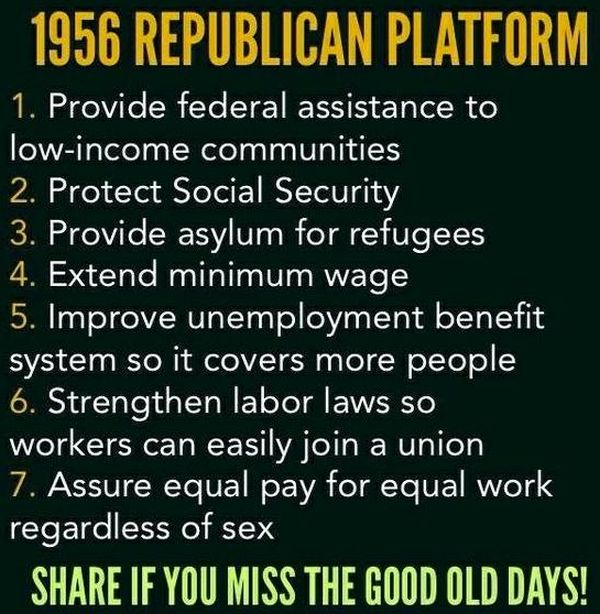
The Right is the Centre?

August 25, 2019

Some people argue that the Coalition government under Malcolm Turnbull was too left wing, and that it needed to move rightwards to the centre.

The idea that the far right, who objected to Turnbull, is more or less the centre has been a great propaganda technique, its a bit like the idea of calling Fox “fair and balanced” when its close to 90% or more right wing or neoliberal propaganda. Not only does this endlessly repeated script keep shifting the supposed centre to the right, but it enables almost all dissent and criticism to be classed as ‘far left’ so that most of the righteous no longer have to bother looking at it- they know its biased in advance, and often can support its suppression.

So what is the main difference between left and right? It’s clearly not conservatism vs radicalism, as the right is radicalising and continually destroying the “checks and balances” that have been built up over the years to contain destructive capitalism, and the left is often frantically trying to conserve things like the environment, people’s wages and working conditions, or the old checks and balances. It’s not about ‘liberty’ as the left tends to support people’s rights to do things that do not harm others and the right supports abstract moralizing, getting into people’s bedrooms, and attempting to prevent all kinds of study and behaviour, while suppressing dissent through increasing fines and jail terms for protestors, and of course media vituperation.

I’d suggest, again, the real difference is that the right is about increasing and protecting hierarchies. Usually they are concerned with the hierarchy of wealth and thus protecting and increasing plutocracy, but hierarchies of gender and sexuality and religion are also important to them, probably as these ideas can more successfully motivate the relatively not-well-off to support plutocracy. The success of this centralist propaganda is shown by events like large tax cuts for the rich, privatisation of public assets, and contracting out public services (and hiding the costs to the taxpayers of the deal behind commercial in confidence agreements) becoming seen as normal, natural and even praiseworthy, rather than right wing and destructive of society, as they might have been considered 50 years ago.

Even as recently as the Howard government (1996-2007), no government would have thought that “robodebt” (a system which systematically and inaccurately harasses people on unemployment benefits, subjecting them to threats of homelessness as money is demanded from them on false charges) was a great idea. Especially as it seems to primarily affect those who are actively seeking for work, and earn bits and pieces of income when they can (and declare it). But nowadays it goes on more or less without comment, and indeed there are supposedly discussions about extending the scheme to pensioners, presumably because the benefit in harassing the relatively poor rather than employers who rip off wages, or fraudulent financial operators, is so great.

Robert Menzies, the founder of Australia’s major modern right wing political party, once wrote things like

“The purpose of all measures of social security, is not only to provide citizens with some reasonable protection against misfortune but also to reconcile that provision with their proud independence and dignity as democratic citizens. The time has gone when social justice should even appear to take the form of social charity.”

In other words he objected to the idea that people who were unfortunate and unemployed should be humiliated, or harassed, in order to receive help.

He also wrote:

“if the individual is to have social and industrial justice and to be guarded against what might become the tyranny of the strong, private enterprise must accept its duties or even its burdens.”

Obviously, in today’s terms, he is a ravening leftist.

The same fate has befallen people who were central to Coalition at one time, like Malcolm Fraser and John Hewson who largely stuck to their guns. One being against the idea of torturing and imprisoning refugees without hope, and the other because he was committed to economic free market moderation and not destroying everything for profit. Now the right has moved on – indeed in the US, we can see that being a neo-nazi and threatening violence has become respectable in Republican eyes, and that the only really terrible racism comes from black people, and sexism from women. The supposed centre has moved rightwards.

Under Turnbull the Coalition may have taken a mild detour into not harassing gay people and having an energy policy, but that is not necessarily far left thinking. The UK’s Conservatives managed to have an energy policy and a commitment to phase out coal burning, before Johnson, although I don’t know what has happened since.

See also: https://www.politifact.com/truth-o-meter/statements/2014/oct/28/facebook-posts/viral-meme-says-1956-republican-platform-was-prett/

1956_platform_meme

Plutocracy and resistance to Climate Change

August 25, 2019

It is a common assertion that people don’t want to sacrifice anything, such as living standards, to fight future threats like climate change, and it is probably true. Humans are not good at avoiding slow future threats. This is especially the case in a Plutocracy (such as most of the world now lives in) when most of the dominant classes understand that facing the threats could challenge their power, wealth, and accepted way of doing things. A big threat, like massive ecological upheaval produces an existential crisis for plutocratic power. This is especially true when many of the modes of making wealth seem to involve ecological destruction somewhere in their path.

One of the recurring motifs we hear, seems to be able to be summarised as “We can’t see how capitalism can solve ecological crises and destruction, therefore there is no threat, we can be concerned about” or perhaps “without destruction there is no profit, so there can be no threat”.

There are obviously some corporations whose executive officers disagree with this kind of position, but they seem in the minority, or handicapped by the usual demand for profit at all cost. I am reminded of an academic paper by Christopher Write & Daniel Nyberg which described how corporate greening starts of with enthusiasm, goes through cost cutting, eventually gets slammed for not delivering maximum profit, until the greening becomes little more than words. Greening is expensive. Paying decent wages is expensive. Not destroying things is expensive. Doing good work is expensive. All go against short-term profit.

Plutocracies are particularly inefficient at facing such threats because wealth concentrates power. The government, and government policy, is bought through money (for campaigning), knowledge, and knowledge distribution is bought through money, the media is nearly all corporately owned and largely protects corporate power. Business associations tend to be against doing anything that might disrupt them or lessen their influence, and the driven wealthy can then use the government to stop government scientists and public servants from communicating with the public. They can get tools of research shut down to help maintain ignorance. Business ends up buying public services and property through privatisation, gets contracts for services, and use “commercial in confidence” to make sure that the public has no idea of the monies involved. It can probably privatise the data, so that the contracting government has little direct idea of what it is doing, and this opens the way for fraud – say finding a person a job with a sub-company, to get the completion and then sacking them to get the ‘new’ client again. In this way, business becomes the government – giving the government the information it wants, directing people with State power, buying politicians, and carrying out services with no responsibility to the people. The only responsibility is to make money out of the situation, and that is threatened by change in approach to government. Encouraging capitalist profit driven markets does not have to encourage democracy, or understanding.

In this situation, if the ruling groups don’t want to do something, then it is hard to persuade them, or others, to do it. While this is reality, it does not make it useful.

Plutocracies are too invested in things remaining as they are to face serious change. They have to be dismantled slowly.

Obviously a sensible business will not behave like this. If the people in it do not recognize change, then they will go out of business. Change is also an opportunity. But business which acts as government has not learnt to do this. It has learnt to use the government to suppress threats to its profitability, and therefore becomes inefficient, unobservant of the surrounding world and frightened of change. This is reinforced by the hierarchy of business, in which people at the top routinely manipulate, or restructure, people beneath them, and people at the bottom routinely give their management the information they think the management requires. This affects the business information systems. In all cases, because there is no real transmission of information or understanding, everyone is governed by social fantasy. And if the business is wanting to avoid a problem like climate change, the fantasy is easily imposed on the world as reality – at least for a while.

Greens and windmills

August 25, 2019

One-time Australian Greens leader, Bob Brown, has recently protested against a windfarm in Tasmania saying:

the Tasmanian public, including the people of the North-West of the island, has not been properly informed of the private deals, or public impacts or cost-benefit analyses (economic, social, cultural and environmental) of this, one of the biggest wind farm projects on Earth.

and

The transmission lines are planned to cut through wild and scenic Tasmania, including the northeast Tarkine forests and (until local outrage led to a sudden change) the Leven Canyon, en route to Sheffield and then the new export cable beneath Bass Strait. Why not use the more direct, much less environmentally destructive route aligning the Bass Highway?

He has been accused of hypocrisy and puzzlement that the ABC and so on did not report this

Bob Brown is human so he should be allowed to be inconsistent. That happens

However, it has never been Greens’ policy, as far as I am aware, that wind farms should be imposed on people. I think those claiming hypocrisy are thinking of the kinds of policies espoused by the right, in which people should joyfully embrace the coal mines, gas fields, highways and so on, which are imposed on top of them or expanded into them – and that farmland and water supplies should be permanently destroyed for temporary private profit, no matter what local people think.

However, Brown’s actions were not unreasonable, it was not about an impact on him in particular; he was responding to worried calls from people who contacted him, which shows he can listen to the public. This is unusual, but not hypocritical.

Again, who has said there should be no controls on Renewable Energy? Why should protected forest be destroyed for windfarms? Why should there be no debate or community consultation? Why should we assume that all renewables are without problem? Again, as this is not a coal mine, a motorway, or a casino in which everything has been agreed beforehand, we can attempt to make this process hospitable to locals….

Renewable energy has to fit in with the community, its views and values, if we value a free society. This may be too slow a way to proceed, but it is an ethical way.

Bob Brown is simply supporting democracy ahead of a development he might approve of in general, and this is so unusual that it looks weird and some people do not know how to respond.

China Problem

August 24, 2019

It is true that if China goes ahead building coal plants, and supporting the building of coal plants elsewhere in the world, then any fight against climate change is lost.

The point is often made, why then aren’t environmentalists fighting China? Is this hypocrisy?

Well I’d have to say that most of what I know about China comes from the UN, Greenpeace or other Environmental NGOs, so I don’t know that people can say truthfully, that environmentalists are unconcerned about China or not fighting them in any way at all.

Most of the environmentalists I know are totally aware of the coal problem in both China and India. However, they tend to think that the only way we can influence the State in both of those countries is through example, so they would rather reinforce environmental concerns in the countries in which they live.

Also the countries in which they live,especially Australia and the US, can often seem to be trying to join the Chinese coal rush rather than counter it, and if that happens the environment is probably lost. So the idea is to fight were we might have influence.

Privatising the Clean Energy Finance Corporation

August 24, 2019

The publicly owned Australian Clean Energy Finance Corporation, has been massively successful in financing clean energy, and making a profit. It is therefore being suggested it should be sold to the private sector because it “must evolve” and it should avoid “crowding out the banks,” avoid competing with the private sector and probably because the current Australian government does not like supporting renewables, or having public sector involvement in anything that is helpful to the public.

And of course we know that financiers, bankers and developers always work towards the best result in the public interest.

If privatisation happens we can predict:

1) Directors and high level executives will award themselves massive increases in salary.

2) Costs to the public will go up.

3) Employees who know what they are doing will be sacked in an efficiency drive.

4) Staff doing due diligence will be cut back likewise, because they inhibit profitable risk taking.

5) People will make profitable employment transfers from the new owner’s original corporations.

6) Public money will be transferred back to the new owners.

7) Public money will be spent on private entertainments, or invested in arcane financial products that are beyond anyone’s understanding.

8) Money will not be spent on what is best for the country but on what brings the best temporary income, or tax concessions, to the owners

9) Money will be distributed through old boys’ networks, rather than by quality.

10) Public money will be lost and the institution run down.

11) Corruption will likely become the norm.

12) All the people who moved in on it, will be very happy.

Extending private ownership, where it is not required has the potential to extend and create disorder and unintended consequences.

Protest then and now….

August 24, 2019

We were lucky when I was young. In the 1980s it is true that leaders in the English speaking world suddenly decided that supporting corporations and hitting the poor would solve all our problems, but they also were rational enough not to want atomic war and global destruction. They understood what nuclear war meant. Basically the protestors and the dominant groups were in harmony – all of us preferred not to have nuclear war and the end of the world. As a result, we all lived through this potential universal death.

Even when it came to environment, the dominant groups largely thought saving the earth was good and possible, and that if it cost a few bucks extra that could be done. Even Margaret Thatcher thought global warming should be tackled, while she was in office – even if she later thought saving capitalism was more important than saving the planet. Apparently after retiring she wrote “Kyoto was an anti-growth, anti-capitalist, anti-American project which no American leader alert to his country’s national interests could have supported.”

Apparently she was persuaded by the usual groups of people. Exxon, Koch, Cato, Institute of Economic Affairs etc. who sold her the 80s mantra, we can do everything if we just don’t get in the way of corporate profit. No work, no planning, is necessary (unless its planning to destroy the power of ordinary people).

This was the transition to the change in which leaders began to value elite profit more than survival. They cannot imagine a future without corporate capitalism and economic growth and I guess that tips them out of reason and their position becomes there is no alternative – we have to destroy everything else in order to survive. Something of a contradiction, we might think.

However, our recent leaders don’t seem even this rational. Trump for example is encouraging corporations to pollute and poison people even more than they might want. The current leader of Brazil apparently started by claiming that the land clearing he had promised for the Amazon was not happening and then trying to suppress the bearer of news:

“The state-run National Institute for Space Research (INPE) has reported a 88-per cent increase in deforestation in June year-over-year, and said that cleared area increased 278 per cent between July 2018 and July 2019.”
“Jair Bolsonaro claimed that the statistics were “lies” meant to tarnish the image of Brazil and its government. He went on to fire INPE head Ricardo Galvao after suggesting that he was working for a foreign non-profit group.”

When the massive fires arrived, he apparently first of all claimed they were not happening, despite the evidence of satellite photographs, later claiming the fires were lit by green NGOs. It seems obvious that people who wanted to clear the Amazon, and reduce oxygen, would be happy with the fires.

Our NSW government is a simple mess of contradictions, but if you want support from them, then do some land clearing, help destroy people’s lived environment in the cities for profit and you will be fine. Our two main parties in Australia, seem to want not just to maintain coal pollution, but to increase it. Again because it would profit some people.

What does money profit anyone if they loose the world to spend it in? The contradiction drives people crazy.

Faced with this lack of sense and coherence, contemporary righteous politicians seem to have decided that they will do as much destruction as possible.
If they are going down they will take the world with them, and maybe they will be wealthy enough to buy some kind of survival, or support from those who are wealthy enough to be building fortress bunkers. This is an unusual combination of psychological factors, but it is now ingrained. Maybe corporations really to select for psychopathology?

The common attitude seems to be that normal folk are disposable and easily deceived, and service directed at them is pointless – apparently these people do not share the same world or wealth. I guess this attitude could also function as a psychological defence against climate change – they might suffer or die, but we will not.

What do you do in such a situation, to fight a leadership wedded to destruction?