In the last blog post, I discussed the ‘two minds’ issue and the way of problem solving this suggested. In this post we move on to climate change and, incidentally, Covid-19. It is useful to have some experience with the method described in the previous post, before moving on, but there is no harm in getting more of a perspective beforehand.
The Nature of the Problems
Covid-19 and Climate Change present as what are called ‘wicked problems’. In my opinion this is a bit of a silly term, but there you are. It basically means there is a set of problems which are complex, intertwined, have multiple interacting (and probably opaque) causes, and do not have well defined solutions. People may not even agree on what the ‘problem field’ is, consequently there is almost always significant dispute over the problem, its existence, its interpretation, consequences and possible solutions – and this may become tangled in wider politics, which makes finding a ‘solution set’ even harder.
Furthermore, applying the solutions (or avoidances) we generate, can change the situation and the problems we face, often in unexpected ways – so wicked problems do not finish neatly. We might solve part of the problem and set off a landslide of other problems. In the worlds of Tom Ritchey “wicked problems won’t keep still.”
The hallmark of a wicked problem is that, even when faced up to, it doesn’t appear solvable within our current frameworks.
Even recognising the problem can be a problem, as wicked problems often become Black Elephants, foreseeable, but exceptional, crises, which no one wants to talk about – often for fear of unresolvable arguments or social exile.
Wicked problems and Black Elephants are not extreme and rare, they are normal in complex systems, and all social systems are complex systems, and not predictable in specific. Most people know how difficult predicting ‘the economy’ is, or even what will happen in politics in the next few weeks – it might be possible to predict general outlines, or trends, perhaps, but specific events are much harder – the more detail you want, the harder the events are to predict exactly. If you act, then you cannot be exactly sure what the results of your action (or non-action) will be until afterwards, and even then it can be difficult to disentangle the results of your actions from ‘background events’. Knowledge in, and of, complex systems is always provisional and uncertain, although many people try to guide themselves by dogma.
Climate change is precisely a wicked problem. It is complex with many intertwined and connected causes. To make it more politically and socially complicated, it is generated by the same processes which have made ‘modernity’ and ‘development’ possible for almost all the world’s large scale societies. These processes are disrupting and destroying ecologies, all over the globe, often in indirect ways. These processes also tend to be ingrained into our directed minds, because this is the world we have grown up in.
Solving normal problems such as development in China, protecting ‘position’ in the US, or maintaining a favourable export market in Australia, may all emit greenhouse gases which cause melting of the ice caps, rise in sea levels, rise in temperatures, drought, rain storms, death of crops, massive fires and so on. This rise in temperature can also generate collapse in the breeding of krill and plankton, which then has effects on fish populations, or on water purity, and adds to burdens on food production. Burdens of food production implies more deforestation, which exports more essential minerals to cities and from cities through waste into the sea, where the minerals become irrecoverable. Increased use of artificial fertilisers is then required, which may further denude soils. Production of essential plastics can poison people, creatures and land, and so on.
However, stopping the use of machines which increase greenhouse gas production, may mean we don’t have enough energy to replace our energy systems, and people may be condemned to poverty which, in turn, increases their precariousness in the face of climate disruption. The problems seem both endless and interconnected.
As a purely incidental remark, one of the advantages of the so-called ‘Donut economics‘ is that it provides a tool which draws attention to some of the world’s boundaries, which are ignored in normal economics. This normal lack of interest in the ecological consequences, and basis, of economic action is another problem.
Likewise with Covid, we are faced with the problem that lock-down, which is so far the only solution we have, sends businesses broke, makes people unemployed and precarious, as well as isolated and prone to mental breakdown. Lock-down encourages resentment as peoples’ livelihoods and sociality are removed. It may further increase sickness as people avoid medical treatment. The economic crash may make governments more precarious as they have less income and receive greater pressure to open the longer lock-down goes on (where it is actually going on). Rushing vaccines, as President Trump and others promote, means that the vaccines are less likely to be properly tested for safety, people are likely to avoid them, and if bad effects occur, people are likely to increase their distrust of mainstream science (confusing it with corporate science). It may be the case that Covid-19 is vaccine resistant, or mutates under the pressure of vaccination and so on. The disease also reveals which people are defined as socially unimportant (old people, sick people etc), which can increase political pressures as those people organise to rebel, or are more effectively ignored.
Both Climate Change and Covid-19 are problems which involve information overload and propaganda, and allow people hostile to particular countries, or to particular politics, to try to undermine those countries’ responses. This almost certainly adds to confusion and panic, which becomes part of the pandemic problem.
The directed mind adds to the problems, as it seems to be tempted to ignore evidence, and how others are reacting, to make things appear simple and easily solvable.
The interaction of the wicked problems of Covid-19 and Climate change has the potential to make both situations worse, as more stress is added to the system response, and the system response is further disrupted.
Directed Mind
We can now move into the difficulties of solving problems from within the habitual directed mind. This mind is part of our social life and is largely shared or collective.
I am going to suggest that our contemporary directed mind, especially in the English speaking world, is heavily influenced by neoliberal ideology and its axioms.
This is to some extent to be expected. The corporate sector controls nearly all sources of information, directly or indirectly, so it is not a wonder if its ideology permeates our thinking practices – however much we may want to resist recognition of this, and however much they try to reassure us that we have reached neoliberal conclusions and accepted neoliberal axioms, through our individual wisdom, reflection, or gut instinct.
To be clear, neoliberalism is not a feature of every society’s common directed mind, but it does seem to affect a large portion of people living in the English speaking world. Again variation is to be expected. Not every directed mind will have all these features, but the socially prevalent directed mind cannot be analysed without reference to these axioms, standard paths, or habits of thinking. Nearly everyone will be affected by some of these.
The directed mind, whatever society it is in, wants to preserve its habits, and use the solutions that it has used before. These habits and solution processes have given it meaning. They have generally seemed to be secure and are probably thought to avoid unknown futures and disturbances. They seem adequate and protective. They are known and familiar.
The socialised directed mind in the English speaking world, probably considers ‘the corporate economy’ a vital part of life, perhaps the most important part of life, which should not be disrupted as that will supposedly produce poverty and challenges to social relations – “How can society survive without the economy?”. There is a habitual slip between ‘this corporate economy’ and ‘the economy,’ which halts consideration of change. Because it forms a habitual base for human life, the corporate economy gets taken into the directed mind and becomes normal.
Taking ‘this economy’ as the most important part of social life, conceals all the other processes that humans require for satisfaction, or life in general, such as a working ecology, beauty, low levels of pollution, or human connection and co-operation. So the assumption this economy is vitally important hides information about all these other even more important factors.
The corporate economy and its associated technology, has previously provided a route out of poverty for many. It is not quite so certain it is still doing this in the previously-developed-world, but history counts. Politicians realise that it has also provided military might and military security, and vast wealth for some small, but now powerful, part of the population. It can be felt to be good, and as providing a secure solution. It is also promoted by those who have apparently benefitted from it, partly because it helps them, and it saves them the effort and discomfort of trying to think differently.
The corporate economy has provided the directed mind with a path whereby nothing is anyone’s fault or responsibility – so it’s morally easy to leave everything to the corporate sector. What the corporate economy delivers is supposedly always the best possible result in the circumstances. It is reputedly the best problem solving device we have, and we, and our governments, don’t have to do anything which might hurt us or our habits – and we are never to blame if things go wrong. This path allows us to hide, or deflect, many ethical dilemmas, and put them to sleep, thus producing a degree of conscious ease.
In a counter-position, it also allows easy blame, also helping to put ethical dilemmas to sleep. Everything is the fault of other people, socialists, individual capitalists or billionaires, or possibly protestors; we are not involved.
Life’s meaning, for most people in the previously-developed-world is generated by work, purchases and/or consumption. Anything that threatens consumption and work is a threat to peoples’ sense of meaning, their identity, and/or to their survival, so it is resisted – even if continuing is a bigger threat to survival.
To the directed mind, buying something appears the solution for most emotional and existential problems. If we are unable to buy things, we are more likely to have to face those discomforts, and this is threatening so the market must continue.
In this mindset, the directed mind feels we should be at liberty to do nearly anything we want. This, nowadays seems to allow liberty to proceed even if it hurts someone else indirectly, or directly, if we call them ‘bad people’. Those bad people can look after themselves, they are weak, and “we are individuals”. In neoliberal theory you are not responsible for what happens to lesser beings as a result of your actions, even when those results are predictable. Hence restriction tends to seen and felt as bad, unless generated by employment, in which case it is largely ignored and realisation is suppressed.
As I’ve argued elsewhere, neoliberal positive thinking of the form that avoids problems and focuses on having-what-we-want now, is now a major way of avoiding problems, and pretending there is a solution without discomfort. Our directed mind often learns that we should be able to solve problems without really facing them – trusting in the corporate economy, the free market, extra consumption, or God, to solve those problems for us.
The positive directed mind can put faith in technology, as this is a major feature of life in contemporary capitalism. However, technology cannot necessarily be produced on demand, or without disruptive effect. This axiom allows us to fantasise about ‘new nuclear’, carbon capture and storage, disruption free batteries and so on, instead of facing the problems.
The world tends to be seen by this directed mind as a resource to be transformed by human labour and technology for our benefit, pleasure or comfort. Otherwise it is not particularly valuable. Even ‘wilderness’ has to be tended by humans and should be open to human use – such as for tourism, four-wheel driving, hunting etc.
Things should be property and be treated as property owned by someone. If they are not ownable, they are worthless.
This directed and individualised consciousness weakens attempts to perceive humans as part of the world, as subject to the world, or as interconnected with the rest of the world. The only recognisable interconnections allowed are economic. This promotion of lack of connection to the world-as-a-whole, may promote isolated and aggressive nationalism as part of shadow politics, as well as ecological destruction.
The great pressure in ‘information society’ is for our conscious mind to be correct. To be right. Our status can depend on others thinking we are right. This inhibits problem solving, as we stay comfortable by staying right. This means not changing our mind and only finding evidence that supports what we already think. Real problem solving requires failure and requires being wrong, as we test what sounds plausible and find it does not work.
In the modern directed mind, anything that disrupts our comfort seems bad, and probably a conspiracy by hostile people.
Everything that is uncomfortable tends to become political. Hence, everyone who disagrees with us is biased, and can be denounced so we can be right. This reinforces convention in the directed mind and means that we don’t have to think about all the problems, only a fragment of the set of problems which appear friendly to us. Wicked and complex problems are best solved by leaving them alone, or turning away from them – which is reinforced by the conventionality of the directed mind and by social forces.
These forms of action and belief encourage a shadow politics, which primarily attacks the evil scapegoats provided for us, and clings to the habits of our directed mind. It is easier to be distracted than to face the problems.
Having, a fixed set of responses, as is normal for a directed mind, limits our attempts to gain awareness of problems, and provides a false sense of comfort.
The Directed Mind; Problems and Politics
These characteristics of contemporary directed minds, which we all have to some degree, make solving wicked problems even more difficult than they already are.
For example, we can easily find people who focus on the real economic, isolation or ‘liberty’ problems of most Covid solutions, but it seems rare for these people to face up to the compounding death or disabling problems of Covid. Indeed it seems common to deny that the latter problems exist, or to pretend that the people who die would have died anyway – which renders the dying and the dead effectively beneath notice. Even those who recognise the death problem tend to neglect the disabling problems, perhaps because those are too disturbing. Those who do recognise the compounding death problem, tend to ignore the economic and isolation hardships, unless people protest hard, and they then tend to dismiss the protestors as politically motivated. In both cases the complete information is relatively difficult to process, and ‘both sides’ tend to think the other is delusional or conspiratorial, and that they have all-correct information.
The same is true of climate change. People who want to continue to live as they live now, with their current directed minds, see the economic, liberty, and disruptive constraints of dealing with climate change. They tend to think the climate change data is political or exaggerated, and they prefer more comforting data when they can find it. The fires were the result of criminal arsonists. Renewable energy is less reliable than coal or gas or oil. Extinctions are not happening. Small increases in average temperature cannot have large effects. The temperatures were not measured correctly. Scientists are socialists and benefitting from people’s fear. All we need is more nuclear energy etc. etc. The full data is ignored.
Likewise, people working to slow climate change, can think of their opposition as deluded, and political. They can ignore the problems of renewable energy transition. They can ignore the political and organisational problems. They can ignore the problem that most energy use is not electrical, and cannot be lowered by simply making electricity renewable. They can ignore how slowly the transition is happening, and think the rest of the transition can happen quickly. They can think that because it is ‘economic’ to make the transition, it will happen, forgetting the economy is political and under the sway of large established corporations who’s controllers may not want to change.
In these situations, shadow politics are easily activated, distracting from the real problems, which it is probably intended to do.
The point is, that with a complex wicked problem set, it is easy to select those parts of the problem field that you think you can solve, in the way you are comfortable to solve them, and ignore the rest. You can ignore the complexities of the situation, and the tendency of human actions to generate unintended effects which rebound through the system, changing it into a new state.
One of the further reasons for avoiding problems is that as well as being associated with a challenge to habitual thought and problem solving, the problems can be associated with, or produce, bodily discomfort, mental dislocation, trauma, threatening images and sensory experience, even to the point of feeling ill, sick or disgusted. That is why, I previously suggested that facing into these kinds of sensations may also be useful in problem solving, while warning that people should be careful if doing this without prior experience or support.
The aim of our normal activity is to preserve our directed consciousness, and our comfort. Sometimes people will use drink, drugs, consumption, unsafe sex and so on, not to dissolve the directed mind, but to dampen down the growing discomfort of the problems.
Facing the problems
As the reader has probably now guessed. I’m going to say again that we need to face these problem fields squarely and face on, as suggested in the previous post. We need to face our discomfort. Exhaust ourselves, realising that our preferred solutions do not work, will not work and ignore vital parts of reality. Argue, put solutions forward, let others destroy them. Fantasise that your opponents are right. Question your knowledge. Acknowledge your grief and pain. Feel the lack of simple and visible solutions. Dissolve what you ‘know’ to be true.
Engage your phantasy, listen to dreams.
Then step back and wait for solutions and symbols to come. Preferably recognise a solution because it is not what you wanted or expected.
It is probable that these solutions may not work either, be prepared to explore them, talk with others about them, share them. Evaluate them carefully in practice.
Treat the solutions experimentally. It is best to test them in your daily life as dispassionately as possible. Remember a persuasive solution may not work, or may work but generate unintended consequences. It may need modifications, or further procedures. And keep going.
If your solutions involve exterminations, or mass imprisonments, look out for the possibility of your having been captured by shadow politics. The same if the solution depends on ‘impossible’ technology or high improbability events such as being saved by aliens. The unconscious can be tricky.
Obviously I cannot be definitive here. There are almost certainly other problem solving techniques, and people have written a lot about complex and wicked problems, and some little about unintended consequences. Take inspiration where you find it, but use it to solve problems rather than to make yourself feel comfortable.
Why Me?
You might well ask “why me?” and the rather sad answer is because people who get paid to solve problems in the government and in business are not succeeding that well. They get tied into the politically possible, the pressures of fitting in, or the need to protect the State, business, or the system as it is.
You are as creative as most other people. You are as prone to mistakes as other people. Why not you? Especially if you can find support and stimulation working with others who hold the same commitment and curiosity about extending their consciousness beyond the directed mind.
Solutions have to come from somewhere. Understandings have to come from somewhere. It might as well involve you, or you and your friends.
Perhaps you might waste your time. But there is nothing more important to waste time on. And perhaps you might succeed and spread the solutions to others. Even small personal solutions might be important.
However, despite the ambition, there is absolutely nothing wrong in practicing the technique described in the last post on smaller problems first. That is, after all, how we learn, and how you will find whether the method works for you, or needs to be modified to work for you. Small steps are good.
Is the problem with Climate change due to a failure of imagination? That is the main question in these next couple of posts, but let us begin with a discussion of creative problem solving.
Let me begin with a personal anecdote. For many years I have participated in role playing games. These games are forms of group storytelling with rules. The players take on the role of characters who are engaged in a generally fantastical adventure. One person, known as the Game Master, sets up the world, all the other characters, and most of the problems the players face.
Sometimes the players face a problem, that they cannot solve. After a while, the game master might ask whether the characters themselves (not the players) can come up with a good idea. Some kind of dice roll will generally answer this question. If the dice role is good, the play moves on. Interestingly, we can almost guarantee that some while later a player will find an ingenious solution to the problem – one that surprises everyone. This won’t necessarily happen if you expect it – it’s not a testable hypothesis – but it happens enough to be noticeable.
What we seem to need, in the game, is a facing up to the problem, seeing all the options and the situation as accurately as possible, lots of failure and argument, and then proceeding as if the problem is solved – and then a solution can arise. This is not the same as those forms of positive thinking, in which the problem is ignored and not investigated – here the problem is faced dead-on.
This seems true of a lot of creative process. Engage with the problem intensely. Learn all you can about it. Fail, and then step back, knowing a solution will arise. Do something differently, and a solution may well appear when you no longer ‘need’ one and are relaxed. Sometimes the solution will appear in a dream – although the dream solution may well have to be decoded or pondered upon – it may look like something entirely different.
What this suggests, is something proposed some while ago by Jung and Gregory Bateson: we have at least two forms of thinking. Jung later implies we have at least four forms of psychological activity, but let’s stay with this binary for a while.
The Primary, Habitual, Conscious Mind.
One mind tends to be dominant in daily life. It is habitual, largely ‘rational’ (given the axioms, emotions or desires it is working from), and rule driven. This mind is wonderful when we already have solutions that seem to work. Then it is simply a matter of applying those solutions correctly. This is especially so, when life is regular and without much change, so that the problems we face are largely similar to the problems we have faced before.
This habitual mind automatically faces some difficulties, as life involves change and situations are never exactly the same as those we have faced before, even if they are similar. And sometimes the solutions we have to problems don’t actually work anymore. They may even make the problems worse…
The main difficulty with this mind is that it is largely automatic. It rarely gives insights, or new behaviour, or even sees contrary evidence.
The theories that this mind accepts tend to influence the world it perceives – what we might call the ‘theory dependence of observation’, to use a term from philosophy of science. Under its influence, we tend not see our evidence critically, and easily assume a few confirmations imply there is only confirmation. We may not wonder if our evidence is that good, or if we are less critical of that evidence, than of other evidence.
This mode of thought is usually shared and reinforced by others, although sometimes, it is just habitual for an individual and can be socially incomprehensible.
This habitual mind represents our general consciousness. It is relatively stable, other than when it is subject to traumatic shock, or voluntary dissolution.
To some extent that statement is a bit circular – we can tell a shock is traumatic because the consciousness is changed. However, traumatic change often produces an extremely ‘programed’ consciousness. The person goes along a path without being able to stop, even if they know it will take them somewhere painful, or in some direction which other people do not comprehend. A traumatised person may see a new situation almost entirely in terms of the previous trauma, even if they are not aware of this. The trauma, then acts as a template which can make very different situations seem the same.
In this mind, people can be largely immune to ‘rational’ argument or ‘evidence’ because they are stuck in their own rationality, habits and ways of looking at the world, as conditioned by that trauma.
These ‘failures’ of the directed mind are often easy to see in other people, but harder to see in oneself.
It can also be useful to remember any form of conscious thinking can become programmatic in this sense. The fact that our thinking is similar to, or different from, the programmatic thinking of other people is no proof it is accurate.
Indeed, the habits of consciousness are probably unconscious in most people. We can, as discussed in previous blog posts, suppress awareness of moral dilemmas, failures, or other problems, in order to get on with the lives we have chosen, no matter how painful, self-destructive, or misguided those choices may be.
If there is a group of us, sharing these pathways, then it becomes even easier to make the solutions part of our group identity, and appear as if they are part of reality. Changing to new solutions can become socially threatening, and is even more strongly resisted.
Luckily we do not need trauma to change our perceptions of the world, and find creative solutions.
Voluntary dissolution of standard consciousness can be useful, but it can also be destructive when powered by addictive external poisons such as drugs, alcohol, or unsafe sex etc. – practices which tend to have diminishing returns the more they are used. I’m not saying that ritual uses of these procedures are always harmful if done carefully and with wide separation between uses…, but it pays to be cautious. It is also relatively easy to engage in safer, less traumatic, forms of dissolution – although even these may benefit from supervision, or someone else’s experience.
We will talk more about this in a few paragraphs.
The Other Mind
The ‘other’ mind is less accessible. We may even want to call it ‘the unconscious mind’, as it is hard to direct with our consciousness (which tends to be habitual and a bit unperceptive, as stated above). This second mind is great at pattern finding and problem solving. Jung originally called this second mode of psychological activity “phantasy thinking”. It is tied in with fantasy, image (‘sensory analogue’ – see below), association, dream, pattern detection and so on. It is pretty much mind as free flow, rather than mind as rule following. It can use perceptions we are not consciously aware of, and set our thought on new paths, helping us to get out of the ruts and ignorances we have constructed through our daily social life. It also seems to be better at dealing with complexity, perhaps because it is better at perceiving many things happening at once, or simply because it is less directed.
In my opinion, Jung’s main contribution to thought is the insistence that phantasy thinking is normal, important, worthy of study and vital for therapeutic processes.
Phantasy thinking is directly related to imagination, however one problem with the term ‘imagination’ is that it can suggest this thinking is primarily done by visual images or “pictures in the mind’s eye”. With investigation we can see phantasy thinking involves: feelings in the body (‘gut feeling’, ‘the heart’, as well as touch), sense of movement, taste, smell, sounds as well as images and words. As such, it functions and thinks through what we could call ‘sensory analogues’ – that is not just by image or words but through other sensory channels and representations. Phantasy thinking can use all modes of information gathering and processing.
However, we need to be aware that sometimes the patters and solutions this mind finds can also be harmful and deceptive… This is to be expected, as we are humans and not gods. We are often wrong. We need to be able to evaluate the insights. Fortunately, the general conscious mind is quite good at evaluation (if given that task, rather than the task of purely justifying or destroying the new insights), and can get better with practice. But evaluation needs to come at the right time. Too soon, and the insight can be lost.
This other mind is not entirely without unconscious rules and programs of its own, which is why it can be deceptive. We may be even less aware of what this mind is doing and, without caution, can find ourselves entangled in its deleterious fantasies – as with shadow projection, ‘complexes’, trauma, etc.
The two minds working together.
Let’s return to my anecdote about role playing games and solution finding. My suggestion is that just as in these games, we can work towards a solution by facing up to the problem, seeing all the options we can and the situation as accurately as possible, perhaps even listing points and problems. We think about what we would like from a solution; and generate lots of failure and argument, perhaps to the point of exhaustion.
Through this process, the directed mind is brought to bear on the problem. We don’t have to solve the problem at this stage, but simply be aware of everything that we are currently perceiving as involved in the problem.
[We might also want to ask questions about what we might be missing (the directed mind is directed and prone to ignore parts of the problem to make it simple), and we might want to ask if what we are doing is making the problem worse for the same reason.
[I’d also suggest when you get a bit more familiar with the process, that you bring in your full response to the problem. Perceive how you might feel the problem, whether you have bodily responses to the problem, pictures of the problem, a sense of the problems movement, its smells or sounds etc. Do this without evaluation. What you find does not have to be rational, its just data. If it gets too painful back off and calm down.]
We then distract, or dissolve, the directed mind.
This may be the place were normally people tend to go and get drunk or have unsafe sex, but this is absolutely not necessary, and you might forget the solution when you return to normality. Instead we can invite the other mind into play, through phantasy (preferably allowing things to arise by themselves), looking at something completely different, going for a walk, putting in random input, relaxing, getting on with something else, or just getting the directed conscious mind out of the way.
Don’t expect the solution to arise immediately. It may arise in a short period of time, but be accepting if it takes a week or even longer. Expecting immediate answers can shut down the process. The solutions will come when they come; often unexpectedly and, as said earlier, perhaps in a dream.
When a solution, or some kind of ‘image’ arises, you can play with it. See where it leads. You may find more new ideas arise. Write them down, try them out. This is just phantasy. Again no pressure. It’s seeing what happens.
If you get interesting dreams then pay attention. It will help if you have already cultivated the habit of paying attention to your dreams, but no reason you cannot start now.
If you don’t get a new start towards solving the problem, then wait a bit longer. Come back to the problem, think about it again, and see what happens again. If you can, record your thoughts – either on a sound file or on paper, having a record can be useful. Engage in distraction or phantasy. Eventually something is extremely likely to shift.
Other ways
There are many ways of approaching this issue.
One way is described very clearly (much better than me) by a friend of mine on his blog.
He writes:
I think the unconscious is often the source of lots of our ideas. The trick to using it is threefold:
First, just knowing it exists and that you can use it to solve some kinds of problems;
Second, feeding it enough raw materials, so there are bits and pieces for it to connect to solve the problem;
Third piece, leaving a silent space for it to present its answer to you.
I’ve found the more I use it, the more I come to know the feeling when my unconscious has something ready for me.
He also gives some useful references to the scientific literature. This is real.
The spiritual psychologist Sydney Banks, tells us that all we have to do is stop our endless thinking and just listen for our inner wisdom, or a good feeling. Simply knowing that your current (‘directed’) thinking is helping to form the problem and that you have an inner wisdom which is easily accessible through ‘listening’, can be enough for some people.
There is nothing occult, or strange, about this process. It is just the way our psyches work. And we have to be prepared to work and play with the process.
What this means for Climate change in the next post…
This will obviously repeat what I have said before, in various places, but it comes out of a circling process and hopefully is more precise than previously. This repetition is also relevant to this blog as neoliberalism appears to form the main institutional block to climate action, energy transition, degrowth and repair of the world ecology. It may also be the main danger to democracy and liberty, as it protects corporate power at the cost of human life.
Introduction
First of all, like fascism, neoliberalism is not primarily a body of theories, although it does point to landmark theorists in neoclassical, monetary and ‘Austrian’ economics. It is primarily a set of techniques for increasing and entrenching the power of the corporate sector, which organises the economy so that most of the wealth goes to the already hyper-wealthy. It is quite happy to ignore its pet theorists, and official principles, if they are inconvenient for these aims.
Origins
Neoliberalism seems to have arisen in the context of a series of challenges to corporate power by governments acting to regulate corporations for the public good.
It seems to have begun in the 30s, with corporate sponsorship, during the great depression. It went to sleep during the second world war, when governmental organisation seemed necessary for corporate survival. It survived primarily as corporately sponsored anti-socialism after the second world war when socialism, or a mixed economy, was boosting the standards of living of the general populace to an extent never before seen. This was the era of the founding of the Mont Pelerin Society, home of Friedrich August von Hayek and Ludwig Heinrich Edler von Mises among other anti-socialists. However, they had relatively little influence as the elite also feared the possibility of worker revolution, which could be stopped by a little wealth and power sharing.
Neoliberalism returned, with the usual sponsorship, in the early 1970s as a response to the fear that democracy and activism (of all kinds, including environmental) was taking power away from the corporate elites to do what they wanted, and that confusion would result. It also proposed a simple ‘solution’ to the problems of stagflation, and the oil shock – which effectively increased levels of unemployment and reduced wages for most people. It came into its true ascendency after the collapse of the Soviet Union, when there seemed no longer to be any fear of a workers’ revolution, and we were faced with what some called the end of history, namely the triumph of capitalism and its then neoliberal ideas.
Neoliberalism was also helped by the Left arguing that the welfare state was a mode of control over the working class. This was partially correct, but the welfare state was clearly better than the previous alternatives. The solution would have been not to attack welfare but to improve it and liberate it.
The left had little defense against neoliberal ‘liberty’ but naïve anti-capitalism or accommodation. Accommodation won out, as it often does, and we got market based Labour parties in the UK and Australia, who followed the neoliberal lead and treated the corporately dominated ‘market’ as the most important social institution and thus the corporate sector as the most important and privileged part of society. The Democrats likewise largely followed the Republicans in the US, as with Bill Clinton’s slogan “Its the economy, stupid.” Socialism was dead.
Neoliberal “Free Markets”
The language that neoliberalism uses tends to resemble the language of libertarians, but it is not the same, even if libertarians can themselves be confused by it, and used by it.
To explain the confusion, we can return to the primary function of neoliberalism which is to extend the power of the corporate sector and prevent it from being “interfered with”, made to act responsibly, “civilised” or encouraged to share wealth, on behalf of the people. Neoliberalism tends towards corporate authoritarianism not libertarianism. Once we understand these are the aims, then many otherwise puzzling features of neoliberalism become clear.
Thus neoliberals talk a lot about the “free market” but they do not mean a market open to all without regulation within which people can live freely, they mean a market that is regulated in favour of the corporate class. This is a market which allows tax evasion, suppresses unions, lowers wages, transfers wealth upwards, hinders organisation against corporations, lowers corporate responsibility towards anyone other than their shareholders, makes it harder for corporations to be sued for harm, lowers environmental regulation or other forms of prevention of damage, and otherwise distorts markets to favour the wealthy and what they do to get wealthy.
By focusing on the market, they also tend to undermine any realisation than societies are more than markets, or more than obedience to markets and the corporate sector.
Neoliberals also try to “externalise” the costs of the markets. That is, in more normal English, put the costs of market operation upon the non-corporate sector. For neoliberals it is the people who ideally, should bear the costs of pollution, poisoning, ecological destruction and worker injury, and not the corporate sector. They make it harder to hold corporations legally responsible for damage, or for people to protest against that damage. Although they have not yet suppressed public opinion, they can suppress public information.
Likewise, in neoliberal thought, the corporate sector should own anything valuable, and the people should own everything that costs, or ‘anything which costs’ should be abandoned. This is what privatisation is about. The idea is to make the state, simply an arm of the corporate class, so it can exert maximal control over your lives.
Public or common property, like tax payers money, should be gifted to the corporate sector, or provided as a service at minimum charge. This, of course, encourages governmental corruption, as it becomes normal to sell public property off to the wealthy. It also becomes normal to have corporate lobbyists embedded in government.
In this framework, mining companies who take the public’s resources, should pay minimum cost for that privilege and the public should get as little as possible. If the mining destroys villages, towns and countryside and uses or poisons water supplies, that is a problem for the people not the company.
If gas pipes and drilling sites leak, helping to increase global warming, that is not the company’s problem, and so on. Again this is a major aim of neoliberal activism.
Neoliberalism can also support monopolies as an efficient and competitive form of trade, as long as they are private corporate monopolies. Partly this was to challenge anti-trust laws, partly to keep the new monopolies safe, and partly to justify privatisation of governmental monopolies. This, of course, violates the normal standards of an open and competitive market, but it does justify and protect corporate power. It is done by pretending that competition could enter the market if the monopoly was abusing its privilege. This idea ‘forgets’ that market occupiers have power and resilience, that consumers have to have a no-risk transfer of allegiance, that new competitors do not face a deficit of experience or have to sink lots of losable capital to get going in the market, that they cannot be undercut until they leave the market, or regulated out of the market by politicians indebted to the monopoly. The reality of actual capitalist economic behaviour is not the same as in the fantasy markets promoted by neoliberals.
One of the main neoliberal fantasies is that the wealthy and powerful will not team up to gain benefits for themselves, and that it is only the envious workers who will exert political force on markets. In a capitalist economy, everything is up for sale, virtue, integrity, and power, and it is much easier for team-ups of the wealthy to have an effect. This is rarely to never considered, or it is thought that these people will always be in competition and so never team up – this simply shows probably deliberate, selective ignorance of human nature, which just benefits the wealthy.
It is correct that, just occasionally, neoliberals do acknowledge this problem and call it ‘crony capitalism’ which aims to imply this is an aberration, which can be blamed on State action, and normal capitalism does not work this way normally, but this is unreal. This is how capitalism generates the State it can buy, and how neoliberalism itself manages to gain influence.
In practice “free markets” in neoliberalism can be defined not as voluntary trade or exchange, but as allowing powerful corporations to behave as they will with any deleterious consequences to the public being ignored, or being claimed to be good. Whatever corporations do, is the neoliberal ‘free market’ in action. The idea of the free market exists to prevent people exerting power over their corporate masters.
The State
Neoliberals need the State to protect: what they define as private property; the organisation of labour; military defense and expansion; contract; investment and; the power of the corporate sector.
While neoliberals make a great deal of fuss about shrinking the State, they wish the State to be shrunk, not to provide people with liberty or to encourage an active local politics, but to provide the powerful with more wealth and the liberty to stand over and exploit everyone else. What neoliberals mean to end forever, is the idea that the State might be useful to the general populace, as opposed to the wealthy. In this they have been extremely successful; people nowadays generally have little faith in the State, in political action or in the power of non-neoliberal political parties to change anything (“both sides are equally bad”).
Thus despite neoliberals having power since the 1980s, there has been no diminution of the State or decline in State regulation. What has declined is the ability of ordinary people to affect the State, or the ability of the State to help people. The State has made the welfare it provides interfering and dominating. The point of neoliberal welfare is to penalise people and encourage people to get off it, not to support them through difficulty as a humanitarian right, and certainly not to support them while they start a new venture.
However, despite this neoliberal hostility to the State possibly helping people and the amount of effort they put into discouraging small frauds by ordinary people, neoliberals think it quite acceptable for financial corporations to be bailed out at taxpayer expense, even if (particularly if?) the corporation has behaved stupidly and and dangerously, and the bailout money is used fund executive bonuses, or share buybacks, rather than to support the workers, or stop them being thrown out of their homes (even if workers loosing their homes is bad for the economy as a whole – maintaining power is more important). A non-neoliberal state might think that the best way to help everyone in a financial or loan crisis, is to subsidise ordinary people’s mortgage payments, so they can keep their homes, eat and keep spending so small local businesses survive. But that is not the aim of free market talk.
Again if a powerful corporate group is affected by neoliberal policies, for example agribusiness, then it can be said farmers are being helped out, when all the money goes to the wealthy parts of the sector, not to the more precarious smaller famers.
This strategy helps make the State more unpopular, and thus justifies rollback of the State’s democratic helpfulness, while keeping the State as the support for the elite. The State becomes more traditional, a thing which protects hierarchy, wealth and property alone.
Neoliberalism also encourages an unrealistic individualism which denies human sociability, interdependence and collaboration for ordinary people. This functions to discourage collaboration against the neoliberal state and corporate sector, while allowing people to seek individuality through supporting neoliberal propaganda.
Deliverables
Neoliberalism has delivered what you would expect, given its inclinations.
Inequality of wealth and power has increased. Vast amounts of wealth have been concentrated in fewer and fewer hands. Social mobility has lessened – it is now much harder for most people’s children to be wealthier than their parents were, or for a person to crawl out of the working class into the middle class, than it was in the 20-30 years after World War 2. Political alienation has increased. Corporations rule the Western world. The rise and success of neo-fascism seems probable. The World is on the brink, possibly over the brink, of ecological crisis. Nothing is likely to be done to prevent, or even accommodate to, this crisis, if it causes problems for the corporate establishment.
Positive psychology and ‘information mess’
As I have suggested elsewhere positive thinking is a hallmark of neoliberalism, and this leads to distortion and suppression of information.
The neoliberal “free market” is dogmatically thought to always deliver the best result possible. The only thing that can ever officially go wrong with the market is government intervention.
Unfortunately markets often go wrong and have unintended and sometimes harmful consequences – this is life – this is what happens in complex systems, and anyone who denies this is a property of all such systems is engaging in selective truth.
However, because the neoliberal State and neoliberal policy exists solely to protect the market and its big players, and it is impossible to separate the market from politics, or from attempts at control, it is always possible to say that something a government has done is the cause of the problem. Even when that action was a result of neoliberal protections for the corporate sector.
Neoliberals are positive the market delivers good things, and that paradise will emerge in the future (even when the market appears to be delivering global destruction), in order to defend corporate power and action.
To keep this positivity, neoliberals have to ignore all the counter evidence, or define that evidence as political bias, again because the purpose of neoliberalism is not to deliver a good economy, but to deliver an economy in which established power is preserved. Counter-evidence is defined as political as it shows the politics of neoliberalism does not deliver quality results for the majority of the population.
Neoliberalism can only flourish an environment of ‘positive’ or cheerful lies, that hide difficulties. Truth would demand the system be changed as it is not working.
Neoliberalism needs misinformation, just as President Trump does, because it is unlikely to be successful campaigning on its real aims of increasing corporate power and wealth, and decreasing the power, wealth and security of everyone else. This need for misinformation is magnified when society as a whole faces great challenges, which may not be able to be solved by maintaining the old ways of life and power.
Neoliberals act to impoverish information and education, to preserve ignorance, so as to increase support.
It is also standard for corporations to use misinformation to boost sales, halt competition, misdirect competition, claim they have working products when they don’t, shift away responsibility for disaster, promote false financial statements and so on. This is the normal behaviour demanded of business people. Support of corporate power without responsibility, is simply to support this already existing flood of misinformation. Misinformation is part of capitalist power, just as much as it is part of other non-democratic sources of power. Capitalist Advertising and PR are big businesses, and it is naïve to think they do not know how to manipulate people with fiction.
Corporations control almost all the media and promote neoliberalism, a good example being the Murdoch Empire. Corporations control and fund large numbers of think tanks, while neoliberal policy aims to make sure that universities are servants of the corporate sector and only do research useful to consolidate the profitability of that sector.
Some extremely neoliberal pro-corporate media has developed the strategy of arguing that other media is left wing and socialist. This is simply not true, as they are nearly all corporately owned, and dependent on corporate advertising for survival. However, it does help to smear any possible alternative to hardline neoliberal corporate domination, and keep its audience loyal and thinking they are being radical, rather than supporting their own submission.
As suggested elsewhere in this blog, neoliberals will embrace fascism to keep power in a crisis. They will attack socialism and communism, because however defective those movements are, they are intended to end the domination of people by corporate wealth, and that cannot be thought.
For neoliberals the lives of ordinary citizens are unimportant when compared to retaining corporate profit – hence they have no difficulty pretending there are no problems with climate change or pandemics.
Neoliberal Conspiracy
In the series of posts on this blog called “Neoliberal Conspiracy” I have suggested that because Neoliberals cannot campaign easily on the grounds of their real policies, they conspire together to try and manipulate people into thinking that hardline neoliberal politicians have another, more populist and libertarian, agenda. In practice, by liberty they mean the equal liberty of all to crush those weaker or less wealthy than themselves. The Murdoch Empire has been an important part of this propaganda war for a long while.
The main aim of the conspiracy is to maintain corporate dominance amidst ecological and other forms of collapse.
However it is important to remember, that due to this conspiracy, most people who end up supporting neoliberal politicians are not neoliberals themselves.
Neoliberalism as capitalism?
I would argue that while neoliberalism is a ‘happy’ form of capitalist ideology, it is not an inevitable part of capitalism itself. It is common, because capitalism is not just about trade, but about forms of power, organisation, and exclusion of others from property. Neoliberalism is simply a tool used to protect and intensify those forms.
I personally feel that 1960s capitalism was much more realistic. It would probably have been less suicidal and able to deal with the pressures of climate change, even without the alternate energy sources we have now. There would have been big research projects, massive amounts of investment and so on. People would have accepted rules to lower emissions, just as they accepted the rules to lower deaths from smog, even if it cost profit.
There is, of course, no evidence for this because they did not face the same problems with the same intensity. Perhaps if they had, then they would have locked down into protecting wealth and ending democracy so as to preserve the inequalities of the system as a whole, but they may not. We cannot know what would have happened, but we can expect that neoliberalism will continue to prefer to kill us, before it does anything to solve the problems.
However, it might be possible to change the forms and ideology of Anglo-capitalism, and help people to become aware that neoliberalism is a useless, deceiving and harmful, ideology.
I have previously discussed “positive thinking” as a way that Neoliberalism engages in information distortion and suppression. Let’s look at this in more detail with the case of Covid-19.
There is a lot of use for some kinds of positive thinking. Realising that life presents problems, that solving problems can generate more problems, and that persistence and a willingness to learn from failure and mistakes, by changing tack rather than giving up, is useful. Life is complex, and enmeshed in complex systems – it is not easy for most people to do much of anything. If I can quote a relatively famous musical philosopher – John Lydon…
“Every problem at first seemed insurmountable,” he says. “Until one worked harder and harder at solving it. It’s a process I enjoy.”…
“I try to say that in the book,” he says. “Everything is a test. You’ve got to solve these problems. You can’t just run away and hide, shirk your responsibility. You’ve got to meet it head-on, get on with it. Sorry, there it is. These are the cards handed to you and you’d better play the game.”
This seems to be relatively realistic, if you assume Lydon also learns from mistakes. Gratitude and thanks for life and for what you have is probably good for you as well.
However, neoliberal positive thinking seems to insist that one should focus on imagined success and not focus on the problems. In the version of life it promotes, it seems you only get what you attract by your thoughts. If you think positively you attract good things, if you think negatively you attract bad things. Therefore, if you are miserable, poor or sick, it is your fault for choosing bad thoughts, and the successful are always virtuous and strong. They control their thinking so it is always positive, always envisioning what they truly desire.
This is far more problematic, especially with the implied addendum, that given a free market if you are virtuous and hardworking then only good will happen to you, if you think good things and are good. This acts as a way of reinforcing inequality and plutocracy – bad things only happen to bad, uncontrolled, or weak people.
This post is rather long, so in summary:
Neoliberal positive thinking
ignores experience,
plays down a whole range of problems,
blocks information flow,
denounces those with different views, no matter how knowledgeable they might be, and
leads to lying, shadow politics and scapegoating.
It also leads to unjustified optimism about:
‘solutions’ which have not been properly tested but which feel good, and of
the ruler’s better understanding of the problems than people who have studied the areas involved.
By helping people to turn away from real problems, it makes the situation worse.
Trump privately recognises the Danger
We now know that Donald Trump confessed on tape to Bob Woodward on 7th February 2020, that he knew the Corona virus was a problem:
You just breathe the air and that’s how it’s passed. And so that’s a very tricky one. That’s a very delicate one. It’s also more deadly than even It goes through air, Bob. That’s always tougher than the touch. The touch, you don’t have to touch things, right? But the air, you just breathe the air and that’s how it’s passed. And so that’s a very tricky one. That’s a very delicate one. It’s also more deadly than even your strenuous flus. People don’t realize, we lose 25,000, 30,000 people a year here. Who would ever think that, right?…
This is more deadly. This is 5% versus 1%, and less than 1%. So this is deadly stuff….
Young people too. Plenty of young people…..
I wanted to always play it down. I still like playing it down because I don’t want to create a panic.
A standard defense of the President’s reaction to Covid-19 is that he was distracted in early February by an Impeachment in the Senate, which the Republicans were never going to agree to proceeding, that no one could possibly be aware of what would happen in the future, and that he stopped travel from China when other people warned against it. However, in this interview, he clearly shows that he understood the danger of the problem, but he presented a completely different view of its magnitude to the public.
Publicly Trump plays down the Danger
About three days later, on the 10th February, at a public session at the White House, he showed his strategy of playing down the danger. He said:
Now, the virus that we’re talking about having to do — you know, a lot of people think that goes away in April with the heat — as the heat comes in. Typically, that will go away in April. We’re in great shape though. We have 12 cases — 11 cases, and many of them are in good shape now.
I think it’s going to work out fine. I think when we get into April, in the warmer weather, that has a very negative effect on that and that type of a virus. So let’s see what happens, but I think it’s going to work out fine.
There is no evidence to assume that the President received further information in this period which could justify modifying his position, (certainly he has not claimed this, that I have seen) so we can assume that his downplaying of the danger was based entirely on wanting to be positive.
This neoliberal positivity went into the policy. It was reported, and confirmed, by Dr Fauci that he and other Trump administration officials had recommended physical distancing to combat the spread of coronavirus in February, but were rebuffed for almost a month – and this despite Trump’s apparent awareness of it seriousness, as revealed by the Woodward tapes. However, Trump seems to have been seduced by wanting to play it down. In neoliberal positive thinking, if you do not focus on the problem, but on how the problem is diminishing or the dawning light, then you will succeed.
what goes into those kinds of decisions is complicated. But you’re right. I mean, obviously, if we had, right from the very beginning, shut everything down, it may have been a little bit different. But there was a lot of pushback about shutting things down back then.
The President did not make public social distancing recommendations until 16 March. [Remarks by President Trump, Vice President Pence, and Members of the Coronavirus Task Force in Press Briefing]. He can be said to have consistently undermined these recommendations, by a refusal to wear masks or be physically distant, except on occasions. He also seems to have attacked State Governors who tried to enforce, or recommend, distancing. I suspect that the worse the pandemic became the more he rejected caution as a mode of showing he was in charge.
An interview on Fox got to the point about optimism, but illustrated how it is tied up with flattery and boosterism:
Bill Hemmer: Mr. President. Thank you. Did we get out here in the light? Right about now – a big part of your job is to be an optimist. Donald Trump: Right. BH: You say that yourself. DT: My life…. We have to do what’s right for our country. And, you know, we have a very optimistic country, but this was a very sad thing that happened…. our people are incredible. And the way they’ve handled it and what they’ve done and what they’ve gone through is to me, it’s it’s really sort of shocking because as we discussed, they want to go back.
They want to go back to their restaurants and they want to go back to their places where they work. They want it. This is our country was built on that whole concept. I never realized how much. But they want to get it back. But we have a great country and our people are just truly amazing people.
Much later at a press meeting at the White House, 7 to 8 months after the Woodward tapes were recorded, and just after they were published, President Trump explained:
The fact is, I’m a cheerleader for this country, I love our country, and I don’t want people to be frightened. I don’t want to create panic, as you say. And certainly, I’m not going to drive this country or the world into a frenzy.
We want to show confidence. We want to show strength. We want to show strength as a nation. And that’s what I’ve done. And we’ve done very well. We’ve done well from any standard. You look at our numbers, compared to other countries, other parts of the world. It’s been an amazing job that we’ve done….
you cannot show a sense of panic or you’re going to have bigger problems than you ever had before.
Looking at the numbers, shows us that the US has done amongst the worst of all nations, in terms of deaths per head of population, but recognising that would not be positive or amazing (in a good sense).
As Dr. Fauci said:
There were times when I was out there telling the American public how difficult this is, how we’re having a really serious problem, you know, when the president was saying it’s something that’s going to disappear, which obviously, is not the case. When you downplay something that is really a threat, that’s not a good thing.
Another relatively positive technique is to emphasise how bad it could be so by comparison everything looks good. And then decide on the lower figures as reasonable.
we did the right thing, because if we didn’t do it, you would have had a million people, a million and a half people, maybe 2 million people dead. Now, we’re going toward 50, I’m hearing, or 60,000 people. One is too many. I always say it: One is too many. But we’re going toward 50- or 60,000 people. That’s at the lower — as you know, the low number was supposed to be 100,000 people.
We now know 50-60,000 was an a considerable underestimate (at time of writing it is 217,000), and the US deaths and serious illness are likely to increase. The more people get sick, the wider the transmission and the harder it is likely to be to halt. We now don’t know how badly the country will do from now on, even if people do start facing the problem. Trump’s remarks about over a million people could be more to the point now, almost whatever is done.
Addenda:
We are now in the last days of the election campaign. The president is continuing the optimism, and saying how bad not being hyper-positive is.
Joe Biden is promising a long, dark, painful winter. Did you see him at the debate? Did anybody see the debate by any chance? No, he said, “A long, dark winter.” Oh, that’s great. That’s wonderful. That’s just what our country needs is a long, dark winter and a leader that talks about it….
Just like he said on the debate, “You’re going to have a dark winter.” That was really depressing. It was even depressing even though he did so badly in the debate, I was depressed because I said, “It’s such a depressing thing he said.”
A few Republicans, such as Richard Burr, chairman of the Senate Intelligence Committee, pushed the same public line as the President writing:
Thankfully, the United States today is better prepared than ever before to face emerging public health threats, like the coronavirus, in large part due to the work of the Senate Health Committee, Congress, and the Trump Administration.
On the 24th of February it is reported that senior members of the president’s economic team, privately told board members of the Hoover Institution, they could not yet estimate the effects of the virus on the American economy.
“What struck me,” [A consultant at the meeting] wrote, was that nearly every official he heard from raised the virus “as a point of concern, totally unprovoked.”…
traders spotted the immediate significance: The president’s aides appeared to be giving wealthy party donors an early warning of a potentially impactful contagion at a time when Mr. Trump was publicly insisting that the threat was nonexistent.
“Short everything,” was the reaction of [one] investor, using the Wall Street term for betting on the idea that the stock prices of companies would soon fall.
It is possible that anyone with a sense of realism could have worked out the same advice, but the formal information was only directed at particular people.
Panic elsewhere
Despite his proclaimed desire to avoid panic at all costs, Trump does seem to manage to promote panic when it serves his political purposes – panic at ‘rioters,’ ‘liberal communists’, Anti-fascists etc., just not when it could lead to over 200,000 dead Americans, and no one yet know how many mutilated and long term sick.
Suburban voters are pouring into the Republican Party because of the violence in Democrat run cities and states. If Biden gets in, this violence is “coming to the Suburbs”, and FAST. You could say goodbye to your American Dream!
The Democrats never even mentioned the words LAW & ORDER at their National Convention. That’s where they are coming from. If I don’t win, America’s Suburbs will be OVERRUN with Low Income Projects, Anarchists, Agitators, Looters and, of course, “Friendly Protesters”.
There is apparently no positivity spare, to try and reduce racial discrepancies in deaths at the hands of police. Positivity helps boost fear of problems you don’t want to solve, and helps shadow projection
Positively control information
This kind of determination to be ‘positive’ about particular problems, leads to a position in which lying, ignoring or suppressing data, and hiding the reality is inevitable. Being positive in the neoliberal sense, creates a fear of real data and a desire to blame those who try to uncover the extent of the problem.
Suppression or hiding
As early as March an anonymous official told AP that
The White House overruled health officials who wanted to recommend that elderly and physically fragile Americans be advised not to fly on commercial airlines because of the new coronavirus, a federal official told The Associated Press.
Dozens of classified discussions about such topics as the scope of infections, quarantines and travel restrictions have been held since mid-January in a high-security meeting room…
Staffers without security clearances, including government experts, were excluded from the interagency meetings… “We had some very critical people who did not have security clearances who could not go,” one official said. “These should not be classified meetings. It was unnecessary.”….
‘Sensitive Compartmentalized Information Facilit[ies]’… are usually reserved for intelligence and military operations. Ordinary cell phones and computers can’t be brought into the chambers.
No one outside ‘the elite’ is to know what is discussed, even people who might know something about the problem. Information is suppressed.
‘Shoot the messenger’
Information which cannot be suppressed can be attacked and ignored. A report from the Inspector General of Health and Human Services, based on interviews between March 23-27 with administrators from 323 hospitals, gave its ‘key takeaway’ as:
Hospitals also reported substantial challenges maintaining or expanding their facilities’ capacity to treat patients with COVID-19. Hospitals described specific challenges, mitigation strategies, and needs for assistance related to personal protective equipment (PPE), testing, staffing, supplies and durable equipment; maintaining or expanding facility capacity; and financial concerns.
severe shortages of testing supplies and extended waits for test results limited hospitals’ ability to monitor the health of patients and staff. Hospitals reported that they were unable to keep up with COVID-19 testing demands because they lacked complete kits and/or the individual components and supplies needed to complete tests. Additionally, hospitals reported frequently waiting 7 days or longer for test results.
ibid: p.3
Trump responded, by politicising the report and dismissing the authors:
It’s just wrong. Did I hear the word “inspector general”? Really? It’s wrong. And they’ll talk to you about it. It’s wrong.….
we’ve done more testing and had more results than any country, anywhere in the world. They’re doing an incredible job. Now they’re all calling us. They want our testing. ‘What are we doing?’ ‘How do you do the five-minute test?’ ‘How do you do the 15-minute test?’
So, give me the name of the inspector general. Could politics be entered into that?…
Any information which presents problems, to the positive view, has (in that view) to be provided by people who are actively hostile, or politically motivated. There is therefore no need to pay attention to any information they might give. This reinforces information suppression.
The House Select Subcommittee on Coronavirus reported that the White House coronavirus task force privately warned state officials that they faced dire outbreaks over the summer, but top Trump administration officials publicly downplayed the threat:
“Fourteen states that have been in the ‘red zone’ since June 23 have refused to impose statewide mask mandates per Task Force’s recommendations — including states with severe case spikes like Arizona, Florida, Georgia, Oklahoma, South Carolina, and Tennessee,” the subcommittee says.
Regardless of how the reports line up with the administration’s messaging, public health specialists have repeatedly called for the reports and data contained in them to be made public. Such information can help local and state officials as well as individuals to better respond to the outbreak
“We’ve got a lot of Covid response-related data that’s all ready and prepped to be shared with the public and it just isn’t being shared,” Ryan Panchadsaram, who helps run a data-tracking site called Covid Exit Strategy, told CNBC in an interview in July.
According to the same news report, the White House condemned the committee for being partisan, with “the purpose of falsely distorting the President’s record.” Again we have the dismissal of problems. There was nothing to take on board here, everything was going well.
Politico reported that:
emails from communications aides to CDC Director Robert Redfield and other senior officials openly complained that the [CDC] agency’s reports would undermine President Donald Trump’s optimistic messages about the outbreak…
The communications aides’ efforts to change the language in the CDC’s reports have been constant across the summer…
since Michael Caputo, a former Trump campaign official with no medical or scientific background, was installed in April as the Health and Human Services department’s new spokesperson, there have been substantial efforts to align the reports with Trump’s statements, including the president’s claims that fears about the outbreak are overstated, or stop the reports altogether.
CDC tried to report as if once kids get together, there will be spread and this will impact school re-opening… that was the aim and that’s how it reads and its disingeneous. Very misleading by the CDC and shame on them. Their aim is clear. This hurts any President or administration. This is designed to hurt this Presidnet for their reasons which I am not interested in. I am interested in this or any President being served fairly and that tax payers money not be used for political reasons. They CDC, work for him.
ibid. [spelling and grammar as reported]
A unreviewed study from the Department of Environmental Health Sciences Columbia University argued that:
Counterfactual simulations indicate that, had these same control measures been implemented just 1-2 weeks earlier, a substantial number of cases and deaths could have been averted.
As we have seen, Fauci and other advisors had recommended control measures in mid February while the President did not introduce them until mid-March. President Trump’s response was, again, to damn the report and its origin:
Columbia is a liberal, disgraceful institution to write that because all the people that they cater to were months after me, they said we shouldn’t close it. I took tremendous heat, you know this. When I ban China from coming in, first time anything like that ever happened, I took tremendous heat…..
And I saw that report. It’s a disgrace that Columbia University would do it, playing right to their little group of people that tell them what to do.
It was clearly unnecessary to say more than something like “There are always disputes about models,” or “they have the benefit of hindsight,” or “I acted on the best information available” or, assuming he had really seen it, “that this article is not yet reviewed – there could be considerable problems with their method or conclusions”, but instead he has to try and make them motivatedly bad and imply their research was subservient to an otherwise unknown “little group of people that tell them what to do”. An evil conspiracy is the only possible explanation for suggesting the Trump government could have done better.
Trump is not alone in the denunciation of people saying coronavirus is series. Dr. Fauci and other health officials, and their families have received death threats [2]. Even people appearing in anti-covid announcements can suffer similarly, presumably in an attempt to silence them, and stop the negativity about the virus. Fauci said:
I wouldn’t have imagined in my wildest dreams that people who object to things that are pure public health principles are so set against it and don’t like what you and I say, namely in the world of science, that they actually threaten you…
There’s one thing about that nonsense that I do object to, and that is the effect that it has on my family…. Because when you get death threats that require you having security protection all the time, and when they start hassling your children on the phone and at their job and interfering with their lives, that pisses me off, I must say.
On the other side, some people with Coronavirus have also received threats, but its not clear, from what I’ve seen, whether that was politically motivated or not – fear of people with a contagious disease is fairly normal if not the best behaviour.
As said in the previous post, shadow politics tends to be denunciatory, rather than curious or information gathering, and that is certainly the case here.
Dislike of Data Leads to Information Mess
The President does not seem to like data and has apparently blamed testing for a rise in cases. Right at the beginning, there were some Americans on a cruise ship, the Grand Princess, which was denied entry into San Francisco, because of the presence of Covid. While the President allowed other people to make the decision, he made his preferences clear.
I’d rather have the people stay, but I’d go with them. I told them [the officials] to make the final decision. I would rather — because I like the numbers being where they are. I don’t need to have the numbers double because of one ship.
That wasn’t our fault, and it wasn’t the fault of the people on the ship, either. Okay? It wasn’t their fault either. And they’re mostly Americans, so I can live either way with it.
A few months later on Fox news he made a similar argument, that implies testing for disease increases knowledge of the numbers of those infected, and thus was not a positive thing.
[Chris] WALLACE: Then — then it [Covid] went down and now since June, it has gone up more than double. One day this week 75,000 new cases. More than double…
TRUMP: Chris, that’s because we have great testing, because we have the best testing in the world. If we didn’t test, you wouldn’t be able to show that chart. If we tested half as much, those numbers would be down.
Cases are up — many of those cases shouldn’t even be cases. Cases are up because we have the best testing in the world and we have the most testing….
I’m glad we do [testing], but it really skews the numbers….
You know I said, “It’s going to disappear.” I’ll say it again…..
It’s going to disappear and I’ll be right….. Because I’ve been right probably more than anybody else.
When you do testing to that extent, you’re going to find more people, you’re going to find more cases. So I said to my people slow the testing down, please.
A review entitled Tracking Covid-19 in the United States, authored by a group led by led by Tom Frieden, director of the Center for Disease Control and Prevention (CDC) from 2009 to 2017, was released a few days after the interview above. It claimed that the US “does not have standard, national data on COVID-19. The US also lacks standards for state-, county- and city- level public reporting.” In the press release for the report, the group said:
The report found critical gaps in the availability of information necessary to track and control COVID-19: across the 50 states, only 40% of essential data points are being monitored and reported publicly. More than half the essential information—strategic intelligence that leaders need to turn the tide against COVID-19—is not reported at all….
because of the failure of national leadership, the United States is flying blind in our effort to curb the spread of COVID-19.
In other words, there is no pressure, or direction, to gain clear information about Covid, or to make that information generally available. Information is a mess, because in the world of positivity, we do not need that information and do not attend to ‘negative’ information. Accurate information may possibly make the Administration, and the situation, look worse, and that would make the problem worse.
As a footnote it may well be the case that because the reporting is of cases and deaths, we automatically ignore or play down those people who seemed injured by Covid, or who do not recover their full health. Thus the situation could be far worse than is suggested by focusing on death and assuming that if people don’t die they have fully recovered.
Imagined Optimism
The President also positively promoted treatments for the disease, based on early projections of success, rather than waiting for test confirmations – even against his medical advisors’ advice. He said things like:
Look, it may work and it may not work. And I agree with the doctor, what he said: It may work, it may not work.
I feel good about it. That’s all it is. Just a feeling. You know, I’m a smart guy. I feel good about it. And we’re going to see. You’re going to see soon enough….
You know the expression: What the hell do you have to lose? Okay?
There is no evidence I am aware of, that this harmed people who then insisted on receiving the unconfirmed drugs from their doctors, but it could have. It did boost pharmaceutical company profits through increased sales. The New York Times reported:
Prescriptions for two antimalarial drugs jumped by 46 times the average when the president promoted them on TV
His repeated declarations of support for the malaria drugs have resulted in shortages for people who need them.
U.S. hospital orders for chloroquine jumped by 3,000% from March 1 to 17, according to Premier Inc., a group-purchasing organization for hospital supplies. Hydroxychloroquine orders were up 260%.
Optimism must be everywhere – especially if it helps the corporate sector.
Positivity leads to suppression, or smearing, of dissent, as we have seen. Trump’s optimism about the medicines meant that people who insisted on better evidence for those medicines were clearly sabotaging his efforts to cheerlead and guide America.
The following report may possibly be based on false information, but it fits in with what we have observed so far:
Dr. Rick Bright was abruptly dismissed last week as the director of the Department of Health and Human Services’ Biomedical Advanced Research and Development Authority, and removed as the deputy assistant secretary for preparedness and response. He said that he had been pressured to direct money toward hydroxychloroquine, one of several “potentially dangerous drugs promoted by those with political connections.”
“I believe this transfer was in response to my insistence that the government invest the billions of dollars allocated by Congress to address the COVID-19 pandemic into safe and scientifically vetted solutions, and not in drugs, vaccines, and other technologies that lack scientific merit… I am speaking out because to combat this deadly virus, science — not politics or cronyism — has to lead the way.”
It sometimes appears that the President positively assumes he knows more than specialists, can easily pick things up and is massively intelligent. Talking about medical knowledge, he said.
I like this stuff. I really get it. People are surprised that I understand it. Every one of these doctors said, “How do you know so much about this?” Maybe I have a natural ability. Maybe I should have done that instead of running for President.
By the way, it’s a disease without question, has more names than any disease in history. I can name, “Kung flu.” I can name, 19 different versions of names. Many call it a virus, which it is. Many call it a flu, what difference?
There are plenty of YouTube videos showing Trump declaring he knows more about a particular subject than anybody…. This is not unique to the President, and can be seen in many positive thinkers. It is a way of positively discounting problems and empirical disruptions, while ignoring advice from people who have studied the problems.
However, this kind of behaviour means that it is less likely that people will report bad news to the President or his Cabinet, because it will, at best be ignored, most likely not be welcome, and possibly be greeted with punishment. This increases the likelihood that the leaders wander in a cloud of positive misinformation, and actually do not know how bad things are, and thus are likely to consider people who report bad things as being misleading. After all nobody they trust told them any other than that the situation was good.
A recent Cornel University Study has suggested “that President Trump was quite likely the largest driver of misinformation during the COVID pandemic to date.”
Positivity and Shadow Politics
As we have seen, positivity demands negativity towards others, who disagree or are more cautious – which easily turns into shadow politics, as it involves trying to shift all mistakes and evil onto others.
The Case of Travel Bans: Denunciation of select opposition
President Trump has continually insisted that people resisted his action to prevent travel from China.
I could say I’m fully responsible. But, you know, one day, we had a virus When I took early action in January to ban the travel and all travel to and from China, the Democrats and Biden, in particular, called it “xenophobic.” You remember that? Joe was willing to sacrifice American lives to placate the radical-left open-border extremists. And we saved tens of thousands of lives, probably hundreds of thousands of lives. And we saved millions of lives by doing the closing and now the opening the way we did it.
According to Paul Offit, chair of vaccinology at the Perelman School of Medicine at the University of Pennsylvania, those kinds of [anti-restriction] opinions were in the minority at the time the president made his decision.
“I don’t know anyone who thought the travel restrictions were a bad idea early on,” Offit told us in a phone interview.
When a virus like that is restricted to one location, as it appeared to be early on, travel restrictions can lessen the odds of it spreading to this country, Offit said. Over time, however, and as cases began to be identified in the U.S., travel restrictions make much less of a difference, he said.
Epidemiologists and former U.S. health officials told Time that the initial travel restrictions were valid and “likely helped to slow the spread of the virus. The problem, they say, is that once it was clear that the virus was within our borders officials did not pivot quickly enough to changing circumstances.”
Although Democratic leaders and Democratic presidential candidates have been highly critical of Trump’s response to the coronavirus, we couldn’t find any examples of them directly and clearly criticizing the travel restrictions.
In a Feb. 4 letter to Trump, Democratic Reps. Nita Lowey, chair of the Appropriations Committee, and Rose DeLauro, chair of one of the subcommittees, wrote that they “strongly support” the president’s decision to declare a public health emergency in response to the novel coronavirus outbreak, and they specifically cited the administration’s actions to impose “significant travel restrictions.”
For what it is worth, the New York Times reported:
From the beginning, the Trump administration’s attempts to forestall an outbreak of a virus now spreading rapidly across the globe was marked by a raging internal debate about how far to go in telling Americans the truth…. [health experts] faced resistance and doubt at the White House — especially from the president — about spooking financial markets and inciting panic…
By Thursday, Jan. 30, public health officials had come around. Mr. Azar, Dr. Redfield and Dr. Anthony S. Fauci, the director of the National Institute of Allergy and Infectious Diseases, agreed that a ban on travel from the epidemic’s center could buy some time to put into place prevention and testing measures….
The debate moved that afternoon to the Oval Office, where Mr. Azar and others urged the president to approve the ban. “The situation has changed radically,” Mr. Azar told Mr. Trump.
Others in the room urged being more cautious, arguing that a ban could have unforeseen consequences. “This is unprecedented,” warned Kellyanne Conway, the president’s counselor. Mr. Trump was skeptical, though he would later claim that everyone around him had been against the idea.
Let us be clear, we will probably never know the full story of these events, and the accounts are ambiguous, but it seems unlikely that the President initiated the stand for banning travel from China, against the advice of everyone, and with ‘everyone’ objecting to that that stand.
However, if people did oppose the travel restrictions it was not just the “radical left”, as the President asserts. For example, the Cato Institute has argued.
U.S. airports recorded nearly 10.7 million entries (mostly by travelers without U.S. citizenship) directly from countries with confirmed COVID-19 cases as of April 7….
Even if they [the bans] were much stricter toward other noncitizens and much earlier, it wouldn’t have mattered. Too much travel had already occurred, and too many U.S. citizens travel. … the evidence shows he [Trump] should have focused far more on domestic measures.
The problem isn’t that Trump acted too slow. It’s that he fixated on international travel almost exclusively and long after the U.S. became the world’s leader in COVID-19 cases….
America needed a leader who sought out novel tools to stop a novel virus, rather than returning to his favorite tool again and again.
Trump does not point out the opposition from his own side and, in fact, did not initially ban travel from China, he restricted it. Travel from Hong Kong and Macau was still allowed – which may not have seemed unreasonable at the time – and
more than 27,000 Americans returned from mainland China in the first month after the restrictions took effect. U.S. officials lost track of more than 1,600 of them who were supposed to be monitored for virus exposure.
Since Chinese officials disclosed the outbreak …. on New Year’s Eve, at least 430,000 people have arrived in the United States on direct flights from China, including nearly 40,000 in the two months after President Trump imposed restrictions on such travel, according to an analysis of data collected in both countries….
Nineteen flights departed Wuhan in January for New York or San Francisco…[before the ban, but after the disease was known] For about 4,000 [of these] travelers, there was no enhanced screening….
In interviews, multiple travelers who arrived after the screening was expanded said they received only passing scrutiny, with minimal follow-up.
the United States had already accepted more than 436,000 passengers from China (mostly non-U.S. citizens) since the outbreak there was reported on December 31.
Among these Chinese passengers were more than 6,000 from Wuhan — the center of the outbreak. One of these Wuhan travelers entered the U.S. in Chicago on January 13, the first known entrance of a person with a COVID-19 infection. Even after the president restricted travel, another 43,000 passengers entered the country on direct flights from China
about 2.6 million entries (again mostly non-U.S. citizens) had occurred from countries with COVID-19 in Europe and the British Isles [before the ban on flights from Europe]….
Sealing borders is a standard way of trying to deal with pandemics. It is a form of “social distancing” in that the idea is to keep people separate and reduce possible transmission.
One of the reasons that a global pandemic has been feared for so long is the extreme difficulty of confining a highly contagious disease in one country any more. Air traffic and passenger movements are truly enormous, and more or less uncontrollable, in the small amount of time needed to stop disease spread. The World Air Transport Stats for 2019, for example states there were 1,811,324,000 international passengers in 2018 and 2,566,346,000 domestic passengers in the same period (p.17). They remark: “Almost 22,000 city pairs are now connected by airlines through regular services” (p14). These figures should give some idea of the difficulty of stopping disease spread in a highly interconnected world. However, we should not forget that cruise liners can also act as incubation factories as with the Ruby Princess in Sydney.
Cutting air traffic was a good idea, which few medical officials opposed, but it is not enough once the disease has breached those borders, or if tens of thousands of people are let in anyway, especially if they are let in without testing or quarantine. Trump seems to be distorting the reality to get a simple positive message and blacken the names of out-group members.
General Negativity Towards Critics
Likewise, in a rally speech on the 28th February, the President emphasised his negativity towards critics, to help justify himself, and his position, saying:
Now the Democrats are politicizing the coronavirus, you know that right? Coronavirus, they’re politicizing it. We did one of the great jobs. You say, “How’s President Trump doing?” They go, “Oh, not good, not good.” They have no clue. They don’t have any clue…..
One of my people came up to me and said, “Mr. President, they tried to beat you on Russia, Russia, Russia.” That didn’t work out too well. They couldn’t do it. They tried the impeachment hoax. That was on a perfect conversation. They tried anything. They tried it over and over. They’d been doing it since you got in. It’s all turning. They lost. It’s all turning. Think of it. Think of it. And this is their new hoax
We went early, we could have had a lot more than that. We’re doing great. Our country is doing so great. We are so unified. We are so unified. The Republican party has never ever been unified like it is now. There has never been a movement in the history of our country like we have now. Never been a movement….
the Democrat policy of open borders is a direct threat to the health and wellbeing of all Americans. Now you see it with the coronavirus, you see it. You see it with the coronavirus. You see that. When you have this virus or any other virus or any other problem coming in, it’s not the only thing that comes in through the border. And we’re setting records now at the border. We’re setting records. And now just using this, so important, right? So important. I’m doing well in the polls despite the worst fake news and worst presidential harassment in the history of the United States. We’ve got phenomenal numbers. No, it’s true. The worst presidential harassment in history.
Anything that [Democrats] can use to try to hurt Trump, they will. Anything he does in a positive sense, like you heard from the reporter that was just suspended from ABC, they will not give him credit for. The playbook is old at this point.
But for them to try to take a pandemic and seemingly hope that it comes here, and kills millions of people so that they could end Donald Trump’s streak of winning, is a new level of sickness. You know, I don’t know if this is coronavirus or Trump derangement syndrome, but these people are infected badly.
When questioned about this Vice President Mike Pence went along with allocation of blame to one side alone, despite obvious hesitations:
Well, I think what the president said earlier this week and his charge to me is to remind the American people that the risk is low, to assure the American people that we’re ready, but also to say, as the president said, this is no time for politics.
And, frankly, I — I think that was Don Jr.’s point, that there has been some very strong rhetoric directed at the president by some members of Congress and political commentators…
But what the president has charged us to do… is to set the politics aside on this and to work the problem.
that’s exactly what we’re doing. And with — with the exception of some barbs being thrown by some of the predictable voices in the public debate on — on the left, the usual shots the president will — takes, and that I have really heard… what I’m telling you is that this is really a time for us to come together…
Positivity was also present in the popular pro-Trump media. This is Rush Limbaugh showing his priorities:
Folks, this coronavirus thing, I want to try to put this in perspective for you. It looks like the coronavirus is being weaponized as yet another element to bring down Donald Trump…. Yeah, I’m dead right on this. The coronavirus is the common cold, folks….
The stock market’s down like 900 points right now. The survival rate of this is 98%! You have to read very deeply to find that number, that 2% of the people get the coronavirus die. That’s less than the flu, folks. That is a far lower death statistic than any form of influenza, which is an annual thing that everybody gets shots for. There’s nothing unusual about the coronavirus. In fact, coronavirus is not something new. There are all kinds of viruses that have that name. Now, do not misunderstand. I’m not trying to get you to let your guard down…
Nobody wants to get any of this stuff. I mean, you never… I hate getting the common cold. You don’t want to get the flu. It’s miserable. But we’re not talking about something here that’s gonna wipe out your town or your city if it finds its way there.
Trump developed the habit of dismissing or insulting reporters who asked awkward questions or who were not equally positive. To give just one early example:
Q: What do you say to Americans who are scared, though? I guess, nearly 200 dead; 14,000 who are sick; millions, as you witness, who are scared right now. What do you say to Americans who are watching you right now who are scared?
THE PRESIDENT: I say that you’re a terrible reporter. That’s what I say.
Go ahead.
Q Mr. President, the units that were just declared —
THE PRESIDENT: I think it’s a very nasty question, and I think it’s a very bad signal that you’re putting out to the American people. The American people are looking for answers and they’re looking for hope. And you’re doing sensationalism, and the same with NBC and “Con-cast.” I don’t call it — I don’t call it “Comcast,” I call it “Con-cast.”
Let me just — for who you work — let me just tell you something: That’s really bad reporting, and you ought to get back to reporting instead of sensationalism.
Let’s see if it works. It might and it might not. I happen to feel good about it, but who knows. I’ve been right a lot. Let’s see what happens. John?
Q Can I get back to science and the logistics here?
THE PRESIDENT: You ought to be ashamed of yourself.
Again, all the President needed to have said to be positive, was something like “200 cases is not too bad, with good management, and people being careful, we can slow this down, and we should be fine”, but positivity demands more shadows than that.
Spreading positivity, with the apparently necessary projecting of shadows onto others, cannot be carried out by one person alone. It requires considerable collaboration and whether a deliberate attack on the American people to protect the neoliberal economy or not, is helped by the possibility that people are operating in a political and conspiratorial environment in which deceiving others “for their own good” is normal – and that is what I am suggesting – that neoliberalism promotes conspiracies and disinformation in order to keep power.
Tucker Carlson of Fox, who at one stage tried to get the President to believe the virus was a serious problem, explained how the politics of this was likely to work:
I understood what our viewers thought… “If [the mainstream media] is telling me Trump must lose because of some virus from China, [then that media] are probably overstating it because they hate Trump”. And I don’t think that it is an irrational thing to conclude.
Supporting the President more or less required people to be positive, or at least dismissive of bad news, because that bad news came from what they reguarded as hostile sources. A Trump voter quoted in the Guardian indirectly backs this take, saying:
I think that a lot of the news media, they don’t tell the whole story. They tell the piece that sounds the most damning and they don’t add the other piece,
The positivity also sets up a false binary – you either play the problem down or panic. Ronna McDaniel, chair of the Republican National Commission makes the binary as hard as possible:
What would it mean if the president came out and said, “The sky is falling and everybody should be panicked”? He presented calm and a steady hand and a plan. And that is what a president should do. You know, we just commemorated 9/11 this week. And I watched Andy Card walk over to George Bush and say, “The second tower has been hit. America is under attack.” And George Bush didn’t stand up and say, “America’s been attacked by terrorists. Everyone panic.”
Panic or playing down the problem are not the only options. Facing a complex problem realistically, and entertaining some uncertainty, was still possible. We might even wonder if the Bush Administration’s being so positive that Iraq was somehow involved in 9/11 and that the conquest of the country would be easy and quick, was a good thing? Perhaps they should have explored the issues further with less determination that there would a positive result from an otherwise unnecessary war?
Positivity as policy and behaviour
Positive from the Beginning. What could they teach us? What could we learn?
It appears that President Trump’s administration was positive before the pandemic, that they did not need to prepare for a pandemic, despite it being a common expectation that a pandemic would affect the world at some time.
In October 2019, the Trump Administration decided to discontinue a Republican program expanded under Obama, called “Predict”, that monitored the transmission of animal-born diseases to humans, the possible origin point of Covid-19. The program had helped discover more than 1,000 viruses. In its 2021 budget, the Trump administration wanted to reduce CDC funding by 16 percent and aimed to reduce contributions to global health programs by $3 billion [paragraph based on Mother Jones, 3 March 2020].
We might add that one explanation for the New Administrations’ refusal to attend briefings by their departments or prepare for transition, as detailed by Michael Lewis in his Fifth Risk, was because they were so positive they could deal with anything; they were smart and governing could not be that difficult – possibly as it was normally done by public servants. All that was needed was for the Departments to be obedient. The other reason was that Trump did not want to spend money on preparing for after the election. He reportedly said…
Fuck the law. I don’t give a fuck about the law. I want my fucking money. Bannon and Christie tried to explain that Trump couldn’t have both his money and a transition.
Shut it down, said Trump. Shut down the transition.
He was persuaded that a refusal to pay would be seen as lack of confidence in his victory, but was apparently resentful about the continued loss of money from his campaign.
As Lewis states, the government bureaucracy polices a huge portfolio of catastrophic risks such as nuclear accident, cyber-attack, catastrophic weather events, pandemics etc:
A bad transition took this entire portfolio of catastrophic risks – the biggest portfolio of such risks ever managed by a single institution in the history of the world – and made all the bad things more likely to happen and the good things less likely to happen…
On the morning after the election the hundreds of people who had prepared to brief the incoming Trump administration sat waiting. A day became a week and a week became a month … and no one showed up. The parking spots that had been set aside for Trump’s people remained empty, and the briefing books were never opened. You could walk into almost any department of the US government and hear people asking the same question: where were these people who were meant to be running the place?
ibid.
This account by Lewis implies positivity in the New Administration about how easy everything should be for them. This is not surprising, as the dogma of neoliberalism primarily exists to protect corporations from government or public ‘interference’ and the holders of this dogma believe that the only times that anything ever goes wrong is if the government is involved.
If people in the Trump Administration subscribed to this neoliberal dogma, then it is perfectly believable that the incoming Trump neoliberal administration dismantled important offices and programmes. Given their positive view of the world, they probably had little idea of what was important, and little propensity to listen to advice because they believed everything would turn out for the best, if left to business.
With these attitudes, they might well have a tendency to prefer not use the State to do anything to stop the spread, and trust to the ‘normal’ processes of the corporate market – which seems to be largely what they have done.
Targets and Predictions
Returning to the period after the pandemic had begun. Just over a week after he agreed to recommend social restrictions, the President declared his simple priority:
we have to put the country to work.
Look, you’re going to lose a number of people to the flu, but you’re going to lose more people by putting a country into a massive recession or depression. You’re going to lose people. You’re going to have suicides by the thousands. You’re going to have all sorts of things happen. You’re going to have instability. You can’t just come in and say, “Let’s close up the United States of America.” The biggest — the most successful country in the world by far…..
I would to have it open by Easter. I will — I will tell you that right now. I would love to have that — it’s such an important day for other reasons, but I’ll make it an important day for this too. I would love to have the country opened up and just raring to go by Easter (Easter Sunday 12 April).
This is an overly positive target, but can be forgotten as soon as it has passed. Around April 23 the Vice President was saying:
If you look at the trends today, I think by Memorial Day Weekend [23-25 May] we will largely have this coronavirus epidemic behind us… State and local officials will begin to reopen activities, you’re going to see states ahead here begin to do that
There was no reason to believe the epidemic would have passed by then, this was pure positivity alone. Perhaps the neoliberal panic about ‘the economy’ overruled everything else? This is not to say economic collapse is not a problem, but it is not the only, or even the primary, problem. This problem and the other problems magnify each other in complicated ways – disease in itself can undermine economies.
Even now in October with a resurgence of Covid cases and the prospect of winter ahead, the President is still claiming the virus is on the way out, and praising an as yet undeveloped vaccine:
The vaccine will end the pandemic but it’s ending anyway. I mean, they go crazy when I say it. It’s going to peter out and it’s going to end, but we’re going to help the end and we’re going to make it a lot faster with the vaccine and with the therapeutics and frankly, with the cures.
…you know what, without the vaccine it’s ending too. We’re rounding the turn, it’s ending without the vaccine. But the vaccine is going to make it go quicker. Let’s get rid of it. We want to get it the hell out of here.
Although this may not be the the President’s fault on 27th October the White House issued a Press Release which claimed one of the Trump Administration’s achievements was
ENDING THE COVID-19 PANDEMIC: From the outset of the COVID-19 pandemic, the Administration has taken decisive actions to engage scientists and health professionals in academia, industry, and government to understand, treat, and defeat the disease.
The White House later admitted this was badly phrased and that the actual report did not claim the disease was over, but it is in keeping with their positive philosophy.
Rushing a Vaccine; Trusting pharmaceutical companies
The President’s main strategy to save the economy has been to rush a vaccine, lessen safety checks, and to say how good American vaccine manufacturers are. He said:
Then, my administration cut through every piece of red tape to achieve the fastest-ever, by far, launch of a vaccine trial for this new virus, this very vicious virus. And I want to thank all of the doctors and scientists and researchers involved because they’ve never moved like this, or never even close.
The Food and Drug Administration has swiftly approved more than 130 therapies for active trials; that’s what we have right now, 130. And another 450 are in the planning stages. And tremendous potential awaits. I think we’re going to have some very interesting things to report in the not-too-distant future. And thank you very much to Dr. Hahn.
It’s called Operation Warp Speed. That means big and it means fast. A massive scientific, industrial, and logistical endeavor unlike anything our country has seen since the Manhattan Project. You really could say that nobody has seen anything like we’re doing, whether it’s ventilators or testing. Nobody has seen anything like we’re doing now, within our country, since the Second World War. Incredible.
Its objective is to finish developing and then to manufacture and distribute a proven coronavirus vaccine as fast as possible. Again, we’d love to see if we could do it prior to the end of the year. We think we’re going to have some very good results coming out very quickly….
Typically, pharmaceutical companies wait to manufacture a vaccine — a vaccine until it has received all of the regulatory approvals necessary, and this can delay vaccines’ availability to the public as much as a year and even more than that. However, our task is so urgent that, under Operation Warp Speed, the federal government will invest in manufacturing all of the top vaccine candidates before they’re approved…
Everything is going faster and better than ever – at Warp Speed! However, even without the vaccine everything would be ok, because there was no real problem.
And I just want to make something clear. It’s very important: Vaccine or no vaccine, we’re back. And we’re starting the process. And in many cases, they don’t have vaccines, and a virus or a flu comes, and you fight through it. We haven’t seen anything like this in 100-and-some-odd years — 1917….
you know, it’s not solely vaccine-based. Other things have never had a vaccine and they go away. So I don’t want people to think that this is all dependent on vaccine, but a vaccine would be a tremendous thing.
ibid.
Similar optimism was present in September:
We’re on track to deliver and distribute the vaccine in a very, very safe and effective manner. We think we can start sometime in October. So as soon as it is announced, we’ll be able to start. That’ll be from mid-October on. It may be a little bit later than that, but we’ll be all set.
This was probably never going to happen. At about the same time
CDC Director Robert Redfield said any vaccine is unlikely to be widely available to most Americans before the summer or early fall of 2021, given initial constraints on supplies if and when a vaccine wins approval from the Food and Drug Administration (FDA). [Even if a] vaccine… will initially be available some time between November and December
Likewise, Dr. Scott Gottlieb, the former commissioner of the FDA and a member of Pfizer’s board of directors said:
for most people, they will not have access to a vaccine until 2021. I think maybe the first quarter of 2021, probably the first half of 2021. And that’s assuming that these vaccines are demonstrated to be safe and effective in these large trials.
ibid.
But the boosting continued.
Under Operation Warp Speed, my administration is on track to deliver a safe and effective vaccine in record time. We’re doing very well with the vaccines, as most of you know.
Four vaccines are now in the final stage of trials. The day the vaccine is approved by the FDA, we’ll begin distributing it within 24 hours, with hundreds of millions of doses to follow very quickly. We’re all set to go. We’re all ready….
Tremendous progress is being made. And I say, and I’ll say it all the time: We’re rounding the corner. And, very importantly, vaccines are coming, but we’re rounding the corner regardless. But vaccines are coming, and they’re coming fast. We have four great companies already, and it’s going to be added to very rapidly. They’re in final stages of testing. And from what we’re hearing, the results are going to be very extraordinary.
While it may be a good idea to speed and encourage vaccine production, it usually takes a long time for safe testing, and not all viruses can be successfully vaccinated against (AIDS for example), or they require continual innovation due to virus mutation, or revaccination because the antibodies do not last for a long time.
Only in neoliberal positive thinking, is having a fully tested and implemented working vaccine, which is widely accepted by the population, the same as having plans for one, so everyone can stop worrying and get on with socialising and work. Other strategies need to be pursued as well.
Dr Fauci also pointed out that the President has not seen the data on the testing.
These are blind placebo-controlled trials. The only ones who see the data intermittently is the safety data monitoring board…. a single unblinded statistician…. Those data are not public data, no one can know what those data show. That person looks at the data and says, ‘OK, let’s keep the trial going, we don’t have enough data to make a decision.’ Or that person can look at the data and say, ‘You know, there really is a very strong signal of efficacy, let’s make it known.’ We bring in the company, we tell the company, then the company can make up their mind, whether they want to use that data to go to the [Federal Drug Administration for approval].
So we can conclude the President is likely repeating, or creating, optimistic business hype:
In the First Presidential Debate, the President implied that he trusted Pharmaceutical companies more than scientists, saying….
I’ve spoken to the companies and we can have it a lot sooner. It’s a very political thing because people like this [Dr. Redfield and Dr. Slaoui, the head of ‘Operation Warp Speed’] would rather make it political than save lives….
It is a very political thing. I’ve spoken to Pfizer, I’ve spoken to all of the people that you have to speak to, Moderna, Johnson & Johnson, and others. They can go faster than that by a lot. It’s become very political because the left… Or I don’t know if I call them left, I don’t know what I call them.
His own CDC Director says we could lose as many as another 200,000 people between now and the end of the year. And he said, if we just wear a mask, we can save half those numbers. Just a mask. And by the way, in terms of the whole notion of a vaccine, we’re for a vaccine, but I don’t trust him at all. Nor do you. I know you don’t. What we trust is a scientist.
President Donald J. Trump: (24:25): You don’t trust Johnson & Johnson, Pfizer?
ibid.
Against Caution about Vaccines
Positive thinking also promotes shadow politics. The president’s optimism requires him to condemn those who wonder if vaccination is enough or if the results will be in quickly enough, as being “anti-vaccine”.
I’m calling on Biden to stop promoting his anti-vaccine theories because all they’re doing is hurting the importance of what we’re doing. And I know that if they were in this position, they’d be saying how wonderful it is. They’re recklessly endangering lives. You can’t do that.
And again, this is really a case that they’re only talking — just started talking a little bit negatively, and that’s only because they know we have it, or we will soon have it. And the answer to that is very soon.
…we may very well have the vaccine prior to a certain very important date, namely November 3rd. Once they heard that, the Democrats started — just to show you how bad the intention is, they started knocking the vaccine. Had nothing to do with a vaccine, it was totally made up. It’s all disinformation….
[Democrats] started knocking the vaccine as soon as they heard that this actually may come out prior to election. Now, it may or may not, but it’ll be within a matter of weeks. It will be within a matter of weeks from November. It’s ready to go and it’s ready to — for massive distribution to everybody — with a focus, again, on seniors.
ibid
Joe Biden’s anti-vaccine theories are putting a lot of lives at risk. And they’re only doing it for political reasons; it’s very foolish. It’s part of their war to try and discredit the vaccine, now that they know that we essentially have it. We’ll be announcing it fairly soon.
If people are interested, Biden’s official policies can be found here.
A Possible Future Solution Justifies Spreading the Problem?
Even after the disease had killed over 200,000 Americans – which is far more than any flu seems to have killed per year in the last 50 or so years – members of the Party seemed to be convinced that they could not get the virus, would not get it seriously, or were afraid of being seen as weak or negative. Pictures of Republican Party parties and events, show people crowded together without masking.
copyright Washington Post/Getty Images
Apparently knowing he had been in contact with Corona Virus, Trump attended a Republican fund raiser inside his golf club in Bedminster, New Jersey, where no one was warned, masks were not worn, and buffet food was served in contravention of New Jersey anti-covid health regulations. This is another way of positively asserting that Coronavirus is never a problem – and which demonstrates the President’s victory over the disease.
Current leaked figures suggest that “34 White House staffers and other contacts” where infected from the one event.
After Trump was recognised as having Coronavirus, his main effort seemed to be to persuade people that he was healthy, possibly immune, and that the virus was nothing to worry about, tweeting positively:
Don’t be afraid of Covid. Don’t let it dominate your life. We have developed, under the Trump Administration, some really great drugs & knowledge. I feel better than I did 20 years ago!
He also suggests that Joe Biden, who is much more cautious, would be hiding in a cellar, apparently using doctored images to make his point – again falsehood is true if it shows how heroic and virtuous the neoliberal President is.
It may be that the President is immune, but that does not mean everyone is immune, or able to get free medical care and experimental drugs, and there would still be no reason to emphasise that mask wearing is unnecessary to protect the health of others, particularly those white house staff who cannot afford the kind of medicines given to Trump, which may not work for everyone anyway.
The point seems to be that in neoliberal individualism and positive thinking, the successful isolated wealthy individual overwhelms fears of death or prolonged illness in many unknown others. Trump is continuing to cheerlead the country, rather than face the complexities of the situation.
Positivity falters
There seems to have been a moment in mid to late March in which the President’s public positivity faltered. Tucker Carlson had warned him the virus was bad and Trump had had a reaction to what he had seen in New York
I grew up in Queens, New York, and right next to a place called Elmhurst, Queens. And they have a hospital that’s a very good hospital — Elmhurst Hospital. Right? I’ve known it. I’ve known where it is. I can tell you the color on the outside, the size of the windows. I mean, I know it very well, right? That was near my community where I lived.
And I’ve been watching that for the last week on television. Body bags all over in hallways. I’ve been watching them bring in trailer trucks — freezer trucks; they’re freezer trucks — because they can’t handle the bodies there’s so many of them. This is in my — essentially, in my community in Queens — Queens, New York.
I’ve seen things that I’ve never seen before. I mean, I’ve seen them, but I’ve seen them on television in faraway lands. I’ve never seen them in our country. Elmhurst Hospital — unbelievable people. I mean, I — when I see the trucks pull up to take out bodies — and these are trucks that are as long as the Rose Garden. And they’re pulling up to take out bodies, and you look inside and you see the black body bags. You say, “What’s in there?” It’s Elmhurst Hospital; must be supplies. It’s not supplies. It’s people. I’ve never seen anything like it.
But while mentioning the same scene he swiftly moved into positivity.
And you also see where you have friends that go into the hospital and you say, “How is he doing?” two days later. And they say, “Sir, he is unconscious” or “He’s in a coma.” So things are happening that we’ve never seen before in this country.
And with all of that being said, the country has come together like I’ve never seen it before. And we will prevail. We will win. And hopefully, it will be in a relatively short period of time.
Within two weeks he was critcising Democrat governors for following the regulations he had issued, and stating that he would open the economy irrespective of what they wanted. He also started to tweet that people should Liberate Michigan, Minnesota and Virginia The inference, is that positive thinking requires shadow politics for it to seem valid, and that it acts as a way of defusing distress.
Conclusion
Early on the President knew the Coronavirus was bad, but he says he decided to play it down, and say it was going to clear up, to avoid panic. He seems to have acted together, with others in the news media and his political party, to mislead people as to the seriousness of the disease, to reduce any Federal co-ordination of the Response and to blame, or scapegoat, Democrat politicians for the problem, including the past administration and State governors where possible. The President delayed, and undermined, recommendations of distancing and hoped that an imagined rapid and unproperly tested vaccine would solve the Country’s problems. This may have later led the President to play the disease down to hide how badly the administration had done – partly because they were so positive that things would go well.
Another possible reason for the positive thinking, is that it is often asserted that consumer and business confidence is the root of economic activity. It could be assumed that if people fear the disease they will both spend and produce less. For example:
Because consumer sentiments are what really drive economies, a return to any kind of “normal” will only happen when and not before confidence returns.
Schwab, K. & Malleret, T. COVID-19: The Great Reset (pp. 43-44). Forum Publishing. Kindle Edition.
Severe slowdown is likely to lead to companies sacking staff (especially without taxpayer support particularly geared at keeping staff employed or paid), and that will lead to a further fall in demand (as people lose income, and increase saving – where possible), and hence to more unemployment.
This realisation could easily slip into a position in which optimism and downplaying the seriousness of the disease, together with attacks on those who thought otherwise could become almost compulsory, if the authorities wanted to keep profit turning and avoid an otherwise inevitable collapse in an election year.
Whatever the case, it seems it was more important to win the election, keep the neoliberal economy going and get people back to work, than it was to protect the American people from the disease. Indeed, it seems likely that the positivity made the situation far worse than it could have been.
The main policies the President seemed to have, were to downplay the disease, keep the share market high by positive spin, attack his political opponents, blame China and hope for a vaccine to be developed quickly – and apparently hope that it did not have bad effects because it was being rushed, as Pharmaceutical companies are trustworthy. Everything else went up and down. He does not even seem to consider the possibility that the disease effects could become worse as the country moves into winter.
A Realist and positive approach does not avoid problems
A real positive approach would have recognised there was a problem, and a problem which was barbed. If people did not self-isolate or practice physical distancing then many people would die or, as it turned out, suffer prolonged illness. However, it is difficult to run a modern country if everyone had to self isolate. It is also possible that if hospitals are shut down, or people are scared to attend them, then people will die unnecessarily from other diseases. There are also likely to be significant mental problems, because humans are not the isolated independent individuals of neoliberal fantasy. These are problems which all have to be recognised, and no doubt there are still more problems needing to be dealt with.
The President could have admitted these problems, could have discussed it with many people, could have encouraged people to be cautious and not to spread the disease, but to keep up socialising, rather than insist on them working in harmful conditions. However, work seems to be the only legitimate social activity for strict neoliberals. He could have helped cities in difficulty rather than try to attack Democrat States and praise Republican States. He could have accepted there might be many approaches which would need to be tried out. He could have accepted hard work and constantly corrected science was necessary. But he didn’t, he floundered in positivity that refused to recognise a set of serious and complex problems, and which continually engaged in shadow politics to try and boost the positive vision that there was no problem.
Positivity creates an unconscious
It is based on panic for the really important thing – the economy, and fear of learning the true extent of the problem. It allows the magnification of fear of lesser problems – such as riots. Positivity creates a negativity towards possible reality, obscures and punishes attempts at understanding, and proposes false dichotomies in order to make the behaviour seem reasonable. It also leads to behaviour which may intensify the problem – particularly as no attention is given to unintended consequences, or unpleasant results.
Neoliberal thinking on Climate change
There is a fair chance this kind of positivity explains some of the neoliberal approach to climate change. If they look after and protect the important things – ie corporate wealth, power and liberty, then (by not focusing on the problems this generates), those problems of climate will disappear in boundless wealth and opportunity. The only real problem comes from those who refuse to be positive, and who do focus on the problems of the world’s slowly disintegrating ecology. These negative people affect the positivity of everyone else, and by pointing to the problems, actually create those problems. Therefore negative people have to be silenced, as they are destroying the capitalist paradise which would otherwise be present.
This hypothesis is a slight refinement of the hypothesis that neoliberals would prefer that large numbers of people should die, rather than that the people are enabled have any liberty to constrain corporate action, or any independence from the corporate system, but it adds force to the idea that this position may often come from a positive cultivation of ignorance rather than malevolence.
The point of this particular series is to argue that the English speaking world is subject to an attempted ‘team up’, organised activity, or conspiracy to maintain the power of the already wealthy and powerful. This conspiracy seems quite capable of preferring the deaths of millions to the loss of established corporate profit. It primarily works through deliberately corrupting information flows, buying politicians and political parties, and by identifying scapegoats, and pursing a ‘shadow politics.’ This movement has the potential to lead towards a fascism, or authoritarianism, that is meant to protect the current social hierarchies of power and wealth, during the planetary ecological crisis.
The wealthy and powerful are here considered to be largely located within the upper echelons of the corporate or shareholding sector. We might call these people the neoliberal plutocracy – while recognising the possible over-simplification in that label.
For example, we can recognise, that people in the upper echelons of the corporate sector do not have to be united in everything.
Firstly, for example, they may not be totally united in support of Donald Trump, even though he appears to aims in common with many of them, such as tax cuts for the already wealthy, demolition of the vaguely helpful participatory State, militarisation of the police, intensification of culture wars, destruction of representative democracy, attacking or misdirecting anti-capitalist, anti-establishment protestors and helping to remove any restraints on the corporate destruction of ecologies.
Secondly, some of this corporate wealth elite may have remnants of a sense of obligation to ordinary people, or feel that wealth should be used charitably, while others may think this is a betrayal of the status quo. There can be all kinds of complexities that may need to be recognised as people are complicated and rarely harmonious as a class. These differences are where cross class support might happen, and a potential for some kind of helpful action might take root.
The purpose of this post is to investigate the propaganda use of what I will call ‘Shadow Politics’. This is not only shady politics, but deliberately stirs up what Carl Jung called “The Shadow”; that is the projection of our own disliked ‘evil’ onto others and then using them as scapegoats for the failure of one’s own politics and social actions.
Shadow politics is rooted in a real cause – the fact that neoliberalism disempowers, isolates, and takes hope away from large sections of the population through its support of corporately controlled “free markets”, reduction of virtue to both wealth and support of neoliberalism, privatisation of previously public goods and services, shoveling wealth to a limited group of people, destruction of general social mobility (other than downwards), and pretending that conservatism is equivalent to destruction. Most people can probably sense that their lives are being stripped away, and they know, even if only subliminally, that the world around them is being destroyed, as is their personal identity and sense of purpose. People are rightly resentful.
In the previous post in this series, on neoliberal individualism, I argued that our self-identity emerges within our interaction with others and with the world. It necessarily is situated within collective traditions, interactions and politics. Our identity is a process, which involves participation in collective systems and of building ourselves from those collective systems.
This individuation process is particularly difficult when there is a collective individualism which suggests that we are already individualised, and just have to do more of the same, or lessen our responsibilities further.
We may even be highly resistant to the idea that our individuality is social in the first place, and think we can proceed by strengthening our both socialised ego and the collective idea of individualism without tackling what we, as a collective, are unconscious of, or refrain from being conscious of. This kind of individualism helps reinforce a collective “shadow process” which lumps other other people together in (usually despised) categories, and overrides the possibility of collaboration between people on different sides, or with different views, and which distracts us from the way we are being manipulated against our better interests.
Shadow
The shadow is what we deny in ourselves, or attempt to discipline in ourselves, but can see in an exaggerated form in others, especially in others that we have defined as outsiders or as ‘bad’. As Jung says:
The shadow personifies everything that the subject refuses to acknowledge about himself [or herself], and yet is always thrusting itself upon him directly or indirectly
Jung CW9-1: #513
It is:
those qualities and impulses [a person] denies in himself but can plainly see in others—such things as egotism, mental laziness, and sloppiness; unreal fantasies, schemes, and plots; carelessness and cowardice; inordinate love of money and possessions…
Marie Louise Von Franz – Meeting the Shadow in Dreams in Man and his Symbols
This set of identifications with particular others usually depends upon social ideologies, conditioning, and information availability and acceptance. It stems from denial, or lack of acceptance, of the complex nature of the world, and is the consequence of multiple repressions, which can include repressions of that part of the psyche that we call ‘the body’. Shadow can involve suppression of what our more individuated self might see as good or useful, not just things which are socially defined as bad.
As Jung says:
The shadow [can be] merely somewhat inferior, primitive, unadapted, and awkward; not wholly bad. It even contains childish or primitive qualities which would in a way vitalize and embellish human existence, but – convention forbids!
Jung CW 11: #134
Jung’s point is that the shadow content is within us, it is cast by us (or ‘projected‘) onto others, in a mistaken attempt to make ourselves feel whole, moral, or pleasing to a God.
As it is an attempt to distract ourselves from perceiving or dealing with our own failings, where and when they occur, it is necessarily a process which makes ‘darkness’ and obscurity.
The consequences of the shadow can be socially magnified. If, for example, society worships a dangerous God, who condemns people to hell for eternity, then being truly viscous towards those socially defined as evil, becomes a way of fiercely indicating to God, and the rest of society, that we are on God’s side. Obviously, the greater the penalties for deviance, then the greater the temptation to attack others first to indicate you are one of the righteous.
We most clearly see our own shadow active in our interpretation of the behaviour of others. Shadow processes lead us to denounce criminality and weakness in others but accept it, hide it, or ignore it, in ourselves. Again, recognising this projected ‘deviance’ and engaging with it, might be where our true individuation can begin.
Individuation often involves a moral struggle – often because in our current socialised state of understanding we are caught in an apparently unsolvable moral dilemma which we refuse to acknowledge, or suppress by declaring one side of the dilemma a full solution.
For example, with Covid, we can decide that getting the economy going is worth any number of deaths, or that the deaths will be solved by an as yet unavailable piece of technology (such as a vaccine), or we can decide to wall people up – allowing them no social contact or possibly no income, and let them face death from other causes. To support our one-sided decision, we then project all our shadow evil onto those who make the other choice.
The important thing is that as well as giving us a sense of righteousness, the shadow projection can shut down further exploration of possible paths, and intensify our problems.
Shadow as process and social process
To be clearer, the shadow is not a ‘thing’ but a ‘process’. It often involves socially organised activity and culture which leads us to seek out the evil in others (usually a socially defined out-group), or seek out information about the evil in these others, and blame them for personal and social wrongs or mishaps, while making ourselves (and our ‘identity group’ or ingroup) innocent or largely innocent – and fighting evil which is located elsewhere. There is, by this process, nothing we need to change in ourselves or our group.
In shadow politics, it is always other people, other groups and othered ‘things’, and not ourselves, who are to blame, and they must be named and blamed publicly, and perhaps expelled or even killed. This process is what we call ‘scapegoating’. The most likely areas of blame depend on the information, or propaganda, you are most likely to chose to receive favourably – which is almost certainly influenced by what kind of social category you give to yourself or, perhaps, have been given by others.
Another way of putting this, is that some, if not most, parts of the shadow process are socially defined, enabled and encouraged. They arise because we attempt to fit in with our social expectations and social categories, by showing we are different from socially hated others. This blame and refusal to alter our behaviour, or consider what we are doing, helps keep the established system going (even if it is destructive), and appears to make it easier for us to survive. For example we don’t have to deal with the problems generated by the system which produces the ruling wealth elites, and their behaviours, we can just blame Bill Gates or Donald Trump.
These social expectations can come from dead authors as much as from live others.
As a brief example, in a shadow process, if we feel sexual attraction or affection to others of our own gender, and we (and our wider society) classify this as bad or weak, we might say to ourselves, that we feel those desires because of the machinations of gay people; the media which puts the idea before us; or because of some devil – not because those desires could be a humanly normal part of us. This blaming others is a way of denying the socially defined ‘evil’ in us, so that we can fit in with our group, by ‘projecting’ it on to another person or social category, usually one we condemn anyway. We may then begin to persecute those others, or guard against imaginary devils, rather than the real ones of our own (perhaps manipulated) prejudices and hatreds. The denial may also make the forbidden feelings more intense and insistent, making denial and the shadow process, even more rigid, violent or eventually hypocritical.
Ruling groups can use this process to distract the people from their failings as a ruling group. If you are encouraged, for example, to blame ‘the Jews’ then you are less likely to blame the Christian lords or the Christian capitalists, or the Christian Church for what is going wrong, and you are showing how Christian and non-Jewish you are.
It may not just be other people that we make evil. If we consider that human perfection consists of being constantly ‘rational’ or ‘spiritual’ and society has defined these virtues in opposition to, or separate from, ‘the body’ or ‘the world’ then, ‘materiality,’ our own physical forms, or even nature itself, may become subject to shadow processes and seem evil or repugnant. The body or the world may be held responsible for dragging down our over-zealous aspirations, and need to be treated harshly or suppressed.
This latter kind of shadow projection and hostility to the body and world has the potential to undermine our ability to live in this world, and we may even not care whether we destroy it or not. We certainly will not listen to it, or individuate with it.
In the shadow process, we break both the interactive connection between ourselves and the shadowy others, and obscure our role in participating in, possessing, or benefitting from, the ‘evil’ we denounce. We propose that we, and our group, are pure, and our discomfort comes from badness of others. We can then ignore our own faults by comparison with those evil others. For example we may claim that black people are more racist than white, or protesting women are more sexist than men. We can denounce the violence of rioters without seeing the violent activities of police or the actions of people ‘on our side.’ We are then free to engage in even more victimisation of those we blame for the problem, and make the situation worse.
There can also be an opposite movement which may be part of shadow process as it helps reinforce the legitimacy of our projections, in that we may also think that people we identify with, and see as good, are enthusiastically opposed to those things we see as evil, when there is no evidence that those supposedly ‘good people’ are even interested, and some evidence may even suggest they are more likely to be causing evil. As an example, we can see Trump supporters passionately believing that the President is opposed to the horrors of child rape, when there is no evidence from his twitter feed or rallies, that the President worries about it at all, and he was friends with a notorious rapist of young teens, and never bothered to denounce or help prevent that from happening, even after they broke up.
Another way of putting this process, is that we are aware of things going wrong, of the situation being bad, and of our inability to do much about it. We may not know what to do, because all of our social theories and allies do not have a real solution either. We are plagued with unease, discomfort and, probably, fear at the situation we are in. Certain groups of people become, or are made to be, ‘symbolic’ of this unease and discomfort and we project all our moral discomfort fear and unease on this group. They become symbolic of a problem which we cannot solve within our worldview and current collective psychology. But by making them the cause of all the problems, we can feel better about ourselves and the people we identify with , and feel that by attacking them we are solving the problems we face. We do not really need to change ourselves or examine our views of the world, or investigate the behaviour of the groups we like.
We can continue life as normal by attacking or getting rid of the groups that we have collectively made to symbolise the problem.
Shadow and Scapegoating
Collective shadow processes are often connected to what we can call collective ‘scapegoating processes’, as should become clear.
In the scapegoating process, all evils are placed upon, or seen as active in, a generally relatively weak creature, person, or group of people. As a result, this ‘entity’ becomes seen as the bearer and cause of most of the evils we face. By expelling, or killing this being, we expel the evil from both ourselves and society, and build unity, and hope for the future, between all those who participate in driving the expulsion or murder.
In the Bible it is said:
Then Aaron shall lay both his hands on the head of the live goat, and confess over it all the iniquities of the people of Israel, and all their transgressions, all their sins, putting them on the head of the goat, and sending it away into the wilderness by means of someone designated for the task. The goat shall bear on itself all their iniquities to a barren region; and the goat shall be set free in the wilderness.
In medieval times people identified as Jews, heretics or witches were made easy scapegoats for social and ecological failures. Disease occurred because of such people. Cows died because of these people. Children became deformed, sick or disappeared because of these people. The travails of the community were laid on their heads, but not consciously as in the ritual. The scapegoaging process involves the idea that life would move smoothly without certain evil people, and all that need be done is blame them and ‘remove’ them.
It is usual for relatively powerless people to be the one’s that the shadow is projected on to and who are blamed for disruption, as they are easier to expel or kill, and they have little political importance or influence. If a starving person steals food, it is they who are bad, not the system which deprives them of food, or allows others (such as myself) to eat too much for their own health or virtue. Attacks by force of law, justifies the attack by the presence of attack: “if we attacked them, they must deserve it.”
Working together to denounce, locate and purge the scapegoat builds group loyalties and satisfactions, so it appears to make people feel good and feel they have solved the problem. They can relax for a moment.
If you are interested in this theory of scapegoating, I suggest reading books by Rene Girard and his followers.
Denunciatory politics.
Shadow politics are denunciatory. A major clue to the probability that shadow politics are involved is the presence of denunciation without constructive policies. It is assumed that just following ‘our way,’ or ‘our leader’, and removing opposition, will solve all problems.
In shadow politics the main aim is not even self-interest, it is tearing down others that you are directed to hate, or feel normal to hate. This does us no real good, but it gets us a great deal of unity, and pleasure in the discomfiture of the others. That the hated-others can appear to suffer is enough. Eventually this can become self-destructive – if, for example, you decide garbage disposers are to be punished for being dirty, you may end up knee deep in garbage.
While it is perhaps dangerous to accuse others of shadow politics (as this could easily become shadow politics itself), it is probable people are engaged in Shadow politics if they blame others, and make victims of people (especially less powerful people), in order to explain away these unintended consequences.
Let us look at some examples. People of a more leftish political persuasion may be very upset by people like Donald Trump. He becomes a symbol for everything that is wrong with the system. This makes Trump way too important, and may even feed his ego (I don’t know of course).
However, it is likely that there is some shadow projection going on. Very few people who are concerned with climate change, probably feel they are doing enough to combat it. They are still working within the system, they possibly engage in consumerism, buy goods from overseas, drive cars, have jobs with companies or governments which are not doing much to reduce their ecological impact, or may even have to make destructive ecological impact themselves. They may also be unhelpful to the working class, increase pollution, be rude to opponents, suppress their awareness of counter-information, refuse to listen to opponents and so on. All things it is easy to see in Trump.
No matter how much they wish to act, the system they are attempting to live in requires them to be destructive, or interdependent with destruction, to survive. Trump, by his apparent indifference, cultivated ignorance, and encouragement of violence, provides a good symbolic focus for this discomfort and encourages shadow projection rather than a productive engagement with consciousness, moral dilemmas, the destructiveness of the social system as a whole, and so on. Without Trump things might be much better, although most people would know that things would still be bad, even if not quite as bad. Trump provides a symbolic resolution for recognition of the problems, but not a practical or constructive one. The reality is that Trump is not responsible for everything that is going wrong. He cannot work alone. That does not mean he should not be removed from office, but that alone will not be enough – there is more work to be done.
I recently read an article on Facebook, which I can no longer find (so please excuse the lack of acknowledgement) which alleged that Trump supporters did not care what Trump actually did, all they wanted was to upset and attack “liberals.” Seeing liberals upset, the idea of “liberal tears,” and plotting vengeance was enough for them. Now there may be some truth here – I would suspect most people on the left have encountered something like this on the Internet. However, I would doubt it was true of all Republicans or even all people who might support or vote for Trump. It creates a shadow projection by saying that a whole class of people are all the same as the supposed ‘worst’ of them. It therefore participates in the shadow dynamics by creating an enemy and effectively refusing to engage with them, other than hostilely – such people are apparently not worth engaging with, or even living with. This kind of reaction then justifies the Trump supporters’ hostility to “liberals”. These liberals really are stuck up jerks, who are out to get us, and deserve our mutual hostility.
If the statement was true in many (but not all) cases, then it would be more useful to ask “how did this arise?” This might lead away from the shadow politics. As a hypothesis, it would seem likely that people in many parts of the US and the English speaking ‘West’, do feel abandoned by the establishment, and have been abandoned by the establishment. They see themselves as ignored. They see themselves as subject to contempt. They see that their work is insecure, that their children are going to have even less chance of improvement than they do. They feel they have failed, and society has failed. Their hard work has not delivered as it is supposed to have done. They are marginalised in their own country, and in politics in general.
They likely feel this, irrespective of whether they can be categorised as working class or middle class. If these people can be categorised as middle class, they no doubt feel the threat that they could easily face poverty again, and lose all they have achieved. They have nothing to rely on other than their own strength and hard work. They have little social vocabulary to analyse their own problems other than what is provided by people like those on Fox. They blame the establishment, but not the neoliberal Republican establishment, which seems to share some of their views about hard work and independence. So they blame the “liberal establishment”; the not-always Republican media, those liberals who would apparently support and give money to people other than them – why are they missing out? Why are they the people who apparently have to pay for tackling climate change by losing the only good jobs that there are? Liberals often appear to take money from the government for doing nothing that has any resonance with them, why the hell should they listen to those people?
It should be noted that nearly all of these factors are the case for most people in the US, whatever politics they agree with.
These are real and common problems which do need to be faced, but shadow politics makes sure they are not faced, or the facing can be ignored, or displaced into hatred of a particular group (‘liberals’ or ‘Trumpites’). The resulting discontent, and possibly neurosis, serves to maintain the established system which causes the problem. It is less painful to denounce already disliked outsiders than to face up to the real problems, or the problems on one’s own side.
Neoliberal Shadows
In neoliberalism, the praise of individualism is joined with a denunciation of not only those who are ‘weak’ or ‘unfortunate’, but of those who recognise interdependence and a sense of responsibility towards others. However, we are all necessarily interdependent and part of the system that may depend on, and repress others. This is the guilt, the moral dilemma, that we are largely avoiding socially through shadow politics.
Neoliberalism encourages us to denounce, outgroups (such as the poor, the sick, the unfortunate, especially those of the wrong religion or race), as evil, dependent or criminal, whatever they do – unless, perhaps, they manage to become wealthy and neoliberal. The parasitism of the poor is condemned, the parasitism of the wealthy is ignored as it seems entirely natural. Neoliberal dependence on the government for subsidy, support, implementation of their policies, or protection is normal, any support directed at shadowy others is evil.
But “They are harmful”, you may assert, “I do not do X or desire to do X.” Or as Jung puts it “the cause of [your] emotion appears to lie, beyond all possibility of doubt, in the other person” (CW 9, 2: # 16).
The people that you accuse may also not do X or desire to do X, even if you find socially acceptable evidence that they do, or your projection tells you they do. Evidence can be faked, and in this world often is. We can easily accept evidence that confirms our projections. The despised others could possibly be harmful, but so may you or those you agree with. The fact that we live in a maladaptive system, this is the case. It also implies that we are likely to be harmful to ourselves in some ways as well as being likely to participate in harm to others, directly or indirectly.
The supposedly evil ones, may not be evil. They may simply misunderstand the nature of the world, be mistaken, be being deceived by psycho-socially knowledgably people, and their policies may make matters worse.
It is as likely, given we live in complex systems, that the other side and ourselves are simply behaving in ways which make sense for them, are well-intended but mistaken, have ways of obscuring or dismissing information which disturbs them and are being mislead by their shadows, than that they are evil as such. In a way this is a far more disturbing view as it suggests that, without extreme care, the same kinds of problem is likely to affect everyone.
Shadow politics and information
In shadow politics, information is about loyalty and denunciation, not about evidence or accuracy. If information denounces the right people then it is taken as likely to be correct.
Knowledge is rarely a lone event gained through your own independent research. It involves sources who you trust and sources you do not trust as much. It also can involve giving comfort to both your ego and shadow. Yes, your research demonstrates that people like yourself (your ingroup) are good and virtuous, and the shadowy others (your outgroups) are really evil and even perhaps worse than you thought.
Without much difficulty, given the huge mass of information available, somewhere you will be able to find knowledge to support your shadow, because you already think that is the case, or because you identify with or have sympathies with those who are telling you. The suppression of awareness of the shadow, can also make these projections compulsive. Those we put the shadow upon, may also be unconscious, and be reacting against your accusations, and so the accusations just both sides together in a self-reinforcing shadow and scapegoating process, and make relationships and change harder.
One further aspect of this is the common allegation that those people who disagree with us are ‘sheeple’ who blindly follow mainstream programming. This form of shadow abuse, allows us to believe anything. The less acceptance an idea has, the more absurd it is, the more we can see ourselves as individual, independent thinkers, and the more that those who disagree with us are sheeple and the less we need to even think about the objections they may put forward. The idea can help shut down discourse, and make our thought even more “black and white”. We don’t have to think about whether we are being deliberately mislead, selecting the information we accept to make ourselves virtuous, or going along with our own social programming.
Overcoming shadow politics
Recognising this process makes normal politics difficult. How much of what we see as bad, or troubling, in the world reflects something within ourselves that we are projecting on to others, and trying to avoid in ourselves? How do we argue about the uncomfortable or bad things in a group in which we participate, without blaming others for our own guilt? This realisation is not easy, but we need to bear it in mind for any politics aiming to be real, and if we wish to do more than purge society of those shadow people who we have chosen to blame.
This is particularly difficult, if we ourselves feel challenged by others. “We know we are virtuous and do our best – how dare they? They must be full of rage themselves, to make these acusations. It is their fault there is a problem, not mine. I have never hurt a member of their group, how can they challenge me, or say I benefit from their pain?”
To carry out a constructive politics, it seems necessary to integrate one’s own shadow, rather than pursue the individualistic and collective assertion that the evil is elsewhere in a collectively approved target. This involves recognising that “we have met the enemy and he is us”…
Then we might need to observe and deal with the social shadow of the group’s we identify with (and if we don’t think we identify with some groups against others, then we probably need to look at ourselves and our behaviour more closely).
Without this moral effort, then there is no political morality at all – there is just a process of finding suitable enemies to blame and scapegoat.
For many, recognising their shadow process in their politics may be denied, because disorientation, chaos, inaction, and moral uncertainty seem inevitable results of such an action, not to mention the potential pain of recognising that the darkness one sees in others is one’s own, or getting a sense that one’s own identity and allegiances are ‘fake’, or a way of avoiding the pain of dealing with real problems.
Conclusion
The shadow is a moral problem that challenges the whole ego-personality, for no one can become conscious of the shadow without considerable moral effort. To become conscious of it involves recognizing the dark aspects of the personality as present and real. This act is the essential condition for any kind of self-knowledge, and it therefore, as a rule, meets with considerable resistance.
Jung CW 9-2: #14
What this suggests is that, for society to be functional, we should somehow try and normalise integration of the shadow together with an engagement with individuation as opposed to accepting neoliberal individualism.
We need to somehow get ourselves first, and others later, to recognise that the main dangers do not always lie with people we already don’t like or suspect. We need to recognise systemic interdependence, the ways we distort information to back our existing cultural biases, and we need to institutionalise recognition that, in complex systems, our understanding of any specific event is likely to be a simplification at best, and probably wrong.
If we have policies, we should try them out, but not be afraid to ‘backflip’ if subsequent events show that these policies do not work, or are likely to be generating unintended and unexpected harmful consequences, that maybe almost the exact opposite to what we claimed would happen.
If we are primarily dedicated to being thought correct, righteous, or individually smart, then this stops correction of mistakes, and helps us to blame consequences on those shadowy, dark or stupid others.
The more we want to be right, the more we want to be moral, the more we want to be ‘individual’, or the more we are threatened by expulsion from our group if we are seen as bad, then the more easily we may be deceived by our shadow, and produce destruction or participate in social shadow events.
The next post considers ‘positive thinking’ as a generator of mistakes and shadow politics.

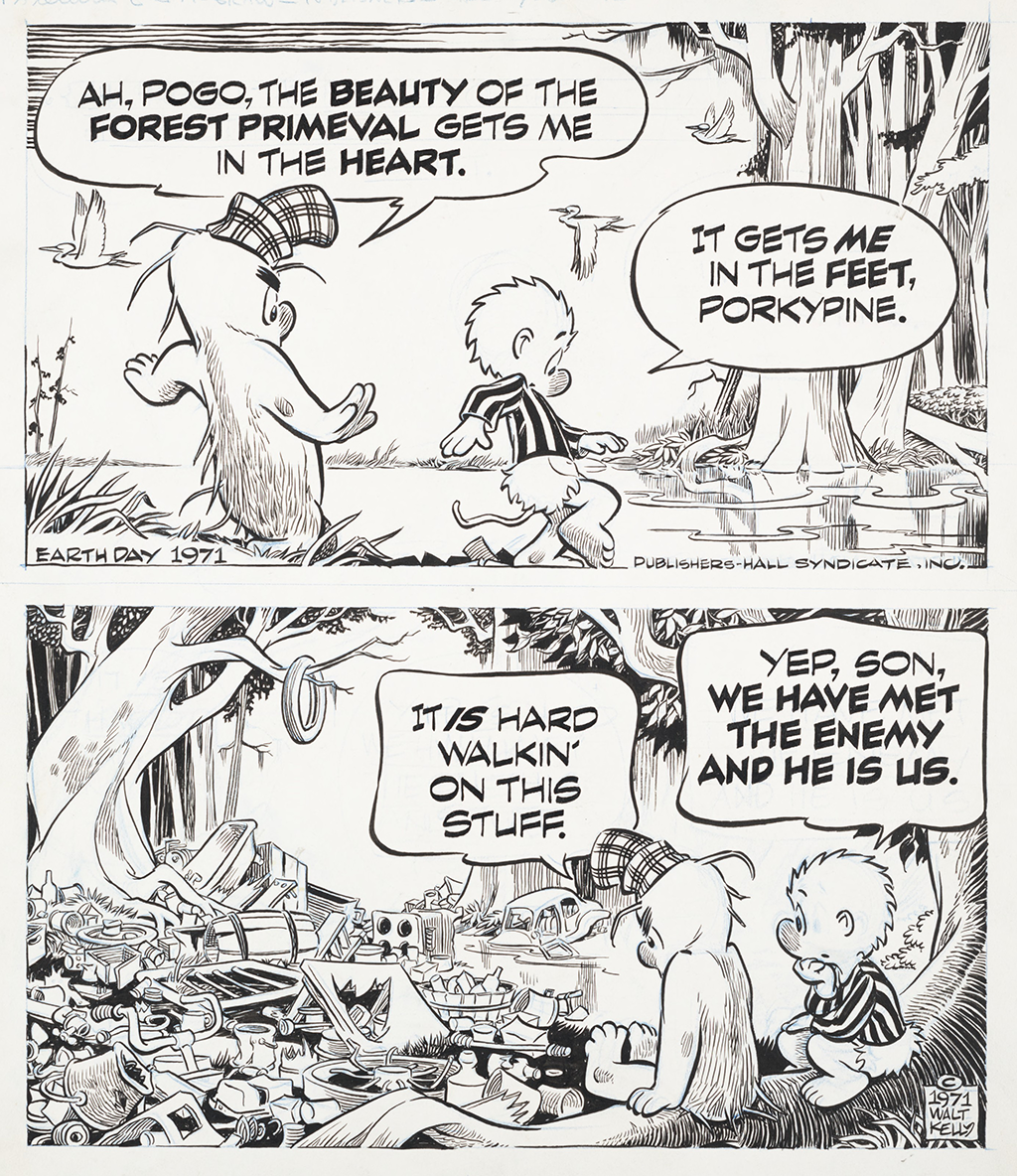
 Climate, technology and chaos Blog