Archive for the ‘Uncategorized’ Category

Comments on Legitimacy as a concept

October 19, 2021

I’ve never been that fond of legitimacy as a concept, partly because it often seems too simple to deal with really complicated situations. The idea of delegitimation processes being mutually connected with legitimation processes, and shaping each other, improves the situation, but perhaps not enough.

Let’s look at some obvious points.

Legitimacy, complexity, process and struggle

Legitimacy is a social phenomena.

Hence Legitimacy is a complex phenomena:

  • It occurs in complex systems and is nearly always dynamic, and possibly unstable.
  • Complex systems tend to stay in equilibrium, but they can change rapidly, perhaps coming into new stable states, that may not be an improvement for all dwellers in the system.
  • Possibly small events can have large consequences, especially if repeated.
  • Unintended consequences are normal. Attempts to impose order generate chaos etc… What is thought to produce legitimacy for a thing/process may weaken its legitimacy. Legitimacy can be risked by enforcement. For example, enforcing fossil fuels destabilises the system, which may destabilise support for fossil fuels.
  • Producing legitimacy, or delegitimacy, is not just a matter of intention, but of mutually influencing factors and forces.
  • It can be hard to draw boundaries around legitimation struggles – they spill over into other ‘factors’ – such as cosmologies, customs, habits, politics, group relationships and identities, economics, ecologies, etc.
  • The course of what happens can depend significantly on the context – or supposed external factors and vice versa.
  • Sometimes with complex phenomena you have to proceed by listing the factors involved so you don’t forget important forces.

Legitimacy is not a noun or thing, it is more a descriptive adjective applied to a thing/process.

There are degrees of Legitimacy/illegitimacy which can be attributed to a thing/process. It is not just on or off.

The attribution of legitimacy involves a process, a struggle.

Legitimation struggles often imply de-legitimation struggles, as some other factors have to be delegitimated – the success of fossil fuels require renewables to be inadequate or hindered, and climate change to be exaggerated. Legitimacy and de legitimacy often come together and shape each other.

Institutions can be fractured and this can affect legitimacy. There can be legitimacy struggles within institutions.

Attribution of legitimacy may not be uniform in society, any more than ethical norms have to be uniform. These differences can drive legitimacy processes.

Legitimacy and Ethics

Legitimacy of a thing/process seems related to ethics in that establishing or demolishing Legitimacy often involves ethical arguments. It is possible that arguments over whether a thing/process is legitimate form a subset of ethical arguments, or that ethical arguments are a subset of legitimacy arguments. We could allege ethics is about the legitimacy of actions, thoughts, existence, relationships, behaviours etc…

Ethics is not only revealed in dispute, but ethical arguments can be irresolvable, so ethical disputes can end up being temporarily terminated by deployment of violence (preferably a violence with some support and acceptance [legitimacy], such as courts, law and police), or some kind of magical terminal category. I suspect the same is true of legitimacy arguments. When the violence is used or legitimacy asserted then it can risk being challenged.

Ethics seems to involve

  • Context – events and framings, what provokes the debate, how the events are understood.
  • Cosmology – how the world works and what ethics, or legitimacy/delegitimacy delivers.
  • Custom and habit – what is done gains ethical force, and ethical legitimacy, up to a point.
  • Doing what other people that a person identifies with, or whose category they are put into, may do… Do what others do.
  • Political relations between groups – social category theory makes predictions here
  • Justification or criticism of what people are doing. Often justification can apply to oneself and one’s group, and criciticism to those in outgroups. The aim can be to persuade people ‘you’ have behaved legitimately, or that ‘others’ have not.
  • Enforcement – ultimate resolution of debate by force, or threat of force, or punishment
  • Exclusion – of some people from ethical debate, by saying they are inadequate etc., eg it seems common to allege young children, slaves or people not of the same monotheistic religion, are not capable of ethics or of deciding whether a thing/process is legitimate.

These factors also appear to affect legitimacy: they can be called ‘framings’ or ‘contexts’ for the struggle.

Legitimacy/delegitimacy: Support, Acceptance, Indifference and Rejection for a thing/process

When we talk about the adjective of Legitimacy we may also be talking about several things, that compose it, apart from ethics.

For example: Active Support, Passive Support, Acceptance, Indifference, Reluctance, Active Hostility and Rejection (you can reject something without being actively hostile to it)

I propose to replace the single legitimation-delegitimation continuum, with two intersecting continuums:

  • Support – Rejection
  • Acceptance – Active Hostility

The central point can be called ‘Reluctance’ or Indifference

This graph allows us to specify that ‘legitimacy’ may involve acceptance and indifference, as much as it involves support. The graph could help prevent people from thinking legitimacy is just one thing. We could guesstimate plotting places for various different groups, to give some idea of the social complexity around a thing/processes’ legitimacy levels, and investigate (and possibly predict) what alliances are possible.

It also suggests a range of paths of transition towards support or towards rejection. Some of this can involve belief about legitimacy, but some of it does not – it may involve a disposition or a set of habits.

Indifference does not have to be on the path to rejection or support. Indifference can theoretically translate into either tacit acceptance or tacit rejection, so it may be less useful to replace this with a single continuum of Support / acceptance / indifference / rejection.

We realise that cumulative small events can trigger instability in the legitimation system, and alter it significantly. The question may be to find those causes of equilibrium stress.

The point here is not to present something entirely accurate, but something better, that hopefully points in more useful directions for this area of study, which allows us to ask better questions.

The Business Council of Australia: Legitimating climate action?

October 18, 2021

This is part of the Change in Legitimacy in Australia argument, but got a bit too long for that. It at pretty low level of analysis. But the point appears to be that the context of legitimacy struggles in Narrabri, and Australia generally, are changing for business. The Business Council of Australia, after a long period of climate action refusal, has issued two booklets on business climate action Achieving a Net Zero Economy and Sunshot: Australia’s opportunity to create 395,000 clean export jobs. The first is described as:

a blueprint to achieve net-zero emissions and position Australia to reap an economic dividend of $890 billion and 195,000 jobs over the next 50 years….

“We believe Australia can achieve a more ambitious 2030 emissions reduction target of between 46 to 50 per cent below 2005 levels.

Achieving net-zero with more jobs and stronger regions. BCA 9 October 2021

This is a major change, and challenges the Federal Government’s (and the Opposition’s) lack of 2030 targets. However, in the official blueprint they point out how important fossil fuels are for exports, and still have about 20% of total energy production coming from fossil fuels by 2070 [1] p.33. So to achieve net zero, the plan needs a lot of new and working offsets or working CCS which seems improbable. It would appear they are ignoring carbon budgets, or hoping accounting can balance real emissions. The Business Council has also announced support for the NSW Government targets and their:

detailed, investment driven plan that accelerates the deployment of proven, commercial technologies to reach this ambitious goal…

Regional NSW is set to be a net beneficiary from the more ambitious target as the plan delivers renewable energy zones and hydrogen hubs to boost green manufacturing in regional centres

NSW emissions target backed by action. BCA 29 September 2021

Narrabri is not in a Renewable Energy Zone, but that might be an opportunity, as it is not constrained or as open to corporate takeover. The Business Council is, not surprisingly, not a promotor of community energy or cooperative energy. Finally, in the second booklet, they argue that:

Australia could create 395,000 new jobs and generate $89 billion in new trade by 2040 through investment in clean energy exports….

[Australia needs] a new energy transition authority with representatives from government, industry and unions to manage the disruption to regional economies and workers dependent on carbon-intensive industries

Sunshot : Australia’s opportunity to create 395,000 clean export jobs. BCA 14 October 2021

This is also pretty surprising, as the Business Council is not normally in favour of unions anywhere, and it is talking about ‘transition’. As the Australian Financial Review remarked:

As absolutely no one has failed to notice, this shift in economic analysis comes three years after it labelled a slightly more modest proposal from the Labor Party as “economy-wrecking”.

Robin. Macquarie is green with a side of coal-seam. AFR 10 October 2021

On Sky News Jennifer Westacott, chief executive Business Council of Australia explained the change:

The facts have changed…. three years ago energy prices were going through the roof and now they’ve stabilised..

Secondly, the markets have moved, over 50 per cent of the ASX is committed to net zero targets. Businesses are moving dramatically. You’ve got giant companies like BP and Shell committing to net zero. You’ve got companies like Fortescue Metals, you’ve got Rio Tinto, BHP, BlueScope – all reducing their emissions at a really rapid pace. 

[Thirdly] three years ago, the US had pulled out of Paris, and now they back in but they’re back in with a higher target. Japan has got a higher target. Canada has got a higher target. And we have always said you’ve got to calibrate with what the rest of the world is doing. 

We’ve now got a technology roadmap [cf here; comment here] we didn’t have one of those before.

[The BCA supports] the safeguard mechanism… it’s a clever mechanism, it puts a cap on emissions. And we’re saying, we agree with the government, you’ve got to do this through technology. 

our plan is basically saying; use the government’s existing mechanism to drive those new technologies, to bring forward the early action. The safeguard mechanism which has been well-used by business now, well-respected mechanism. That’s the government’s mechanism. And the point is, if we want to get this done through technology and we don’t send some kind of signal or take too long, if we take too long we add a lot of risk later on. 

Jennifer Westacott interview with Laura Jayes, Sky News AM Agenda. BCA 11 October 2021

I’m not sure if Westacott is implying that if the US retreats from targets or COP fails then they will also retreat from targets, basically the justification seems to be everyone is doing it, we emulate these people, and acting is pragmatic. Behind this, probably lurks the fear of importing countries penalising Australia for inadequate targets or policies through rules such as carbon tariffs [2] [3], [4], [5], [6].

Clearly one rhetorical technique is to praise the government here, and align the Council’s apparently radically different policy with “business as usual”. The “safeguard mechanism,” also known as the Emissions Reduction Fund mentioned above, seems to be a voluntary mechanism for large operators, to pledge to reduce emissions from a “baseline”, and receive a taxpayer funded subsidy to do so. If they go the wrong way and exceed the baseline, they can apply for more time, a change in the baseline, or an exemption. Even an official government website says:

This significant level of flexibility which allows baselines (or GHG emissions limits) to be readily adjusted has led some critics to question the effectiveness of the safeguard mechanism and whether it will achieve its aim of ensuring that emissions reductions purchased through the ERF are not displaced by rising emissions elsewhere. The same critics claim that the safeguard mechanism ‘gives the green light’ to increase greenhouse emissions to some enterprises.

Australia’s climate safeguard mechanism Parliamentary Library 3 December 2018

[see also Reputex]

While the Business Council appears to choose the easy way forward in that it supports an inactive Federal Government and pretends the government is active, rather than risk standing up against it, this is fundamental change, even though the BCA has tried to appear as if they have always supported climate action, they have previously retreated. They have also supported using Kyoto carry-over credits to meet Australia’s emissions reduction target, which is supporting fake emissions reduction, and have had an Energy and Climate Change Committee which included representatives from Origin Energy, Orica, Santos, BP, Ausgrid, Chevron, BHP, Caltex, Shell and ExxonMobil. Cynics may expect a similar result this time, or that they will shift support to nuclear. They will certainly be attacked for this new position. However rewriting an organisation’s history is, in some ways, a recognition of where they should have been, and a resolution of cognitive dissonance.

It still indicates context is changing – whether the change is reinforced or not by the actions of others, is another question.

More

A few days later the ‘Climate Leaders Coalition‘ a board linking 32 major Australian companies including BHP, Coles, CBA, Citibank, Deloitte, Fortesque Metals, Microsoft, Qantas, Rio Tinto, and Santos, claiming a total revenue of $305 billion released a document entitled Roadmap to 2030: Shifting to a Low Carbon Future. This also indicates significant change. However, again they fall into the problem of methane fuels, and allowing gas companies to pretend that storing CO2 at the point of production somehow will act as an offset and reduce emissions from gas burning – which of course it will not (cf p.43). Any gas being burnt without the CO2 from the burning being caught and stored or used, is contributing greenhouse gas emissions, especially if coal is not being shut down. This seems to be in conflict with earlier principles they elaborate.

Legitimation and Delegitimation struggles

October 15, 2021

Introduction: Characteristics of Legitimacy

Legitimacy is an awkward subject, because it does not exist by itself, it exists in a series of potentially shifting cosmologies, customs, relationships, contexts and struggles. Legitimacy exists within complex systems, with all of the problems involved in analysing those systems.

Legitimacy is not really a noun or a thing in itself (that usage leads to significant problems), it is a descriptor – some thing, practice, process, institution, custom, series of events or group of people (henceforth abridged as ‘thing/process’), has gained some kind of ‘legitimacy’ somehow or other, and that legitimacy probably varies throughout society, throughout different groups, and probably has to be maintained in someway.

Early studies on legitimacy tended to focus on powerful organisations such as the State. In this case legitimacy essentially meant the ‘right’, or ‘rightness’ of dominant people to be accepted in their dominance. This implies that legitimacy is a moral or political question, inherently associated with ethics – in the west of rights, or of God’s will. The democratic move of the early 17th Century was based on the idea that at least some of the ‘ordinary people’ being governed should have to consent to the governing for it to be legitimate. David Hume, went as far as to imply the fact that the governing existed meant there was some consent, even if there was only the consent of fear and imagination, otherwise no one would follow the instructions, and the thing/process would fall apart. The consent of imagining implies some precarity in the legitimacy of any institution, thing/process etc.

A thing/process’s legitimacy may not always have an on/off switch, and may only rarely be agreed to by 100% of the affected population; as such it always carries the possibility of contestation. We may need to recognise that what we call a thing/processes’ legitimacy can always be partial. Perhaps this can be indicated by using some more complicated term like ‘degrees of legitimacy’, or ‘ratios of legitimacy,’ even if these degrees may be impossible to measure.

More recently, a thing/processes’ legitimacy has been perceived as form of ethical/political struggle in which a process, thing, or series of events, is made ‘legitimate’ in the sense it has (enough) significant support, or lack of hostility, which allows it to function. The support, lack of significant hostility, or acceptance, seems important.

It is possible that a group’s legitimacy to rule, may not be agreed to, by the vast majority of the population, but the group claiming legitimacy holds effective violence or is ‘supported by’ social inertia – people can’t be bothered to get rid of them, or the authority is perceived as irrelevant in most cases. The authority of the dominant group does not necessarily rely on a positive belief about that group, or even that something is so, for most people. The claim of legitimacy may be a claim that tries to make a belief in legitimacy, but is ignored. Legitimacy may only matter when it is challenged.

People can adapt to events (reluctantly), rather than overtly resist them, so these events may again have little ‘legitimacy’ (in the sense the term is usually used) for many people. The thing/process is an expected order rather than an accepted or supported order. Legitimacy might then appear to be habits, or simply ‘imagined order,’ even if the promised order is yet to arrive, as with communist or capitalist utopias.

That could mean the process has tacit acceptance to a degree. Analysists might try to remove tacit acceptance from questions of legitimacy, but that is reducing the complexities, and factors around the struggle. I’m suggesting that we recognise those variations, and avoid the idea that the legitimacy of something is a positive belief about that something, but more a lack of effective challenge at the moment, or a relative confidence the thing/process cannot be challenged usefully. Defining legitimacy as a belief that something is legitimate is not very helpful, (I’m not even sure legitimacy is a concept widely used outside of sociology and politics) but it might be possible to say more if we think of it as depending on many factors some of which may be beliefs and some of which are not. Another way of expressing this might be to state an organisation has a high degree of legitimacy if there is no obvious or effective deligitimation.

Finally, institutions and processes etc. can become sites of power struggles and conflict themselves; they do not have to be uniform, or simply an abject tool of one class alone. Culture, information and ‘legitimacy’ does not have to be uniform within organisation, and this lack of uniformity can imply gaps of comprehension within that organisation, the generation of fantasies to explain the gaps and recognises some of the dynamics of change, not only because of internal conflict, but because of the possibility that external actors can insert themselves into the struggle.

While it may be useful to separate out legitimation and delegitimation practices into ‘discursive’ (spoken and written), institutional, and behavioural as do Bäckstrand & Söderbaum 2018, the reality is that these cannot be separated. Discourse practices are behavioural, and institutional; institutional practices are discusive and behavioural and so on. Behaviour is also a huge term, including regular customs and habits, violence, emulation, acting relationships etc….

Legitimacy, Ethics, Delegitimation

Legitimating of a thing/process, like ethics, involves a struggle to appear persuasive, right, virtuous, inevitable, effective and so on. Like ethics it affects, and is affected by: cosmology (whether it fits with the supposed working of the universe); is a familiar or established custom (that fits in with the cosmos or not); copying valued others; whether it allows whatever is considered ‘normal politics,’ and the supposedly ‘real’ relationships between groups to function – the strongest dictatorship is not without internal politics. Likewise the context of the debate is important to give it meaning, or limit the range of possibilities. Legitimacy can also be enforced by power relations, by law as a symbol of power relations, and sometimes by violence or threat; To establish legitimacy, powerful people may try to render other plausible actions illegitimate, they will certainly exclude some people from real power. Although, if an organisation’s legitimacy appears to depend only on violence, it may also, in some circumstances, appear illegitimate. Like many other processes, what is used to attain it, can also undermine it. However, domination can appear legitimate, if it survives long enough. Yet again, if a group is growing in power, the systems that ignored it or held it down, may look increasingly illegitimate to that group and others, or the groups can be deceived and pull things down in a way that further disempowers them. Like ethics a change in context can change a thing/process’s legitimacy for some people.

To repeat, the existence of ethical positions in a society, does not imply uniform norms throughout society and so we cannot appeal to these overarching norms as explanations for legitimating activity or degrees of legitimacy. Likewise ethics do not assume everyone has the same beliefs. That some thing/process is present and accepted, may create any widespread norms, rather than be justified by them.

The recognition of, or achievement of, the appearance of degrees of legitimacy by a thing/process, implies the possibility that it’s legitimacy may be challenged. Further, some of those degrees of legitimacy are risked every time it is pushed, stretched or fails, or it could be open to destabilisation, from either (random?) ‘internal’ or ‘external’ events. Motion is not an addition to a ‘normal’ stasis or equilibrium. Processes are always in flux, and always have the potential to be self-undermining.

Legitimating activity may depend on ‘something’ else being declared illegitimate or unfavourable. There may be no binary, or dialectic here, with processes simply being either legitimate or illegitimate; they may have both characteristics in different degrees for different parts of society – making appeals to different groups. We may need to think of (de)legitimisation processes as intertwined and shape each other (Bäckstrand & Söderbaum 2018, Uhlin 2019), while recognising what it is that appears legitimating for one group may appear delegitimating for another.

The possibility of ‘de-legitimation’ comes with legitimation itself, just as the possibility of ‘mis’, or ‘dis’ information comes with ‘information.’ Legitimising and delegitimising agency may be anywhere in society, although clearly the greater the power, wealth and control of information, the more likely the agency will have effect up to a point – that is that the powerful people making the legitmation case, are themselves considered legitimate, or they do not understand that the arguments they think are persuasive actually delegitimate themselves in the eyes of their audience. Legitimation and de-legitimation struggles seem likely to shape each other, as legitimacy of a thing/process implies something else is not as legitimate.

Social Category theory

Social Category theory suggest that the social groups associated with thing/processes can be categorised in ways which help legitimation and delegitimation practices. These groups are classified in relationship to other groups people identify with or against. This schema is based on Bar-Tal 2004, with a few other practices added. The point is that legitimacy and illegitimacy can be generated by separating people into opposed categories.

Legitimaton (identification with) ***Delegitmation (identification against)
The people tied in with this thing/process are just like us in many ways. They are individuals and people.The people tied in are inhuman or subhuman, they are completely unlike us. They are all the same. They are not really people.
What we consider positive traits are attributed to the group, if possible as essential parts of their beingWhat we consider negative traits are attributed to the group, as essential features of their being
The people tied in with this thing/process support our group’s norms and customsThey violate our group’s norms and customs
We class them with other groups we feel positively towards. We are roughly equal partners.We class them with groups we feel negatively towards. We have little in common.
We have shared history and shared struggles, supporting each otherWe have a bad, or conflictual, history.
They support us, or work with us, or for us. We defend each other against others.They are persecutors. They use violence or deceit against us.
We rightfully exclude similar people who oppose usThey wrongfully exclude us.
Raise ‘positive emotions’, warm feelingsRaise ‘negative emotions’ anger, digust etc.
They fit in with our cosmologyThey attack or disrupt our cosmology
Golden politics most of the time – things are going in the right direction, everything will be wellIt is easy to use Shadow Politics against them

Once this process of separation and opposition, gets going, it maintains and intensifies a context of lack of discussion and mutual attack, which magnifies the ill feelings the groups have towards each other – this can then be magnified by media – which gives people a shared experience of attack and name calling.

Institutions

Institutions are social groupings, composed of social groups, with specific kinds of tasks. Institutions often, but not always, help group people together while excluding others. They support particular behavioural practices – not necessarily for everyone equally. As such they provide some ground for the behaviour which needs justification and thus produce ethical ‘systems’ (systems here does not imply the ethics has to be systematic. Institutions also provide targets, if people can be persuaded that their ethical/behavioural system is not ethical, or they do non-acceptable things, and they are too weak to respond, or they over-respond, then they have degrees of illegitimacy. I’ve already suggested institutions do not have to be places of harmony, they can be places of struggle in themselves – this can make make them legitimate as people can see their interests represented, but it can also make them appear vulnerable, or incoherent. To the extent that institutions issue guidelines, they can also dismantle guidelines. Institutions which focus too much on internal conflicts or the acquisition of internal benefits can be very bad at adapting to changes in the ‘external world’ and thus delegitimate themselves through failure to win people over, or through practices which have become destructive.

Example: Delegitimising US Government

Legitimacy of a process (etc.) can be precarious and subject to quite rapid change. It was probably inconceivable, 2 years ago, that US election results would be widely disbelieved in the US, with the concurrent assumption that not only was the election illegitimate, but the Presidential results, and hence the Presidency, are also illegitimate. This suggests relatively high degree of legitimacy can be broken by political struggle. How broken it is, we cannot know in advance, and still do not know, but it is not looking good.

Increasing the degree of legitimacy of Trump’s claims requires the delegitimating of Biden, his party and the electoral system, while delegitimating Trump only require delegitimating him and his party, so the shock of delegitimation is even greater. But the struggle involves a lot of delegitimating of both ‘sides’, which adds to the legitimacy problems of the system, and hence reinforces the Republican position.

Supporters of the ex-president, assert both a) the moral superiority of Donald Trump over the ethical integrity, or legitimacy, of the whole electoral system, and b) their victimhood to the established system which therefore has to be challenged. To those on ‘any other side’ such an assertion seems ridiculous, but it clearly appears likely to be accepted by a significantly large number of voters in the US and elsewhere, and almost certainly cannot be ignored with impunity.

In my experience, social categories worked pretty much as we me might expect. Democrats and Republicans rendered each other subhuman with attributes like: stupid, can’t think for themselves, easily deceived by their media, hypocritical, oppressive, selfish, sneaky, anti-American, all the same, riotous, oppressive, destructive and criminal. On top of that Republicans classed Democrats as communists and fascists, and Democrats classified Republicans as fascist. Discrediting all the people involved discredited anything the others did, and the system involved – the electoral system was seen by many Republicans as part of the Democrat machine, with the characteristics they associated with that machine. In this view, nothing was independent. You were either for them or against them.

Mutual participation does not mean both sides are equally to blame for the situation, but it does mean they are participating in the system of collapse, and helping to intensify the separation.

The events also shows that evidence, and argument do not have to be coherent, or detailed, (especially when the category moves are in play) for them to have an effect in some circumstances. The overwhelming, and growing, affective truth of the feeling that ordinary people in the US have little input into their government (are victims of the system), threatens the legitimacy of governance processes – the fact that Trump is called out as illegitimate, may only add to the effectiveness of his claims, as he is being pronounced illegitimate by a system which is losing legitimacy – and is felt to be oppressive which, in turn, delegitimises that governance in terms of US cosmology.

The context of the power struggles over government in the US has also changed over the last 20 years.

  • Corporations have become more dominant (because of wealth appropriation, and legal rulings magnifying corporate rights and political purchase) and ‘ordinary people’ have become more excluded through that extension of dominance producing a kind of ‘distant dominance‘.
  • Governments have repeatedly failed to solve the growing problems of life, or include people in the governing process.
  • One party has consistently argued that governments cannot do anything useful and everything should be left to business and The Market, reinforcing the above two points, increasing corporate power and decreasing governmental competence or ability to reach out to the people.
  • The information ecology has changed radically, meaning it is harder to create community unanimity. It is also easier to manipulate people, create antagonistic information groups fueled by anger against ‘the others’, to keep revitalising positions with little real validity, and to add unspecified power to allegations the internet was involved in the fraud.
  • The economy, life and ecology have also become more precarious, partly because of corporate dominance and the pursuit of destructive methods of producing order and power.

All these changes in context, threaten established habits, customs ways of life, and the sustainability of the dominance which has created these conditions. This change possibly renders even extremely mild challenges to corporate power, like Joe Biden and the Democrats, something that has to be de-legitimized to keep that power going. So powerful people throw their weight behind it, sure of their ability to ride the waves, something which they probably would not have been risked even 20 years ago…

Not only is the power struggle different, but the implied rules around what is permissible in power struggles have changed, and the context of struggles have changed. Results granting Presidency to one party have become delegitimised, and perhaps the whole system will come to share that fate.

This is a risky game for the Republicans, as their own legitimacy is challenged in the process but, from my position, it seems plausible to assert that when they win, which they almost certainly will through stacked elections, vote prevention and threats to those who proclaim results they don’t want, they will attempt to enforce legitimacy through violence, threat and law (engaging in shadow politics), while proclaiming this violence is supporting liberty for their followers. This will probably render the system even more doomed, as it will suppress responses to real challenges, or even the recognition of real challenges.

Legitimation/Delegitimation Struggles and the Fossil fuel Industry

A similar dynamics could apply to fossil fuels. Their legitimacy is not only dependent upon a perceived need for cheap customary energy and exports, but upon the dominance of parts of the corporate sector, and a degree of ‘invisible violence’ – ignoring court decisions when appropriate, changing the law to allow continuance, changing regulation to make alternatives difficult, poisoning locals, disrupting or destroying ecologies, increased penalties for protest etc.. This legitimacy could theoretically slide as quickly as that of US elections, although established dominance is probably largely on the side of fossil fuels and profit at any cost. However, the gorwing explicitness of this siding may undermine the appearance of legitimacy, and other corporations may wonder about their survival and change sides on this issue, as with the Business Council of Australia recently going for emissions targets that 2 years ago it said would destroy the economy. Whether the announced change of the Murdoch Empire’s position in Australia is real, a smokescreen, or an attempt to minimise action, will be seen with time, as was their last supposed change.

One of my colleagues, pointed out that delegitimation is part of the process of change, not just when climate change, pollution or health issues, are used to delegitimate coal and gas in Australia, but in India. sometimes people will come in to villages to attempt, actively, to de-legitimise old modes of life, as when Indian villagers are told not to use cowpats as fuel. Unintended consequences may be generated (what happens with the cowpats, now?), which then become part of the process, and disrupt it.

To reiterate, legitimate/illegitimate does not have to be an exclusive binary. Coal can appear to be part of the expected order and to disrupt that order, and it is this ‘paradox’ that allows questioning to be generated. Going off coal will likely disrupt the expected order and legitimate order for some people. Saying, to those people, we have to change our lives and get off coal, merely proves this disruption to those people.

Legitimacy can also cause people to ignore vital factors. For example, renewable energy is absolutely necessary for transition away from a destructive system, but where do we get the energy to produce all the renewables we need on top of the energy we need to continue life as it is?

We can only survive, should that be an ethical goal, if we reduce energy usage considerably and quickly.

The Next part of this series discusses legitimation issues for Fossil Fuels in Narrabri, a country town in NSW.

Ethics and undecidability

October 13, 2021

I shall argue that ethical questions are vital but fundamentally irresolvable and so the questions become:

  • How do people build and reinforce an ethical system?
  • How does, or to what extent does, that system affect human life?
  • How can we change social ethics?

Social importance of ethics

Let me posit that humans like to be regarded by themselves and others, if possible, as ‘good people’ no matter how ‘good’ is socially defined. A Viking’s idea of what makes a good person, might be radically different to that of Mother Teresa’s, and ideas of goodness might differ in a society with a person’s gender, social role, age and so on. There may be no coherent set of ethical positions across different groups in a society. However, being recognised as socially ‘good’ by some others, often builds status, privilege, trust, influence and sometimes power. Being recognised as ‘not-good’ may increase distrust, fear, the threat of exile and so on.

Sometimes what is socially good, is built up in opposition to a supposed mainstream – thus a ‘good’ criminal (as defined by others), might see themselves as tough, competent and clever, despite the mainstream seeing them as bad. Perhaps they claim to see the reality of human life, while other people are hypocrites.

Arguments about politics, decisions about courses to choose in life, seem frequently underlined by claims that the decisions and positions involve ethics. Even if people can be accused of hypocrisy, they are still making some kind of ethical decision, deciding that the decision they make is the best one, that it is a decision they should be able to live with. So we can still suggest they are being ethical, simply that they perhaps do not expect others to approve.

Ethics is complicated, and hard to demarcate, and understanding ethics seems complexified by several factors such as its lack of a non ethical basis, its connections to cosmology, its connections to group identity and politics, its connection to custom and habit, and finally (but permeating everything) its connection to context.

Lack of basis for ethics

Firstly, it seems there is no basis for ethics which is not an ethical statement which foreshadows the ethical argument that will proceed from it. In general ethical arguments do not have appeal across different forms of ethical arguments, and there seems no way to avoid this problem, despite the apparent importance of ethics for human identity.

For example, if we say it is good to behave in the same way in all situations (the so called “categorical imperative”), that itself is an ethical statement, which can be denied by other ethical arguments such as the assertion that it is our duty to behave with respect to the situation in its particulars, and not suppress those particulars in the general (what is sometimes called “situational ethics”). I would suggest we almost always categorise human events as situations similar to others, because of our intentions. We may want to classify an event as ‘bad’ or ‘excusable’ because of circumstances and context for example – is a killing murder, self defense, occurring in war, ‘crime of passion’, provoked, accidental etc…

Even something as apparently straightforward as acting to preserve the survival of as many people as possible, is already an ethical decision. Other ethical systems could suggest that humans do not necessarily deserve to survive, or that the population (usually of other people) should be culled, or that only elites, or true believers, like us (whoever we are) deserve to survive, that survival should be determined by contest, or that or that material survival (as opposed to gaining spiritual wisdom) is unimportant, and so on.

There is no necessary agreed on basis from which to argue ethics, so ethical questions are always irresolvable, although groups who share similar ethical orientations may agree on the general principles.

If groups do not share some symbolic ethical orientation, then there appears no obvious basis on which different ethical positions can be resolved, other than by different groups resolving to live together irrespective of this difference, different groups splitting or hiding, or uniformity being imposed perhaps by total control of information or through violence. And these resolution positions may also be said to be ethical positions.

We might suggest that ethics is itself revealed in argument over what should be done, and what has been done.

I will argue that to study ethics in action and the way it is built, reinforced and changed, we have to look at the following kinds of factors, all of which help resolve or limit the undecidability of ethics:

  • Cosmologies (the way people and reality works),
  • Established customs or habits – what people do regularly and publicly is supposed to be good. on the other hand changes in custom or habit may make new habits become ethically good
  • Group identities and relations to other groups. A good member of a group appears to express group values.
  • The way group boundaries are constructed and the group is positioned in relationship to other groups.
  • Contest and power relations – the other group is always bad, what we do is good, or at least acceptable in the context.
  • Dominance can become a custom which justifies the nature of the dominance. If wealthy people dominate then wealth marks virtue. If religious people dominate that piety marks virtue. If warriors dominate then boldness in combat marks virtue, and so on.
  • Context, the surrounding events may well alter ethical judgement and decision making. Cosmologies, etc can be considered to be contexts

Ethics and cosmology

Ethics always states something about a person’s cosmology. By ‘cosmology’, I refer to the ways that a person or group, thinks (theorises) that people and the world or cosmos actually work, or the ways that people have to live to survive. Good behaviour should generate ‘good’ results (however they are defined), because that is how things are – even if the good results may manifest after we die. Thus if you think that obeying the written instructions of a God is the basis of ethics, that says something about your cosmology and the way you expect behaviours to be rewarded. If you think that behaving ethically will bring happiness, you may aim to increase happiness, in the way you think that works. If you think the world is a place of endless struggle, then you will probably participate in, and train for, that struggle.

There is, for example, some evidence that believing in neoclassical capitalist economics is correlated with more selfish behaviour. Which way the causality flows is uncertain (believing in classical economics generates selfish behaviour, and selfish behaviour reinforces a belief in those forms of economic theory), but it may form a positive feedback loop. The behaviour and cosmology reinforce each other.

Sometimes behaviour and cosmology may not appear to reinforce each other, but they still set off a particular ethical dynamic. For example may believe that God is both love and an eternal torturer, this may set off a dynamic of using torture and violence to express your love and concern – which may drive guilt which drives more torture and less love, and so on. Perhaps people eventually came to think that this message was inconsistent and this helped drive the decline in Christian dominance?

Custom and habit

Anthropologists who studied traditional people often expressed surprise, when they asked the people “why do you do this?” and received the answer “because we have always done it,” or “our ancestors did this.”

The point is that if some process is familiar it can seem that that is the way of the universe, or the way things work, or are. You may not like it (individually), but most people will go along with it, because that is how the world is, and perhaps little thinking seems required. Custom and habit suggest ethical acceptance, or else they might change. They reinforce cosmologies. If it is the custom to sacrifice your first born to the gods, then while you might have personal doubts, most other people in your group will support the action, and will probably try to make you perform it – perhaps to avoid the anger of the god. If it is necessary to find a job to survive, then getting a job will seem moral. If it is customary for the Aristocracy, or the wealthy, to rule, and they seem relatively good at ruling, then it will seem good that they rule. If people get married as a mark of maturity, people may seek to get married. If a society and its habits had depended on fossil fuels for a long while, it could seem immoral to try and change, and to risk those habits that have grown up around that technology – new habits might seem impractical, unpragmatic or just wrong.

A change in habit can produce challenges to cosmologies…

Ethics politics and difference

Ethics is always political and revealed in conflict, disagreement and argument. Politics usually involves some kind of ethical appeal, even if the appeal appears pragmatic, because in some views ethics is primarily pragmatic, but what is pragmatic is also an ethical decision. Whether it is ethical to run a country either by increasing corporate profit, benefitting the people materially, or keep the ecology functional, is a matter of ethics. People often justify what they want to do by an appeal to ethics, cosmology or politics.

As political, ethics can be perceived to be part of the social relations of differences between groups and their social categories and identities. This is a context in which ethics works, and social identities are constructed. Identities often come with ethical positions, in which it is implied that exemplary members of the category will behave in particular ways, and exhibit particular virtues. One obvious basis for ethics, is that everyone we respect in our group is doing it, so we had better do it. This seems to work because of the lack of a basis for ethics

People’s ethical judgment of the behaviour of people on ‘their side’ is often more lenient, and trustful, than it is towards people on a socially defined other side. A person who seems to be a good exemplar of the groups you identify with, will probably seem to be virtuous. A person who seems to exemplify, to you, the groups you oppose, will probably seem non-virtuous, or more prone to corruption and evil. Likewise, people can justify their group’s narrow political interests while claiming it is for the greater good, or the good of all. People seem to more easily see the bad in another group than in their own, or even invent that bad in the others through some kind of shadow projection. Social categories are important for ethics. Mistreating, or ‘mastering,’ some people of certain social categories may be a requirement of virtue

The way the boundaries between groups and social categories is constructed is also important, because empathy and concern is also strong between people who are defined as similar, and who can be put into a wider category. This is similar to the ways that Benedict Anderson suggested that Nations where constructed out of popular media; the media grouped people together as worthy of concern, as sharing the same stories and the same identity, so that distance was relatively unimportant. In this case, different people were constructed as different, but still belonging to the wider notion of the nature, and for some people of humanity. However, categories can be constructed as opposed, in which case the connecting empathy may be significantly weakened, or even broken all together. We can see something like this happening in the US. Once not that long ago, people who identified as Republican or Democrat could see each other as different, but also as fellow Americans who worked together for their country and who could co-operate for the greater good. That stage now seems over. Republicans see Democrats as evil hypocrites, and Democrats see Republicans as conniving and stupid people who deny reality. There has been almost no co-operation between the parties, except for a co-operation in name calling, hostility and building polarities, for the last 12 or so years.

As a result, the US is probably in danger of falling apart, or falling into decay. There is no common story and identity group cosmologies are growing apart. The split is driven by ethics, ethical identity and group relations, and seems to be becoming a custom or habit, and hence part of practical cosmology.

Context and Framings

We can define ‘context’ as the events around (or ‘framing’) a specific event, or which the event is embedded within. Changes in context changes the meaning of an event, just as a different context can change the meaning of a text, or anything else. Framings can be conscious or unconscious. Using the term ‘framing’ is meant to suggest that the context of an event, does not have to be ‘real’ – people can bring their own framings to an event, and different groups may have different framings, so they perceive and interpret what is happening quite differently. Cosmologies can provide context. Wide scale, or local, politics can provide context. Ecologies can provide context.

If the context involves charged relationships between particular groups such as a challenge to authority, then the condemnation of a person in the opposed group might intensify and the defense of a person in a supported group might also intensify. In a war, the side committing war crimes will probably ignore them, or defend them as honorable, or aberrations. If a custom is breaking down, then those who offend against it may be excuses or more severely condemned, depending on other parts of the context. If a cosmology changes enough then it may provide a context in which the old ethics does not appear to work or make sense. In the case I will eventually get around to studying, one important context is the relationship of Governments to fossil fuel companies – this governs a lot of what is easy to happen, and what is difficult to happen

It appears to me that the somewhat precarious role of coal at the present, because of climate change (a change in context and cosmology), has not yet rendered fossil fuels completely bad, but it does seem to render other people’s coal bad, and our coal ok – it is cleaner or something.

This is one reason why it seems important to fossil fuel companies to deny climate change, deny human responsibility for climate change, find a model of the world in which burning fossil fuels is not harmful, or fantasise about technologies which would fix the problem, but don’t exist yet.

The problems of socially defining and enforcing Justice (which is an ethical position), particularly across culture and rivalrous nations, may make climate justice arguments ineffective in promoting climate action.

Conclusion

This suggests that ethics arises in making (or justifying) decisions, in conflict over those decisions, in supporting or criticising established behaviours, and within power relations. So ethics enters into human life and politics almost immediately. A wide view of ethics could easily suggest it is central to human life and to human identity.

All of the arguments above means that ethical argument may not be persuasive to others, unless you use their form of ethics and are a member of their social group, and perhaps not even then. In general there seems little to resolve ethical struggle, between people with different ethics and different ethical identities, other than violence, threat of violence, exclusion of people from discussion, or apathy.

However, ethics, in practice, seems more social, contextual and political than absolute. It may be that pointing out the incoherence, or changing the contexts, customs and cosmologies of ethics, or perhaps pointing to exemplary people in the group being targeted who are slightly closer to the desired position, is more significant than attacking the basis of the ethics.

More Diamonds: Diamond Points: 4-7

October 3, 2021

Continuing from: More on Diamond’s first three points

And I’m still not past the first chapter….

The Next points

Diamond point 4) Get Help from Others

I’ve already mentioned the probable need to team up with others, talk to others, get fresh perspectives, and support (preferably mutual). Other people or nations, can perhaps lend (or gift) you resources for a time. Humans are social animals, the more ties the better (in general – introverts may disagree, but it still helps). Your own view of yourself, may not be that accurate, you need those fresh perspectives, and you gain more power, competence and effect working with others – provided you don’t try and set up a hierarchy. Cooperation magnifies effects.

Possibly important here: “good communication is only possible between equals”.

However, choose your helpers wisely. If you choose the wrong people, you can end up losing power and competence. You can end up in a restricting and harmful cult, which appears safe. Getting help is a risk, like most other choices, but if you are already sliding downhill you may need to take that risk.

It is probably worth bearing in mind, that many possible solutions may produce new problems, lead to new hazards or new dead ends, yet staying where you are could also be lethal. Continual awareness, and openness to change, is needed….

Diamond point 5) Other People as Models

Other people and other countries may have faced similar problems. You can perhaps learn from them, and learn to emulate them, or at least gain some hope from them. So again you can talk to others, team-up with others, or read about others. Part of the point of Diamond’s book is to learn about countries which have faced problems, and learn from their successes and mistakes. Many people I know have found Jung’s Memories, Dreams, Reflections useful in their personal lives. It certainly opens up possibilities which are not normally perceptible in Western society.

The problem is that some of our current National problems may be unusual. We don’t have, as far as I know, many records of places which have survived ecological collapse or massive changes in climate. If you know of any, then please indicate them in the comments section, and I’ll lift them up here, with acknowledgements.

Another problem occurs when we choose a bad example to emulate. Lots of people embraced neoliberalism, because powerful nations did. It rarely helped them solve all their problems.

Diamond Point 6) Ego Strength/National Identity

This is a point I have problems with, because to me, ego derives from what you are aware of, as produced by the theories, culture, conditioning, habit and experience you have had. The ego is a form of directed consciousness, with accepted ‘truths’. This idea is supported, so some extent, by Diamond comparing ego-strength to national identity, which I guess can be thought of as, what a dominant portion of the nation thinks it is like and what that dominant portion of the nation thinks its members share. Ego is absolutely necessary, but it is also a restriction.

My guess is that ego-strength is very useful if the problems are not complex and do not require big changes, but this does not mean it is always useful, or always non-destructive. For example, national identity can be both delusional and a source of problems, and may need to change. For example, if Germany, Japan or Italy had kept their ‘fascist,’ or militaristic, identity (yes Japan was different, but there are enough similarities) then they could not have adapted to the post-war world at all – they would simply have gone on damaging themselves, or provoking others to damage them. If a nation has constructed an identity around ‘race’ and national kinship, it is probably going to have internal fights and commit crimes if its leaders want it to be ‘pure’. The nation is going to consume energy which could probably have been better spent adapting to its new world. Similarly, if a person has constructed an ego around the idea of them being useless, exploitative, or always correct, then they don’t want more strength behind those ideas; they may need ego opening, not ego strength. They probably need some flexibility or flow, not more ego strength.

“Self pride” in an identity may mean that you are unlikely to change, or adapt, or even see the problem. Pride implies staying the same, or even disparaging others and refusing to learn from them.

As another possible example. If national or personal ego is invested in ‘free markets’, or fossil fuel use, then it may be close to impossible to face climate change because, these factors are part of the probable causes of climate change. Facing climate change may mean impacting fossil fuel companies and fossil fuel use, ‘harmfully’. However, keeping the ego strong may mean not abandoning these positions ever, as abandoning a fundamental value seems weak, and on the other side, they may have no belief that anything can compensate for a lack of fossil fuels or free markets. Being open to fossil fuel use, and what people call ‘free markets,’ needing to be changed, requires the ego to be open to alteration, and that is more than just ego strength – even if it is a form of strength.

The ego that has grown to produce a problem, may not be the best place from which to overcome the problem.

However, while ego-strength may not always be worth while; it is certainly correct that giving up, apathy, or hopelessness (in everything) also seem harmful. So a person or a nation might need to have a capacity for resilience, for recognising something beyond mere identity, a capacity to keep on going, to keep learning, to keep focused, and to discard ideas which are harmful to themselves and others, or which are now useless. That is, they may need to change conscious, change ego, or change national identity. This means that fencing off what works, (Diamond point 3) is an ongoing process of alteration, not a one-off event.

At this moment, I can’t think of a good word for this persistence and willingness to change (tenacity, resolve, responsibility?), but ‘ego-strength’ is not it.

Diamond Pont 7) Self Appraisal

Diamond ties the ability to do honest self-appraisal to ego strength. Obviously, I’m not so sure. The ego, or the national identity, is a form of directed consciousness, and unless that consciousness is open to change, and strong enough to change or suspend its ‘truths’ for a moment, it is hard to give honest appraisal, or be open to new ‘visions’ and understandings.

With a strong commitment to the ego. It is much easier to give a dishonest and comforting self-appraisal. This again is where blame, shadow politics and condemnation is handy: we are not part of the problem, it is them, all evil them whoever they are. If we attack them harder, then all our problems will disappear. Sometimes that may be true in part, but if you are that good, then why are they the problem?

Ego strength can lead to the rejection of other’s help and advice, because accepting that advice implies you are not perfect or strong.

How do you tell the difference between honest self-appraisal, and mistaken comforting self appraisal which flatters your ego? This is not easy, as it is both you that is deciding, and you that have the problems. This may also require listening to others, and relaxing the hold of existing beliefs, which are harming you.

We need the strength to go beyond our ego, and to stick with the task of facing reality and heading into the unknown.

Concluding comments

Self motivated change is NOT easy. it is a struggle. It is easier to stay where you are, strengthen your ego beliefs, blame others and die. And we have more points to go.

Continued in: Diamond Points: 8-12

More on Diamond’s first three points

October 3, 2021

This is another conclusion to the last post, hopefully summarising it.

Please remember I have no particular credibility, so this is simply advice that may or may not be useful to you.

I also apologise for being a more hectoring than is probably necessary, so just ignore that if you can… and see whether anything is worthwhile.

It seems that in the crises we face, both business and state are implicated, so we have to work at the levels we can work at, and not hope that someone else will solve problems for us.

What to do in a crisis, personal or social

1 Recognise and accept the problems

  • This can be difficult. and may require patience. If you really accepted the problems then you might be dealing with them already.
  • You may have developed social and psychological defences against the problems, or be trying to persuade yourself the problems are not real.
  • You might recognise some problems and deny others. No one is perfect.
  • If lots of people identify a problem, there may be something in it.
  • You may be frightened of the problems. Accept the fear and the problem.
  • Blame, especially angry blame, is usually a defence, aimed at making you feel innocent and better.
  • It is probably the system that is at fault not individuals.
  • Problematic systems interact. Those interactions can be reinforcing of the problem, or possibly, opposing/balancing the problem.
  • In a complex system, there may be people at fault, and that may include you, but this means that you can possibly make a helpful change wherever you are.

2 Taking responsibility

  • Take responsibility for what you can do and for recognising the problems you, and others, face. That’s all.
  • That the problems are systemic does not mean you can do nothing.
  • Every small improvement counts
  • If you are the CEO of a heavily polluting company you have more responsibility for what that company does, and more capacity to act, than does a worker. This does not mean that you won’t face significant opposition. But you may have any easier option to make things a bit better.
  • Team up with others to make a greater difference, and to support each other.
  • Have some self compassion for failure. You probably will fail some of the time, perhaps most of the time.
  • Beware of acts which can diminish your responsibility, such as angry blame.
  • Don’t be afraid of experiment – but check its unlikely to harm others – look for what is happening as a result of the experiment.
  • You don’t know how much improvement a situation can tolerate until you try.

3 Keeping what works

  • Identify what what works ‘well enough’ in your life
  • Build on that.
  • When you team up with others, also recognise what is working in that team up, and for other people.
  • Learn from each other. Everyone has slightly different experiences and understandings.
  • However, sometimes what worked, can now form an obstacle to further progress. Does it need to be abandoned or modified?
  • It may be worth trying to take back the State, but this seems difficult in the extreme. It is probably best to work one seat at a time, in areas you can affect.

Final comments

It is up to us. In one sense, there is no one else available, although the crises need many of us. This means we have to look after ourselves, and not flog ourselves to death. Humans need rest. They need breaks. They need enjoyment, as well as dedication.

Final point. It is normal for plans not to work out, or for actions to have unexpected consequences. This is not a matter for blame but for learning. No matter how nice an idea sounds, it may not work in the real world, and we often learn by doing.

Jared Diamond and Crisis

October 1, 2021

I’ve only just started to read Jared Diamonds book Upheaval (Little & Brown/Allen Lane 2019), so what I say may prove incorrect and need to be modified later.

Diamond posits a similarity between the way individuals and nations face crisis – and he uses a template developed in the 1950s to help people adapt to crisis, to help show how nations can change and triumph over such crises.

A crisis occurs when the ways people have developed to live a life are obviously no longer working, and things are breaking down. In personal life this may be because you cannot solve problems at work, you are no longer invested in work, someone important to you dies, your partner leaves you or vice versa, you loose your money, you loose you job, your town is hit by a natural disaster, there is war, or you become very sick and so on. Clearly not everything is under our control. That is life. The same kind of events can happen to a nation. More difficultly, as I have said before, the techniques of life that the society promotes can often lead to destruction if circumstances change, then those techniques of life may need to change to deal with those changing circumstances and the changing problems they present.

Diamond makes a long series of points that a person and a nation will find helpful, to work through the problems.

Today I will look at the first three points, because they seem to be foundational. I’ll phrase them slightly differently to Diamond, because I think he looses a clarity in concision.

The points are:

  • Recognise the problems and be prepared to face them
  • Take responsibility for the problems. It is you reactions to those problems that determine what will happen. It is not other people’s fault, even if they are harming you.
  • Find what in your life is working and ‘fence’ it off from change, to give you a base to work from

Diamond point 1) Recognising and facing problems

This is part of the what I’ve called the Toynbee cycle. Civilisations or societies, if they are to succeed and survive, have to adapt to, or solve, problems, or challenges, in their environment and inadequacies in their actions. Many problems can be generated by social action, ideological unconsciousness, established hierarchies and power relations.

The major problem, sometimes at this stage, is the difficulty of facing, or admitting the problems.

At the moment, I don’t think there is much evidence the nations of the world as a whole are facing up to the problems before them, or recognising the seriousness of those problems. This is partly because they are difficult problems, and partly because they derive from patterns of action which have, in the past, brought success, wealth and power – especially for those currently dominating life, economics and politics. This latter point, brings about social resistance from powerful people, and from lack of apparent alternatives (as alternatives may have been crushed or removed by regulations that favour the previous system).

One obvious problem is that the currently dominant economic system is producing pollution which produces climate change (among other things), while the same economic system is destroying both ecologies and the remaining planetary resilience that would help us humans deal with these problems (or at least give us more time to act). It also seems to be a way to build prosperity and security, and there is no obvious replacement, if it needs replacing.

A second problem is that our political system, as a whole, is devoted to protecting the economic system and the systems of power and wealth it produces – and this helps the dominant groups to ignore, play down or dismiss the problems, and keep the system that apparently benefits them (but will ultimately disrupt them severely).

Climate

The latest version (September 2021) of the UN NDC Synthesis Report states:

[The IPCC estimates] that limiting global average temperature increases to 1.5C requires a reduction of CO2 emissions of 45% in 2030, or a 25% reduction by 2030 to limit warming to 2C…

The available NDCs of all 191 Parties taken together imply a sizable increase in global GHG emissions in 2030 [when] compared to 2010, of about 16%. 

The 16% increase is a huge cause of concern. It is in sharp contrast with the calls by science for rapid, sustained and large-scale emission reductions to prevent the most severe climate consequences and suffering, especially of the most vulnerable, throughout the world

UN Full NDC Synthesis Report: Some Progress, but Still a Big Concern 17 September 2021 Italics added.

On the other hand, Climate Action Tracker estimates that emissions levels will remain constant until 2030, rather than decline by the roughly half which is necessary to stay under a 1.5 degrees increase:

Australia, Brazil, Indonesia Mexico, New Zealand, Russia, Singapore, Switzerland and Viet Nam… have failed to lift ambition at all – they have submitted the same or even less ambitious 2030 targets than they had put forward in 2015.

CAT Global Update: Climate target updates slow as science demands action 15 September 2021

It seems nations are not facing the problems. Australia, which has no excuse as it is a prosperous country, is busy having a gas led recovery, and even those Australian states which have emissions targets are promoting new coal and gas fields. For example, the NSW Energy minister, Matt Kean, is reported as saying:

Our emissions reduction target assumes continued expansion of coal mining in NSW

Daily Telegraph NSW will halve its carbon emissions by 2030

and

the coal industry here in NSW won’t be affected by domestic policy makers, it is going to be affected by the decisions of borders overseas and governments overseas

Raper NSW government sets more ambitious 50pc emissions reduction target for 2030. 29 September 2021 and On why some of us know we need to get our green skates on and some of us are still coal gazing Fifth Estate
  • [For some bizarre reason the press conference transcript does not seem to have been issued.]

Even here where emissions targets are being set, the problem of coal export emissions is being left to others at best. The problem is being turned away from. Probably because coal mining companies are powerful, and because coal is supposedly good.

There are obvious other problems which are not being faced up to, such as Covid openings based solely on vaccination numbers, information distribution and corruption, distrust and so on…. but let’s leave it there.

There is no really evidenced ability to face up to problems fully.

Diamond point 2) Taking Responsibility

It is hard to take responsibility for problems you don’t recognise. Australia’s PM seems to refuse to take responsibility for much. Almost everything is someone else’s problem.

It is also easy to blame climate and other problems on other States you may not like, like China. But, so what if China is not delivering on emissions reduction? That does not absolve us from doing our best, even if it makes us feel good to scapegoat others and engage in shadow politics.

Rather than wondering what they can do themselves, many people seem keen to blame population for the problems. The problem is more to do with the amount of consumption and destruction per head than population itself. If you think consumption and destruction per head is a problem, then work to reduce the population of places like Australia, or the wealth elites. But people’s enthusiasm seems tied in with blaming foreigners and less powerful people.

‘We’ have responsibility for ‘our’ part of the problem, and for trying to intensify that problem by selling more coal and gas. We cannot stop China or other people from doing what they are doing, we can only stop ourselves.

Diamond point 3) Keeping what works

The problem here is severe. Especially if we consider the US. What in the US works?

I’m not going to document much here because I’m not really going beyond cliché.

The Economic system

is working if you think its purpose is to continue to transfer wealth upwards, otherwise it is not doing much except destroy the planet. Trump supporters, and others, know that things are not working for them economically as well as they used to – and few people seem to be listening to them.

Covid may have produced an increasing collapse of supply chains, and this is likely to have systemic economic effects [1], [2], [3], [4], [5].

The Political system

does not appear to be working after Trump. One party has gone along with the idea of destroying trust in the system (references to this would clog the page completely), in order to ‘fairly’ take actions to ensure they will win in future, no matter what. Again Trump supporters and others distrust the political system, as it does not deliver for them. It seems largely bought by a politically active corporate sector. It is doubtful the political sector could ever act against that corporate sector in the public interest, without extreme difficulty and with much cost to the actors. This is not just a US problem.

The Information system

is widely distrusted, and the most distorting parts of the system endeavor to destroy trust in other parts of the system, and many people seem to just accept what they want to hear. Education also seems to be failing, or being wound down in favour of home schooling or private schools. This does not help people to distinguish what is real from what is fantasy. Raising anger rather than discussion seems to be the main aim of participants, and they do that well. Polarisation is frequently remarked, this is exemplified in a situation where anything the outgroup proposes must be wrong, and all virtue resides in one’s own group (even if you don’t think they are particularly virtuous). The internet does not help. One of the problems about facing problems, is that people can always find some group telling them that a problem is not really a problem, and the real problem involves something easy, or some scapegoat.

The Health system

is not working. Life expectancy is declining in the US, and not just because of COVID-19, or the failure of the economy to have the resilience to provide for ordinary people. One journalistic account states:

the US houses among the most advanced medical and research centers in the world, but performs poorly in basic health metrics such as maternal mortality and infant mortality; accidental injury, death and disability; and chronic and infectious disease….

“So much of the whole issue of social determinants of health and the US ‘health disadvantage’ is rooted in a lack of trust and a lack of trustworthiness in many parts of our society,” said Laudan Y Aron, a senior fellow at the Urban Institute’s health policy center….

[A report] US Health in International Perspective: Shorter Lives, Poorer Health… describes how Americans spend more than double per person on healthcare compared with 17 peer nations, but rank near the bottom in health outcomes….

recent research show[ed] that American life expectancy has declined while peer nations saw continued gains.

Glenza How the US vaccine effort derailed and why we shouldn’t be surprised. The Guardian 27 September 2021

It is frequently said the US has an extremely expensive health system, which delivers bad results for the people. But if all you count is profit, then it’s doing remarkably well.

The Food system

may not be working well, either.  The health of soil is seriously compromised:

Iowa has lost about half the topsoil it had in 1850. Since they were first plowed, America’s farmland soils have lost about half of their organic matter – the dark, spongy decomposed plant and animal tissue that helps make them fertile.

The soil that produces [the] nation’s food supply is a weakened link slowly failing under ongoing strain. 

Otten & Collier It’s time to rethink the disrupted US food system from the ground up The Conversation 5 June 2020

On top of this there is the mass marketing of cheap, sugary and ’empty’ food which possibly affects people’s health, energy and capacity, the death of small farms and the growth of oligopolies which tend to be narrowly focused, water pollution etc etc.

Disaster Relief Systems

may or may not be working. I’m not having much luck working out whether Hurricane Ida was better survived than Hurricane Katrina, but the point is that the more the weather gets wild, the more disaster relief systems will be stretched, and less likely to work. Covid also means that the health systems needed to protect people after a disaster are already stretched, and it is likely that the disease will spread unless care is taken.

This depressive interactivity is true for all other systems. The closer some systems get to breakdown, the more stress on other systems.

As mentioned before, some times processes which used to work, and may still work for you, have become obstacles or even sites of destruction. This is something we may have to be aware of, especially if we have benefitted from those processes.

Declines in other ‘infrastructure’ such as roads, bridges, water, sewerage, power cables, etc. may also add to the problems [1], [2]

General

One of the problems the US might face, might precisely be that very little works, and that gives them little space to move from to recover from crisis. All the non-working systems compound the problems in each other.

So far Diamond’s analysis is not providing much hope, especially at the ‘fencing off what works’ stage.

However, we can still push governments, corporations and people to recognise the problems, and their responsibility for producing the problems and acting on the problems….. Hopefully people can build new systems as they go about facing those problems.

Indeed I expect that change will come from below as people realise they have to make the change from below.

Given that not much is working we either have to let experimental groups explore future modes of organisation, or take a ‘leap into the dark’ with experimental policies which can allow us to learn more about the situation and explore what works and discard what does not work. This would require a great deal of popular support to work as it will lead to mistakes, which render it open to sabotage by those protecting the establishment, and those who already ‘know’ what works. This is unlikely to happen in a polarised and distrustful society.

We must also be ready to defend ourselves from what seems to be fossil fuel fascism – as that is one solution we can expect will be pushed by the establishment to avoid any real change.

Climate and Categories

September 30, 2021

George Monbiot, writes in the Guardian today about the way that the categories we use to fight climate change may in fact hinder our capacity to do anything about it, because they break up the system into tidy, non intersecting boxes, and the issue with all ecological events/processes are that they are interconnected. I’ve added a few comments in italics, but most of this is a summary.

There is a box labelled “climate”, in which politicians discuss the climate crisis. There is a box named “biodiversity”, in which they discuss the biodiversity crisis. There are other boxes, such as pollution, deforestation, overfishing and soil loss, gathering dust in our planet’s lost property department. But they all contain aspects of one crisis that we have divided up to make it comprehensible.

Monbiot. ‘Green growth’ doesn’t exist – less of everything is the only way to avert catastrophe. The Guardian, 29 September 2021

In reality these divisions do not exist, and a crisis in one ‘box’ spills over into other boxes. They make compounding crises. We cannot deal with one of these crises, without considering how they interact and how the way we respond to one box effects the ‘other’ boxes – “each source of stress compounds the others.”

Some of the crises may be separated out altogether from the problem. Therefore economic crises and political crises may not be seen in terms of the ecological crises, even though it is political and economic decisions which are making the ecological crises, and politics and economics cannot be entirely separated from ecological events. If there is a drought, supplies can get disrupted, companies can go bust, food prices increase, governments be destabilised, and so on.

He looks at the right whale: “fewer than 95 females of breeding age remain.” This comes about because:

  • Warming waters push the whales into busy sea lanes – where they get tangled in nets or injured by ships.
  • Their food source (a small crustacean) is also moving north.
  • A fishing industry has recently developed to exploit the crustacean We don’t know the effects of this on its population levels.
  • Increased ocean acidification could also impact on the crustacean.
  • Increased gas and oil exploration may add to pollution and crustacean death.

Other problems include declining birth rate of the whales which could be caused by

  • Pollution. We know some mammals are affected by pollution in that way.
  • Disruption of communication via Ocean noise caused by the shipping.

you could call the decline of the North Atlantic right whale a shipping crisis, or a fishing crisis, or a climate crisis, or an acidification crisis, or a pollution crisis, or a noise crisis. But it is in fact all of these things: a general crisis caused by human activity.

ibid

He then points out that the effects of chemicals tend to be investigated individually is if they were isolated from other chemicals, whereas they are (in the wild) constantly interacting with thousands of other chemicals, as well as thousands of other purely ‘natural’ chemical and transformative processes (such as various kinds of digestion).

Studies of bees show that when pesticides are combined, their effects are synergistic: in other words, the damage they each cause isn’t added, but multiplied. When pesticides are combined with fungicides and herbicides, the effects are multiplied again.

ibid.

As well as encountering chemicals, insects may also find their reproductive cycles no longer match plant cycles because of climate change. Even changing street lights can have unintended consequences:

The switch from orange sodium streetlights to white LEDs saves energy, but their wider colour spectrum turns out to be disastrous for insects. 

ibid.

The problems with coral reefs is not just because of bleaching through increased heat (even though people will deny this), but because of bottom fishing (dragging weighted nets along the reef and pulling them down), explosive fishing (usually illegal but still happening), fertiliser run offs, coal dust pollution, ocean acidification, and increasingly strong storms and cyclones. With decreasing fish supplies the response will probably be to increase fishing and destructive fishing techniques, which will put further stress on reefs and their inhabitants.

What would we see if we broke down our conceptual barriers <boxes>? We would see a full-spectrum assault on the living world. Scarcely anywhere is now safe from this sustained assault. 

ibid.

If we are to try and solve the current crisis through massive building projects, such as renewable farms or carbon removal:

this would demand a massive new wave of mining and processing for the steel and concrete…. The mining of sand to make concrete is trashing hundreds of precious habitats. It’s especially devastating to rivers, whose sand is highly sought in construction. Rivers are already being hit by drought, the disappearance of mountain ice and snow, our extraction of water, and pollution from farming, sewage and industry. Sand dredging, on top of these assaults, could be a final, fatal blow….

mining and processing the minerals required for magnets and batteries is laying waste to habitats and causing new pollution crises

ibid

His conclusion seems unavoidable.

The problems largely stem from a political conviction that endless economic growth is possible, necessary and desirable. This conception of economic growth and increasing extraction of ‘goods’ and ‘resources’ cannot be isolated from the world it occurs within and which it is destroying – “there is no such thing as green growth. Growth is wiping the green from the Earth.”

Politics and economics are not separate from the crisis.

Somehow, we have to decrease consumption per head, and that responsibility primarily falls upon the polluter elite, or that part of the population who both fund pollution through investment and pollute massively to live their lives. While most people reading this blog, are not the elite of the elite, they still probably pollute more than most of the world’s population and, through pension funds, profit from pollution, and so (even if individually, the cuts a person can make are trivial) some cutting is within your power, and if enough people do it, that could travel through the system, and help build effects, to persuade the elite of the elite that there is some resistance happening.

The Generosity in Climate Generosity

September 28, 2021

I’ve previously written about Climate Generosity as a pathbreaker, or a way of doing things which has the potential to open up action, which does not wait for that action to be fair or just to ourselves, and that generosity has the capacity to build social networks of action and help people feel their actions are meaningful.

This is an attempt to look at some of the academic work on generosity and gifting, and see how it fits in, or does not fit in, with what I have been saying.

Despite the length of this blog, it is merely a sketch.

Outline

In the course of this blog post I will argue that generosity and gifting:

  • build ongoing relationships and networks, as those relationships are ongoing in cycles of gift and response,
  • distribute goods from places of plenty, to those of less plenty (temporary or otherwise),
  • form parts of other forms of exchange and are embedded in wider social life with the potential to transform that life,
  • are different from transactional exchange (such as money for items exchange), but may help support such transactions, although capitalism may also suppress such actions (directly or indirectly),
  • can be common in times of crisis or risk, although we probably cannot state in what particular circumstances,
  • build social resilience and help societies survive shocks perhaps better than those societies which do not encourage generous behaviour,
  • dampen noise, misinterpretation and disruption between groups,
  • indicate trustworthiness and build trust,
  • make the givers feel good, and gives them more social connections, and possibly more opportunities,
  • require attention to the needs and wants of others,
  • are precarious or risky, and may fail,
  • can be hostile and destructive and undermine themselves without that attention and care,

Secondarily we are left with some remarks:

  • there may be different types of gifting and generosity which require investigation to understand the circumstances in which they are appropriate and effective,
  • the impossible gift happens all the time,
  • ‘generalised’ and ‘productive’ exchange can reinforce each other,
  • extractive exchange can be destructive or harmful when the other has no way of defending themselves from the taking. This seems to be the common mode of exchange in many current societies when dealing with ecology.

I’ll now briefly cover some areas of thought about generosity and gifting: anthropology, sociology, social psychology, social geography, philosophy and ethics.

Anthropology

Anthropologists have since Malinowski and Mauss in the early 20th Century written about how stateless societies often have prestation economies, in which people exchange gifts in return for status and connection with others (both inside and outside their main groups and communities).

This exchange can be motivated by practical issues. If a group gains a sudden and large supply of meat or vegetables, they cannot accumulate it as capital (food rots) and the best way of dealing with the situation is to give it out over the relatively short period of time in which the food can be eaten, and use the giving to build relationships with others, who might respond similarly, evening out the food supply. Groups may also exchange what we might call ‘art objects,’ ‘magic objects’ or ‘persuasive objects’ with little utilitarian value, but which have acquired meaning through being old and exchanged many times with a powerful history.

To some extent the gift demands return, but the return can occur in many ways, such as respect or offering to help in some project etc. In some places gifts can be weapons, and ways of humiliating those who cannot respond equitably, as in the late versions of potlach. No one claims that gifts are inherently disinterested or purposeless.

This position was emphasised by Mauss. One possible objection to Mauss’s position is that he intends:

to isolate one important set of phenomena: namely, prestations which are in theory voluntary, disinterested and spontaneous, but are in fact obligatory and interested.

[and he asks]

what is the principal whereby the gift received has to be repaid? What force is there in the thing given which compels the recipient to make a return?

Mauss, The Gift 1954: p.1

If he only considers prestations which are obligatory and interested then the gift he will observe is obligatory and interested. By ignoring the possibility of non-obligating gifts, or ‘generous gifts’ which don’t demand return, or equal return, he is limiting the field quite drastically. Blau remarks, less limitingly, that exchange is caught between the polarity of pure calculation and pure generosity – neither of which may exist (Exchange and Power in Social Life, 1964: 112).

However, in general, gifts establish the possibility of continuing cycles of gift and receiving, obligation and acceptance. Relationships do not end when the gift is given.

gifts are in fact used to construct a wide range of possible social worlds as stable arenas for social interaction… it is a formative social process in its own right

David Cheal The Gift Economy: 126

‘Stable’ might be a bit much here, but gifts can form cycles of exchange, like many other forms of exchange, which link people who may never meet, and which can reinforce and continue the relationship.

Gifting is usually contrasted with commodity and monetary exchange, in which the exchange can end with the passing of money and the assumption of vague equivalence of exchange. As Cheal points out, reciprocity is not accounting (op.cit: 2).

Strathern reminds, that:

a culture dominated by ideas about property ownership can only imagine the absence of such ideas in specific ways…. To talk about the gift constantly evokes the possibility that the description would look very different if one where talking instead about commodities.

Strathern, The Gender of the Gift 1988: 18-19.

In reality of course, transactional exchange in capitalism can be complicated as well. People buy from favoured shops, or have relationships with shopkeepers and shop staff, and a good seller knows that keeping and soothing relationships is almost as important as sales, as it can keep sales comming. This may occasionally extend into credit, or favoured person discounts. Even in capitalism, exchange can be about relationships, rather than just rational accounting.

This all implies that climate gifting could act as a way to build relationships and alliances, between people and between groups, especially between people who are not otherwise obviously connected. It also recognises the obligation of those who have to give to those who have not – something which capitalism tends to interrupt, perhaps to help the build up of capital. It also challenges neoliberal modes of common sense, and re-establishes a more open gift economy, in which anyone can give something. In some ways generosity restores equality of interaction, in other ways it does not. However, if new and real forms of connection can be built through gifting, then they have potential to allow new forms of action and social transformation.

Sociology

What we learn from disasters is that people can pull together and help/gift strangers with relative ease, in difficult circumstances, whatever our fiction tells us differently. See Bregman and Solnit A Paradise Built in Hell.

Mike Davis and Anthony Fontenot tell us about a small town which, after hurricane Katrina, helped found the ‘Cajun Navy’ rescuing people stranded in the floods. And despite a median income of less than half the average income, they provided food and shelter for about 5,000 people: “No Red Cross, No Salvation Army or Federal Funds. . . Just Friends.” This was an intense act of generosity, but people all over the USA apparently offered beds to people in trouble, and presumably did not expect much in return.

Is this unexpected? After all most societies will have experienced disruption, the irruption of weather, flood, drought or movement of earth, and it may not be good for their long term survival if they cannot help people in trouble. Michel Serres (Natural Contract: 51-3) suggests that community may even originate from out of these crises with our physical relation to Earth. This may be improbable, but never-the-less it reminds us that the response to catastrophe does not have to be the war of all against all, or descent into apathy; it can bring revitalisation.

Social Psychology

Klapwijk & Van Lange (Promoting Cooperation and Trust in “Noisy” Situations: The Power of Generosity. Journal of Personality and Social Psychology 2009, 96(1): 83–103) suggest that generosity is important to building trust, especially when signals between people are full of disruptive (“negative”) noise, where noise is defined as “discrepancies between intended and actual outcomes for an interaction partner due to unintended errors” (op. cit: 84) such as accidentally saying the wrong thing, not responding to an e-mail because of a network breakdown, or arriving at a meeting late because of co-incidental problems.

Noise, in sense of ‘unintended’ events which add to the probabilities of miscommunication, or different framing of events, is normal in human interaction – and can lead to progressively hostile escalation, especially when there is a mixture of corresponding and conflicting interest, which is also normal.

In our current world, with the massive politicization of a significant part of the media who promote hostility towards ‘action-against-climate-change’, overcoming noise and deliberate misinterpretation and misinformation, is important to progress. Generosity seem one way of avoiding or bypassing noise problems (perhaps because it implies ‘charitable’ interpretation), even though it runs the risk of being taken advantage of.

Responding to others as you interpret them as responding to you, (tit for tat) can make things worse when noise is present. Generosity can avoid unintended combat, but may leave people vulnerable to deliberately engineered combat, so it depends on a judgement about who you are dealing with, and how generous they have been in the past.

Klapwijk & Van Lange’s experiments show

when noise was present, an unconditionally cooperative strategy was more effective in eliciting cooperation and was perceived as more moral and trustworthy and as being more inclined to make other-regarding transformations (and less inclined to make self-regarding transformations) than a tit-for-tat partner…

in a world where unintended errors (or incidents of noise) are doomed to happen, it is not advisable to adopt strict reciprocity.

[Likewise] acting less cooperatively than the partner— elicit[s] very low levels of cooperation—and fairly rapidly so….

strategies that deviate from strict reciprocity in an other regarding manner—by acting more generously—turn out to be more effective at coping with noise. Such strategies not only elicit greater cooperation levels but also tend to generate more positive thoughts and feelings by others.

ibid: 99, 101

In other words generous behaviour can produce better co-operation and interpretations, than strictly reciprocal, or punishing behaviour, at least in the cultures the experimenters were working in.

While not mentioning the above study Przepiorka & Liebe (Generosity is a sign of trustworthiness—the punishment of selfishness is not. Evolution and Human Behavior (2016) 37: 255–262) come to similar conclusions. “[P]articipants who choose a generous division of money are more trustworthy and are trusted more than participants who choose a selfish division or participants about whom no information is available.” Generosity is an effective way of signaling, and creating, good intent. The “signaling benefits of altruistic acts which accrue in social exchange can ease the conditions under which other-regarding preferences can evolve” (255-6). “[G]enerosity and cooperative intent are positively related and… observers infer cooperative intent from acts of generosity” (261).

So it appears likely that generous exchanges can create social bonds, and further co-operative action. As well they may also help to make people feel good – perhaps because of making those social bonds and co-operating.

This ability of generosity to make generous people feel good, was the finding of a large scale interview research project by the “Science of Generosity Project” at the US University of Notre Dame, reported in Smith, C., & Davidson, H. (2014). The paradox of generosity: Giving we receive, grasping we lose. New York, NY: Oxford University Press. It claims that people who practice generosity (either through volunteering, giving or relating) tend to benefit in terms of psychological and social well-being, irrespective of their incomes. The study defines generosity as the “virtue of giving good things to others freely and abundantly” (p. 4). It allows for the possibility that people with better lives tend to be more generous, but also insists that it works the other way, that generosity and a good life work together in positive feedback.

Despite the positive effects of generosity the majority of US Americans are not overtly generous, despite these obvious benefits. The researchers claim:

If the top 10 percent of most generous Americans were to stop giving money, the entire sector of society and the economy based on voluntary financial giving would simply collapse”

op.cit: 105

Usefully it gives some social explanations for lack of generosity in terms of perceived economic precarity, a sense of lack of time or time pressures, and from social world views such as think that self-interest is both normal and dominant, and apathy and anxiety as a response to crisis. Neoliberal ideologies could easily lead people to think that co-operation and generosity are foolish. Where the pursuit of ‘worldly goods’ is considered the path to contentment then it seems unlikely people will be generous.

By spending ourselves for others’ well-being, we enhance our own standing. In letting go of some of what we own, we better secure our own lives. By giving ourselves away, we ourselves move toward flourishing. This is not only a philosophical or religious teaching: it is a sociological fact.

ibid: p1

However, as a sociological fact, it seems reasonable to assume there must be recognised ways of giving, and people to give to, with whom some kind of relationship is considered possible – at least at the level that the generous know that what they are giving is useful and valued. So we can assume that building networks of generosity, in which generosity is normalised rather than marginalised or disbelieved, is as important as deciding to be generous oneself. Working to build such networks could also help people to build the habits of generosity; ‘‘repeated behaviors that involve recurrent intention and attention’’ (13).

Generosity expands the number and density of social-network relational ties, which tends to lead to greater happiness and health… Many practices of generosity involve extending and strengthening the ties that generous people have in their social networks

ibid: 78. (italics in original)

At the other end,

By always protecting ourselves against future uncertainties and mis-fortunes, we are affected in ways that make us more anxious about uncertainties and vulnerable to future misfortunes. In short, by failing to care for others, we do not properly take care of ourselves. It is no coincidence that the word ‘miser’ is etymologically related to the word ‘miserable.’

ibid: 1

This realisation is probably important in dealing with climate change. Protecting ourselves alone can lead to incapacity, and perhaps to withdrawal from the struggle. The capitalist cultural tendency seems to be to:

  • find security in material goods,
  • look after our own,
  • protect ourselves
  • separate from others, especially unsuccessful others as lack of success is contagious,
  • see only competition (perhaps outside family life) and selfishness as absolutely fundamental to human being, rather than some combination of competition and co-operation,
  • claim if people appear generous then it must be hypocrisy, or deceit, (that is everyone is really selfish),
  • want to delete ideas of generosity other than as a commercial transaction – eg buying presents.

This may suggest that capitalist societies (especially neoliberal capitalist societies) are remarkably ill placed to deal with problems that require care for others (human or non-human), or a lessening of material goods in favour of psycho-social goods. In support of this, it appears that, in general, the percentage of a family’s charitable contributions drops as income rises (104).

Finally for this section, Whitham (Generalized Generosity: How the Norm of Generalized Reciprocity Bridges Collective Forms of Social Exchange. American Sociological Review 2021, 86(3): 503–531) investigates the potential for relatively small, anonymous acts of generosity that are not directly reciprocated, or what sociologists call ‘generalized exchange‘, to build social bonds and promote contributions to the group. She concludes that “a strong norm of generalized reciprocity will activate mechanisms theorized to build strong social bonds in generalized and productive exchange systems, and will promote additional behavioral investments into the group.” Productive exchange involves pooling resources and sharing the collective benefits. The gift moves from person to group to person. For my purposes this is clearly relevant to the possible success of community energy.

Her experiments appear to show that a “strong norm of generalized reciprocity, relative to a moderate norm, has a positive effect on giving across time, but only in conditions of high risk” (520). “[P]erceived interdependence has a positive effect on trust, affective regard, and group identity” (522). That is that the more that people see themselves as interdependent, the higher the levels of trust, mutual regard and group identity. The higher the norm of generalised reciprocity, the better the social bonds. This, may again demonstrate the benefit of ecological thinking in which interdependence and interaction is taken as fundamental, and no being can be said to exist by itself.

“[G]enerosity begets further generosity, and greed begets further greed” (526). However, the more people give, the more it may be possible they need to feel they receive to feel satisfied and treated well, as opposed to feeling taken advantage of. I suspect a generalised productive exchange may diminish this side effect.

A strong norm of generalized reciprocity may effectively scale up the bonds-building benefits of productive exchange to the larger collective, such that investments made by individuals will, eventually, flow back to them, thus reinforcing the positive value of community membership and motivating further investments in the community.

ibid: 529.

Social Geography

Climate generosity involves generosity at different levels of distance. The examples of generosity I have given in my writings on climate generosity have been local. They have involved gifts by members of the community to the community. That means there is the question of whether generosity can work at a distance – say between nations, or between a community in one place and one in another.

As Barnett and Land suggest:

The starting assumption of discussions about ‘caring at a distance’ is that the sorts of virtues that people display towards loved ones, friends, neighbours, or compatriots become that much more difficult to sustain over large distances. There is, furthermore, a tendency in these discussions to run ‘distance’ together with ‘difference’ so that the problem of caring at a distance is rendered equivalent to the problem of relating to ‘Others’

Barnett & Land Geographies of generosity: Beyond the ‘moral turn. Geoforum 38 (2007) 1065–1075: 1066

This derives from an assumed common sense that you build up generosity and care in local relationships first, and any caring at a distance derives from these cares. This is pretty much David Hume’s philosophical position on ethics, and it suggests that if a person or group does not have a generous, caring locale, then they are unlikely to extend it care elsewhere – again implying the problem with neoliberalism.

Barnett & Land refer to some earlier work and suggest that care is built on four ethical capacities.

  1. the capacity to be attentive to the needs of others;
  2. the capacity of taking responsibility for meeting needs for care;
  3. the capacity to actually provide care competently;
  4. the capacity to be responsive to the ongoing needs of receivers of care.

This makes the point that Generosity is not random – we can only be generous by giving what people themselves want or need, and that requires attention, responsibility and responsiveness to feedback. It also, I would think, implies being part of a network of care exchange or productive exchange. You may not expect care at this moment, or indeed at any moment, but you are contributing to a habit of care for all within the network, including yourself and kin, should it be needed. Altruism and self-concern are not necessarily opposed [They refer to Mansbridge “On the relation of altruism and self-interest“. In: Mansbridge, J. (Ed.), Beyond Self-interest. University of Chicago Press, Chicago, pp. 133–143.] As a result, Barnett & Land suggest that base-line assumptions of “egoism and self-interest” might not be the best, or only, “starting-point from which to approach questions of practical, normative action” and that generosity is is a modality of power through which “the living together of people” is routinely sustained over time and space. Generosity could be thought of as a form of power, but as power implies ‘power over’, it is better thought of as an act of sustaining, forging and re-forging ties.

That is that caring for others, including strangers, is a normal part of life. This would appear to be relatively normal in cities, and in those customs of hospitality whereby strangers are protected and accepted for a time. These are perhaps not universal, but are common throughout the world.

Furthermore a gift, or generosity, usually has some relationship to what is valued by the recipient, or the act can misfire. Any gift can be refused. Gifting, generosity, is a potential hazard. As Mauss remarks “the veritable persona is at stake” (1954: 38). So there is interplay between altruism and self focus. If the receiver’s self focus or self enjoyment is not increased, the act of generosity fails – even though politeness may dictate that an apparently happy response is given, or needs to be given.

rather than supposing that altruism and egoism are opposed versions of selfhood, we might think instead of the co-existence of two different perspectives that go together to make up ethical subjectivity

Barnett & Land Geographies of generosity: Beyond the ‘moral turn’ Geoforum 38 (2007) 1065–1075:

generosity is necessarily a finite, partial virtue, because it is a mundane, ordinary, and everyday practice always undertaken in the company of others.

Barnett & Land Geographies of generosity: Beyond the ‘moral turn’ Geoforum 38 (2007) 1065–1075:

Philosophy

Derrida famously suggests that ‘the gift’ interrupts economic circulation as “it must not circulate, it must not be exchanged” (Given Time 1: p.7). However, the original anthropological data on the Kula gift exchange shows precisely that gifts can travel in a circle. I was once told that in Japan in the 1960s everyone had to exchange gifts, but the gifts were rarely opened and indeed circled on to the next person. There was nothing to prevent a person from receiving a gift they had once given. Derrida continues:

for there to be a gift, there must be no reciprocity, return, exchange, countergift or debt. If the other gives me back or owes me or has to give me back what I gave him or her, there will not have been a gift….. the gift… is annulled each time there is restitution or countergift

Given Time 1: p12

Derrida implies the perfect gift cannot exist, as it would be a gift which was not noticed as a gift, that carried no obligation: “at the limit, the gift as gift ought not appear as gift: either to the donee or to the donor” (ibid: 14). “For there to be gift, it is necessary that the gift not even appear, that it not be perceived or received as gift” (ibid: 16). If there is a return there is no gift (ibid: 18). So retrospectivity destroys the perfect Derridean gift.

This seems to be setting up an idea of perfection which, in practice, few people may have. There is no reason to assume something cannot ever exist because it can be annulled. Perhaps the possibility of a gift being annulled, or rejected, makes it a gift, and this points, as emphasised previously, to the fraughtness of giving? The gift has to occur within some sequence of events and that includes events occurring after the giving, which are not determined by that giving alone. Derrida continues, by arguing that if the gift is conceptually annulled as soon as it appears then “there is no longer any ‘logic of the gift’, and one may safely say that a consistent discourse on the gift becomes impossible: it misses its object and always speaks, finally, of something else” (Given Time 1: p24).

This is defining something so that it cannot exist and then wondering why people talk about it.

Derrida illustrates his point by arguing that Marcel Mauss:

speaks of everything but the gift: [the book] deals with economy, exchange, contract, it speaks of raising the stakes, sacrifice, gift and countergift – in short of everything that in the thing itself impelled the gift and the annulment of the gift.

ibid: 24

This may be correct, but as emphasised earlier, this is the kind of gift Mauss is interested in. He is not discussing the possibility of pure generosity. Furthermore, Derrida’s realisation of fragility or impossibility is present in most anthropology. People give imperfect gifts, gifts inherently spill over into, and are affected by other parts of the relationship, other parts of society and custom, and into ‘economic’ transactions. This is not really surprising. It results from social complexity, and is not a failing that denotes unreality. Categories confining complex events are inherently lacking, just as categories such as ‘economics’, or ‘society’, are lacking and incoherent; that does not mean there is nothing to perceive. Categorical purity is perhaps impossible, but that does not mean that things cannot be.

if the gift is another name of the impossible, we still think it, we name it, we desire it. We intend it. And this even if or because or to the extent that we never encounter it, we never know it, we never verify it, we never experience it

What we can take from this is that linguistic categories are approximations; they link things which different – they may slide over difference. They may lead us to false places. Again this is not unexpected. Most human processes have the capacity to disrupt themselves. Generosity, can undermine itself, without attention and without care or if it simply acts as a prestation. Is it, for example, generous to give machetes to people who have never had steel weaponry, even if they want them, and even if you don’t expect a return?

But this is also cultural. There appear to be cultures who are aware of the ‘ungiven’ gift of life, of the gift of food, of the gift of trees and forest. Likewise, the concept of the unequitable and undeserved gift is central to the theology of St. Paul, where salvation is given unearned through generous grace, and in the Calvinist version grace is given unpredictably without regard to human effort or desire. Perhaps Derrida’s idea of gifting beyond response has a theological origin? After all, what can a self-sufficient, omnipresent, omnipotent, omniscient God get back from us?

Where Derrida is useful is in his claim that what we call gifts do not have to form a coherent category to be differentiated from debt, credit, monetary transaction, (although money can be a gift), or ‘economic rationality’. That somehow the impossible gift (of existence with others) may be the origin of values – something that points beyond what appears to be happening.

However, the ideal of generosity, whatever its imperfections, is to give something of value to those being gifted, without claim on a return, perhaps not even the return of recognition, as when one gifts anonymously. Consequently for all practical purposes, generosity can flow.

Economics

In most conventional forms of capitalist economics, people work for profit for themselves, or those close to them at best. Nature is officially separated from real humans, but endlessly generous. Therefore if nature is harmed in the making of profit, there is no relevant harm. This indicates another form of exchange which we might call ‘extractive removal‘. If you take from others forcibly, then you may ‘owe’ them nothing, there is no expectation of reciprocity, there is little building of relationship. The other is just a source, a slave, a conquered object, a resource. Even people, workers, marks, etc may be treated in the same way. The extractor perceives themselves, or their group, as far more important and worthy than those who are being extracted from. There is nothing to constrain extractivism, other than the irreversible decline to non-existence, of those from whom goods can be extracted.

This is an anti-generous approach, and suggests that generosity could be subversive of this kind of capitalism in a very human way.

If there is a threshold beyond which climate change threatens to destroy ecosystems beyond recovery, then generosity stipulates that we do not cross these thresholds. This specific implication of generosity is much more demanding compared to existing concepts of sustainability, which only require that we compensate future generations by sufficient man-made capital for the loss of environmental capital to make them not worse off compared to us.

Reyer Gerlagh Generous Sustainability. Ecological Economics 136 (2017) 94–100: 100

Ethics

While generosity usually seems to be recognised as good, there is no claim that uncaring, or unaware, generosity is always good. Like all human acts in complex systems, generosity can have unintended and deleterious consequences. These have to be watched for, if we wish to be ethical. It is not enough just to give, one has to give appropriately and well.

Conclusion

Looking back to the outline, I would say that the original Climate Generosity suggestion is supported by research. However, acting generously is still not going to be simple.

Generosity is complicated, but it may open doors….
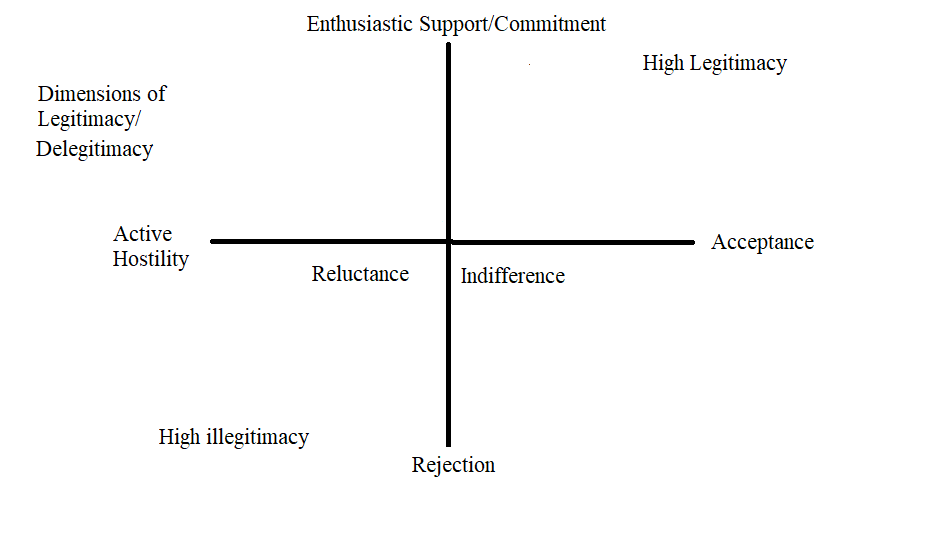
Pelosi and the PM

September 26, 2021

Australian Reporting

The Australian media has almost been falling over itself to note that US House Speaker Nancy Pelosi has praised Scott Morrison on Australia’s climate action. The Sydney Morning Herald which is usually denounced by the Murdoch Empire as far left, had the following headlines.

Nancy Pelosi says Australia is ‘leading the way’ on climate

saying she “hailed Australia as a global leader on climate change” and “singled out Australia for praise”

and

Nancy Pelosi’s praise for Scott Morrison should terrify Labor

This article actually points out the government is not doing much, but often the headline is the take-away.

Skynews had:

Scott Morrison wraps up ‘successful’ US trip

Saying, “Absolutely no one expected Nancy Pelosi to stand there and say Scott Morrison has been a leader on climate change” predicting “some kind of deal made while he was here”

The Daily Telegraph:

Australia praised for climate change stance by Nancy Pelosi [Paywall]

This is a little bit of a beat up, It was not quite fulsome praise but hopefully it will help Morrison to move a little away from promoting gas and coal.

The PM in New York

This is what PM Morrison said in NY. This provides the context:

“our achievements in reducing emissions is an important story for Australia to continue to tell, because it’s our record of achievement that actually establishes the integrity of the commitments that we make. That we will meet and beat our 2030 targets, I was able to inform the President today. And that we will continue to work on our plan as to how we can continue to reduce emissions to zero well into the future.

As I indicated at the start of this year, it was our intention to do. Because in Australia it’s not enough to have a commitment to something. You’ve got to have a plan to achieve it. And this is an important part of the way we approach this task. You have a plan to meet your commitment. If you don’t have a plan, you don’t have a commitment.

And so we will continue to work through those issues. It was a good opportunity to discuss the important elements of that plan today, in particular technology, the hydrogen projects that we’re engaged in, which were announced particularly early this week, and the important role that hydrogen technology as well as CCUS battery technology and others are going to play, not just in advanced economies, but in developing economies as well.

We share a passion that developing economies, particularly in our region, in Indo-Pacific, will be able to develop their economies with a clean energy future, that they will be able to realise the jobs that advanced economies have, to develop their industrial base on the new energy technologies. And Australia wants to play a critical role in that. And we want to partner with countries to achieve it. This will be an important topic of discussion on Friday, particularly to the point that you’ve raised [which was, “was critical minerals and hydrogen discussed during the meeting?”]”

Press Conference Prime Minister – New York, USA 22 Sep 2021 Transcript

The fact that the Government has avoided having a plan since they came to power over 9 years ago is not entirely irrelevant to the context, but let us assume they have suddenly discovered that planning can be useful and are now engaging in it.

He is still brandishing CCS or CCUS, which is about as failed a tech as its possible to get, but helps keep us burning coal and gas….

Pelosi Comments

In my opinion, Pelosi had a choice. She could accuse him of lying and incompetence which is really bad diplomacy and likely to lock him into his current denial of a problem, or she can selectively choose his words to try and hold him too those words. This is what she said (Italics for emphasis):

Yesterday, I had the privilege of welcoming two heads of state, Boris Johnson – maybe some of you were at that presentation with Boris Johnson, Prime Minister Johnson – and then later in the day, in the morning, same morning, with Prime Minister Scott Morrison of Australia. Why I bring it up in association with climate is that they were so exuberant about the urgency of addressing the climate issues.

Of course, we thanked the Prime Minister of U.K. for hosting COP26.  I just had the privilege of doing that at 10 Downing over the weekend when I was at the G7 Heads of Parliament and to see what was happening there in preparation for COP26.  But then he made a presentation to our bipartisan leadership of his priorities and strongly, strongly, strongly talking about what the U.K. was doing in terms of climate. 

And the Prime Minister of Australia, Morrison, he was saying we’re not only addressing the Paris Accords, we are – our slogan is ‘We Meet It and We Beat It.’

So, they’re [Boris and Scott] leading the way, and that’s what we all have to do, is meet our emissions responsibility and our financial responsibility to other countries so that when we leave COP26, having fulfilled our obligations to the Paris Accords, and then to go further.

It’s a health issue for our children: clean air, clean water. It’s a jobs issue for our country: green technologies, being preeminent in the world on those. It’s a security issue [important in terms of the newly signed sub agreement], because security experts tell us that migrations and the rest, rising sea levels, thermal management of the planet, drying up of rivers, encroachment of deserts [All Australian concerns], the list goes on, you know what they are, I think that is cause for competition and conflict over habitat and resources.

So it’s a security issue – health, jobs, security – and, of course, a moral issue, if you believe, as I do, that this is God’s creation, and we have a moral obligation to be good stewards [appeal to Religion]. But, even if you don’t share that view, we all agree that we have a responsibility to our children, grandchildren, future generations, to hand off the planet in a very responsible way.

Transcript of Pelosi Weekly Press Conference in the Capitol Visitor Center 23 September 2021

So while Pelosi avoids criticism of the PM, and her statement does involve some praise, it seems to be more, “that’s what you have claimed to be doing, so please do it.” She also seems to praise Johnson more than Morrison.

Her approach may produce a better result than an attack, but we will have to see….