Trusting government?

October 16, 2022

The Eastern Australian floods

If you have been looking at the Australian media, or at least the decent media, you will have read about the NEW flooding in NSW, Victoria and Tasmania, with towns being evacuated and so on. You will have read, or know from your own experience, that this level of rain, all over the place, seems unprecedented.

It certainly does not seem normal.

And we are still being told that we should sell more coal and gas by the government – on the grounds that the COP26 accounting procedure means that fossil fuels mined here and burnt overseas do not increase our emissions levels, as if global emissions we encourage do not affect us. Given the tax and royalty arrangements, it also seems unlikely that we gain that much from these sales – tax avoidance seems common.

And the right (Andrew Bolt, Matt Canavan, Peter Dutton etc) are still pretending that there is no climate change or that climate change is a hoax, or that it has nothing to do with humans, and that we can do nothing about it. Anything to ignore it, and these people could be in government again relatively soon.

Let us be clear, we still have not managed to fix, or deal with, the previous flooding from this year or the bush fire damage from years before. People are still living in sheds and caravans, or in rotting houses. People are still threatened by more floods and fire damage. Roads still need fixing. Bridges still need repair.

Damage is mounting up and we cannot deal with the damage we already have. Events will compound. For example flooding means waterborne disease and sewerage are likely to be present. Crowding people together may spread airborne disease. Mosquitoes will spread other diseases (for example encephalitis from a destroyed piggery). People will likely not get insurance payments, or not be able to reinsure. There will be such a demand for building workers that people will be caught in bad conditions possibly for years. There eventually will not be enough money to rebuild towns or to move them.

How does this potential suffering stack with doing nothing, preparing for nothing and making it worse by selling more fossil fuels overseas?

Covid in Australia

Likewise the governments tell us that Covid is not a problem. But it is not clear how they are evaluating that. It seems to be to me. People are dying more now in NSW than they were over the 2020-21 period, and we know more about long covid, and it is currently appearing that people who have had covid can die of ‘unrelated’ diseases more commonly that the rest of the population. In both cases we don’t seem to want to admit it.

The government is back away from dangers that add to the crises we are experiencing, and they are encouraging the rest of us not to bother about them either. This will mount up.

This is State failure in action.

Failing infrastructure in the US and climate change

I’ve written about this before and here. But a friend of mine recently wrote:

It has been one thing after another causing problems.

Part inadequate infrastructure, part devastating weather events, part drought and wildfires, big part pandemic. I’m not even going to include the effects of dysfunctional government.

Now, the Mississippi River, which is vital to getting products to the Louisiana ports, mostly grains and some coal, is too low for the heavy loaded barges, due to prolonged drought in the middle of the US. [some barges are stranded]

Farmers are currently harvesting corn, wheat, soybeans. Harvesting must occur or the crops will be lost. With very little unused storage bins, unless alternate shipping can be utilized, a very large portion of the crops will be lost.

Certain areas of the Mississippi River have required regular dredging because of the way the Army Corp of Engineersv(ACE) rerouted the Mississippi. This didn’t happen under Trump, because of the Defense funds diverted for the wall. The monies taken were earmarked for domestic military needs, like military housing upkeep, base education, and the operation of the ACE domestic works, like dredging.

The 2021-22 US budget was written under Trump’s presidency and has just ended. Republican senators are waiting until after the midterm elections to pass a new budget.

It is readily apparent that the government does not care about the people.

Redundancy and Slack

This lack of storage is silly, if correct. I suppose a part it is the popularity of ‘just in time’ supply systems which diminish the capacity for resilience, but save corporations storage costs and hence boost profits. ‘Slack‘ and redundancy are vital for survival.

The more efficient a system becomes, the more fragile it becomes.

It seems like the US does not repair infrastructure very often which again removes slack and makes systems much more precarious than they have to be.

Not having slack assumes that everything in a complex system will always remain the same, or remain predictable. this will not happen normally, never mind in a world of global pandemics and climate change.

So far we have been lucky but not only do we need to stop or slow, climate change, we need to prepare for disruptive events. We need redundant services, we need a back up of people able to help in large disaster struck areas. We need to be able to keep on repairing infrastructure, fixing the consequences of disaster, and reducing the bad effects of climate and travel. The last thing any sensible government should be doing is lowering tax rates on the corporate sector. We and they need the money to prepare to build slack and respond to disasters that are coming, and which accumulate.

When we have huge destructive bushfires, followed by huge destructive floods, over large pandemics, we can’t afford not to have working adaptation, rescue and health services, otherwise everything just gets worse and more and more people will be displaced and suffering.

Governments have to increase both services and their income to pay for it, or we face collapse.

Being unprepared no longer cuts it. Having a state which is incapable of protecting its citizens (other than against military attack) is no longer enough.

William Shattner on Earth and Space

October 12, 2022

I guess many people will have seen William Shattner’s response to his space journey, but just in case….

“I love the mystery of the universe. I love all the questions that have come to us over thousands of years of exploration and hypotheses … [but] when I looked in the opposite direction, into space, there was no mystery, no majestic awe to behold … all I saw was death,”

“Everything I had thought was wrong. Everything I had expected to see was wrong,….. “I had thought that going into space would be the ultimate catharsis of that connection I had been looking for between all living things – that being up there would be the next beautiful step to understanding the harmony of the universe.”

“I discovered that the beauty isn’t out there, it’s down here, with all of us. Leaving that behind made my connection to our tiny planet even more profound.”

“It was among the strongest feelings of grief I have ever encountered. The contrast between the vicious coldness of space and the warm nurturing of Earth below filled me with overwhelming sadness.

“Every day, we are confronted with the knowledge of further destruction of Earth at our hands: the extinction of animal species, of flora and fauna … things that took 5bn years to evolve, and suddenly we will never see them again because of the interference of mankind. It filled me with dread.

“My trip to space was supposed to be a celebration; instead, it felt like a funeral.”

The Problem of the Rich as Saviours

October 10, 2022

It is quite clear that the neoliberal experiment has so-far benefitted those who are already rich. Most of the ‘new’ wealth has gone to them. In the UK figures from the ONS for example, assert that the average household wealth of the top 1% (263,000 people) is £3.8 million, while that of the poorest 10% of households is £15,400. The median wealth was £302,500. People in the lowest 60% hold just one fifth of wealth. In Australia, the richest 20 per cent hold nearly two thirds of Australia’s wealth. Oxfam claim that the world’s richest 26 people possess the same wealth as the poorest 50% of the world’s population.

Oxfam said the wealth of more than 2,200 billionaires across the globe had increased by $900bn in 2018 – or $2.5bn a day. The 12% increase in the wealth of the very richest contrasted with a fall of 11% in the wealth of the poorest half of the world’s population.

The rich have wealth and the power it brings and they seem to reassure themselves this is because they are more deserving than others. The working class has been stuck with low wages and bad and precarious conditions of work – if workers become unemployed then the system sets out to persecute them until they take whatever is going, no matter how much it cripples them. There is more freedom for the rich.

However this change in patterns of wealth and income, has also lead to us depending on the rich for action as they control the money and property and the businesses. And action to reduce Climate Change or social inequality has almost not happened at all.

So we have a problem with no apparent solution.

The rest of this post largely comes from another blogger whose work I admire. I’ve edited, rearrange, added and abridged a little. But please go to the original.

There are regular laments these days about our crisis of imagination. We face existential crises, and yet nobody with any sort of influence has any sort of idea what to do about any of it. The typical strategy seems to be ‘more of the same’ on steroids. Who would suggest that doing the same thing is going to have different results? And not only different, but polar opposite results! This is idiocy.

We turn to the rich for solutions. Living on the borderlands of that world, as I do, I’ve known quite a number of rich people… and they’re not sociopaths… they’re just… not that bright… The rich are not cruel by design. They often desire to do good in the world and believe they are doing so. But they are so blinded by their own sense of self worth — I must be smart; I have all this money! — they don’t see the real world effects of their actions….

In this self-reinforcing world, wealth and status can breed complacency and a sort of smug sense of rectitude — which then turns into social blindness, self-absorption, and not a little stupidity…. Partly this is because there is a high degree of reluctance to call them on their idiocy.  They live in an opaque bubble-land that admits no opinion or evidence that might conflict with their own wants or values or need to be smart. They are ignorant, and yet lead through their wealth.

This blind ignorance of society’s leaders is not something we like to acknowledge. Yet it holds sway over everything, over all the conversations we are having, and these leaders are the people who have orchestrated this whole mess

I don’t think we have a crisis of creativity or a lack of imagination, but I do think we are looking for imagination from the wrong people. Those who do not have wealth or prestige are creating wonderfully imaginative new ways of being. In fact, those who are outside this system, the have-nots, have always made life with few resources and with an inventiveness that is just astounding.

We need to look away from the money and status and look instead to those who already live small lives, as our exemplars

We can’t depend on power and wealth to unmake themselves. Powerful and wealthy people are just not smart enough to make these changes, and they think they will survive anyway.

*****

Wealth can protect people from information, or hide it from them, or make it so they don’t want to know about things which might threaten that wealth, no matter how nice they are – and their servants/employees may not want to upset them either, as its often not a good recipe for keeping a job.

If we are looking for solutions, then we may need to look away from the centres of the problem. We may have to rely on those who are already facing the problems of life as they are now and working together to do their best to defend against them, or change the system, while being ignored by the rich. These people may have much greater capacity for change.

An interview in Australia

October 9, 2022

It may be a hallucination, but I swear I heard this conversation the other day….

Andrew BOLT (Skynews. Murdoch man): Look, we are clearly being softened up for Labor to break its promise to cut taxes for wealthy people. What is the best argument for these stage three tax cuts?

Peter DUTTON (Leader of the conservative opposition):
The greatest argument for tax cuts for the wealthy is that we want to give rich people back more of their own money and give a little bit to other people to make it look fair, and as a result the economy will just take off. We’ve 40 years of evidence showing cutting tax for wealthy people works. Look how wages have increased! Look how working conditions have improved! Look how wealth inequality has got even better! Labor is proposing to walk away from what was a core promise which would have a detrimental impact on wealthy individuals, but also on the economy more generally. “Everyone who has stuff will get more, but those who have not, even what they have will be taken away.” That’s reality; it’s in the Bible.

BOLT:
What about the argument, ‘oh, we can’t afford it anymore because inflation, budgetary pressures, maybe a global recession’?

DUTTON:
Well Andrew, the tax cuts don’t start until mid-2024 so there’s no problem now, even if 2023 is promising to be a very difficult year. Everywhere will probably go into recession, but not Australia – given that we’ve had nine years of Coalition government and nothing bad happened until at least a month after we left. It will take a lot for the Labor Party to mess it up and to drive us into recession, which is the last thing I want to talk up for our country, but as we know, Labor is capable of making that decision. Nothing to do with us.

By 2024 everything will be fine, and if not, so what? The tax cuts will stimulate everything.

BOLT:
I would have thought that if the government’s a bit short of other people’s money and it really wants to ‘spend, spend, spend’, then how about cutting their own spending rather than cancelling a tax cut?

DUTTON:
You are really proposing a novel approach that if you’re spending more than you earn, then you should cut back on what you’re earning – like with the tax cut. That’s obviously sensible and the Labor party’s heads will be spinning when they hear that. The Labor Party know how to tax and they know how to spend, they don’t know anything about practicality, and at the core of their ideology is to try and redistribute wealth to people who shouldn’t have it.

In Queensland they’re proposing a ridiculous mining royalties tax and that will drive investment out of Queensland and therefore jobs. No overseas company should have to pay for Australian minerals. We should pay them. That’s what we have done for years, and it works really well. Governments cutting their income is always good policy. Taxes just target people who have worked, when you should be punishing people who have misfortune.

You wouldn’t expect Labor to have too many rational views, like ours. It’s all spend, spend. You wouldn’t catch us spending on anything other than fossil fuels and Covid subsidies to companies that don’t need them. That’s sensible spending.

BOLT:
As I said last night, Peter Dutton, you’ve done something that no one has seen from the conservative side ever before: you got stuck into a culture war. You supported people who hate gays. Never been done before. Ever. Bold Step. Given how much pro-gay news there is the left wing media.

You got criticised by Daniel Andrews, who everyone knows is Satan.
What’s your response?

DUTTON:
Well, there’s a couple of points I could make, but instead let me say this – Daniel Andrews presides over one of the most corrupt governments in the country and if ever there was a time for a change of government, it’s now in Victoria. Ok we could say things about NSW, but that’s just their ICAC being corrupt and badly designed, by holding them up to scrutiny. People on our side get picked on all the time. All the time. We are told we are corrupt. It’s just the left wing media you know. Its a conspiracy.

In Victoria, they are really corrupt. You know they had long lockdowns. Andrews doesn’t argue the merit of his attack on me, you’ll notice, he attacks the person and that’s how he gets away with skating over the issues where he’s been a complete failure in everything. Now I’m letting you know exactly where he is corrupt, and not attacking the person at all!!!. He’s just corrupt.

He would say that he’s in favour of inclusion, he would say that he’s in favour of freedom of choice and freedom of speech and instead he’s supported a decision which has crucified somebody for their religious beliefs. If people want to support gays they can just go somewhere else. If they want to attack them, and they’re religious, they should just get the job. Its political madness. If you can’t go around and state gays should be killed anymore – what can you say? You couldn’t have a conversation like ours, Andrew, could you? It’s the end of all liberty.

I absolutely stand by what I said yesterday. The Liberal Party has very strong values, particularly around the rights of the Church to condemn anyone we don’t like (as long as it’s not business people), and I’ll take every opportunity to assert this because people will know by the time of the next election that there is a big difference between the Liberal Party and the Labor Party – not just on social issues, but on economic and national security issues as well.

BOLT:
The new religion – global warming – this government’s got frankly unbelievable and dangerous targets like making us all buy electric cars, through wanting half of all new car sales to be electric by 2030. That’s taking away our right to be petrol heads. And then they want 83 per cent of our electricity to come from unreliable renewable energy, not good old coal. That’s based on this global warming scare but there’s been so many dud predictions as you know. Here for instance, is our former Chief Climate Commissioner Tim Flannery, 15 years ago:
TIM FLANNERY: Even the rain that falls isn’t actually going to fill our dams and our river system.

BOLT:
And its pissing down. I ask you. Towns are being destroyed and flooded repeatedly and this guy said it would be dry and sunny. In fact, Sydney has today recorded the most annual rainfall ever. It’s wettest year ever. Its dams are full. Melbourne’s and Brisbane’s nearly full. This more sunny days thing, is just not happening – ok so they supposedly have the worst droughts ever in Europe and China, but it’s just normal. Always having droughts in the UK. We know that. What do you conclude from all this?

DUTTON:
Well, the rivers are rising again as we speak Andrew, and that Tim Flannery was dead wrong, so I presume he’ll come out and apologise for the mistake, but I wouldn’t hold your breath. I mean will we apologise for delayed response on climate change as some people demand? Of course not. Because nothing’s happening, but a bit of rain and a bit of bushfire before that. I mean how weak is that? Our Party stays strong and fixed, whatever the evidence. We could do with some global warming to get rid of this rain, right?

I mean, we’ve started this debate on nuclear power in our country. It’s absurd that in the year 2022 we absolutely can’t be talking about safe new technology in the form of small modular reactors on any media at all. Its not reasonable. This is when France, Canada, China, the United States, the United Kingdom, Germany and many other countries have either adopted or are considering the adoption of nuclear power to firm up the renewables in the system, and don’t have small nukes either. No one does. But small nukes are the future Andrew. We don’t need those stupid gay and feminist renewables do we?

And wanting more and better electricity cables? Does this government think we are made of money? Especially given how important the promised tax cuts are. This pipe dream that the government has of around $100 billion to roll out of cables and towers in communities and towns across the country is never going to be realised. Never. We’ll do everything to stop this waste of money.

We’re talking in Europe at the moment about a catastrophic winter where people are going to either feed themselves or turn on their heaters, but they’re not going to be able to afford to do both. Europe should have had bought into more gas, not these renewables. With gas they can’t be vulnerable to exporters not supplying them because of a war, or because gas is short, or companies are profiteering. Power prices will continue to go through the roof in our country, whilst Labor pursues their zealot-like approach to having renewables and not gas.

I want to see, indeed am happy to see renewables in the system, but it needs to be firmed up to keep the pollution up, and if you don’t like coal and gas and you don’t believe methane based hydrogen’s coming any time soon and hydro is not going to fit the bill, what are you left with? We want happy fossil fuels companies… what more do you need? That keeps the power going our way, no problems.

BOLT:
Peter Dutton, thank you so much indeed for your time.

DUTTON:
Thanks, Andrew. Thank you.

Original

Politics of gendering???

October 7, 2022

If I was going to write an essay on this question I’d probably go on in this manner, and argue that the current anti-trans agenda raises some challenges which need to be discussed, but (whether people want it to be or not) it is being hijacked by the right wing to make it an anti-(gay, lesbian, woman, queer, non-straight sex roles), etc movement. This debate seems to be proposing state intervention to curtail people’s liberty, and hence should be considered carefully. It could also be said to attack people who are vulnerable in our society, even while it is supposed to protect them, as it says they should not exist.

Feel free to respond, after all I can’t be in favour of discussion if I don’t allow it.

[Stuff in [brackets] was added later]

Introduction: The suppression of sex and gender variety

Everywhere around the world today women, feminists, gays, lesbians and transgender people are being attacked, by those who hold that only purely straight ‘masculine men’ and ‘feminine women’, and the power and conceptual structures built around those categories and their relationships, should exist.

At the Australian version of the US based CPAC Conference, Conservative Australian politicians were agitating for their right to assign pronouns to people in the way that they want to consider accurate, along with opposition to having a formal aboriginal ‘voice’ to Parliament, celebrating the fact that moderate conservatives lost their seats in the last Australian election and claiming that climate change is a scientist’s conspiracy to cause society to collapse. This makes it relatively clear that listening to despised minorities is not part of their conservative way. These are also the people who would have stopped gay marriage, and who have encouraged religions to discriminate against gay and lesbian people.

At the same time Vladimir Putin used an anti-trans, anti-gay, argument to justify annexing parts of Ukraine, as it was necessary to protect the motherland from these horrors. He apparently said:

Do we really want perversions that lead to degradation and extinction to be imposed on children in our schools from the primary grades? To be drummed into them that there are various supposed genders besides women and men, and to be offered a sex change operation? Do we want all this for our country and our children?

Riley Putin Claims U.S. Wants to Push Gender “Perversions” on Russian Youth. metroweekly 11 October 2022

[This was followed by a Russian law forbidding any act which could be regarded as an attempt to promote “non-traditional sexual relations” whether in film, online, advertising or in public. So orthodoxy about male and female gender categories, is easily expanded to include anti-gay and lesbian positions – which is possibly the intention.]

There also seems to be a massive movement in the US to enforce gender categories and ‘gender purism’. This seems to want to make sure that all women are proper subservient, non-feminist women who would never object to anything men propose, and that everyone should be sexually straight. Men are all the one thing and women are completely different. After all, in these definitions, lesbians are not real women (as they don’t desire sex with men and are supposedly all ‘butch’) , gays are not real men (as they don’t desire sex with women and are supposedly all effeminate), and children need parents of the ‘opposite’ sexes – anything else is counted as child abuse by them. However, this is clearly dismissing the violence against children that can occur in normal heterosexual families. It also seems that homosexuality is linked, by the same people, with pedophilia and bestiality. I know little about bestiality, but it would seem observable that most pedophilia involves ‘godly men’ often conservatives, people in other organisations for children organised by supposedly straight men, and family members known by the children. So it would seem that these compulsory sex role people are deliberately putting recognition of the real likely pedophilic culprits to one side. There is, likewise, no evidence I have seen that Transgender people have a marked role, or even a role, in child trafficking. It is another example of ‘loyal category’ thinking ‘as ‘when people think people they classify as being unlike them must be evil and those like them must be honorable and assert that someone like Donald Trump is anti-pedophile, when the little evidence we have suggests exactly the opposite.

There is lots of action to make us straight. Apparently, in the US:

Nearly 670 anti-LGBTQ bills have been filed since 2018, according to an NBC News analysis of data from the American Civil Liberties Union and LGBTQ advocacy group Freedom for All Americans, with nearly all of the country’s 50 state legislatures all having weighed at least one bill. 

Lavietes and Ramos Nearly 240 anti-LGBTQ bills filed in 2022 so far, most of them targeting trans people. NBC News, 20 March 2022

Some researchers have said that their research shows that:

Transgender people are over four times more likely than cisgender people to experience violent victimization, including rape, sexual assault, and aggravated or simple assault

Transgender people over four times more likely than cisgender people to be victims of violent crime 23 March 2021

Then you seem to have people devoted to to establish women’s guilt as in the current Depp Heard case, and now apparently in the Pitt Jolie case. Nothing to do with trans or gayness but a lot to do with enforcing sex/gender categories and gender righteousness. This hostility towards non-compliant women, may also be fed by the so-called ‘incel’ movement, which also seems relatively hostile to gay people as well as women.

[Two weeks after writing this, I read about a Federal Republican Bill to:

prohibit.. the use of federal funds to develop, implement, facilitate, or fund any sexually-oriented program, event, or literature for children under the age of 10. The bill prohibits federal funds from being used to host or promote events where adults dance salaciously or strip for children…. [This includes] any topic involving sexual orientation, gender identity, gender dysphoria, or related subjects. … radical [ie non completely straight] gender theory.

Congressman Mike Johnson House Republicans Introduce Legislation to Ensure Taxpayer Dollars Cannot Fund Sexually Explicit Material for Children. October 18, 2022

[As other people have remarked.

Universities, public schools, hospitals, medical clinics, etc. could all be defunded if they host any event discussing LGBTQ people and children could be present. The way they define “sexually oriented material” simply includes anything about LGBTQ people.

Alejandra Caraballo twitter October 19 2022

[The bill grants people the right to sue if their child is exposed to prohibited material in a way that involves federal funding “in whole or in part,” further dampening any discussion.

[This Bill cannot become law until after the November elections, but it indicates where the ‘only straight gender campaign’ is likely going. Since then we have seen Republican Governor of Florida DeSantis crack down on trans people, and gays and lesbians, and indeed forbid colleges to even talk about people being gay. He has now threatened to crush all ‘leftism’. This is about generating conformity and fear.]

We also know that the suicide rate among LGBTQI+ people is high [1] [2]. I use the collective because it seems common, amongst those young people I know, to blend everything together, and because the right seems actively hostile to all of them and also blends them altogether. It appears the main cause of suicide probably stems from attacks, laws and insistence that they are not acceptable because they do not match totally separate gender categories.

The Left Reacts by more suppression

On the whole the Left’s reaction to this real attack on gender freedom, feminism and non-heterosexuality seems to have been to suppress discussion of some real questions around transgender issues.

There are persistent claims, which seem born out by casual observation, that it is impossible to discuss problems around transgender in left-inclined media. However, after about 10 mins research, I’m not entirely sure this is correct [1] [2] [3] [4] [5] [6] [7] [8] [9] [10] [11] [12] [13] [14] [15]. However, it is much asserted, and may mean the discussion is not visible, or that people are not directed to this discussion, or avoid the discussion.

We are also all aware of the ways that people such as JK Rowling have suffered “pile on attacks” online and elsewhere for daring to try and talk about problems of gender and transgender. Often this is reported by the right wing media who are pushing sexual straightness and the evil of trans and gay people. However, this does not mean all such reports are completely wrong. People on the left cannot assume that because some objectors are uncomfortable about some gender issues that these objectors have nothing important to say, or that questions should not be asked. Having looked at the style of writing, it also would not surprise me, if many of these pro-trans writers are right wing trolls, they use very similar language, but we cannot know.

I suspect this apparent reluctance to discuss arises from a general, and probably correct, sense that once the right has got rid of trans or queer people, they will go for gay and lesbian people as well [as is shown by the Bill mentioned above] and then any other people they despise. This certainly seems plausible, but that simply means that rather than not discussing the issues, the issues need to be thought about carefully without allowing the left or the “sexually abnormal” (as the right might say) to be split and made even more vulnerable. The discussions also need to be visible. It also seems to me, that most of the problems which are brought up, are both genuine and completely solvable, by normal means, without having to suppress anyone.

Is this discussion significant?

Some people claim the problem is numerically insignificant and hence trans or gay people can be ignored, but that seems subjective. In Australia right wing politician Mark Latham pointed out that a:

non-binary sex option was marked on the 2021 Census form by just 43,220 respondents or 0.17 per cent of the Australian population…. to listen to the transgender activists and debate in Australia, you would think there are 17 million of them, not 0.17 per cent of the population!

17 million is more than half the population. I’ve not seen anyone claim anything like that, so that’s a bit of rhetorical fantasy. However, there are problems. IF they are such a small percentage of the population, then why bother? Its a trivial problem. Personally, I think 43,000 people marking this section shows this is an issue for a reasonable number of people, while Latham obviously does not, yet worries about it a lot. There are certainly not that many members in his political party. However, the Australian Bureau of Statistics cautioned against using this figure for anything as the question was too badly phrased, and ‘yes’ could have meant too many things.

the results of the census showed that the concept of non-binary sex was “not consistently understood” and was “perceived in different ways by different people”.

About one third of the people who responded explained their response:

These written responses provided some insight into how respondents interpreted the sex question, with three in five referencing gender identities using terms such as “agender, demiboy, gender fluid, non-binary gender and trans woman”.

So the data suggest that there are a significant number of adults (people who would be filling in the census forms) for whom straight gender identity is a problem (and there are probably more who did not fill it in), even if we are not sure in what kind of way binary gender is a problem for them. A Pew survey in the US reported that about 9 out of 10 people knew someone who was gay or lesbian, and 30% of people knew someone who was trans.

So let’s state some clear bases here before we risk further discussion.

  • Life is complex, and human social and linguistic categories often do not exhaust the world or fully describe the world, no matter how important those categories are to us. This ‘category failure’ makes some understanding difficult as so many factors are involved, but we can improve categories as we go along. The difficulty is not lessened by calling for the extermination of all who disagree with our category use, as evil, or attempting to associate those people with things we associate with evil such as pedophilia.
  • Complexity also considers the context of an argument. Without considering the context, a person may be arguing, or helping to produce, exactly the results they do not want. Lesbians might want protection from men taking over Lesbian spaces, but by fighting trans people, they may be setting up an excuse for others to police the ‘womanhood’ of Lesbians.
  • There are three relevant but questionable concepts involved in this issue: ‘sex’, ‘gender’ and ‘sexuality’.

Sex

Almost everyone agrees that sex is biological, despite some genetic and anatomical variants such as people who have XY chromosomes but are fully female as the male hormones never switched on, there are people who are hermaphrodite some of whom will have been surgically assigned a gender at birth etc. How much relevance people want to give to these variants is a subject of dispute, when we are talking about the population as a whole, but they do exist, and complicate issues of binary sex. While sex is binary and simple in most cases, it is not in all.

Most people on the left would agree that sex is important, even if sometimes hard to define. It would be common to argue that women and others with a history of oppression, may deserve some degree of different treatment to, say, hyper-rich white straight men. Women may need different forms of medical treatment – women may need support during pregnancy and childbearing and there are diseases more likely to emerge if you are one sex or the other, or have some other genetic markers. Statistically women appear to have different signs of heart attack and this should be better known about. Women may need protected spaces to flourish separated from male violence, intimidation, rape and imposition, while protected spaces for men may need rethinking because such spaces have traditionally functioned as ways of excluding women from competence, power and influence. So while equality might be an aim, not everyone, or every process or category, can be treated as ‘the same’ all the time.

This is generalisable. Differential treatment and privilege may be needed to protect some groups, “as long as it does not oppress anyone else”. This question of “as long as a behaviour does not oppress others” is a moral question, which I suspect will always be in dispute and probably should be, as ideas, conventions and behaviour change. It’s not always easy to decide, but it is harmful to avoid the issue, as it is always possible to split more vulnerable groups.

Gender

Most people on the left would also accept that people can be ‘gender fluid’. Gender is not the same as sex, and gender identity may not be the same as sexual identity. The assertion that conventions about sex and gender should always be the same is highly problematic. It also seems highly problematic to assert it is dangerous to society as a whole.

Gender characteristics also seem complicated. We may find that gender characteristics may be distributed statistically by sex, similarly to the way height is. Men are taller than women in general, but many men quite commonly encounter women taller than them. Is this a sign of evil? No. Is a particular man being more ‘maternal’ than a particular woman, evil? I would say not.

We may find that, under most circumstances, most, but not all, women, are relatively non-physically-violent, warmer and more supportive when compared to most, but not all, men and so on. I have found it hard to observe personality traits which are completely exclusive to one sex or the other – they are generally shared to some degree. Both women and men can be close or distant to their children. We are likely to repeatedly encounter statistical variance. The point is to allow people to express an unusual gender identity, as long as (again) it does not oppress others. It’s not acceptable, for example, to assert that because a person identifies as male it’s ok for them to beat those they identify as women, or prevent women from doing mathematics, no matter how traditionally sanctioned this kind of behaviour may be.

As part of liberation, in an ideal world people would be free to be what they want to be, without governments or religions telling them they have to be something else, “as long as this freedom does not oppress others”. It ideally should not, be a problem, if a person’s sex did not completely match with traditional ideas about appropriate gender or sexuality.

Apparently, it did not used to be common for women to want to transition to being men, now it is. It is at least a reasonable hypothesis that some of this urge comes from social insistence that sex and gender are the same. Consequently, young women who want a power and freedom which is still limited by their sex category, or who encounter hostility towards their aims or threats of violence, might decide that life would be less painful if they were male. Just as more gentle, or fashion focused, males might decide they would not be bullied or dismissed if they were female. These problems could arise from the imposition of sex and gender categories, even if the people imposing them, thought they were being real and kind. Hence, paradoxically, acceptance of gender variation (rather than enforcing gender separation) might diminish people wanting ‘the operation’.

At the moment this sexed distribution of characteristics seems unclear. However, potential solutions to problems arising from this distribution, do not usually involve solving height differentials by cutting people’s legs down to size, or building artificial extended legs for others. However, acceptance of variation is not always easy or simple. We can also note that people who don’t have any problem with their sex, can have gender issues, for instance it now seems that women who have time and money to train for sport can develop extremely muscular physiques, which are not usually seen on women, and be berated for not expressing gender conventions or for being unfeminine, ugly or for cheating by using steroids and hence are motivated to quit sport to stop the harassment. It is certainly probable that some are accused of really being male. [There was an example, involving a man berating a nine year old girl with short hair at a sporting event, for not being feminine enough to be a girl]. There seems to be a lot of gender and sexuality enforcing hostility around, and it is not an unreasonable supposition that policing of gender and sex, will lead to policing of women, as for example with genital checks for sport, menstrual checks, or women being beaten up in public toilets for looking too masculine. [We can possibly predict that if if this continues and a woman does not have long carefully tended hair and is not wearing a dress, then the right will come for her, as not beeing femme enough to be a woman.]

Sexuality

Sexuality is also complex. There are many modes of sexuality. People may tend to reduce it to either being gay or straight, and insist people be one or the other, or to assert they value one of these sexualities and do not value the other; but. again, this refuses to recognise ambiguities in many people’s sexuality. Many sexual behaviours are far more confusing than these simple categories suggest. Again the proviso about sexuality is “as long as it does not oppress or harm anyone else and is consensual” – consequently active pedophilia should always be banned (no matter who does it), same as non-pretend rape (although the issue of pretense can clearly be problematic), permanent unconsensual scarring, sexual acts which risk (or cause) the death of others, and so on. The main point is that many people can be bi-sexual, or multi-sexual, rather than mono-sexual in their approach. Hence it is not surprising that some MtF trans people still prefer women, and some FtM prefer men.

There are clearly events which challenge any easy reconciliation within, and between, these categories of sex, gender and sexuality, and what can always be permissible.

We may note that anti-trans people also tend to be in favour of conversion therapy, that is religious oriented therapy, prayers, exorcism, etc, to convert people from gay to straight. While I would not ban it for those who want to try it, there should be some examination of whether it is effective, or whether it drives people from God into suicide.

Trans and categories

Transgender has become one of these areas of difficulty. Some people appear to inherently feel that they are born with the wrong ‘sexed’ body, and may only feel content if they can have a changed body and live the life of the ‘other’ sex. This is relatively common across cultures. Some people have traditionally gone through incredibly painful and dangerous practices to make this change, and may still find they are not accepted by others, as appears to be the case in Indian culture. They may be raped, have difficulty surviving in society or employment, be forced into sex work, marginalised, expelled from their family and communities, and so on. This pain and marginalisation should to be acknowledged if people discussing the issues do want not to increase it. There are other forms of feeling that one is born into the wrong body as well. There are people who are miserable because they have a leg rather than a stump, and who may try to remove their leg to make them feel real, and sometimes real surgery is performed to stop dangerous self damage, and produce some contentment.

However, there are other problems. As, has already been stated, there is a question of whether some people’s transgender issues arise from social and personal enforcing of binary, exclusive and connected categories within sex, gender and sexuality. If so, then when a person’s gender and/or sexuality category does not match their sex category, the sex category may be ‘saved’ by insisting the person is really the ‘other’ sex, rather than accepting that gender and sexuality are complicated. In simple words, people could hold that if you are a ‘butch woman’ or you sexually prefer women, you must really be a man, or if you are a femme male or sexually prefer men, you must really be a woman, rather than allowing you to be complicated and violate categories. Or a person may still have a sexual attraction to women and want to become female, or a woman may have sexual attraction to men and want to become male.

The operation and after therapy etc. could then be performed to save the standard categories (reinforced by the income generated by therapy, surgery etc, as we live in a capitalist society), rather than to always benefit the client. Similarly the insistence that people are really homosexual if they express gender identity issues, could also be an enforcement of binary sexuality.

It is certainly not difficult to imagine that social enforcement of categories could result in people being ‘pushed’ into transgender positions, and into dangerous and destructive surgery which does not solve their social or personal problems, and which creates new problems for them. This issue implies that surgery, or hormone treatments, should not be the default treatment – but these treatments may have to be normal, until society becomes accepting of ‘odd’ categories.

If, however, people are encouraged to have reasignment surgery to reduce social anxieties about gender categories, then we would expect many people who have had such surgery to protest, to seek re-assignment to their original sex, or to commit suicide at at least similar levels to that which happens to people who identify themselves as transsexual before surgery. This issue needs careful study, rather than suppression. While sex-change surgery may work for some people, it may not be right, or necessary, for others who seem to have similar problems – and again this needs care to distinguish, if we do care.

Category enforcement and Self-identification

Likewise, with social enforcement of gender categories, we can have people who don’t appear to replicate or perform the ideal gender of the sex they have, being told to leave places which should be appropriate for them. For instance, I have heard (no idea how accurately) that some lesbians have been told to get out of women’s toilets or whatever, because they must ‘really’ be men. [see for example 1, 2, 3 ] Simple things like having single unit toilet booths, rather than collective gendered toilets, could solve some of those problems. It might also lessen que problems in women’s toilets.

If we have a severe problem with enforcing categories which are really fluid rather than binary, we may need to be careful about the misery that enforcing these categories can bring about. That is we accept people having ‘gender or sexuality fluidity’ rather than insisting on category resolution through surgery or exclusion. This is clearly not the same as insisting sex assignment surgery should be banned, but insisting that its failures, if they exist, tell us something about people, and when the operation may be appropriate or not, and those failures should not be covered up or not be talked about.

On the other side there are plenty of stories to suggest that self identification, without reference to the social nature of the categories causes problems. In a way, it does not matter if these stories are true or not; they are not implausible and they act as thought experiments which enable us to think about possible problems.

For example, it is supposedly the case that genetic men, men who appear to identify as men, or people who claim to be MtF are supposedly insisting on their ‘rights’ to use women’s toilets, or receive prison sentences as women even if having previously raped or assaulted women. Other people apparently claim to be real lesbians despite aggressive behaviour towards lesbians and even if they still have a functional penis they want pleasuring. These behaviours, imagined or uncommon or not, can easily be seen as men asserting their ‘right’ to violate women only spaces, intimidate women, or continue to rape women.

It also seems possible that some of these claims result from ‘false flag operations’. The person causing the problem is violating women’s space or bodies for pleasure in the violation, or from wanting women to be scared of MtF people, rather than attempting to resolve their own gender fluidity problems. I have read of completely self-identified men entering women’s spaces, trying to make the right-wing point that ‘sex is sex’ and ‘gender is sex’, and that trans people are dire for everyone because they upset strict bounded categories. This works along the lines of “if MtF people can use women’s toilets, why can’t we males?” This is another form of category enforcement.

And how would we distinguish the innocent, or inept, from those exploiting this self-asserted right? If you are gong to exclude MtF from female toilets, how are you going to do it? Genital inspection? DNA testing? X-rays? Or just excluding people who don’t fit the stereotypes of gender? This kind of exclusion, has an easy possibility of leading to real oppression to people born female.

Self identification and Law

The point here is that simple claims of self-identification do not seem enough, and that laws should not be changed to make a simple declaration enough for all situations. Questions of long-term commitment, and acceptance by a community are relevant to the identification issue at least.

For me the question remains as to why these problems cannot be resolved by the law as it is? If people are trespassing and expressing aggression towards others then those being aggressed against should be able to be restrict (or remove) whoever enters no matter what the trespasser claims to identify as. If a previously male rapist claims to identify as a woman, they should not be jailed with women despite their self-made claims; they should possibly be kept in a special protected jail, perhaps along with pedophiles. This does not seem that difficult.

[Likewise I’ve just read of a male prison guard who sexually assaulted at least 30 women in jail, and another who is charged with 95 counts of sexual abuse. There clearly should be no space for that to happen at all. Why was this not seen? why was it allowed? This is is clearly a problem, thirty people is not a negligible number, but it does not appear to have attracted the attention that the possibilities of trans people being rapists has. I don’t know of any real MtF who has been accused of this level of rape. The focus on transgender people seems to be completely bizarre by comparison. Indeed I have had discussions with people who assert that these multiple rapes by male prison guards are not important, when compared to the fact that MtF trans people may enter women’s jails and not rape anyone. This focus seems completely weird, but it indicates that at least some of the anti-trans stuff has nothing whatsoever to do with protecting women. Likewise, if they were interested in protection they would be looking at the number of women who are being murdered by straight males they know.]

Secondly when a person is born male, it seems fairly straightforward to suggest that being accepted as female by people born women is a privilege not a right. Likewise a white person cannot expect to just declare themselves black and be accepted by a black community as black, no matter how strongly they feel they should be, or identify as black.

Having sexual intercourse with someone is also a privilege and not a right. Most people probably learn that most people they desire, do not have to desire them back at quite an early age. Everyone should have the legal right to say ‘no’ whatever the circumstance. No one has a right to claim that because they identify as female, all desired lesbians, or men, must be prepared to have sex with them. People should be able to say no to advances. Anyone can masturbate if they need release, in private. It is likewise not always oppressive for people to have to demonstrate their bone fides and qualifications to join a club. Sometimes that will work smoothly, other times it could lead to potential suffering, but that suffering may be unavoidable at the moment, based on understanding what is possible. Social change takes time, and some people will seek to exploit it or stop it.

The issue again, about gender self identification, comes to the “as long as it does not oppress anyone else, or is used to oppress anyone else” point. Insisting that people should have sex with you is oppression, and should be treated that way. This, again, should not be a difficult problem to resolve. Lesbian clubs almost certainly would have to deal with straight males coming in to cause trouble, and presumably have solutions for it – they probably have to deal with some obnoxious people born female as well and have solutions for that.

It would appear that we can resolve a fair number of these issues, by simple application of normal conventions about unacceptable behaviour, without insisting on the absolute claims of gender and sex categories, and exiling perfectly harmless people, and by not trying to rush people into transitioning (or not transitioning), so as to keep those categories pure.

More talk and more talk

Again it seems difficult to tell how many of these kind of reports of self-declared trans people attacking others, are false flag operations, being used on behalf of the right to split feminism, or the left, as the reports often appear to be politically motivated, and the sources generally do not seem to report the oppressions experienced by trans people or gay people.

However, even if the reports are politically motivated and designed to split the left and deny the existence of people of various genders and sexual orientations, that is no reason to stop discussion about these kinds of issues, or to recognise that at the moment, many women have concerns about the possibility of people-born-male coming in and attacking their private spaces and bodies, or telling them how to run their lives or how to be really ‘feminine’. Or indeed they may not like men policing women only spaces. Silencing only makes those opposing the righteous agenda of two sexes associated with two genders and straight sexuality more vulnerable to divide and conquer.

The way through these problems is more likely to be through discussion, and not through attacking, especially as the “pile on” attacks on questioners, that supposedly originate from transgender people, do imply that dissenting women do have to worry about being threatened by straight males claiming to be women.

Discussion could make it clearer what part of these pile on attacks are false flag operations, and what problems need to be sorted out.

Problems are rarely solved by repression. Splitting will only further the right’s determination to enforce the categories in the way they want. Divide and conquer.

Children

Another area of panic is young children transitioning. As far as I know, this is not common. It is more common than when I was young, but that is not saying much. People had to hide their desires. It also seems to be quite hard to participate in transitioning until the child is relatively old, or has their parents consent. If parents don’t want this and the child does, I guess parents have every right to make their children miserable. They have done so for thousands of years, but again the assertion of children being changed against their parents will, does not seem well documented at all, more a scare-story. But it is easy to stop ‘careless’ medical intervention, without attacking trans people in general.

Final Comments

We may need to recognise that we live in perilous times amongst a resurgent right claiming to fight for family, national values and the protection of children. It seems correct to perceive that these values involve “traditional” sex roles along with enforcement of those roles. Their ideal is that men are the natural leaders with women shutting up and accepting that “feminism” is deviant and unacceptable. Abortion and contraception are to be suppressed, because these give women independence. Children are not to be told of, or observe, any possible sexual, gender or sexuality variants, as this will supposedly keep them straight

Any one who identifies as LGBTQI+, or supports people in this loose classification, potentially upsets this framework, and risks removal or ostracism. It would seem that people who attack trans-people on principle (even if supposedly for the good of trans-people) are likely to feed into a growing movement of attack against all people who are not completely straight in their gender or sexuality. You might of course think, like Putin or various Republicans, that this is good, but others might disagree.

However, the problems brought up by the existence of a few trans people (or people pretending to be trans) are surprisingly normal problems. How do you remove unfair advantage? How do you stop people preventing discussion? How do you stop people assaulting, victimising or harrassing others and so on?

@@@@@@@@

More recent times March 2023

Recently, we have had Neo-Nazi ‘Christian’ groups attacking or trying to intimidate trans people and, gays and lesbians. This is more or less what I was expecting would happen, and the attack on trans-people has turned into an attack on everyone who is not straight, or does not express straight gender identities

Drag Queens are becoming a target of the anti-pedophile movement, who can use this drag queen’s challenge to gender roles to distract from the far greater likelihood that children will be raped by right wing religious types.

In some states in the USA, people are not supposed to support, or otherwise help, kids who identify as trans or gay or lesbian in schools… It must not be talked about, and must be suppressed because the kids must be made to feel sinful.

This was inevitable. It is easy for the right to include, say, lesbians or gay men, amongst the trans people they are attacking, because those lesbians and gay men are obviously ‘deviant’ in their sexuality and gender roles, just like trans-people may be. However, it now appears that discrimination against transpeople can also be supported by gay and lesbian organisations, who don’t seem to realise that this will become a basis for discrimination against them.
EVs and infrastructure

October 5, 2022

There is a web article about EVs doing the rounds amongst “climate do nothingers”. I’ve no idea who first wrote it, or if it’s genuine. The article is attributed to “An Electrical Contractor In Melbourne”, and it makes some interesting points. You can see the original reproduced here, here and here. It’s important.

The story is that he was trying to install EV charge points in an apartment building in the Docklands area of Melbourne. Ironically and earlier puff-article claims that “Docklands makes the perfect spot for electric car charging infrastructure because it’s such a new development.”

The Electrical Contractor noted that:

  1. The building did not have non-allocated parking spaces, so there is no space that could be shared. This would mean billing would be complicated. However, many houses and home units in cities do not have private garages or driveways, so this could be a real problem in terms of charging and billing. But it can be worked on, and modes of sharing developed.
  2. The power supply in the building was designed for the expected loads in the building with virtually no spare capacity for car charging in any case. This is bad design, but completely plausible and probably quite common as its cheaper. It probably means that with increasing energy use the wiring etc will have to be ripped out soon anyway. People seem to be constantly updating electricity supplies in houses in the city, its certainly happened with places I know of, and whenever a unit block gets pulled down people seem to be able to find the electricity to make it modern.
  3. People are likely to fight over the charging spaces if every apartment cannot have them, so as to increase the value of their units. Quite possibly. This could be overcome by some kind of organising or having the charging spaces be owned by the body corporate (you get access for a couple of hours a day), but it is likely to be a source of contention otherwise. {another writer remarks that you have to get the motion passed at a Strata AGM and people without EVs could hold up the process, as it costs a lot}
  4. There are more statements that the electricity supply and arrangements for the building would have to be updated. Yes, true but we have already agreed on this, and making the same point several times does not add anything.
  5. Melbourne in general does not have enough electricity supply, or routers or feeders. Yes if we are going to ‘electrify everything’ we need to spend on cables, make sure those cables are not vulnerable, and supply improvement and this may have to be done by the taxpayers, as corporate wires owners seem to be reluctant.
  6. He then notices the huge amounts of extra electricity which would have to be generated to supply EVs. Again this is correct. He doubts it could be done with renewables which is fair enough, but possibly not correct. There is no point in doing it, if EVs are to be supplied with electricity generated by emissions intensive fossil fuels.

He concludes that going over to EVs is:

just a greenies dream in the foreseeable future other than in small wealthy countries.
It will no doubt ultimately come but not in the next 20 years.

However, not doing it soon, will result in climate catastrophe, which we probably cannot afford at all. We are already lagging in trying to rebuild or protect destroyed areas that are likely to be destroyed again, or in shifting people elsewhere with less possible destruction. The climate crisis is starting to disrupt efforts to stop it.

Clearly one implied consequence of the article is that we need planning which can take in the complexity of the situation here. Its not just a matter of building and selling EVs, its a matter of the whole system, and interaction between systems, such as the supply and use systems, and the ecological systems.

One retro-solution, which won’t be popular with neoliberals, is to greatly improve public transport and hire car facilities so that people don’t need cars for personal use all the time. That could slow the growth of the problem giving people some time to work it out. However, capitalism destroys commons, and many public transport systems have been privatised (just like the wires and supply), which renders them unlikely to adapt quickly because of the extra cost, the difficulties in cross-corporate planning, and the lowering of profits involved in expansion.

To help solve the problem, we also need to look at places with high levels of EVs now. How are they coping? What are they doing?

As the author notes, the question of where does the energy come from is a major issue. I’d say that despite his doubts renewables and storage could supply it, but not at the current rate of installation, which need to be much higher.

However, this is not easy. The real problem with electrification of everything and replacement of fossil fuel based energy is still ‘where do we get the energy from to build the renewables?’ We don’t have anywhere near enough renewables to build all the renewables we need from renewable energy, while replacing fossil fuel generated energy.

The real problem is that we have left it so long to act we seem to be in an impossible situation, where there is no real solution, especially if we demand increasing energy supplies and use, which we may need so as to repair increasing damage from climate change, and to protect ourselves from climate change.

However, this is the situation we have to deal with. Delaying action for even longer because action is difficult will not help at all.

I still would suggest we need degrowth, and we have a choice between planned degrowth now, or enforced degrowth later as the systems collapse.

*************************

An Appendix

A day later David Waterworth a writer on EVs wrote an article about a group of residents in an 18 unit block in Redcliffe. Four of the unit owners had EVs, where there was talk of having one charger. It was obvious that one charger would not be enough for the EVs already present, let alone those that would arrive later. Objects of discussion included

the need for growth, how the power the EVs consume would be paid for, the total amount of power available to the building as a whole, and situating the charging stations in a place that did not disrupt traffic flow in the basement car park.

Waterworth A Solution For Unit Charging Outlets In Apartment Building. Clean Technica 6 October 2022

The solution they came up with was that they

decided to use the money available from the developer [who had planned to install one charging station] together with a top-up from all the residents to install up to two 15-amp power points in each resident’s garage (most units come with a three-car garage[!!!!]). An extra $11,000 was allocated to this project — which is fairly minimal when spread across 18 units. All of the power points are on separate mini-meters which are read every three months. Each unit holder reimburses the Body Corporate for the power they use. The final step in this evolution will be to put a large solar array on the roof of the building. This will reduce the cost of electricity for the Body Corporate. The follow-on benefit of this step is a reduction in the cost to charge EVs, as they will be charged at the cheaper Body Corporate rate.

Waterworth A Solution For Unit Charging Outlets In Apartment Building. Clean Technica 6 October 2022

Obviously nothing stops people using the new power points in their garages for other purposes.

However the problem for people without parking spots remains.

*********************

Some further comments

A CitiPower spokesman told Australian Property Investor Magazine that more EVs are being connected to networks in Melbourne and Victoria every day but challenges for apartment owners remained.

“There are ways to manage the electrical peak demand on-site using smart control systems, however, we do recognise that electric vehicles may present a challenge for existing apartment owners,” he said.

CitiPower has recently conducted a major upgrade of its network to support Melbourne’s CBD to ensure security of supply and is enabling the needs for new load connections in both the CBD and Docklands areas.

“Increases in electrical load requirements in specific buildings may trigger the need for a substation upgrade and/or system augmentation,” the CitiPower spokesman said.

“This is normal practice and is similar to new connections and changes to customer load requirements at different premises across our network.

“CitiPower is actively supporting the connection of distributed energy resources, including electric vehicles, by investing in our network and in new technology to support this growth.”

Francis 2022. Charged environment as apartments are prepped for electric cars. Australian Property Investor 26 July

The same Magazine spoke to the NSW government

a spokesperson… said many buildings are not currently designed in a way that easily accommodates the installation of charging infrastructure in the carpark.

“They lack the necessary wiring, electrical infrastructure and accessible space needed to install charging infrastructure.

“Retrofitting EV infrastructure into existing buildings can be expensive and technically challenging; depending on the size, layout and age of the building, this can cost approximately $75,000 for an apartment building with 20 car spaces.

“Ensuring EV electrical infrastructure is built-in when a building is under construction is much cheaper and can save apartment owners at least 75 per cent for the same building size if planned for upfront.

“The NSW Government will update relevant regulations to make sure all new buildings and precincts are constructed and wired to be ‘EV ready’.”

Some of the problems still arise from lack of useful regulation and the question of profits…

The hurdles facing apartment-dwellers who want to use electric vehicles, install solar panels or switch from gas to electric for cooking and heating are not just financial, says Associate Prof Cathy Sherry, of the University of New South Wales law and justice faculty. And for those who rent – about half the people who live in apartments across the country – the barriers can be insurmountable….

Only owners can vote on strata committees, and in many cases the interests of those who live in their apartments and investors are at odds when it comes to improvements that will reduce emissions, but cost money in the short term. [sometimes apartments are even left vacant by investors.]

Kurmelovs 2022 Apartment dwellers face hurdles in the race to install EV chargers. The Guardian 8 May

There are some ‘good stories’ in this article, of gradual switches, say doing solar first to reduce electricity costs, so people have some spare money to move into the chargers.

However the final comment goes to two people who essentially both recommend information and education to help strata management committees looking to make the switch, and a strata-specific grant program to help pay for upgrades to older buildings.

“There are hundreds of thousands of strata schemes in Australia, there’s no point them all reinventing the wheel….. They need mandates and guidance. That’s the reality.”

Kurmelovs 2022 Apartment dwellers face hurdles in the race to install EV chargers. The Guardian 8 May

Pyrrhonism

October 5, 2022

This is heavily based on the writings of Doug Bates… it uses a lot of his words and was an attempt to simplify his writings.

Introduction: who is Pyrrho?

Pyrrho of Elis was a Greek philosopher, born in Elis, who lived somewhere between  about 360 – 270 BCE. Diogenes Laertius, with his usual eye for anecdotes, says Pyrrho:

joined Anaxarchus, whom he accompanied on his travels everywhere so that he even met with the Indian Gymnosophists and with the Magi. This led him to adopt a most noble philosophy, to quote Ascanius of Abdera, taking the form of agnosticism and suspension of judgement. He denied that anything was honourable or dishonourable, or just or unjust. And so, universally, he held that there is nothing really existent [true], but custom and convention govern human action ; for no single thing is in itself any more this than that….

 Ænesidemus says that he studied philosophy on the principle of suspending his judgment on all points, without however, on any occasion acting in an imprudent manner, or doing anything without due consideration…..

He would withdraw from the world and live in solitude, rarely showing himself to his relatives ; this he did because he had heard an Indian reproach Anaxarchus, telling him that he would never be able to teach others what is good while he himself danced attendance on kings in their courts. He would maintain the same composure at all times, so that, even if you left him when he was in the middle of a speech, he would finish what he had to say with no audience but himself

Lives of the Philosophers [another version]

We have no surviving writings from Pyrrho although, apart from the brief account in Diogenes Laertius, one from the Christian Eusebius, there is a lengthy account by Sextus Empircus known as Outlines of Pyrrhonism [1] [2].

What follows here is a radical simplification, which shows his philosophy as a way of life, more than a mode of making propositions.

What is Pyrrhonism

Pyrrhonism, like many other Greek philosophies, sets forth a prescription of how to live a life of eudaimonia (happiness, flourishing, and excellence). Pyrrhonists claim that achieving eudaimonia involves achieving a prior and consistent state of tranquility, equanimity, untroubled by unnecessary acceptance of possibly erroneous and troubling thoughts. The Greek term for this state is ataraxia, “without ‘disturbance’ or ‘trouble’.”

Pyrrhonists do not claim that ataraxia is objectively good or virtuous; they just argue that experience shows that ataraxia is more conducive to eudaimonia than are the states of being anxious, troubled, and perturbed.

Pyrrhonists observe that people are primarily prevented from gaining ataraxia (and hence gaining eudaimonia) is through belief in what they call ‘dogmas’.

A dogma is a belief in something “non-evident,” or an assertion about the truth of something which is non-evident, “Non-evident” means to be derived from something other than experience. For example we it is not a dogma to assert that being run over by car is likely to be painful. Asserting that people will be run over by cars because they are not virtuous is a dogma.

However, as there is no generally agreed upon criteria for resolving disputes about dogmas, and dogmas can shape our perceptions of reality, endless dispute is possible. In itself, this dispute shows that dogma can impede ataraxia.

[it is not always easy to be sure when a proposition is evident or not.]

To dispel belief in dogmas, and achieve ataraxia, Pyrrhonism prescribes a large number of the kind of things that contemporary French philosopher and student of ancient Greek philosophy, Pierre Hadot, terms “spiritual exercises” which may be classified into three broad categories: aporetic, ephectic, and zetetic.

a) The aporetic exercises help a person avoid coming to (premature) conclusions.

b) The ephectic exercises help a person suspend judgment, or withhold assent, on truth of the non-evident.

c) The zetetic exercises direct the mind to keep searching for more evidence, or arguments, to avoid sticking with conclusions.

To quote Mr.Bates:

In Pyrrhonism and Stoicism ataraxia is not a doctrine that tells people to avoid stressful things, such as a stressful career, but it is so in Epicureanism, which encourages practitioners to avoid stressful activities, such as participating in politics. In contrast, the Pyrrhonist approach is about achieving equanimity despite being in stressful situations, such as going into battle.

Bates 2022 Ataraxia A Key Pyrrhonist Concept

Pyrrhonism is not really just skepticism, which can be said to be about using doubt, but a form of practice which can involve skepticism, so as to help people achieve peace. As such it has been alleged, and I think plausibly, to have been influenced by Buddhism, especially if Pyrrho did travel to India.

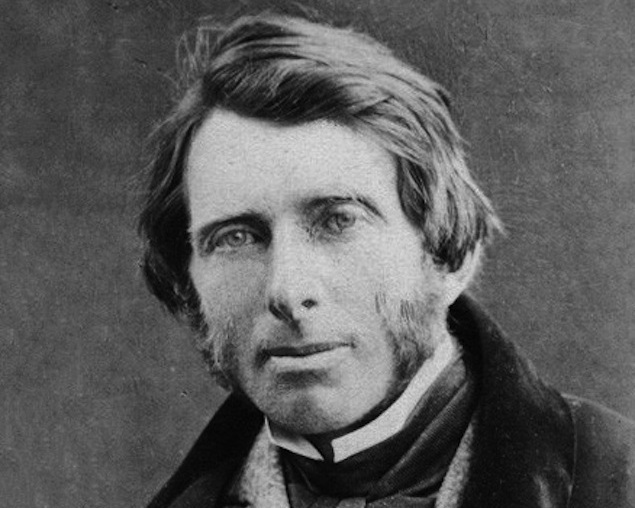
Ruskin on perfection and alienation

October 2, 2022

Imperfection and disorder are necessary for satisfaction

I have made the point previously, that for Ruskin the economic creation of illth (opposite to wealth) is not just a matter of environmental damage, pollution and so forth, it is also and importantly the destruction of human social capacity, of ‘soul,’ virtue, helpfulness, creativity and vitality.

Here, in an early analysis Ruskin takes illth in labour as stemming from demands for perfection, and the demands of machinery, which restricts human error, and hence creativity. I ask people to note, but ignore the sexism of the language, this obviously is intended to apply to women and men equally. I also apologise for the length of the quotations, but sometimes it is easier to read the originals.

Hitherto I have used the words imperfect and perfect merely to distinguish between work grossly unskilful, and work executed with average precision and science; and I have been pleading that any degree of unskilfulness should be admitted, so only that the labourer’s mind had room for expression. But, accurately speaking, no good work whatever can be perfect, and the demand for perfection is always a sign of a misunderstanding of the ends of art

Ruskin Stones of Venice: works vols 9-11. 202/845.

In this particular passage ‘art ‘refers to labour of builders and sculptors.

This for two reasons, both based on everlasting laws. The first, that no great man ever stops working till he has reached his point of failure: that is to say, his mind is always far in advance of his powers of execution, and the latter will now and then give way in trying to follow it; besides that he will always give to the inferior portions of his work only such inferior attention as they require; and according to his greatness he becomes so accustomed to the feeling of dissatisfaction with the best he can do, that in moments of lassitude or anger with himself he will not care though the beholder be dissatisfied also.

I believe there has only been one man who would not acknowledge this necessity, and strove always to reach perfection, Leonardo; the end of his vain effort being merely that he would take ten years to a picture and leave it unfinished. And therefore, if we are to have great men working at all, or less men doing their best, the work will be imperfect, however beautiful. Of human work none but what is bad can be perfect, in its own bad way.

Perfection is impossible and dissatisfaction is an inevitable part of the creative process.

The second reason is, that imperfection is in some sort essential to all that we know of life. It is the sign of life in a mortal body, that is to say, of a state of progress and change. Nothing that lives is, or can be, rigidly perfect; part of it is decaying, part nascent. The foxglove blossom,—a third part bud, a third part past, a third part in full bloom,—is a type of the life of this world. And in all things that live there are certain irregularities and deficiencies which are not only signs of life, but sources of beauty. No human face is exactly the same in its lines on each side, no leaf perfect in its lobes, no branch in its symmetry. All admit irregularity as they imply change; and to banish imperfection is to destroy expression, to check exertion, to paralyze vitality. All things are literally better, lovelier, and more beloved for the imperfections which have been divinely appointed, that the law of human life may be Effort, and the law of human judgment, Mercy.
Accept this then for a universal law, that neither architecture nor any other noble work of man can be good unless it be imperfect; and let us be prepared for the otherwise strange fact, which we shall discern clearly as we approach the period of the Renaissance, that the first cause of the fall of the arts of Europe was a relentless requirement of perfection, incapable alike either of being silenced by veneration for greatness, or softened into forgiveness of simplicity.

Disorder is inherent to life and to vitality. Requirements for perfection are harmful to human nature and we should allow people to fail.

I have already enforced the allowing independent operation to the inferior workman, simply as a duty to him, and as ennobling the architecture by rendering it more Christian.

We invite in failure to build art. It is necessary, and helps incorporate people’s variations, capacities and freedom into the work.

Wherever the workman is utterly enslaved, the parts of the building must of course be absolutely like each other; for the perfection of his execution can only be reached by exercising him in doing one thing, and giving him nothing else to do. The degree in which the workman is degraded may be thus known at a glance, by observing whether the several parts of the building are similar or not; and if, as in Greek work, all the capitals are alike, and all the mouldings unvaried, then the degradation is complete; if, as in Egyptian or Ninevite work,

Ruskin’s point is so important that he condemns Classical Greek work which was often thought the epitome of style and to be aimed for.

How much the beholder gains from the liberty of the labourer may perhaps be questioned in England, where one of the strongest instincts in nearly every mind is that Love of Order which makes us desire that our house windows should pair like our carriage horses, and allows us to yield our faith unhesitatingly to architectural theories which fix a form for everything, and forbid variation from it. I

Ruskin goes on to make sure that his audience do not take him to be advocating for complete chaos, even going so far as to praise “our commerce” which shows this is an early work.

Work and Creative Labour needs some chaos

Earlier in the book he remarks of a stone mason, and points to the chaos of creativity

you find his work perfect of its kind: but if you ask him to think about any of those forms, to consider if he cannot find any better in his own head, he stops; his execution becomes hesitating; he thinks, and ten to one he thinks wrong; ten to one he makes a mistake in the first touch he gives to his work as a thinking being. But you have made a man of him for all that. He was only a machine before, an animated tool.

Ruskin Stones of Venice: works vols 9-11. 192/835.

Recognising this creativity in imperfection, the necessity of space for thought and feeling, and the necessity of the risk of failure is to free people. The opposite is to destroy people.

And observe, you are put to stern choice in this matter. You must either make a tool of the creature, or a man of him. You cannot make both. Men were not intended to work with the accuracy of tools, to be precise and perfect in all their actions. If you will have that precision out of them, and make their fingers measure degrees like cog-wheels, and their arms strike curves like compasses, you must unhumanize them. All the energy of their spirits must be given to make cogs and compasses of themselves. All their attention and strength must go to the accomplishment of the mean act. The eye of the soul must be bent upon the finger-point, and the soul’s force must fill all the invisible nerves that guide it, ten hours a day, that it may not err from its steely precision, and so soul and sight be worn away, and the whole human being be lost at last—a heap of sawdust, so far as its intellectual work in this world is concerned: saved only by its Heart, which cannot go into the form of cogs and compasses, but expands, after the ten hours are over, into fireside humanity. On the other hand, if you will make a man of the working creature, you cannot make a tool. Let him but begin to imagine, to think, to try to do anything worth doing; and the engine-turned precision is lost at once. Out come all his roughness, all his dulness, all his incapability; shame upon shame, failure upon failure, pause after pause: but out comes the whole majesty of him also; and we know the height of it only when we see the clouds settling upon him. And, whether the clouds be bright or dark, there will be transfiguration behind and within them

Emphasis added

This applies obviously to disciplined factory work of the type common in the modern world. Again, we might have to scrape by the rhetoric on other forms of slavery; they also involve soul destruction, perhaps in different ways, perhaps in similar ways. The point is that there is no care for humanity in these processes.

And now, reader, look round this English room of yours, about which you have been proud so often, because the work of it was so good and strong, and the ornaments of it so finished. Examine again all those accurate mouldings, and perfect polishings, and unerring adjustments of the seasoned wood and tempered steel. Many a time you have exulted over them, and thought how great England was, because her slightest work was done so thoroughly. Alas! if read rightly, these perfectnesses are signs of a slavery in our England a thousand times more bitter and more degrading than that of the scourged African, or helot Greek. Men may be beaten, chained, tormented, yoked like cattle, slaughtered like summer flies, and yet remain in one sense, and the best sense, free. But to smother their souls with them, to blight and hew into rotting pollards the suckling branches of their human intelligence, to make the flesh and skin which, after the worm’s work on it, is to see God, into leathern thongs to yoke machinery with,—this is to be slave-masters indeed; and there might be more freedom in England, though her feudal lords’ lightest words were worth men’s lives, and though the blood of the vexed husbandman dropped in the furrows of her fields, than there is while the animation of her multitudes is sent like fuel to feed the factory smoke, and the strength of them is given daily to be wasted into the fineness of a web, or racked into the exactness of a line.

Ruskin tends to make a point repeatedly, but repetition can be good.

Let me not be thought to speak wildly or extravagantly. It is verily this degradation of the operative into a machine, which, more than any other evil of the times, is leading the mass of the nations everywhere into vain, incoherent, destructive struggling for a freedom of which they cannot explain the nature to themselves. Their universal outcry against [riches], and against nobility, is not forced from them either by the pressure of famine, or the sting of mortified pride. These do much, and have done much in all ages; but the foundations of society were never yet shaken as they are at this day. It is not that men are ill fed, but that they have no pleasure in the work by which they make their bread, and therefore look to [riches] as the only means of pleasure. It is not that men are pained by the scorn of the upper classes, but they cannot endure their own; for they feel that the kind of labour to which they are condemned is verily a degrading one, and makes them less than men. Never had the upper classes so much sympathy with the lower, or charity for them, as they have at this day, and yet never were they so much hated by them for, of old, the separation between the noble and the poor was merely a wall built by law; now it is a veritable difference in level of standing, a precipice between upper and lower grounds in the field of humanity, and there is pestilential air at the bottom of it.

Ruskin goes on to make a point which will not be popular today, but he argues that obedience is not an oppression if it involves responsibility, admiration, and relationship. This reverence can be humanising, but it is not found in the modern workplace.

to feel their souls withering within them, unthanked, to find their whole being sunk into an unrecognized abyss, to be counted off into a heap of mechanism numbered with its wheels, and weighed with its hammer strokes—this, nature bade not,—this, God blesses not,—this, humanity for no long time is able to endure.

One final quotation relevant to sociology, and probably a reference to Adam Smith’s remarks on the production of pins. Ruskin emphasises the more profit, less soul and satisfaction aspects of production, which Smith also notes, but is less often quoted on.

We have much studied and much perfected, of late, the great civilized invention of the division of labour; only we give it a false name. It is not, truly speaking, the labour that is divided; but the men:—Divided into mere segments of men—broken into small fragments and crumbs of life; so that all the little piece of intelligence that is left in a man is not enough to make a pin, or a nail, but exhausts itself in making the point of a pin or the head of a nail. Now it is a good and desirable thing, truly, to make many pins in a day; but if we could only see with what crystal sand their points were polished,—sand of human soul, much to be magnified before it can be discerned for what it is—we should think there might be some loss in it also. And the great cry that rises from all our manufacturing cities, louder than their furnace blast, is all in very deed for this,—that we manufacture everything there except men; we blanch cotton, and strengthen steel, and refine sugar, and shape pottery; but to brighten, to strengthen, to refine, or to form a single living spirit, never enters into our estimate of advantages. And all the evil to which that cry is urging our myriads can be met only in one way: not by teaching nor preaching, for to teach them is but to show them their misery, and to preach to them, if we do nothing more than preach, is to mock at it. It can be met only by a right understanding, on the part of all classes, of what kinds of labour are good for men, raising them, and making them happy; by a determined sacrifice of such convenience, or beauty, or cheapness as is to be got only by the degradation of the workman; and by equally determined demand for the products and results of healthy and ennobling labour.

Overcoming the problems?

Ruskin goes on to emphasise this chaos and failure, as part of his solution to the problem of destructive work. Firstly:

Never encourage the manufacture of anything not necessary, in the production of which invention has no share.

If something is not absolutely necessary now, then the worker should have time and place for creativity.

He illustrates with the glass trade:

Glass beads are utterly unnecessary, and there is no design or thought employed in their manufacture. They are formed by first drawing out the glass into rods; these rods are chopped up into fragments of the size of beads by the human hand, and the fragments are then rounded in the furnace. The men who chop up the rods sit at their work all day, their hands vibrating with a perpetual and exquisitely timed palsy, and the beads dropping beneath their vibration like hail.

Neither they, nor the men who draw out the rods or fuse the fragments, have the smallest occasion for the use of any single human faculty; and every young lady, therefore, who buys glass beads is engaged in the slave-trade…
But glass cups and vessels may become the subjects of exquisite invention; and if in buying these we pay for the invention, that is to say, for the beautiful form, or colour, or engraving, and not for mere finish of execution, we are doing good to humanity.

The contrast is obvious.

Secondly we have to accept a degree of roughness.

never… demand an exact finish, when it does not lead to a noble end.

This is to protect and help the worker improve….

If you are to have the thought of a rough and untaught man, you must have it in a rough and untaught way; but from an educated man, who can without effort express his thoughts in an educated way, take the graceful expression, and be thankful. Only get the thought, and do not silence the peasant because he cannot speak good grammar, or until you have taught him his grammar….

Always look for invention first, and after that, for such execution as will help the invention, and as the inventor is capable of without painful effort, and no more. Above all, demand no refinement of execution where there is no thought, for that is slaves’ work, unredeemed….

on a [small] scale, and in a design which cannot be mathematically defined, one man’s thoughts can never be expressed by another: and the difference between the spirit of touch of the man who is inventing, and of the man who is obeying directions, is often all the difference between a great and a common work of art.

I suspect this request is a bit naïve as owning perfection will come to be associated with riches and status, if we have not changed society, as mechanical perfection is more easily evaluated than imperfect invention, and thus it will be demanded. However Ruskin continues with his glassware example, to make the point.

The old Venice glass was muddy, inaccurate in all its forms, and clumsily cut, if at all. And the old Venetian was justly proud of it. For there is this difference between the English and Venetian workman, that the former thinks only of accurately matching his patterns, and getting his curves perfectly true and his edges perfectly sharp, and becomes a mere machine for rounding curves and sharpening edges; while the old Venetian cared not a with whether his edges were sharp or not, but he invented a new design for every glass that he made, and never moulded a handle or a lip without a new fancy in it. And therefore, though some Venetian glass is ugly and clumsy enough when made by clumsy and uninventive workmen, other Venetian glass is so lovely in its forms that no price is too great for it; and we never see the same form in it twice.

Now you cannot have the finish and the varied form too…. If the workman is thinking about his edges, he cannot be thinking of his design; if of his design, he cannot think of his edges. Choose whether you will pay for the lovely form or the perfect finish, and choose at the same moment whether you will make the worker a man or a grindstone.

This is purely a social division again.

We are always in these days endeavouring to separate the two; we want one man to be always thinking, and another to be always working, and we call one a gentleman, and the other an operative; whereas the workman ought often to be thinking, and the thinker often to be working, and both should be gentlemen, in the best sense….

it is only by labour that thought can be made healthy, and only by thought that labour can be made happy, and the two cannot be separated with impunity.

The point is that the creation of real beauty, humanity and wealth does not degrade the producers, or anyone else. It requires time for reflection and allows the possibility of human failure. Capitalism, or industrialism, by their mechanical and time deficient productive processes generally create illth (physical and psychological) not wealth and thus, at the least, require modification (if that is possible), and this implies the production of less, if better, ‘stuff’.

Inflation and interest rates

September 13, 2022

I probably do not understand economics that well, so feel free to inform me. But here we go:

The consumer price index goes up by x% mainly because of food and energy (drought, floods, sudden gas shortages, increasing energy company profits), but possibly also because of Covid lockdowns in China, or climate change in China, India and Pakistan which is knocking factories out.

The central bank claims people have too much money (there is a loose money supply), so that is why we are getting inflation. I have not seen much evidence that most people, have too much money, or that inflation is being driven by wages increasing faster than profits. Indeed quite the other way around….

Anyway, the central bank appears to assume that people in general must have too much money, therefore it increases interest rates to restrict the money supply.

As those with loans pay more for those loans, they have less money to spend… there is less demand and so prices are supposed to come down.

However, low to median wage people already have less money because its being eaten up by price rises in food and energy – which they might NEED.

Now after the interest rate rise they have even less money and may get thrown out of their homes because they also need to eat etc…. and can’t pay off the loan increases…. Some people live pretty close to the edge.

They can always starve the children I guess, but the situation is likely to get worse as small business with little capital reserve need to put up prices in general to pay off the increased interest on the loans they have taken….

So inflation increases as prices go up and therefore the central bank puts interest rates up again, to try and lower inflation, and drives more people out of their homes and, just maybe, some small businesses go out of business, because they cannot compete with those big businesses with capital reserves…. and the economy gets even more centralised, and people have even less chance of upwards social mobility.

And given small businesses are major employers, it possibly means that closing small business increases unemployment. The IMF apparently has argued that US unemployment should about double to about 7.5% (I can’t find this information, so it may not be correct.). You might wonder about a system whose solutions to problems, openly involve making ordinary people’s lives more precarious.

With less competition, big companies can put up prices, and they can easily coordinate putting up prices, and blame it on inflation. They don’t have to do this of course, but I’d be surprised if some near monopolies don’t – after all making profit for the least cost, is the point of the game. They can also argue that because of cost increases they can’t afford to put up wages – again making profit for the least cost. So the policy is likely to help the transfer of income from ordinary people to the corporate rich and shareholders.

With all the homes being sold, and high interest rates perhaps house prices fall, perhaps they don’t – they didn’t with huge interest rates some years back, where I live. I guess people with money just bought more property.

So this common anti-inflation technique, is bad for people and small business, but ok for big business and people with money to invest in property, and it protects the banks because they get more income, and more foreclosures?

Is that how it works?

The non-commons

September 9, 2022

The non-tragedy of the commons

I assume people know about the so called “tragedy of the commons” which was later retracted by its populariser, Garrett Hardin. The theory is that naturally selfish people will seek to take personal advantage of common land, and this uninhibited usage will eventually destroy the land through over-grazing over-cropping, over-fishing, etc.

This proposal stands in contrast to the empirical fact that there are commons on the Earth, which have survived as commons or shared property for hundreds and possibly thousands of years. What we might call hunter and gather societies generally exist with common ownership of ‘country’; the people are connected with the land they roam upon. They may even share the land with other groups.

These commons are managed by the users, who also have an interest in the commons being maintained for their own, and other locals’, benefit. So they try to stop people over-exploiting the commons – just as non-commoners might try and stop other forms of theft. You can look up the work of Elinor Ostrom and her followers if you choose to see how this works.

It appears that capitalist modes of behaviour, and capitalist ‘common sense’, destroy the commons. In capitalism people’s control over non-private property which serves them all, appears to be largely unrecognised by business or State. Capitalists regularly pollute the air, rivers, fields, towns, and so on – because they have ‘defined’ and ‘enforced’, this common space as an ‘externality’ – something which is external to the regime of private property, or economic cost, and therefore does not count. The power of local people over non-private property, or even their private property that obstructs big business, is often destroyed or marginalised. Consequently, we could expect capitalists to behave disastrously towards commons in the way that Hardin described, and indeed many argue that taking away the commons was part of the transition to capitalism. Therefore his article could better be titled “The Tragedy of all commons and common resources under Capitalism.”

By saying that people cannot naturally own things in common, he also works to discourages people from working together for common production and for shared benefits. The alternative is that one person has to own property, and the others labour for the owner, in return for the common benefits. This helps establishes an authoritarian basis for common work, and gets rid of democratic voices.

This hostile attitude to commons, and the declaration that common selfishness will destroy it, is possibly one of the roots of the ecological crisis. Common and private land, and anything else, can be happily ruined by its owners. Any commons, again including the air and the climate, can be ruined if it is not privately or State owned, or if the owners don’t have comparable power to those doing the ruining. Capitalism assumes Common Property is up for defacement and destruction, and that there is no such reality as common benefit without the exchange of money. The regime assures people that state owned property (crown land etc) is always vulnerable to being sold off to people with influence.

Pro-capitalist attack on the commons and defense of the non-commons

I was recommended to read a libertarian article on the impossibility of common property, which is interesting and a bit of an illumination of how neoliberalism works as theory. The argument goes like this:

  • Liberty is bound up in individually, or corporately owned, private property and with capitalism.
  • Hence everything should be made into private property to maximise liberty.
  • Collective property of any type, other than corporately owned, leads to other people telling you what to do (what commoners might call ‘managing shared resources’), which is bad.
  • Liberty appears to be about being able to buy what you can afford and sell what you have. Nothing else.
  • Therefore collective property, or commons, which cannot be sold, should be banned to preserve liberty and taken into private hands. [People with property seem to have the right to tell other people what to do, without it being a violation of liberty]
  • Everyone who believes in the possibility of collective property or public goods, not impinging on your right to do whatever you want, is an idiot who believes in pixie dust and the virtue of officials.
  • Free Markets on the other hand, are absolutely wonderful, and have no problems at all. There are no power imbalances in free markets. Even Mother Teresa would recognise that they are morally superior to systems which have public goods, commons, or collective forms of property. Capitalism is perfect and can only be improved by destroying stupid commons and selling off collective goods to those who can afford them, so they can control them and look after them.
  • Even public institutions should be sold off. Private police, and private courts, will support everyone’s property rights, not just their owner’s interests, or the rich who can pay more for the services. There is apparently no conflict of interest, because there is competition.
  • The idea of collective property and public goods only exists to support non-libertarian state power structures. Collective and shared property does not exist without the State. There has never been collective property without a state.
  • Once you realise all of this you will be like Frodo and chuck the evil ring of collective property into a volcano and let freedom, joy and happiness rule.

If it is not clear, I think this argument is largely glib, contradictory, unconvincing and ignorant of counter-evidence – and most of the statements could easily be reversed (“Liberty is bound with collectively owned and controlled property,” “Accumulation of private property leads to people being able to command others”) – but like most neoliberal or libertarian arguments, does help boost corporate power and control over people’s lives and freedoms. It justifies business destroying commons or stealing commons and turning them into non-commons in the name of liberty. It acts as a warning of the probable loss, and precariousness, of certain non-capitalist rights.

Tragedy of the non-commons

In some ways the article meshes with another article of Hardin’s, Lifeboat ethics, where he argues against environmentalists who say that “no single person or institution has the right to destroy, waste, or use more than a fair share of [the planet’s] resources” by suggesting we are in a lifeboat and should leave the poor (or the people in less ‘safe’ prosperity) to drown, so we can survive. Helping them simply overloads the lifeboat and we all die…. As there is no commons, and we are all thieves anyway, we don’t need to worry about those who are destroying the planet or how they do it – we just leave the poor to die and celebrate our apparent safety.

He also states: “To be generous with one’s own possessions is quite different from being generous with those of posterity.” However, that is precisely what he is doing, sacrificing posterity’s common good, for the personal present day good of the planet destroyers or the polluter elites.

We also don’t know we are safe from the planet destroyers. Self interested people, accepting this capitalist ethic, should perhaps wonder why they should assume the planet destroyers will let them use the lifeboat and not just push them away?

Commons in Practice

As stated earlier Garret Hardin in his later life recognised that the Tragedy of the Commons occurred when the commons wasn’t “well managed.” He probably realised this when, after much discussion with Elinor Ostrum, he recognised that some commons had lasted for thousands of years. (see also Buck)

For some reason his back down is nowhere near as well known as the original paper. Probably the original paper serves a more acceptable pro-capitalist ideological purpose.

So to reiterate. The forces disrupting commons tend to be:

  • Violence by the dominant classes. Generally aristocrats or capitalist, stole the commons for themselves and threw the people off, saying the land had no real ownership so it was theirs.
  • Ideologies that say everyone should exploit any situation for maximum profit as with neoliberal egotistical capitalism.

The tragedy is brought about by unequal power and capitalism, not by the human nature of the commoners.

Successfully run commons, could be considered ‘socialism’ in action.

Significant property is shared, utilised and cared for, and people who would rip it off, are ‘punished’ by the collective (reprimands, silence etc) or slowly have their rights to use commons taken away. Commons users can democratically participate in the administration (usually as a family unit) of the commons, and there is no significant inherited privilege to use force against other commoners other than to protect the commons from exploitation or appropriation, as agreed to by other participants.

The tragedy of the commons should be seen as a reason for regulating capitalists and stopping them from destroying other people’s collective property, rights and livelihood for the capitalist’s own profit, as all polluting companies do by poisoning air, water, land, ecologies and so on, to lower their costs and increase their profit. We, the people and the ecologies we live in, should not be devalued in comparison with private property or private profit.