Posts Tagged ‘climate change’

The climate scientist hoax?

September 15, 2019

People frequently tell me, with an air of great authority, that climate scientists only believe in climate change because they gain personal benefit from it.

Thus many people claim that you simply put “climate change” into a research project, say about the nesting habits of squirrels, and lo and behold, the grant awarding offices will give you the money to research squirrels which you previously could not get. Its a sure money winner apparently.

They never say how they know these kinds of statement are true. I would doubt that many of those making these statements had ever put in a grant application to get money to research anything, and I doubt still more that these applications were suddenly accepted because they added a quick reference to climate change the next year.

They certainly never say who they got the grant money from.

They don’t seem to think about all the questions and work they would have to do to relate the squirrels (or whatever) to climate change, whether climate change affected the nesting habits in general and how, or whether any observed changes varied by place? Did climate change have an effect on forestation, and other parts of the ecology, or where the squirrels being affected more severely by human initiated deforestation, pollution, water loss to mines, or development, rather than climate change? What other fauna might be being affected by the same underlying factors, and how does that relate to the effects being noticed in squirrels?

Is there a long standing set of problems about the nesting habits of squirrels, or are they commenting on a set of known changes in squirrel nesting patterns? What does previous literature suggest and how are they reacting to it.

If you have written a grant, you will know that you have to do slightly more than use a few buzz words to get one, and indeed the buzz words may go against you. Various conservative governments have in my life time, decided not to award grants the Australian Research Council had approved, because they did not like the politics implied by the buzz words of the research.

Let us be clear: In reality, scientists seem to get more more or less no benefit at all from supporting climate change.

Not only will they not get special treatment in grant applications, but they can get silenced or sacked by Governments if they speak or give the politically wrong results. Experiments and data collections get shut down, or diverted elsewhere. They get attacked by journalists and internet trolls. They receive death threats, if they get noticed. They run the risk of their personal emails being subpoenaed by right wing think tanks looking for scandal. They have to fight against the almost bottomless funding of fossil fuel companies. They have to constantly refute material that has been refuted before. They have to face up to the massive disruption that is happening to the Earth, with the knowledge that effective action has been continually blocked for ‘economic’ reasons and special deals, and that in the US and Australia, effective action is completely improbable. They even have to watch as governments launch new permissions for business to pollute and destroy the environment, including vital water supplies. If they are biologists, they are looking at whole eco-systems collapsing or dying out, and they have an awareness of what is likely to come. Their favourite squirrels and everything that depends on them, might be dying out. This is depressing to put it mildly.

The only benefit I can think of is that scientists, and others who recognize climate change is real, get the sense that they are standing up for truth and reality. They are refusing to bow down to State and Corporate authority. And they get some support from other scientists, but that’s about it.

“Solar radiation management”

September 10, 2019

Solar radiation management usually involves reflecting sunlight back into space to lower global warming. The cheapest versions of this proposal involve injecting particles or gasses into the upper atmosphere. The idea is it might give us time to reduce emissions, and reduce Greenhouse Gas levels in the atmosphere, through some kind of carbon removal technology which actually works at the kind of levels we need.

There are a few problems:

  1. We can only model the effects, and use those models to guide us in implementation. We will not know the effects until they arrive. Our models will always be out of date.
  2. Effects from this kind of geoengineering will not be immediate, so it will be even harder to judge what effects are arising from the technology.
  3. Some countries will suffer bad weather events after the process begins. We won’t know if they suffered those effects because of the process, because of climate change, or because of normal weather or a combination of all three.
  4. Some countries which suffer bad weather effects leading to famine or large scale destruction, might decide this is climate warfare against them – which could lead to conventional war. If not they would probably demand and deserve compensation, which would probably cause frictions between badly affected countries.
  5. We would have to have a world-wide agreement on this, and ownership of this, how it was used and what the effects are, to preserve peace and co-ordinate the practice. This is probably impossible.
  6. It will not stop the seas from getting more acidic, leading to ocean death, especially if it encourages delays to reduction of GHG emissions.
  7. It will be costly – not amazingly costly, but costly enough. If there is a world financial crash or war, then it could be discontinued, and climate change might “catch up” leading to more weather instability, and ferocity.

This is not a solution. But we don’t have a solution. This is a problem.

Cthulhuocene

August 29, 2019

HP Lovecraft’s story, The Call of Cthulhu, opens with some of the most famous lines of horror literature:

The most merciful thing in the world, I think, is the inability of the human mind to correlate all its contents. We live on a placid island of ignorance in the midst of black seas of infinity, and it was not meant that we should voyage far. The sciences, each straining in its own direction, have hitherto harmed us little; but some day the piecing together of dissociated knowledge will open up such terrifying vistas of reality, and of our frightful position therein, that we shall either go mad from the revelation or flee from the deadly light into the peace and safety of a new dark age.

Lovecraft reverses the then standard idea that we more or less know everything and can know everything relevant, and proclaims this lack merciful rather than horrifying. We are forced to remain in blissful ignorance of the nature of the universe and “our frightful position therein”. The story then proceeds to undo this opening statement, and make it clear what at least part of that frightful position is, and how vulnerable we are to destruction from things we don’t, and cannot, understand.

In a way, this almost exactly suggests how we approach the Anthropocene. The customary position is to refuse to “correlate all our contents,” to argue that the world cannot end from trivial and everyday human actions, to reinforce our ignorance and lack of understanding of an object which is beyond our understanding, and certainly beyond our ability to predict. However, the sciences continue to piece together dissociated knowledge, and open up the terrifying vistas of a climate and ecology, so disrupted and out of control, that we either go mad, or flee into a new dark age in which science and knowledge is subservient to fear and politics.

Both stories are almost detective stories, “flashed out from an accidental piecing together of separated things.” Lovecraft’s tale is a detective story which links events from all over the world. A professor dies, from unknown causes, after being jostled by a “negro”; racism and horror of the unknown is never far separated in Lovecraft. His heir goes through the professor’s boxes and discovers strange things. These scattered objects and texts, like the fragments that most of us live with in the Anthropocene, strange weather, disappearance of insects, drying rivers, weird snowfalls, scientific gibberish, conflicting accounts, jumbled correlations from over the world, bad dreams, disease, disturbed artists, and mental illness out of nowhere, hint at a story which will destroy the hero and reader’s peace of mind forever.

Images recur, of a hybrid being – “simultaneous pictures of an octopus, a dragon, and a human caricature” – but “it was the general outline of the whole which made it most shockingly frightful.” Again it is the outline, the suggestion which is beyond easy resolution, like the Anthropocene. No one knows, or can know, what the Anthropocene means, what its outline really is. It can look like sea level rise, drought, storm, or any number of ‘ordinary’ things, but putting them together all at once, in varied combinations, is impossibly disturbing. All we can tell is the natural order is not what we thought. Its image can suggest “a fearsome and unnatural malignancy”.

Both tales bring into mind the vast ancientness of the planet, which has lived without us for billions of years, and will live without us for billions of years. This creature, beyond conception, harbours no special affection for humans, no hostility either, just complete lack of concern. Whether we worship it or not, counts for nothing, although worshippers might convince themselves otherwise. This massive creature, on whom we live and which we are part of, has been sleeping. The Holocene has been relatively free from upheavals, and indeed might have remained free from such upheavals for thousands of years, but we have prodded it, not perhaps, awake, but to roll over it its sleep, to scratch off its fleas, perhaps for some fragment of it to arise out of the oceans and throw civilisation aside without even noticing. Let us be clear, although the Anthropocene may mark a geological epoch, in terms of world existence it is nothing, a mere blip. In a billion years, a relatively small time in planetary life, nothing of the Anthropocene and human life will probably remain to be detected. The earth does not see us, we are no more special than any other species which has vanished in the past, trilobites, brontosaurs, giant dragonflies, all have been and gone

In the story Cthulhu rises from the depths of the Pacific as the earth moves, and science, so far beyond us as to be indistinguishable from magic shatters our reality, opening the strange and disparate affects we might ignore. However, rather anti-climatically, the being is driven back under the waves, more or less by accident. There was only good fortune that a ship was in the vicinity, otherwise the end would have come incomprehensibly to all, and it may yet come at any moment. Whatever safety we had was random.

Come or not, all those who hear of it, and understand however badly, can never be the same. The image haunts them as does the dread. “A time will come-but I must not and cannot think!” Others carry on, the world remaining veiled. Let us hope their dreams, and ours, do not further the world-beast turning once again.

Protest then and now….

August 24, 2019

We were lucky when I was young. In the 1980s it is true that leaders in the English speaking world suddenly decided that supporting corporations and hitting the poor would solve all our problems, but they also were rational enough not to want atomic war and global destruction. They understood what nuclear war meant. Basically the protestors and the dominant groups were in harmony – all of us preferred not to have nuclear war and the end of the world. As a result, we all lived through this potential universal death.

Even when it came to environment, the dominant groups largely thought saving the earth was good and possible, and that if it cost a few bucks extra that could be done. Even Margaret Thatcher thought global warming should be tackled, while she was in office – even if she later thought saving capitalism was more important than saving the planet. Apparently after retiring she wrote “Kyoto was an anti-growth, anti-capitalist, anti-American project which no American leader alert to his country’s national interests could have supported.”

Apparently she was persuaded by the usual groups of people. Exxon, Koch, Cato, Institute of Economic Affairs etc. who sold her the 80s mantra, we can do everything if we just don’t get in the way of corporate profit. No work, no planning, is necessary (unless its planning to destroy the power of ordinary people).

This was the transition to the change in which leaders began to value elite profit more than survival. They cannot imagine a future without corporate capitalism and economic growth and I guess that tips them out of reason and their position becomes there is no alternative – we have to destroy everything else in order to survive. Something of a contradiction, we might think.

However, our recent leaders don’t seem even this rational. Trump for example is encouraging corporations to pollute and poison people even more than they might want. The current leader of Brazil apparently started by claiming that the land clearing he had promised for the Amazon was not happening and then trying to suppress the bearer of news:

“The state-run National Institute for Space Research (INPE) has reported a 88-per cent increase in deforestation in June year-over-year, and said that cleared area increased 278 per cent between July 2018 and July 2019.”
“Jair Bolsonaro claimed that the statistics were “lies” meant to tarnish the image of Brazil and its government. He went on to fire INPE head Ricardo Galvao after suggesting that he was working for a foreign non-profit group.”

When the massive fires arrived, he apparently first of all claimed they were not happening, despite the evidence of satellite photographs, later claiming the fires were lit by green NGOs. It seems obvious that people who wanted to clear the Amazon, and reduce oxygen, would be happy with the fires.

Our NSW government is a simple mess of contradictions, but if you want support from them, then do some land clearing, help destroy people’s lived environment in the cities for profit and you will be fine. Our two main parties in Australia, seem to want not just to maintain coal pollution, but to increase it. Again because it would profit some people.

What does money profit anyone if they loose the world to spend it in? The contradiction drives people crazy.

Faced with this lack of sense and coherence, contemporary righteous politicians seem to have decided that they will do as much destruction as possible.
If they are going down they will take the world with them, and maybe they will be wealthy enough to buy some kind of survival, or support from those who are wealthy enough to be building fortress bunkers. This is an unusual combination of psychological factors, but it is now ingrained. Maybe corporations really to select for psychopathology?

The common attitude seems to be that normal folk are disposable and easily deceived, and service directed at them is pointless – apparently these people do not share the same world or wealth. I guess this attitude could also function as a psychological defence against climate change – they might suffer or die, but we will not.

What do you do in such a situation, to fight a leadership wedded to destruction?

Consolation for the Pacific Islands

August 19, 2019

The Pacific Islands forum has been held recently. Australia made a splash over keeping up the coal burning, and don’t you worry about those rising sea levels. I mean its not our problem…

From the Sydney Morning Herald

Tuvalu prime minister Enele Sopoaga, whose tiny atoll nation face a growing threat from rising seas levels, said members of the forum had called on Australia not to open new coal mines, move away from coal-fired power and to “do things that are necessary to keep up with the targets of the Paris agreement”.

[But], the Morrison government has worked furiously behind the scenes to convince counterparts to tone down the language of the draft Funafuti Declaration, arguing any reference to a transition away from coal-fired power was a “red line” issue for Australia.

Lots of protest and then the deputy Prime Minister said:

“I also get a little bit annoyed when we have people in those sorts of countries pointing the finger at Australia and say we should be shutting down all our resources sector so that, you know, they will continue to survive,” he said.

“They will continue to survive, there’s no question they’ll continue to survive and they’ll continue to survive on large aid assistance from Australia.

“They’ll continue to survive because many of their workers come here and pick our fruit, pick our fruit grown with hard Australian enterprise and endeavour and we welcome them and we always will.

There you are: the capitalist paradise, “come and provide wage labour for us and everything will be ok”.

Jacinda Ardern the New Zealand Prime Minister supported the Pacific Island position and well known Australian radio gnasher, Alan Jones, with the usual calm of the Righteous stated:

“I just wonder whether [Prime Minister] Scott Morrison is going to be fully briefed to shove a sock down her throat. I mean she is a joke this woman…”

As usual, he tried to avoid Australian responsibility, by saying China produces lots of coal (true, but when I was young I was taught that because someone else did something bad, it didn’t mean I should do it as well), and he implied that seeing this statement as part of a repeated pattern of him encouraging violence against powerful women was “wilful misinterpretation of what I said to obviously distract from the point that she was wrong about climate change and wrong about Australia’s contribution to carbon dioxide level.” He also made a number of misleading charges about NZ, apparently being unaware that:

New Zealand’s primary renewable energy sources are hydro and geothermal power. About 80 per cent of New Zealand’s electricity comes from renewable energy, compared with about 20 per cent of Australia’s.

Now Pacific Islanders know righteous Australians hate New Zealand more than them.

Sea level rise is an issue for both Australia and the Pacific.

So far sea level rises have been largely trivial (maybe 7-9 centimetres over the last 25 years. Not really perceptible by human vision, especially given tidal variation, human perceptual adaptation and lousy memory. However, even this amount of sea level rise can make a huge difference in terms of flooding and storm surges in low lying lands (such as the Pacific Islands or Bangladesh), and certainly affects underground water supplies in those regions – and even in places like the US. You can see the information on the NASA websites…. Much of this increase may have occurred through the expansion of water through heat absorption.

However the problem is that once the land ice in the Arctic and Antarctic circles starts melting, which it is with the extraordinarily high temperatures they have been getting up in Greenland and Alaska, then we are in unknown territory. The melting is, as I understand it, way more pronounced than expected at this stage of the process, as were the high arctic temperatures. The more the ice melts, the more will melt, as the local temperature’s rise, due to lack of ice. There is also heady suspicion that there is a lot of methane under the ice. Releasing this will increase the rate of warming, so even more ice will melt. Glaciers all over the world seem to be shrinking, so this is not a purely arctic or antarctic event. Glacier shrinkage will cause massive water supply problems in many countries, and hence more refugee movements, and probably wars.

In 2007 the IPCC projected a high end estimate of 60 cm by 2099 (that will probably result in Bangladesh loosing a tenth or more of its land), but in 2014 they estimated 90 cm in the same period because of more rapidly increasing temperatures. Some people suggest that the last time the average temp was around 2 degrees warmer than pre-industrial times then the water was about 5m higher than now. That would do serious damage to most coastal cities. Most of the Pacific Islands would not be remotely habitable. Some people have suggested that, with runaway climate change we are looking at tens of metres of rise before the end of this century – we have to hope those figures are not correct – and most people will assume that.

If people keep pouring greenhouse gasses and pollution into the skies then the rates of sea level increase will be faster than if they stop. Certainly, it is extremely unlikely that water levels will go down. If Tuvalu is increasing in size, it is almost certainly not because water is going down. Land masses apparently increase for many reasons, but it would probably be unusual to hope that all significant land masses will rise by enough to offset the sea level rise.

Events are further complicated because if the Gulf Stream dies which seems probable, then London could get around about the same temperatures as Moscow – whatever they turn out to be – and so we might possibly get a re-icing in parts of Europe, but it seems unlikely, as that is primarily regional, and summer temperatures will be above freezing. Also for reasons I do not understand, sea level rises are not uniform across the globe.

The Pacific Islands, and many other places do seem threatened by sea-level rises. Some small islands in the Solomons have already become uninhabitable and have significantly eroded, and in other islands people are moving to higher ground – where such ground is available.

And the main cause of such rises, as understood at the moment, is greenhouse gas emissions. This comes largely from fossil fuel use, but agri-business practices and building practices are important as well. If we go past various tipping points, because of our emissions, there probably really won’t be much we can do and the levels of destruction Australia will experience from sea level rise alone, will almost certainly be extremely disruptive of anything resembling normal life here.

So while we are helping to destroy the Pacific Islands, we are also helping to destroy ourselves. But hell it makes someone a mighty amount of money.

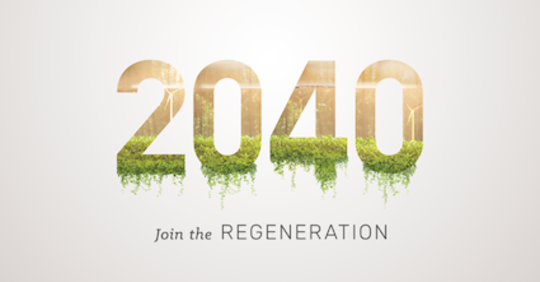
2040

July 7, 2019

I suggest that people see the film 2040. It portrays how we can start to beat climate change with the tech we have now. Its a bit glib on occasions but it gives hope that something could be done, if we could remove the corporate and governmental opposition.

First he goes to Bangladesh, to see how villages (we are talking shacks) can put solar on their rooftops and share it with other households, through a network of wiring and metres, which allows people to buy energy from this micro grid, even without being able to afford solar panels. The process allows microgrids to connect up, thus making a robust local system, which can cover the countryside. If the grid is broken by the increasing natural disasters of climate change, people can still get some power, as opposed to none.

This system would work well in Australia, but is currently illegal due to pro-corporate regulations. (We sold off our wires, and had to make them safe for private enterprise…). At the moment if i want to share my solar power with my next door neighbour i can’t. We need to make such links, installed by registered electricians, legal.

Then he looked at self driving electric cars, and how people could come to think of cars in terms of use, like they now think of music and films, rather than ownership. This would free up massive amounts of parking space which could be turned into urban farms, solving some of the food supply crisis, and relieving the need to transport food over vast distances. He also seemed to think it would reduce traffic and traffic jams, but i’m not sure about that. It might work because the cars go off after they have delivered you and don’t have to search for parking.

As far as I understand, this set up is not yet workable, making self driving cars that are relatively safe outside of small areas is still quite difficult. If it did reduce traffic, then you could also expect massive opposition from our toll road owners who have paid billions for waste property, and of course from oil companies who are not renown for their ethics, but are renown for ruthless political operation and massive misinformation campaigns. Anyone need to say Exxon? I’m not sure carpark owners would sell their property for urban farming either, but this could be solved by the State buying land and buildings back for people’s use (however unfashionable it is for the State to do anything useful).

Then there is regenerative agriculture. One person claimed that agriculture was responsible for more carbon emissions than burning fuels. This makes it important.

It turns out relatively easy to fix (apart from droughts). In Australia, industrial farming with fertilisers kills the soil, and the water runs off, taking the soil with it and taking the fertilisers into rivers where they provoke algal blooms and dead fish. Destructive ecologies spread.

The film maker visited a farmer who had simply planted a mix of grasses, sunflowers, sorgum, millet etc. and let them grow to about over a metre or so in height. Then he let in some cattle who ate them and defecated on the soil, and moved about as they are supposed to. Cattle that eat corn are unhealthy and their meat not so good for people, cattle that eat grass are pretty good alround.

After three months it was possible to see a marked difference between the old concrete like soil and this new spongy friable dark and moist soil. Apparently this process puts masses of carbon back into the soil and makes it more fertile without fertilisers. If we eat less meat then more soil can be let wild, we can store more carbon, and probably get a bit healthier.

We can also grow seaweed for food and fertiliser on platforms in the ocean deserts (although transport might be a bit of a problem). This provides areas for fish to grow, de-acidifies water from excess carbon, and could revitalise fish stocks – although we would have to stop industrial fishing from killing everything again. We could also do this closer to the coast. It is really easy to upscale with few negative ecological consequences.

Problem: Big agriculture will hate this, as it requires care rather than cheapness of production. They will fight against it. They want us to eat GMO foods that depend on brand name fertilisers and weed killers. However, small farmers should love it, and in the non-industrialised world saving small farmers, removes poverty (from dispossession for large farms…etc) and provides most of the food anyway. Some possible problem as crops rot releasing CO2 and methane, but still better than industrial ag.

Finally educating and empowering women and girls. Lowers population, increases care for the planet. The whole deal. What can I say?

Problem: Religions…. most of them.

Watch the film, and have a look at:

https://whatsyour2040.com/

2040

Trip to the Hunter Valley

June 9, 2019

I spent several days last week in the Hunter Valley, visiting various community groups, with colleagues.

I saw that the Hunter is covered with huge coal mines, most of which are hidden from the road by scenic barriers; mounds of earth with trees growing on them, or by metal panels stuck on stilts. It is almost as if the mining companies were not proud of what they were doing, and did not want people to observe it.

I also learnt that open cut coal mines tend to have two, or even three parts. There is the mine pit, which destroys the land it occupies and much of the land around it, and there are the waste mountains which are composed of the rocks and soil covering the coal and separating the coal seams. That also destroys the land it is piled on and around it. The third place is where the finished coal is dumped for transport.

Several of these processes require heavy water use. The coal dust is apparently damped down to keep it from flying around, although excavation through explosives cannot be damped. The coal at the “holding for transport place” is supposed to be damped down, again to stop it from flying about, although we watched for quite a while at one mine without any evidence of this damping happening. The air was heavy with clouds of coal dust. The truly massive trucks involved use lots of diesel which is also polluting, and poisonous to breathe, but they get the tax removed on diesel usage, so its all good.

People who live near mines tell us that coal dust covers everything, and the general suspicion seems to be that coal is not damped down at night. So everyone is breathing coal dust. The mine waste also produces dust. Its dumped from the big trucks and clouds of dust rise up. The ground and trees around the dumps are covered in white/grey powder. The growth is not healthy looking.

Mining companies are supposed to do rehabilitation of the mines. This apparently means filling the pits with water, which then leaches poisons from the coal and sinks into the land taking the poisons with it. The process not only poisons rivers and bore wells but deprives the areas of water flow, on top of the water the mines get to appropriate for their own purposes. I’m not sure why the pits are filled with water, but the obvious suggestion is that it is cheap for the companies. There is some evidence of seedling planting but this mainly on the mounds that are shielding the mines from tourists, or on the sides of the dumps facing the roads. Apparently areas away from vision are largely untouched, although clearly I cannot confirm that. Most of the growth you see covering the sides of the rubble areas looks random, or natural, and very sparse. It is probably at least as unhealthy as the areas covered in the white or grey powder from the dumps.

We did not see many people working the mines or the dumps. The huge trucks, conveyor belts and mining by blowing ground up and using huge digging implements to scoop up the rocks, means few workers are needed. We were also told that most of the workforce is now contracted out, so the workers earn much less than they used to and have no sick or holiday pay or pension funds other than what they put aside out of their diminished pay. The aim of business is nearly always to decrease wages where possible.

People of course fight new mines and mine expansion, because it endangers their health, their communities and the countryside they live in. Mining companies buy up property, but this always comes with a non-disclosure agreement, so people cannot find out what the prices being paid are, and so don’t know what to hold out for; this amounts to suppression of the market for profit. People who protest might find that their houses are not bought while the rest of the village is destroyed. Sometimes companies were told to destroy the houses because the areas was too dangerous or too uninhabitable, but they would rent out the houses instead, further poisoning their workers who rented them.

People who protest can suffer from death threats in the streets from pro-mine people, which the police take seriously, and they can similarly be threatened by government agents although, so far, not with death. Under new laws they can be imprisoned for up to seven years, and if they protest about these laws can be told they are for their safety, as protesting on mines can be dangerous. If the court rejects a mine because of its destruction, then the laws can be changed retrospectively to get that mine through. It also seems to matter who you are in terms of successful protests. So far more mines seem to have been stopped to protect horse studs than farms or villages. As one person said “Horses are more important than people”.

It can sometimes seem like the main reason for the mines going ahead is the pleasure of destruction. In one place where a mine was stopped, the fertile ground, attractive hills and Aboriginal sacred sites were clear. It would have been a loss for very little long term gain.

People have argued that agriculture could make more for the local economy and the State (mining companies pay very little in royalties for our minerals, and generally avoid tax), and that farming would continue a lot longer that mining with fewer health side effects, but even that is not enough to persuade the State not to support miners. One group was told by a government official that “wherever there are resources we will harvest them” – clearly fertile land is not a resource which can be harvested.

We were taken to one site were a well known company had spent considerable amounts of money building gas storage facilities, only to find that the company prospecting for that company had neglected to inform them that the plain flooded regularly, and that the ground was so honeycombed that any gas bored out would leak into the air. The Government office relied entirely on documents provided by the company to do the approval and did not know about either point. They did no further research.

Some people alleged the government and its committees had been stacked with people from the fossil fuel industry or chosen by that industry, so there was no possible objections to the conduct of the industry or what it could destroy. This appears standard throughout most of the capitalist world.

Quite a number of people suggested that the process was so biased towards the mining industry that there was no point engaging with the State, actions had to be taken outside it to have any effect. However, there is no doubt the courts can be useful, if the situation is aligned, and pro-mining evidence can be shown to be wrong. Ultimately gains are precarious, but it seems necessary to participate.

One group was trying to get people to think about the future of the Hunter beyond coal. They were told by a representative of the industry that diversification was suicide. The stupidity of this statement, if reported correctly, is unbelievable. Focusing on one industry is a recipe for disaster. All eco-systems including economies, benefit from diversity.

There was only a little talk about renewable energy. Although some people suggested that the coal heaps could be covered in solar, as they were not fit for anything else.

All the people we met were inspirations. We need to join with them to preserve the earth from destruction for profit and from joy of destruction.

HT Odum on Energy, Ecology and Economics

June 3, 2019

Howard T. Odum was one of the earliest people to tie economics together with energy and ecology, so it is worthwhile giving a brief outline of some of his thought. As Odum develops his thought, the ideas seem to get a little overcomplicated, so this is only a basic account which seems enough to be useful for understanding our current situation and highlighting its problems. More detail may follow later.

Ramage & Shipp (Systems Thinkers) describe his underlying theme as follows:

The central method for Odum in understanding the behaviour of an ecosystem at any scale was to follow its energy flows: the way in which energy was transferred and transformed from one part of the system to another.

Odum also wanted to develop principles which applied to any ‘ecosystem’ from the ‘individual’ to the world.

I’m not sure what Odum’s definition of energy is, as I cannot find one at this moment, but let us assume energy is the ability to do work, move particles (produce heat) or to build organisation, structure or what is sometimes called ‘negative entropy’. We can use the Jancovici definition of energy as produced by, or allowing changes in, the world/system, or as being the engine of transformation. A constant stream of fresh available energy is needed to maintain any system’s functioning.

Paying attention to the ‘laws’ of thermodynamics, Odum notes that there is always a loss (or more accurately ‘dispersal’, or ‘degrading’) of energy; this is known as ‘entropy.’ There is always a difference between usable, or available, energy and the total energy expended to produce, transport and concentrate that available energy. The usable energy is generally less than the total energy expended, through the system.

For example, the energy used by motor transport is not just the energy used by the automobiles to move around, but the energy used in manufacturing the cars; building the roads and bridges and petrol infrastructure; transporting petrol; maintaining roads and cars etc. Energy is constantly dispersed, or lost as heat, in these processes, and the energy required to maintain the whole traffic system is much greater than just the sum of petrol burnt to power cars.

The amount of available, or net, energy to a society, organism or ecological system, determines the limits of what may be done. For Humans, real wealth, or prosperity, is ultimately limited by geophysical, ecological and energetic processes.

Odum argued as far back as 1974 that humans were using more and more of our available fossil fuel energy to generate new fossil fuels or other energy sources, thus lowering socially available energy as a percentage of energy use. This was presumably overcome through using up energy sources more rapidly.

Most business predictions about future available energy are based on the gross (total) energy of the source and not the available energy. This relationship between energy consumed to make energy available (what other people call Energy Return on Energy Input) can be excessive and Odum argued that shale oil, for instance, would never yield more energy than was used to extract it. This does not mean that people cannot structure the market to make profit from shale oil in the short term, but it is ultimately a non-constructive use of energy and will cause collapse somewhere in the system.

Odum suggests that social systems will succeed and dominate, the more they can “maximize their useful total power from all sources and flexibly distribute this power toward needs affecting survival”. When it is possible to expand inflow of available energy into a society, then survival can be helped by rapid growth or expansion allowing that society or organism to take over a domain, even if there is a large amount of energy (and other) wastage.

This spread or domination often involves using energy before others can use it; or ‘stealing’ energy from others and the future. The expanding system is heavily competitive (perhaps internally as well as externally). The more energy a system steals from others, the more likely its expansive phase will be short, as it is probably destroying its ecological base.

In general, if a society, or organism, consumes all of the resources it requires for survival, then it must change, diminish or die out.

Furthermore, if the energy expended by a society (especially one with decreasing available energy) does not help support energy collection and concentration, or social replication and general equilibrium processes, then the system is also likely to become vulnerable to collapse.

When energy inflows are limited or declining then successful systems (or parts of systems) are more likely to use the available energy to build relatively co-operative, stable, long-lasting, high diversity, equilibrium states. These societies are more oriented towards maintaining energy inputs without increasing energy expenditure to do so. In this case, previously marginal lifeforms or societies, using energy sources that are neglected by the dominant form, may continue after the dominant form has burnt itself out.

Odum seems primarily interested in the dominant systems using maximum power and then changing, rather than in evolution on the margins. He also seems to assume steady states (equilibriums) are what ‘nature’ seeks, rather than that all systems change and risk disequilibrium. His thesis was largely developed before Chaos and complexity theory, and assumes that all systems develop maximal use of energy: “systems organize and structure themselves naturally to maximize power [energy use]”. However he notes that “energies which are converted too rapidly into heat are not made available to the systems own use because they are not fed back through storages into useful pumping, but instead do random stirring of the environment.” This could be destabilising.

He suggests that modern economics developed during an extremely high expansion era, and economists are generally not even aware of the possibility of relatively steady, low growth, societies. Most of our other institutions and understandings are also based upon, and demand, expansion. These institutions and ideas will be challenged and stressed by lower energy availability and may actively sabotage attempts at change.

However, most of human existence has occurred in relatively low expansion societies, so such societies are not impossible.

Furthermore, as most economists take expansion as natural (living in societies of high energy availability), they assume expansion of energy is also natural or easy. They tend to oppose ideas which suggest contraction or conservation are healthy phases, and tend not to notice how new post-fossil-fuel, energy sources (e.g. nuclear and solar) often depend on a kind of subsidy through fossil fuel use. These new energy sources become less useful, less easy to build and less profitable when that energy subsidy is removed.

[M]ost technological innovations are really diversions of cheap energy into hidden subsidies in the form of fancy, energy-expensive structures.

It is even possible that the successes in expanding agriculture in the last 100 years does not primarily come from improvements in agricultural knowledge and practice, but from burning lots of fossil fuels, so that we invest far more energy into food than we get out of it. People now eat “potatoes partly made of oil.” The expansion of fish catch has come from massively increased tonnage of ships, massive increase in the energy expended in the building of them and powering them. With the decline of fish populations, even more energy may be required to carry on getting a profitable fish catch, until the fish are gone, and the fishing system collapses.

Changing social energy sources to renewables takes massive energy expenditure (and probable ecological destruction) to make the factories, gather resources, build the equipment, fuel the transport etc. That does not mean it is completely impossible to slowly organise the manufacture of renewables entirely through renewable energy, but that it won’t occur without considerable planning and enforcement, and it may not happen in time to prevent disastrous climate change.

It may be the case that there there are no new sources of low energy input, and low polluting, energy becoming available. For example, fusion is still a fantasy.

The energy available to contemporary society, and hence the amount of work/organisation and effective activity that can be done, may well be running down. Consequently economic expansion is slowing. Quite a number of people argue that the period of real growth in the West ended in the 1970s or even earlier.

It could be that current appearances of expansion are largely being funded by the attempt to use easy currency availability as energy, through low interest debt and through syphoning wealth up the hierarchy. But this ‘simulation’ of available energy cannot continue forever, without new sources of energy availability. Some of the global expansion may be happening because developing countries are using energy to generate growth, from a low basis, as happened earlier in the west.

The question arises that if we are now beginning an era of declining global energy availability, how should we best spend the energy remaining? Sixty years ago we possibly could have used the energy to build a renewable system, that may now be more difficult, because of the decline in availability.

Societies also receive an energy subsidy which comes from the natural workings of ecologies such as the flows of sun, wind, waters, waves, etc. Another method of achieving apparent growth could arise through accelerated destruction of the world ecology (consuming it without replacement) which will have fierce consequences as life supports are destroyed, and need to be repaired (requiring large amounts of energy if possible).

An economy, to compete and survive, must maximize its use of these [ecological] energies, [while] not destroying their enormous free subsidies. The necessity of environmental inputs is often not realized until they are displaced.

Our current societies are tending to destroy these subsidies, or remove vital parts of the system (such as water) and replace the ecosystem workings (if replaced at all) by high energy expenditure technologies, which become vulnerable to energy decline. A society which is aiming for relative equilibrium may need to make sure it helps its natural ecology to increase its own replication and equilibrium capacity.

After this discussion it should seem obvious that the energy used to give us energy availability includes the works of the sun, ecologies, humans and technologies. A lot of this energy availability comes without human work, and the more human activity destroys this ‘free energy’ the more expensive energy production becomes.

High availability of energy allows the building of complicated structures, greater resilience against natural fluctuations and threats, and allows greater concentrations of people and built organisation. Cities, for example, depend on cheap energy for building concentrated structures and for bringing in food. With fossil fuels, cities have increased in size as food can be brought in from far away and local lands do not have to support the population. Loss of energy availability, may mean cities collapse.

High energy availability also gives greater capacity for expansion. High energy availability human societies are usually military threats to lower energy availability societies – hence the pressure for everyone to increase energy availability for defense. Attempts to maintain growth seem to be a matter of maintaining, or obtaining, dominance at the expense of a functioning eco-system. In times of energy scarcity, militarily active societies may burn themselves out, putting energy into expansion rather than conservation, or they may put increasing amounts of energy into maintaining the power and lifestyles of the already wealthy and powerful. This may postpone apparent system breakdown, but it will only increase the problems and collapse will more likely be hard to control.

In the contemporary world, those countries which have only recently embarked upon the growth/expansion process, may be starting it at a time when it would be better to support or improve their former economic and energy flow patterns, if they wish to survive.

Countries which save energy now are more likely to survive, and they will have functioning energy resources in the future. Countries which attempt to solve their energy problems through warfare at a distance will probably expend more energy than they can recover.

With the decline in available energy human labour will become more important. Without some degree of social change in attitudes to labour, this seems likely to involve the creation of an under class or even slavery (although Odum does not argue this). Information storage, processing and availability may well decline, as that consumes a lot of energy. Information (because of the second law) tends to disperse, depreciate, and develop error, and it requires ongoing energy usage to preserve unchanged or develop, although it may require less energy to replicate than to generate anew.

The contemporary world is caught in the paradox of needing energy to continue with its patterns of development and expansions, but the only energy and economic processes which can power this, are destructive of the ecosystem at large and of the capacity of these societies to continue. The only way non-catastrophic way forward is to find some way in which general economic expansion can be curtailed, ecologies supported, and energy usage reduced.
Denying consensus

May 27, 2019

There was comment on the Guardian site recently which shows at least some of the problems with the Left.

It ran something like:

Three really good reasons to deny the science of climate change:

  • 1. Ignorance
  • 2. Stupidity
  • 3. Insanity
  • This formulation tells us nothing. It offers no strategy for persuasion or action. Perhaps, it makes the writer feel better, and heavens we all need to feel better, but it succeeds in making the likelihood of communication and problem solving even less, by name-calling and making barriers and reactions. It puts people who disagree with the speaker(and even some others who might be friendly to those speakers) into dismissible social categories and prevents people from hearing each other.

    It creates problems, it does not diminish them.

    Let’s look at some other reasons people might have for not being active, which are slightly less closed.

  • Fear. People don’t want to think about climate change, because there are no obvious things they can do. It threatens their children and grandchildren, and that is not easy to face. If correct it could be terrifying. Yet we have lived with the threat of nuclear war, population increases and so on, and so far everything is all ok. I spent my youth terrified and nothing happened. Maybe this will be ok, as well?
  • Lack of fear. Everything is in the hands of God. The world is too big to hurt. How is this tiny amount of a perfectly normal gas I breathe out every day going to massively disrupt the whole Earth? It doesn’t make sense. Humans are insignificant in the scheme of things. I cannot change what will be.
  • Sense of probable loss. Loss is painful, and over the last 40 years we have lost out over and over. The promises we were given have not eventuated. You guys trying to stop climate change could take even more away from me and my family. This is another loss. Let’s hope it is as unreal as the promises we were given.
  • Uncertainty as to whether remedies will work. Do we have any guarantees these remedies will work? No? In reality we don’t. It may even now be too late, and plenty of people assure us the costs are way to great to take action without certainty. What are you asking that we should give up again? Why is it always us that are giving up our prospects?
  • Uncertainty about change. Futures are not predictable any more. Who could have guessed this would be happening? Who would guess contemporary technology? Polls are always wrong. Guesses at the future are just guesses, and you are probably using your guesses to gain power over me, and persuade me to act against my interests, like everyone else. Why should I trust you?
  • Experts are often wrong. This is obvious. All of you promised that “free markets” would deliver liberty and prosperity but they haven’t. Even vaguely. They said war in the Middle East would be easy and successful, but its been a total mess, hurt lots of people, and made things worse. Even doctors change their minds every five minutes about what is good or bad for us. They promise cures that never come. These experts are just con-artists without common sense. Everyone makes mistakes you know.
  • Life is overwhelming. I have to make too many decisions. I have pressures from work all the time. My wages and conditions are being cut. I never get any holidays. My boss is a total dickhead. My company is corrupt. I’m not feeling well. My spouse is unhappy. I’m one or two pay days away from family disaster. My kids are acting weird, and I don’t know what to do to help. I’ve too much on my mind. Go away… I don’t need this climate bullshit.
  • Immediate pressures. [Pointed out by Alice Suttie] I have to provide for people around me today. I have to deal with real problems now, not decades, or even just years, in the future. My mother is really sick, I have debt collectors at the door, the electricity may be going to be cut off. I’m busy. I don’t have time to worry about irrelevancies. If you can’t help me now, or propose policies that help me now, then trouble someone else will you?
  • You people are just rude. You obviously don’t understand me. You are obviously not going to listen to me. Why should I listen to you? You are up yourselves, you f+@in alarmist morons
  • There is almost certainly more that could be said here. The advantage of some of these formulations is that the speakers are seen as relatively rational (as people are). We are not dealing with stupidity or insanity which cannot be altered. The statements are largely based on real remarks I have read from people. They are specific, not catastrophizing, not foreclosing of all solutions, like ‘madness’ is. They suggest that some of the problems might be generated by the activist approach, so the approach may need to change. They also suggest that there are specific questions and dialogues which need to be opened and pursued, and that people might be persuadable.

    Now these dialogues may not be easy. They may involved being abused. But the possibility of dialogue and failure also suggests the possibility of learning something new together.

    And that might get somewhere. At least further than thinking the opposition is ignorant, stupid or mad.

    Climate and conversation

    May 22, 2019

    These are a few suggestions based on reading and occasional interaction…
    This is not a research article.

    Lets begin with the don’ts.

    Don’t talk about climate change.
    If people do not “believe” in climate change, you are not going to persuade them otherwise.
    Groups are already polarised on this issue, and it brings up lots of reasons not to talk to each other, suspicions and so on. It becomes a matter of identity and allegiance. You need to go beyond this.

    Don’t go on about the evidence.
    They have rejected the evidence, and you personally are probably not a climate researcher.
    Both of you are taking the evidence to a large extent based on authority.
    They believe a different authority, or think they are “independent thinkers”.

    Some psycho-social research shows that counter-evidence to what people already believe, is rarely compelling and sets up resistance especially when its tied in with identity politics (which seems to be the case on both sides).

    Another obvious point: Talking about people or telling people they are ignorant, stupid or easily conned is harmful to communication. That they already call you similar things does not excuse this. Only do it, if you want to waste your time.

    If you are a politician speaking to a wide audience, then its different. You have to clearly say what you will do and why its not harmful.
    You need to lower fear and scare. And climate change is scary (even if you deny it, the you are probably scared of what those other people might do to stop it).

    For example Bill Shorten, Australian Labor Party leader, could have said, and as far as I can tell did not say:

    “The Adani mine will not bring jobs. In court, talking about the big mine, Adani promised less then 1,500 job *years* of work for people in the mine or as a result of the mine. This is not very many, especially given the project is supposed to last 25 to 30 years. There are 750 two year jobs for example. We will actively compensate for and exceed these few jobs in Central Queensland, with useful projects (names a few).
    “The Adani mine, being open cut, is likely to pollute the Great Artesian Basin and that could damage water supplies and agriculture down large parts of east coast Australia. We cannot risk that loss of jobs, food security and prosperity. If water safety cannot be guaranteed, or we find the CSIRO were pressured to give a particular result, the mine will not go ahead. We will also not support Adani being given unlimited rights to water, this is suicidal given current climatic conditions
    “We want to encourage electric cars, not force people to buy them. As usual the Government is lying.”

    This still will not get your message through the Murdoch Empire. They will lie about you whatever you do, but keep on trying – people don’t have to depend on them.

    What can you do?

    First off.

    Talk and building connection is more important than persuasion.

    You might even learn something if you are not trying to persuade people. They may still try and score points off you, but just keep talking, making some kind of connection. They may even say things you can agree with, and that can build bonds.

    You don’t have to agree with people on everything to like them, or talk to them. This idea is quite radical in itself in our society 🙂 It is also a lot easier to say, than to do. Our society does not encourage discussion, it encourages telling people each other where they are wrong (This is a “think about doing what i say, not what i do” post 🙂

    Face to face is probably better.
    You can talk in groups, many people find it easier, but it can also open old fractures, so get ready to damp that down. That people turned up, means they are interested in talking.

    Sense of Place Nearly everyone has some kind of tie to a place they love, means a lot to them, or is their home. What is it about that place? What do they do there? Is it the same as it was? If not, how has it changed. How could it be protected?

    Again, the point is to explore relation to place. It is not about cause or blame, unless the others introduce that.

    People who may deny climate change can talk about lengthening drought, changes in wildlife, the decline in bird species, the difficulties with water, the greater amounts of fertiliser they have to use, the increase in dirt (particulate pollution?). What other changes affect their lives? Are you both gardeners? – that can lead to ecological connection, although it does not have to. All these are important, but they won’t talk if they feel you are trying to manipulate them or sell them something. So don’t. People’s experience of place and change is interesting in itself – its actually vital.

    There is no ecological thinking without an awareness of the environment – and awareness of environment leads to new questions and thinking.

    Talk about your own experiences apolitically – give back. What might you share?
    If you live in a country area, you probably know the place they are talking about, and can probably relate to them.

    What remedies might they have tried? If nothing, then fine, but it is likely they have tried something; like cleanups, changing the water flows, rotating crops, tree planting, opening a wind farm, having an Airbnb to raise cash, moving to a different place etc. How did it work? How do they find the bank, or government (or other) services? What have they heard about, but is really not practical?

    There is lots of stuff to talk about. Perhaps they are as depressed/distressed as you, but about other things.

    In ecology everything is connected. Surprising things happen. Maybe they got in a rainmaker and it worked. Maybe turtles appeared out of nowhere. It’s good to relate to a special place and notice changes.

    The point is this is a long process requiring patience. Its about building relationships, building communities, that have been (I suspect) deliberately broken, largely by pro-fossil fuel organisations and political opportunism. Be prepared for things to go wrong. In some cases people have a lot invested in preventing conversations. You just start again, maybe with different people.

    It is not about winning. We either get through this together or not at all, and we can all learn.