Posts Tagged ‘climate science’

Australia’s climate emissions

July 7, 2024

This is basically a summary of:

https://www.theguardian.com/environment/datablog/ng-interactive/2022/oct/03/tracking-australias-progress-on-the-climate-crisis-and-the-consequences-of-global-heating

Emissions reduction targets and needs

  • Labor has targets of reducing emissions to 43% beneath 2005 levels by 2030 and reaching net zero by 2050.
  • Climate scientists say the cuts should be at least 50% by 2030, it would be better if they were 75%.
  • The Coalition opposition wants to abandon all 2030 targets so emissions can increase freely. It hopes all necessary emissions reduction will happen between 2040 and 2050 because of 7 nuclear power stations. This is impossible without massive cuts in Australian energy use.
  • The idea of a carbon budget calculates a ‘fair’ level of total GHGs that can be emitted for a country to avoid 1.5C or 2C of warming. The Climate Targets Panel,says Australia has a carbon budget of up to 10.1bn tonnes of greenhouse gas emissions between 2013 and 2050 to help keep heating below 2C.
  • Scientists warn there will likely be a significant and devastating difference in the damage caused by the climate change produced by a heating of 1.5C and the heating produced by 2C.

At current rats of GHG emissions (2024), Australia will have consumed its carbon budget for 1.5C in less than 5 years.

And it will have consumed its carbon budget for 2.0C in about 11 years.

This is according to figures from the Commonwealth Department of Industry and Resources, Climate Change Authority, and Guardian Australia

Current Emissions Reduction

The currently claimed emissions reductions almost completely stem from land use change, which is fairly contentious and hard to measure. However, if those emissions are removed, then it looks as though the emissions reductions since 2005 are trivial.

The emissions from the Australian economy (including electricity, industry, transport, agriculture and waste) have decreased about 2.5% since 2005. This low level of reduction is not unexpected as the Coalition, has ruled over most of this period.

As well, the emissions produced by burning Australian Coal and Gas, overseas is not included in these counts. For example according to the Resources and Energy Quarterly, National Greenhouse Gas Inventories, Australian Energy Statistics, and the IPCC, Australian emissions from black coal are about 156.7 billion tonnes and emissions from Australian black coal sold overseas are 864.4 billion tonnes.

Consequences

2023 was a record-breaking year for average temperatures in Australia and the world, and 2024 has been hotter again, so far.

Global surface temperature of the sea has so far been hotter in 2024 than in 2023, which is the hottest year ever recorded.

In the past 18 months, the extent of sea ice (in millions of kilometres) in the Southern Ocean around Antarctica. have been well below anything previously recorded.

A Table of Australian events which probably were worsened by climate change (Stops at 2020, missing massive floods and further bushfires)

EventType of EventLocationEffect of climate change
Australian bushfires, 2019-20WildfireSouth-east AustraliaMore severe or more likely to occur
Queensland fire weather, 2018WildfireQueensland, AustraliaMore severe or more likely to occur
New South Wales hottest summer, 2017HeatNew South Wales, Southeastern AustraliaMore severe or more likely to occur
Northern Australia marine heatwave, 2016OceansOff Northern AustraliaMore severe or more likely to occur
Western Australia severe frosts, September 2016ColdWestern AustraliaMore severe or more likely to occur
Extratropical Australia wildfire risk, 2015-16WildfireAustraliaMore severe or more likely to occur
Record Australian heat event of October 2015HeatAustraliaMore severe or more likely to occur
South of Australia “exceptional” air pressures, August 2014AtmosphereOff Southern AustraliaMore severe or more likely to occur
Australia high temperatures, spring 2014HeatAustraliaMore severe or more likely to occur
Australia heatwave, May 2014HeatAustraliaMore severe or more likely to occur
Australia record summer temperatures, 2013HeatAustraliaMore severe or more likely to occur
Australia & tropical Pacific warm anomalies, 2013HeatAustralia & far west PacificMore severe or more likely to occur
Eastern Australia record heatHeatEastern inland AustraliaMore severe or more likely to occur
Australia record hot September, 2013HeatAustraliaMore severe or more likely to occur
Australia record temperatures, 2013HeatAustraliaMore severe or more likely to occur
Australia hot summer, 2012-13HeatAustraliaMore severe or more likely to occur
Fitzroy river flooding, 2010Rain & floodingQueensland, AustraliaDecrease, less severe or less likely to occur
Global temperatures and rainfall extremes, 1951-2005HeatEurope, North America, Asia, Australia, and the Northern HemisphereMore severe or more likely to occur
Australian “Millennium Drought”, mid-1990s to late 2000sDroughtAustraliaMore severe or more likely to occur

Economics and climate: Another defense mechanism? 02

November 6, 2023

Common economic models of Climate Change

Apparently the Economic models used to predict the damage of climate change are totally unreal. They essentially do not even start to recognise that economies depend upon working ecologies and fairly stable weather patterns. They do not realise that modes of production can be modes of destruction, or that the (dis)information systems cultivated by business can also disrupt understanding of the economy, leading to booms, busts and bailouts. Any model which assumes economic stability, and lack of self-disruption, is not an accurate model of an economy.

William Nordhaus apparently put together the basic types of climate economy models which are used by financial organisations, the US EPA and the IPCC. These are known as ‘Dynamic Integrated Climate Economy’ (DICE) models. The IPCC calls its similar models ‘Integrated Assesment Models’ (IAM).

The prime conclusion from these models is that social and economic adaptation to climate change is pretty cheap. Nordhaus predicted “damage of 2.1 percent of income at 3◦C, and 7.9 percent of global income at a global temperature rise of 6◦C”.

At this price, it may be so cheap that it is not really worth cutting back emissions, or doing anything that could potentially harm profits. He apparently even suggests that the global economy reaches an “optimal” adaptation with a temperature rise between 2.7 and 3.5 degrees Celsius. So that is what we should aim for…. much higher than climate scientists generally think is reasonable.

Apparent assumptions of the models

Nordhaus and others can only argue the lack of both severe costs and serious disruption at even 6 degrees, by assuming that:

  • Frictionless market adaptation can occur easily and that companies which are profitting from damage, will not try and delay change through political connections and information distortion so that people (in power and elsewhere) will not want to change. Resistance to change can accumulate and block change, until only violent and unpredictable change can occur,
  • Global temperature increases have no significant or disruptive outcomes, and that increases in temperatures produce smooth and linear changes in weather and ecology, as if the temperature increase only produced warming and did not have ‘side effects’ like increased storm damage, change in rainfall, increased frequency of fires, activation of trigger points, increased death rates in some parts of the world, and change in agricultural conditions.
  • Pollution and destructive extraction have no effect on the economy, are external to it, or can easily be avoided,
  • Energy supply can continue to grow and will not slow down the economy, and that,
  • GDP can continue to increase in an economy that is hitting planetary boundaries.

He also assumes that thereare no bad consequences from ‘just-in-time’ production and distribution which cuts down on storage costs, and has the capacity to reduce resilience in a disruption (supermarket shelves emptying in times of panic etc). If just-in-time can be abandoned, long term storage set up or local production engineered again, then maybe this would be a lesser problem, but it would drastically change patterns of cost.

Trivialising Damage from Climate Change

As Keen et al put it in their abstract:

Such relatively trivial estimates of economic damages—when these economists otherwise assume that human economic productivity will be an order of magnitude higher than today—contrast strongly with predictions made by scientists of significantly reduced human habitability from climate change.

Nonetheless, the coupled economic and climate models used to make such predictions have been influential in the international climate change debate and policy prescriptions

Keen et al 2021 Economists’ erroneous estimates of damages from climate change IDEAS Working Paper Series from RePEcrg

They continue. arguing that the models:

severely underestimate.. damages from climate change by committing several methodological errors, including neglecting tipping points, and assuming that economic sectors not exposed to the weather are insulated from climate change. Most fundamentally, the influential Integrated Assessment Model DICE is shown to be incapable of generating an economic collapse, regardless of the level of damages

ibid

Tipping points should be part of the models

Tipping points are part of current climate models and cannot be ignored in economic models of climate change. There is almost no likelihood of a completely smooth transition, and current predictions are that several tipping points will get started long before the end of the century and before the average temperature increases are greater than 2 degrees. It may be necessary to point out that completion of a tipping point may take years but will continue after it starts, so tipping points can start before they are noticed.

Keen et al point to the:

concept of “tipping cascades”, whereby passing a threshold for one system—say, a temperature above which the Greenland ice sheet irreversibly shrinks—triggers causal interactions that increase the likelihood that other tipping elements undergo qualitative transitions—in this example, freshwater input to the North Atlantic increases the risk of a collapse of the Atlantic Meridional Overturning Circulation (AMOC—also referred to as the ’thermohaline circulation’).

Such causal interactions can also be mediated by global temperature changes whereby tipping one system—e.g. the loss of Arctic summer sea-ice—amplifies global warming, increasing the likelihood that other other elements undergo a qualitative transition

ibid

The intial work by Nordhaus setting up the DICE denies the possibility of tipping points and cascades completely. According to Keen et al, Lenton et al:

calculated that including tipping points in Nordhaus’s own DICE model can increase the “Social Cost of Carbon” (by which optimal carbon pricing is calculated) by a factor of greater than eight [8], and proposed 2◦C as a critical level past which “tipping cascades” could occur [9,10,15]….

inclusion of tipping point likelihoods in DICE…. leads to much higher damages [8]

ibid

The economy is safe when indoors?

Using similar models to DICE, the 2014 IPCC report stated that “Estimates agree on the size of the impact (small relative to economic growth)” with a 2.3% increase in global income for a 1 degree C increase in global temperature over pre-industrial levels.

The Report summarised that:

For most economic sectors, the impact of climate change will be small relative to the impacts
of other drivers (medium evidence, high agreement). Changes in population, age, income,
technology, relative prices, lifestyle, regulation, governance, and many other aspects of
socioeconomic development will have an impact on the supply and demand of economic
goods and services that is large relative to the impact of climate change

Chapter 10 Key Economic Sectors and Services, p 662 In Climate Change 2014: Impacts, Adaptation, and Vulnerability. Part A: Global and Sectoral Aspects. Contribution of Working Group II to the Fifth Assessment Report of the Intergovernmental Panel on Climate Change

This unlikely assumption appears to be based on another bad assumption that:

  • by far the majority of economc action is independent of ‘weather’ events, ecological destruction and resources depletion.

That is, again, that this climate economics does not consider the world the economy occurs within. It also appears to assume that air cooling technology and energy supplies will be able to cope with the extra loads. Again the models ignore the economic consequences of “potential loss of lives and livelihoods on immense scale and fundamental transformation and destruction of our natural environment” (Stern et al 2022). Not to mention agricultural collapse. While Economists apparently don’t eat, most people would recognise that the total economy is errected upon food supplies, no matter how much else goes on. Stern writes that 6 degrees increase is unlikely to give losses of 8.5% of GDP, but:

we could see deaths on a huge scale, migration of billions of people, and severe conflicts around the world, as large areas, many densely populated currently, became more or less uninhabitable as a result of submersion, desertification, storm surge and extreme weather events, or because the heat was so intense for extended periods that humans could not survive outdoors. It is profoundly implausible that numbers around 10 percent of GDP offer a sensible description of the kind of disruption and catastrophe that 6 C of warming could cause.

Stern 2022 A Time for Action on Climate Change and a Time for Change in Economics , The Economic Journal, 132, 644: 1259–1289

Likewise:

Climate change (either regional or global) has played a role in the collapse or transformation of numerous previous societies (37) and in each of the five mass extinction events in Phanerozoic Earth history (38). The current carbon pulse is occurring at an unprecedented geological speed and, by the end of the century, may surpass thresholds that triggered previous mass extinctions (3940).

Kemp et al 2022 Climate Endgame: Exploring catastrophic climate change scenarios PNAS

Even if you could allocate calculated risk and danger factors for events that could completely change the system, that still does not mean that an estimate of a 1% chance of collapse means collapse cannot occur.

The orthodox economists, their models and the politicians who use them, seem completely unaware that complex systems can collapse, or change very rapidly, and they depend upon the idea that free markets can always beneficially adapt to almost anything without much cost.

Importance of noting extremes, disorder and uncertainty

Kemp et al 2022 suggest that investigating the “bad-to-worst cases is vital” for improving resilience, and informing policy and emergency responses. “

First, risk management and robust decision-making under uncertainty requires knowledge of extremes. For example, the minimax criterion ranks policies by their worst outcomes (28). Such an approach is particularly appropriate for areas characterized by high uncertainties and tail risks….. Climate damages lie within the realm of “deep uncertainty”: We don’t know the probabilities attached to different outcomes, the exact chain of cause and effect that will lead to outcomes, or even the range, timing, or desirability of outcomes, (30). Uncertainty, deep or not, should motivate precaution and vigilance, not complacency

They propose 4 main questions: all of which point to the importance of considering disorder and the production of lack of resilience.

  • 1) What is the potential for climate change to drive mass extinction events?
  • 2) What are the mechanisms that could result in human mass mortality and morbidity?
  • 3) What are human societies’ vulnerabilities to climate-triggered risk cascades, such as from conflict, political instability, and systemic financial risk?
  • 4) How can these multiple strands of evidence—together with other global dangers—be usefully synthesized into an “integrated catastrophe assessment”?

“even simpler ‘compound hazard’ analyses of interacting climate hazards and drivers are underused. Yet this is how risk[/danger] unfolds in the real world. For example, a cyclone destroys electrical infrastructure, leaving a population vulnerable to an ensuing deadly heat wave”. They further suggest that IPCC reports do not spend large amounts of space analysing what will happen at 3 degrees or above warming, and have indeed shifted over time to considering 2 degrees or less which might be fine if there was evidence we will reach that target. However, the culture of climate science tends “to ‘err on the side of least drama’ (7), to not to be alarmists, which can be compounded by the consensus building processes of the IPCC.

Political and economic instability, feeds into the dangers, as does a teetering energy system, heavy illth production, technological lock-in, failure to face challenges, and a harmful (dis)information system. These are all observable current problems.

What do the models do?

The Optimism of these models, and their framing of easy social change within an unstable environment, without political opposition from anyone, is absurd.

The models seem out of touch with what we know about earth systems and social systems, they can only be seen in terms of being a defense mechanism, ideologies useful for protecting the business and political system as it is now and which actively halt adaptation and prevention measures. They help convince people that doing nothing is ok, and nothing bad can happen.

However, eco-and-climate system change changes will almost certainly spill through other systems and change almost everything, including the current market’s ability to function, and the powerful people who use these models will not be prepared for it…. and hence neither will we. They are part of a collective suicide and refusal to face challenges, which might cost some people profit.

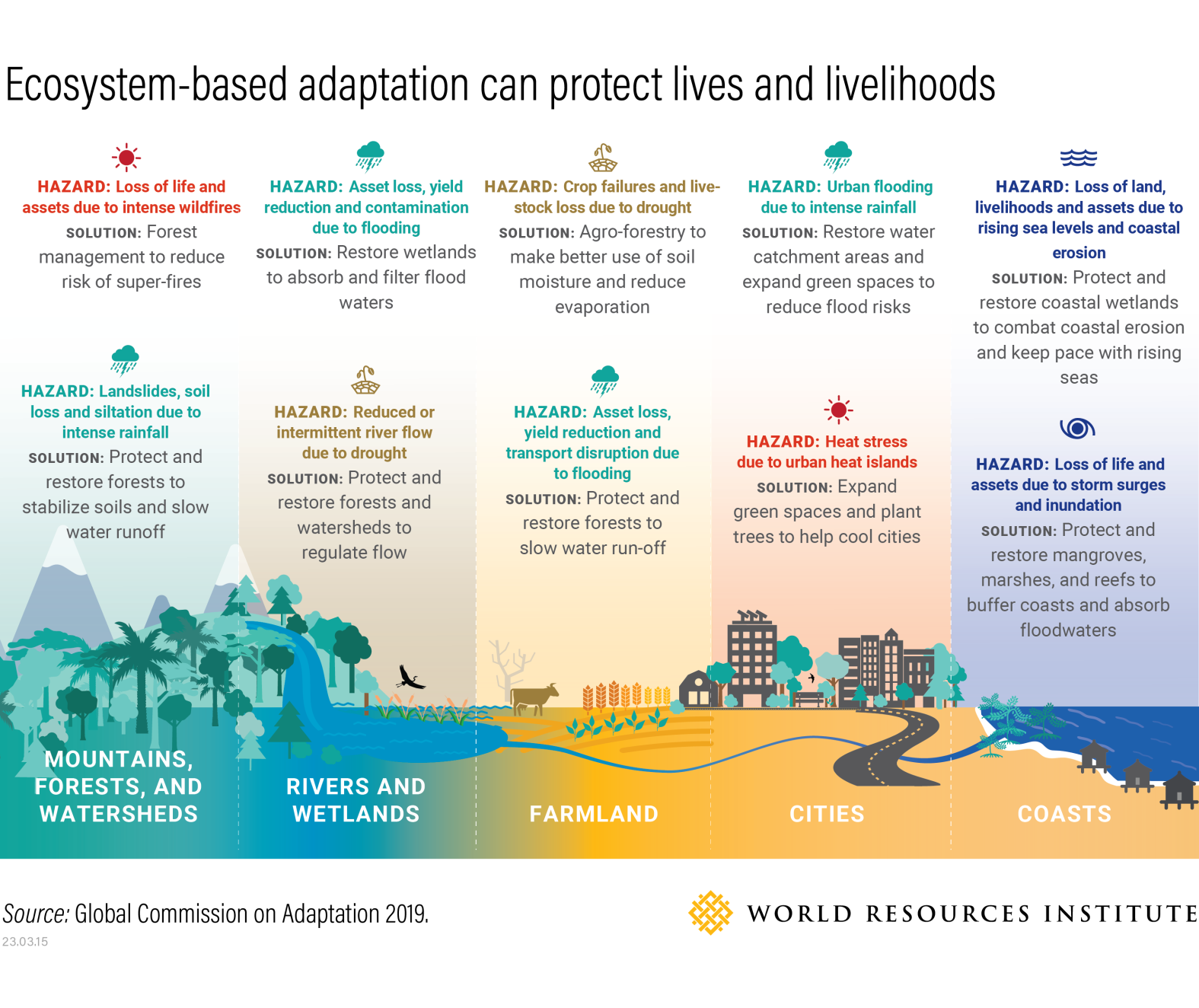
Just some illos, diagrams, memes whatever////

July 29, 2023

Some people and ecosystems already face or are fast approaching “hard” limits to adaptation, where climate impacts from 1.1 degrees C of global warming are becoming so frequent and severe that no existing adaptation strategies can fully avoid losses and damages.

We are not on a path to achieve these levels of emissions reduction. Up until covid emissions were constantly increasing. Post covid they are increasing again.

We are also clearing forests so the CO2 is not drawn down.

An area the size of Switzerland was cleared from Earth’s most pristine rainforests in 2022, despite promises by world leaders to halt their destruction, new figures show… the equivalent of 11 football pitches of primary rainforest were destroyed every minute last year

Greenfield Destruction of world’s pristine rainforests soared in 2022 despite Cop26 pledge The Guardian 27 Jun 2023

Households with incomes in the top 10%, including a relatively large share in developed countries, emit upwards of 45% of the world’s GHGs, while those families earning in the bottom 50% account for 15% at most. 

IPCC: Summary of 2023 Synthesis Report

March 21, 2023

Most of this is quotations from The Synthesis Report Summary.

Optimism

Deep, rapid, and sustained reductions in greenhouse gas emissions would lead to a discernible slowdown in global warming within around two decades, and also to discernible changes in atmospheric composition within a few years (high confidence).

The rate of growth in emissions between 2010 and 2019 (1.3% year) was lower than that between 2000 and 2009 (2.1% year).

Maintaining emission-intensive systems may, in some regions and sectors, be more expensive than transitioning to low emission systems [however the question for business is, which is the most profitable on the whole, and which loses the least already made capital investment?]

The Situation with GHG Emissions

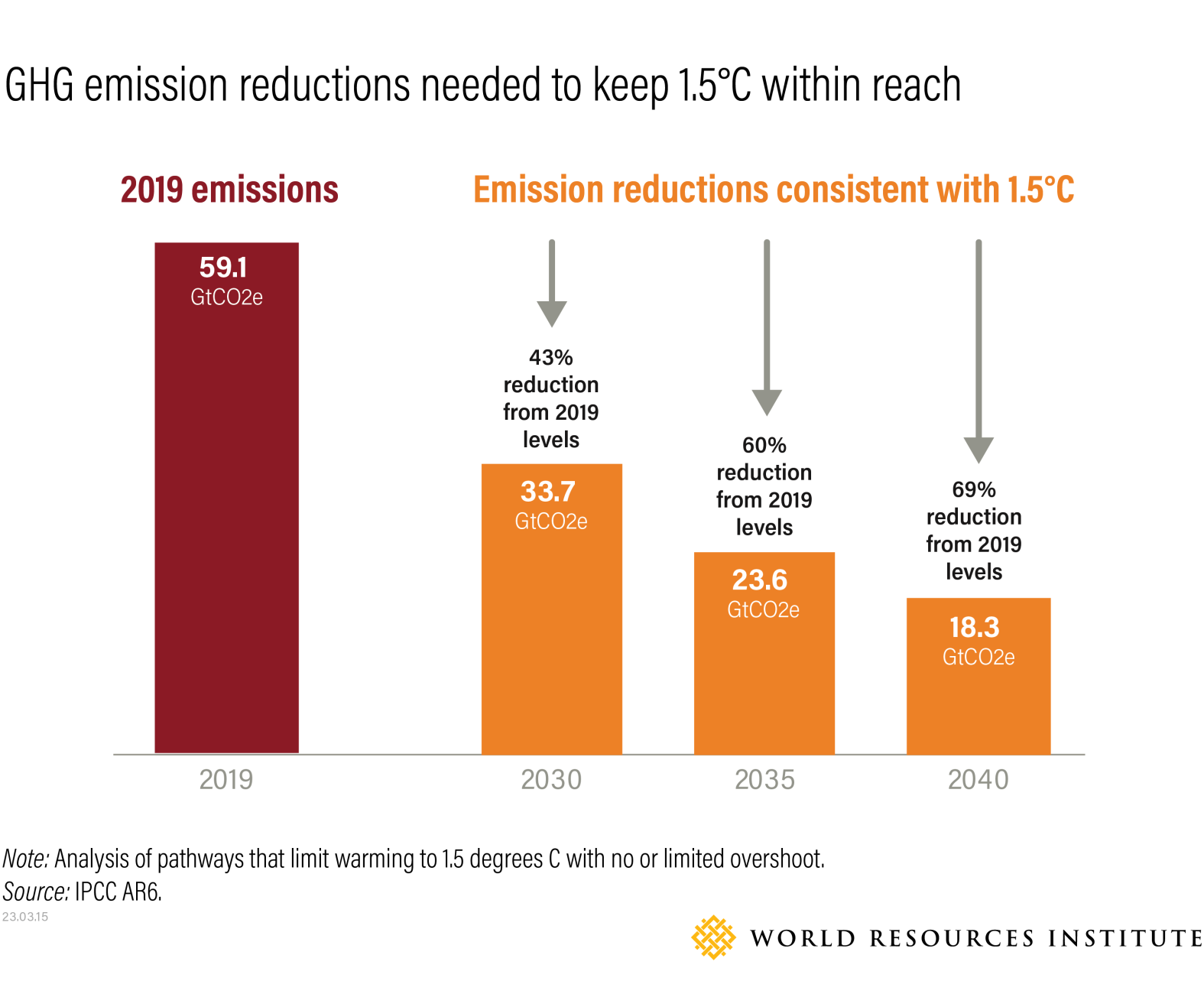
Global net anthropogenic GHG emissions have been estimated to be 59±6.6 GtCO2-eq in 2019

In 2019, atmospheric CO2 concentrations (410 parts per million) were higher than at any time in at least 2 million years (high confidence), and concentrations of methane (1866 parts per billion) and nitrous oxide (332 parts per billion) were higher than at any time in at least 800,000 years (very high confidence). [we are headed towards a non-human world.

Emissions reductions in CO2-FFI [from fossil-fuel combustion and industrial] due to improvements in energy intensity of GDP and carbon intensity of energy, have been less than emissions increases from rising global activity levels in industry, energy supply, transport, agriculture and buildings.

If the annual CO2 emissions between 2020–2030 stayed, on average, at the same level as 2019, the resulting cumulative emissions would almost exhaust the remaining carbon budget for 1.5°C (50%), and deplete more than a third of the remaining carbon budget for 2°C (67%). Estimates of future CO2 emissions from existing fossil fuel infrastructures without additional abatement already exceed the remaining carbon budget for limiting warming to 1.5°C (50%) (high confidence). [It is logical to assume that no new gas and oil sources are needed]

[Bad news is that at current rates of reduction ie policy failure we are locked-in for between 2 and 4 degrees increase. The higher ends of that is catastrophic.]

Some Effects

In all regions increases in extreme heat events have resulted in human mortality and morbidity (very high confidence). The occurrence of climate-related food-borne and water-borne diseases (very high confidence) and the incidence of vector-borne diseases (high confidence) have increased. In assessed regions, some mental health challenges are associated with increasing temperatures (high confidence), trauma from extreme events (very high confidence), and loss of livelihoods and culture (high confidence).

Economic damages from climate change have been detected in climate-exposed sectors, such as agriculture, forestry, fishery, energy, and tourism. Individual livelihoods have been affected through, for example, destruction of homes and infrastructure, and loss of property and income, human health and food security, with adverse effects on gender and social equity.(high confidence).

In urban areas, observed climate change has caused adverse impacts on human health, livelihoods and key infrastructure. Hot extremes have intensified in cities. Urban infrastructure, including transportation, water, sanitation and energy systems have been compromised by extreme and slow-onset events, with resulting economic losses, disruptions of services and negative impacts to well-being. Observed adverse impacts are concentrated amongst economically and socially marginalised urban residents.

[increasing drought, fires, infectious diseases, floods, displacement, glacier retreat, ocean acidification]

Challenges

There are widening disparities between the estimated costs of adaptation and the finance allocated to adaptation.

Climate finance growth has slowed since 2018

The IPCC still thinks Carbon Capture & Storage is required. which basically blows any optimism for me.

[However they recognise this problem]: Implementation of CCS currently faces technological, economic, institutional, ecological, environmental and socio-cultural barriers. Currently, global rates of CCS deployment are far below those in modelled pathways limiting global warming to 1.5°C to 2°C.

The report also says over-reliance tree planting and biomass crops paired with CCS, can have adverse socio-economic and environmental impacts, including on biodiversity, food and water security, local livelihoods and the rights of Indigenous Peoples, especially if implemented at large scales and where land tenure is insecure.

Net zero CO2 energy systems entail: a substantial reduction in overall fossil fuel use, minimal use of unabated fossil fuels, and use of carbon capture and storage in the remaining fossil fuel systems; electricity systems that emit no net CO2; widespread electrification; alternative energy carriers in applications less amenable to electrification; energy conservation and efficiency; and greater integration across the energy system (high confidence).

The press release also states: The pace and scale of what has been done so far, and current plans, are insufficient to tackle climate change.

Consequences of not acting now

The higher the magnitude and the longer the duration of overshoot, the more ecosystems and societies are exposed to greater and more widespread changes in climatic impact-drivers, increasing risks for many natural and human systems…. Overshooting 1.5°C will result in irreversible adverse impacts on certain ecosystems with low resilience, such as polar, mountain, and coastal ecosystems, impacted by ice-sheet, glacier melt, or by accelerating and higher committed sea level rise

The choices and actions implemented in this decade will have impacts now and for thousands of years (high confidence).

Climate change and new paradigms

January 3, 2023

‘Paradigms’ are typical patterns of thought, acceptance of thought, together with research practices. They provide guides for people. In his 1962 book, The Structure of Scientific Revolutions, which gave the term its current common meaning, Kuhn defined scientific paradigms as: “universally recognized scientific achievements that, for a time, provide model problems and solutions to a community of practitioners”.

One question that arises quite often is whether climate change is simply a paradigm that will be abandoned, or whether it will be stable. The basic theory that CO2 and other greenhouse gases can act as a blanket (or greenhouse) holding in heat, and causing warming, has stood for well over 100 years. The observations indicating global warming have been going on for about 50-70 years, so climate change is as well established as a fact as any science can be. Almost certainly the paradigm and the interpretation of global warming will change and grow with more research and modelling, but that does not mean it is wrong, or that it has not contributed shifts to thought, producing new paradigms, already.

In my opinion, a major paradigm shift has happened over the last 40 years largely due to climate studies.

Many people nowadays understand weather, climate and ecologies (and societies) as complex/chaotic systems, which have particular properties, which were previously unexpected.

For example, while these systems normally function under an unstable equilibrium, changes and stress in the system can build up, so that the systems can rapidly change state, even in human terms. In retrospect we call these places which begin the rapid change ‘tipping points’. We can predict that there will be tipping points in climate change when methane is released from the ocean, or the currently frozen tundras or the ice caps melt. Other tipping points may emerge when forests turn into net carbon emitters and so on.

While previously we thought significant climate change (without a massive accident such as meteorite collision) happened slowly in human terms, now we know it can happen quickly. We also know more about the conditions of ‘great extinctions’ and ‘ocean death’ and so are aware that we are building the conditions towards these kinds of events.

We also know that it is extremely difficult and perhaps impossible to predict the state of a complex system in the future. The further into the future the less likely we can predict its state. Consequently all we can predict is increasing climate turmoil, droughts, massive bush fires, storms, flooding, changes in temperature and so on. It is hard to tell people in, say, London, they will experience this kind of weather, this kind of temperature change etc. The gulf stream may drop away due to global heating, and the weather may get colder in London. All we can really and truthfully predict is that the change will hurt people more, and cause social instability.

This lack of accuracy in prediction is something that is often used to deny climate change, (“they said it would get hotter and dryer, but its flooding”). However, it’s hard to predict the weather 3 or 4 weeks in advance, and we are now dealing with constantly changing weather patterns, moving into situations we have not encountered before, so prediction gets more difficult – and the more the system departs from its previous equilibrium states, the worse this will get.

People have also been looking more at the social dynamics of climate change, as that is a major factor in what will happen. So far we can say, governments and businesses are nearly all failing dismally to deal with the problem, and have been since the 1990s. This is probably because of the amount of propaganda issued by powerful corporations and their hangers on, telling us the science is uncertain, or that remedies are too costly.

We are discovering the truth of many previous theories of social collapse – basically the dominating classes want to hang on to their habits, riches and power and the only way they think they can respond is by continuing the situation which has brought them riches and power – to hell with everyone else. As a result society is stuck with solutions to old problems. These old solutions cannot deal with the new problems and make those new problems worse. Societies can be maladaptive systems – however it is also possible that changes in the base (amongst ordinary people) could change social trajectories.

That represents a bit of a change in social theory, which tended to think that the dominant classes were clever and adapted to new situations, and that societies could structure ‘nature’ indefinitely in ways they required.

So global warming is already changing our paradigms, and that changes the data we look for, and all of that data (that I’m aware of) is pretty much pointing to more extreme weather, and more difficult living conditions. It would be sensible to take these new paradigms seriously, and do what you can at a local level as well as a State or business level.

Climate change in 1965

September 4, 2022

The 1965 Report Restoring the quality of our environment presented to US President Johnson gives some ideas of knowledge and approach to climate change. They took it as likely and serious. Here are some paragraphs with a few comments in [ ]s:

President Johnson wrote:

the technology that has permitted our affluence spews out vast quantities of wastes and spent products that pollute our air, poison our waters, and even impair our ability to feed ourselves…. Pollution now is one of the most pervasive problems of our society.

Johnson points out that pollution is a general and serious problem resulting from the way societies have gained affluence. The Report, itself, opens with some history of the knowledge of CO2 Pollution, climate change, and its consequences:

The possibility of climatic change resulting from changes in the quantity of atmospheric carbon dioxide was proposed independently by the American geologist, T. C. Chamberlain (1899) and the Swedish chemist, S. Arrhenius (1903), at the beginning of this century.

They point to some existing evidence of climate change.

One might suppose that the increase in atmospheric CO2 over the past 100 years should have already brought about significant climatic changes, and indeed some scientists have suggested this is so. The English meteorologist, G. S. Callendar (1938, 1940, 1949), writing in the late 1930’s and the 1940’s on the basis of the crude data then available, believed that the increase in atmospheric CO2 from 1850 to 1940 was at least 10%. He thought this increase could account quantitatively for the observed warming of northern Europe and northern North America that began in the 1880’s….

As Mitchel (1961, 1963) has shown, atmospheric warming between 1885 and 1940 was a world-wide phenomenon.

The authors point to the difficulties of prediction of climate….

Even today, we cannot make a useful prediction concerning the magnitude or nature of the possible climatic effects.

Although clearly they recognise that climate change is a problem. They also recognise that sea level rise is a likely result.

It has sometimes been suggested that atmospheric warming due to an increase in the CO2 content of the atmosphere may result in a catastrophically rapid melting of the Antarctic ice cap, with an accompanying rise in sea level…. But such melting must occur relatively slowly on a human scale…. The melting of the Antarctic ice cap would raise sea level by 400 feet. If 1,000 years were required to melt the ice cap, the sea level would rise about 4 feet every 10 years [They add that this is not yet happening]

They think CO2 increase is induced by the actions of a particular social formation, and is therefore humanly induced.

Through his worldwide industrial civilization, Man is unwittingly conducting a vast geophysical experiment. Within a few generations he is burning the fossil fuels that slowly accumulated in the earth over the past 500 million years. The CO2 produced by this combustion is being injected into the atmosphere; about half of it remains there.

We can conclude with fair assurance that at the present time, fossil fuels are the only source of CO2 being added to the ocean-atmosphere-biosphere system.

By the year 2000 the increase in atmospheric CO2 will be close to 25%. [They were wrong, the increase was much bigger than they thought] This may be sufficient to produce measurable and perhaps marked changes in climate, and will almost certainly cause significant changes in the temperature and other properties of the stratosphere. At present it is impossible to predict these effects quantitatively…

Again, they suggest that humanly induced climate change could be bad for humanity

The climatic changes that may be produced by the increased CO2 content could be deleterious from the point of view of human beings. The possibilities of deliberately bringing about countervailing climatic changes therefore need to be thoroughly explored.

The solution they propose, appears to involve an early suggestion of geoengineering, rather than a cutback in fossil fuel consumption.

A change in the radiation balance in the opposite direction to that which might result from the increase of atmospheric CO2 could be produced by raising the albedo, or reflectivity, of the earth.

So, the Report could warn that global heating and climate change was likely to occur because of human burning of fossil fuels, but made no suggestion of cutting back consumption of those fossil fuels.

Sounds pretty contemporary.