Posts Tagged ‘complexity’

Comments on Legitimacy as a concept

October 19, 2021

I’ve never been that fond of legitimacy as a concept, partly because it often seems too simple to deal with really complicated situations. The idea of delegitimation processes being mutually connected with legitimation processes, and shaping each other, improves the situation, but perhaps not enough.

Let’s look at some obvious points.

Legitimacy, complexity, process and struggle

Legitimacy is a social phenomena.

Hence Legitimacy is a complex phenomena:

  • It occurs in complex systems and is nearly always dynamic, and possibly unstable.
  • Complex systems tend to stay in equilibrium, but they can change rapidly, perhaps coming into new stable states, that may not be an improvement for all dwellers in the system.
  • Possibly small events can have large consequences, especially if repeated.
  • Unintended consequences are normal. Attempts to impose order generate chaos etc… What is thought to produce legitimacy for a thing/process may weaken its legitimacy. Legitimacy can be risked by enforcement. For example, enforcing fossil fuels destabilises the system, which may destabilise support for fossil fuels.
  • Producing legitimacy, or delegitimacy, is not just a matter of intention, but of mutually influencing factors and forces.
  • It can be hard to draw boundaries around legitimation struggles – they spill over into other ‘factors’ – such as cosmologies, customs, habits, politics, group relationships and identities, economics, ecologies, etc.
  • The course of what happens can depend significantly on the context – or supposed external factors and vice versa.
  • Sometimes with complex phenomena you have to proceed by listing the factors involved so you don’t forget important forces.

Legitimacy is not a noun or thing, it is more a descriptive adjective applied to a thing/process.

There are degrees of Legitimacy/illegitimacy which can be attributed to a thing/process. It is not just on or off.

The attribution of legitimacy involves a process, a struggle.

Legitimation struggles often imply de-legitimation struggles, as some other factors have to be delegitimated – the success of fossil fuels require renewables to be inadequate or hindered, and climate change to be exaggerated. Legitimacy and de legitimacy often come together and shape each other.

Institutions can be fractured and this can affect legitimacy. There can be legitimacy struggles within institutions.

Attribution of legitimacy may not be uniform in society, any more than ethical norms have to be uniform. These differences can drive legitimacy processes.

Legitimacy and Ethics

Legitimacy of a thing/process seems related to ethics in that establishing or demolishing Legitimacy often involves ethical arguments. It is possible that arguments over whether a thing/process is legitimate form a subset of ethical arguments, or that ethical arguments are a subset of legitimacy arguments. We could allege ethics is about the legitimacy of actions, thoughts, existence, relationships, behaviours etc…

Ethics is not only revealed in dispute, but ethical arguments can be irresolvable, so ethical disputes can end up being temporarily terminated by deployment of violence (preferably a violence with some support and acceptance [legitimacy], such as courts, law and police), or some kind of magical terminal category. I suspect the same is true of legitimacy arguments. When the violence is used or legitimacy asserted then it can risk being challenged.

Ethics seems to involve

  • Context – events and framings, what provokes the debate, how the events are understood.
  • Cosmology – how the world works and what ethics, or legitimacy/delegitimacy delivers.
  • Custom and habit – what is done gains ethical force, and ethical legitimacy, up to a point.
  • Doing what other people that a person identifies with, or whose category they are put into, may do… Do what others do.
  • Political relations between groups – social category theory makes predictions here
  • Justification or criticism of what people are doing. Often justification can apply to oneself and one’s group, and criciticism to those in outgroups. The aim can be to persuade people ‘you’ have behaved legitimately, or that ‘others’ have not.
  • Enforcement – ultimate resolution of debate by force, or threat of force, or punishment
  • Exclusion – of some people from ethical debate, by saying they are inadequate etc., eg it seems common to allege young children, slaves or people not of the same monotheistic religion, are not capable of ethics or of deciding whether a thing/process is legitimate.

These factors also appear to affect legitimacy: they can be called ‘framings’ or ‘contexts’ for the struggle.

Legitimacy/delegitimacy: Support, Acceptance, Indifference and Rejection for a thing/process

When we talk about the adjective of Legitimacy we may also be talking about several things, that compose it, apart from ethics.

For example: Active Support, Passive Support, Acceptance, Indifference, Reluctance, Active Hostility and Rejection (you can reject something without being actively hostile to it)

I propose to replace the single legitimation-delegitimation continuum, with two intersecting continuums:

  • Support – Rejection
  • Acceptance – Active Hostility

The central point can be called ‘Reluctance’ or Indifference

This graph allows us to specify that ‘legitimacy’ may involve acceptance and indifference, as much as it involves support. The graph could help prevent people from thinking legitimacy is just one thing. We could guesstimate plotting places for various different groups, to give some idea of the social complexity around a thing/processes’ legitimacy levels, and investigate (and possibly predict) what alliances are possible.

It also suggests a range of paths of transition towards support or towards rejection. Some of this can involve belief about legitimacy, but some of it does not – it may involve a disposition or a set of habits.

Indifference does not have to be on the path to rejection or support. Indifference can theoretically translate into either tacit acceptance or tacit rejection, so it may be less useful to replace this with a single continuum of Support / acceptance / indifference / rejection.

We realise that cumulative small events can trigger instability in the legitimation system, and alter it significantly. The question may be to find those causes of equilibrium stress.

The point here is not to present something entirely accurate, but something better, that hopefully points in more useful directions for this area of study, which allows us to ask better questions.

Climate and Categories

September 30, 2021

George Monbiot, writes in the Guardian today about the way that the categories we use to fight climate change may in fact hinder our capacity to do anything about it, because they break up the system into tidy, non intersecting boxes, and the issue with all ecological events/processes are that they are interconnected. I’ve added a few comments in italics, but most of this is a summary.

There is a box labelled “climate”, in which politicians discuss the climate crisis. There is a box named “biodiversity”, in which they discuss the biodiversity crisis. There are other boxes, such as pollution, deforestation, overfishing and soil loss, gathering dust in our planet’s lost property department. But they all contain aspects of one crisis that we have divided up to make it comprehensible.

Monbiot. ‘Green growth’ doesn’t exist – less of everything is the only way to avert catastrophe. The Guardian, 29 September 2021

In reality these divisions do not exist, and a crisis in one ‘box’ spills over into other boxes. They make compounding crises. We cannot deal with one of these crises, without considering how they interact and how the way we respond to one box effects the ‘other’ boxes – “each source of stress compounds the others.”

Some of the crises may be separated out altogether from the problem. Therefore economic crises and political crises may not be seen in terms of the ecological crises, even though it is political and economic decisions which are making the ecological crises, and politics and economics cannot be entirely separated from ecological events. If there is a drought, supplies can get disrupted, companies can go bust, food prices increase, governments be destabilised, and so on.

He looks at the right whale: “fewer than 95 females of breeding age remain.” This comes about because:

  • Warming waters push the whales into busy sea lanes – where they get tangled in nets or injured by ships.
  • Their food source (a small crustacean) is also moving north.
  • A fishing industry has recently developed to exploit the crustacean We don’t know the effects of this on its population levels.
  • Increased ocean acidification could also impact on the crustacean.
  • Increased gas and oil exploration may add to pollution and crustacean death.

Other problems include declining birth rate of the whales which could be caused by

  • Pollution. We know some mammals are affected by pollution in that way.
  • Disruption of communication via Ocean noise caused by the shipping.

you could call the decline of the North Atlantic right whale a shipping crisis, or a fishing crisis, or a climate crisis, or an acidification crisis, or a pollution crisis, or a noise crisis. But it is in fact all of these things: a general crisis caused by human activity.

ibid

He then points out that the effects of chemicals tend to be investigated individually is if they were isolated from other chemicals, whereas they are (in the wild) constantly interacting with thousands of other chemicals, as well as thousands of other purely ‘natural’ chemical and transformative processes (such as various kinds of digestion).

Studies of bees show that when pesticides are combined, their effects are synergistic: in other words, the damage they each cause isn’t added, but multiplied. When pesticides are combined with fungicides and herbicides, the effects are multiplied again.

ibid.

As well as encountering chemicals, insects may also find their reproductive cycles no longer match plant cycles because of climate change. Even changing street lights can have unintended consequences:

The switch from orange sodium streetlights to white LEDs saves energy, but their wider colour spectrum turns out to be disastrous for insects. 

ibid.

The problems with coral reefs is not just because of bleaching through increased heat (even though people will deny this), but because of bottom fishing (dragging weighted nets along the reef and pulling them down), explosive fishing (usually illegal but still happening), fertiliser run offs, coal dust pollution, ocean acidification, and increasingly strong storms and cyclones. With decreasing fish supplies the response will probably be to increase fishing and destructive fishing techniques, which will put further stress on reefs and their inhabitants.

What would we see if we broke down our conceptual barriers <boxes>? We would see a full-spectrum assault on the living world. Scarcely anywhere is now safe from this sustained assault. 

ibid.

If we are to try and solve the current crisis through massive building projects, such as renewable farms or carbon removal:

this would demand a massive new wave of mining and processing for the steel and concrete…. The mining of sand to make concrete is trashing hundreds of precious habitats. It’s especially devastating to rivers, whose sand is highly sought in construction. Rivers are already being hit by drought, the disappearance of mountain ice and snow, our extraction of water, and pollution from farming, sewage and industry. Sand dredging, on top of these assaults, could be a final, fatal blow….

mining and processing the minerals required for magnets and batteries is laying waste to habitats and causing new pollution crises

ibid

His conclusion seems unavoidable.

The problems largely stem from a political conviction that endless economic growth is possible, necessary and desirable. This conception of economic growth and increasing extraction of ‘goods’ and ‘resources’ cannot be isolated from the world it occurs within and which it is destroying – “there is no such thing as green growth. Growth is wiping the green from the Earth.”

Politics and economics are not separate from the crisis.

Somehow, we have to decrease consumption per head, and that responsibility primarily falls upon the polluter elite, or that part of the population who both fund pollution through investment and pollute massively to live their lives. While most people reading this blog, are not the elite of the elite, they still probably pollute more than most of the world’s population and, through pension funds, profit from pollution, and so (even if individually, the cuts a person can make are trivial) some cutting is within your power, and if enough people do it, that could travel through the system, and help build effects, to persuade the elite of the elite that there is some resistance happening.

Buber and nature

August 9, 2021

I have written a little about Martin Buber on this blog, see here and here. Again I emphasise that I am not Buber expert, but I want to talk about Buber’s comments in the afterward to I and Thou on nature, or on what I generally call ecologies.

People may remember the fundamental binary of approach to relationship that Buber distinguishes. To simplify there is:

The I-Thou relationship, in which we treat the other as mystery, to be related to in all its complexity, we dialogue in language. Ideally the relationship should be mutual, but it cannot always be equal.

and

The I-It relationship in which we treat the other as a thing, something to be reduced to our own purposes. We might think of dialogue as irrelevant, although instruction and command might happen.

[I suggested there was a third relationship, an it-Authority relationship, in which people reduced their own ‘I’ to an it, in the face of authority, but that is irrelevant here.]

To reiterate this is a simplification of Buber’s position. However, there is a problem when we encounter ecology. As Buber states

if the I-Thou relation entails a reciprocity [mutuality] that embraces both the I and the Thou, how can the relationship to something in nature be understood in this fashion?

I and Thou, Trans. Kaufmann (p. 172). Kindle Edition. Translation modified by reference to I and Thou trans by R. G Smith p 125.

Automatically, Buber is buying into the problem of the binary. Thou’s might only be human or linguistic. He continues:

If we are to suppose that the beings and things in nature that we encounter as our Thou also grant us some sort of reciprocity, what is the character of this reciprocity [mutuality], and what gives us the right to apply this basic concept to describe it?

ibid

This implies again, that the human is somehow of a different order to ‘nature’ and somehow unrelated to it, or un-mutual with it. Humanity becomes an opposite to nature, if you want, rather than ambiguous. However, Buber recognises the problem and to some extent struggles with his binary. His first suggestion is that we cannot treat nature as a whole, we have to divide it into realms. In practice this can be a lot more difficult than it seems, but Buber divides the whole into animals and plants – ignoring bacteria and possibly insects which are vital to our healthy functioning, as well as dangerous to that functioning.

Animals can be drawn into the human orbit. ‘Man’:

obtains from them an often astonishing active response to his approach, to his address—and on the whole this response is the stronger and more direct, the more his relation amounts to a genuine Thou-saying.

I and Thou, Trans. Kaufmann (p. 172). Kindle Edition.

This implies humans can be open to animals if they treat them as Thous, However, this implies that animals which ignore humans cannot be related to. Spiders for example. And so it sets up levels of importance of nodes in the complex system of the ecology, that implies we can safely ignore some beings, even if the ecology holds us all together, and that holding together may be necessary for survival. It appears Buber takes the standard Western approach of defining something special in the human and then claiming it does not apply to animals, or only partially applies.

Animals are not twofold, like man: the twofoldness of the basic words I-Thou and I-It is alien to them although they can both turn toward another being and contemplate objects. We may say that in them twofoldness is latent…. we may call this sphere the threshold of mutuality.

I and Thou, Trans. Kaufmann (pp. 172-173). Kindle Edition.

So relationship between humans an animals is inferior, in some ways, to the potential linguistic relationship between humans, only a threshold or a liminal zone. But liminality should imply some levels of ambiguity, of borders being vaguer than we might think. Possibly there is a continuum of possible relationship.

Yet again, the dynamics of his exclusionary argument are contradicted by Buber’s process. When talking of Plants he says, the plant:

cannot “reply.” Yet this does not mean that we meet with no reciprocity at all in this sphere. We find here not the deed or attitude of an individual being but a reciprocity of being itself—a reciprocity that has nothing except being [in its course (seind)].

I and Thou, Trans. Kaufmann (p. 173). Kindle Edition. Translation modified by reference to I and Thou trans by R. G Smith p 126

Buber remarks that humans can indeed grant a tree the opportunity to manifest its “living wholeness and unity” and “now the tree that has being, manifests it [that being?]”. So, the human has again, the ability, or choice, to allow things to manifest in the I-Thou relationship, or the I-It relationship.

Given that Buber seems to have considered the two relationships to be ‘ontological’ he would not agree with the point that the type of relationship seems to be a decision, or a matter of culture, as much as a function of reality. However, it seems clear that it is common for indigenous peoples to relate to nature as Thou, as full of living beings which speak in their deep interaction with each other, and with humans. Relationship is fundamental – and if a place tells you to go away, you should make sure you do. If a place tells you it is sick, it is your responsibility to heal it, unless it says otherwise.

Again there is an opening from Buber which speaks to a partial recognition of this:

Our habits of thought make it difficult for us to see that in such cases something is awakened by our attitude and flashes toward us from the course of being. What matters in this sphere is that we should do justice with an open mind to the reality that opens up before us.

I and Thou, Trans. Kaufmann (p. 173). Kindle Edition. Translation modified by reference to I and Thou trans by R. G Smith p 126

But again there is the coming down.

This huge sphere that reaches from the stones to the stars I should like to designate as the pre-threshold, meaning the step that comes before the threshold.

ibid

The relationship seems to be being made inferior, not really an I-Thou relationship. Not even a liminal zone – despite the fact that, at least by my reading, the prose suggests he seems more enthusiastic about trees than about animals. There still seems the ease of slipping into the I-It when faced with ecology and thinking this is normal, or to subjugate ourselves and nature before the Authority of the State, the Party, the Market or God.

The question, then, is can we be open to the mystery and depth of the complex systems we participate within?

I think it is both possible and necessary. We cannot exhaust those systems, anymore than we can exhaustively know another person, We can be surprised, and that is itself offering an opening to the world. We can come to feel them, to have an awareness which is non-linguistic, unconscious even, or ‘tacit’, and this may be true of our relationships to other people as well. Probably very few people can express themselves totally in dialogue (we may not even know what we say), and there is a presence and mutuality in silence, in which we can still be open to the Thou, in which presence and dynamism can be found, and in which we can feel ourselves part of something beyond us which is not only necessary for us, but which can be with us.

Buber seems trapped by a binary, and a desire for borders, which he seems aware are ambiguous at best. However, ambiguity does not seem acceptable perhaps because humans are supposed to have a special relationship with spirit or God. But could not the whole world have such a relationship, not just humans?

Incompleteness and life

August 8, 2021

A simple insight, made many times before, but it ties into complexity and uncertainty.

Life is always incomplete. There is no way that I can read or even gain access to everything that is important, or everything that might illumine my thinking, change my mind, or improve my art. I am incomplete, I am uncertain in my understanding. I am unfinished.

No matter how many books I buy, my collections will always be incomplete. There is always more philosophy to think about, facts about life to know, novels to read, music and different performances to listen to.

Partly this occurs because life is finite. You are unlikely to get more than 120 years or about 6,000 weeks of living, which is not much. But even if you lived forever, the chances are high that you could not get, read, look at or hear everything you wanted, as it would keep being produced as you lived.

The attempt to gain all this experience or knowledge is self defeating, because it consumes the time you could be living, or developing what you do know, and have experienced. It takes time away from life, and diminishes life.

Of course you have to learn some amounts of material, and you are always learning, but there is a point at which the returns diminish and the loss through seeking accumulates.

The art is recognising when you are hitting those limits, and have to put up with incompleteness and uncertainty.

Those of a more mystical bent, would probably tell you that, once you have attained supplies of food and shelter, you already have most of what you really need, you just have to realise access to it.

Ambiguity

August 7, 2021

I’m trying to write something on ambiguity, as part of the the nature of life, and how ambiguity becomes part of the response to climate change…. This is a space to try and work on it.

Definition of ambiguity

To begin let me try for a definition of ambiguity – which not only begins well, but fits with what I’ve discovered in the writing. The definition is probably not completely unambiguous.

Using the full Oxford English Dictionary (OED) we can construct not only a definition of ambiguity but show that attitudes towards ambiguity are generally hostile until the 20th Century when it comes to be recognised as important – possibly an opening to limits.

Ambiguity arises when events, situations, beings, or words (I’m trying to be definitive here, rather than rely on a word like ‘something’) have “different possible meanings; [the] capacity for being interpreted in more than one way; [or] lack of specificity or exactness.” The OED goes on to elaborate (slightly rephrased), ambiguity occurs when interpretation of language or events is uncertain, doubtful, dubious or imprecise. We can also have situations in which the events are difficult to categorize (linguistically, or practically) or to identify; especially due to changeable or apparently contradictory characteristics. Reality is in flux, and our perceptions may shift, so nothing remains the same forever. We can say that ambiguity is demonstrated whenever people see an event in a different way, or choose to emphasise different parts of the event and its context or surroundings.

Ambiguity in language

Ambiguity is almost always present in language due to homophones, words with multiple meanings, normal and expressive imprecision (‘My love is like a red red rose’ – not really, even though we may know what the poet implies), metaphor, meaning being shaped by context of the text’s emission, the context of its interpretation, or the context of the words which surround each other. We have shifting contexts, framings or word meanings (so that the same sentence issued at one time, or by one person, may not have the same meaning as when it is issued at another time or by another person), and through strategy in which people use words to persuade others, or to interpret a statement in a way that satisfies them. That misunderstanding seems common also implies ambiguity is common.

In many of the early illustrative quotations ambiguity is to be removed (“That alle ambiguites and dowtes may be removede.” “To puttyne awey alle ambyguite” etc), as it is a cause of hazard or dispute (“To prevent ambiguities and quarrels, each Prince..shall declare his pretences.”), and it indicates probable lack of understanding.

Some forms of philosophy from Plato onwards, have attempted to suggest either that poetry and ambiguity makes bad philosophy, or that most philosophical problems stem from bad use of language or cultivated ambiguity, and they may be right, at least some of the time. However, they are perhaps unable to demonstrate consistent lack of ambiguity, or perhaps fixity of meaning, in their explication ].

There is also the possibility that if a person is trying to work up to say/write what has not been said before then that person will not have the language to say it, and hence will, necessarily, be ambiguous or at least obscure. At one stage of my life, I argued that language found in new knowledges was almost always ‘magical,’ dependent on metaphor, ‘similarity’ and ‘contagion’ and I still think that is true, and likely to produce ambiguity and misunderstanding.

William Empson famously insisted that awareness of ambiguity and multiple association (together with the reader’s own experience) was an essential part of receiving the richness of poetry. However, he also suggests “any prose statement could be called ambiguous,” (p1). That language, at enough length, is ambiguous is perhaps revealed by the fact that literary critics never cease to find new points and new approaches and new meanings for valued plays and novels and even for philosophers. To some extent we get by, by ignoring the ambiguity of ordinary speech, by communication being good enough, or exact enough, for purpose.

We further face ambiguity because of the social dynamics of information, the way that information is distorted and filtered by human desires for social belonging (to fit in with others’ understandings and be confirmed in that understanding), the social construction of trust though identification, and the habit of seeing our group as good, and outgroups as untrustworthy.

Ambiguity of Reality

However, not only is language ambiguous, but so are our perceptions of reality, descriptions of reality or perhaps reality itself. Simone de Beauvoir states that “to say that [reality] is ambiguous is to assert that its meaning is never fixed, that it must be constantly won” (#).

While meaning is rarely fixed I suggest that an unambiguous meaning cannot be won without loss of reality and loss of recognition of complexity.

For example most people today appear to ignore the ambiguity in capitalism. Thus the pro-corporate player notes that capitalism brings prosperity (all the world’s most prosperous countries are capitalist), it brings choice (think of the realms of books you can buy), it brings freedom etc. While the anti-capitalist might note that it brings plutocracy, destroying democracy through purchase of politicians and policies; undermines ecologies through overenthusiastic extraction, pollution and growth; substitutes greed for virtue; and promotes pleasing blame and fantasy instead of information, as the media is controlled by corporations and competing for sales and influence. The ambiguity arises in that both sets of claims are accurate to a point. Suppressing one set of claims simply suppresses reality and complexity.

In approaches to climate change we find the same kind of suppression of ambiguity. This often involves suppression of normal uncertainty, or an over insistence on uncertainty.

If there is any uncertainty about future trajectories (which there is) then people can decide to be certain that nothing bad is happening at all, or if we are told that 97%, or whatever, of climate scientists say climate change is happening and is humanly caused, then people will insist this means scientists are conspiring or suppressing counter evidence, or that we should completely trust the 3%, or even non-experts, who do not agree before we take climate science seriously.

Then people will claim that action on climate will undermine the prosperous economy, and others claim it will not – the problem here being that the economy causes ecological destruction and climate change and is thus destroying itself, and that effective acting on climate change has to alter the economy and what it can do, or the destruction will continue. Others claim the economy will adapt to climate change in time to prevent climate change. There is no evidence for this. The economy is ambiguous in that it brings both good and bad, and we cannot control it completely: the economy we have, encourages people to game rules and regulations to get the maximum profit, not produce communal survival. We need to recognise that economic change to fight climate change will require the economy to change and that may produce chaos, although perhaps not as much as climate change itself. However, economic change and climate change will interact and almost certainly produce unexpected results – which will be only ambiguously relatable to one or the other.

Then we have the supporters of renewables who condemn those people who want to defend their local environments against windfarms or masses of solar panels. It is true that renewable farms are not as destructive as coal mines, or coal-seam gas fields, but nevertheless, do we not want people to defend and relate to their local environments? If we what to save the environment in some way destroys or alters that environment, is their not a problem?

How, in climate change, do we balance the loss of liberty to pollute, or other losses of liberty, with survival or repair? It depends on what we consider more important to our group life, and that is an ambiguous decision because not everyone will see it the same way.

Again we have to recognise both the social dynamics of understanding and the politics of making some set of statements true, as often functioning as modes of reduction of ambiguity rather than modes of truth seeking. While perceived ambiguity may be lowered, it is also likely to reduce our perceptions of complexity and real uncertainty.

Ambiguity in Morals

Likewise we often have moral ambiguity. This is shown by the simple fact that most crimes can be defended, that people can undermine the reputation of those thought to be good, or that there are competing moral priorities. For example, justice through imprisonment can compromise the value of reforming someone, or sometimes it may not. What is a large fine for some person, may be trivial for another and just taken as the necessary ‘charge’ for being able to commit a crime. If a person has done lots of good things, but one really bad thing how do you weigh the good and the evil? Mother Theresa was frequently seen as a moral saint, for looking after dying people, but then we learn that she refused to lessen the pains of dying, because she thought those agonies part of God’s will, or reformatory. Is this good or bad? Moral dilemmas are normal, and arise because the world is complex and ambiguous, and again are often resolved by our assumptions about who is likely to be guilty and who is likely to be innocent, and the politics of morals in which we are more interested in defending what our group has done, than understanding the complexity of ethics in the situation.

For me, moral ambiguity is present in most conceptions of God. There is the old problem that if God allows evil, then God permits evil, and is therefore evil or impotent – and God is usually defined as omnipotent. In sacred writings we read of God commanding cruelty and genocide, because those who displease him can be treated harshly, and those who please him are compelled to attack those who displease him, or they become displeasing. Or we hear of a God who arranges for people to be tortured in hell forever with no remission, for often what seem to be trivial ‘sins’ which may even have no lasting effect especially if the sinned against are in heaven…. and if they are not in heaven it is because of the judgement of God. I would say that gods tend to be morally ambiguous when their morals are worked out.

Strategic Ambiguity

To return to a point made previously, ambiguity can be used strategically, to persuade others or elide reality. People can use an ambiguity in an attempt to remove an ambiguity which could be kept in mind.

One recent example. A government minister was accused of anally raping a young woman when he was young. The woman is dead, so apparently a case cannot be brought against him. I don’t know why as murder cases can be brought with the subject being dead, but this assertion is frequently made and accepted as true. Anyway, when facing the press he forcefully denied he had slept with the woman. The problem is that this statement is ambiguous. No one was actually accusing him of having slept with her. Indeed, if they had slept together, than perhaps the rape charges would be less believable, or indicate more of a misunderstanding. However ‘slept’ is in the context of sex usually taken to mean having sex, but it may not, and his words may have been carefully chosen to truthfully avoid the untruth of denying he raped her.

Again in climate change, we may be told the government has acted, or is acting rationally and carefully, when they have done little to reduce the potential damage of climate change – they may have acted in other ways, or the evidence that they use to imply successful action does not originate in their action or lack of action.

Ambiguity and Complexity

We both are complex systems, and live amidst complex systems, and these systems produce ambiguity for humans. They are inherently not fully understandable by humans; we cannot predict the course of events or the results of actions with absolute precision. Events in one complex system are not separate from the system, or from events in other systems, boundaries are rarely precise, events are nodes rather than things: a storm is not separated from the atmospheric conditions, or the wind, or the low pressures, or the moisture contents, or the cloud formations, or the sea, or… A person is not completely separable from their culture, their language, the cultural history they participate in, those around them, their experiences and learnings, their social position, the food they eat, the air they breathe, the bacteria they carry and so on. So even if we were to have a completely precise non-metaphoric language, then reality would still escape that language and appear ambiguous. Language itself is an interactive complex system, in that words interact with each other and with different contexts to produce understanding, meaning and behaviour. We discover ambiguity everywhere even, if I understand Godel, in mathematics, which is the best attempt humans have made to remove ambiguity from rules and their consequences, and mathematics may not be able to formulate ‘subjective’ qualitative events to begin with, and that is what we live with.

Conclusion

The point is that we face several types of ambiguity, and this ambiguity is normal and unavoidable. We face the ambiguity of language, brought about by the complex multiple and different social tools we use to use and understand language and communication, and we face ambiguity in the world because of the lack of precision in our social tools of understanding a constantly changing complex reality, and we face moral ambiguity when judging our actions and the actions of others again partly because of complexity and also because of social positioning and alliances around the case we are judging.

De Beauvoir’s ethics??

May 4, 2021

This is a very incomplete account of Ethics of Ambiguity, made because this writing of de Beauvoir’s is one of the few ethical texts that take ambiguity seriously, although perhaps not seriously enough. It may also be one of the most interesting ethical texts of the last century. I’m not going to claim that at this stage I’ve noticed everything and understood everything, so this account is likely to be incomplete or even incorrect.

Making an ambiguous binary: determination vs freedom

The book starts with the distinction between ‘determined’ and ‘free’ which is, for humans, ambiguous (and essential) because:

  • past actions to a large extent determine what we feel, experience and can choose (the affects of the past are largely unchangeable givens – although some psychotherapists insist not completely);
  • we live amidst what appear to be determined processes (or, perhaps more accurately, processes we do not appear to have direct influence upon, which can include world and bodily processes);
  • <I’d add that we also experience the affects of unconscious processes, which may influence our thinking and freedom – but existentialism seems to have a problem with recognising these>
  • while we experience some freedom of choice.

Or as she says, in the language of the translator, “[Man] asserts himself as a pure internality against which no external power can take hold, and he also experiences himself as a thing crushed by the dark weight of other things.” This ambiguity cannot be accurately removed. I would add that culture seems to be another source of ambiguity, it gives tools teaching us what, and how, to think and thus both restricts and enables freedom.

Humans are part of the world of which we are conscious (EA: 7) and so we cannot escape being ‘messed’ by the world. Indeed attempts to escape the world are possibly harmful or limiting to both ourselves and others.

De Beauvoir argues that people (“philosophers”) often try to “mask” this essential ambiguity, by reducing reality to one side of a binary such as ‘determination’ or ‘freedom’; ‘mind’ or ‘matter’ etc, and establish a hierarchy of dominance whereby one side of the binary is, or should be, more significant than the other (and dominant) – mind over matter etc.

Or as de Beauvoir says: “It has been a matter of eliminating the ambiguity by making oneself pure inwardness or pure externality, by escaping from the sensible world or by being engulfed in it, by yielding to eternity or enclosing oneself in the pure moment” (EA:8).

We might wonder if the idea of freedom may be ambiguous itself? I’d suggest that it is a significant reduction when “philosophers” reduce the world to a binary of freedom and determination rather than a possible plurality, or continuum. Seek the third to destabilise the binary – which in this case might be those necessary and responsive natural processes, which we need to take account of to live…

Freedom as source of value

Let us accept, for the moment, the binary, but be aware of its possible reductionism, then de Beauvoir asserts that freedom “is the source from which all significations and all values spring. It is the original condition of all justification of existence” (EA: 24). To “will oneself moral and to will oneself free are one and the same decision” (EA: 24). There also seems to be an assumption that freedom and openness are morally related “My freedom must not seek to trap being but to disclose it” (EA: 30). I will later suggest that for de Beauvoir ‘disclosure of being’ does not seem to explicitly include the non-human world, and that further complexity and ambiguity would be recognised, if this was the case….

We have the usual problem of why we should select freedom as the basis of ethics, without a previous ethical assumption that freedom is good. We also know from de Beauvoir’s opening, that freedom is never total, we are splitting reality into a opposed binary of free and determined and making freedom the dominant and valued pole. We could imagine someone arguing that enthusiastically embracing our fate is the real basis of virtue, or that only certain people are entitled to be free and that virtue is about accepting, or earning, these limits.

However, it certainly appears that we seem free to make choices, and most people would agree that virtue and ethics have to do with choices, or argument over correct choices in particular situations, so let us assume that this freedom to choose, is one basis for ethics, and see what happens. What is the role of the ambiguity that de Beauvoir points to?

Freedom implies an ability (to some extent) to make ourselves up as we go along, so that we become the path of our choices, and that path is open to change as we are free to choose to go in a different direction at this moment, now. However, we are not free of the consequences of that choice. Or in existentialist lingo: “To will freedom and to will to disclose being are one and the same choice; hence, freedom takes a positive and constructive step which causes being to pass to existence in a movement which is constantly surpassed” (EA: 78-9). We make our being through our choices; perhaps it is better to say ‘in the interplay between choices and the world,’ to make the freedom less absolute, and to emphasise the relationships involved.

Moving into relationship

Given her position, de Beavoir can suggest:

Freedom is the source from which all significance and all values spring. It is the original condition of all justification of existence. The man who seeks to justify his life must want freedom itself absolutely and above everything else. At the same time that it requires the realization of concrete ends, of particular projects, it requires itself universally.

(EA: 24)

Or Freedom requires that others be free. And:

the constructive activities of man take on a valid meaning only when they are assumed as a movement toward freedom; and reciprocally, one sees that such a movement is concrete: discoveries, inventions, industries, culture, paintings, and books people the world concretely and open concrete possibilities to men.

(EA: 80)

So again, we have the moral proposition that freedom should lead to the opening of freedom for others.

There are several problems here. One is whether absolute freedom is required for this ethics, as opposed to a moderate level of freedom. The other problem is what is a “valid meaning”? The construction of forts and killing machines has a meaning, and what makes that meaning invalid? De Beauvoir’s answer might be that they limit freedom by violence, but they might aim to protect freedom as well. Surely they could have both meanings, or both functions simultaneously? The meaning could be ambiguous and difficult to resolve, and indeed this is implied in her accounts of communist revolution…

It seems important to recognise that freedom of choice does not mean we can achieve exactly what we choose to attempt in the world, because of complexity, epistemological insufficiency, and unintended consequences. In other words, perhaps success involves some restraint and ambiguity itself? Freedom may even achieve its undoing, for some people, because of such factors – especially if the supposedly free being operates without paying attention to the world.

Part of the answer to these questions are that, more or less by definition, while individuals’ have ontological freedom (ie some inherent apparent freedom of choice) they do not have moral freedom by themselves alone. While you cannot probably force freedom, ontological freedom leads to the possibility of plural social and moral freedom, and the possibility of working towards it or against it. As is being implied, freedom always occurs in relationship with other people and other beings, and this may attack freedom of oppression. This sets up the “the paradox that no action can be generated for man without its being immediately generated against men.”

Sometimes increase of freedom can result in loss of some levels of freedom for oppressors. “I am oppressed if I am thrown into prison, but not if I am kept from throwing my neighbor into prison.” But oppressors try to give up nothing.

To withdraw from this problem is “a way of fleeing the truth of the present” which is that we, by choice, are opening a future whatever we do. Acting now is not the same as contemplating what has already happened – “With regard to the past, no further action is possible”.

However, this misses the ambiguity of working towards freedom for, or better with, others, while perhaps undermining it, through lack of understanding etc., although she does discuss the ambiguities of Soviet Russia… A problem is that we cannot know the result of our actions until it arrives.

Some people try to will themselves unfree to justify their choices. ‘I could do no other’ and this could be their experience, even if it is ontologically incorrect. Death is always on the horizon. How would I know what they experienced without being in the same position? which is not something that I can do.

So freedom only occurs in relationship to other beings, and this relationship is not always easy.

Relationship occurs everywhere

Every human has to do with other humans. Consciousness itself is always about the act of being in relation to, or interaction with, something else – world, humans, non-humans. There is never a consciousness by itself. So we might again suggest that consciousness is not purely free but conditioned to a degree. Consciousness arises in complexity, and in a world with its own dynamics. Because of its origination in the world, human consciousness is never as we imagine pure consciousness to be, it is permeated by feeling, by understandings, by unrealities and so on.

While De Beauvoir recognises this fundamental existential issue that we are inevitably in relationship to other people and (we add) to the world by whether we help or hinder the freedom of other beings (and hence our selves), it is not clear she recognises the impurity of consciousness.

De Beauvoir argues that our freedom inherently involves an involvement with the freedom of others. Without the freedom of others we are unfree in the moral sense (and I suspect in the ontological sense as well, because we have made our being free in tandem with this lack of freedom in others). Again I suspect people could deny this, but we cannot live without interaction, and this interaction heavily influences our own capacities. Limits we impose on others (intentionally or otherwise) may impose on ourselves.

I concern others and they concern me. There we have an irreducible truth. The me-others relationship is as indissoluble as the subject-object relationship… To will oneself free is also to will others free. This will is not an abstract formula. It points out to each person concrete action to be achieved

(EA 72-3)

One must “act to defend and develop the moral freedom of oneself and others” (EA 98). The attainment of my “moral freedom depends on others being able to attain it.” (Arp: 3) A community of free people can help us be free.

freedom always appears as a movement of liberation. It is only by prolonging itself through the freedom of others that it manages to surpass death itself and to realize itself as an indefinite unity.

“[W]e say that freedom can not will itself without aiming at an open future,” as opposed to a future of constraint. This is a problem if an open future may lead to destruction of others.

This opening may imply some level of equality or sympathy with others, otherwise our freedom may seem to depend on harming the freedom, or existential process, of others.

In which case equality, sympathy or empathy or compassion, or the ability to imagine the sufferings and restrictions of others are also bases of virtue, not just freedom. De Beauvoir has over-simplified in making the original binary of freedom and determination, although she also says ““I concern others and they concern me. There we have an irreducible truth” (EA: 78) – but it is an irreducible truth which suggests that more than freedom could be at stake. Freedom is not the all, and not the only, basis of ethics.

This recognition leads to another problem. While we can extrapolate that humans individuals exist in a network of human consciousness and culture, de Beauvoir does fully open and extended this interrelationship to non-humans and non-human world processes, perhaps because she does not regard non-human beings as free. If so, this could be said to be the use of ‘freedom’ to perpetuate a form of domination and suppression of the non-human. Perhaps this is inherent in the imagined idea of absolute human freedom? She is, perhaps, not open to enough ambiguity as to what consciousness involves?

It seems that if we recognise we live in interaction, then we probably have to recognise that we live in interaction with the sun, the planet, and all beings or processes on the planet. We may have to respect their ‘freedom’ to continue to exist. Forests may have to exist, to not be clear felled, not only to preserve human freedom, but to preserve the world. Water cycles have to exist, and not be dried out by boosting deglaciation or drainage, and so on. This too may be ambiguous, forests may be felled to make space for humans or feed humans, but at the same time we are endangering humans and their freedom. The ambiguity is huge…. and the temptation is to reduce that ambiguity by making humans, or some form of social system, more significant than the ‘other’ of the world, and to imply these humans should dominate, rather than respect the way the world’s ecologies work.

In other words, freedom (if limited to humans), can lead to the destruction of co-existing interactions and lessen the possibilities of human freedom…

I’ve argued elsewhere that ethics is primarily situational. It is a response to events, as well as an attempt to rectify, or improve those events, by some kind of measure. As people may interpret situations differently, then this also leads to ambiguity.

Moral development and conflict

De Beauvoir notes that people are not born with an innate moral sense which will lead them to agreement. This seems obvious. De Beauvoir tries to specify some kind of moral ‘styles’ and to show their inadequacies.

Children tend to take the world as they find it. Adults tell them what is moral and punish or reward is taken as being the nature of the world. “This means that the world in which [the child] lives is a serious world, since the characteristic of the spirit of seriousness is to consider values as ready-made things.”

Through social oppression some adults are forced into remaining children. “This is also the situation of women in many civilizations; they can only submit to the laws, the gods, the customs, and the truths created by the males.” This is ambiguous, as we can be complicit in our own oppression. We can try to make the oppression comfortable for ourselves, or even call it freedom. Similarly, as ‘freedom’ can be culturally defined then our views may be incompatible to begin with and without working together remain so. For example is it freedom to have to choose between working for a boss or starving, dying of easily preventable or treatable diseases, being shot or beaten by police for protesting against police violence, have homelessness thrust upon you, have the dominant classes be free to ruin your ecology and poison your air? It looks as if for many people in the US, this is the case.

Therefore it could be that working for others’ freedom might seem to be an imposition in a way that working with others for their own version of freedom might avoid. The difficulty of defining a common version of freedom, and the difficulties of arbitrating between different freedoms, adds to the ambiguities, uncertainties and negotiations we face in creating an open future.

If there is little oppression then: “With astonishment, revolt and disrespect the child little by little asks…, “Why must I act that way? What good is it? And what will happen if I act in another way?” Although there are people who are filled with such horror at the idea of a defeat that they keep themselves from ever doing anything.

Moral growth involves becoming aware that acts have consequences for others, as well as ourselves – and the skills to relate to those other beings and processes, which is why (for me) empathy, compassion, imagination etc seem as important for ethics as freedom.

Yet accepting that we bear the responsibility for exerting our freedom can be frightening, anxiety producing etc. and this can lead us away. Some people “have eyes and ears, but from their childhood on they make themselves blind and deaf, without love and without desire. This apathy manifests a fundamental fear in the face of existence, in the face of the risks and tensions which it implies.”

People can attempt to remove this fear by arguing that they are compelled, or should be compelled to behave in a certain way to be moral. In this way the freedom of others is a threat. Their acts “are never positive choices, only flights.” This reduces ambiguity, but crushes morality, empathy, imagination and freedom.

The ‘sub-man’ (and the ‘serious person’) want to reduce ethics, and the world, to the static or ‘unconditioned’. They want a guarantee. They refuse to engage with ambiguity, flux and uncertainty, and suffer a “fundamental fear in the face of existence” (EA: 42). They do not want choice, but instructions/programs, and take orders and values from authority. As such people don’t have to think, or relate carefully, they can be dangerous.

In lynchings, in pogroms, in all the great bloody movements organized by the fanaticism of seriousness and passion, movements where there is no risk, those who do the actual dirty work are recruited from the sub-men. (EA 44)

(EA: 44)

The sub-man is not very clear about what he has to lose, since he has nothing, but this very uncertainty re-enforces his terror. Indeed, what he fears is that the shock of the unforeseen may remind him of the agonizing consciousness of himself.

The serious person “gets rid of his freedom by claiming to subordinate it to values which would be unconditioned. He imagines that the accession to [agreement with] these values likewise permanently confers value upon himself.” Such a person fulfils a social role or persona: “no longer a man, but a father, a boss, a member of the Christian Church or the Communist Party.” The serious person loses all meaning if cut off from these enforced social placements, they fail to recognise their freedom, or the responsibility of that freedom; they follow the rules.

Other more ‘advanced’ types include the nihilist, the adventurer, the passionate man and so on.

“The nihilist is right in thinking that the world possesses no justification and that he himself is nothing. But he forgets that it is up to him to justify the world and make himself exist validly” (EA: 57). The nihilist flies from life into nothingness, perhaps longing for something new to fill themselves with, and become serious.

The adventurer takes “delight in living” (EA: 58) but is insensitive to needs of others, or the freedom of others. They remain “indifferent to the content, that is, to the human meaning of his action, [and] thinks he can assert his own existence without taking into account that of others.” Even ‘worse:’ “He carries the seed of [a tyrant] within him, since he regards mankind as indifferent matter destined to support the game of his existence.” He “will enclose himself in a false independence which will indeed be servitude.”

The adventurer is like the passionate man, but de Beauvoir asks, in regard to the disposition of the passionate man, “why not betray, kill, grow violent?” (EA 66).

It seems to me, that all of these deficient types are deficient primarily in their ability to empathise with others, have compassion for others, or ability to imagine what it is to be another. They also do not move beyond themselves, into their mutuality with the world. They interact with others, but these others are source of authority, or objects for their own actions. If these ways are freely chosen then it takes other processes than freedom to lift the person into another choice. And it seems that an ethics should recognise it cannot be completely driven by one ultimate alone…

Precarity of morals

As implied morality is both ambiguous and precarious. It requires work, and attention to what is happening and likely to happen. “[C]oming to recognise and accept oneself in one’s ambiguity is the necessary pre-condition of the moral life” (EA: 81).

The notion of ambiguity must not be confused with that of absurdity. To declare that existence is absurd is to deny that it can ever be given a meaning; to say that it is ambiguous is to assert that its meaning is never fixed, that it must be constantly won.

Why can’t ambiguity remain without being fixed or won?

Partly this had to do with inevitable insufficiencies: “man does not create the world. He succeeds in disclosing it only through the resistance which the world opposes to him”

“There is an ethics only if there is a problem to solve” and we might add, disagreement on solving the problem – ethics is also political – ‘what should we do, in this situation?’. Given different views and complexity, there is likely to be failure: “the freedom of man is infinite, but his power is limited” (EA 28), “ “without failure, no ethics.”

“moral consciousness can exist only to the extent that there is a disagreement between nature and morality” (EA 10)

From my point of view, ethics tends to be revealed in these conflicts and problems. Conflicts produces the ethical justifications, and the attempts at persuasion. Ethics is social, and ethical ambiguity and uncertainty cannot be escaped, as every situation and every problem is slightly different.

Because of complexity moral actions are always ambiguous and uncertain, we can never know whether our choice and actions are the best ones possible. There is no unambiguous guide to correct choice. every attempt in some way is a failure “Art and science do not establish themselves despite failure but through it”, the same is true of ethics.

Ethics is open to the constant tension inherent in the “perpetual contestation of means by the end and the end by the means” (EA 155).

People have to confront the contradictions: “what distinguishes the tyrant from the man of good will is that the first rests in the certainty of his aims, whereas the second keeps asking himself, “Am I really working for the liberation of men? Isn’t this end contested by the sacrifices through which I aim at it?” In other words it is the ambiguity, uncertainty, struggle and unfinished nature that makes ethical thought ethical. Because situations are ambiguous, and non-repeated, and escape understanding there are not guaranteed ethical formulas. “The movement of the mind, whether it be called thought or will, always starts up in the darkness… at each particular moment we must… maneuver in a state of doubt” or recognised uncertainty, and we cannot see what results, whether we did the right things, until afterwards.

“Ethics does not furnish recipes any more than do science and art.’ It is the failure of this realisation that ethics is never complete, never avoids risks or failures, that is one cause leading to tyranny over others (human and non human) and harm.

Conclusion

Main points of contention are:

  • The freedom/determination distinction sets up a false binary, and leads to the imposition of human freedom as the valued part. This leads to the implied value that human freedom involves domination over the world.
  • The reduction of the non-human to an inherent, pre-determined essence, rather than to independent processes, or apparent passivity before humans, essentially puts the world into the devalued pole.
  • For freedom to be any basic part of ethics, we may need to encourage the cultivation of empathy, compassion, sympathy and imagination. By itself freedom leads to a temptation to dominance, even when people recognise that the freedom of others is valuable for their own freedom.
  • Freedom is ambiguous. What is it? Does it have limits? What influences our conceptions of freedom?
  • Freedom needs to be able to enter into dialogue, and is thus not the entire basis of ethics.
  • We need to recognise the consciousness and freedom are not transcendent, they emerge out of interaction in the world. Hence we may need to recognise the nature of that world and its importance, and the importance of ethically oriented relationships with it.
  • We still do not have a basis for ethics, even though it is a useful position.
  • Ethics is difficult, and political.
  • Ethics occurs within dispute, uncertain and ambiguous situations and with uncertain and ambiguous outcomes.
  • It appears that we cannot escape these realisations without losing ethical awareness.

A meditative approach to Complexity. Western Dadirri?

April 11, 2021

Cross Cultural Christian theologian Raimon Panikkar makes what seems like an important point in dealing with complexity and in producing peace.

He suggests that people conditioned by Modern Life, or Western consciousness or culture, can run away from both reality and wider eco-systems in order to live and participate in their societies. These societies are hostile to ecologies and to humans because they seem to seek complete domination and control over the ‘world and events’, rather than accept the dynamics of ‘world and events’ and work with them. People in these societies seek security through that sense of domination, and through the assurance that any disruption of required order will be temporary.

Climate turmoil is particularly threatening because it undermines that sense of domination and the sense of security which has grown around the idea of controlling the world. It clearly states we do not have control, and that the control we do have is going to lead to disaster. Hence, what I’ve called the Existential Crisis of Climate Change.

Complexity thinking is also a challenge, as recognising the real complexity of social and ecological systems also threatens that sense of security and control, as we can then perceive that our best-intentioned, and most understood, actions are likely to provoke unintended consequences.

If we place ourselves in a continual rush, without regard to likely futures, and the trajectories from the past, it becomes easier to suppress the trauma provoked by awareness of climate failure and complexity, and to carry on destroying the world without facing deliberation or awareness. Society helps generate that rush through work, and distracts us from anything ongoingly important by daily scandal, or the emergency of the moment – often without putting the emergency into historical context, so it is just another overwhelming event (hopefully happening to others). This does not produce peace. Indeed this society apparently requires upset and strife.

Panikkar’s solution is simple, but perhaps difficult to practice, and resembles what I understand of Daddiri.

Panikkar emphasises the importance slowing down, and of cultivating a receptive attitude, rather than a dominating attitude, when working with life and complexity – and everything is complex.

Receptive in this case means accepting what is happening and allowing the dynamics of what is happening to be present, while:

  • Not attempting complete control over, or complete security in, the situation.
  • Not running away; because accepting does not make things worse, it only increases awareness of how bad things are, and allows us to face the fears undermining us,
  • Not trying to change what is there immediately – giving it, and yourself, space to be,
  • Suspending attempts at total understanding, as they are not possible,
  • Being ok with normal ignorance, but learning what you can,
  • Not isolating the present completely from previous experiences, but not dominating it with previous experiences, it is both unique and continuous with other experiences.

His idea is to start with maximal awareness of what is – including perhaps awareness of death – and then to proceed gently without force, and with flow, while still being receptive to events as they occur whether expected or not.

This process encourages us to retain our memories and experience, while giving us context for understanding, and making change. In this way we can acknowledge and mourn our losses (anticipated or otherwise), honour the value of what is lost, or may be lost, and bring what might be the future into our present consideration.

This blog is about, again: Dealing with crises

April 6, 2021

This is something of a sequel to the post “What is this blog about?”

Multiple Crises

We are in the midst of several crises of ecological and social destruction, , mainly brought about by our processes of extraction and pollution. Focusing only on the climate crisis can be a distraction from, or a defense against, realising how deeply we are caught in these multiple crises.

The Eco-crises include:

  • Deforestation
  • Destruction of agricultural land, through mining, house building, over-use, erosion etc
  • Poisoning through pollution
  • Over-fishing
  • Ocean Acidification
  • Disruption of the Nitrogen and Phosphorus cycles
  • Pollution, and loss, of water supplies
  • Introduction of new chemicals and materials
  • Changes in weather patterns

There are also social crises:

  • of information,
  • of social and political fracture,
  • of wealth and power disparities, including poverty
  • of political corruption,
  • of insecurity of work and income for most people (what is often called ‘precarity’),
  • of psychological contentment (existential crises)
  • and so on.

All these various crises interact in complex ways. Loss of agricultural land, for example, will probably spur the fractures of wealth and power, increase poverty and increase insecurity.

Part of the aims of this blog is to identify the problems, the underlying causes of the problems, and the ways we might come to change our minds and actions so as to deal with those problems.

Complexity and wicked problems

Complexity [1], [2], [3] adds to the difficulties of solving the crises. However, complexity has to be part of our understanding of social problems.

The term ‘wicked problems’ is used for problems:

  • Which don’t have a standard precedent, or standard formula for action; or the precedents and formulas appear to dig us deeper into the problem.
  • With no universal formulation; every wicked problem appears to be unique.
  • The people involved are in conflict, with different opinions and different aims, and there does not seem to be a possible mutually pleasing or agreeable solution. So solutions are likely to be undermined by those participating in the process, or prove unstable in the long run.
  • There are many linked problems, factors, drivers and consequences. The problem branches out into the systems.
  • Knowledge of the situation is obviously, and perhaps dangerously, incomplete. Some important people may dispute we have any knowledge.
  • There is little certainty a solution can be found in the time available for solving.
  • The problems are likely to change over time.
  • Solutions can also change the nature of the problem, and create further problems.

Wicked problems are systemic problems within complex systems. They sound impossible to fix, and hence are psychologically disorienting.

However, I’d say it is very difficult to fix the system rather than impossible. But the longer we leave it to stop what we are doing to disrupt the system, then the harder it will get to ‘fix’ it – or to keep it livable for the kind of society we might like.

It is easy to forget that we have always lived in complex systems and, in general, humans survive quite well – it’s not as if ‘wickedness’ or complexity are new phenomena, just something we often don’t recognise in contemporary societies.

If we remember we live in complex systems with a degree of unpredictability and uncertainty, and need to modify actions as we go along (and observe what happens), rather than assume we know in advance, then this realisation can change the ways we act, and process the results of our acts.

Complexity implies learning as we go along, trial and error, and so on.

It can also be helpful to pay attention to other sources of information than just our standard orderings. Information is a real problem nowadays, partly because there is so much of it, and so much of it is evaluated by whether it fits in with the politics of our ‘information groups’ online or in the media, and sometimes information primarily relies on the techniques of magic.

Social breakdown?

We are currently not organised to solve complex problems of great magnitude, but this does not mean it is impossible.

People may note that many large scale societies seem disrupted by ‘tribalism’ I don’t like the term ‘tribalism’ because not all forms of organisation we call tribal, have the features people use the word ‘tribal’ to indicate, However, the UK was at one time incredibly split and diverse, with big breaks between people. Papua Niugini was likewise one of the most diverse and splintered countries ever, with more completely different languages than any other country in the world. Both those places are now reasonably together, PNG in a remarkably short time – even if there are still obviously problems. We can, and have reduced the problems of ‘tribalism’ in the past.

Consequently, I don’t think there is any inevitability in the idea that people cannot unify or recognise difference and be able to live with it.

We may need to look at more closely, is what kinds of patterns of social organisation promote ‘gentler competition,’ more cross-social empathy and a sense of unity and, on the other hand, what patterns promote faction. That has become a recurrent theme on this blog – observing the ways that contemporary political communication patterns depend on the creation of enemies and outgroups, to bond the ingroup together behind the rulers.

My suggestion is that the patterns of behaviour over the last 40 years have increased the factionalisation of the US, for example. Things can get better or worse. But if we think the world is hostile, and prominent people encourage this thinking, then we tend to retreat from being-together, into being against each other. If we think that different humans can get on pretty well in general, and there are fewer forces promoting separation, then we are more disposed to try and get on.

We have also had times in human history in which the difference between the top and the bottom of the wealth hierarchy was not that great in terms of poverty, we have had times in which living conditions improved for a lot of people, and we have had times of better social mobility than others. These kinds of conditions need to be investigated without dogma, and without trying to prove that our dominant groups are really the best ever, or that hierarchy is essential – hierarchy is common, but hierarchies can vary in depth and separation between levels.

I have this vague suspicion that if we had encountered eco-problems we face now, in the 50s or 60s of last century, we would have found it easy to do a better job of handling it. We had a better sense that we all were all in things together, that sometimes money was not the only thing – and we had a growing sense that the world was fragile, which was useful, if threatening to some people.

Conceptual steps

It is now not uncommon to recognise the issues around complex systems, once people become aware of them. It is not hard to gain an awareness of the dangers of ecological destruction. It is easy to gain some sense of the political confusion, and learn that this confusion is not necessary, if you are not afraid to take on established destructive powers and habits. There are lots of people working on these issues; they even get some coverage in some media. There is a lot of effort put into discrediting science, on behalf of profit, but we can still learn if we want to.

As implied above the first step is to recognise that we do live in a set of complex systems, and that we need an experimental politics that looks for unintended consequences, and is prepared to modify policies depending on results.

We then need to be able to live with some levels of uncertainty and skepticism towards our own understandings – which plenty of people do already. In this skepticism, it is useful to be aware of the difference between real skepticism and directed skepticism, in which you are only skeptical of the out-group’s ideas, and use this apparent skepticism to reinforce your own dogmas.

We need to be able to recognise the ecological crises are problems, and that we probably cannot survive without working ecologies, and that societies previously have seemed to collapse because of ecological crisis. Dealing with the problems cannot be postponed indefinitely.

We need to understand that everything operates in contexts, and that changing the context can change the whole system, or even the meaning that some events have for us.

We probably need to be able to perceive some things in terms of continua, or statistical difference, rather than as binary opposites – because it is more realistic, and allows greater communication.

We need to be able to recognise that people are hurting because of the social and eco-crises, and that we cannot afford to have that pain be commandeered by fascist-like movements who try and impose more dogmatic order on the world.

Talking to each other with as much respect and kindness as we can, is often a good start.

Practical steps

While we cannot solve the problems entirely by ourselves, and they can seem overwhelming, it is useful to make whatever start you can, by yourself if necessary.

I’ve seen books which have long lists of things people can do:

  • learn as much as you can,
  • cut your electricity usage and bills as much as you can,
  • turn the heating down, and wear warmer clothes if possible, when its cold.
  • buy food from local producers,
  • buy organic food when you can afford it,
  • eat a bit less meat,
  • sit with local plants, get to know your local environment,
  • be careful what weed killers, insecticides and fertilisers you might use,
  • don’t use bottled water unless you have to,
  • avoid buying plastic,
  • engage in recycling even if it does not work,
  • don’t use a car for short distance travel if you can walk,
  • contact your local representatives about ecological and climate problems,
  • sign online petitions (if you don’t sign them, they won’t count),
  • engage in, or help organise, street marches or blockades. Start with the easiest first,
  • talk to friends about the issues, but not aggressively,
  • write about heavily polluting local industries to the owners, managers and local politicians,
  • buy ecologically principled renewables if you can afford them, or get together to explore organising a community buy in, if you can’t,
  • if you have superannuation, try and make sure it is not invested in fossil fuels or other ecologically damaging industries,
  • if you do buy shares, buy them in beneficial businesses,
  • let politicians and business people know that climate change and preserving the environment are important to you.

I’m sure people can think of other things which could make a difference in their area – even showing your support for other people who are doing the work is good.

If you are retired or young, you get extra opportunities to practice these kinds of things, and to work out what to do.

All these actions may sound trivial, but they will help a little. The greater numbers of people who act, then the greater the effect, the more it becomes part of their habits and common sense, the more it becomes part of social common sense, and the more it carries political weight, and the further sensible action will go. Find the things you can do and do them. Even better if you can join do them with others, as that helps support your actions and widens them, but the main thing is to do them.

We are helped in this process of change because of two factors:

1) small events, especially small accumulating events, can have large effects in complex systems, and

2) people tend to emulate others; so if you set as good example as you can without forcing it on others, then people may pick up the ideas and actions themselves and these actions may spread – and that builds a movement, even if it is not organised.

If you identify as part of the ‘political right’ and you think climate change is a danger, then it could be even more important for you to set an example, as people are more likely to learn from those they identify with, or classify themselves with.

There will be opposition to your protests, but that is life….

Old regulation

One of the main things that obstructs renewables in Australia is regulation, and I’d guess that would be a factor in most places. Markets tend to be regulated to favour those who have historically won in those markets, and those regulations often make assumptions which are no longer accurate. When something new starts, it has to fight against the established regulations. There are few markets without regulation. If there are no regulations then there might be ingrained corruption.

Anyway, finding out the regulations, finding out where they stop change, and agitating to change them, or draw attention to how they work, can also be useful. Politicians, or people in the market, may not even be aware of the regulatory problems

Climate Generosity

I’m interested in the idea of climate generosity as opposed to climate justice [1], [2]. It seems to me that people living in the justice or fairness framework, often behave as if they should begin to act when it’s fair, and that other people should act first to show them it’s fair. People are always saying things like “why should we destroy our economy while they are still polluting?” and so on. Leaving aside whether action on climate change necessarily involves economic destruction, we can’t really afford to wait. So we may need to just be generous and act before others act. We might be being exploited by those others, but who cares if it encourages more people to act and we survive?

This is another reason to act, even if it seems pointless.

Generosity is quite normal human behaviour. We might give gifts to gain status, or gain advantage, but that is fine. It often feels good to be generous and helpful. How we act is up to us: we might try and gift solar panels to a community building, even better if we work with others. We might try to get our politicians to use our taxpayer funds to help gift solar panels to a village, rather than force a coal mine on them, we could try and raise money for this ourselves.

Again we might talk to people and find out what they want rather than we think they should want, and see if it’s possible to help them get it with minimal ecological damage. Gifting is fraught, but you can increase the beneficial nature of the gift, by finding out in advance whether people would like it, and whether they will accept it, and understand that no return is expected, except for them to use it and acknowledge it. There are all kinds of ways to proceed, and involve others. Most people can at least make a present of some of their time.

Generosity reputedly helps people to feel good, build relationships, creates meaning and allows action. It helps solve the existential crisis.

Environmental relating

Sitting with, and observing, your environment can be fundamental to relating to the world, and getting  a sense of how it works and changes, how important it is to you, and how much a part of it you are. Almost everywhere that people live there is some sense of environment, some form of nature.

One of the problems with renewables at the moment, seems to be that the people installing them think primarily in terms of business and money, rather than in how renewables can be installed with relative harmony, help people relate to their environment, and be socially fair and appropriate. This is partly because of the success of neoliberal ideologies in shaping people’s common sense and sense of how the world works.

The number one bad?

One of the most dangerous things that has happened in the last 40 to 50 years is the triumph of ‘neoliberalism’. Hence I write about it a lot on this blog [1], [2], [3], [4], [5] and so on.

Neoliberalism is the idea that only important social function is business. The only responsibility of business is to make profit. People are taught that business can do anything, and that what it wants to do, must be good, that wealthy people are inherently virtuous, and that the job of government is to support established business and protect them from any challenge at all. This is usually justified by a kind of naïve Marxist idea that the economy determines everything else, so a ‘free market’ must mean freedom. But the idea is nearly always used to structure the economy to support the established wealthy, who can buy policies, buy regulation, buy politicians and so on.

A standard neoliberal process is to strip away regulation of the corporate sector, particularly ecological regulation, and try and regulate ordinary people so they cannot stop corporate action. Common tools of neoliberal economic policy include taxpayer subsidies of corporations when they face trouble, selling off public goods and profit to the private sector, tax cuts for corporations and wealthy people, and cut backs in the helpfulness of social services and making social services punitive. The main idea is that the wealthy deserve even more privilege, and the poor deserve less.

As such, neoliberalism has helped lessen the sense of possibility, and collaboration, that I referred to above. I suspect that neoliberalism, and the power relations that go with it, have done more to slow our response to the problems we face than anything else. This is not to say that free markets are not useful tools, but they are not the only tools or always the best tools, and neoliberals tend to want to structure the world so that it helps markets, rather than structure the market to serve and preserve the world. Indeed many people will argue that the idea of structuring the market to serve the world and its ecologies is tyrannical. But the basis of all economies is ecology. If we don’t make sure the ecological system can regenerate all that we take from it in a reasonable time (even, or especially, in a bad year), then we are on a dangerous path. Neoliberalism seems inherently opposed to action to stop ecological destruction [1], [2].

One reason neoliberalism is harmful, is that its supporters cannot win elections if they tell people that their primary interest is transferring wealth upwards, increasing the power of corporations, rendering ordinary people powerless, and making ecologies expendable, so they have to lie, stir up culture wars, and build strong ingroups to have any chance of victory [1], [2]. Now, in the US, they appear to be trying to stop people from voting. Sadly, the end point will probably be something like fascism [3], [4], [5], [6].

Neoliberalism suggests that ordinary people have no ability to cooperate (and should not cooperate outside of their jobs), are largely competitive and selfish, poverty is a moral failing, and that money is the measure of all virtue.

Any conservative should be able to tell you:

  • a) that people are cooperative and competitive, and that for good social life we want a competition which builds cooperation amongst the population rather than destroys it,
  • b) people are selfish, but they are not only selfish, and
  • c) virtue has little to do with money.

So we have to move on from the idea that it should be forbidden to criticise markets in politics – or perhaps more precisely, the players in those markets and the way they play. Tax cuts for wealthy people are not the only economic policies which exist.

The problem of virtue – the prime dangers of renewables comes from companies not from renewables

We should never assume that because a project appears to be virtuous, and we support its virtue, it will not have harmful effects. Furthermore, our ideas about the project, and how it works, may be completely wrong.

This applies to everything. Recognising that a virtuous, useful project that we completely support can have harmful and unintended consequences is fundamental to an experimental politics, and to navigating complexity.

So far the main problem we have had with renewable energy, is that we are often (although not always) carrying out the transition through the normal ways that we have carried out business and development in the past. These ways of proceeding have traditionally harmed people, and harmed ecologies, partly I suspect because they have always put development, business and profit ahead of those people or ecologies. So we have to be careful.

For example, production of solar panels can involve ecological destruction through mining or pollution. The factories can have harmful working conditions – workers can be poisoned. Disposing of old, or broken, panels can create pollution. We face the usual consequences we might expect from attempts to increase profit, without any ecological or social concern.

Biofuels have in many places resulted in small farmers being pushed off their land, loss of casual farm work for people without land, breakdown of village relationships, deforestation (which goes against the point of the fuels), replacement of food crops with fuel crops pushing up the price of food and leaving people short of food. Biofuels have resulted in greater use of fertilisers which may harm the soils and rivers, they may consume vast quantities of water which can threaten local livelihoods, if rain is rare.

It’s pretty obvious that cultivating vast areas of monocrops takes fuel burning, and making and transporting the resulting fuels can take fuel burning. As well, it usually takes much longer to grow biofuels than to burn them, so it is not immediately obvious that, unless fossil fuel consumption is significantly curtailed by these processes, that it is actually helping at all.

Likewise, wind and solar farms can involve companies fraudulently stealing land from small farmers (people I research with have observed this in action), can involve secret agreements which split townships, unclear distribution of royalties, disruption of people’s sense of the land, agreements that do not involve local people or only involve some local people, fake community consultations, use of water which is in short supply to clean panels, destruction of jobs without replacement and so on. Sometimes it can even involve organised crime, or militia’s, intimidating opposition, forcing people to sell land, or provide ‘services’ for the non-local labour that has come in to install the renewables.

Even events like attempting to conserve forests can lead to traditional people who have lived pretty well with the forests for thousands of years, being thrown out of the forests and becoming homeless.

It should be clear to anyone, that an energy transition does not have to proceed like this, but this is how normal developments proceed at the moment. Mining is often surrounded by local protest and horrendous treatment of local residents, and even poisoning. Having a large chain supermarket arrive in your town, can destroy local business, and create unemployment amongst previous business owners. However, for some reason or other, many of the people who lead country wide protests against wind farms, do not see a problem with mining, even when destroying agricultural land completely, perhaps because they think mining is virtuous. However, it is not just renewables that cause problems, it is the system. So the system needs change, at whatever levels we can manage.

The point is we need to have more care about how we proceed, and more awareness of the problems in virtuous projects without feeling we have to abandon them. If people get dispossessed by renewable companies, behaving as companies often do, we need to stop this, as they may tend to react with hostility towards the transition in general, when the problem is company behaviour not transition.

This blog aims to explore some of these effects, and suggest possible remedies. We cannot afford for business to behave like this, so renewables companies must be regulated to engage with communities.

Perhaps this means that community based renewables are a better way to go? People working as a community are more likely to listen to each other, and to relate to the place they are working in – which does not automatically mean harmony of course. If this is true, then it again demonstrates the importance of working at a local level – even in cities.

The downside is that careful processes take longer and slow progress down, but we want a liveable world at the end of it.

Problems of Fantasy Tech

Finally, some imagined technologies like ‘clean coal,’ ‘carbon capture and storage,’ or geoengineering [1], [2], [3] often act as ways to reassure us we can continue on as we are doing, and suggest we can fix everything up with a future technological add on to the process. These technologies currently do not exist safely, or are not working at the rates we need. It is generally not sensible to imagine that a working technology must appear because we need it, or in the right amount of time to solve our problems. That is just fantasy. While we should research new technologies, we also have to act with the technologies we have now, as well as we can. Further delay, because of technological fantasy, just makes the situation worse.
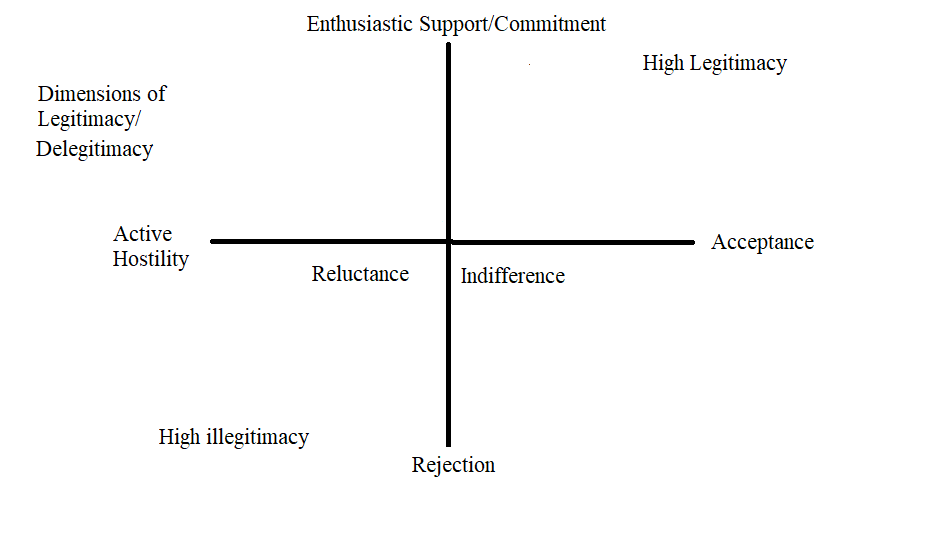
Complexity and Philosophy

February 22, 2021

Complexity theory, challenges standard Western philosophy, which is possibly why so many people seem to find understanding it difficult. This is a place where I will put those challenges as they occur to me.

1) Interdependence and interaction

  • Everything that exists, seems to exist in interactive ecologies.
  • ‘Being’ seems connected.
  • All ‘individual beings’ depend on others for their particular existence. Lone individuals, as far as we know, do not exist as ‘lone’ for their entire lives/existences.
  • Buddhist ideas of ‘dependent causation,’ ‘dependent arising’, or ‘dependent origination’ seem to be reasonable approximate descriptions of what actually happens (although we do not have to accept their usual statements about reincarnation).
  • As a consequence of this idea of interdependence, it appears that humans are not separate from ‘nature’. They depend on ‘nature’.

2) Flux and process

  • Everything which exists is constantly in flux along with everything else. Life flows.
  • Some processes are much slower than others, and so they might seem static from a human point of view, but they are still processes.
  • There may be no eternal, or static, units of being.
  • ‘Archetypes’ and ideas are probably local and temporal.
  • We assume that ‘regularities in process’, or the laws of nature, can be unchanging, but we don’t know for sure – certainly everything else changes. Stars do not seem constant over billions of years.
  • Small events can produce large scale change in certain circumstances (which we may not be able to define in advance).
  • Taoism seems to be useful beginning for reflection

3) A degree of unpredictability and uncertainty are normal

  • Humans cannot predict exactly what will happen in the future, but we can often make good guesses. We can also make very bad guesses.
  • This is just a fact of life.
  • Unpredictability does not mean pure randomness. Evolved complex systems generally oscillate around a stable point – this is called homeostasis and produces a degree of regularity in the flux, at any moment.
  • This degree of regularity means that while we may not know exactly what will happen next we may have some idea. We can expect that people will fall downwards towards the Earth. Our house will not disappear, even if it could collapse. We do not expect that, without some major intervention, pigs will grow wings and fly under their own power.
  • The system does not appear completely random, but it is not completely predictable. A word which has been coined for this state of affairs is “impredictability”; it aims to recognise the normal reality of ‘regularity within limits’ together with the apparent lack of complete certainty in anticipation.

4) Problems of models and understanding

  • In complexity, the only true models of the systems are, generally, the systems themselves.
  • As humans generally do not have a complete understanding of all the complex systems involved in a situation, they cannot completely control complex systems, although they can affect them.
  • As a result unintended consequences are a normal feature of human life.
  • We have to live amidst this uncertainty, regularity and unexpectedness. We should expect unintended consequences.
  • Dogma is almost certainly going to prove incorrect and inadequate as a guide to the future.
  • A statement about what is true at one moment, may not be as effective or accurate at another moment.
  • Being aware of what we don’t know is probably useful to survival, but it is also useful not to simply hope that events will not go badly despite our expectations. We don’t normally hope we can jump out of an aeroplane in full flight without any other technology and survive all the time.
  • Uncertainty about the absolute truth of any statement is probably more prevalent than real clear certainty.
  • Statements have degrees of approximation to reality.
  • We learn by doing, and by attending to unexpected, or discomforting, events, and fixing them as best we can.
  • If we develop policies we should probably regard those policies as experiments, and be prepared to modify them as the results come in.
  • Recognising degrees of failure is important to living within complexity.
  • That statements may be ‘true’, does not mean there is a thing we can call ‘truth’.

5) Boundaries, are not always clear

  • The boundaries between living and dead are not always precise.
  • ‘Matter’ interactively organises, or self-organises, as well as dissolves.
  • As we are constantly in interaction the boundaries between beings are not always precise. We breathe each others’ air, we absorb and transform language, ideas and food. We share continually with other beings.
  • The boundaries between human and non-human are not clear. Mitochondria may be parasites. Most of your weight may come from organisms which are not genetically related to you, but which affect, or even drive, human process.
  • It does not always appear easy, appropriate or entirely accurate to separate a system from its ‘environment’ for purposes of study. This is especially so, if we then proceed to try and render the environment inert, without ongoing interactive effect on the system.

6) Minds and Systems

  • Interdependence and boundary vagueness imply there are no lone or purely bounded ‘minds’.
  • Minds are interactive, they grow and learn in interaction with each other and the world. They learn together.
  • Minds do not appear to end with the individual’s skin, or with the individual.
  • Thinking occurs not only with others, but through learnt language, technology, cultural tools, and ‘natural phenomena’ (trees, objects, creatures, rooms), and the responses and resistances felt, used and observed.
  • Minds are possibly distributed through ecological systems; we learn amidst minds, encouragements and resistances.
  • Human minds (and possibly others) are not born intact or complete – we all have childhoods and learn as we develop.
  • Using our adult mind as a guide to minds or awareness in general, is likely to be fallacious.
  • Not all minds have to be the same, and mind of some sort seems dependent on, and distributed through, the world.
  • That humans seem to have relatively good minds, does not mean that other beings are without minds.

7) Non-Harmony in Holism

  • That everything depends on the presence of others, and interaction with others, implies holism. The whole is greater than the sum of its parts, and the whole influences the parts. The individual is born into, or thrust into, the whole. The individual does not exist without the whole. Yet the whole is not necessarily harmonious.
  • Evolution occurs because of imbalance and failure. Failure to replicate completely perfectly, failure to survive, failure to meet competition, failure to adapt to change in the rest of the system.
  • Competition is real. Co-operation is equally real.
  • As has already been proposed, if a system has been stable for a long time, it is probably relatively harmonious and homeostatic. It is likely to be robust and resilient within limits, but should anything significant change (weather, a new creature arrives, a normal creature has an abnormal reproductive burst, a geological event occurs) then harmony may be disrupted, and change may occur quite rapidly. We may not know precisely what events are ‘significant’ in this sense, until afterwards.
  • Systems can heal, if we stop disrupting them, but not always.
  • Complex systems are adaptive; that is they work towards balance and homeostasis, but that balance and stability need not be beneficial for all members of the system. Complex systems can appear to be maladaptive from the perspective of those they are eliminating. There is no guarantee that humans and ecological systems will always be able to live together. There is even less guarantee that all social systems can exist in interaction with all other complex systems.
  • While we humans are part of a whole, we are not One in the sense that we are all the same, or all similar, or all working harmoniously together all the time. Complexity implies variety.
  • Attempts to enforce ‘oneness’ will almost certainly have harmful consequences for everyone.

8) Hierarchy?

  • Complex systems may have hierarchies, in that some systems (for example planetary) include or overlap with many lower level systems (such as a stream or a lake).
  • However, those more general systems ‘higher’ in the hierarchy may not fully determine what happens at a lower level, although they may influence events.
  • Complex hierarchies are not ideal human hierarchies in which those people at the top command those below, or have a better life than those below, because they supposedly deserve it.
  • What happens below has a large degree of independence, and can eventually influence the top level systems, as has occurred when bacteria started producing oxygen billions of years ago, or when humans started to destroy planetary boundaries.
  • Complex hierarchies involve transmission of influence, in both directions.
  • Real human hierarchies are often like this as well.

9) Order and Chaos are intertwined

  • What we might call order and chaos are co-existent, not different realms.
  • Human attempts to produce order, often produce what the orderers call chaos or disorder. Especially if the ideas of order are dogmatic or ideal, rather than attentive to reality, flux and unintended consequences.
  • Complete order approximates death.
  • Life is disorderly. The more alive something is, the less predictable it is.
  • ‘Sustainability’, in the sense of maintaining a particular order forever, is impossible. However the only alternative is not just destruction, as it can be possible to work within the flux, and help maintain a beneficial homeostasis.
  • Ethics can never be about establishing complete order, but it could be about making temporary homeostatic ‘islands of beneficial order’ for all or most beings.

10) Ethics is situational and uncertain

  • As ecologies flux, no situations are ever completely the same. Relationships change.
  • What is right, just, or ethical in one situation may not be in another, no matter how similar they appear (they will differ).
  • Ethics is a form of decision making with regard to a probably uncertain and imagined future. Ethics cannot be abstracted from the other systems present; political, religious, technological, ‘natural’ or whatever.
  • Ethics becomes visible when there is ethical dispute. Dispute is central to ethics. Ethics will probably never guarantee harmony.
  • Most, perhaps all, ideas and actions have ethical consequences, as they play out through the system.
  • The consequences are likely to be unintended.
  • Ethical ethics may involve care and attention to unintended consequences, after the act of deciding, to make sure the results are ethically acceptable.
  • Insisting a decision is ethical without attending to results will probably lead to disastrous, or cruel, behaviour.
  • Ethics is probably part of our understanding of the cosmos and how it works.
  • Because of uncertainty, ethics involves imagining what we need to do, and what the consequences of those acts will be.
  • Ethics involves imagining the reactions of others, and the level to which we can identify with those others.
  • That is ethics may be built upon imagination, empathy and sympathy.
  • If we imagine a complete difference between ourselves and others, then our ethics towards those beings will probably be different and harsher.
  • As events are interconnected, and boundaries are uncertain it is not easy to say where ethical ‘ethical responsibility’ ends.
  • As ecologies promote life, we probably should not abstain from ethical responsibility towards ecologies, should we wish to survive.
  • David Hume’s point still stands, that because human ethics is based on the way humans behave, does not mean that such behaviour is necessarily ethical. A descriptive statement is not necessarily a proscriptive statement. There may be an unbridgeable gap between an ‘is’ statement and an ‘ought’ statement.
  • There may be no basis for ethics independent of ethics. Ethical relativism is not immoral (as often claimed), it could be an ethical position, which involves a hesitation to condemn.
  • Ideas of God may not not provide a basis for ethics. However, the ethics associated with God, can provide a ethical basis for judging the reports of that God’s behaviour. Is it consistent? Is it good? Or do we have to excuse God from behaviour we would judge as bad if performed by someone else? Can any supposedly all-powerful and all-intelligent God who punishes people with eternal torture be described as purely good?

11) God

  • If God created, or engineered, a world of variety, complexity and uncertainty (for us), what does that tell us about God?

Dadirri and US politics

February 1, 2021

This post probably won’t make that much sense if you do not read the previous post, Dadirri and complexity.

I am not a US citizen, so take this as you will.

The US is, in my opinion, broken. Trump and the Republicans, again in my view, have broken it.

While I think Republicans should probably acknowledge this (given what they claim about being the party of responsibility), and it would make life easier for all if they did, it seems highly possible they will never do so. It would mean admitting they were wrong.

In our society, that seems hard for anyone to do. Admitting error no longer seems to mean mean you can now move on, and refrain from doing it again. Nowadays admitting error, is admitting a grievous sin and moral failing. It means loss of status and condemnation from your own, as well as the others. It is, effectively, wrong to admit being wrong. If you admit one thing you did was wrong, then everything you ever believed and did could also be wrong. People would laugh and mock you. You would be swept away by those who are more confident. If it feels good, do it again.

This is a kind of pathology of positive thinking: admitting a ‘bad’ supposedly makes for more bad to come. This means the ‘bad’ is never faced, and never acknowledged.

However, allocating blame, and contradiction, is far less important than acknowledging the brokenness, and sitting with that brokenness and all we feel and all that is. Blame, or reasoning it all out at the start, is not Didirri. Didirri or receptivity is openness to the reality of what is. It represents a pause, a being with whatever is present, an acknowledgement of reality, so we may proceed or carry on.

One possibility is that the US may never be repaired.

Perhaps some may not want it to be repaired, because it is useful to them for it to be broken, or because repair would admit the damage they caused. But this does not matter. Blame does not explain, nor does it heal, it may just reinforce the brokenness – especially if we start with blame.

The reality seems to be that Americans will have to live with that brokenness. They can be still, and open to possibilities that arise from that brokenness, or they can rush on and say things are not harmed or brush the harm to one side. What if we were open to that brokenness? To the possibility it may never be repaired, but we still have to live?

If we refuse the brokenness, we may never be receptive to solutions. We may never sit with those who do recognise the problem, or with any others. We may not be able to face the silence, and the possible confusion, or pain, of recognising complexity. But those who wish to move on peacefully have to respond to the situation and its full complexity and respond fully. We have to respond healthily to wounds, not ignore them or punish them. That takes Dadirri.

The problem is probably never the ‘them’ but always the ‘we’. We can act, but we cannot peacefully make ‘them’ act.

This is difficult. Society is not geared for silence. The media does not like silence, as they exist for noise, they exist for advertising, they exist for your involvement, they exist to tell you things. Politics exists for drama and noise, displays of conviction and condemnation, not for being together. Business exists to tell us what to do, and what to buy, and how important business is, not for a peaceful soul.

What in the US leads back to silence, to shades and complexity, to perception?

Americans supposedly believe in prayer. Can they sit with God and wait for silence to speak? Can they admit life’s complexity? Can people admit there is something to heal, which does not mean the others become like them? Can we surrender a desire for control, or to only see the ‘positive’?

Can people stop rushing? Will they listen, and by example of that listening, show the way?

Receptivity may not be easy, but we can all stop and start to listen, and be open, without demanding a result.

Anyone can start.

That might be enough to start something new.