Its a bit odd to speed it up, so please read the whole if you can. She writes:
What I want to talk about is another special quality of my people. I believe it is the most important. It is our most unique gift. It is perhaps the greatest gift we can give to our fellow Australians. In our language this quality is called dadirri. It is inner, deep listening and quiet, still awareness….
When I experience dadirri, I am made whole again. I can sit on the riverbank or walk through the trees; even if someone close to me has passed away, I can find my peace in this silent awareness. There is no need of words. A big part of dadirri is listening.
In our Aboriginal way, we learnt to listen from our earliest days. We could not live good and useful lives unless we listened. This was the normal way for us to learn – not by asking questions. We learnt by watching and listening, waiting and then acting. Our people have passed on this way of listening for over 40,000 years…
There is no need to reflect too much and to do a lot of thinking. It is just being aware.
My people are not threatened by silence. They are completely at home in it. They have lived for thousands of years with Nature’s quietness….
Our Aboriginal culture has taught us to be still and to wait. We do not try to hurry things up. We let them follow their natural course – like the seasons. We watch the moon in each of its phases. We wait for the rain to fill our rivers and water the thirsty earth…
We don’t like to hurry. There is nothing more important than what we are attending to. There is nothing more urgent that we must hurry away for.
I’ve also been reading Raimon Panikkar on receptivity. A similar point is being made. It is helpful to humans just to be open, to listen, to be aware of whatever is happening, with no rush to judgement, no interruption, no necessity to understand immediately. To refrain from our words, and our criticism of what is – even when what is, seems to someone else presenting what we think is a misunderstanding.
Dadirri, or receptivity, is just listening and being, not judging, not interrupting, not interfering, not even attempting control or to get a ‘good’ result.
It seems possible to suggest that this is the first call of complexity – when we realise the world is too complicated to fully grasp. Just to sit with it, and listen, without thinking we understand, or even trying to understand.
By this listening we allow the complexities to exist with us. If we are split, we allow our split without shutting it down for what we think is the best result. We accept any dark thoughts or fears that arise, without condemning them, and without obsessing over them. They are there, they are part of what is. Without judgement. We accept cheerful, good thoughts, without praising them and without obsessing over them, or trying to stop them from passing. They are all thoughts. We sit and listen. We accept the noise of cars and drills, and jackhammers. They are part of what is. They may not be the wind in the trees, or the calls of birds, but they too exist. We cannot separate from what is, however much we wish to. We cannot understand everything, however much we wish to. Some understanding will be symbolic, and need not to be foreclosed.
What we might call ‘bad’ is present and a judgement. What we might call ‘good’ is present and a judgement. Recognising either can be a mode of force, if we push one side and suppress awareness of the other. In Dadirri, we just be open and receptive to what is, and what flows, and what becomes. As the Elder states: “There is no need to reflect too much and to do a lot of thinking. It is just being aware.”
It seemed to me that many of our problems stem from a refusal to be receptive or to practice Dadirri. From a desire to separate from, or control, what appears to be the case.
In politics we rush to condemn, rush to argue, rush to self-defense and justification, before we have even heard what other people are saying. We perceive people as opponents rather than accept them as just being. We take them as bad, as harmful. Indeed we will probably rush to condemn our opponents for rushing to judge.
We don’t just sit together, listening and feeling and receptive, leaving aside desires for control or victory. Perhaps this seems impractical, but as long as it seems impractical, the longer we will refuse to try it out.
One person, I’m sorry but I forget who, recently asked something like; “What if the Australian prime minister just sat with Elders, rather than told them what his policies were, or told them what to think. Wouldn’t that really indicate a change and a new mode of being together?”
Another story I remember, which I may have got wrong, was that a mining company was talking to Aboriginal people about what the company offered, and they were getting more and more worked up as the Aboriginal people did not speak. Eventually one person said something like “How can we reply till we have properly heard what you say, and thought about it?” They might also have added “and heard what country has to say”. Maybe the latter is just romanticism, but that is the point – there is a lot to hear, to be open to. And this is so, nearly everywhere.
You can’t make urgent decisions urgently, without full listening to all beings involved, and the web of their interactions, as best you can. And that takes time, and lack of pressure, lack of push to conclusions. Life is complex. That is its nature and life needs attention, openness.
“There is nothing more important than what we are attending to. There is nothing more urgent that we must hurry away for.”
It also means that you may change your course, as more listening proceeds and you hear what was previously silent or ignored by accident.
It is not entirely silly to say that the uninvited, or the excluded, will come back strongly and unwelcomingly, unless we are ready for them, or welcome them in advance.
Sometimes, we may have to recognise that something is broken and cannot be fixed. We still have to be, and be receptive to that brokenness. We may never be able to ‘fix it’, but we still may have to live with it, and not always automatically force it together when it is unwilling or incapable.
Receptivity means being open to the possibility that events appear unpleasant. It does not mean denial of what is. We cannot fix things if we deny there is a problem, or if we fixate on what we think is the problem, or jump straight into what we think is the solution, rather than being open to the complexity of the problem and its branching out all over the place first.
This slips into caution about positive thinking. Positive denial, is simply denial of what is. This is a refusal to listen, a refusal to learn, a refusal to accept what was unintended, or to acknowledge the ignored that came back offended. It denies complexity and life.
Denial is not receptivity. Denial, as I understand, is not Dadirri. Useful positive thinking is listening, and assuming that something will arise that can be enough at this moment. It is assuming no difficulty is too great, although recognises it may be difficult the less we listen. Receptivity does not deny difficulty, it allows what is to be what it is, and for us to feel the way forward slowly and quietly, and be open to the responses that are engendered by what we do.
It allows complexity to be, and finds the best way through.
This is an attempt to explore Q, and to write about Q, somewhat in the manner of Q.
First off, I’m not an expert on QAnon, so there is no need to take this seriously.
What was the Conspiracy?
Q does seem to be pro-Trump. However, Q does not seem to have had either Trump, or the Trump re-election committee, behind them, because it seems that Trump had little idea of what Q was talking about until relatively close to the end, when he could have taken advantage of it all along. He did occasionally retweet Q memes, but the memes were ubiquitous in the sources that Trump might read or see, so that does not mean he knew much about it. This is what he said when asked:
Trump: Yeah. I know nothing about a QAnon…. I know you told me [about QAnon], but what do you tell me doesn’t necessarily make it fact. I hate to say that. I know nothing about it. I do know that they are very much against pedophilia. They fight it very hard, but I know nothing about it….
I’ll tell you what I do know about, I know about Antifa and I know about the radical left and I know how violent they are and how vicious they are, and I know how they are burning down cities run by Democrats, not run by Republicans….
Savannah Guthrie: Just this week, you retweeted your 87 million followers a conspiracy theory that Joe Biden orchestrated to have SEAL Team Six, the Navy SEAL Team Six to kill — cover up the fake death of bin Laden. Now, why would you send a lie that to your followers? You retweeted it.
Trump: I know nothing about it. It was retweet. That was a — an opinion of somebody and that was a retweet. I put it out there. People can decide for themselves to take a position.
Given Trump would seem to take advantage of anything popular which favoured him or attacked his ‘enemies’, there is no reason to think that he would refrain from using Q, if it was connected to him and he knew about it. Unless Trump was in deep cover; which means he would confirm nothing of Q, although him confirming nothing, does not confirm anything.
Trump’s display of ignorance could suggest that Q was trying to take advantage of Trump and his followers for some purpose. Is there reason to think this untrue? Q had more to gain than Trump did. They could influence Trump’s followers, while binding Trump to promises he could probably never carry out such as capturing and trying Hilary Clinton as she tried to escape, engineering mass suicides of his enemies, perhaps announcing that the Mueller Report had unearthed pedophilia in security agencies, get John McCain to resign, expose Pope Francis and so on. Trump was also expected to hold ‘the Storm’ and arrest hundreds (maybe thousands) of satanic pedophiles, which may well have proven difficult if he had tried to do it – which he does not seem to have done. Trump was even incapable of triumphing over coronavirus, which was supposedly not really that deadly. Did the prophecies fail, did Trump fail, or was he pushed by Q? Were the prophecies codes for something less palatable to Trump’s people? Who are the secret manipulators?
Was Q even designed to discredit Trump and his followers, by demanding the impossible, and then letting the followers see it all fail? Q could have been the deep state in action, only pretending to be against itself. Was Trump was doing this himself? If Q was Satanist running a false flag operation, then allowing 100,000s of innocent Americans to die, because no coherent action was taken, could count as a major success.
The background: ‘drops,’ and black magic
The idea was clever. Q is supposedly a person with a Department of Energy clearance for Top Secret information (why Department of Energy?). We don’t even know Q is a real person, or how many people post as Q. The people playing Q basically issued questions, random snippets of information, made predictions and let people construct their own fantasies (or do a lot of learning as they might put it), so they provided the data and fantasy to back Q’s assertions, and spin the Web Q started. This is one supposed Q drop from near the beginning:
Mockingbird HRC detained, not arrested (yet). Where is Huma? Follow Huma. This has nothing to do w/ Russia (yet). Why does Potus surround himself w/ generals? What is military intelligence? Why go around the 3 letter agencies? What Supreme Court case allows for the use of MI v Congressional assembled and approved agencies? Who has ultimate authority over our branches of military wo approval conditions unless 90+ in wartime conditions? What is the military code? Where is AW being held? Why? POTUS will not go on tv to address nation. POTUS must isolate himself to prevent negative optics. POTUS knew removing criminal rogue elements as a first step was essential to free and pass legislation. Who has access to everything classified? Do you believe HRC, Soros, Obama etc have more power than Trump? Fantasy. Whoever controls the office of the Presidecy controls this great land. They never believed for a moment they (Democrats and Republicans) would lose control. This is not a R v D battle. Why did Soros donate all his money recently? Why would he place all his funds in a RC? Mockingbird 10.30.17 God bless fellow Patriots.
There is no ‘secret information’ here, just questions with no answers. It is all references to things people would already have heard of, if they watched Alex Jones or similar parts of the Right0Sphere – Huma, for example is a close associate of Hillary Clinton, who is supposed to have peeled faces off children in a Satanic ceremony – is there any evidence of this? It doesn’t matter as she is not being accused of anything; people are just being told to watch her.
Here is another drop. Note the repetitions between posts, which might build up truth (‘What I tell you three times is true’):
Some of us come here to drop crumbs, just crumbs. POTUS is 100% insulated – any discussion suggesting he’s even a target is false. POTUS will not be addressing nation on any of these issues as people begin to be indicted and must remain neutral for pure optical reasons. To suggest this is the plan is false and should be common sense. Focus on Military Intellingence/ State Secrets and why might that be used vs any three letter agency What SC decision opened the door for a sitting President to activate – what must be showed? Why is POTUS surrounded by generals ^^ Again, there are a lot more good people than bad so have faith. This was a hostile takeover from an evil corrupt network of players (not just Democrats). Don’t fool yourself into thinking Obama, Soros, Roth’s, Clinton’s etc have more power present day than POTUS. Operation Mockingbird Patriots are in control. Sit back and enjoy the show.
This primarily states that Trump will not say anything about what Q is saying, so overt confirmation is not to be expected. Is silence confirmation? Trump is also not a target, but a target of who? Perhaps that means he is a target of Q (because it is denied). Of course both these posts could be fake, but they show the style…. it seems like a textual Rorschach blot. We might wonder if, like Trump’s speeches, whether the ‘drops’ interrupt and disrupt ‘rational’ (Mind 1) thought processes and critical thinking? Why do they make so few connected propositions which can be challenged? Could they be acting as incantations, black magic, hypnotic effects, replacing rationality, with repeated phrases about how great we are, how persecuted we are, how we can overcome everything, how those who disagree with us are traitors? How better is life, if we just hand over our will and our trust to the black magician? To the Satanist who pretends to expose Satanists, but never does. Mind 2 finds the patterns which are hinted at within the hypnotic suggestions, and that becomes hypnotic truth…
Q as liar? Fantasy and community?
Q also claimed that sometimes they would issue false information deliberately, some say to misguide the real criminals. This admission protects everything Q says. False information could be said to not really come from Q, or was a deliberate deception for some reason. This meant that any vaguely clear statement which turned out to be so obviously wrong, that even Q followers could not believe it, was easy to explain away, or forget. If Q says straight out sometimes they lie – who knows what to trust? This is just like Trump. People no longer know what is intended to be true, what is just ignorance and what is deceit. How many times does Q have to lie, before it all seems untrue, more untrue than not, only accidentally true on occasions, or people bed down with a hypothetical truth that they will protect from challenge?
The end result is that whatever takes off amongst readers is what what they elaborate, what people need to hear to make sense of the world, and which gave them a sense of accomplishment – people issue youtube ‘news’ videos – “You are the news now,” “Do your own research,” “Have faith in you own research”. While this further engages the participants, it could lead to a situation where if a source disagrees with Q on anything it seems obviously false, and cannot be trusted. If you don’t hear anything that Q is talking about in the mainstream media, that is because that media is part of the conspiracy and is actively suppressing the information. If you do hear something that confirms, or makes sense of, Q it must be true. So QAnon the movement became, more or less, completely self-referential and self-reinforcing. What was true would be what other Q followers said was true. And some of them might think “disinformation is necessary,” and just lie for some higher purpose – whatever that was? Supporting Trump? Supporting the swamp Trump cultivated? Supporting the take down of Trump?
These processes of trust and distrust build community and closeness amongst those who hang out for more drops from Q or who attempt to make sense of Q. The community builds up the sense that something important is happening here concerning the future of the USA, and ‘we’ are participating. People accepted what they were told because others they respected did, while saying that was only something that happened to those outside their community. Sadly, what is to say we cannot be conditioned by any media/information, unless we are critical of it? As they say “where we go one, we go all” or “WWG1WGA,” which sounds a bit like the sheep they condemn others for being, but let’s assume that is not true, and it just indicates following where the ‘evidence’ takes them, as long as it does not invalidate Q.
Satanic pedophiles
Opposition to Q, further proves Q had something, because wouldn’t the Satanic pedophiles oppose Q in all possible ways? “Many in our govt worship Satan.” “These people worship Satan_ some openly show it.” Although Q mentions Satan relatively little, it seems to be elaborated by followers; its a meme they magnify.
Q promises action is being taken, even if we don’t see it:
The pedo networks are being dismantled. The child abductions for satanic rituals (ie Haiti and other 3rd world countries) are paused (not terminated until players in custody).
It certainly attracts attention, and I’ve certainly met people who think Trump is warring against organised high level pedophiles, despite the fact the only publicised arrests have been of friends of his, who previously escaped because of friends of his.
The elite pedophilia thing is not impossible. Organisations like the Catholic Church have behaved as if they were run by pedophiles to protect pedophiles and other rapists, so we cannot assume that no other high level organisations would be run in the same way. We also know that hidden pedophile rings do exist online. Online, anyone can find anything if they search hard enough, and police do break some of them. This is reported in the mainstream media, easily.
The odd thing is that Donald Trump could be seen as the person fighting pedophile rapists. That is hard to believe. He is a person who reveled in sexual assault, even if it was largely imaginary. Many women allege he behaved ‘inappropriately’ towards them. He seems to be a serial adulterer and user of prostitutes. He not only at one time had largely unreported, but real, charges against him of raping a thirteen year old girl. These charges were dropped as he became president, because the woman involved received death threats. He was a friend of Epstein’s who knew about Epstein’s tastes and did nothing about it, not even break off friendship, for years. He also knew, and hired, various other people who favoured Epstein. He specifically shouted out to Maxwell, when she was arrested, to wish her well. He deliberately had a woman who was repeatedly raped as a child unnecessarily executed for murder. We might as logically expect him to run a pedophile ring as be against it. Perhaps Q provides cover for this? Do the research….
The ‘Secret of Media’, is hidden
Some of Q, is not unreasonable:
What happens when 90% of the media is controlled/owned by (6) corporations? What happens when those same corporations are operated and controlled by a political ideology? What happens when the news is no longer free from bias? What happens when the news is no longer reliable and independent? What happens when the news is no longer trustworthy? What happens when the news simply becomes an extension/arm of a political party? Fact becomes fiction? Fiction becomes fact? When does news become propaganda? [more]
‘Of course’, there is no analysis of the normal process of monopoly, oligopoly and control in capitalism. The post relies on the standard uninvestigated rightwing meme that the US media is ‘liberal’ or pro-Democrat, rather than pro-corporate, or biasedly pro-Republican and geared at benefitting its owners and advertisers. Q does not suggest Right wing media bias. News could equally become propaganda when it belongs to Murdoch, or other ideologically committed billionaires, who stack their media with propagandists who promote the idea that any news which disagrees with their position is both lies and politically motivated. Q suggests that bad news stories about Trump, no matter how well documented, show there is a conspiracy against Trump and against decent Americans, not that Trump might be bad. Q people have to stand outside the supposed group-think of those who think Trump is a problem, and join the group-think of denying that Trump is incompetent, corrupt, not clearing the swamp, etc. – no matter how clear Trump’s failings would seem if you investigated him with an open mind. By all means, “do your own research,” but don’t assume that only pro-Trump sources are genuine, lest you want to be mindwashed.
Just remember the lamestream media could not be bothered to report the charges of Trump raping adolescents or many of his war actions, before thinking it is inherently anti-Trump.
If Trump was a Satanist, we might ask, does Trump enjoy other people’s deaths? Is this why he had people executed on his way out? Is this why he pretended Covid would not kill many Americans, even now when over 400,000 Americans (current figures, likely to get bigger) have died? Is this why he ignored Covid after the election, to pay people back for not voting him in? Is this why he allows companies more freedom to pollute and poison people? Is this why Trump media also pretends the virus is not real? It is sacrificing its watchers to some ‘higher cause’?
Did Trump pardon those who entered the Capitol Building for him, or did he pardon politicians who were convicted for defrauding people for money, or convicted of tax or financial fraud, people who committed war crimes, or high level people who were convicted for illegal acts protecting him? Is this defending the swamp and casting aside the principled? What does your media say?
Q is dead, but Q is not dead
That Q was, at best, largely fake, should be relatively clear to everyone by now. The Storm never happened. There never were any mass arrests carried out by Trump, even at the last minute. There never was any outside evidence of the plots that Q generated awareness of. There were no trials. Three years of promises with nothing to show, except winding up support for Trump. But who knows, perhaps Q can be saved by pretending the failure of the prophecies was a necessary step towards later success, that so many good people could not have been sold a line so it must be true, or that people misread the drops (not hard) and that Q did not bother to let anyone know…. In which case Q is at best unreliable, and we still are not certain Q was other than a complete fake.
Acknowledged failure does not mean Q will not start up again, or that people who are dedicated will not keep it going, but it needs a new rationale. And that may take a while to get going…. So don’t give up on it yet, only 4 years till the next attempt (at best).
Because QAnon was so widespread in the ‘Right0sphere’, the domain of dedicated Right wing theory and propaganda, people who frequent that zone are almost certainly influenced by Q memes and Q provoked fantasy, even if they have never knowingly directly engaged with the Q community, and even if they thought Q was loopy. They share some things in common to begin with, so increasing that sharing may not be hard. In that case, is the spread of Qdom limited by the presence of Q, any more? It may have its own self-generating base, and so will probably continue, even if it drops in popularity, and it may well resurface later on, when all the disproving factors have been forgotten.
Q and real politics
Part of Q’s success involves what I have called ‘shadow politics’. That is the ability to displace evil on to outgroups, or the ‘other side’ in a binary political system. Because the other side is not us, and we are good, they become the repository of all our suppressed, or unacknowledged desires. Through this thoroughly human process, we are able to truly identify the evil and fight it. Fighting that evil, and hopefully expelling it, bonds us together in community, while also making the separation between the groups sharper and more intense.
As it is harder to talk across groups, it becomes easier to believe they are deluded and evil. Because this separation is so involved in fantasy, there is no limit to what can seem to be true, in terms of their evil and our good. You can see this in action with people condemning those others involved in QAnon, almost as much as you can see it in the QAnon movement itself.
Politics and economics also tend to become caught in fantasies and projections which are collective and cultural, and indeed even make collective culture. It might even be the case that effective politics is about the creation of effective fantasies – which can then obstruct people from attending to the reality they are dealing with, and lead to destruction – because they seem so true, and they are so easy to communicate. One important thing in research is to attempt to prove you are right, the other is to explore how much you can be wrong. This is difficult when fantasies are involved, and is almost never encouraged by leaders, whose power often depends on you accepting their truth.
What Q does indicate, and what should be taken seriously, is the shear amount of alienation in the US population, and how deeply uninvolved, or frightened, at least 30% or so of potential voters feel about political process. How they feel the ruling elites do not listen to them, the intellectual elites despise them, and the media is untruthful – and, sadly, there is real point to that feeling. This is significant. For many people, it feels as if the current world is being run by evil geniuses (or evil morons), who have no morals at all.
We can assert that the ideologies of capitalism have let people down, because those ideologies have no capacity to explain what is happening to people, or give consolation. People have little hope – nothing indicates that doing what they are supposed to do (like ‘work hard’) actually works for them. They are losing money and life chances. Life is going downhill, for them and their children. It shows they feel they are the victims of forces they cannot control – and this is probably correct. It may also show they feel that God has abandoned them, or needs a lot of placating to be on their side.
QAnon also shows people’s own heroism, they were prepared to stand up for change, if they thought that change was true. They were prepared to separate from families and community for this truth. That it may not have been true, does not diminish that heroism, or their determination to find things out and take the consequences.
Do Q’s satanic pedophiles exist, at any really important level, any more than the Pizzagate ring existed? Probably not. However, it is important symbolically, as it again could represent the idea that people experience themselves as being at the mercy of predators in their daily lives, which could well be true – they are all subject to the forces of predatory capitalism, and a system which sacrifices normal people for taxcuts for the wealthy, fossil fuels, run down housing, and subsidies for the hyper-wealthy.
If this alienation from politics and from social life, is not taken seriously by people in politics (and religion) and they do not work to fix it, but continue to work to take advantage of it, or dismiss it, then the US will continue to head for tyranny, persecution of innocents and collapse. Everything may well unwind. If steps are not taken, the future could be every bit as horrific as Q suggests.
The usual answer is that it is someone who works with ‘dark forces’.
However that is not quite enough. Even if we were clear what ‘dark forces’ were, sometimes we need to work with the chaos, or destructiveness, to produce healing.
I guess that is the point: the black magician works with dark forces for their own personal power or for the pleasure of destruction.
The most obvious dark forces present today, are the forces of the socially repressed but vengeful collective unconscious – brought out by a failing and flailing society. Trump manifests what Jung calls the shadow, the denied harmful parts of the collective personality, and its projection onto those with little power.
The use of these forces for personal power and destruction is why I think of Trump as a ‘black Shaman’.
[I should add that there are large dispute as to whether ‘shaman’ is a valid analytical category – see Kehoe’s book Shamans and Religion for a relatively good introduction to the debate – I’m using the term in its normal western meaning of a person who summons, travels with and/or listens to spirits, even if that is no excuse]
Trump seems to have spent most of his life creating chaos and destruction to build his power and support his ‘righteousness’ or his apparently unending ability to ignore, or celebrate the harms he creates – an ability which often seems contagious, so that we are dealing with collective shadow forces.
The Background
In business Trump appears to use threats and the promise of using the law to attack, and an ability not to be held responsible for failure. He is an excellent salesman, and self-promoter, although it appears he sees what he wants to see, rather than face ‘what is’. He is excellent at self-deception. I am sure he really believes that Covid is not a problem and that he cannot lose.
However, he has many failures and not a few frauds to his name, but is imagined to be a success. this imagined success is vital to his real success.
He has repeatedly threatened to sue individuals who speculate he’s exaggerating about his riches, and he once even made good on such a threat, suing the author of the 2005 book TrumpNation for estimating that his empire was worth as little as $150 million. (That lawsuit was thrown out.) Forbes editors also say Trump regularly lobbies them to increase the magazine’s estimates of his wealth…. Forbes pegs his fortune at about $4.5 billion
having looked at Donald Trump’s detailed financial filing with the Federal Election Commission: He owns assets worth at least $1.4 billion and has liabilities of at least $265 million.
He supposedly persuaded workers in his Casino companies to take stock in the company as their pension fund, so when the companies went bust the workers lost their pensions. This was perfectly legal. Even more scrupulously:
Trump used his company as a means of transferring his personal debt load onto shareholders, issuing rounds of junk bonds to build up cash that would erase his own debts.
So he partly salvaged his loses on the backs of his workers. Despite this, his supposed business success, his TV success and his celebrity, makes him a symbol of the American dream. Winning in America creates its own morality, which justifies that victory. He is considered ‘tough.’ Even his documented tax evasion might help amongst those who hate taxes. He is not a person, but a vessel for shadow mana – a projection of what American people should want to be, and do want to be – although it is probable that a nation composed of people like him would collapse in faction and distrust. However, his image attracts and energises; even those who do not worship him, still find their thoughts returning to him, without considerable effort – and this reinforces his attraction and centrality to the world.
In politics, he works with, and summons up, the genuine grievances of the American people, who have been abandoned, suppressed, marginalised, and thrown out of decent paying work and who suffer precarious survival chances. They face loss of home and landscape, and have lost hope, through the consequences of the kinds of policies he, and his fellowship of the wealth elite have bought and supported for their own benefit.
The American people’s living standards have at best remained stable. Social mobility appears to have slowed. Their children probably don’t have a great future. Yet they are bombarded with messages that tell them if they just think positively, or act right, then they can overcome everything. They too can learn The Secret and succeed. They can be wealthy, sexy, healthy and attractive. Those who fail to do this are clearly worthless – it’s easy after all, just a matter of correct thinking. In the neoliberal illusion, there can be no talk of social class or opportunity structures (inequality, corporate power, the distribution of wealth, and the coming environmental collapse) which might explain the problem. It is all personal failure, which is also known to be untrue. It is an immobilising contradiction.
Trump gives people hope again. He is is one of the few politicians (who can get media coverage) who acknowledges what people feel, and directs that feeling into action – even if the action is primarily just letting off steam, or threatening outgroups. His followers can do something, and feel something together with crowds of others feeling the same, which gives them validation. Now, they can fight for their own improvement, and positively hope for further upgrades.
Rather than cultivate that grievance so as to overturn the policies that make the problems, or investigate what should be done to deal with these real problems, Trump turns those grievances into hatred and anger against his enemies – who just happen to be the people most likely (not certainly) to repeal those destructive policies.
Trump gives the real grievances a false target, and given that you cannot talk widely about the real causes of ordinary peoples’ loss in the US, then it works pretty persuasively. After all the mainstream media says similar things, and ignores or hides the real problems, and has been for a long time. This is part of what I have called the “Neoliberal Conspiracy” initiated by the powerful and wealthy. Ordinary people seem to be being conspired against by the wealth elites, although it is hard to tell if the conspiracy is deliberate, or whether it just grows out of the wealth elites defining corporate power and corporately dominated “free markets” as good.
In this sense, Trump benefits twice: once from the policies that transfer the people’s wealth to himself and which support his business crimes against workers and contractors, and second from the anger that the results of these policies generates.
Trump persuasively creates a fictional world in which life makes sense, people can find someone to blame (which is easier to deal with, than blaming the system which is praised on all sides), and he has plenty of people who have already been playing along with that position, who try to be radical by dismissing any critical narratives about real power, and pretending that Trump stands alone, with real Americans, against the horrors. We can see that what seem to be pure right wing ‘news’ sites are flourishing, without responsibility, and are now perhaps the new mainstream – boosting the message. The background creates the conditions for his performance.
Trump as ‘Shaman’
Trump is dependent on his audience for energy. He must give speeches to feel their energies flowing through him. In that sense he seems dependent on the crowds for meaning as they are dependent on him for meaning. And yet the speeches are odd, full of incoherent rambling. Looked at as words they can be almost meaningless, yet I suspect they act as incantations – disrupting what is left of the rational mind and replacing it, like an Eriksonian hypnotist, with repeated phrases about how great we are, how persecuted we are, how we can overcome everything, how things are going well, how the Democrats are traitors. How things are better if we just hand over our power to the shaman.
You know, when people see it, I walk in, we do polls, and they do a poll. “We interviewed 73 people, and President Trump is down 57 points.” This is a poll. See, this is a poll. When you draw crowds like this. This is not the crowd of somebody that’s going to lose the state of Michigan. This is not. This is not. And look at this crowd. You can’t even see the end of it. You can’t. This is not the crowd of a second place finisher. Do you agree with that? No. No. This is our crowd, all together. We’re in this together and we’re doing it together. As long as I’m President, we will remain the number one producer of oil and natural gas anywhere on this planet. And for the first time, we are energy independent. You never heard that term before. We’re energy independent, and you know, we have very good relationships in different parts of the world. In some we help. We don’t have to, though. Now we don’t have to do … We do what we want, but we have some very good allies and partners that we’ll help them, but we don’t need their oil anymore. We have so much oil. We have more oil than anybody, okay? And it’s an incredible thing that it’s happened over the last few years. A lot of great things. And you’re paying, what, $2 a gallon for your gasoline? That’s okay.
Through this incantation, and subversion of coherent thinking, he gives hope. He gives endless hypnotic positive assertions. Things are not bad, the awareness of bad things is promoted by his enemies, you can ignore them, as things really are going well. And if some of the media don’t agree with him, then that just proves everything is really fine, because we know the media are evil.
And it doesn’t matter if he lies, the lies point to the greater truth. As a shaman, he utters mystic symbols, which point towards the real truth of what cannot be said (perhaps what the truth should be). This is the truth that is felt in the heart or in the gut – which needs no testing. Reasonable speech tends not to speak to the passions, it is denuded of affect and ineffective – especially to crowds who want passion – who want to be enlivened, lifted out of a sense of powerlessness – and he enlivens them – he frees their energy. And this is Good.
Looked at literally much of what he says is lies. Lies repeated so often, they become assertions of faith – that mark the believer. As Hannah Arendt said:
The result of a consistent and total substitution of lies for factual truth is not that the lie will now be accepted as truth and truth be defamed as a lie, but that the sense by which we take our bearings in the real world—and the category of truth versus falsehood is among the mental means to this end—is being destroyed.
…one could make people believe the most fantastic statements one day, and trust that if the next day they were given irrefutable proof of their falsehood, they would take refuge in cynicism; instead of deserting the leaders who had lied to them, they would protest that they had known all along that the statement was a lie and would admire the leaders for their superior tactical cleverness…..
If the ‘other side’ can be defined as responsible for all evil, then victory is all that counts. If lies help win that victory, split the opponents, or cause them discomfort the lies are good by definition. It does not matter if words are literally false.
Such lies function as what some psychologists call “blue lies”; lies which are told on behalf of one’s group against another group – they reinforce identity (and the denied identity politics Trump engages in), and are recognised as being used to hurt the others. These lies can:
actually strengthen the bonds among the members of that group….
University of Toronto psychologist Kang Lee explains, blue lies fall in between generous “white” lies and selfish “black” ones. “You can tell a blue lie against another group,” he says, which makes it simultaneously selfless and self-serving….
The lies are beneficial for your group…. They help bring some people together by deceiving those in another group….
“Many people are angry about how they have been left behind in the current economic climate” [Maurice Schweitzer says]… Trump has tapped into that anger, and he is trusted because he professes to feel angry about the same things.”
“Trump has created a siege-like mentality,” says Schweitzer. “Foreign countries are out to get us; the media is out to get him. This is a rallying cry that bonds people together.”
The suggestion Trump makes is that Trump is persecuted like his followers are persecuted. He is one of them. If correct, this serves as a further example of the functioning of ingroups and outgroups. Outgroups are those who can be lied about when it benefits the ingroup, or confuses the outgroup, or angers them. If the ingroup lies about itself to boost its standing and power, that is also good. If the outgroup lies about anything, then that is still bad, as it points to their greater falsehood.
These lies are to believed when useful. They may never be taken entirely seriously, but they are never entirely disbelieved, or put aside (truth and falsehood are no longer taken as absolute opposites in practice). People are free to use the lies whenever it becomes time to denounce the others, and they will not be called out. At worst these lies are taken as rumours which point to the real truth about how dastardly the others are.
Lying can also be regarded as an art which produces admiration. A person might go along with the lies in admiration of the sheer entertaining effrontery and fantasy of it, and because of their inner truth. Going along with the lies, may well later lead to a tacit belief in the lies.
Sometimes Trump’s aim seems to be simply to turn his followers grievances against those who stand up to him, or who say he was wrong (and get defined as outgroup), but would not threaten the policies which are the basis of his power. Part of the illusion he attempts to create is that he is always right, so people who disagree must be wrong, and be deliberate saboteurs; again outgroups are evil. In any case they are enemies, and they are the real liars.
In this act of suppression, he can use the force of others. It was not he who gets armed people into the streets, or who generates death threats to Dr. Fauci, it is the peoples’ legitimate anger which he encourages and excuses. Through these threats they are standing up to the elite – unfortunately not the right elites.
He also attempts to create the idea he is the victim; “no president has been more persecuted than myself”. This relies on people’s short memories. Many presidents have been attacked more than him; some have been shot, some have faced years of intrusive inquiries with little result.
However, as already stated, this victimhood establishes the idea he is one of the real people who are victimised daily, just as his misspelling, and incoherence in his tweets, and the mockery they promote, supports this ideal connection; and as does the dismissive snobbishness of much of the ‘intellectual’ response to Trump – that will not recognise the real base of his power in people’s discontent and powerlessness.
However, his victimisation is fictitious, and it is easy for him to stand against it – he is squarely part of the inherited wealth elite, he has wealthy and powerful contacts in the US and internationally, and he is President of the United States – an elected King, with power of war, secret police, appointment of justice, pardon and preferment. This victimisation distracts from his overt power, and creates the illusion he is fighting against what oppresses the people, and that he is standing up for them, and mastering their problems. And he can invent solutions which have never happened, but such is his persuasive power that his supporters do not seem to question this, as these events should be happening, and will if we hold strongly to the belief and don’t challenge it.
Given the problems he identifies are immigrants, Mexicans, black people, rioters, professors, journalists, feminists etc., these are also relatively easy to defeat. They also fit in with the already established modes of hatred in the community – people who are different – people who are sometimes unpleasant, or up themselves, but who have little power.
These processes also disarm the Democrats and other opponents, who seem to think, even after these past four years of Presidency, that the law will stand up and act to enforce the conventions and fair play, when the law is largely a tool of power, and Trump and his party are the power.
Occupy Washington
The current occupation of the White House illustrates how this works.
Before the elections, Trump tried to cast doubt on the results if he lost. He threatened to challenge the results. He campaigned on the idea that his followers were going to be cheated and disenfranchised – while attempting to disenfranchise large parts of the population by making pre-polling difficult where possible, by casting doubt on postal votes and trying to suggest postal votes should not be counted, or would not be counted. This was on top of the usual Republican efforts to prevent people in their outgroups from voting. He was doing what he alleged the enemy was doing. That someone was doing it, made it plausible the enemy would do it. This would also distract from the fact that his side was doing it.
However even if these Republican threats to disenfranchise people did not disturb the awareness of his followers, they were still rightly feeling cheated (the system does not work for them) and disenfranchised (the vote and the party, really does not deliver people who really represent them or do anything for them). Corporations ride over them. They are even threatened with losing employment, livelihood and survival to protect the despicable weak because of Covid.
On top of that, if the other side is truly evil and victory is all that counts, then Trump’s behaviour is perfectly ‘reasonable’. If the outgroup won then it would clearly be dire, because even when ‘our group’ wins the consequences are not great now (possibly in the future) – imagine how bad it would be if the others got in?
So Trump used people’s sense of disenfranchisement to increase their disenfranchisement, and set up the possibility of a rule by force. A rule in which he stayed in the White House whatever the people voted. This rule would sever any responsibility to the people, because he had broken the system. What keeps it going is he, himself and his shamanic power to channel unconscious rage at the system, whose workings people are not conscious of. He can appoint who he wants to, and do whatever he wants, because he spoke directly to the people and reinforced the deception through scapegoating. Republican politicians would know that they have depended on the deception for their power and, if the real fraud was revealed, their party would probably suffer – although in reality many people would never believe the fraud was unreal. How could the President, the magic man, the success icon, really loose?
The politicians would also know that nobody would protect them from the President’s vengeance, if they did not support him.
At this moment what does it cost them to play along with the President? If he goes, and the fraud charges stick, they can use them to justify attempting to tear Biden down. If the fraud charges fade away, they can carry on as usual, without fearing others in their party, and if the President succeeds in his coup, then they can claim to have supported the fraud charges all along and without having risked the wrath of the autocrat. Also they might find it reassuringly useful to believe that the Democrats cheat and lie like they do themselves, that makes it fair.
Comments by Jung
As some people will recognise this piece is influenced by memories of Jung’s work on the period before World War II.
After writing this piece I browsed Jung’s collected Works Vol 10 Civilisation in Transition, to see what I had forgotten. In this section are some very free paraphrases of what Jung wrote, together with a few paragraphs from an old interview, and a few additions by myself I have substituted Americans for Germans for example – please don’t take these as direct quotations from Jung, hopefully they add to the ‘analysis’ above.
Of course Jung is talking about Hitler, not Trump, and while they may be very different, the similarities seem significant enough for the purpose.
*****
[#454] The individual Americans’ feeling of weakness, indeed of non-existence brought about by the social system and its response to them, was thus compensated by the eruption of hitherto unknown desires for power. It was the revolt of the powerless. Americans wanted order, wanted revenge, and wanted a meaningful life, but they made the fatal mistake of choosing a victim, and creator, of disorder and unchecked greed, for their leader.
This man was the most prodigious personification of all human inferiorities. He was an utterly incapable, unadapted, irresponsible, psychopathic personality, full of empty, infantile fantasies, but cursed with the keen intuition of a rat.
[#419] Another diagnosis of Trump would be ‘pseudologia phantastica’ which is characterized by a peculiar talent for believing one’s own lies. … Nothing has such a convincing effect as a lie one invents and believes oneself, or an evil deed or intention whose righteousness one regards as self-evident. Especially if it can be changed for another lie as needed – which one also believes is true. A person who tells people what they want to hear, at that moment, will nearly always be more persuasive, than one who is consistent, or checked by reality.
[#418] All these pathological features — complete lack of insight into one’s own character, auto-erotic self-admiration, denigration and terrorization of one’s fellow man (how contemptuously Trump speaks), ability to summon the shadow, falsification of reality, determination to impress by fair means or foul, bluffing and double-crossing — all these were united in the man whom a strange fate chose to be the political, moral, and religious spokesman of the USA for four[?] years.
Is this pure chance? Or is it some kind of destructive compensation? Some longing for death and destruction to break the monotony and desperation of people’s lives?
[#454] Because of his closeness to the shadow, Trump spoke for that shadow (the inferior part of everybody’s personality), to an overwhelming degree, and this was another reason why people went for him. These failings of psychic development allowed the President to crystalise the problem, and symbolise a way forward…. He gave them other people to denounce; a focus for their hatred and loss. He joined them together in their collective shadow. He forged that shadow from the ruins of the country and its despair. He gave relief with a cause identified, even if wrong.
[#455] In Trump, every American should have seen his own shadow, his own worst danger. It is everybody’s allotted fate to become conscious of and learn to deal with this shadow. But how could the Americans be expected to understand this, when nobody in the world can understand such a simple truth when it applies to them? How many on the left, gained a sense of righteousness for themselves by denouncing Trump’s followers as their own shadow, rather than engaged with them as people? The point of the shadow is to separate, and promote retreat into fantasy and violence, to keep oneself proud, while bonding with others who denounce the same people.
[interview] Trump’s voice is nothing other than his own unconscious, into which the American people have projected their own being; that is, the unconscious of seventy or so million Americans. That is what makes him powerful. Without the American people, and their collective psychological states, he would be nothing…
[interview] Trump does not think – he listens to his shadow and its whispers and speaks it directly. He is like a man who listens intently to a stream of suggestions in a whispered voice from a mysterious source, and then acts upon them….
[interview] Trump’s power is not political, it is magical. With his unconscious perception of the real balance of political forces at home and in the world, he has so far overcome the merely rational expectations of any opponent. His apparent irrationality is a strength, which undermines any supposedly rationally acting opposition with its unreal, customary and derogatory, expectations of him….
[#426] Believing one’s own lies when the wish is father to the lie is a well known hysterical symptom and a distinct sign of a sense of inferiority – one cannot face up to truth… Reality, only dimly perceived at best, is to be completely blotted out. In an individual we call this sort of thing an hysterical twilight-state. When a whole nation finds itself in this condition it will follow a mediumistic leader over the housetops with a sleep-walker’s assurance, only to land in the street with a broken back.
[interview] With Trump you are scared. You know you would never be able to talk to that man; because there is nobody there. He is not a man, but a collective. He is not an individual, but a whole nation, or the nation’s disruptive unconscious. What he thinks at that moment is taken by him as righteous with no quarter. Agreeing with him merely 95% of the time may not be enough to satisfy him. I take it to be literally true that he has no personal friend. How can you talk intimately with such a person?
[#432] The phenomenon we have witnessed in America is nothing less than an outbreak of epidemic insanity, an irruption of the unconscious into what seemed to be a tolerably well-ordered world (but which, ultimately, was not), channeled by an otherwise empty shaman, probably initially by accident, until he came to crave the power and meaning it gave his own life.
Trump is no mere gangster or thug and understanding him as such will not help combat him.
Addenda June 2025
Trump celebrates the Shadow of America. It is all out in the open: greed, pettiness, bluster vindictiveness, fear of difference (whether political, racial, sexual, intellectual), sacrifice of the inferior, attraction to violence and dominance, vicious hierarchies, and multiple people beating up on much fewer people. Through identification with the leader people can throw off repression of the shadow, which is energising and exuberant. You can hurt anyone who is not approved. It feels good to throw off repression along with crowds of others. By following Trump you can be free.
An initial rave, with and in response to Panu Pihkala.
We are frequently told we should live in the present, and focus on the moment, as a mode of therapeutic behaviour. At the same time people complain about other people’s lack of history and their lack of understanding of how events connect together.
This article briefly explores the dilemmas of this issue.
If we live solely in the present then, to some extent, we are stripped of our conscious past and our experience. We can call this having a short time horizon.
As is well known, experiences are given their meaning by their context, and one context is always our previous experience. This context and experience, also suggests to us how we could act in the current situation. Sometimes we can get stuck in repeating the acts, but sometimes we can learn from that past. Without the past we have no space for conscious reflection and action – so we might make no conscious progression – we are simply locked into automism, and ‘pure response’ to what appears to be happening to us.
This is helped by our ways of living.
The Internet helps us live a haze, as its multiple links can always take us everywhere, so that we do not develop a continuous train of thought, we are always accepting in the moment and only have reflex like criticisms of what we read. If we like it, then it is correct and we might pass it – the act of passing it on, is also an interruption of thought – if we don’t like it, then it is false and we can forget it – we don’t have to ponder, we can just abuse.
We go over text by quickly scanning rather than with attention, to select what we want to know, to bolster what we want to know, or confirm what we want to know. This behaviour makes us more vulnerable to manipulation. When we present something which turns out to be embarrassingly wrong we can delete the whole thread, so we don’t have to be reminded of our failure, we just live in the present.
Because we move on quickly and keep to the present, then we do not for example, have to read books, we can just accept the summaries by those who tell us what we want to hear.
Our places of work, in general, are restructured, and re-organised almost at whim. Many people do not even have a place in the workplace which is their own – they are shifted around deliberately, networks and connections are constantly broken – new software changes our ways of proceeding. We build only on ‘flexibility’ – which generally means accepting that we should “do as we are told”.
As part of the acceleration of life, it can be inconvenient to remember the past. What is the use of knowing MS-DOs or CPM now? What is the use of remembering the hardships of earlier days, when we have the hardships of now – and do younger people really want to be told of the problems of being young in the 1970s, as an aid to life? Is it remotely relevant to them?
This lack of past is convenient for society’s dominant forces, because we cannot see events getting worse, or learn how to avoid them, and we cannot learn from the past.
We don’t have to know anything about Marx, socialism, worker’s rights or whatever, because that was the past, and we are in a different and better(?) world, which has no interest in what the past can teach, except perhaps in flashes.
It seems to be the case in the contemporary world that followers repeatedly dismiss the past lies of their heroes, and anticipate that their leader’s current statements must be the truth because they have no reason to distrust them – partly because they cannot remember the past lies, or the past times the pronouncements did not turn out as expected. Knowing everyone has no past, there is no attempt by those leaders to construct a coherent and vaguely true narrative – other than the narrative that they are always successful or always correct, no matter how often they fail. No one can check them, and if they do then it is not relevant, because of the new important conflict that has arisen.
Indeed leaders may attempt to overwhelm people still further by generating constant upheaval and scandal, so that the past is always overwhelmed by the present.
Low time horizons strip away both meaning and recognition of the complexity that is fundamental to the world. As well as stripping away the past, we strip away the future.
Without a sense of time, then we cannot understand events that move in time, and change radically over time, like pandemics and exponential increase of cases – we are probably not very good at understanding that anyway – we just reduce the event to this moment. The figures at this moment are always static and deniable. “Life can go back to normal,” to booze, physical contact and social eating, without there being any change, or any possible consequences of that action. Indeed it is doubtful whether people think hard about the consequences for those who are less healthy than themselves. Those people can look out for themselves – everything is simple – there is no effect.
With climate change, we can assume the change is somewhere in the future, therefore not troubling to us now, which also helps those who profit through generating climate change. With the constant new information, refutations and scandal, the majority of people will not remember last years’ fires, they may be open to being persuaded that those fires were not that bad, by people who could have a longer strategy to make the situation worse, or who are just reinforcing their own defenses against awareness. Without history people will not notice the heat as it increases, because they adapt and get used to it, until it is too late.
The shallow time horizon lowers the change of us seeing the trajectory of changes as they pass – things have been as they are now, forever.
In this process, we are possibly defending against anticipated trauma – the knowing that we, and our children, are probably doomed. If so, this is part of a flight from personal death into an eternal present, where it can be no worse than it currently is – it is a mode of denial and defense, backed up by the routines of our lives
In the last blog post, I discussed the ‘two minds’ issue and the way of problem solving this suggested. In this post we move on to climate change and, incidentally, Covid-19. It is useful to have some experience with the method described in the previous post, before moving on, but there is no harm in getting more of a perspective beforehand.
The Nature of the Problems
Covid-19 and Climate Change present as what are called ‘wicked problems’. In my opinion this is a bit of a silly term, but there you are. It basically means there is a set of problems which are complex, intertwined, have multiple interacting (and probably opaque) causes, and do not have well defined solutions. People may not even agree on what the ‘problem field’ is, consequently there is almost always significant dispute over the problem, its existence, its interpretation, consequences and possible solutions – and this may become tangled in wider politics, which makes finding a ‘solution set’ even harder.
Furthermore, applying the solutions (or avoidances) we generate, can change the situation and the problems we face, often in unexpected ways – so wicked problems do not finish neatly. We might solve part of the problem and set off a landslide of other problems. In the worlds of Tom Ritchey “wicked problems won’t keep still.”
The hallmark of a wicked problem is that, even when faced up to, it doesn’t appear solvable within our current frameworks.
Even recognising the problem can be a problem, as wicked problems often become Black Elephants, foreseeable, but exceptional, crises, which no one wants to talk about – often for fear of unresolvable arguments or social exile.
Wicked problems and Black Elephants are not extreme and rare, they are normal in complex systems, and all social systems are complex systems, and not predictable in specific. Most people know how difficult predicting ‘the economy’ is, or even what will happen in politics in the next few weeks – it might be possible to predict general outlines, or trends, perhaps, but specific events are much harder – the more detail you want, the harder the events are to predict exactly. If you act, then you cannot be exactly sure what the results of your action (or non-action) will be until afterwards, and even then it can be difficult to disentangle the results of your actions from ‘background events’. Knowledge in, and of, complex systems is always provisional and uncertain, although many people try to guide themselves by dogma.
Climate change is precisely a wicked problem. It is complex with many intertwined and connected causes. To make it more politically and socially complicated, it is generated by the same processes which have made ‘modernity’ and ‘development’ possible for almost all the world’s large scale societies. These processes are disrupting and destroying ecologies, all over the globe, often in indirect ways. These processes also tend to be ingrained into our directed minds, because this is the world we have grown up in.
Solving normal problems such as development in China, protecting ‘position’ in the US, or maintaining a favourable export market in Australia, may all emit greenhouse gases which cause melting of the ice caps, rise in sea levels, rise in temperatures, drought, rain storms, death of crops, massive fires and so on. This rise in temperature can also generate collapse in the breeding of krill and plankton, which then has effects on fish populations, or on water purity, and adds to burdens on food production. Burdens of food production implies more deforestation, which exports more essential minerals to cities and from cities through waste into the sea, where the minerals become irrecoverable. Increased use of artificial fertilisers is then required, which may further denude soils. Production of essential plastics can poison people, creatures and land, and so on.
However, stopping the use of machines which increase greenhouse gas production, may mean we don’t have enough energy to replace our energy systems, and people may be condemned to poverty which, in turn, increases their precariousness in the face of climate disruption. The problems seem both endless and interconnected.
As a purely incidental remark, one of the advantages of the so-called ‘Donut economics‘ is that it provides a tool which draws attention to some of the world’s boundaries, which are ignored in normal economics. This normal lack of interest in the ecological consequences, and basis, of economic action is another problem.
Likewise with Covid, we are faced with the problem that lock-down, which is so far the only solution we have, sends businesses broke, makes people unemployed and precarious, as well as isolated and prone to mental breakdown. Lock-down encourages resentment as peoples’ livelihoods and sociality are removed. It may further increase sickness as people avoid medical treatment. The economic crash may make governments more precarious as they have less income and receive greater pressure to open the longer lock-down goes on (where it is actually going on). Rushing vaccines, as President Trump and others promote, means that the vaccines are less likely to be properly tested for safety, people are likely to avoid them, and if bad effects occur, people are likely to increase their distrust of mainstream science (confusing it with corporate science). It may be the case that Covid-19 is vaccine resistant, or mutates under the pressure of vaccination and so on. The disease also reveals which people are defined as socially unimportant (old people, sick people etc), which can increase political pressures as those people organise to rebel, or are more effectively ignored.
Both Climate Change and Covid-19 are problems which involve information overload and propaganda, and allow people hostile to particular countries, or to particular politics, to try to undermine those countries’ responses. This almost certainly adds to confusion and panic, which becomes part of the pandemic problem.
The directed mind adds to the problems, as it seems to be tempted to ignore evidence, and how others are reacting, to make things appear simple and easily solvable.
The interaction of the wicked problems of Covid-19 and Climate change has the potential to make both situations worse, as more stress is added to the system response, and the system response is further disrupted.
Directed Mind
We can now move into the difficulties of solving problems from within the habitual directed mind. This mind is part of our social life and is largely shared or collective.
I am going to suggest that our contemporary directed mind, especially in the English speaking world, is heavily influenced by neoliberal ideology and its axioms.
This is to some extent to be expected. The corporate sector controls nearly all sources of information, directly or indirectly, so it is not a wonder if its ideology permeates our thinking practices – however much we may want to resist recognition of this, and however much they try to reassure us that we have reached neoliberal conclusions and accepted neoliberal axioms, through our individual wisdom, reflection, or gut instinct.
To be clear, neoliberalism is not a feature of every society’s common directed mind, but it does seem to affect a large portion of people living in the English speaking world. Again variation is to be expected. Not every directed mind will have all these features, but the socially prevalent directed mind cannot be analysed without reference to these axioms, standard paths, or habits of thinking. Nearly everyone will be affected by some of these.
The directed mind, whatever society it is in, wants to preserve its habits, and use the solutions that it has used before. These habits and solution processes have given it meaning. They have generally seemed to be secure and are probably thought to avoid unknown futures and disturbances. They seem adequate and protective. They are known and familiar.
The socialised directed mind in the English speaking world, probably considers ‘the corporate economy’ a vital part of life, perhaps the most important part of life, which should not be disrupted as that will supposedly produce poverty and challenges to social relations – “How can society survive without the economy?”. There is a habitual slip between ‘this corporate economy’ and ‘the economy,’ which halts consideration of change. Because it forms a habitual base for human life, the corporate economy gets taken into the directed mind and becomes normal.
Taking ‘this economy’ as the most important part of social life, conceals all the other processes that humans require for satisfaction, or life in general, such as a working ecology, beauty, low levels of pollution, or human connection and co-operation. So the assumption this economy is vitally important hides information about all these other even more important factors.
The corporate economy and its associated technology, has previously provided a route out of poverty for many. It is not quite so certain it is still doing this in the previously-developed-world, but history counts. Politicians realise that it has also provided military might and military security, and vast wealth for some small, but now powerful, part of the population. It can be felt to be good, and as providing a secure solution. It is also promoted by those who have apparently benefitted from it, partly because it helps them, and it saves them the effort and discomfort of trying to think differently.
The corporate economy has provided the directed mind with a path whereby nothing is anyone’s fault or responsibility – so it’s morally easy to leave everything to the corporate sector. What the corporate economy delivers is supposedly always the best possible result in the circumstances. It is reputedly the best problem solving device we have, and we, and our governments, don’t have to do anything which might hurt us or our habits – and we are never to blame if things go wrong. This path allows us to hide, or deflect, many ethical dilemmas, and put them to sleep, thus producing a degree of conscious ease.
In a counter-position, it also allows easy blame, also helping to put ethical dilemmas to sleep. Everything is the fault of other people, socialists, individual capitalists or billionaires, or possibly protestors; we are not involved.
Life’s meaning, for most people in the previously-developed-world is generated by work, purchases and/or consumption. Anything that threatens consumption and work is a threat to peoples’ sense of meaning, their identity, and/or to their survival, so it is resisted – even if continuing is a bigger threat to survival.
To the directed mind, buying something appears the solution for most emotional and existential problems. If we are unable to buy things, we are more likely to have to face those discomforts, and this is threatening so the market must continue.
In this mindset, the directed mind feels we should be at liberty to do nearly anything we want. This, nowadays seems to allow liberty to proceed even if it hurts someone else indirectly, or directly, if we call them ‘bad people’. Those bad people can look after themselves, they are weak, and “we are individuals”. In neoliberal theory you are not responsible for what happens to lesser beings as a result of your actions, even when those results are predictable. Hence restriction tends to seen and felt as bad, unless generated by employment, in which case it is largely ignored and realisation is suppressed.
As I’ve argued elsewhere, neoliberal positive thinking of the form that avoids problems and focuses on having-what-we-want now, is now a major way of avoiding problems, and pretending there is a solution without discomfort. Our directed mind often learns that we should be able to solve problems without really facing them – trusting in the corporate economy, the free market, extra consumption, or God, to solve those problems for us.
The positive directed mind can put faith in technology, as this is a major feature of life in contemporary capitalism. However, technology cannot necessarily be produced on demand, or without disruptive effect. This axiom allows us to fantasise about ‘new nuclear’, carbon capture and storage, disruption free batteries and so on, instead of facing the problems.
The world tends to be seen by this directed mind as a resource to be transformed by human labour and technology for our benefit, pleasure or comfort. Otherwise it is not particularly valuable. Even ‘wilderness’ has to be tended by humans and should be open to human use – such as for tourism, four-wheel driving, hunting etc.
Things should be property and be treated as property owned by someone. If they are not ownable, they are worthless.
This directed and individualised consciousness weakens attempts to perceive humans as part of the world, as subject to the world, or as interconnected with the rest of the world. The only recognisable interconnections allowed are economic. This promotion of lack of connection to the world-as-a-whole, may promote isolated and aggressive nationalism as part of shadow politics, as well as ecological destruction.
The great pressure in ‘information society’ is for our conscious mind to be correct. To be right. Our status can depend on others thinking we are right. This inhibits problem solving, as we stay comfortable by staying right. This means not changing our mind and only finding evidence that supports what we already think. Real problem solving requires failure and requires being wrong, as we test what sounds plausible and find it does not work.
In the modern directed mind, anything that disrupts our comfort seems bad, and probably a conspiracy by hostile people.
Everything that is uncomfortable tends to become political. Hence, everyone who disagrees with us is biased, and can be denounced so we can be right. This reinforces convention in the directed mind and means that we don’t have to think about all the problems, only a fragment of the set of problems which appear friendly to us. Wicked and complex problems are best solved by leaving them alone, or turning away from them – which is reinforced by the conventionality of the directed mind and by social forces.
These forms of action and belief encourage a shadow politics, which primarily attacks the evil scapegoats provided for us, and clings to the habits of our directed mind. It is easier to be distracted than to face the problems.
Having, a fixed set of responses, as is normal for a directed mind, limits our attempts to gain awareness of problems, and provides a false sense of comfort.
The Directed Mind; Problems and Politics
These characteristics of contemporary directed minds, which we all have to some degree, make solving wicked problems even more difficult than they already are.
For example, we can easily find people who focus on the real economic, isolation or ‘liberty’ problems of most Covid solutions, but it seems rare for these people to face up to the compounding death or disabling problems of Covid. Indeed it seems common to deny that the latter problems exist, or to pretend that the people who die would have died anyway – which renders the dying and the dead effectively beneath notice. Even those who recognise the death problem tend to neglect the disabling problems, perhaps because those are too disturbing. Those who do recognise the compounding death problem, tend to ignore the economic and isolation hardships, unless people protest hard, and they then tend to dismiss the protestors as politically motivated. In both cases the complete information is relatively difficult to process, and ‘both sides’ tend to think the other is delusional or conspiratorial, and that they have all-correct information.
The same is true of climate change. People who want to continue to live as they live now, with their current directed minds, see the economic, liberty, and disruptive constraints of dealing with climate change. They tend to think the climate change data is political or exaggerated, and they prefer more comforting data when they can find it. The fires were the result of criminal arsonists. Renewable energy is less reliable than coal or gas or oil. Extinctions are not happening. Small increases in average temperature cannot have large effects. The temperatures were not measured correctly. Scientists are socialists and benefitting from people’s fear. All we need is more nuclear energy etc. etc. The full data is ignored.
Likewise, people working to slow climate change, can think of their opposition as deluded, and political. They can ignore the problems of renewable energy transition. They can ignore the political and organisational problems. They can ignore the problem that most energy use is not electrical, and cannot be lowered by simply making electricity renewable. They can ignore how slowly the transition is happening, and think the rest of the transition can happen quickly. They can think that because it is ‘economic’ to make the transition, it will happen, forgetting the economy is political and under the sway of large established corporations who’s controllers may not want to change.
In these situations, shadow politics are easily activated, distracting from the real problems, which it is probably intended to do.
The point is, that with a complex wicked problem set, it is easy to select those parts of the problem field that you think you can solve, in the way you are comfortable to solve them, and ignore the rest. You can ignore the complexities of the situation, and the tendency of human actions to generate unintended effects which rebound through the system, changing it into a new state.
One of the further reasons for avoiding problems is that as well as being associated with a challenge to habitual thought and problem solving, the problems can be associated with, or produce, bodily discomfort, mental dislocation, trauma, threatening images and sensory experience, even to the point of feeling ill, sick or disgusted. That is why, I previously suggested that facing into these kinds of sensations may also be useful in problem solving, while warning that people should be careful if doing this without prior experience or support.
The aim of our normal activity is to preserve our directed consciousness, and our comfort. Sometimes people will use drink, drugs, consumption, unsafe sex and so on, not to dissolve the directed mind, but to dampen down the growing discomfort of the problems.
Facing the problems
As the reader has probably now guessed. I’m going to say again that we need to face these problem fields squarely and face on, as suggested in the previous post. We need to face our discomfort. Exhaust ourselves, realising that our preferred solutions do not work, will not work and ignore vital parts of reality. Argue, put solutions forward, let others destroy them. Fantasise that your opponents are right. Question your knowledge. Acknowledge your grief and pain. Feel the lack of simple and visible solutions. Dissolve what you ‘know’ to be true.
Engage your phantasy, listen to dreams.
Then step back and wait for solutions and symbols to come. Preferably recognise a solution because it is not what you wanted or expected.
It is probable that these solutions may not work either, be prepared to explore them, talk with others about them, share them. Evaluate them carefully in practice.
Treat the solutions experimentally. It is best to test them in your daily life as dispassionately as possible. Remember a persuasive solution may not work, or may work but generate unintended consequences. It may need modifications, or further procedures. And keep going.
If your solutions involve exterminations, or mass imprisonments, look out for the possibility of your having been captured by shadow politics. The same if the solution depends on ‘impossible’ technology or high improbability events such as being saved by aliens. The unconscious can be tricky.
Obviously I cannot be definitive here. There are almost certainly other problem solving techniques, and people have written a lot about complex and wicked problems, and some little about unintended consequences. Take inspiration where you find it, but use it to solve problems rather than to make yourself feel comfortable.
Why Me?
You might well ask “why me?” and the rather sad answer is because people who get paid to solve problems in the government and in business are not succeeding that well. They get tied into the politically possible, the pressures of fitting in, or the need to protect the State, business, or the system as it is.
You are as creative as most other people. You are as prone to mistakes as other people. Why not you? Especially if you can find support and stimulation working with others who hold the same commitment and curiosity about extending their consciousness beyond the directed mind.
Solutions have to come from somewhere. Understandings have to come from somewhere. It might as well involve you, or you and your friends.
Perhaps you might waste your time. But there is nothing more important to waste time on. And perhaps you might succeed and spread the solutions to others. Even small personal solutions might be important.
However, despite the ambition, there is absolutely nothing wrong in practicing the technique described in the last post on smaller problems first. That is, after all, how we learn, and how you will find whether the method works for you, or needs to be modified to work for you. Small steps are good.
Is the problem with Climate change due to a failure of imagination? That is the main question in these next couple of posts, but let us begin with a discussion of creative problem solving.
Let me begin with a personal anecdote. For many years I have participated in role playing games. These games are forms of group storytelling with rules. The players take on the role of characters who are engaged in a generally fantastical adventure. One person, known as the Game Master, sets up the world, all the other characters, and most of the problems the players face.
Sometimes the players face a problem, that they cannot solve. After a while, the game master might ask whether the characters themselves (not the players) can come up with a good idea. Some kind of dice roll will generally answer this question. If the dice role is good, the play moves on. Interestingly, we can almost guarantee that some while later a player will find an ingenious solution to the problem – one that surprises everyone. This won’t necessarily happen if you expect it – it’s not a testable hypothesis – but it happens enough to be noticeable.
What we seem to need, in the game, is a facing up to the problem, seeing all the options and the situation as accurately as possible, lots of failure and argument, and then proceeding as if the problem is solved – and then a solution can arise. This is not the same as those forms of positive thinking, in which the problem is ignored and not investigated – here the problem is faced dead-on.
This seems true of a lot of creative process. Engage with the problem intensely. Learn all you can about it. Fail, and then step back, knowing a solution will arise. Do something differently, and a solution may well appear when you no longer ‘need’ one and are relaxed. Sometimes the solution will appear in a dream – although the dream solution may well have to be decoded or pondered upon – it may look like something entirely different.
What this suggests, is something proposed some while ago by Jung and Gregory Bateson: we have at least two forms of thinking. Jung later implies we have at least four forms of psychological activity, but let’s stay with this binary for a while.
The Primary, Habitual, Conscious Mind.
One mind tends to be dominant in daily life. It is habitual, largely ‘rational’ (given the axioms, emotions or desires it is working from), and rule driven. This mind is wonderful when we already have solutions that seem to work. Then it is simply a matter of applying those solutions correctly. This is especially so, when life is regular and without much change, so that the problems we face are largely similar to the problems we have faced before.
This habitual mind automatically faces some difficulties, as life involves change and situations are never exactly the same as those we have faced before, even if they are similar. And sometimes the solutions we have to problems don’t actually work anymore. They may even make the problems worse…
The main difficulty with this mind is that it is largely automatic. It rarely gives insights, or new behaviour, or even sees contrary evidence.
The theories that this mind accepts tend to influence the world it perceives – what we might call the ‘theory dependence of observation’, to use a term from philosophy of science. Under its influence, we tend not see our evidence critically, and easily assume a few confirmations imply there is only confirmation. We may not wonder if our evidence is that good, or if we are less critical of that evidence, than of other evidence.
This mode of thought is usually shared and reinforced by others, although sometimes, it is just habitual for an individual and can be socially incomprehensible.
This habitual mind represents our general consciousness. It is relatively stable, other than when it is subject to traumatic shock, or voluntary dissolution.
To some extent that statement is a bit circular – we can tell a shock is traumatic because the consciousness is changed. However, traumatic change often produces an extremely ‘programed’ consciousness. The person goes along a path without being able to stop, even if they know it will take them somewhere painful, or in some direction which other people do not comprehend. A traumatised person may see a new situation almost entirely in terms of the previous trauma, even if they are not aware of this. The trauma, then acts as a template which can make very different situations seem the same.
In this mind, people can be largely immune to ‘rational’ argument or ‘evidence’ because they are stuck in their own rationality, habits and ways of looking at the world, as conditioned by that trauma.
These ‘failures’ of the directed mind are often easy to see in other people, but harder to see in oneself.
It can also be useful to remember any form of conscious thinking can become programmatic in this sense. The fact that our thinking is similar to, or different from, the programmatic thinking of other people is no proof it is accurate.
Indeed, the habits of consciousness are probably unconscious in most people. We can, as discussed in previous blog posts, suppress awareness of moral dilemmas, failures, or other problems, in order to get on with the lives we have chosen, no matter how painful, self-destructive, or misguided those choices may be.
If there is a group of us, sharing these pathways, then it becomes even easier to make the solutions part of our group identity, and appear as if they are part of reality. Changing to new solutions can become socially threatening, and is even more strongly resisted.
Luckily we do not need trauma to change our perceptions of the world, and find creative solutions.
Voluntary dissolution of standard consciousness can be useful, but it can also be destructive when powered by addictive external poisons such as drugs, alcohol, or unsafe sex etc. – practices which tend to have diminishing returns the more they are used. I’m not saying that ritual uses of these procedures are always harmful if done carefully and with wide separation between uses…, but it pays to be cautious. It is also relatively easy to engage in safer, less traumatic, forms of dissolution – although even these may benefit from supervision, or someone else’s experience.
We will talk more about this in a few paragraphs.
The Other Mind
The ‘other’ mind is less accessible. We may even want to call it ‘the unconscious mind’, as it is hard to direct with our consciousness (which tends to be habitual and a bit unperceptive, as stated above). This second mind is great at pattern finding and problem solving. Jung originally called this second mode of psychological activity “phantasy thinking”. It is tied in with fantasy, image (‘sensory analogue’ – see below), association, dream, pattern detection and so on. It is pretty much mind as free flow, rather than mind as rule following. It can use perceptions we are not consciously aware of, and set our thought on new paths, helping us to get out of the ruts and ignorances we have constructed through our daily social life. It also seems to be better at dealing with complexity, perhaps because it is better at perceiving many things happening at once, or simply because it is less directed.
In my opinion, Jung’s main contribution to thought is the insistence that phantasy thinking is normal, important, worthy of study and vital for therapeutic processes.
Phantasy thinking is directly related to imagination, however one problem with the term ‘imagination’ is that it can suggest this thinking is primarily done by visual images or “pictures in the mind’s eye”. With investigation we can see phantasy thinking involves: feelings in the body (‘gut feeling’, ‘the heart’, as well as touch), sense of movement, taste, smell, sounds as well as images and words. As such, it functions and thinks through what we could call ‘sensory analogues’ – that is not just by image or words but through other sensory channels and representations. Phantasy thinking can use all modes of information gathering and processing.
However, we need to be aware that sometimes the patters and solutions this mind finds can also be harmful and deceptive… This is to be expected, as we are humans and not gods. We are often wrong. We need to be able to evaluate the insights. Fortunately, the general conscious mind is quite good at evaluation (if given that task, rather than the task of purely justifying or destroying the new insights), and can get better with practice. But evaluation needs to come at the right time. Too soon, and the insight can be lost.
This other mind is not entirely without unconscious rules and programs of its own, which is why it can be deceptive. We may be even less aware of what this mind is doing and, without caution, can find ourselves entangled in its deleterious fantasies – as with shadow projection, ‘complexes’, trauma, etc.
The two minds working together.
Let’s return to my anecdote about role playing games and solution finding. My suggestion is that just as in these games, we can work towards a solution by facing up to the problem, seeing all the options we can and the situation as accurately as possible, perhaps even listing points and problems. We think about what we would like from a solution; and generate lots of failure and argument, perhaps to the point of exhaustion.
Through this process, the directed mind is brought to bear on the problem. We don’t have to solve the problem at this stage, but simply be aware of everything that we are currently perceiving as involved in the problem.
[We might also want to ask questions about what we might be missing (the directed mind is directed and prone to ignore parts of the problem to make it simple), and we might want to ask if what we are doing is making the problem worse for the same reason.
[I’d also suggest when you get a bit more familiar with the process, that you bring in your full response to the problem. Perceive how you might feel the problem, whether you have bodily responses to the problem, pictures of the problem, a sense of the problems movement, its smells or sounds etc. Do this without evaluation. What you find does not have to be rational, its just data. If it gets too painful back off and calm down.]
We then distract, or dissolve, the directed mind.
This may be the place were normally people tend to go and get drunk or have unsafe sex, but this is absolutely not necessary, and you might forget the solution when you return to normality. Instead we can invite the other mind into play, through phantasy (preferably allowing things to arise by themselves), looking at something completely different, going for a walk, putting in random input, relaxing, getting on with something else, or just getting the directed conscious mind out of the way.
Don’t expect the solution to arise immediately. It may arise in a short period of time, but be accepting if it takes a week or even longer. Expecting immediate answers can shut down the process. The solutions will come when they come; often unexpectedly and, as said earlier, perhaps in a dream.
When a solution, or some kind of ‘image’ arises, you can play with it. See where it leads. You may find more new ideas arise. Write them down, try them out. This is just phantasy. Again no pressure. It’s seeing what happens.
If you get interesting dreams then pay attention. It will help if you have already cultivated the habit of paying attention to your dreams, but no reason you cannot start now.
If you don’t get a new start towards solving the problem, then wait a bit longer. Come back to the problem, think about it again, and see what happens again. If you can, record your thoughts – either on a sound file or on paper, having a record can be useful. Engage in distraction or phantasy. Eventually something is extremely likely to shift.
Other ways
There are many ways of approaching this issue.
One way is described very clearly (much better than me) by a friend of mine on his blog.
He writes:
I think the unconscious is often the source of lots of our ideas. The trick to using it is threefold:
First, just knowing it exists and that you can use it to solve some kinds of problems;
Second, feeding it enough raw materials, so there are bits and pieces for it to connect to solve the problem;
Third piece, leaving a silent space for it to present its answer to you.
I’ve found the more I use it, the more I come to know the feeling when my unconscious has something ready for me.
He also gives some useful references to the scientific literature. This is real.
The spiritual psychologist Sydney Banks, tells us that all we have to do is stop our endless thinking and just listen for our inner wisdom, or a good feeling. Simply knowing that your current (‘directed’) thinking is helping to form the problem and that you have an inner wisdom which is easily accessible through ‘listening’, can be enough for some people.
There is nothing occult, or strange, about this process. It is just the way our psyches work. And we have to be prepared to work and play with the process.
What this means for Climate change in the next post…
The point of this particular series is to argue that the English speaking world is subject to an attempted ‘team up’, organised activity, or conspiracy to maintain the power of the already wealthy and powerful. This conspiracy seems quite capable of preferring the deaths of millions to the loss of established corporate profit. It primarily works through deliberately corrupting information flows, buying politicians and political parties, and by identifying scapegoats, and pursing a ‘shadow politics.’ This movement has the potential to lead towards a fascism, or authoritarianism, that is meant to protect the current social hierarchies of power and wealth, during the planetary ecological crisis.
The wealthy and powerful are here considered to be largely located within the upper echelons of the corporate or shareholding sector. We might call these people the neoliberal plutocracy – while recognising the possible over-simplification in that label.
For example, we can recognise, that people in the upper echelons of the corporate sector do not have to be united in everything.
Firstly, for example, they may not be totally united in support of Donald Trump, even though he appears to aims in common with many of them, such as tax cuts for the already wealthy, demolition of the vaguely helpful participatory State, militarisation of the police, intensification of culture wars, destruction of representative democracy, attacking or misdirecting anti-capitalist, anti-establishment protestors and helping to remove any restraints on the corporate destruction of ecologies.
Secondly, some of this corporate wealth elite may have remnants of a sense of obligation to ordinary people, or feel that wealth should be used charitably, while others may think this is a betrayal of the status quo. There can be all kinds of complexities that may need to be recognised as people are complicated and rarely harmonious as a class. These differences are where cross class support might happen, and a potential for some kind of helpful action might take root.
The purpose of this post is to investigate the propaganda use of what I will call ‘Shadow Politics’. This is not only shady politics, but deliberately stirs up what Carl Jung called “The Shadow”; that is the projection of our own disliked ‘evil’ onto others and then using them as scapegoats for the failure of one’s own politics and social actions.
Shadow politics is rooted in a real cause – the fact that neoliberalism disempowers, isolates, and takes hope away from large sections of the population through its support of corporately controlled “free markets”, reduction of virtue to both wealth and support of neoliberalism, privatisation of previously public goods and services, shoveling wealth to a limited group of people, destruction of general social mobility (other than downwards), and pretending that conservatism is equivalent to destruction. Most people can probably sense that their lives are being stripped away, and they know, even if only subliminally, that the world around them is being destroyed, as is their personal identity and sense of purpose. People are rightly resentful.
In the previous post in this series, on neoliberal individualism, I argued that our self-identity emerges within our interaction with others and with the world. It necessarily is situated within collective traditions, interactions and politics. Our identity is a process, which involves participation in collective systems and of building ourselves from those collective systems.
This individuation process is particularly difficult when there is a collective individualism which suggests that we are already individualised, and just have to do more of the same, or lessen our responsibilities further.
We may even be highly resistant to the idea that our individuality is social in the first place, and think we can proceed by strengthening our both socialised ego and the collective idea of individualism without tackling what we, as a collective, are unconscious of, or refrain from being conscious of. This kind of individualism helps reinforce a collective “shadow process” which lumps other other people together in (usually despised) categories, and overrides the possibility of collaboration between people on different sides, or with different views, and which distracts us from the way we are being manipulated against our better interests.
Shadow
The shadow is what we deny in ourselves, or attempt to discipline in ourselves, but can see in an exaggerated form in others, especially in others that we have defined as outsiders or as ‘bad’. As Jung says:
The shadow personifies everything that the subject refuses to acknowledge about himself [or herself], and yet is always thrusting itself upon him directly or indirectly
Jung CW9-1: #513
It is:
those qualities and impulses [a person] denies in himself but can plainly see in others—such things as egotism, mental laziness, and sloppiness; unreal fantasies, schemes, and plots; carelessness and cowardice; inordinate love of money and possessions…
Marie Louise Von Franz – Meeting the Shadow in Dreams in Man and his Symbols
This set of identifications with particular others usually depends upon social ideologies, conditioning, and information availability and acceptance. It stems from denial, or lack of acceptance, of the complex nature of the world, and is the consequence of multiple repressions, which can include repressions of that part of the psyche that we call ‘the body’. Shadow can involve suppression of what our more individuated self might see as good or useful, not just things which are socially defined as bad.
As Jung says:
The shadow [can be] merely somewhat inferior, primitive, unadapted, and awkward; not wholly bad. It even contains childish or primitive qualities which would in a way vitalize and embellish human existence, but – convention forbids!
Jung CW 11: #134
Jung’s point is that the shadow content is within us, it is cast by us (or ‘projected‘) onto others, in a mistaken attempt to make ourselves feel whole, moral, or pleasing to a God.
As it is an attempt to distract ourselves from perceiving or dealing with our own failings, where and when they occur, it is necessarily a process which makes ‘darkness’ and obscurity.
The consequences of the shadow can be socially magnified. If, for example, society worships a dangerous God, who condemns people to hell for eternity, then being truly viscous towards those socially defined as evil, becomes a way of fiercely indicating to God, and the rest of society, that we are on God’s side. Obviously, the greater the penalties for deviance, then the greater the temptation to attack others first to indicate you are one of the righteous.
We most clearly see our own shadow active in our interpretation of the behaviour of others. Shadow processes lead us to denounce criminality and weakness in others but accept it, hide it, or ignore it, in ourselves. Again, recognising this projected ‘deviance’ and engaging with it, might be where our true individuation can begin.
Individuation often involves a moral struggle – often because in our current socialised state of understanding we are caught in an apparently unsolvable moral dilemma which we refuse to acknowledge, or suppress by declaring one side of the dilemma a full solution.
For example, with Covid, we can decide that getting the economy going is worth any number of deaths, or that the deaths will be solved by an as yet unavailable piece of technology (such as a vaccine), or we can decide to wall people up – allowing them no social contact or possibly no income, and let them face death from other causes. To support our one-sided decision, we then project all our shadow evil onto those who make the other choice.
The important thing is that as well as giving us a sense of righteousness, the shadow projection can shut down further exploration of possible paths, and intensify our problems.
Shadow as process and social process
To be clearer, the shadow is not a ‘thing’ but a ‘process’. It often involves socially organised activity and culture which leads us to seek out the evil in others (usually a socially defined out-group), or seek out information about the evil in these others, and blame them for personal and social wrongs or mishaps, while making ourselves (and our ‘identity group’ or ingroup) innocent or largely innocent – and fighting evil which is located elsewhere. There is, by this process, nothing we need to change in ourselves or our group.
In shadow politics, it is always other people, other groups and othered ‘things’, and not ourselves, who are to blame, and they must be named and blamed publicly, and perhaps expelled or even killed. This process is what we call ‘scapegoating’. The most likely areas of blame depend on the information, or propaganda, you are most likely to chose to receive favourably – which is almost certainly influenced by what kind of social category you give to yourself or, perhaps, have been given by others.
Another way of putting this, is that some, if not most, parts of the shadow process are socially defined, enabled and encouraged. They arise because we attempt to fit in with our social expectations and social categories, by showing we are different from socially hated others. This blame and refusal to alter our behaviour, or consider what we are doing, helps keep the established system going (even if it is destructive), and appears to make it easier for us to survive. For example we don’t have to deal with the problems generated by the system which produces the ruling wealth elites, and their behaviours, we can just blame Bill Gates or Donald Trump.
These social expectations can come from dead authors as much as from live others.
As a brief example, in a shadow process, if we feel sexual attraction or affection to others of our own gender, and we (and our wider society) classify this as bad or weak, we might say to ourselves, that we feel those desires because of the machinations of gay people; the media which puts the idea before us; or because of some devil – not because those desires could be a humanly normal part of us. This blaming others is a way of denying the socially defined ‘evil’ in us, so that we can fit in with our group, by ‘projecting’ it on to another person or social category, usually one we condemn anyway. We may then begin to persecute those others, or guard against imaginary devils, rather than the real ones of our own (perhaps manipulated) prejudices and hatreds. The denial may also make the forbidden feelings more intense and insistent, making denial and the shadow process, even more rigid, violent or eventually hypocritical.
Ruling groups can use this process to distract the people from their failings as a ruling group. If you are encouraged, for example, to blame ‘the Jews’ then you are less likely to blame the Christian lords or the Christian capitalists, or the Christian Church for what is going wrong, and you are showing how Christian and non-Jewish you are.
It may not just be other people that we make evil. If we consider that human perfection consists of being constantly ‘rational’ or ‘spiritual’ and society has defined these virtues in opposition to, or separate from, ‘the body’ or ‘the world’ then, ‘materiality,’ our own physical forms, or even nature itself, may become subject to shadow processes and seem evil or repugnant. The body or the world may be held responsible for dragging down our over-zealous aspirations, and need to be treated harshly or suppressed.
This latter kind of shadow projection and hostility to the body and world has the potential to undermine our ability to live in this world, and we may even not care whether we destroy it or not. We certainly will not listen to it, or individuate with it.
In the shadow process, we break both the interactive connection between ourselves and the shadowy others, and obscure our role in participating in, possessing, or benefitting from, the ‘evil’ we denounce. We propose that we, and our group, are pure, and our discomfort comes from badness of others. We can then ignore our own faults by comparison with those evil others. For example we may claim that black people are more racist than white, or protesting women are more sexist than men. We can denounce the violence of rioters without seeing the violent activities of police or the actions of people ‘on our side.’ We are then free to engage in even more victimisation of those we blame for the problem, and make the situation worse.
There can also be an opposite movement which may be part of shadow process as it helps reinforce the legitimacy of our projections, in that we may also think that people we identify with, and see as good, are enthusiastically opposed to those things we see as evil, when there is no evidence that those supposedly ‘good people’ are even interested, and some evidence may even suggest they are more likely to be causing evil. As an example, we can see Trump supporters passionately believing that the President is opposed to the horrors of child rape, when there is no evidence from his twitter feed or rallies, that the President worries about it at all, and he was friends with a notorious rapist of young teens, and never bothered to denounce or help prevent that from happening, even after they broke up.
Another way of putting this process, is that we are aware of things going wrong, of the situation being bad, and of our inability to do much about it. We may not know what to do, because all of our social theories and allies do not have a real solution either. We are plagued with unease, discomfort and, probably, fear at the situation we are in. Certain groups of people become, or are made to be, ‘symbolic’ of this unease and discomfort and we project all our moral discomfort fear and unease on this group. They become symbolic of a problem which we cannot solve within our worldview and current collective psychology. But by making them the cause of all the problems, we can feel better about ourselves and the people we identify with , and feel that by attacking them we are solving the problems we face. We do not really need to change ourselves or examine our views of the world, or investigate the behaviour of the groups we like.
We can continue life as normal by attacking or getting rid of the groups that we have collectively made to symbolise the problem.
Shadow and Scapegoating
Collective shadow processes are often connected to what we can call collective ‘scapegoating processes’, as should become clear.
In the scapegoating process, all evils are placed upon, or seen as active in, a generally relatively weak creature, person, or group of people. As a result, this ‘entity’ becomes seen as the bearer and cause of most of the evils we face. By expelling, or killing this being, we expel the evil from both ourselves and society, and build unity, and hope for the future, between all those who participate in driving the expulsion or murder.
In the Bible it is said:
Then Aaron shall lay both his hands on the head of the live goat, and confess over it all the iniquities of the people of Israel, and all their transgressions, all their sins, putting them on the head of the goat, and sending it away into the wilderness by means of someone designated for the task. The goat shall bear on itself all their iniquities to a barren region; and the goat shall be set free in the wilderness.
In medieval times people identified as Jews, heretics or witches were made easy scapegoats for social and ecological failures. Disease occurred because of such people. Cows died because of these people. Children became deformed, sick or disappeared because of these people. The travails of the community were laid on their heads, but not consciously as in the ritual. The scapegoaging process involves the idea that life would move smoothly without certain evil people, and all that need be done is blame them and ‘remove’ them.
It is usual for relatively powerless people to be the one’s that the shadow is projected on to and who are blamed for disruption, as they are easier to expel or kill, and they have little political importance or influence. If a starving person steals food, it is they who are bad, not the system which deprives them of food, or allows others (such as myself) to eat too much for their own health or virtue. Attacks by force of law, justifies the attack by the presence of attack: “if we attacked them, they must deserve it.”
Working together to denounce, locate and purge the scapegoat builds group loyalties and satisfactions, so it appears to make people feel good and feel they have solved the problem. They can relax for a moment.
If you are interested in this theory of scapegoating, I suggest reading books by Rene Girard and his followers.
Denunciatory politics.
Shadow politics are denunciatory. A major clue to the probability that shadow politics are involved is the presence of denunciation without constructive policies. It is assumed that just following ‘our way,’ or ‘our leader’, and removing opposition, will solve all problems.
In shadow politics the main aim is not even self-interest, it is tearing down others that you are directed to hate, or feel normal to hate. This does us no real good, but it gets us a great deal of unity, and pleasure in the discomfiture of the others. That the hated-others can appear to suffer is enough. Eventually this can become self-destructive – if, for example, you decide garbage disposers are to be punished for being dirty, you may end up knee deep in garbage.
While it is perhaps dangerous to accuse others of shadow politics (as this could easily become shadow politics itself), it is probable people are engaged in Shadow politics if they blame others, and make victims of people (especially less powerful people), in order to explain away these unintended consequences.
Let us look at some examples. People of a more leftish political persuasion may be very upset by people like Donald Trump. He becomes a symbol for everything that is wrong with the system. This makes Trump way too important, and may even feed his ego (I don’t know of course).
However, it is likely that there is some shadow projection going on. Very few people who are concerned with climate change, probably feel they are doing enough to combat it. They are still working within the system, they possibly engage in consumerism, buy goods from overseas, drive cars, have jobs with companies or governments which are not doing much to reduce their ecological impact, or may even have to make destructive ecological impact themselves. They may also be unhelpful to the working class, increase pollution, be rude to opponents, suppress their awareness of counter-information, refuse to listen to opponents and so on. All things it is easy to see in Trump.
No matter how much they wish to act, the system they are attempting to live in requires them to be destructive, or interdependent with destruction, to survive. Trump, by his apparent indifference, cultivated ignorance, and encouragement of violence, provides a good symbolic focus for this discomfort and encourages shadow projection rather than a productive engagement with consciousness, moral dilemmas, the destructiveness of the social system as a whole, and so on. Without Trump things might be much better, although most people would know that things would still be bad, even if not quite as bad. Trump provides a symbolic resolution for recognition of the problems, but not a practical or constructive one. The reality is that Trump is not responsible for everything that is going wrong. He cannot work alone. That does not mean he should not be removed from office, but that alone will not be enough – there is more work to be done.
I recently read an article on Facebook, which I can no longer find (so please excuse the lack of acknowledgement) which alleged that Trump supporters did not care what Trump actually did, all they wanted was to upset and attack “liberals.” Seeing liberals upset, the idea of “liberal tears,” and plotting vengeance was enough for them. Now there may be some truth here – I would suspect most people on the left have encountered something like this on the Internet. However, I would doubt it was true of all Republicans or even all people who might support or vote for Trump. It creates a shadow projection by saying that a whole class of people are all the same as the supposed ‘worst’ of them. It therefore participates in the shadow dynamics by creating an enemy and effectively refusing to engage with them, other than hostilely – such people are apparently not worth engaging with, or even living with. This kind of reaction then justifies the Trump supporters’ hostility to “liberals”. These liberals really are stuck up jerks, who are out to get us, and deserve our mutual hostility.
If the statement was true in many (but not all) cases, then it would be more useful to ask “how did this arise?” This might lead away from the shadow politics. As a hypothesis, it would seem likely that people in many parts of the US and the English speaking ‘West’, do feel abandoned by the establishment, and have been abandoned by the establishment. They see themselves as ignored. They see themselves as subject to contempt. They see that their work is insecure, that their children are going to have even less chance of improvement than they do. They feel they have failed, and society has failed. Their hard work has not delivered as it is supposed to have done. They are marginalised in their own country, and in politics in general.
They likely feel this, irrespective of whether they can be categorised as working class or middle class. If these people can be categorised as middle class, they no doubt feel the threat that they could easily face poverty again, and lose all they have achieved. They have nothing to rely on other than their own strength and hard work. They have little social vocabulary to analyse their own problems other than what is provided by people like those on Fox. They blame the establishment, but not the neoliberal Republican establishment, which seems to share some of their views about hard work and independence. So they blame the “liberal establishment”; the not-always Republican media, those liberals who would apparently support and give money to people other than them – why are they missing out? Why are they the people who apparently have to pay for tackling climate change by losing the only good jobs that there are? Liberals often appear to take money from the government for doing nothing that has any resonance with them, why the hell should they listen to those people?
It should be noted that nearly all of these factors are the case for most people in the US, whatever politics they agree with.
These are real and common problems which do need to be faced, but shadow politics makes sure they are not faced, or the facing can be ignored, or displaced into hatred of a particular group (‘liberals’ or ‘Trumpites’). The resulting discontent, and possibly neurosis, serves to maintain the established system which causes the problem. It is less painful to denounce already disliked outsiders than to face up to the real problems, or the problems on one’s own side.
Neoliberal Shadows
In neoliberalism, the praise of individualism is joined with a denunciation of not only those who are ‘weak’ or ‘unfortunate’, but of those who recognise interdependence and a sense of responsibility towards others. However, we are all necessarily interdependent and part of the system that may depend on, and repress others. This is the guilt, the moral dilemma, that we are largely avoiding socially through shadow politics.
Neoliberalism encourages us to denounce, outgroups (such as the poor, the sick, the unfortunate, especially those of the wrong religion or race), as evil, dependent or criminal, whatever they do – unless, perhaps, they manage to become wealthy and neoliberal. The parasitism of the poor is condemned, the parasitism of the wealthy is ignored as it seems entirely natural. Neoliberal dependence on the government for subsidy, support, implementation of their policies, or protection is normal, any support directed at shadowy others is evil.
But “They are harmful”, you may assert, “I do not do X or desire to do X.” Or as Jung puts it “the cause of [your] emotion appears to lie, beyond all possibility of doubt, in the other person” (CW 9, 2: # 16).
The people that you accuse may also not do X or desire to do X, even if you find socially acceptable evidence that they do, or your projection tells you they do. Evidence can be faked, and in this world often is. We can easily accept evidence that confirms our projections. The despised others could possibly be harmful, but so may you or those you agree with. The fact that we live in a maladaptive system, this is the case. It also implies that we are likely to be harmful to ourselves in some ways as well as being likely to participate in harm to others, directly or indirectly.
The supposedly evil ones, may not be evil. They may simply misunderstand the nature of the world, be mistaken, be being deceived by psycho-socially knowledgably people, and their policies may make matters worse.
It is as likely, given we live in complex systems, that the other side and ourselves are simply behaving in ways which make sense for them, are well-intended but mistaken, have ways of obscuring or dismissing information which disturbs them and are being mislead by their shadows, than that they are evil as such. In a way this is a far more disturbing view as it suggests that, without extreme care, the same kinds of problem is likely to affect everyone.
Shadow politics and information
In shadow politics, information is about loyalty and denunciation, not about evidence or accuracy. If information denounces the right people then it is taken as likely to be correct.
Knowledge is rarely a lone event gained through your own independent research. It involves sources who you trust and sources you do not trust as much. It also can involve giving comfort to both your ego and shadow. Yes, your research demonstrates that people like yourself (your ingroup) are good and virtuous, and the shadowy others (your outgroups) are really evil and even perhaps worse than you thought.
Without much difficulty, given the huge mass of information available, somewhere you will be able to find knowledge to support your shadow, because you already think that is the case, or because you identify with or have sympathies with those who are telling you. The suppression of awareness of the shadow, can also make these projections compulsive. Those we put the shadow upon, may also be unconscious, and be reacting against your accusations, and so the accusations just both sides together in a self-reinforcing shadow and scapegoating process, and make relationships and change harder.
One further aspect of this is the common allegation that those people who disagree with us are ‘sheeple’ who blindly follow mainstream programming. This form of shadow abuse, allows us to believe anything. The less acceptance an idea has, the more absurd it is, the more we can see ourselves as individual, independent thinkers, and the more that those who disagree with us are sheeple and the less we need to even think about the objections they may put forward. The idea can help shut down discourse, and make our thought even more “black and white”. We don’t have to think about whether we are being deliberately mislead, selecting the information we accept to make ourselves virtuous, or going along with our own social programming.
Overcoming shadow politics
Recognising this process makes normal politics difficult. How much of what we see as bad, or troubling, in the world reflects something within ourselves that we are projecting on to others, and trying to avoid in ourselves? How do we argue about the uncomfortable or bad things in a group in which we participate, without blaming others for our own guilt? This realisation is not easy, but we need to bear it in mind for any politics aiming to be real, and if we wish to do more than purge society of those shadow people who we have chosen to blame.
This is particularly difficult, if we ourselves feel challenged by others. “We know we are virtuous and do our best – how dare they? They must be full of rage themselves, to make these acusations. It is their fault there is a problem, not mine. I have never hurt a member of their group, how can they challenge me, or say I benefit from their pain?”
To carry out a constructive politics, it seems necessary to integrate one’s own shadow, rather than pursue the individualistic and collective assertion that the evil is elsewhere in a collectively approved target. This involves recognising that “we have met the enemy and he is us”…
Then we might need to observe and deal with the social shadow of the group’s we identify with (and if we don’t think we identify with some groups against others, then we probably need to look at ourselves and our behaviour more closely).
Without this moral effort, then there is no political morality at all – there is just a process of finding suitable enemies to blame and scapegoat.
For many, recognising their shadow process in their politics may be denied, because disorientation, chaos, inaction, and moral uncertainty seem inevitable results of such an action, not to mention the potential pain of recognising that the darkness one sees in others is one’s own, or getting a sense that one’s own identity and allegiances are ‘fake’, or a way of avoiding the pain of dealing with real problems.
Conclusion
The shadow is a moral problem that challenges the whole ego-personality, for no one can become conscious of the shadow without considerable moral effort. To become conscious of it involves recognizing the dark aspects of the personality as present and real. This act is the essential condition for any kind of self-knowledge, and it therefore, as a rule, meets with considerable resistance.
Jung CW 9-2: #14
What this suggests is that, for society to be functional, we should somehow try and normalise integration of the shadow together with an engagement with individuation as opposed to accepting neoliberal individualism.
We need to somehow get ourselves first, and others later, to recognise that the main dangers do not always lie with people we already don’t like or suspect. We need to recognise systemic interdependence, the ways we distort information to back our existing cultural biases, and we need to institutionalise recognition that, in complex systems, our understanding of any specific event is likely to be a simplification at best, and probably wrong.
If we have policies, we should try them out, but not be afraid to ‘backflip’ if subsequent events show that these policies do not work, or are likely to be generating unintended and unexpected harmful consequences, that maybe almost the exact opposite to what we claimed would happen.
If we are primarily dedicated to being thought correct, righteous, or individually smart, then this stops correction of mistakes, and helps us to blame consequences on those shadowy, dark or stupid others.
The more we want to be right, the more we want to be moral, the more we want to be ‘individual’, or the more we are threatened by expulsion from our group if we are seen as bad, then the more easily we may be deceived by our shadow, and produce destruction or participate in social shadow events.
The next post considers ‘positive thinking’ as a generator of mistakes and shadow politics.
This blog post continues the series on the conspiracies of the powerful, by suggesting that the form of ‘individualism’ encouraged by neoliberalism functions to support corporate dominance, helps to create eco-catastrophy and hinders real and creative ‘individuation’.
The ideal neoliberal individual identifies with their ego. They are lone and autonomous. They have no responsibility towards others, or dependence on others. If they recognise such connection then they work to sever it.
This is clearly difficult for normal humans, so the individual is often allowed to be responsible for their family or towards those who please them, and obey them.
However the individual is still opposed to those who do not please them; ‘sheeple’ who disagree with them, or people of other ‘races’, other political parties, or other genders. These people are seen as non-virtuous in the neoliberal sense; they are protesting the natural hierarchical order, not hard working, not true and independent individuals.
The dependence of neoliberal individuals on being different from these displeasing others, leads to what in the next blog I will call “shadow politics,” in which neoliberal individuals project their denied dependencies and faults on others, and work to expel or obliterate those others. ,
Neoliberal individualism encourages this “shadow politics” by hindering the development of real individuation, and promoting an unreal view of life. It encourages a socialised and homogenous individuality that, directly and indirectly, functions to support neoliberal policy and power by giving the neoliberal class an angry political base. It further helps reinforce the politicisation of knowledge, and hence promotes ignorance. This ignorance can lead to catastrophic social failure.
The reality is that we are mutually interactive and dependent individuals, needing other people and supportive ecologies to exist and flourish. This recognition is the basis of real individuation.
Neoliberal individualism as ideology
The promotion of a particular form of anti, or asocial capitalist “individualism” is part of the information and power structures neoliberalism spreads, even if it is not deliberately engineered.
This should not be too surprising as individualism, of some form or other, has been the ideology of protestant captalism for at least 500 years.
Neoliberal individuality is often said to be under attack from mysterious displeasing others. This is partly because it depends on a contrast between the person expounding it, with those displeasing others. It is a relatively common propaganda strategy to claim something that is largely dominant and popular is under attack. That way the propaganda gets reinforced, and remains unthought about, as people seek to defend it.
Capitalist individualism may have been briefly under threat between 120 to 50 years ago with the rise of communism, but it has come back to dominance with the triumph of the neoliberal elite, functioning as both one of its core persuasive propositions, and as a disciplinary motif which keeps neoliberal power functioning – before eco-collapse.
The political functions of capitalist individualism
Individualism, as it has developed in capitalism, has several political functions. It allows the breaking of community responsibilities and obligations which, in turn, enables:
the accumulation of capital – rather than having to give capital back to the community in gifts or funeral rituals;
finding meaning in possessions;
the breaking of community charity;
the seeing of salvation in purely individual or egoic terms; and
the reduction of all relationship to cash and contract.
More recently it argues that anything that is not individualistic is communist and dangerous, when society essentially depends on willing collaborations and interdependencies of various types: human to human, group to group, creature to ecology etc.
Promotion of individualism helps to break up collective collaboration against the dominant regime, and allows such collaboration to be dismissed as juvenile. It makes liberty and advancement an individual, rather than collective, or collaborative, issue. It encourages workers to be individually submissive and dependent upon heroic employers, rather than to take a collective stand which could benefit everyone. It drives consumerism and the idea of reward coming from the accumulation of personal, or individual, property which is not to be shared outside the family. It may even help define the individual by their ownership and consumption. It allows those who are unemployed, unfortunate, sick, or damaged by the neoliberal State, or neoliberal economic policy, to be blamed for individual fault, and dismissed as worthy of any consideration. It allows the removal of the individual person from the context on which they depend, and thus works to encourage, and legitimate, the destruction of land and ecology for personal profit. Land or ecologies held in common are worthless, and should be handed over to those who can afford them, or they are easy to destroy without qualm.
Recognition of necessary and functional, systemic interdependence is severed, unless seen in purely competitive terms (“nature red in tooth and claw”), or in terms of competitive markets regulated in ways neoliberals like, which are then magically supposed to deliver the best possible results irrespective of any player’s intention.
Individualism, as it has arisen and is encouraged in neoliberalism, cultivates no responsibility towards other beings in general, and breaks the sense of working with others and the world. Victory and autonomy are what count.
Neoliberal individualism encourages weakness and ineffectiveness, when people act outside of, or challenge, the neoliberal system.
Neoliberal individualism is collective
The irony of this individualism is that it gains this power as an ideology because it is collective, enforced, felt to be obviously good because it fits in with capitalist lives and power relations, and is shared by many people. It takes as normal the idea that everyone is alone (perhaps apart from a neoliberal God, who rewards capitalist virtues and punishes capitalist sins), and that everything that people suffer depends on completely on themselves. The poor or unfortunate brought their suffering on themselves, and so need to be condemned or told to get on with making themselves better and stop troubling others. On the opposite side, every approved wealthy person, no matter how much they inherited, how much support they received from others of their group, or from government subsidy or from social organisation, gained their wealth through individual talent and effort, and they owe nobody else, or anything else, anything.
Complexity and interconnection
Reality, as usual, is complicated. As suggested earlier, the reality is that we are embedded in systems upon which we depend, and which we help maintain or destroy.
We cannot self-create, or gain independence, to the extent that individualist thinkers often appear to assume. We did not invent the world, and the societies, we live in – although we can shape them. We did not invent the languages with which we think, interpret and explain our experience, although our language use has personal idiosyncracies and sometimes we shape the language of others. We think with sensory images of the world we experience and move around in; we did not create this. We did not originate all our ideas; we borrowed them from our culture, from other people (sometimes without thinking) and from books, just as we gained the language we borrowed and learnt without thinking. We took on, transformed and reacted against the ideas of others. Those borrowed and shifted ideas shape who we are, how we think, and how we live and relate to others – and many of those ideas may be unconscious, unexamined, or promoted by established forces.
Similarly, we depend upon the work, and sacrifice, of many people for our life and existence; farmers, truckers, sewage workers, electricity workers, street cleaners, shop assistants and so on – the list is huge. We all would have died as children without interconnection with others, no matter how cruel or incompetent those others turned out to be. We likewise depend upon the vast interacting webs of nature to survive; from plants and trees, to ants and bees, to the bacteria that help break down our food, to the relative stability of climate, and to the Sun and stars, however indifferent these beings may be to our fate.
Even our bodies seem to be colonies rather than whole individuals. Most of our mass is held in non-genetically related bacteria. Our cells themselves seem to be colonies of small creatures. If this inter-cellular and infra-cellular collaboration stopped, then our ‘I’ (whatever that is) could not function. There is likewise the possibility that our minds are not single factors but organisations which shift in and out of use, and consciousness, depending on the context.
With different formations and patterns around us, and interacting with us and in response to us, we would almost certainly be different, or not exist.
We are not individuals in the neoliberal sense at all. We are dependent upon systems, constituted by systems and have the possibility of influencing systems. Our ‘individual’ psyche spills out into the social and world systems, and the world and social systems spill into us. Boundaries are not clear. We live with, and sometimes against, other beings – but even those beings who appear to threaten us are indelibly part of the same systems to which we belong.
Our sense of our self as an individual is born in and with a collective tradition which it inherits. The individual is born in interaction with others and with the world; we are a process.
In that very real sense, non of us (who can speak) have never been totally lone individuals, separate from others and independent of others. We cannot survive as lone individuals. In the vast empty realms of space we could not live. If we did have a chance of surviving then it would be because of the work and knowledge of others, or the work of nature, as well as ourselves. Our ‘I’ is a ‘we’ as well as an ‘I’. Autonomy is always limited by contexts. Its expression requires us to work with, and alongside, the dynamics of interdependent reality.
Variation is real
Yet, despite all the collectivity that is part of real life no person is completely shaped by the collective. No person is the same as any other. Everyone has their own unique variations of body, history, and context that makes them different. Natural variation is the basis of evolution, and adaptation. There is probably no assumed path, however supposedly superior, that will fit everyone.
Trying to forget, or suppress, these variations, can be a basis of oppression and delusion; as with insisting everyone should be a lone individual, or that everyone is part of an identical collective (if the latter has ever happened outside of individualist fantasy).
Addendum: Solnit on neoliberal individualism and preserving hierarchy
Since the initial version of this blog. Rebecca Solnit has written a short article on the Right’s response to Covid, which makes similar points, much better than I did. So I will quote some of it, before moving on to the topic of “individuation”. My slight modifications are in square brackets.
She writes:
The pandemic [and the ecological crisis, have] focused and intensified the need to recognize the interconnectedness of all things—in this case the way that viruses spread and the responsibility of those in power and each of us to do what we can to limit that spread, and to recognize the consequences that could break our educational system, our economy, and our daily lives… if we did not take care, of ourselves, each other, and the whole…. [I]nseparability is a basis for making decisions on behalf of the common good. But Republicans have long denied this reality.
The contemporary right has one central principle: nothing is really connected to anything else, so no one has any responsibility for anything else, and any attempt to, say, prevent a factory from poisoning a river is an infringement on freedom… Freedom as they uphold it is the right [for the already privileged] to do anything [they] want with utter disregard for others…
Despite the rhetoric of freedom and equality of opportunity, [neoliberal individualism has] always been about preserving… a hierarchy
This problem of immersion and variation, and the reality that it represents, is what, it seems to me, Jung points to through the term ‘individuation.’
As the individual is not just a single, separate being, but by his very existence presupposes a collective relationship, it follows that the process of individuation must lead to more intense and broader collective relationships and not to isolation (CW 6: #758).
Individuation is a:
separation and differentiation from the general and a building up of the particular – not a particular that is sought out, but one that is already ingrained in the psychic constitution (CW 6: #761).
It involves a transcendence of capitalist ideas of individualism and of overcoming the real but denied attachment to, or identification with, a group and group ideology. Becoming a real individual is not a pre-existent state, it is difficult and built.
If the individuality is unconscious, there is no psychological individual, but merely a collective psychology of consciousness (CW 6: #755).
Individuation is a relational movement, a paradoxical movement aimed both towards what seems most internal and what seems most external. It involves becoming aware of unconscious dynamics and attachments, both creative and destructive.
In Jungian work becoming aware of personal and collective unconscious forces, and coming to a relationship with them, can involve: suspending certainty of knowledge, dialogue, listening, attention to dreams, active imagination, art work, spiritual experience, and even free association.
This path of coming to oneself, within the collective, has patterns. It is not uniquely individual, but it depends upon being human, the person and the context they live within.
The relations between person and context is not always a relationship of harmony. In becoming a person, we may have to break with families and with social ideologies – but the paradox is always that we often break with our social ideologies, myths and symbols, through other ideologies, myths and symbols, hoping that our internal creativity can use the devices and people around us, to further that process of coming into our variant being, and adapting to, and with, reality – perhaps partly changing that reality if necessary.
One danger is that these ‘new’ collective ideologies we can use to attempt to break free, may simply be social tools for pathology or mere restatements of ‘individualism’, rather than wisdom welling up from unconscious processes.
Individuation is not simply a breaking of ties to everything but our ego, or our conscious self, as with neoliberal individuality.
Indeed the ego is found not to be the central part of the self around which everything orbits. The individuated person, learns to consult with the unconscious world of which they are a part, to gain wisdom from the hidden, and from the perception of useful pattern – some of which may be preserved in neglected traditions. (This is why Jungians like fairy tales). Certainly the ego has the function of evaluating the patterns, but if the ego is not humble, or does not recognise its limits, it can be captured by the perceived patterns – such as shadow projection. Individuation is a reassertion of our real ties to the world, while taking our individual and creative place within that world.
Individuation also involves a cultivation of ethical responsibility. Almost the first step in individuation is becoming aware that most of what we call the evil we see in the world is present in ourselves and largely projected onto the world in an attempt to avoid or suppress recognition of that ‘evil’ in our selves and become ‘virtuous’.
Recognition of our own ‘evil’ is difficult. Our un-individuated ‘collective ego’ is largely built upon suppressing and denying our evil and projecting it on to others, in an attempt to become a good socially, or personally, approved individual.
The socialised individual casts a shadow, and some of what it can perceive as bad are actually:
good qualities, such as normal instincts, appropriate reactions, realistic insights, creative impulses etc.
For example religions have, in some forms, denied our bodies and natural desires completely.
If the role of the shadow is not recognised in our personal and social lives then the individual is not only impoverished in the potentials of their true self, and their connections with others, but they become more easily manipulated by proponents of their form of individuality, into hatred of those on whom they are encouraged to project their shadow. Individuality becomes simply a compliant social role, or an attempt to dominate others and keep up shadow projection on ‘the inferior’. Overcoming this shadow projection, not only requires self-knowledge, but some level of ethical refinement and experimentation.
Consequently, individuation should not be taken to mean that we become ‘supermen’ or that we should embrace ego inflation – that is becoming what the ego already thinks it should be, or is, or coming to think that we are somehow above the rest of humanity. These are dangers on the path of individuation leading to delusion and possibly psychosis. This is why a guide who has started on the process, and dialogue with them , can be useful on the path.
Figuratively we can think of individuation as involving a descent into ‘the unconscious’, or ‘the depths’ and a surfacing with new wisdoms. However, there is always the risk that we can ascend with new pathologies, hence the need for ethical growth at the same time, to evaluate the actions we now engage with.
The main message is that, wherever we should be on the path of individuation, we are still humans and still interdependent with others and still working with the world. Hopefully we can reach some level of freedom and satisfaction amongst those others, perceive ourselves more accurately and contribute to to the lives of others. Even if we end up residing in a mountain cave by ourselves we got there through living with others, and this may need to be acknowledged.
If the individuation is constructive, and the context of that individuation is right for development, then individual persons can change the world – even if they do not wish to. Some of those people are visible, like Confucius, Laotzu, Plato, Aristotle, Paul of Tarsus, Mohammed, Aquinas, Shakespeare, Newton etc. Sometimes it is just ordinary people whose names are lost to history, who by a simple action encouraged something momentous to happen, that may not have happened without them.
Sometimes the change that the context allows seems clearly for the worse, as when the person does not emerge cleanly from the depths and encourages attacks on their shadow, as with Hitler and Stalin, or Pol Pot etc.
A different politics?
We all face a number of problems which probably cannot be solved by neoliberal individualism.
Immediately there is the issue of Covid. At the moment we have two solutions, the Trump solution and Lock Down.
The Trump solution seems to be: Get back to work, be positive and pretend there is no problem and hope that a vaccine arrives quickly. The secondary parts of this seem to be – do not encourage the vaccine manufacturers to do the proper testing to make sure the vaccine has no dangers, and indemnify the manufacturers should it prove to have dangers.
Apart from ignoring the problems of a vaccine, the Trump solution seems to have no thought that we could work together on solving, or diminishing, this problem, and indeed Trump attacks people for wearing masks, and encourages people to be neoliberal individuals with no care about their effects on others -running meetings without distancing and so on. He also cheers armed protests against lock-downs and against people protesting in the Streets. The Trump Solution also downplays any information that suggests Covid is more harmful than we might think, with long term effects on people who have caught it, frequent need for massive medical care, high levels of contagion, and low levels of anti-body preservation. This form of individualism only seems to seek the information which confirms it.
The Lock-down solution similarly does not really see the possibilities of people collaborating, or the problems that lock-downs only work for a short while. People have to know that other actions are people taken. Neoliberal individualists are also likely to resist lock downs as them see them as an imposition on their individual right to do whatever they want, whenever they want, and so Lockdowns are inherently vulnerable to neoliberal attacks, from those who don’t ‘want’ to support others in times of danger, or only see the issue in terms of competition.
Neoliberal individualism, does not encourage the idea that sometimes we have to suffer some loss in order for the system to survive or prosper. Given we are not connected, other than in competition, why should we risk any loss for an uncertain advantage for others? Without empathy there is no connection to others. They are just things that attack us.
Likewise with climate change. We cannot solve this individually. Neoliberal individualism separates us from nature, it makes nature an object to be exploited, and ultimately leads to social death.
Individuation on the other hand can lead to an awareness of connection, because you don’t have to engage in separation in order to find yourself. You do have to find your connection to the greater you, the fields of unconscious process, the place you occupy in the system that sustains you.
An individuated person can also realise that solutions may be as complex as the problems, and pay attention to material that others ignore. Even if it is only by withdrawing their shadow projections.
Conclusion
That the ideology of individualism is unreal and possibly destructive, does not mean individuals are not important, or that the collective is necessarily good. The process of emerging from the collective, and listening to the wider self and the wider world is a process we can call individuation.
Individuation is difficult. There is almost never a resting place of certainty, or of perfect autonomy.
Any vision which sees the future in terms of individuals alone, or families alone in secure buildings, or people as an always harmonious single willed collective, is doomed to failure in the long term as it does not recognise reality.
Individuation is particularly difficult when there is a collective individualism which suggests that we are already there, and can proceed by strengthening the ego and accepting the collective idea of individualism without tackling what we, as a collective, are unconscious of, or refrain from being conscious of.
In neoliberalism, individualism tends to enable what we might call shadow politics, and this is the subject of the next post in this series….
This blog article is largely a summary and brief discussion of a short paper published in Nature Climate Change. “The co-evolution of technological promises, modelling, policies and climate change targets” by Duncan McLaren & Nils Markusson. I mesh some of the summary with a blog article written by McLaren, as this appears to give extra information and more clarity to the general argument. Unless specified, quotations come from the article.
The paper discusses “technologies of prevarication” which form part of an “an ongoing cycle that repeatedly avoids transformative social and economic change” (p.392).
The ‘gentle’ argument is that the international goals of avoiding climate change have been reinterpreted in the light of new technological and modelling methods, and the promises these new ‘devices’ have allowed. These technological promises, in general, allow the sidelining of social transformation, and the delay of any real cut back in emissions.
In the terms I’ve deployed elsewhere, these fantasies about technologies act as defense mechanisms against change and political challenge.
The article proposes five different stages in the global climate policy process. These stages overlap, but policy debates about targets in these stages “was noticeably framed primarily in [certain] terms while previous formulations retreated from the public eye” (p.392).
I should add that I don’t think these stages are proven and fully documented (the article is short), but they are plausible, and I’m sure the authors will document them more rigorously later.
the UN settled on a goal of ‘stabilizing atmospheric concentrations of GHGs [Green House Gases] at a level commensurate with avoiding dangerous anthropogenic climate change’…
p.392
This was associated with coupled ‘general circulation models‘ [1] and ‘integrated assessment models‘ [2] which allowed the exploration of emissions reductionstechniques and their economic costs. As the authors say in a blog post:
assessing specific policy interventions with these early models was difficult, and responses were often discussed in very broad-brush terms.
Policy responses included: energy efficiency, promotion of forest carbon sinks (the blog adds ocean iron fertilisation), and finally nuclear energy. Nuclear energy stalled largely because of costs and public concerns about risks, and voters not wanting to live near one.
Stage 2: The debate around Kyoto was largely over speed of emissions reductions, usually with percentage reductions of emissions by target dates.
Models enabled people to relate emmissions cuts to concentrations of GHGs, but not to outcome temperatures.
Policy and promises focused on emissions reductions from fossil fuels, through the technologies of Carbon Capture and Storage (CCS) (promising up to 90% reductions from fossil fuels) and fuel switching, and on energy efficiency. Trading schemes were proposed, [although were often so slackly developed, in order to reduce costs to business, that they had little result.] The IPCC issued a report on CCS. The blog mentions that in some parts of the world there was talk of building new “capture ready” coal power stations, with licenses being granted before the term was even defined. The blog states:
CCS was selected preferentially by the model algorithms because the simulated costs of continued expansion and use of fossil-fuel power – linked to retrofitting with CCS – were lower than those associated with phasing out electricity generation using coal and gas.
practical development of CCS got little further than research facilities, while the promise of ‘CCS readiness’ even facilitated continued construction of new fossil power plants.
p.394
Fuel also switching did not live up to its promise.
Modelling
continued to become more sophisticated. It moved on to establish direct links between economic activity and the concentration of CO2 in the atmosphere.
The blog asserts that in the lead up to the Copenhagen COP, there was intense debate over setting a goal for atmospheric CO2 concentrations. Initially 550 ppm was considered adequate but the debate saw that lowered to 450 ppm.
There had been little progress, in reducing emissions. Bioenergy came to the fore as a promise, especially Bioenergy with CCS (BECCS) which implied a lowering of GHG concentrations at a future date. At the time BECCS was more or less completely conceptual, but it merged two apparently known technologies so was considered practicable.
Like CCS before it, BECCS promised ways to cut the costs of meeting a particular target, slowing the transition even more by its promise to effectively reverse emissions at a future date.
p.394
The blog phrases this more strongly. BECCS “allow[ed] the justification of a slower transition by its promise to effectively reverse emissions at a future date.”
Computer modelling became more complicated, with many 450 ppm of CO2 scenarios using the postulate of imagined CCS. The fact that this target appeared, to some, nowhere near adequate to prevent destructive climate change led to 350.org being founded.
There was less talk of emissions cuts and more talk of concentrations, and some possible confusion over the connection to temperature outcomes, even if the Copenhagen was officially focused on keeping the increase in temperature at about 2 degrees.
Yet again, CCS, or BECCS, had failed to be deployed, or we might add, even researched, to any useful extent.
some negotiators argued… for the pursuit of ‘a clear limit on GHG concentrations, and consequently a scientifically calculated carbon budget’…
p.394
A Carbon Budget attempts to set a total limit on the CO2 that can be emitted by States, to keep global temperature rise below a certain level. According to the blog “the UK began setting periodic five-year carbon budgets under its Climate Change Act in 2008″.
At around the same time:
the development of a simple inversion tool in the MAGICC model enabled not only the development of RCPs [Representative Concentration Pathways], but also more sophisticated global carbon budgeting models.
p.394
The idea of limiting cumulative emissions seemed to be more robust than previous methods, but opened the idea of imagined ‘negative emissions technologies’, which again reinforced the fantasy of underdeveloped BECCS. Indeed these imagined technologies became the only way forward, even if they largely remained imaginary.
As the blog states:
In addition, [these negative emissions technologies] enabled promises of future carbon removal as a means to reverse any “overshoot” of the budget…. And there is a fine line between inadvertent and planned overshoot
Stage 5: Outcome Temperatures. The carbon budgets idea never really got put into play – possibly because they were too empirical and demanded emissions cutbacks, and the non-use of fossil fuel reserves. So the Paris COP shifted to a focus on temperature increase – officially 2 degrees, but possibly 1.5 – as the boundary around dangerous climate change. This further boosted talk of negative emissions technology.
Looking ahead, although [Negative Emissions Technologies] might retrospectively balance carbon budgets, delayed action would still make a temperature overshoot more likely.
p.395
This helps construct “a space for an imaginary technology that can act directly to reduce temperatures”, such as Geoengineering. This, in turn, makes the use of geoengineering, and attempts to control the ecology of the whole world, more likely to be factored into models.
However, it is extremely difficult to accurately model the ecological consequences of geoengineering (especially without large scale testing), so the likely undesired effects become a cost left out of the models.
Policy change looks like to be a co-evolutionary process involving implicit policy, politics, models, and imagined technologies.
In this process, the ‘evolutionary fitness’ of each technological promise is less a product of its (potential) climate impact than a measure of how well it can be modelled, and how well it matches the extant framings of climate policy.
p.395
These imagined techs then become embedded in the models and in the policy projects even if they do not exist at sufficient scale, after years of opportunity. The blog argues that the problem is magnified because the “integrated assessment models” focus on:
cost optimisation with time discounting. This means they favour future promises of action over plausible, but potentially costly, near-term interventions.
Critically, in this process, each technological promise has enabled a continued politics of prevarication and inadequate action by raising expectations of more effective policy options becoming available in the future, in turn justifying existing limited and gradualist policy choices and thus diminishing the perceived urgency of deploying costly and unpopular, but better understood and tested, options for policy in the short term.
p.395
These technologies of prevarication have rarely delivered on their promises, or been as cheap as expected, and have rarely been embraced by governments or business in practice as opposed to imaginal rhetoric.
Often the problems, or unintended consequences, of the imagined technologies were not seen until people started to implement them. BECCS for example can result in deforestation, impingement on food production, require large amounts of energy input, and the extracted CO2 can be used to help push oil out of wells to be burnt to produce more CO2. At the best talk of CCS and carbon extraction merely slows down transition.
There is a possibility that:
each promise has, to some degree, fed systemic ‘moral corruption’ in which current elites are enabled to pursue self-serving pathways while passing off risk to vulnerable people in the future and in the Global South.
p.395
The technological promises, promise to save neoliberalism and market based developmentalism, and “promised future action, rather than immediate sacrifice.”
Carbon sinks may have perhaps gone backwards. Nuclear power has almost ceased being built, even though the promise remains to allow people to imagine future cuts in emissions. Efficiency gains have enabled growth in consumption and energy expectations have expanded. Often technologies etc have allowed additional energy capacity rather than reduced emissions. We can add that it appears that many countries (particularly China and the US) have encouraged poorer countries to lock-in to coal dependency to keep the exporters coal mines running, as emissions are counted on a per country basis. This increases the cost of conversion to renewables – all the money which could have been spent getting the countries self sufficient in renewables has been wasted in fossil fuels. While cheaper renewables make a change apparently more practicable, it is an extra expense and destruction of invested capital that poorer countries, and some wealthier ones, cannot afford easily – they have more immediate expenses, and few powerful people like to admit they have wasted money for nothing.
The whole process has downplayed urgency and helped defer deadlines for action.
We have played into the imagined technological fix, rather than the social change we need. There is no suggestion that the people who have invented and worked on this technology are to blame, the problem is the way their imaginings have been used to in policy and modelling to maintain small scale action. It has been more important for politicians to maintain neoliberalism, and development, than to act on climate.
[L]ayers of past unredeemed technological promises have become sedimented in climate pathway models. Contemporary imaginaries may prove just as unrealizable as the previous generations of promises,and there is no logical end to the set of possible technological promises that could be added to ‘resolve’ the models.
p.396
This ‘sedimentation’ of failed technological promises is now so standard that risks of technology disappointment and failure should be incorporated into models and policy discussions, and research.
Thirty years of failure, should show that we cannot continue our society working as it does, and expect to solve problems of climate change. We have to, as the blog states, “deliver behavioural, cultural and economic transformations.”
Comment
Assuming the figures used to make this graph are accurate, the image shows how well we have reduced energy production from fossil fuels, and how much we have increased renewable energy in the last 40 years.
We have failed. We have had years of climate action, discussion between nations, and targets have been set, yet the actions taken have ignored the problem and made the situation worse. The idea that technologies are largely defense mechanisms or modes of prevarication, is graphically illustrated. If we keep the same social organisation, and the same development processes going, then we are committing suicide. Whatever the appearance our States are failed States, when it comes to dealing with this problem.
We cannot rely on the State or big business to save us, or even to try to save us. We have been doing that, and this faith has not been repaid. We may need to get to work outside the State and outside big business…
This is where ideas of degrowth and community energy democracy come in. Degrowth will almost certainly not be a popular response to politicians, but it does allow us to ask questions which are otherwise not being asked. These questions have the potential to open the unconscious of our social dynamic towards destruction.
What, for example, if we tried to reduce burning fossil fuels without replacing them? This would be world changing, it would also start debates about wealth distribution, and energy distribution. What do we really need the energy for? How do we need the energy production distributed, to make these cuts possible? How can we levelise consumption to give everyone what they need to survive comfortably and freely? Can communities build and manage their own energy supplies? Can any of this be achieved along with the maintenance of rivalrous military based nation states? Will those in power who love the maintenance of violence-based hierarchies fight with all they can muster to go to destruction before surrendering their power?
I doubt such questions will be asked, but they are essential, otherwise technology is likely to primarily remain either a prevarication or a defense mechanism, which maintains our self-destruction.
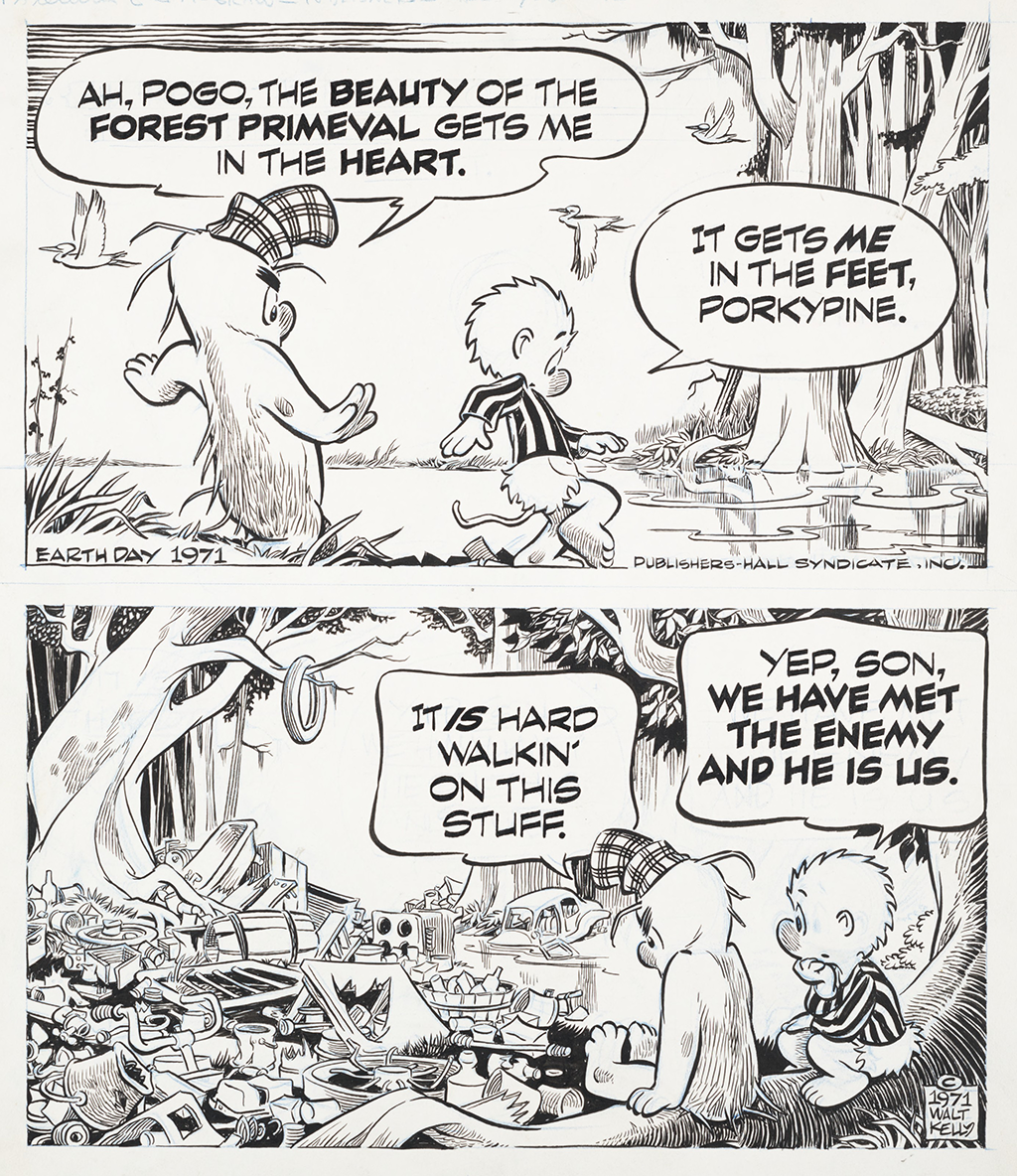
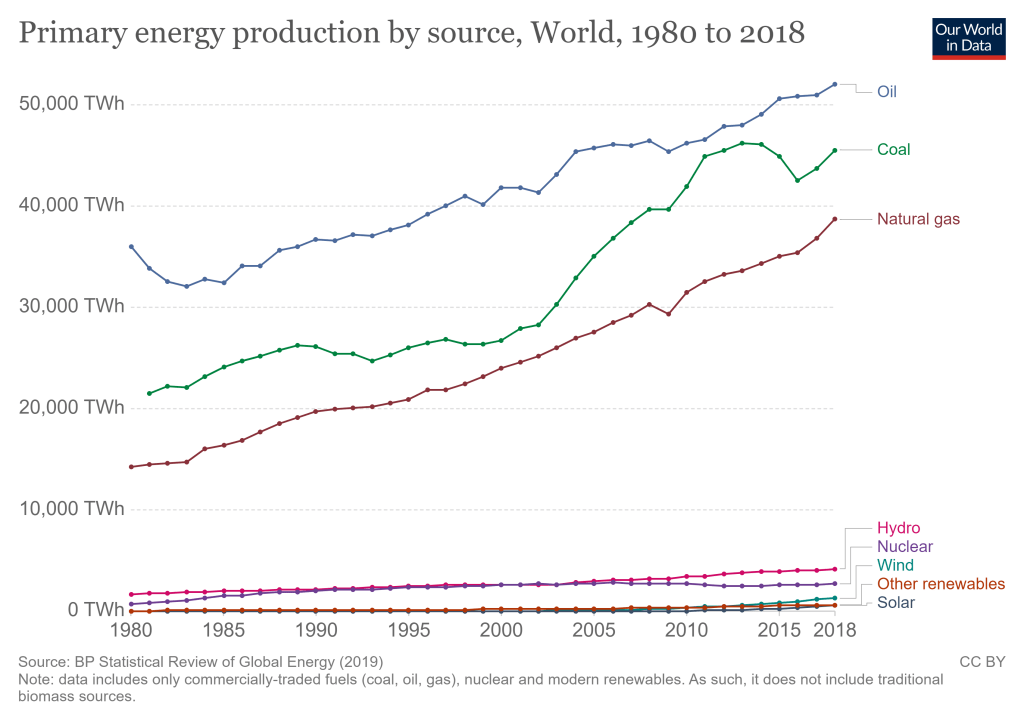
 Climate, technology and chaos Blog