It may be a hallucination, but I swear I heard this conversation the other day….
Andrew BOLT (Skynews. Murdoch man): Look, we are clearly being softened up for Labor to break its promise to cut taxes for wealthy people. What is the best argument for these stage three tax cuts?
Peter DUTTON (Leader of the conservative opposition): The greatest argument for tax cuts for the wealthy is that we want to give rich people back more of their own money and give a little bit to other people to make it look fair, and as a result the economy will just take off. We’ve 40 years of evidence showing cutting tax for wealthy people works. Look how wages have increased! Look how working conditions have improved! Look how wealth inequality has got even better! Labor is proposing to walk away from what was a core promise which would have a detrimental impact on wealthy individuals, but also on the economy more generally. “Everyone who has stuff will get more, but those who have not, even what they have will be taken away.” That’s reality; it’s in the Bible.
BOLT: What about the argument, ‘oh, we can’t afford it anymore because inflation, budgetary pressures, maybe a global recession’?
DUTTON: Well Andrew, the tax cuts don’t start until mid-2024 so there’s no problem now, even if 2023 is promising to be a very difficult year. Everywhere will probably go into recession, but not Australia – given that we’ve had nine years of Coalition government and nothing bad happened until at least a month after we left. It will take a lot for the Labor Party to mess it up and to drive us into recession, which is the last thing I want to talk up for our country, but as we know, Labor is capable of making that decision. Nothing to do with us.
By 2024 everything will be fine, and if not, so what? The tax cuts will stimulate everything.
BOLT: I would have thought that if the government’s a bit short of other people’s money and it really wants to ‘spend, spend, spend’, then how about cutting their own spending rather than cancelling a tax cut?
DUTTON: You are really proposing a novel approach that if you’re spending more than you earn, then you should cut back on what you’re earning – like with the tax cut. That’s obviously sensible and the Labor party’s heads will be spinning when they hear that. The Labor Party know how to tax and they know how to spend, they don’t know anything about practicality, and at the core of their ideology is to try and redistribute wealth to people who shouldn’t have it.
In Queensland they’re proposing a ridiculous mining royalties tax and that will drive investment out of Queensland and therefore jobs. No overseas company should have to pay for Australian minerals. We should pay them. That’s what we have done for years, and it works really well. Governments cutting their income is always good policy. Taxes just target people who have worked, when you should be punishing people who have misfortune.
You wouldn’t expect Labor to have too many rational views, like ours. It’s all spend, spend. You wouldn’t catch us spending on anything other than fossil fuels and Covid subsidies to companies that don’t need them. That’s sensible spending.
BOLT: As I said last night, Peter Dutton, you’ve done something that no one has seen from the conservative side ever before: you got stuck into a culture war. You supported people who hate gays. Never been done before. Ever. Bold Step. Given how much pro-gay news there is the left wing media.
You got criticised by Daniel Andrews, who everyone knows is Satan. What’s your response?
DUTTON: Well, there’s a couple of points I could make, but instead let me say this – Daniel Andrews presides over one of the most corrupt governments in the country and if ever there was a time for a change of government, it’s now in Victoria. Ok we could say things about NSW, but that’s just their ICAC being corrupt and badly designed, by holding them up to scrutiny. People on our side get picked on all the time. All the time. We are told we are corrupt. It’s just the left wing media you know. Its a conspiracy.
In Victoria, they are really corrupt. You know they had long lockdowns. Andrews doesn’t argue the merit of his attack on me, you’ll notice, he attacks the person and that’s how he gets away with skating over the issues where he’s been a complete failure in everything. Now I’m letting you know exactly where he is corrupt, and not attacking the person at all!!!. He’s just corrupt.
He would say that he’s in favour of inclusion, he would say that he’s in favour of freedom of choice and freedom of speech and instead he’s supported a decision which has crucified somebody for their religious beliefs. If people want to support gays they can just go somewhere else. If they want to attack them, and they’re religious, they should just get the job. Its political madness. If you can’t go around and state gays should be killed anymore – what can you say? You couldn’t have a conversation like ours, Andrew, could you? It’s the end of all liberty.
I absolutely stand by what I said yesterday. The Liberal Party has very strong values, particularly around the rights of the Church to condemn anyone we don’t like (as long as it’s not business people), and I’ll take every opportunity to assert this because people will know by the time of the next election that there is a big difference between the Liberal Party and the Labor Party – not just on social issues, but on economic and national security issues as well.
BOLT: The new religion – global warming – this government’s got frankly unbelievable and dangerous targets like making us all buy electric cars, through wanting half of all new car sales to be electric by 2030. That’s taking away our right to be petrol heads. And then they want 83 per cent of our electricity to come from unreliable renewable energy, not good old coal. That’s based on this global warming scare but there’s been so many dud predictions as you know. Here for instance, is our former Chief Climate Commissioner Tim Flannery, 15 years ago: TIM FLANNERY: Even the rain that falls isn’t actually going to fill our dams and our river system.
BOLT: And its pissing down. I ask you. Towns are being destroyed and flooded repeatedly and this guy said it would be dry and sunny. In fact, Sydney has today recorded the most annual rainfall ever. It’s wettest year ever. Its dams are full. Melbourne’s and Brisbane’s nearly full. This more sunny days thing, is just not happening – ok so they supposedly have the worst droughts ever in Europe and China, but it’s just normal. Always having droughts in the UK. We know that. What do you conclude from all this?
DUTTON: Well, the rivers are rising again as we speak Andrew, and that Tim Flannery was dead wrong, so I presume he’ll come out and apologise for the mistake, but I wouldn’t hold your breath. I mean will we apologise for delayed response on climate change as some people demand? Of course not. Because nothing’s happening, but a bit of rain and a bit of bushfire before that. I mean how weak is that? Our Party stays strong and fixed, whatever the evidence. We could do with some global warming to get rid of this rain, right?
I mean, we’ve started this debate on nuclear power in our country. It’s absurd that in the year 2022 we absolutely can’t be talking about safe new technology in the form of small modular reactors on any media at all. Its not reasonable. This is when France, Canada, China, the United States, the United Kingdom, Germany and many other countries have either adopted or are considering the adoption of nuclear power to firm up the renewables in the system, and don’t have small nukes either. No one does. But small nukes are the future Andrew. We don’t need those stupid gay and feminist renewables do we?
And wanting more and better electricity cables? Does this government think we are made of money? Especially given how important the promised tax cuts are. This pipe dream that the government has of around $100 billion to roll out of cables and towers in communities and towns across the country is never going to be realised. Never. We’ll do everything to stop this waste of money.
We’re talking in Europe at the moment about a catastrophic winter where people are going to either feed themselves or turn on their heaters, but they’re not going to be able to afford to do both. Europe should have had bought into more gas, not these renewables. With gas they can’t be vulnerable to exporters not supplying them because of a war, or because gas is short, or companies are profiteering. Power prices will continue to go through the roof in our country, whilst Labor pursues their zealot-like approach to having renewables and not gas.
I want to see, indeed am happy to see renewables in the system, but it needs to be firmed up to keep the pollution up, and if you don’t like coal and gas and you don’t believe methane based hydrogen’s coming any time soon and hydro is not going to fit the bill, what are you left with? We want happy fossil fuels companies… what more do you need? That keeps the power going our way, no problems.
BOLT: Peter Dutton, thank you so much indeed for your time.
Orbán’s speech in Texas, opens with lots of flattery and a few jokes, but it soon settles into a rhythm more familiar from his last speech to CPAC. He is:
A leader of a country that is under the siege of progressive liberals day-by-day.
Obviously there is a huge army of progressive liberals outside the gates. Like Russia in Ukraine???
I can already see tomorrow’s headlines: “Far-right European racist and anti-Semite strongman, the Trojan horse of Putin, holds speech at conservative conference.” But I don’t want to give them any ideas. They know best how to write Fake News.
He was pretty accurate, but the level of reportage seems to have been pretty low key, just as it was when CPAC went to Hungary. My experience then was that many on the US right had no idea it was happening, and regarded reports as fake news “why would CPAC go to Hungary?”. On the whole, the US media likes to pretend that authoritarian pro-corporate governments are not a threat.
The Obama Administration tried to force us to change the Fundamental law of Hungary, and delete Christian and national values from it.
I’m guessing they tried to support some group which was being declared non-human, but I’ve no idea, he does not say. An accusation is always better if its too vague to be denied, or you don’t look bad making it.
Progressive liberals didn’t want me to be here because they knew what I would tell you. Because I am here to tell you that we should unite our forces.
Fair enough. If you are going to tell lies about progressive liberals and declare war on them, they probably won’t be happy you are here, but it does not prove your virtue.
If somebody has doubts whether progressive liberals and communists are the same, just ask us, Hungarians. We fought them both, and I can tell you: they are the same.
So the technique is as before, try to combine different groups in the one smear of guilt by association. Is it possible that communists and progressive liberals both opposed Orbán for different reasons and did not join together?
political life is ruled by liberal hegemony
If only it was. This is about scare mongering, and suggesting the right has been stripped of rightful power.
So, first and foremost: we need to trust our Judeo-Christian teachings. They help us decide what actions are right and what actions are wrong. If you believe in God, you also believe that we humans were created in God’s image. Therefore, we have to be brave enough to address even the most sensitive questions: migration, gender, and the clash of civilisations. Don’t worry: a Christian politician cannot be racist.
Interesting. Presumably this statement above means that racism is bad, but if you are Christian you just can’t be racist and don’t have to trouble your conscience about it. Which given his speech just before he came in which he supposedly said, seems to be what he thinks.
There is a world in which European peoples are mixed together with those arriving from outside Europe. Now that is a mixed-race world. And there is our world, where people from within Europe mix with one another, move around, work, and relocate. So, for example, in the Carpathian Basin we are not mixed-race: we are simply a mixture of peoples living in our own European homeland.
I’ll tell you the truth: in Hungary we introduced a zero-tolerance policy on racism and anti-Semitism, so accusing us is fake news, and those who make these claims are simply idiots.
The idiots obviously include writers on the Jerusalem Post, who report that an official report on anti-Semitism is just a press release with no information on how the data was compiled, that the government has effectively censored Holocaust museums and that:
a European Union survey finds that 40% of Jews in Hungary have thought about leaving the country because of antisemitism, [so] it’s hard to swallow that Hungary offers a high quality of life for Jews.
He implies that mixing is about culture…. ?
Don’t be afraid to call your enemies by their name. You can play it safe, but they will never show mercy. Consider for example George Soros, as you call him here…. He is my opponent. He believes in none of the things that we do. And he has an army at his service: money, NGOs, universities, research institutions and half the bureaucracy in Brussels. He uses this army to force his will on his opponents, like us Hungarians.
George Soros’s army is a recurring figure in his speeches. Indeed there are huge billboards in Hungary which attack Soros. Soros wants an “Open Society,” with many opinions, something which authoritarians do not want. He has not been very successful given the supposed reach of this army. I suspect that Soros’s prime crime, is that he has not believed in the ideology that the free market always delivers the best result, or that corporations don’t have power. But I suspect that Orbán does not believe in a free market either. I don’t know, but he probably believes in a market which cronies with business to make what looks like the best result for Hungary.
You also have to know how you should fight. My answer is: Play by your own rules! But how do you do that? It is as simple as it sounds. You must play to win. ‘You cannot expect victory and plan for defeat.’ You have to believe that you are better than your left-liberal opponents are. And don’t care what the liberals say! They always say you will lose. They say it cannot be done.
You also have to know how you should fight. My answer is: Play by your own rules! But how do you do that? It is as simple as it sounds. You must play to win. ‘You cannot expect victory and plan for defeat.’ You have to believe that you are better than your left-liberal opponents are. And don’t care what the liberals say! They always say you will lose. They say it cannot be done.
You just have to prove them wrong.
Again we learn that in war anything goes. Presumably a Christian not only cannot be a racist, they also cannot play dirty, or destroy tradition or principle in their politics; whatever they do is justified by victory.
this war is a culture war. We have to revitalize our churches, our families, our universities and our community institutions. Hungary is an old, proud but David-sized nation standing alone against the Woke Globalist Goliath.
I’ve already stated many times that the right engages in culture wars, because its real agenda would not be popular and Orbán seems to run similar culture war memes to those of the US Right. Some say he has pioneered the vote rigging the Republicans seem to be engaged with [1]. But that makes sense: if your opposition is evil, you cannot afford the risk of them winning. Again we have the idea of the “Woke Globalist Goliath”. Whatever wokeness is, its not that big a movement, but presumably its an evil giant. Always magnify your enemy while making them look weak?
His next point is that they built a wall and kept out migrants. The corresponding point that Trump said he would build a wall, and failed at enormous cost, after 4 years, is not made.
Progressives claim all over the world that families should not be protected. In Europe they say there is no such thing as family, because love is love and family is family. If you cannot define family, nothing is a family.
This is simply not true. Most progressives do not want violence in families, rape in families and so on. They want families to be protected. This has sometimes been seen as an attack on families, by those people who support violence in families. Who says there is no such thing as family? People do say, however, that there are more complicated families than a married man and woman and their children by that marriage. This is reality, and those more complicated families need protection.
All subsidies are already available to families following conception. Families automatically get tax breaks, the state takes over your student loans after your third child. Women are exempt from paying personal income tax for life after the birth of their fourth child. And we are fighting to extend the same zero tax policy for mothers with three children.
Sounds like communism 🙂 Mother Heroines of the Soviet Unions etc.
He also boasts that children should not know about non-straight people.
We decided we don’t need more genders; we need more rangers. Less drag queens, and more Chuck Norris. We believe there is no freedom without order. If there is no order, you get chaos… In Hungary you will only hear: “more funds to the Police!”
Sometimes you get more chaos the more you try and impose order. But let us remember why people in the US said things like defund the police. This was because many black people, respectable middle class black people, are still treated like criminals by police, even without any criminal record or criminal behaviour. It was because black people are convicted for crimes which are ignored if you are white. It was because black people where killed by police out of proportion to their numbers. It is because police are frightened they are going to be shot if they don’t shoot first. If you can sort out the police, then the police will be more popular. There is no sign that Republicans want to deal with these problems, and maybe they are happy with those problems, and happy to blame the people being shot and arrested. Orbán gives no hints how to solve those problems.
we introduced a flat tax on personal income, which is currently 15 per cent. In just 10 years-time we reduced the tax wedge by 10 per cent, which was the biggest tax cut in Europe. We have the lowest corporate income tax in Europe, which is a flat 9 per cent. With this low corporate income tax last year, we had a 27 per cent investment rate, which was among the best in Europe.
Should it surprise us that corporations pay a lower tax rate than workers? Probably not. That would possibly be pleasing to Republicans as well. The only question is whether corporations pay that 9% or not, or manage to get out of it. If a flat tax works then good.
With the war in Ukraine. He argues that America and Russia need to negotiate peace. I don’t know whether his statement implies that the Ukrainians have a say in this. If they don’t then its a betrayal of peace.
only strong leaders are able to make peace. We in the neighbourhood of Ukraine are desperately in need of strong leaders, who are capable of negotiating a peace deal. Mayday, mayday! Please help us! We need a strong America with a strong leader.
He may just want Russian gas.
We in the West have not faced a crisis like this for a long time. The ideological wars of the twentieth century – against the totalitarian powers of Nazi Germany and the Soviet Union – were terrible, but democratic West rallied, and defeated them both. Now the West is at war with itself.
He does not mean the crises of climate change or ecological destruction. It would seem he means people being gay and disobedient, not being professed Christians, having complicated families, resisting being beaten up by police for no reason, or wondering why they are paying higher rates of tax than corporations.
All pretty trivial compared to the challenge of Hitler and Stalin. And let’s not forget that many Christian Churches supported Hitler, and went out of their way not to attack his policies, or refuse to teach “Aryan Christianity.” Hungary might be said to have gone along with Hitler as they later went along with Stalin.
We must take back the institutions in Washington and in Brussels. We must find friends and allies in one another. We must coordinate the movement of our troops, because we face the same challenge
Again its a war. And its a war for ideological space and power. There is no compromise. Only the extinction of liberals having any basis for power. Its a war based on a claim of religious tradition to get some religious bodies onside. It is a war based upon a claim about family and being straight. It is a war based on disliking difference. It is a war in which fixing elections, controlling the media and controlling supposedly independent institutions is considered normal.
Everything is to be held in check and made the same.
People may know that the important US rightwing Organisation CPAC (Conservative Political Action Conference) is courting Hungary’s President Viktor Orbán, and getting his advice on how to proceed to win victory in the USA. CPAC has both formally gone to Hungary to observe the results and invited Orbán to speak to them in Texas. So this is not a bit of random noise. This is saying that the USA has no ideas of its own, and it’s a bit like inviting Mussolini to speak to them in the 1930s. It indicates what the US right is looking for, if we did not already know.
So its worthwhile looking at Orbán’s two speeches to them. Some of what he says is probably good advice for everyone, and people who are not authoritarian right wingers should pay heed, not only to the authoritarian advice, so they know what is being done against them, but to find out what they might learn.
The first was given in Hungary, when CPAC visited him. It was called “The cure for progressive dominance was invented in Hungary.” Some of us may dispute the idea of progressive dominance, but the idea that progressives are dominant is important to right wing ideology, it makes a good excuse to justify unethical action. Orbán says
four days ago I formed my fifth conservative, Christian government
I guess we can guess that this means he is hostile to non-Christians, and is full of self righteousness, because he has God on his side, and can punish the heathen, or other people he does not like. Some claim that he expelled many Christian denominations from Hungary, so American people should be worried about what Republicans think is Christian. But this might be a bit premature.
How can I contribute to today’s gathering? Perhaps if I tell you how we won: how we first defeated the communist regime; then how we defeated the liberals; and then, most recently, how we defeated the international liberal left when they combined their forces against Hungary in the election.
International people are bad unless they are right wingers, obviously the right is international, but it again conjures the idea that the left is powerful and stretches all over the world.
This problem – if I am not mistaken, both in America and Western Europe – is the domination of public life by progressive liberals. The problem is the fact that they hold the most important positions in the most important institutions, that they occupy the dominant positions in the media, and that they produce all the politically indoctrinating works of high and mass culture.
He offers no evidence of course, again the point is to officially claim that right wing politics is fighting against a monster. It is hard to believe that Rupert Murdoch and Tucker Carlson are dominating the media as progressive liberals, and its hard to pretend that there is not a large body of right wing literature, rightwing publishing houses, or rightwing corporately sponsored think-tanks, or that the right does not feature in many important institutions (including universities), unless you refuse to look, or unless you consider that everyone that disagrees with you is a progressive liberal, and should be removed or censored.
One way you can detect authoritarianism, is a refusal to admit the other side could win legitimately, and to suspend all restraint against that other side, while pretending to be victims to justify whatever steps you might take.
He talks about the revolution against the communists
We thought we had finally got what we wanted, but we were wrong: under the dictatorship liberals and conservatives entered into an anti-communist pact, but at the first subsequent opportunity the liberals sided with the communists. It turned out that in fact they were natural allies. If I am not mistaken, this kind of sinful covenant has also been seen in the United States.
I’m not familiar with Hungarian history, but talking of “sinful covenants” should ring alarm bells, especially as there is no evidence that current day “progressive liberals” have much more in common with communists than the conservative right.
And then, between 2002 and 2010, we saw what generally happens in such circumstances: the socialists spent the people’s money. Hungary sank into debt, the economy fell into recession, inflation ran out of control, unemployment rose and people were unable to pay their bills. Street violence broke out and paramilitary groups were on the march. It was a long time ago, but let us not forget: strings of ethnically-motivated murders outraged public sentiment.
We might wonder which side these paramilitary groups were supporting.
the fruit of progressive government speaks for itself: economic ruin and street violence. When a left-wing government comes to power, the story almost always ends in the same way.
Again there is not even an attempt to justify this. There are plenty of governments that he would call left progressive that don’t encourage street violence and that don’t leave economic ruin. More modern street violence occurred under Trump than under Obama, including the attack on the Capitol and the BLM riots in response to police violence, and Obama started the US economy on a road to recovery from the crash of 2008. Biden seems to be doing ok on the US economy as well. Under Trump the U.S. national debt increased by 39%, reaching $27.75 trillion; the U.S. debt-to-GDP ratio the highest since WWII. When he left office there were 3 million fewer jobs in the U.S. than when he took office, which is something of a surprise given the increase spending. However, being able to condemn street violence is probably a good place to be. Most politicians have developed the art of excusing violence by their own.
The first point in the Hungarian formula is to play by our own rules. The only way to win is to refuse to accept the solutions and the paths offered by others.
Another way of expressing this, is don’t play by conventions, don’t play by the rules, don’t heed tradition. Let the rules inhibit others. Never agree with the others. Politics is total war. There is no reason not to encourage violence in the Streets, or violence against opposing politicians. Stochastic Terrorism is great, if you don’t want to risk normal terrorism.
The second point: national conservatism in domestic politics. The cause of the nation is not a matter of ideology, nor even of tradition. The reason that churches and families must be supported is that they are the building blocks of the nation. This also means that one must remain on the side of the voters….. One must find the issues on which the Left is completely out of touch with reality and highlight them – but in a way that can be understood by people who are not eggheads
Churches are good sources of ideology, and they will support people who go along with them and support them. No immigrants. Walls on borders. Lie about what your opponents want.
Third point: the national interest in foreign policy…. the Nation First! Hungary First! America First!
You might wonder what groups are being identified with the Nation, but people will want to know what is in the policy for themselves and their associates. This is reality. Always portray wars in the national interest, or not being involved in a neighbouring war as in the national interest.
Fourth point, Dear Friends: we must have our own media…. My friend Tucker Carlson stands alone and immovable. His show has the highest audience figures. What does this mean? It means that there should be shows like his day and night – or, as you say, 24/7.
There should be no media, other than media which supports the right. This is pretty much the case in Hungary, nearly all the media is owned by supporters of Orbán. But yes, the left needs to heed this and build its own media. Hard, when media requires money and there is an established corporate media which generally ignores the left, but it used to be possible: unions could own media.
Fifth point: expose your opponent’s intentions. As a condition for victory, media support is necessary, but not sufficient…. Here in Hungary we expose what the Left are preparing before they even take action. At first they will deny it, but success is all the sweeter when it emerges that we were right all along. For instance, there is the issue of LGBTQ propaganda targeting children. This is still a new thing over here, but we have already destroyed it…. to quote General Patton again: “A good plan, violently executed now, is better than a perfect plan next week.”
Invent stuff about your opponents, and keep repeating it until it is believed, and then act against what you said they were doing, violently. This can be done by any side that does not believe truth is relevant, or who is prepared to say some minor groups of the opposition represent the whole group of the opposition.
Sixth point: economy, economy, economy. We all know that the Left want to operate the economy according to abstract notions…. When we came to power, we decided that we must only pursue economic policies that benefit the majority of voters
This is probably borrowed from Bill Clinton…. not that he would accept of course. But sadly we know that with control of the media, then you can, like Trump, claim to have made economic progress and people will believe you for a while, and some will be able to truthfully say they are doing better.
Our seventh point: do not get pushed to the extreme. I say this because extreme conspiracy theories rear their heads from time to time on the right – just as extreme utopias regularly rear their heads on the left.
No objection to this, just wish it would happen, and that the right would not deny science, and invent imaginary conspiracy theories to attack their opponents. But I suspect he is saying try to keep the conspiracy arguments in bounds
Eighth point: read every day. A book a day keeps the defeat away. I know that this sounds strange. I am not an academic myself, but the fact is that no invention has yet surpassed the book as a vehicle for understanding and conveying ideas. The world is becoming increasingly complex, and we need to dedicate time to understanding it. I, for instance, set aside one whole day every week for reading. Reading also helps us to understand what our opponents think and where their thinking is flawed. If we know that, the rest is mere technique.
Ninth point: have faith. A lack of faith is dangerous. If you do not believe that there will be a final reckoning and that you will be held to account for your actions before God, you will think that you can do anything that is in your power
The problem with this is simply the obvious one that if you think everything you do is guided by God, then you may well think that you can do anything that is in your power.
Tenth point: make friends. Our opponents, the progressive liberals and neo-Marxists, have unlimited unity: they have one another’s backs.
if only that was true 🙂 but it does make them a monolithic block capable of evil, and unprincipled.
if we want to succeed in politics, we should never look at what we disagree on, but instead look for our common ground.
another likely truth. This is why Libertarians and Evangelical Christians can live with pagan fascists.
Eleventh point: build communities. My Friends, over the years I have also learned that there is no conservative political success without functioning communities.
This is true for every politics. Politics must become communal. It must build relationships, identity, mutual support and mutual dedication to the cause. However, he also suggests taking over community organisations to gain influence. For the righteous, communities must have no voice of their own.
the twelfth point: build institutions. For successful politics, one needs institutions and institutes. Whether they are think tanks, educational centers, talent workshops, foreign relations institutes, youth organizations or whatever, they should have a political aspect. Let us not forget: politicians come and go, but institutions stay with us for generations.
This is also true, and follows that only the righteous should have a voice, and there should be no institutions which do not support the righteous and their government. No pluralism. Authoritarians see this uniformity as paradise – an echo of the unity in God.
Few people can stand against this gentle coercion.
Now we see that the progressives are threatening the whole of Western civilization, and the true danger is not from without but from within….
We are dealing with the same people: faceless, ideologically trained bureaucrats sitting in Washington DC and Brussels. Progressive liberals, neo-Marxists intoxicated by the dream of wokeness, those in the pay of George Soros, the advocates of the open society. They want to abolish the Western way of life that you and we love so much: what your parents fought for during World War II and the Cold War, and what we fought for when we drove the Soviet communists out of Hungary.
Again we have the inflation of the progressive evil, to make the fight existential and unbounded. Remember your opponents are evil and faceless. They are completely hostile to civilisation, and they must be removed and driven out. We are right. They are wrong. There is no common point. You might build commonality with those you share goals with, but your defined opponents have nothing in common with you. They must be exterminated. This really is war. And if democracy involves disagreement, and acceptance of disagreement, this is a war on democracy.
According to reports of a 350.org and Lock the Gate report:
at least $1.3bn and up to $1.9bn in direct funding for the gas industry was promised between September 2020 and the election. They found another $63m was pledged in indirect funding for federal agencies to support the expansion.
The International Energy Agency made it clear in May 2021:
from today, [there should be] no investment in new fossil fuel supply projects, and no further final investment decisions for new unabated coal plants. By 2035, there are no sales of new internal combustion engine passenger cars, and by 2040, the global electricity sector has already reached net-zero emissions.
Exxon Mobil made $18bn in profits in the past three months. Shell and Chevron each made nearly $12bn. Those are all record numbers.
A recent study showed that for the past 50 years, the oil industry has made profits of more than $1tn a year, close to $3bn a day. These profits are driven not by some fantasy of free enterprise and perfect competition, but by the exact opposite – cartels, mega-corporations and the regulatory capture of governments..,
However, more recently, the leader of the opposition said:
It is high time that Australia had an honest and informed debate on the benefits and costs of nuclear energy….
The current energy crisis has shown the importance of getting more dispatchable power into the grid. The average wholesale electricity price in the second quarter this year was three times higher than the same time a year ago – a situation described by the Australian Energy Market Operator as ‘unprecedented’….
Australia is already a nuclear nation. The Australian Nuclear Science and Technology Organisation has operated a nuclear research reactor at Lucas Heights for over 60 years. A national conversation about potential of nuclear energy is the logical next step.
We have already had multiple inquiries that suggest nuclear power is too expensive without a carbon price which the Coalition will not accept, and few people want to live next door to one.
In their mind it appears to ‘excuse’ opposing climate targets, and suggests they might have a plan.
They will probably hope to distract from their failure to agree to actually cut emissions by arguing that people disinterested in nuclear energy, such as most people in Labor, Green and Teals, are not really prepared to tackle climate change, and are only interested in crippling the Australian economy, while the Coalition has a practical solution to the problem with zero social cost.
However, they have no ability, or probably intention, to get nuclear up before 2030 and thus help phase out greenhouse gas emissions. It’s just empty virtue signaling.
If you want to see the difficulties of modern nuclear then have a look at the Hinkley Point project.
The CSIRO was recently unable to get any pricing from the people claiming to have developed Small and Medium Reactors, and CSIRO Chief Executive Dr Larry Marshall pointed out that:
The latest report shows renewables are holding steady as the lowest cost source of new-build electricity.. With the world’s largest penetration of rooftop solar, unique critical energy metals, a world class research sector and a highly skilled workforce, Australia can turn our challenges into the immense opportunity of being a global leader in renewable energy
The status of nuclear SMR has not changed. Following extensive consultation with the Australian electricity industry, report findings do not see any prospect of domestic projects this decade, given the technology’s commercial immaturity and high cost. Future cost reductions are possible but depend on its successful commercial deployment overseas.
We have had a range of feedback into the assumed current costs for nuclear SMR over several years reflecting the difficulty of finding good evidence for costs in circumstances where a technology is not currently being deployed. This year only one submission was received but it continues the theme established in previous years that current costs of nuclear SMR should be lower. Vendors seeking to encourage the uptake of a new technology have proposed theoretical cost estimates, but these cannot be verified until proven through a deployed project.
So the chances of getting affordable nuclear in time, seems small. However the cost of renewables is decreasing and they are much easier to build than reactors.
It seems likely that a conversation on nuclear, at the same time as ignoring all the other fossil fuel problems we have, and all the solutions we have, is likely to be an attempted shield for doing nothing.
This is a set of quotations and arguments from George Monbiot, with an occasional paraphrase. Monbiot is easily the most important journalist who writes on climate change, power and economics, and his work is well worth your perusal, and hopefully this will help. If there are copyright issues, please let me know and I will remove this.
Monbiot. Photo from the Guardian
Summary
Complex Systems can change quickly to a new state of equilibrium – events cascade and reinforce the change – this is what the global eco-system, Gaia if you like, is facing.
The media is engaged in distraction, and blame shifting, partly this could be because the situation is frightening, and partly because we are ruled by a plutocracy that resists change, or awareness of change.
Plutocracy may lead to avoidance even in the powers that be. this can be summarised by the idea of “learning to live with” climate or Covid. This “living with” usually seems to mean ignoring the problem, invoking magic, blaming the relatively powerless, and not learning at all.
Plutocracy leads to confusion, even when governments try to do something, as they also try and support the plutocracy that is causing the problems. For instance, they avoid stopping new fossil fuel development, or removing regulations that support fossil fuel companies.
Much of the technology promoted and imagined as helpful is magical as well. It may not even exist, but will still solve our problems. Carbon Credits and biofuels are good examples of technology which is supposed to help, but which may make the problems worse.
On top of everything else we have a world food crisis. The food system is complex, but has the kind of structure which indicates it is likely to collapse altogether if there is much stress.
Finally we quickly look at a few solutions: basically supporting democracy against plutocracy and getting rid of climate debt to free poorer countries to deal with their own climate crises.
Complexity and mess of information
[Complexity is important, as I keep hammering] Monbiot writes that people who study complex systems have discovered that they behave in consistent ways. It doesn’t matter whether the system is a banking network, a nation state, a rainforest or an Antarctic ice shelf; its behaviour follows certain mathematical rules. In normal conditions, the system regulates itself, maintaining a state of equilibrium. It can absorb stress up to a certain point. But as stress escalates, these same properties start transmitting shocks through the network. [The system] suddenly flips: a small disturbance can tip the entire system over its critical threshold, whereupon it collapses, suddenly and unstoppably. It passes a tipping point, then falls into a new state of equilibrium, which is often impossible to reverse.
If the nodes behave in a variety of [different] ways, and their links to each other are weak, the system is likely to be resilient. If certain nodes become dominant, start to behave in similar ways and are strongly connected, the system is likely to be fragile. [This happened leading up to the 2008 financial crisis, in banking].
Human civilisation relies on the current equilibrium states. But, all over the world, crucial systems appear to be approaching their tipping points. If one system crashes, it is likely to drag others down, triggering a cascade of chaos known as systemic environmental collapse. This is what happened during previous mass extinctions.
[One] way of telling whether [the complex system] is approaching a tipping point [is that its] outputs begin to flicker. The closer to its critical threshold it comes, the wilder the fluctuations. What we’ve seen this year is a great global flickering, as Earth systems begin to break down. The heat domes over the western seaboard of North America; the massive fires there, in Siberia and around the Mediterranean; the lethal floods in Germany, Belgium, China, Sierra Leone – these are the signals that, in climatic morse code, spell “mayday”.
[However, our media are not talking about the problems. They engage in distraction and the pursuit of ratings] Tune in to almost any radio station, at any time, and you can hear the frenetic distraction at work. While around the world wildfires rage, floods sweep cars from the streets and crops shrivel, you will hear a debate about whether to sit down or stand up while pulling on your socks, or a discussion about charcuterie boards for dogs. I’m not making up these examples: I stumbled across them while flicking between channels on days of climate disaster.
Most political news is nothing but court gossip: who’s in, who’s out, who said what to whom. It studiously avoids what lies beneath: the dark money, the corruption, the shift of power away from the democratic sphere, the gathering environmental collapse that makes a nonsense of its obsessions.
This distraction has taken up things like anti-litter campaigns [shifting the packaging industry’s deliberate creation of waste onto consumers] personal carbon footprint [instead of industry footprint, again shifting responsibility to relatively low emitters]. The oil companies didn’t stop there. The most extreme example I’ve seen was a 2019 speech by the chief executive of the oil company Shell, Ben van Beurden. He instructed us to “eat seasonally and recycle more”, and publicly berated his chauffeur for buying a punnet of strawberries in January. [In other words, none of the problems were apparently related to his company’s business. It was the general public, that was the problem. Wealthy polluters have to be protected from anyone doing anything about the pollution they emit.]
[Personally the question arises is this avoidance because of climate change being a scary “turn off” and they fear audiences will go elsewhere, is it because the media is owned by the same class of people as those who profit from climate change, who don’t want people to get the idea that people could have power over the corporate sector, or is it because there is always a corporately sponsored think tank which can point to something optimistic or to the evil consequences of doing something?].
Plutocracy
[We live in plutocracies, and its sometimes pretty overt] The Sunday Times [recently] reported that people who have donated at least £250,000 to the Conservative party have been invited to join an “advisory board”, with special access to the prime minister, cabinet ministers and senior government advisers. They have used this access to lobby for changes in government policy. The 14 identified members of the group have a combined wealth of at least £30bn, and have donated £22m to the Conservatives. The group and its agenda had hitherto been kept secret.
We have also been told that the Conservative party is helping its donors to apply for key government positions.
The interests of the very rich are not the same as the interests of the nation. We should never forget what the billionaire stockbroker Peter Hargreaves, who donated £3.2m to one of the leave campaigns, said about Brexit: “We will get out there and we will become incredibly successful because we will be insecure again. And insecurity is fantastic.”
[The real] power is oligarchic capital, [and that bends the way that we respond and the ways that the corporate media reports the crises]
Plutocracy leads to UK Water Crisis
[Monbiot suggests that] Absence, [and lack of action from government,] is what the party donors paid for.
[R]ecent prime ministers and their governments have prepared us for none of the great predicaments we face. They have looked the other way as the water companies failed to commission any new reservoirs since they were privatised in 1989, and allowed astonishing volumes of that precious commodity we call treated drinking water – 2.4bn litres a day on current estimates – to leak away. It’s a carelessness so grand that it feels like a metaphor. Instead of forcing them to stop these leaks, the government has allowed these corporations to pump the rivers dry: the living world, as ever, is the buffer that must absorb failure and greed.
So determined is the government to absent itself from decision-making that it cannot even institute a hosepipe ban: it must feebly ask the water companies to do so. Most, with an interest in ensuring their metered customers use as much as possible, have so far refused. Nor have the companies been obliged to upgrade their sewage treatment works. The combination of over-abstraction and sewage dumping is devastating. The water in the upper reaches of some of our chalk streams – remarkable ecosystems that are almost unique to England – now consists of nothing but sewage outflows and road run-off. During this long period of regulatory absence, the privatised water firms have piped £72bn in dividends into the accounts of their shareholders.
To [plutocrats], the duty of care is an abomination. Ten years ago next month, Liz Truss launched Britannia Unchained,… [that blamed] everything going wrong in the UK to “a diminished work ethic and a culture of excuses”. Of her four co-authors, three – Priti Patel, Kwasi Kwarteng and Dominic Raab – are frontbenchers in the current government… They blamed inequality and the lack of social mobility in this country not on the patrimonial spiral of wealth accumulation and the resultant rentier economy, but on “laziness”. Citing no meaningful evidence, they maintained that “once they enter the workplace, the British are among the worst idlers in the world”.
[And to return to a previous point;] When governments are contractually incapable of solving their people’s problems, only one option remains: turning us against each other [giving them a distraction].
Magic and Avoidance
[Avoidance is common in plutocracy, as the plutocrats are part of the problem.] We have a new term for doing nothing: “learning to live with”. Learning to live with Covid means abandoning testing, isolation and wearing masks in public places. Living with it, dying from it, what’s the difference? The same applies to climate breakdown.
[With climate] our primary effort should still be to decarbonise our economies, to prevent even worse impacts. We also need to brace ourselves for the heating [and resultant weather] that’s now unavoidable.
[However,] government policy is to wish away these problems [and shift responsibility on to ordinary people] Doubtless we’ll soon be told we need to take “personal responsibility” for ensuring our homes are not flooded and our power lines are not destroyed by storms.
There is no learning involved in “learning to live with” [hence its easy and makes no demands personal or political]….
A few days ago, a senior executive at the Institute of Economic Affairs suggested that instead of preventing climate breakdown, we could simply “build sea walls”. It is not just denial we’re up against. It’s a belief in magic.
MPs with no discernible record of concern for poor people, and a long record of voting against them, suddenly claim that climate action must be stymied to protect them. [Or that we must sell poorer countries our fossil fuels to reduce their poverty.]
An analysis by conservation charity WWF suggests that, while the last UK budget allocated £145m for environmental measures, it dedicated £40bn to policies that will increase emissions.
It is still government policy to “maximise economic recovery” of oil and gas from the UK’s continental shelf. According to the government’s energy white paper, promoting their extraction ensures that “the UK remains an attractive destination for global capital.”
Boris Johnson appears to be on the point of approving the development of a new oilfield – the Cambo – in the North Sea.
Since [Joe Biden] pledged to ban new drilling and fracking on federal lands, his administration has granted more than 2,000 new permits. His national security adviser has demanded that Opec+, the oil cartel, increase production, to reduce the cost of driving the monstrous cars that many Americans still buy.
[Laws and regulations are written to support this corporate death spiral.] A UK oil company is currently suing the Italian government for the loss of its “future anticipated profits” after Italy banned new oil drilling in coastal waters. Italy used to be a signatory to the Energy Charter Treaty, which allows companies to demand compensation if it stops future projects. The treaty’s sunset clause permits such lawsuits after nations are no longer party to it, so Italy can be sued even though it left the agreement in 2016.
There is no realistic prospect of preventing more than 1.5C of global heating unless all new fossil fuel development is stopped. In fact, existing projects need to be retired. Nor can we achieve the government’s official aim of net zero emissions by 2050. [But magically we can work against climate change and keep on with more fossil fuels. that way we don’t have to struggle against the plutocracy.]
Renewable power, for instance, is useful in preventing climate chaos only to the extent that it displaces fossil fuels.
[However, fossil fuel companies are rich] and fossil fuels will become stranded assets only when governments insist that they be left in the ground. [So that probably won’t happen for a while yet.]
[Again there is magic. A reasonably well known economist Oded] Galor claims, without providing the necessary evidence, that “the power of innovation accompanied by fertility decline” may allow us to avoid a difficult choice between economic growth and environmental protection. [We will also develop] “revolutionary technologies” that will one day rescue us from the climate crisis. [Just like that. No problem. Technology will always be found to solve every problem, when we need it.]
[People] appear to believe that the transformations necessary to prevent systemic collapse can happen without political pressure or political change. [So we don’t have to trouble THE Market or face up to the corporations who temporarily benefit from from not paying the cost of their pollution and destruction.]
[Magic innovations would be nice, but we still need to stop burning fossil fuels, just in case they don’t eventuate. If they do eventuate, we just have to deal with less pollution.]
Carbon Credits: Magic or Fraud
[Carbon credits are an idea which depends on] removing historic carbon from the air, and counteracting a small residue of unavoidable emissions once we have decarbonised the rest of the economy.
[However], they are being widely used as an alternative for effective action. Rather than committing to leave fossil fuels in the ground, oil and gas firms continue to prospect for new reserves while claiming that the credits they buy have turned them “carbon neutral”.
The French company Total is hoping to develop new oilfields in the Republic of the Congo and off the coast of Suriname. It has sought to justify these projects with nature-based solutions: in Suriname by providing money to the government for protecting existing forests, and in Congo by planting an area of savannah with fast-growing trees.
If the drilling goes ahead it will help to break open a region of extremely rich forests and wetlands that sits on top of the biggest peat deposit in the tropics, potentially threatening a huge natural carbon store. The rare savannah habitat the company wants to convert into plantations to produce timber and biomass has scarcely been explored by ecologists. It’s likely to harbour a far greater range of life than the exotic trees the oil company wants to plant. It is also likely to belong to local people though their customary rights… In other words, the offset project, far from compensating for the damage caused by oil drilling, could compound it.
Last year, forests being used as corporate offsets were incinerated by the wildfires raging across North America [showing how precarious, this form of carbon store is, in the climate fossil fuels are producing.].
Oxfam estimates that [even if carbon credits worked] the land required to meet carbon removal plans by businesses could amount to five times the size of India – more than the entire area of farmland on the planet. And much of it rightfully belongs to indigenous and other local people, who in many cases have not given their consent. This process has a name: carbon colonialism.
A better strategy would be to spend money on strengthening the land rights of indigenous people, who tend to be the most effective guardians of ecosystems and the carbon they contain. {But that would prevent land from being alienated and purchased (or stolen) by corporations and other wealthy people for their own use.]
The number of undernourished people fell from 811 million in 2005 to 607 million in 2014. But in 2015, the trend began to turn. Hunger has been rising ever since: to 650 million in 2019, and back to 811 million in 2020. This year is likely to be much worse.
Last year, the global wheat harvest was bigger than ever. Astoundingly, the number of undernourished people began to rise just as world food prices began to fall. In 2014, when fewer people were hungry than at any time since, the global food price index stood at 115 points. In 2015, it fell to 93, and remained below 100 until 2021.
[Food forms a complex system, and as remarked above if nodes behave similarly there is a problem. In this case the] features that might impede systemic collapse (“redundancy”, “modularity”, “circuit breakers” and “backup systems”) have been stripped away, exposing the system to “globally contagious” shocks.
On one estimate, just four corporations control 90% of the global grain trade [and] just four crops – wheat, rice, maize and soy – account for almost 60% of the calories grown by farmers.
[Food companies nowadays can depend on just-in time supplies with no redundancy or stores, this is easily disrupted by collapse in supply through company problems, war, bad weather or eco-crises – all more likely in climate change.]
If so many can go hungry at a time of unprecedented bounty, the consequences of the major crop failure that environmental breakdown could cause defy imagination. The system has to change.
Ukraine and Russia produce nearly 30% of the world’s wheat exports, 15% of the maize (corn) and 75% of the sunflower oil. Altogether, they generate about 12% of the calories traded internationally. [This obviously has effects given the current war in Ukraine]
Just as European countries allowed themselves to become hooked on Russian gas and oil, they are also highly reliant on Russian and Belarusian fertilisers. About one-third of the nitrogen and two-thirds of the potassium imported by the UK and western Europe come from Russia and Belarus, and we can expect them to use this dependency as another economic weapon.
[Adding to the precariousness of food supplies we have agricultural land and crops being used to make biofuels, hence reducing the world’s food supplies again.]
Between 2019 and 2021, farmers in England raised the area of land used to make biogas by an astonishing 19%. Now 120,000 hectares (300,000 acres) is ploughed to grow maize and hybrid rye for biogas, which is marketed, misleadingly, as a green alternative to fossil gas. The reopening of a bioethanol plant in Hull that will turn wheat into fuel for cars is likely to take another 130,000 hectares out of food production.
About 450 hectares of land is needed to feed a biogas plant with a capacity of one megawatt. By contrast, a megawatt of wind turbine capacity requires only one-third of a hectare.
The investigative group Transport & Environment shows, the land used to grow the biofuels consumed in Europe covers 14m hectares (35m acres): an area larger than Greece. Of the soy oil consumed in the European Union, 32% is eaten by cars and trucks. They devour 50% of all the palm oil used in the EU and 58% of the rapeseed oil. Altogether, 18% of the world’s vegetable oil is turned into biodiesel, and 10% of the world’s grains are transformed into ethanol, to mix with petrol.
Since 2000, 10m hectares of Africa’s land, often the best land, has been bought or seized by sovereign wealth funds, corporations and private investors.
[We might be told the biiofuel plants will run on waste, but] Invariably, as soon as the market develops, dedicated crops are grown to supply it.
The UK government, “responding to industry feedback”, increased its target for the amount of biofuel used in surface transport. Worse, it justifies continued airport expansion with the claim that planes will soon be able to use “sustainable” fuels. In practice this means biofuel [and more magic and fantasy]
There’s a limit to how much we can eat. There’s no limit to how much we can burn.
Changing the plutocracy
Society is a complex system, and complex systems can never be sensibly and benevolently controlled from the centre. A centralised, hierarchical system means concentrated power, and concentrated power favours concentrated wealth. [And concentration of power and contacts may favour system collapse.]
Politics is “the active engagement of free citizens” in their own affairs. [Politics is a normal part of everyday life as we organise ourselves to do things together].
Bookchin proposed a structured political system, built on majority voting. It begins with popular assemblies, convened in opposition to the state, open to anyone from the neighbourhood who wants to join. As more assemblies form, they create confederations whose powers are not devolved downwards but delegated upwards. The assemblies send delegates to represent them at confederal councils, but these people have no powers of their own: they may only convey, coordinate and administer the decisions handed up to them. [possible examples include Rojava in Syria and the now defunct participatory budgeting in Porto Alegre, southern Brazil. This kind of proposal might end the problem that] we have no opportunity to engage creatively with each other in building better communities.
Until we change our political systems, making it impossible for the rich to buy the decisions they want, we will lose not only individual cases. We will lose everything.
An analysis in the journal Global Environmental Change suggests that $10tn of value is extracted from poorer countries by richer ones every year, in the form of raw materials, energy, land and labour. That’s 70 times as much money as would be needed to end extreme poverty worldwide….
A report from Green New Deal suggests that debt has been used by the World Bank as a means of obliging Senegal to allow US, Australian and British companies to exploit its oil and gas. In Argentina, the International Monetary Fund (IMF) has reportedly pushed for the development of the giant Vaca Muerta shale gas basin, using similar leverage. Impoverished and coerced by debt, poorer nations have little choice but to allow destructive industries to exploit them.
An analysis by Oxfam suggests that 85% of the Covid loans made by the IMF to poorer nations were connected to austerity programmes: the fund is using the power of debt to push nations into cutting wage bills and spending less on public services and support for poor people.
Rich nations owe a massive climate debt to poorer nations: for the devastating impacts of the fossil fuels we have burned. Yet they have no intention of paying for the loss and damage they have caused. Poor countries are deemed to owe massive financial debts to the rich nations, yet they cannot pay them without destroying their economies and their ecosystems.
The proposal is simultaneously to cancel both the climate and the financial debts, liberating the money poorer nations need to take climate action.
[This sounds good, but it would, like any other climate action which cuts energy, would probably produce some kind of degrowth. However, degrowth will undoubtedly happen when the cost of fixing climate damage starts becoming a significant fraction of the profit made from provoking that damage.]
[Needless to say, it is probable that the plutocracy will oppose this measure, as they or the wealth economy will suffer, and most people will never get to hear of it.]
Conclusion
There is hope. But we have to be prepared to take on the Plutocracy and their promotion of harmful magic and distraction. We have to slow emissions, and keep fossil fuels in the ground. We can’t phase them out immediately, but we can agitate for more democracy, degrowth, and debt reduction as part of a strategy to help poorer countries.
It is easier and much quicker to lie, or to invent something that sounds right, or that people might want to believe, than it is to research a topic thoroughly, and check that everything you have read is correct and that your understanding (of everything involved) is accurate.
Note a source does not have to be deliberately lying. There is no difference between a lie and a mistake as far as misinformation is concerned.
If you release a lot of lies, and are like Trump and get a lot of coverage, then you can see which ones are taken up, and follow them up with more reinforcing fake news to fill in the gaps and help convince people that misinformation is real.
Misinformation evolves. That which appeals to its audience, will spread the furthest. Random misinformation allows the audience to choose what to spread on its own.
Social bias as a filter
In information society, there is always way too much information out there to evaluate it properly or test it for truth. Testing information takes time and dedication. Consequently, the main ways of judging information is:
By whether it harmonises with information, attitudes, cosmologies, religions or morals, you already have, or with actions you already take or would like to take.
By whether it is promoted by people who you consider to be be members of your group, or having a similar identity.
By whether it is promoted by high status people who you consider to be members of your group.
By whether it makes your groups virtuous and outgroups vicious, immoral or evil.
By whether it will cost you social status to accept or refuse to accept the information.
By how essential the information becomes for acting within your main groups.
By whether it promotes emotions that are righteous in your group.
If its promoted by people you dislike, and distrust, who contradict those in your groups, then its probably fake.
Information will be judged socially. Acceptance is geared towards survival in particular groups, with particular kind of identities, and maintaining hostility towards other groups.
The more you think your ‘opponents’ are lying, the more excuse there is to lie yourself.
The less identity groups are polarised, or separated, and the more they are included in a wider category (such as ‘fellow Australians’), then the more likely that information can be evaluated with accuracy.
Information as programming
Information tells people what is important in life and the world, what they should look for, and what counts as data. This is sometimes known as the “theory dependence of observation”.
Another way of describing this is via the slogans: “Perception involves interpretation,” “We put meaning onto the world.” “Our thoughts shape the world we perceive”.
This process is not an completely unbreakable loop, but it can be hard to break.
Humans tend to find what they are looking for, so if you program people with the right misinformation, then they will soon find their own misinformation and see connections that are not there. If those connections get taken up, then even more people will fall into the trap. Especially if agreeing with information becomes tied in with their membership of a group and of an identity – and people start indicating that the person is not a proper ‘X’ because they don’t accept the ‘truth’.
As suggested earlier, if authoritative people in the group start repeating the misinformation as true, and it points to the evils of an outgroup, then it is even more likely to be believed, and never to be challenged. The consequences are too high. More misinformation will be produced in order to make the misinformation, and the world it reveals, more believable.
Having their attention directed away from reality, and into confirmation bias and group loyalty, normally increases a person’s incapacity to interact with the world as that world is. Misinformation can increase stupidity, lower resilience, and lead to a bad end, as people ignore real problems and complexities in favour of imaginary problems and simplicities or complications.
Conclusion
Misinformation thrives because accuracy is hard, requires checking and is limited. Misinformation does not have to be checked to see if its accurate, and it can go anywhere that people take it. If information is tied into a group identity, that it becomes even harder to stop, because stopping it challenges group and individual identity and can be seen as an imposition on a person’s liberty.
In the 80s right wing parties, in much of the Western World, embraced neoliberalism. The official excuse was the oil shock and stagflation (inflation and stagnation together). The Keynesian compromise did not seem to be working.
Neoliberalism is essentially the public doctrine that the free market liberates creativity and solves all possible problems the best possible way, and brings liberty, as the government “gets out of your life”
The secret doctrine of neoliberalism, which is pretty open, is that the market rules, and makes the rules, and government should aim to protect successful players in the market, as they are the best possible people. Hierarchy in the market is god-given. and market leaders are chosen by the market for their virtues. Even monopoly in a market is competitive according to ‘Contestability theory’.
This policy aims to give more power and wealth to the established wealth elites, and takes money, power and working conditions from the poorer and the middle classes. As a result, the new Wealth Elites are amazingly more wealthy and powerful than even the ordinary wealthy.
You cannot honestly sell these policies to the electorate in a democracy.
So you need culture wars about nothing.
You need to encourage anger and hysteria in the populace to inhibit calm dispassion
You need to encourage fear of other news sources
You need to make scapegoats who can be used to explain ordinary peoples’ losses, and who cannot respond in kind.
Democracy and a well informed electorate is anathema – because informed, powerful people would take back their power and ‘interfere in the market’ – perhaps to protect their local environment, stop their children being poisoned or shot, get better working conditions or higher pay etc. They might act to lower profit or reduce the wealth hierarchy – and this is bad, this is what neoliberalism protects corporations from, and so it endlessly promotes helplessness, distraction and displacement.
When neoliberalism clashes with the best knowledge we have, then the best knowledge we have has to be destroyed. People have to be told that by not believing this best knowledge they are being independent thinkers, and standing up to the left wing establishment who are supposedly oppressing them by promoting this knowledge.
The only real knowledge that can be allowed are worldviews that support neoliberalism.
So a significant number of people start believing whatever is reassuring: Climate change is not real. Climate change is not a problem. Covid restrictions are tyranny. Covid is a mild flu that rarely hurts anyone. Covid is a global medical conspiracy to impose communism. The US election was stolen by Joe Biden. Free Markets deliver liberty. etc etc
People become accustomed to believing improbable things, without wondering if they are true or not, or only reading those who support the untruths, and that becomes stupidity. One you accept one or two overtly false axioms you can be lead to believe almost anything.
Stupidity is a political policy- engineered to support and encourage plutocracy.
Its hard to say what capitalism is or is not, but relatively easy to point out when you are reading a book which is driven by ideology driven rather than by wanting to discover the truth about how capitalism works.
1) Funding
If the authors are, or were, funded by corporate sponsored think tanks or just plain sponsorship, then they are likely bought. They were chosen for their ability to please their corporate customers and their desires, and it becomes part of their job. Accuracy is almost certainly less important than maintaining their income. Hence by capitalist logic, we should be suspicious of these people. This covers a fair number of ‘Austrian’ and ‘free market’ writers.
2) Naturalisation
If the author presents capitalism as purely natural, and conflates capitalism with other forms of economic activity such as trade, exchange, production or so on, then its ideological. Communist societies engaged in trade and so on. We would expect communism and capitalism to be economically different. The term ‘Capitalism’ has to be limited to specific set of economic and political organisations or the term is meaningless.
3) Capitalist hierarchy is good
If the author presents the wealth hierarchy in capitalism as a matter of hard work, genius or customer satisfaction alone, then the work is ideological. Capitalism involves a form of political organisation which allows and reinforces the concentration of wealth amongst certain people, and hence the building of fixed hierarchy and power differences are essential parts of capitalism, which need to be part of our analysis, not counted as accidents or benefits.
4) Without a past
An ideological person may present capitalism as being without a history, to bury the violence, dispossession and theft (or colonialism) that has been a dynamic part of capitalist history, and can still be seen today. They are suppressing the roots and routes of capitalist development to make it look better. They may even argue that capitalism is always peaceful, ignoring the enclosure of the commons, the conditions of the working class in 19th Century England, the East India Company or the Opium Wars and many other acts of violence which have benefitted and helped originate capitalism – we could even argue World War I was entirely about defending and establishing colonial and capitalist empires.
Capitalism does not have a peaceful past, and that is part of the way it works.
5) Uniquely generates moral goods like ‘liberty’
If the person says that something valuable, like liberty, is a fundamental part of capitalism, then they are likely being driven by ideology. Capitalists like liberty for themselves, most dominating classes do. The question is ‘was liberty for the people something that had to be fought for, against capitalists or not’. The historical answer seems to be that it had to be fought for. Furthermore most pro-capitalist ideologies act to remove that liberty, by putting the liberty of corporations first, or attempting to restrict the power of organised labor. Pro-capitalists also tend to oppose social movements for the liberty of those still suffering from oppressive histories (calling them SJW etc). Liberty is not a natural result of capitalism, although, as said previously, capitalists like liberty for themselves, or for their liberty to be immune from considerations of public health, functioning ecologies, good working conditions, wealth sharing. etc.
Sometimes ideological authors engage in argument by punning saying that free markets lead to freedom, or that free markets are freedom. In practice the ‘free market’ devolves into whatever is best for the wealth elite, and gives them the freedoms they need and can obtain.
[This does not mean that there can be no liberty in any form of Capitalism. This had happened to some degree and needs investigation – what causes it?
A real ideologue will respond to the idea that capitalism is not about liberty, by creating a false dichotomy. Either you support whatever their version of capitalism is, or you supposedly support tyranny. No, you can support a kind of democratic capitalism, of the type that they have in Scandinavia, or had in the 50s, 60s and 70s in the US, UK and Australia. that is easy.]
Capitalism generates what is ‘profitable,’ or extractive, to the system, and this may, or may not be, what people think is morally good. It may not even be self-sustaining, but destructive in the long term.
6) Removes power inequalities
The fundamental social relationship in capitalism is between employer and employee, master and servant, boss and worker. This is rarely a relationship of liberty, and more usually a relationship of punitive obedience – to survive most people will ‘need’ a boss.
There is no necessary harmony between the working class and the capitalist class. Even capitalist theory should realise that, in general, workers want good wages, freedoms and good working conditions, and that capitalists want high profits and low costs. Labour is purely a cost to capitalists and the freer it is to disobey, or live independently of capitalism, the more costly it is. Capitalists also want cheap pollution, and cheap extraction, those affected by pollution and extraction do not.
7) Opposed to the State
Ideologues frequently claim that capitalism is opposed to the State. However, no form of capitalism has ever existed without a State, to protect wealth inequalities, labour inequalities, contract and obligation, the social forms required by capitalism, and to satisfy the wealth elites desire for power and control. Laws in capitalism are often about defending the rights of particular sections of the capitalist class. Even if this wasn’t the case with some laws, then there is nothing to prevent it from happening if enough capitalists desire it.
Some corporations are large enough and wealthy enough to count as mobile States in their own right
The idea that capitalism is opposed to the State functions as a method of explaining away the problems in capitalism – “it was the State what done it!” not the dynamics of capitalism. Where capitalism exists, then the State is largely controlled by the capitalist class, who buy politicians, regulations laws, and subsidies to help themselves survive. Where capitalism exists the State is the Capitalist State. Capitalism and the State are not separable, and hence the State is part of the system, not opposed to it.
The function of being opposed to the State, is to destroy, or ‘roll back’, any part of the State which might constrain capitalists, or benefit workers and other people, and to make the State purely plutocratic. Paradoxically those who opposed the State never seem to make it smaller, perhaps because that is not their aim. Controlling and punishing non-wealth-elites can take a lot of effort and State mechanics, as can subsidising businesses which supply the military.
8) People are simple
If an author states that people are primarily competitive, then they are driven by ideology. People are both competitive and co-operative. Indeed without co-operation you could not have most forms of competition like wars, or even like corporations. Usually the reason for ignoring co-operation is to pretend that the wealth elites will not co-operate together to take over the State or to found a State, for their group advantage. It also obscures the idea that crony capitalism, and state capture, are normal forms of capitalism.
Co-operation amongst the wealth elites leads to plutocracy, suppression of liberty for others, and the end of open markets.
9) Economic Man
Any book which reduces people to rational profit driven machines, is ideological. People are irrational and complicated. Any view which reduces people to competitive rational profit seeking machines is almost certainly going to destroy the conditions for human contentment or satisfying human life.
John Stuart Mill made this assumption to make economics simple for himself, without pretending that this was true, but it became taken as true, as it helps justify and naturalize capitalism
10) Markets are perfect information processors
Ideologists insist that markets are the best form of information processors. However, the information available in capitalism, tends towards information that encourages purchase, profit, extraction and more capitalist power. It is not geared towards capitalists recognising the signals that they are doing something pathological, before the destruction happens. Hence business cycles, corporate crashes, stock market crashes, market bubbles, ecological failures such as over-fishing and so on.
The market is, however, part of the ecology, and the ecology can be thought of as an information processor, but the way that information is processed is through disruption of ecological equilibrium, leading to disruption or destruction, as a new equilibrium is found. These new equilibriums do not have to be beneficial to previously existing life forms. The drive for immediate profit in the market may not signal this information in ways which can be recognised until too late.
That appears to be what is happening now with ecological destruction and climate change. Despite the dangers being reasonably obvious to many people (especially scientists), most capitalists keep on profiteering and making the dangers worse.
Taking the market ‘out’ of the bigger ecology, or making the market more important than the bigger ecology, or into the main information processor, makes the market a completely useless information processor, filled with falsity and avoidance, and headed towards destruction on a grand scale.
Conclusion
If a book only considers an ideal capitalism, or an imagined capitalism, it is ideological. Any true consideration of capitalism must consider real forms of capitalism, their history and mess. We cannot do economics, or any other social science, in the abstract.
Just something obvious I’ve noticed recently – which suspect others will have noticed before me
People seem to be using a formulation of a rule which seems designed to discredit the rule it is supposed to be protecting. The formulation is of the form: “X is terrible and should be stopped. But any particular incidence of X can always be dismissed or excused.” These supposedly excusable cases are then claimed to not reinforce the problem of X.
The Heard Depp Dispute
I first noticed this as a regular thing, in a discussion about the Heard Depp trial. I’m not that interested in this trial, but I have noticed that it seems to be caught in a massive propaganda war, and that the ‘reporting’ I’ve seen seems to be overtly trying to influence my opinion on the subject and promote particular agendas and emotional reactions in its audience. Reporting seems to coagulate around two poles
a) women are hysterical liars who try to frame men by accusing them of rape and cruelty, when really the problem was the woman. Believe the man, castigate the woman. This is the position I have come across most often.
OR
b) Men are inherently violent and untrustworthy and women are constantly in danger all the time. Believe the woman, castigate the man.
I suspect that the divisions are likely to be based on gender and on Democrat and Republican political allegiance. It is also not surprising given the apparent aims of some of the reporting, that Heard claims she has received a torrent of abuse and death threats. The reporting would often seem to be aiming for that level of anger and interaction – perhaps apolitically, just to get eyeballs for advertising as the phrase goes.
To get back to the subject. In this charged atmosphere, I met someone who appeared to argue that he was opposed to Heard because she was ruining #Metoo for other women.
[I am not alleging anything about this particular person, this is a social phenomenon, not necessarily anything to do with individuals or their intentions.]
Anyway, in this case, the proposition mentioned above, appears to go:
“#Metoo is right for pointing out that women get beaten and raped by men regularly and that they then have their protests and charges casually and demeaningly dismissed as falsehoods, hysteria or malevolence.
“However in this particular case Heard is clearly hysterically and malevolently claiming to have suffered from threats and violence, and so her claims should be dismissed.
“This quick dismissal does not reinforce the difficulties that women face in coming forward.”
Given this dismissal, the death threats etc, she has likely received, can be ignored. It appears likely to me that after seeing what Heard has been through, even if she is proven to have lied, other women will feel inhibited about coming forward. Why, if they have been assaulted, should they suffer twice from the violence of the attack, and the violence of the manipulated (?) audience?
I have no idea of Heard or Depp’s real motives of course, or the real events that each interprets differently, or why it is obvious she (or he) is lying. I do know that a British judge thought that “the great majority of alleged assaults” on Heard by Depp had been “proved to the civil standard”. But this is largely ignored. The argument that the person is defending #Metoo does not seem to be neutral or encouraging women to stand up to violence and intimidation, but discouraging it.
This discouragement may be the argument’s intention, but it would seem to be its function.
In using the argument, the person can claim to be virtuous and recognising that violence against women is bad, at the same time as encouraging people to dismiss claims of violence by any particular woman, especially against men they like.
BLM
This argument strikes me as similar to many US based arguments I’ve heard over Black Lives Matter, in this case the formulation appears to be:
“Of course it is bad that so many people get shot by police (avoiding the race issue). We should protest against this and stop it. But in this particular case (whatever it is) when a black person was shot in a confrontation with police they were: a known criminal (even if they were not making threats or engaged in violence); they could have been on drugs; they are unsavory; the police thought they went for a weapon; they were not obeying the police; they were running away in terror; they shouted at the cops threatening them; they acted surprised and guilty when the police knocked down their door by mistake, and so on.”
Again while the person can concede that police shooting people is supposed to be bad, in practice they say this black person deserved it, or it was a sad mistake. The formulation suggests that there is nothing to worry about really. With each particular murder a person excuses, they can still claim to they are virtuous and opposing police violence. In reality, the formulation excuses the police violence it is supposed to be against.
Climate Change
This is a slight variant. The Australian government admits that climate change is bad, and that emissions are bad – but in any particular case of mining fossil fuels, the emissions or burning that result should be ignored, because one case cannot make any difference and is beneficial for someone (usually the mining company). No matter how much the ‘single cases’ add up to produce harm that is supposedly recognised by the arguer, any single case is fine, which eventually means no case should be stopped. Again the person can claim to be virtuous and recognise climate change is a problem, while still doing everything they can to make it worse.
Conclusion
The point of the formulation is that it is a way, the person seeks to establish their moral credibility on the issue (violence against women, police shooting unarmed or unresisting people, or avoiding climate change), while actually excusing the crime they are supposed to be condemning.
A constant use of special cases, undermines getting rid of the evil we are supposed to be condemning, and yet there may be occasions in which the exception is real: the woman is lying or the police responded appropriately. This is the deadly paradox, and its certainly possible and needs to be factored into trials.
However, in climate the special exception is probably more rarely justifiable, because the cumulative bad is inevitable, no matter the virtue of any particular mine or power station.
If the formulation is common, then we can be reasonably sure that people are using it to reassert the established ways of dismissing and denying the problem, while pretending to virtue. Becoming aware of this standard formulation, may help us become aware of it, so we can try and escape it, or argue against it – and remain more neutral during the trial whatever politics gathers around it.
If we were to identify something as “virtue signaling” then this would be a fine candidate. It signals virtue to the audience while allowing the condition to continue, and using the person’s signaled virtue to excuse the crime in this case, and possibly in every case. The exception functions to break the rule completely.
the amount of energy needed to refute bullshit is much greater than needed to produce it.
Not as neat, and its not going to supersede Brandolini’s formulation, but its a bit clearer for those without a science background.
Brandolini’s law is implied in a lot of the material I’ve written on disinformation and the mess of information, but I now have a phrase that summarises the problem, and sets out areas for future research, much better than anything I’ve written.
It is much easier to invent ‘facts’ that appeal to people’s biases, fears and already accepted truths, than it is to make a reasonably accurate statement about reality. An explanation for why someone is wrong is often lengthy, and sometimes impossible.
As an example of impossibility, say for example someone asserts that the President of Agleroa engages in the slave trade of children, and uses his power to hide this.
No one can disprove this. A disproof can simply be another example of his power in action, or “fake news”. How can I show an absence of children being traded etc? To make a disproof requires vast amounts of energy. If for example the bullshitter had made a claim that the President had traded kids on a particular date, and I could find no evidence for that, it does not disprove all the dates that such trades could have occurred, and it might be argued that I could not find anything because I’m operating in bad faith or that the data is hidden beyond my capacities to find it. Even if I succeed in convincing one person that the President is not trading children then, if there is a group of people devoted to slandering the President of Agleroa who find it profitable to spread this accusation, it will still keep surfacing. People may even disbelieve me if I try and show Agleroa is not a real place.
In a similar case a real President was repeatedly said to be fighting organised pedophilia. There was no evidence for this, and it was similarly hard to disprove, because we were told he was working in secret. He apparently didn’t even talk about it, so as not to alarm pedophiles, and this silence could be taken as proof. Those who could be bothered to disprove it, were probably trying to defend pedophiles and therefore not trustworthy.
These situations are like disproving climate change denial.
If a person assumes nearly all climate scientists are lying or conspiring so as to harm them, then there can be no disproof. A person who tries to participate in the disproving by pointing out ‘facts’, is either part of the conspiracy, or a dupe repeating these scientist’s false information. How do you disprove the assertion that nearly all climate change scientists are lying, to a person who accepts that proposition as more probable than they are not lying?
This energy needed to maintain a “true position” means that what I’ve called “information groups” that filter out information rejected by the group, condemn those outsiders who disagree, and which propagate the misinformation the group lives by, and identifies with, become even more important.
Other Formulations
My earliest formulation of a similar position was what I called Gresham’s law of information “Bad information drives out good”. This is partly because bad information is plentiful [is easy to manufacture], but people may want to hoard and hide good information to give themselves an advantage, or it gets lost in the ether [Entropy]. But this is nowhere near as elegant, or as explanatory, as Brandolini’s Law.
Earlier formulations include this from Jonathan Swift:
Besides, as the vilest Writer has his Readers, so the greatest Liar has his Believers; and it often happens, that if a Lie be believ’d only for an Hour, it has done its Work, and there is no farther occasion for it. Falsehood flies, and the Truth comes limping after it; so that when Men come to be undeceiv’d, it is too late; the Jest is over, and the Tale has had its Effect…
The obvious point here being that human energy use always involves time. Information takes time to discover and test, and it needs to be present at the time it is needed. Misinformation can have its intended effect, and by the time it is satisfactorily refuted, it is too late. Again we can see this with climate change denial claims in which it now seems too late to do anything effective about climate change, so let’s not bother.
Slightly later we have George Holmes:
Pertness and ignorance may ask a question in three lines, which it will cost learning and ingenuity thirty pages to answer. When this is done, the same question shall be triumphantly asked again the next year, as if nothing had ever been written upon the subject. And as people in general, for one reason or another, like short objections better than long answers, in this mode of disputation (if it can be styled such) the odds must ever be against us; and we must be content with those for our friends who have honesty and erudition, candor and patience, to study both sides of the question.
Holmes points out another problem, which is even more common in the information age, disinformation never dies. The disinformation can be reprised with ease, in perhaps a slightly different form if necessary. And, in the unlikely even that the person who revitalises the disinformation wants to find something more accurate, it will take them a lot longer to locate and read the refutation (assuming the refutation is good in the first place :). The short punchy lie is much easier to grasp than the lengthy refutation, at any time.
Conclusions
Brandolini’s Law is a succinct and explanatory formulation that has great relevance for modern information society.
There are two big questions it raises:
Given the huge (and probably increasing) amounts of energy that it takes to maintain a shared sense of the universe in a large society and keep people well informed about reality and responsive to events in reality, is it inevitable that such societies will fragment into factions pushing their own truths and ignoring what is happening, until they collapse? [this is a bit like
What can we do to lessen the law’s effects, so we can resurface from being buried under disinformation and misinformation?

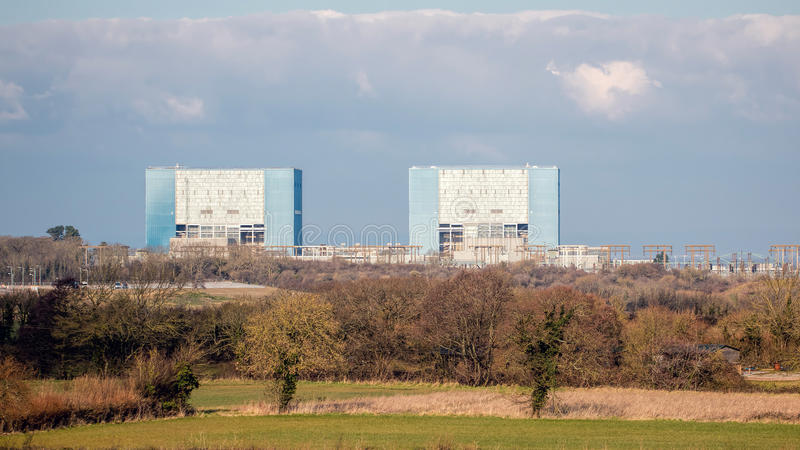
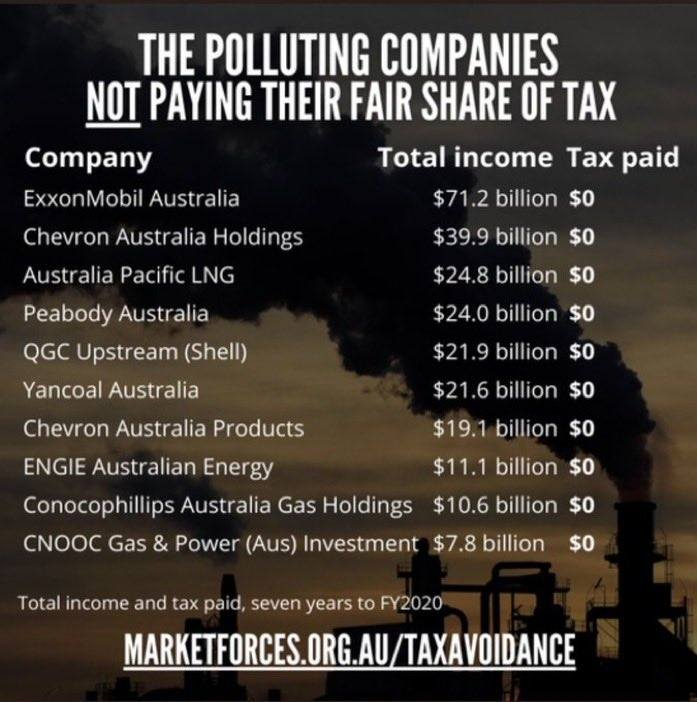

 Climate, technology and chaos Blog
.jpg)