Posts Tagged ‘disorder’

Dictatorship or Evacuation?

April 5, 2025

Trump may want a dictatorship with himself at the top gaining deference from everyone. He has for example, not consulted with congress about a number of things he is supposed to consult about. He has said he will be able to seek a third term, possibly through succession. There are innumerable stories about how State level Republicans have been trying to get rid of potential non-Trump voters to fix elections for good eg [1], [2], [3], [4], [5], [6]. This is all part of Project 2025.

But if that is his aim, his attempts to implement project 2025 may not be generating the result he wants. Dictatorships are usually said to require a strong, well organised State.

By pulling the State apart, and massively confusing people as to his aims, he is generating a plutocracy, in which those who have enough riches will be able to do what they want, and those who do not have enough riches will get to do what they are told and to suffer. This represents a philosophy generally called “libertarianism” [7], [8]. Peter Thiel one of the billionaire founders of the movement leading to project 2025, stated clearly that “I no longer believe that freedom and democracy are compatible.” Democracy, in which people (including women) are consulted, is apparently incompatible with corporate liberty, or the liberty of the rich and special. Libertarianism, or oligarchy, is more likely to result from Project 2025.

Musk is a libertarian, who may well consider getting some people off earth more important than any aim of general welfare – after all if Earth is rendered unlivable before he gets a self-sufficient Mars base, then humanity may be doomed. If every human on Earth dies as a result of corporate and government actions, and the survivors on Mars found ‘Human space’ then all is well – humanity continues. This is virtue in the long term! As far as I know he has not declared government spending on his Space-X company to be a waste of money, and suitable for cutbacks (although he apparently has terminated expenditure into investigations into potentially illegal acts by his companies) [8]. He seems far keener to sink money into escape than into technology to prevent or lessen the effects of climate change – as after all climate science in the USA has been severely disrupted and repressed [9], [10], [11], [12].

Generally corporations like stability, so they can plan, so they can engage in profitable but low risk investment and so on. So most companies will not like the chaotic result of Project 2025 when they see the results, however much they have supported it until then.

However, they will fight to retain their power and positions, and the destruction of the US State will likely lead to the enshrinement of corporate power, wealth and struggle.

It could result in a feudal system in which ‘the Barons’ of industry fight over property, without the obligation the real Barons had to provide any ‘protection’ for the people. There will be nothing to constrain pollution or ecological destruction, or to counter act against the power of riches – except The Market – and the conveyance of elites to Mars -which will not be a pleasant life either.

However, a likely unexpected consequence of these policies, could be that the capitalist market falls apart, because ordinary people do not have the money to drive production… Can capitalism as we know it survive without a relatively well off working class, with the rich just serving each other? I don’t know. It will be a different type of organisation, perhaps again if it encourages mass die off, then it might survive going to Mars….

What happens after the elites hit Mars, is anyone’s guess.

entropy again

November 20, 2024

The simplest form of what gets called entropy, is the dissipation of energy that occurs every time energy is directed to do some work. Energy gets lost when it is used.

Some, to all, of this dissipated energy cannot be regathered or reused without even more energy use and dissipation. It is not worth the effort.

This means that a system without an ‘outside’ source of energy (eg. a human body without food, the Earth without the sun), will eventually run down. No system can generate enough energy to keep itself going forever, it must take energy in from outside itself. This is why there are no perpetual motion machines.

As all organisms, materials and machines which use energy or direct energy to work or movement, or action etc. dissipate energy, wear out, suffer friction or accidents, do not replicate correctly etc, the idea of entropy is also applied to overall dissipation of ‘order’ or ‘functionality’ in the system or in relationships between participants in the system. Growth and development occurs when there is enough energy available for functional participants to build (often increasingly complex and) functional patterns and relationships.

‘Things’ and systems break down because it eventually takes more energy to maintain them than they can gather or direct to repairs, or there is no easy-enough access to external energy. It points to the idea that if ‘processes’ or things are not maintained and repaired they will eventually fall apart, or otherwise change from their ordered or functional relational states. However if the input and direction of energy can be maintained this is less likely, but accidents and breaks in relationships usually accumulate. Participants can end up building an order which is hostile to them and undermines their attempts to maintain and repair the system to which they belong.

It seems habitual for human organizations to become so complicated and complex as they grow that they expand beyond the ability of humans or machines to maintain or repair the functional relationships between participants (not enough energy or time) and head into collapse or decay, or to some new emergent order (if there is enough energy).

It is in some sense possible that the USA is more likely to breakdown through overwhelming infrastructure (bridge, roads sewage, water supplies, electricity cables, etc) breakdowns and misconnections, than from stupid politics. But stupid politics will not help maintain functional relationships, or will direct energy away from the problems.

Summary of points by points

February 15, 2024

Systems and Complexity

  • Systems theory implies that humans, societies, ecologies, and biochemical functioning make up one vast interactive system affecting each other, even if not in harmony.
  • Humans are part of this. They are not currently independent of earth functions, or of Gaia if you prefer.
  • Dominant systems of human social action seem to be disrupting planetary systems and breaking ‘planetary boundaries‘. One of these disruptions is the generation of climate change via the burning of fossil fuels for energy, and cheap but harmful agricultural practices.
  • There are many intersecting systems which influence each other – not only the ecological systems, but the human systems of energy, technology, illth [1], economics/power, information and social psychology. All of these seem stretched to breaking point. Economics and power is shoveling riches and power to the hyper-rich, information is becoming propaganda and defense, energy is breaking due to peak oil and the energy that will be needed to transform to renewables to stop system collapse. New technologies like 3 D printing, AI, Genetic Modification are likely to have systemic effects.
  • The complexity of these systems makes prediction, knowledge and co-ordination difficult. We do know that the current interactions are likely to be disruptive and cause struggles between social groups.
  • Small changes can make large differences. Tipping points accumulate and cascade throughout the system.
  • Unintended consequences of action and policy are normal, hence political action should be considered as an experiment, and unintended consequences be looked for rather than dismissed.
  • People at different places in the system will perceive things differently. Hence a functional information system is required, which we do not seem to be able to organise, partly because capitalism seems to depend on inaccurate information (advertising, hype, PR, marketing, misdirection etc are market tactics).
  • In complexity, ‘Knowledge’ is always a simplification.
  • Simplification leads to unconsciousness as well as awareness. Knowledge is paradoxically both necessary and a possible misdirection.
  • Uncertainty is normal and should be recognised.
  • The only accurate model of the system is the system itself.
  • Diversity can help survival by allowing a multitude of experimental responses to change.
  • Suppression of diversity reduces resilience and adaptive capacity, even if it helps administration, because diversity can hinder centralised governance. Everything nowadays should be run like a business, irrespective of whether that is appropriate or not.
  • Government in complex systems appears distributed, and it is easy to avoid responsibility, or try and freeload onto others. The problems of co-ordinated action are boosted if everyone has to agree to a strategy for it to work – such as not increasing fossil fuel consumption, and then phasing it down. those who don’t agree will maintain what appear to be advantages.
  • Even the ultra powerful can feel stymied.

Challenges and Avoidence

  • Societies and individuals regularly face challenges.
  • Turning away from these challenges to try and maintain the status quo or ‘elite consciousness and knowledge’ (social egos), does not help survival, mental health, or future progression.
  • During their development, societies have produced ‘resolution sets’ which have solved, postponed or hidden past challenges.
  • Resolution sets include types of technology and the elites that have commanded those technologies and used them in particular ways.
  • Technologies include forms of social organisation. Military, economic or political forms etc. Neoliberal capitalism and developmentalism are both resolution sets that have probably developed into obstacles to facing challenges, partly because they involve continual growth and a convenient belief that The Market solves every problem and its victors should be helped rather than hindered.
  • The problems neoliberal capitalism and developmentalism have ‘resolved’ largely do not include the current energy, ecological or climate challenges.
  • The current resolution sets have generated the new challenges.
  • Elites can get ‘stuck’ in their resolution sets as those sets provide them with status, income, power and the certainty of being useful. They give meaning.
  • It is easier to turn away from those challenges when they are as big as current challenges, and solving them may involve giving up power, familiarity and meaning, which are already under threat because of the challenges.
  • Sometimes new resolutions come from creative groups hidden in ‘niches’ or the spaces between powers, where they can develop without being prematurely crushed. This is a diversity in action.
  • If these creative groups succeed they may become a new elite from without or, if the current elites are functional, a new part of the established elites and produce change from within.
  • The presence of successful movements can change the politics of the dominant system, as politicians seek the potential votes of those involved in the new success.
  • Not changing the workings of the economic and political, neoliberal and developmentalist elites, will lead to disaster.

Energy

  • Energy is vital for all life including social life. The basic forms of energy are sunlight and ‘food’.
  • Energy is found in ecologies (social or ‘natural’), in the active patterns of systems.
  • Energy in society tends to be intertwined with power relations.
  • Powerful people often have more access to energy, and to the provision of energy – through money, might and so on. Less powerful people have less available energy.
  • The more energy available, then the more can be funneled to the dominant elites, increasing inequality, and apparently making those dominant elites more secure and more able to ignore challenges.
  • Dominant elites, and dominant ways of life, are threatened by lack of energy. Hence the change from fossil fuels to renewables, which could provide less energy, can be seen as threatening.
  • Energy cannot be created or destroyed, it can be released and lost. Releasing energy takes energy – First Law of thermodynamics.

Energy and Entropy

  • Energy is always dissipated when used. A closed system will run down – this is the Second Law of thermodynamics.
  • Energy needs to come from outside the local system, so social access to energy tends to be competitive between social groups and between nations.
  • Structures of order require energy expenditure, or they will decay or wear down, and need to be repaired, or changed, through energy use – or else more energy is required to bypass the decay.
  • The more ‘artificial’ the structures of order the more energy they will need.
  • Societies and businesses tend to let their structures of order such as sewage, electricity cabling, gas piping, buildings and so on decay, as repairing them is endless and takes money away from other more ‘glamorous’ or status filled projects and most of the time we don’t notice.
  • Paradoxically, more energy can lead to both benefit and more destruction especially ecological destruction, reinforcing the smashing of planetary boundaries.
  • Fossil fuels have been an excellent source of energy.
  • The modern world has been built on fossil fuels.
  • Without fossil fuel burning producing the unintended effects of pollution, ill-health, climate change and the possibilities of peak oil, few people might wish to change.
  • The Energy Transition requires large amounts of energy. It will almost certainly be some time before the transition can be powered without burning fossil fuels, and increasing GHG emissions and making the situation worse.
  • This is especially the case if humanity keeps increasing its energy demand, or if Jevons effects mean renewables simply add to energy supply without replacing fossil fuels in the longer term.

Steady State? Degrowth

  • One possible route to transition is to reduce energy use (perhaps through efficiency measures, but perhaps through cutbacks).
  • Perhaps less energy should be devoted to harming the planetary systems, and to the political systems.
  • This (as implied above) will be resisted by current elites, and has other consequences, many of which may not be foreseeable.

The situation is difficult.

Systems of Failure

January 21, 2024

This is just a list of some reasons for failure to face challenges, especially the challenge of climate change (although the list is not intended to be complete or deep).

Pride and fear of loss. We know what we are doing. We are committed to a set of actions and policies. If we admitted we had been wrong, and indeed suicidal, for 20 years then, we would undermine the legitimacy of our power, heirachies, and modes of organisation which are undoubtely for the best. Another similar way of seeing this kind of blockage, is as a commitment to existing social and technical competencies and a refusal to explore new possibilities, as that possibly disturbs systems and status.

Trying to impose the established order and its normal solutions more rigorously. Follows on from Pride. In general, the established and standard solutions to challenges are the only ones which can be used. They are imposed upon systems that reject these techniques, or make the situation worse. Currently, many promoted climate solutions involve letting ‘The Market’ take care of the challenges, by imposing more ‘free market’ discipline on workers (as a cost cutting exercise), persecuting people on social welfare, handing more power to the corporate sector, making sure the wealthy become even more wealthy, removing protective regulation, and so on. It is quite common for pro-right people to reduce the environmental protection, perhaps to encourage businesses to pollute heavily as they used to. Liberty for corporations (just a particular section of society), is thought to produce good results in everything. Such limited action lowers diversity of possible response and hence lowers resilience. It simply increases the pressure on the ecological system and will lead to greater tumult.

Pretending that the signs of disorder are illusionary, irrelevant or passing. “There really is no crisis. So nothing should be done.” For example, arguing that ecological destruction and climate change generated by society’s economic processes and success is not a problem, will return to normal, is beyond human remediation, or is a purely natural process. When this position is taken as true then the logical conclusion is that people pointing to the challenge are engaged in some kind of hallucinatory conspiracy, so they can be ignored, or perhaps locked away. Anyway, trying to fixing the challenge will cause even worse problems, disrupt our cosy lives, or be expensive, and so it can’t be real.

Pretending to be solving the problem, but carry on as previously. This is a common response at COPs. For example, you praise yourself for boosts to renewables, but you are encouraging a) new coal and gas mines, b) building more coal fired power stations, c) keeping fossil fuel based energy economic through subsidy and ignoring costs and potential costs, d) promoting ‘clean’ fossil fuels though Carbon Capture and Storage or other fantasy technologies, or e) claiming increasing biofuels does not increase emissions at all. Imagined solutions become defense mechanisms.

Support incremental and slow response to problems, while protecting the established system. This could be fine if we had lots of time left, but people have been delaying action for so long it is now just more suicidal delay. It removes preceptions of the urgency of the problem, and awareness of cascading and accumulating challenges.

Attacking those who might be trying to solve the challenges – People concerned about the challenge, are a potential challenge to the power and wealth of elite modes of organisation – for the reasons above. As people point to the challenge and imply that the elites have to change (as they have not remotely solved the problem), it is logical to assume that scientists came up with climate change to support something the elites don’t like, like socialism and tyranny. Yes acting against climate change could be beneficial for ordinary people, not the elites. It can be said that rivals like China promote the idea to weaken the West, or that people who recognise climate change as a problem, are elites who want to spread even greater costs of living onto ordinary people and, although it is never said, ordinary people are already suffering the results of elite neoliberalism and do not want more ‘austerity’.

Emphasising the challenges in transition and playing down the problems of staying largely inert. Counting the expected economic and social costs of transition while ignoring the costs of ignoring climate change, (because those climate costs are declared unreal, or are not the elite’s problem as they think they can survive).

Blaming attempts to fix the problem for the problems. The Australian coalition frequently blames power failures on renewables, even when the coal energy generators collapsed in the heat, gas backup did not come online, or exceptional storms ripped down power cables. Another technique is to Invent new problems associated with solutions (such as health issues for wind turbines while ignoring massive, and well documented, health issues for coal mines or from fossil fuel air pollution), and so on.

Oversimplifying the challenges to make them seem manageable. This affects both sides. While renewable energies are useful and may solve a large number of problems, they are not a complete solution. They do not solve the problems of over-fishing, deforestation, peak-phosphorous, over-grazing, greenhouse emissions from industrial agriculture and other parts of the general social approach to destroying ecologies. The challenge is large, not narrow. Likewise people often say that the results of climate change are unpredictable, and then firmly predict that everything will be fine. Anti-renewable people also can blame population growth for the total problem.

Stirring up distractions to get people’s attention focused elsewhere, especially if the chosen challenge, seems unsolvable by the current order. One way of doing that is through scapegoating, or blaming people overseas, so we can keep on with pollution.

Locating a scapegoat to blame for the problems and arguing everything will be well when that scapegoat is purged. Dominant groups can actively blame the relatively powerless (refugees from wars and climate change, illegal or legal immigrants, Muslims, professors, gay people, non-existant marxists, and ‘liberals/greenies’) for almost all problems. In Australia, after the ‘Black Summer fires’ the Coalition and the Murdoch media blamed Greens for not preventing the bush fires, when the Greens did not have the policies claimed, did not have the power to implement them, and when the clearances to prevent fires had exceeded the targets set by Coalition governments. Again the point, is “Its not [our country] causing the problem, its someone else. We can keep on”.

Punishing people for objecting to the established order and the problems it generates. Australian and other governments have intensified penalties for protests: increasing jail sentences and fines, trying to prohibit those charged with protest from associating with other protestors, and making it difficult for people to encourage boycotting those companies who help generate climate change and so on. This also has the ‘advantage’ of disrupting the information system, so news of challenges is less circulated or broadcast.

On Modern Conservatism and the Right

January 18, 2024

Conservatism is the idea that we should preserve social institutions, processes and land, and improve them gradually because life is complex and we don’t know how things mesh together, or every (or even what) function they might have. Moving quickly is always high risk, and any improvement has to be done with care.

Conservatism has a great respect for historically developed ‘checks and balances’ and for varied sources of power (so that one power cannot become dominant and bend everything to its will). It is also suspicious of fanatical adherence to ‘ideologies’ as they can blind people as much as help them.

As a failing, they might be a bit oblivious to violence which protects the system, but they certainly will object to violence that attempts to overthrow the system.

Conservativism is a perfectly coherent political philosophy that is a vital part of any political system. It constrains people from rushing ahead without thinking or feeling.

However, the Modern Right (as a movement) is not conservative at all, and constantly rushes ahead destroying checks and balances and obeying ideologies, rather than thinking.

The modern Right has acted rapidly to break down the post-war compromise between capitalism and socialism which developed to protect the population from the vagaries of capitalism, and to curtail boom and bust cycles. Rather than proceed cautiously with care, it destroyed checks and balances and followed an unproven ideology that the free market always knows best and that governments are always useless to provide help for people who are not part of the wealthy.

The modern Right has rushed to concentrate power and wealth in the hyper rich corporate class, turn democracies into plutocracies, and aimed to destroy any opposition to this concentration (unions, left wing thought etc. Most people now do not know what left wing thought is, any more than they know what conservative thought is).

It has rushed to destroy land, air, and water, and has boosted climate change by being reluctant to move against the plutocracy it created. It has no love of its country’s nature.

It is now rushing into scapegoating people for the social collapse its policies have generated. These people have had no provable role in that collapse, and the Right appears to be trying to undo civil rights for everyone who are not officially supporters.

It is now rushing into trying to discredit (not improve) vital social institutions such as systems of Justice. This would be more or less incomprehensible to a conservative, as they would know that once social discrediting of systems of justice happens, we are headed towards ‘justice’ as violence and justice at the whim of the tyrant. There is no longer any rule of law.

Likewise attempts to discredit the electoral system (rather than improve it) are also attempts to destroy the basis of the legitimacy of the government. And indeed we see this in Trump’s attempts to steal the election by intimidation and fraud. Again this would be completely incomprehensible to any genuine conservative, because they know that these actions will lead to chaos, violence and tyranny.

The Right is also trying to bring pro-corporate (ie non-traditional Christian) religion into power, to support the plutocracy, and thus end any separation between Church, State and Business.

In all, any person who considers themselves conservative, should carefully distinguish their position from that of the pro-corporate, or neo-fascist, Right.

Real Conservatives will get mowed down by it as much as anyone else

Democrats remove Trump from Ballot????

December 28, 2023

To understand what is happening you need to read at least some of the two High Court judgements.

Here is a quick run down. We will start with the High Court of Colarado.

Colarado

This High Court says:

  • “More than three months ago, a group of Colorado electors eligible to vote in the Republican presidential primary—both registered Republican and unaffiliated voters… filed a lengthy petition in the…. “Denver District Court”… asking the court to rule that former President Donald J. Trump… may not appear on the Colorado Republican presidential primary ballot”

So on the very first page the judgement states that the motion was brought by Republicans.

People who tell us it was a Democrat motion are lying. Not unusual perhaps. But, it is probably good to remember not to trust them in anything they say, as that was pretty easy to discover, and reporters might have to go out of their way to avoid discovering it.

In this Denver District Court case:

  • “The court found by clear and convincing evidence that President Trump engaged in insurrection as those terms are used in Section Three [of the 14th Amendment].”

In other words Trump was essentially convicted of insurrection – which is something the MSM also seem to have ignored.

However the District court also found that:

  • “Section Three does not apply to the President”

This District Court decision was appealed both by Trump and by the Republicans and unaffiliated voters to the High Court.

  • “The Electors and President Trump sought this court’s review of various rulings by the district court.”

The High Court found:

  • “The Election Code allows the Electors to challenge President Trump’s status as a qualified candidate based on Section Three.”
  • “Congress does not need to pass implementing legislation for Section Three’s disqualification provision to attach, and Section Three is, in that sense, self-executing.”
  • “Section Three encompasses the office of the Presidency and someone who has taken an oath as President. On this point, the district court committed reversible error.”

In other words being President does not exclude you from the 14th Amendment. As well the lower court made a decision about ‘insurrection’.

  • “The district court did not err in concluding that the events at the U.S. Capitol on January 6, 2021, constituted an “insurrection.”

and

  • “The district court did not err in concluding that President Trump “engaged in” that insurrection through his personal actions.”

In other words, by the legal standards of a civil case, there is no doubt Trump engaged in, or participated in, an insurrection. He appears to have been convicted without penalty which perhaps shows how privileged Trump is.

The Logical conclusion is:

  • “President Trump is disqualified from holding the office of President under Section Three; because he is disqualified,”

Trump broke the law and the Constitution, which is usually considered to be bad, and perhaps people don’t want to set a precident for Presidents to be known lawbreakers? However, the ultimate decision depends on the US Supreme Court

  • “If review is sought in the Supreme Court before the stay expires on January 4, 2024, then the stay shall remain in place, and the Secretary will continue to be required to include President Trump’s name on the 2024 presidential primary ballot, until the receipt of any order or mandate from the Supreme Court.”

The rest of the document justifies their position, and includes more justification of the point that Trump participated in insurrection.

I personally suspect that the Supreme Court will overturn this decision, despite the High court having apparently demonstrated their arguments well, and argued that the framers of the amendment intended it to apply to the office of President. But the Supreme court could easily argue that it does not matter what the framers intended, all that matters is the words, the lack of words and the Supreme Court’s interpretation of the words. This would completly go against their usual originalist interpretations of the Constitution, but it helps save Trump, so who cares?

In short.

  1. The case was not brought by Democrats. In my experience Democrats want Trump on the Ballot as they think Trump is the easiest person for Biden to defeat.
  2. Trump has been convicted of participating in insurrection.
  3. The 14 Ammendment covers the office of President, when the President participates in Insurrection, and forbids him from running for any office including that of President..
  4. Therefore by the law set out in the US Constitution, Trump has disqualified himself from standing for the Presidency. Only Trump did this. No one else disqualified him.

If people break the law, President or not, they should pay the penalty, perhaps particularly if they were president. Indeed, we would expect the “law and order party” to agree with this, but apparently the law is for others.

Of course if, in other cases, Trump does get declared immune from prosecution for all crimes committed while President, then that will affect Biden too, and it will be hard to remove him from the ballot on the grounds of crime, or to prosecute him for crimes…

Michigan

In Michigan, the high court (apparently controlled by Democrats) said:

  • The only legal issue properly before the Court is whether the Court of Claims and the Court of Appeals erred by holding that the Michigan Secretary of State lacks legal authority to remove or withhold former President Donald J. Trump’s name from Michigan’s 2024 presidential primary ballot. I agree with the Court of Appeals that under MCL 168.614a and MCL 168.615a, the Secretary of State must place Trump on the primary ballot “regardless of whether he would be disqualified from holding office”

in other words, it does not matter if Trump has disobeyed the constitution, or could be disqualified from office, as the Michigan Secretary of State cannot stop his name being put on the primary ballot.

The previous court had ruled

  • the relevant statutes require the Secretary of State to place any candidate” who has been identified by the relevant political party “on the presidential primary ballot, and confers no discretion to the Secretary of State to do otherwise, there is no error to correct.”

The big difference between Colarado and Michigan is that the Colarado code insists that Presidential candidates should be qualified, and could rule that Trump is not qualified because of his crimes, but in Michigan, there is no such requirement – anyone can stand for a primary no matter how criminal they are.

To repeat: nothing can be done about lawbreakers or constutional violators standing for a presidential primary.

  • the Secretary of State is not legally required to confirm the eligibility of potential presidential primary candidates. She lacks the legal authority to remove a legally ineligible candidate from the ballot once their name has been put forward by a political party in compliance with the statutes governing primary elections.

This may mean that State law overrides the Constitution

As far as I understand, the judgement suggests in an endnote, that people could appeal to stop Trump being on a Presidential ballot, once Trump becomes the nominee. That is a different matter.

UN Production Gap Report

December 17, 2023

One of the most important documents for a long time, was released just before the current COP. I’ve only just seen it. It:

finds that governments plan to produce around  110% more fossil fuels in 2030  than would be consistent with limiting warming to 1.5°C, and 69% more than would be consistent with 2°C.

ibid.

This means that:

Taken together, government plans and projections would lead to an increase in global coal production until 2030, and in global oil and gas production until at least 2050.

Summary of Key Findings emphasis added

In other words despite 151 national governments pledging to achieve net-zero emissions, by 2050, governments and fossil fuel companies are working together to produce more fossil fuels, and hence more emissions. OR they are simply ignoring the emissions problem, and hoping it will go away.

As is well known the International Energy Agency has argued that if we wish to stay under 1.5°C all there can be no development of new oil and gas fields after 2021.

Beyond projects already committed as of 2021, there are no new oil and gas fields approved for development in our pathway, and no new coal mines or mine extensions are required. 

IEA Net Zero by 2050

It appears from the UN report that not one country has committed to cutting coal, oil or gas production to be consistent with a 1.5C target, and with this level of production, we are locked into a more than 2°C temperature rise.

This is despite the latest forecasts that coal, oil, and gas demand will peak this decade.

Indeed this action can be seen as an attempt to undermine the prediction and keep countries addicted to using fossil fuels and increasing fossil fuel company profits.

Whatever anyone says, Carbon Capture and Storage cannot deal with this excess of emissions. It cannot deal with even a small fraction of what we already produce. So the chance of it succesfully dealing with this excess is microscopic.

Again, if we needed to know, this shows the dominant power in the world, and that it does not care what happens to people, as long as it makes its profits.

Even the excuse that coal is being phased out faster than oil and gas is useless, because:

“We find that many governments are promoting fossil gas as an essential ‘transition’ fuel but with no apparent plans to transition away from it later”

 Ploy Achakulwisut quoted in Governments plan to produce double the fossil fuels in 2030 than the 1.5°C warming limit allows

UN Secretary-General António Guterres says:

Governments are literally doubling down on fossil fuel production; that spells double trouble for people and planet… We cannot address climate catastrophe without tackling its root cause: fossil fuel dependence. COP28 must send a clear signal that the fossil fuel age is out of gas — that its end is inevitable. We need credible commitments to ramp up renewables, phase out fossil fuels, and boost energy efficiency, while ensuring a just, equitable transition

Governments plan to produce double the fossil fuels in 2030 than the 1.5°C warming limit allows

However, if Governments have previously promised to cut emissions but are really supporting fossil fuel companies in increasing emissions, why would anyone trust them to really change, as opposed to saying they will change, at the COP?

These are graphs of the problem, showing the differenc between planned production and needed reduction:

Just before the COP28 meeting in the UAE, it was revealed that Adnoc, the UAE’s state oil company was going to use the conference “to jointly evaluate international LNG [liquefied natural gas] opportunities” in Mozambique, Canada and Australia, and that it planned to discuss fossil fuel deals with 13 other nations including Columbia, Germany and Egypt. The documents suggest that Adnoc would argue that “there is no conflict between the sustainable development of any country’s natural resources and its commitment to climate change.”

The president of COP28, Dr Sultan al-Jaber, is the head of Adnoc. In 2022, under his leadership, Adnoc announced they would invest $US150 billion to “accelerate” the growth of oil and gas development. “Adnoc’s ‘overshoot’ of the IEA net zero scenario is…. 6.8 BBOE [billion barrels of oil equivalent], the third largest worldwide.” [The Link in the Guardian article to the accelerated growth announcement, no longer works, but see the ABC].

“The UAE team did not deny using COP28 meetings for business talks, and said ‘private meetings are private’.”

The UAE also prepared talking points on commercial opportunities for its state renewable energy company, Masdar, ahead of meetings with 20 countries, including the UK, United States, France, Germany, the Netherlands, Brazil, China, Saudi Arabia, Egypt and Kenya.

ibid

The UAE also failed to report its oil industry’s emissions of methane to the UN for almost a decade.

This can be seen as part of the fossil fuel company’s campaign to keep new fields opening and implies that it is rountine to put business before attempts to lower emissions.

While we are at it, the World Meterological Organisation released a preliminary finding that:

confirms that 2023 is set to be the warmest year on record. Data until the end of October shows that the year was about 1.40 degrees Celsius (with a margin of uncertainty of ±0.12°C )above the pre-industrial 1850-1900 baseline….. The past nine years, 2015 to 2023, were the warmest on record…. Greenhouse gas levels are record high. Global temperatures are record high. Sea level rise is record high. Antarctic sea ice is record low. 

2023 shatters climate records, with major impacts

My guess after seeing this result, is that we are going to sail over 1.5 degrees in a very short time, which means that cut backs in fossil fuel production, use and emissions have to start immediately. If we want a safeish planet. There is no later.

Odum’s model of growth, descent and collapse

November 7, 2023

Odum seems to argue that complex living systems (ecosystems) tend to have a surge model, they boom and then they collapse or withdraw once the resources required are consumed. Or in more detail they have a cycle:

  • Growth – different groups of organisms (or societies) compete and some outgrow the others and become more plentiful or dominant and hamper the others.
  • Climax – the system grows until nearly all important available resources are consumed and it reaches maximum development. It may also produce pollution at a level that kills off biologies or resources it needs. Some plants for example kill surrounding plants which support the biodiversity they need, if they are too succesful.
  • [Maturity – the system shifts from growth to maintenance and symbiosis, competition lowers, less resources are consumed for the outputs. There can be a degree of stability or conservation. Perhaps the societies do not consume more resources than they can replace. Maturity is not always reached]
  • Descent – assets, raw materials, energy decrease because growth has used up available stores of resources, or there is a surge of destruction at the climax of growth as more resources are used up faster than ever to try and maintain stability, or cyclical ecological conditions change (eg. autumn begins). The ‘higher’ co-ordinating functions of the society/ecology can fall apart as they don’t have the available energy to support them. “By one means or another, the developed system has to adapt to coming down… An unresolved question is when is it good policy to downsize gradually [and in an organised manner] and when should [downsizing] be catastrophic?” [for example some forests may require major burns to renew and regrow]
  • Low energy restoration – before another period of growth, resources have to be rebuilt up, usually naturally, as humans have few resources or little spare energy. Soil may need to be left fallow to rebuild itself etc. “Processes of environmental production must exceed consumption” for some while to rebuild. Some resources may have extremely slow periods of rebuild, such as fossil fuels and effectively not be largely available again, and some dispersed resouces may never accumulate together in a form useable in large quantities. For example phospherous or helium is not lost but dispersed, and it may be very hard to retrieve without much more energy than is available.

There is no reason to exempt human systems from these cycles, but it does mean that in human systems what is an appropriate policy in one part of the cycle “may be poor policy in another.”

The most likely result of our current growth is a collapse, “with dispersed smaller-population communities” living primarily on speedily renewable resources and energies, such as firewood or small cropping or, if we get it going, some surviving renewable energy technology.

Any relatively quick continuance. rebuilding or maturity will have to rely on renewable energy as fossil fuels are not only finite and are requiring more energy to extract, but they damage other needed systems for reaching some level of maturity.

Even worse, unless the energy generators and resources we currently use can be replaced or recycled, then the system will not have the pathways to start the regrowth phase, and we will stay at a low level after the collapse for a long time. This does not just mean limits to economic and population growth, but limits to social ‘development,’ social complexity and social comfort.

Such a cycle is probably inevitable. Regeneration systems almost certainly have limits. What is new, is that the cycle is likely to affect the whole planet, not just one ‘civlisation’ and its resource use. There will be few areas which will be immune and have the materials and energy to generate prosperity and start growing outward. People who are hunters and gatherers and slash and burn agrictulturists will probably do best.

It seems to be logically better to develop the way down now while we still have some, if lessening, slack than to wait until the crash.

Example

Simply because I was asked, this is a simple and unscholarly look at the collapse of Rome.

Rome develops an extremely effective citizen army and military technology – the best in the world. They were almost wiped out once or twice. But they survived. One basis that keeps this military going is the gifting of land to retiring or surviving soldiers and loot to victors. This is pretty standard. Pay can be small because of the promises of land and loot. However, that also forces the military to expand into new areas to provide loot and land for soldiers. It is locked into expansion.

The military technology is great enough that the expansion proceeds relatively smoothly for a few hundred years. However, changes in the political system mean that the Roman people become less involved in politics, or less identified with politics – they are excluded and it becomes dangerous to get involved. Rome also uses up its militarisable population and has to recruit military from conquered areas. These new recruits also have less involvement with the empire other than in terms of reward, and may require more consistent payment. Eventually the empire expands too much for the loot and land it occupies to be able to support the armies and centralised, or dispersed, control. The ruling classes tend to take what land they can to make large estates to cement their power and riches, which deprives soldiers and soldiers’ families of land or potential land. Supply lines became too long, people get bored. The looted became restless and look for opportunities to rebel. It takes more effort to maintain stability. Land becomes overused and became less fertile.

To keep functional, any empire has to either generate large amounts of energy and resources (which will eventually be used up), or plunder from its conquests more than it costs to rule those conquests, and keep expanding to get more plunder when they have stripped the conquered areas. That requires potentially infinte expansion, or calling off the empire and trying to become steady state, which is hard because so much power and wealth depend on expansion. Infinite explansion is always going to run against human and planetary limits. I have heard there is some evidence the Romans reached China! but they could not keep the outpost going. Once the expansion runs into limits you eventually can’t reward or pay the people who keep it up to those limits, and have to rely on having crushed the opposition, which is not going to stay stable for ever. Maintaining Empire requires more energy than unconquered peoples can provide if conquered, and it requires energy to keep it going. When that energy depends on agriculture and forestry, then you have the problems of using up the land’s fertility and using up the forests. You also need to keep up skills training and tech of conquest, administration and building, which takes energy and often peace to store the information accurately.

After the fall of Rome, it seems fertility of the land was problematic at best, and knowledge was destroyed, dispersed, or unretrievable. While the material and intellectual poverty of the European Dark Ages, can be exaggerated, it took a long time to get anything resembling even the city of Rome going again. Similarly, without oil, the remanants of the Islamic Empires and their collapse would probably still be in relative poverty from the same kind of causes.

Conclusion

Societies tend to consume the resources they rely upon faster than those resources can be replenished, or their mode of destruction exceeds the modes of production. If this is not realised, and massive reorganisation is not undertaken then the societies will collapse. We cannot rely on magical technolgy to save us. But more importantly, the modes of consumption and destruction tend to get entangled with modes of power, and people fight to keep them going, rather than risk uncertainty or loss of power and riches. People get distracted supporting the growth mechanisms instead of maturity mechanisms.

A general formula is that: “the processes that make a society successful eventually kill them when circumstances change, or resources start becoming limited”.

Roman military effectiveness and expansion destroyed the empire they made

Economics and climate: Another defense mechanism? 02

November 6, 2023

Common economic models of Climate Change

Apparently the Economic models used to predict the damage of climate change are totally unreal. They essentially do not even start to recognise that economies depend upon working ecologies and fairly stable weather patterns. They do not realise that modes of production can be modes of destruction, or that the (dis)information systems cultivated by business can also disrupt understanding of the economy, leading to booms, busts and bailouts. Any model which assumes economic stability, and lack of self-disruption, is not an accurate model of an economy.

William Nordhaus apparently put together the basic types of climate economy models which are used by financial organisations, the US EPA and the IPCC. These are known as ‘Dynamic Integrated Climate Economy’ (DICE) models. The IPCC calls its similar models ‘Integrated Assesment Models’ (IAM).

The prime conclusion from these models is that social and economic adaptation to climate change is pretty cheap. Nordhaus predicted “damage of 2.1 percent of income at 3◦C, and 7.9 percent of global income at a global temperature rise of 6◦C”.

At this price, it may be so cheap that it is not really worth cutting back emissions, or doing anything that could potentially harm profits. He apparently even suggests that the global economy reaches an “optimal” adaptation with a temperature rise between 2.7 and 3.5 degrees Celsius. So that is what we should aim for…. much higher than climate scientists generally think is reasonable.

Apparent assumptions of the models

Nordhaus and others can only argue the lack of both severe costs and serious disruption at even 6 degrees, by assuming that:

  • Frictionless market adaptation can occur easily and that companies which are profitting from damage, will not try and delay change through political connections and information distortion so that people (in power and elsewhere) will not want to change. Resistance to change can accumulate and block change, until only violent and unpredictable change can occur,
  • Global temperature increases have no significant or disruptive outcomes, and that increases in temperatures produce smooth and linear changes in weather and ecology, as if the temperature increase only produced warming and did not have ‘side effects’ like increased storm damage, change in rainfall, increased frequency of fires, activation of trigger points, increased death rates in some parts of the world, and change in agricultural conditions.
  • Pollution and destructive extraction have no effect on the economy, are external to it, or can easily be avoided,
  • Energy supply can continue to grow and will not slow down the economy, and that,
  • GDP can continue to increase in an economy that is hitting planetary boundaries.

He also assumes that thereare no bad consequences from ‘just-in-time’ production and distribution which cuts down on storage costs, and has the capacity to reduce resilience in a disruption (supermarket shelves emptying in times of panic etc). If just-in-time can be abandoned, long term storage set up or local production engineered again, then maybe this would be a lesser problem, but it would drastically change patterns of cost.

Trivialising Damage from Climate Change

As Keen et al put it in their abstract:

Such relatively trivial estimates of economic damages—when these economists otherwise assume that human economic productivity will be an order of magnitude higher than today—contrast strongly with predictions made by scientists of significantly reduced human habitability from climate change.

Nonetheless, the coupled economic and climate models used to make such predictions have been influential in the international climate change debate and policy prescriptions

Keen et al 2021 Economists’ erroneous estimates of damages from climate change IDEAS Working Paper Series from RePEcrg

They continue. arguing that the models:

severely underestimate.. damages from climate change by committing several methodological errors, including neglecting tipping points, and assuming that economic sectors not exposed to the weather are insulated from climate change. Most fundamentally, the influential Integrated Assessment Model DICE is shown to be incapable of generating an economic collapse, regardless of the level of damages

ibid

Tipping points should be part of the models

Tipping points are part of current climate models and cannot be ignored in economic models of climate change. There is almost no likelihood of a completely smooth transition, and current predictions are that several tipping points will get started long before the end of the century and before the average temperature increases are greater than 2 degrees. It may be necessary to point out that completion of a tipping point may take years but will continue after it starts, so tipping points can start before they are noticed.

Keen et al point to the:

concept of “tipping cascades”, whereby passing a threshold for one system—say, a temperature above which the Greenland ice sheet irreversibly shrinks—triggers causal interactions that increase the likelihood that other tipping elements undergo qualitative transitions—in this example, freshwater input to the North Atlantic increases the risk of a collapse of the Atlantic Meridional Overturning Circulation (AMOC—also referred to as the ’thermohaline circulation’).

Such causal interactions can also be mediated by global temperature changes whereby tipping one system—e.g. the loss of Arctic summer sea-ice—amplifies global warming, increasing the likelihood that other other elements undergo a qualitative transition

ibid

The intial work by Nordhaus setting up the DICE denies the possibility of tipping points and cascades completely. According to Keen et al, Lenton et al:

calculated that including tipping points in Nordhaus’s own DICE model can increase the “Social Cost of Carbon” (by which optimal carbon pricing is calculated) by a factor of greater than eight [8], and proposed 2◦C as a critical level past which “tipping cascades” could occur [9,10,15]….

inclusion of tipping point likelihoods in DICE…. leads to much higher damages [8]

ibid

The economy is safe when indoors?

Using similar models to DICE, the 2014 IPCC report stated that “Estimates agree on the size of the impact (small relative to economic growth)” with a 2.3% increase in global income for a 1 degree C increase in global temperature over pre-industrial levels.

The Report summarised that:

For most economic sectors, the impact of climate change will be small relative to the impacts
of other drivers (medium evidence, high agreement). Changes in population, age, income,
technology, relative prices, lifestyle, regulation, governance, and many other aspects of
socioeconomic development will have an impact on the supply and demand of economic
goods and services that is large relative to the impact of climate change

Chapter 10 Key Economic Sectors and Services, p 662 In Climate Change 2014: Impacts, Adaptation, and Vulnerability. Part A: Global and Sectoral Aspects. Contribution of Working Group II to the Fifth Assessment Report of the Intergovernmental Panel on Climate Change

This unlikely assumption appears to be based on another bad assumption that:

  • by far the majority of economc action is independent of ‘weather’ events, ecological destruction and resources depletion.

That is, again, that this climate economics does not consider the world the economy occurs within. It also appears to assume that air cooling technology and energy supplies will be able to cope with the extra loads. Again the models ignore the economic consequences of “potential loss of lives and livelihoods on immense scale and fundamental transformation and destruction of our natural environment” (Stern et al 2022). Not to mention agricultural collapse. While Economists apparently don’t eat, most people would recognise that the total economy is errected upon food supplies, no matter how much else goes on. Stern writes that 6 degrees increase is unlikely to give losses of 8.5% of GDP, but:

we could see deaths on a huge scale, migration of billions of people, and severe conflicts around the world, as large areas, many densely populated currently, became more or less uninhabitable as a result of submersion, desertification, storm surge and extreme weather events, or because the heat was so intense for extended periods that humans could not survive outdoors. It is profoundly implausible that numbers around 10 percent of GDP offer a sensible description of the kind of disruption and catastrophe that 6 C of warming could cause.

Stern 2022 A Time for Action on Climate Change and a Time for Change in Economics , The Economic Journal, 132, 644: 1259–1289

Likewise:

Climate change (either regional or global) has played a role in the collapse or transformation of numerous previous societies (37) and in each of the five mass extinction events in Phanerozoic Earth history (38). The current carbon pulse is occurring at an unprecedented geological speed and, by the end of the century, may surpass thresholds that triggered previous mass extinctions (3940).

Kemp et al 2022 Climate Endgame: Exploring catastrophic climate change scenarios PNAS

Even if you could allocate calculated risk and danger factors for events that could completely change the system, that still does not mean that an estimate of a 1% chance of collapse means collapse cannot occur.

The orthodox economists, their models and the politicians who use them, seem completely unaware that complex systems can collapse, or change very rapidly, and they depend upon the idea that free markets can always beneficially adapt to almost anything without much cost.

Importance of noting extremes, disorder and uncertainty

Kemp et al 2022 suggest that investigating the “bad-to-worst cases is vital” for improving resilience, and informing policy and emergency responses. “

First, risk management and robust decision-making under uncertainty requires knowledge of extremes. For example, the minimax criterion ranks policies by their worst outcomes (28). Such an approach is particularly appropriate for areas characterized by high uncertainties and tail risks….. Climate damages lie within the realm of “deep uncertainty”: We don’t know the probabilities attached to different outcomes, the exact chain of cause and effect that will lead to outcomes, or even the range, timing, or desirability of outcomes, (30). Uncertainty, deep or not, should motivate precaution and vigilance, not complacency

They propose 4 main questions: all of which point to the importance of considering disorder and the production of lack of resilience.

  • 1) What is the potential for climate change to drive mass extinction events?
  • 2) What are the mechanisms that could result in human mass mortality and morbidity?
  • 3) What are human societies’ vulnerabilities to climate-triggered risk cascades, such as from conflict, political instability, and systemic financial risk?
  • 4) How can these multiple strands of evidence—together with other global dangers—be usefully synthesized into an “integrated catastrophe assessment”?

“even simpler ‘compound hazard’ analyses of interacting climate hazards and drivers are underused. Yet this is how risk[/danger] unfolds in the real world. For example, a cyclone destroys electrical infrastructure, leaving a population vulnerable to an ensuing deadly heat wave”. They further suggest that IPCC reports do not spend large amounts of space analysing what will happen at 3 degrees or above warming, and have indeed shifted over time to considering 2 degrees or less which might be fine if there was evidence we will reach that target. However, the culture of climate science tends “to ‘err on the side of least drama’ (7), to not to be alarmists, which can be compounded by the consensus building processes of the IPCC.

Political and economic instability, feeds into the dangers, as does a teetering energy system, heavy illth production, technological lock-in, failure to face challenges, and a harmful (dis)information system. These are all observable current problems.

What do the models do?

The Optimism of these models, and their framing of easy social change within an unstable environment, without political opposition from anyone, is absurd.

The models seem out of touch with what we know about earth systems and social systems, they can only be seen in terms of being a defense mechanism, ideologies useful for protecting the business and political system as it is now and which actively halt adaptation and prevention measures. They help convince people that doing nothing is ok, and nothing bad can happen.

However, eco-and-climate system change changes will almost certainly spill through other systems and change almost everything, including the current market’s ability to function, and the powerful people who use these models will not be prepared for it…. and hence neither will we. They are part of a collective suicide and refusal to face challenges, which might cost some people profit.

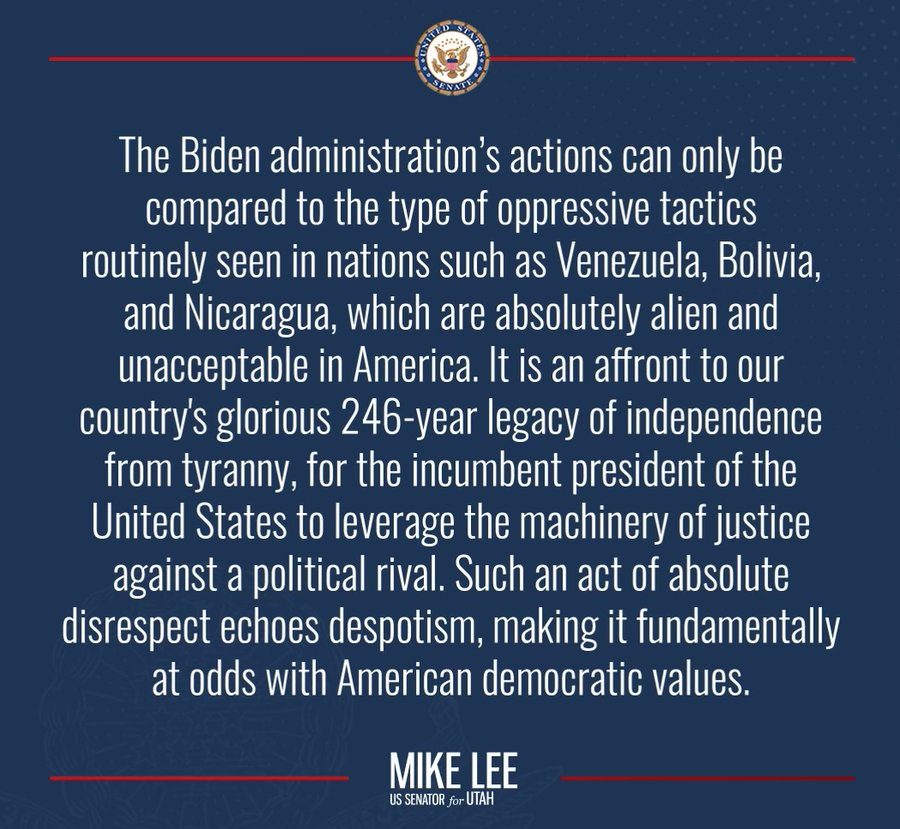
Robert Reich is wrong about Trump

June 13, 2023

In his article in todays Guardian, There will be no Civil War over Trump Mr Reich makes the classic intellectual error that people do things for clear reasons, and with good understandings. And thus they will not generate war over Trump. This proposition is simply not true. People do things for non-rational reasons; feelings of disquiet, distrust, disgust, misery, not having a vision of a beneficial future, ‘knowing’ stuff at an emotional level which they cannot express and so on.

Trump appeals to this knowing, and his inarticulateness and personal grievance, make him appear to be one of those people who, like us all, share grievances and cannot express them. People can relate to Trump, and he allows them to displace their grievance onto the State and the Democrat/Liberal ‘humanist’ elites, and distract them from the real cause of their misery. And as the State is part of the problem, it no longer appears to stand for the people, it is not a completely false target.

Most people in the English speaking world have experienced over 40 years of neoliberal policies (promoted by media, politicians and corporately sponsored think-tanks), in which corporate power has been protected from democracy, wages have stagnated or declined, working conditions have declined, social welfare and social security have become punitive and inadequate, bosses have gained arbitrary power, wealth has been siphoned off to the already hyper-rich, wealth inequality has increased along with political inequality. People’s futures have been taken over by crisis and the realisation that their children and grandchildren and not going to have it good. Community co-operation appears to be breaking down. There are apparent threats everywhere, increased violence, political corruption, corporate corruption, climate change, ecological destruction, pollution, irresponsive government, friction between social groups. Disorder seems to be increasing, and there is little attempt to put in a new order which benefits most people.

The problem people face is neoliberalism, corporate dominance and wealth syphoning. The State is part of this problem, because it has enabled all this to happen through its overt support of neoliberalism, and coporate power.This is a story which ‘the left’ does not seem to want to tell, because it (just like ‘the right’) depends on corporate donations, and fears organisations of corporate bodies, like the ‘minerals council of Australia’ or whatever, which have the huge monetary resources to make that attack count. The Media largely does not want to tell the story, because it is owned by corporations and billionaires, and depends on corporations buying advertising space. The right does not want to talk about it, because it is their fundamental policy.

Hence we have a stressed out working and middle class, who are risking descent into poverty all the time. Nobody is giving them a real explanation of their problens, or a set of policies which deal with the problems or can get traction without the promoters risking political death from corporate backlash. Trump voters know something is wrong. They know the system is not working. Trump, for all his faults, acknowledges this loss. ‘Make America Great Again’, expresses a feeling that it is possible to restore previous plenty, and this is welcomed by people. Sure Trump has few policies, and those policies almost certainly do not benefit the people who vote for him, but that is not the point. He is showing awareness and concern for the problem. He, and the Republican establishment, are generating scapegoats for the real issues, to explain why things are not better: as if drag queens, tran-sexuals and people worried about racial discrimination are responsible for economic decline and loss of futures. These people are made to symbolise all that is wrong, without threatening the market-elites, so supporting Trump seems secure to those market elites. Trump seems funded by his supporters, to an extent which seems unusual in modern politics and shows his appeal, and he is funded by the rich-elites.

In a way Trump is perfectly correct, people might need to join in a “final battle” for America -“These people don’t stop and they’re bad and we have to get rid of them. These criminals cannot be rewarded. They must be defeated.” The problem is that the people Trump wants to fight are often not America’s problem, they are just scapegoats, or people who point out that Trump is the criminal. It is as Reich says…. “a final battle over … himself,” but Trump is no longer just a corrupt politician, he has become a symbol for fears and aspirations which are real, no matter how fake he is.

As Reich reports, Trump has mainstream Republicans supporing violence to defend him. For some reason Reich decides this unimportant, rather than an indication of how Republicans are bound up with Trump and protecting Trump, and violence against Trump’s ‘enemies’.

There are many more posts on Twitter which incline more to violence than these, because people have been convinced that Trump is innocent, that the Department of Justice and the FBI are weaponsed against all ‘conservatives’, that the whole thing is an attempt to distract from Biden’s corruption, that Trump is the only honest politician and that he will smash the corruption (something also being said by Trump), that revenge is necessary on those who are really corrupt, and so on. It is endless. There seems to be a real fury out there – and it is absurd to pretend people are not being stoked for war. That may not mean war is inevitable, but the possibility is there, and little can stop it – certainly Trump being convicted is not going to stop it, whatever the evidence against him.

According to a CBS poll 76% of Republican voters think the charges are politically motivated, 61% think the charges won’t change their views about Trump, 14% changed their views for the better. 80% think that even if Trump is convicted he should be able to be President. If Trump could not run, then 74% of Republican voters want someone like Trump. 45% thought it important to punish the Democrats.

Oddly the more Trump is attacked, and shown to be criminal, the more he can be seen to be one of the masses, victimised by the powers that be. He can’t be guilty any more than ‘we’ are guilty for what is happening to us, and if he is guilty what hope is left? The rationale that the current charges he faces seem justified is completely irrelevant to Trump’s supporters. These charges are another fake, another step in the battle to keep them down.

The more that the left attacks Trump’s followers as stupid ill-educated morons (which is really common), then the more they fall into the Republican Trap, because they make it seem clear that ‘Democrat elites’ have nothing but contempt for working and middle class people, and therefore, as Republicans allege, are generating the problem. Democrats are not acknowledging the real problems people face, or their feelings as valid.

If this continues, there is no reason not to expect violence and highly disruptive violence. It may not be organised. It may be sporadic, but it will happen.

Modern weaponry means that a few well organised people can do significant amounts of damage, and protect themselves through generating fear and images of heroism.

As long as the violence is against Democrats or scapegoated outsiders, then Republicans will support it, or not object….. The violence can be repressed, which will generate more violence as more people get caught in the hunt to suppress, or the violence will be met by a violent oppositional response. What level of continued violence counts as civil war is irrelevant, what matters is using violence to promote and protect Trump and allow him to create a state of terror.

If Democrats don’t put forward a coherent world view as to what is wrong, acknowledge that wrong, acknowledge the real grievances of Trump voters, and put forward plausible solutions, then Trump will win. People seem not to appreciate that his vote increased in the last election, with people’s experience of him still fresh. It is simply optimism to think his base is moving away, that Biden will win without effort, and that there is no possibility of continuing political violence.