The Coalitions “Nuclear Fantasy” is not generated by concerns about:
Energy supply, as the seven nukes will not even replace the coal power generated electricity that is being shut down, never mind grant the increase in energy we will need by 2040.
Small Modular Reactors do not exist commercially, so after a lot of blather, they are only going to use two of them, in the hope they will eventually exist. The experimental SMRs also seem to produce less electricity than do normal reactors, so they are not a substitute for normal reactors. We will probably need three times the number of nukes.
The Smart Energy Council calculates that the seven reactors will only provide 3.7% of Australia’s electricity demand by 2050. This is pretty trivial, and may not be worth the cost or the risk.
Emissions reduction or reducing climate damage, because they also want to cut back large scale renewable projects, and they are abandoning emissions reduction targets. They will have to increase emissions, to get the energy needed, probably from gas burning.
Nuclear is not very flexible, it is required to generate a baseload, that means that as with coal, it gets disrupted by high levels of solar generation. This implies that to make it work, cheaper renewable energy has to be turned off. This also implies that the Coalition will need to prevent the regular export of electricity from your rooftop into the grid, so solar will become more expensive to operate.
Delay or the electricity generation gap. Given the illegality of nuclear energy in Australia, even assuming best building practice in a country that has never built such a thing, it will take at least 15 years to complete, and many of those years will be without coal power or adequate renewables. So electricity prices will climb, and we will have shortages.
Lowering costs of electricity as they seem to be ignoring the costs of building, insuring and decommissioning nukes, and making renewables harder to use. In the UK for example electricity prices from the new nukes are so high (because of the cost of building), that they will massively increase the price of electricity generally.
The long delay means that nuclear will do nothing to lower energy prices in the near future, although they are trying to imply it will.
The CSIRO GenCost report, finds conventional nuclear power stations will cost about 2.5 times as much as onshore wind and 5 times more than large-scale solar. If so, the electricity price has to be higher to recover the capital cost.
Not surprisingly Nuclear reactors cost more to run than wind or solar. They have large numbers of moving parts, materials are dangerous, and a lot of care and precision is required.
Communities. They are happy to support opposition to, and veto over, renewable projects (because they oppose renewab;es), but no community will get a veto over nuclear because its in the “national interest”.
Coalition policy continues to ignore that the best thing for rural towns is community owned renewable energy, it keeps the money in the town, gives them control over their development and means everyone gets buy in.
Issues of taxpayer subsidies which will be required for the build, as there is no evidence that corporations want to build any nuclear energy for themselves, unlike renewables.
Costs of insurance and decommissioning. In general, even though nuclear is usually safe, because of the possibility of severe accidents insurance companies are reluctant to cover them, and taxpayers usually end up taking the risk and taxpayers usually pay the billions or more to demolish the reactors safely.
Money. As the project will probably be built by foreign companies, most of the money will leave Australia.
Nuclear waste. that appears to be something we worry about in the future.
Given the policy is not about anything sensible, it would seem to be about
Continuing their war on renewables
Supporting fossil fuel companies, and their emissions, for at least another 15 to 20 years
and
wasting lots of money, on something which could produce huge problems for Australia.
It appears this is the usual swamp politics of subsidising and protecting the fossil fuel corporate sector from change, at the taxpayers’ expense.
Nuclear might have been a great idea 10 to 20 years ago, but is not now a whole answer, or even a partial answer especially if emissions are being increased and alternatives suppressed.
In other words don’t think that building a few nuclear power stations stops the need for other action.
For non-Australians, Peter Dutton is the leader of the opposition right wing party.
Whether you think Dutton is a bad thing is of course a matter of opinion.
Some people apparently think protecting fossil fuel company sales and profits is good, because they are the people who built the modern world and we should continue down that path.
Some people think climate change does not matter because a socialist conspiracy of scientists all over the world is far more probable than a conspiracy of right wing politicians, and corporations who are profiting, to deny climate change.
Some people think that not acting is a really bad choice that will kill Australians and lead to more floods, fires and droughts.
Some people think it is a really bad choice that will kill Australians and lead to more floods, fires and droughts, so we need the money from gas and coal exports….
Peter Dutton does not want fossil fuel energy to be replaced with renewable energy. As a result he has has claimed the 2030 Labor Party emissions targets are difficult and so are unobtainable, and they are bad for the economy, so he won’t bother to have any emissions reduction targets, or at least won’t bother to announce them before the next election. This protects fossil fuel emissions, and so he seems to be serious about protecting fossil fuel company profits.
In the old days would ‘Conservatives’ have shrunk from a problem because it was difficult?
His respect for the corporate economy seems much greater than his respect for human lives and the property of ordinary people. He seems to expect that it will be possible to attain the cutbacks by 2050, but of course with enough delay from not having any targets now those later targets probably won’t happen because they have also become way too difficult.
That is why he is proposing nuclear energy, which the CSIRO has said will be far more expensive than renewables plus all their oncosts of storage, cabling etc. At the best nuclear won’t be ready to run in Australia until 2040, which means at least another 16 years of fossil fuel profits. He almost certainly knows nuclear energy will not really get going, so as to replace all fossil fuels, for another 20 years after that, even if he wanted to. The problems of building the necessary 20 to 50 nuclear power stations at the same time in the one country nowadays are severe or possibly insurmountable, so it won’t happen. [We now know that they have no intention of replacing all fossil fuel generate energy with nuclear] Nuclear power also has huge costs for decommissioning, and for insurance (if you can get any). Taxpayers should not have to pay this or the billions in costs to build.
Nuclear energy also involves water for cooling so, in Australia, this probably means seaside plants only, as the rivers are already drying up. Nukes in France were shut down a year or so ago because of lack of water.
From a reducing climate turmoil point of view, Labor’s targets are inadequate as well, but far less inadequate than Dutton’s.
Dutton is also running around the country campaigning against windfarms at sea (10 or more Km away from habited zones), supposedly for both ecological and consulting with community reasons. Likewise National Party leader David Littleproud spent a day meeting with fishing and anti-wind farm groups opposed to plans for up to 200 floating turbines offshore between Wombarra and Kiama and said the Coalition was committed to overturning the two offshore wind zones now declared for the Illawarra and Port Stephens in the NSW Hunter.
“We should have a slow transition from some of our coal-fired power stations to nuclear power plants that are zero emissions and firm that up with gas and carbon capture storage, which is zero emissions as well,”
However the Coalition have never opposed offshore drilling despite it producing continual noise at depth, and being notably damaging to marine life. I’m also prepared to bet that he won’t go on endlessly about community consultation for nuke installation, if he is serious about it [again this does seem to be correct]. People will just have cop it, especially in Labor electorates, or it will not go ahead and fossil fuel company profits are guaranteed for even longer. which in his eyes seems good.
The latest move the US elites through the Atlas network, corporate bought think-tanks and Murdoch media, in their fight to preserve oil company profits, is not to focus entirely on denial of climate change or scientific conspiracy, as they are perhaps getting a little unpersuasive, but to try and get people worked up about industrial size renewables and their possible local ecological destructiveness. They do not seem to promote objection to industrial coal, gas or even diesel energy and mines, despite their documented detrimental ecological and health effects, especially when at sea, and so it seems less well organised.
There is some evidence to suggest that money is also following this trail from the USA to Australia, along with faked academic papers [2], and other fake news [3], [4], and ‘community resistance’ which has in some places been purchasing support. These activists also make sure not to ever mention the possibility of community led renewable energy – because it is (by definition) not corporate, and they do not bother to compare known effects of climate change with less likely effects of offshore wind warms.
Peter Dutton may well be following his American sponsors. He is probably also betting that Trump will win the next US Presidential election (which seems likely), and that result will be unrestrained action for oil companies and polluters (“Drill, baby, drill.”). Dutton, wants to support his American allies, because he wants to be on the winning side.
Whatever his policies are, Dutton’s choice is not a death wish as some have alleged. He will get funding from mining and fossil fuel companies, he will get corporate and pro-Trump think tanks churning out material to justify him, pay his supporters, and clog social media. He will get support from Murdoch and most of the rest of the media. He will get unity in his Party (who seem to be largely climate deniers), and the whole fossil fuel and corporate ‘Deep State’ will be behind him. He is obviously courting Gina Rinehart [5], [6], [7], [8], [9], [10]. He may even get some Russian support through social media, as Putin is keen to continue to sell fossil fuels, and may logically think climate change will make Russia more habitable and gain northern ports.
In terms of gaining victory Dutton is not making a foolish choice, in terms of looking after Australia, its people, wildlife and future, he is.
Even the inadequate Labor Party actions will not be allowed to continue if he wins.
As a neoliberal, Trump gets really upset about climate change being used ‘politically’ to encourage energy transition, cut back the burning of fossil fuels, helping electric cars or promoting corporate responsibility. The only responsibility that Corporations have is to make money, and that can never destroy their ability to survive.
To Recap: Agenda 47 gives Trump’s official policies, many of which are also present in the corporate manifesto Project 2025. They seem to be heavily oriented towards crushing dissent.
This section considers his ecological and climate attitudes.
Against Corporate Responsibility and Shareholder action
He makes it clear by his non-political support of free speech that it should be forbidden for shareholders to ask companies not to destroy the environment. The sole moral responsibility of companies is to make profit. That’s all; not to be safe for workers, not protect the communities they operate in, not consider the effects of their actions on others, or whatever, just make profit.
When President Trump returns to the White House, he will immediately ban ESG [Environmental, social, and governance] investments through executive order and work with Congress to enact a permanent ban.
“When I’m back in the White House, I will sign an executive order and, with Congress’ support, a law to keep politics away from America’s retirement accounts forever.”
The entire ESG scheme is designed to funnel your retirement money to the maniacs on the radical left.
But pensions and retirement accounts with his radicalism and incompetence, they’re going down and they’re going down big and nobody’s seen anything like it.
I will demand that funds invest your money to help you, not them, but to help you. Not to help the radical left communists, because that’s exactly what they are. I will once again protect our seniors, just like I did before, from the woke left and the woke left is bad news. They destroy countries.
ESG simply means asking companies not to destroy the environment that people (including old people) live in, to pay fair wages, not defraud people, adhere to labour laws, factor in the risks of their actions and be transparent and responsible. However, this will be prevented.
Under Trumps laws, no one, including shareholders will be able to ask companies to stop destroying things or poisoning people, apparently because not destroying things and not exploiting workers, is a radical leftism which destroys countries. It should also be remembered that shareholders are company owners, and that if they cannot influence what their companies do, other than support them going for more profit, then that is a fairly odd definition of capitalist property rights.
It seems that, for Trump, it is disloyal to America to challenge corporate power, while siding with corporate power is completely non-political. All those who disagree are “radical left communists, because that’s exactly what they are.” Asking companies to disclose climate risks is also criminal.
Against Recognising Corporate Climate Risk
In May 2021, Biden issued an Executive Order that required federal agencies to define “climate-related financial risk to the financial stability of the… U.S. financial system” which led the Securities and Exchange Commission (SEC) to require private companies to publicly disclose climate-related risks.
This ruling will force companies to share with investors their estimated impact on the environment, which will allow climate crusaders in investment firms to punish companies that do not conform to their radical environmental agenda.
Apparently looking at climate related risk is too big a risk for corporate liberty to pollute and harm people, to be requested.
More Fossil Fuels
Given Trump being against people acting within the normal rules of capitalism, and effectively putting an end to shareholder motions requesting responsibility, it is not surprising that his energy policy is more fossil fuels, despite the warnings about what this will produce.
He states:
“Joe Biden’s war on American energy is one of the key drivers of the worst inflation in 58 years, and it’s hitting every single American family very, very hard… Biden reversed every action I took that achieved energy independence and soon we were going to be energy dominant all over the world.”
Let us ignore that Biden has pushed for the greatest expansion of American fossil fuel production ever, and presided over huge increases in profits for oil companies [1], [2], [3], [4], [5]: that is not enough for Trump.
Nobody has more liquid gold under their feet than the United States of America. And we will use it and profit by it and live with it. And we will be rich again and we will be happy again. And we will be proud again. Thank you very much.
So lets burn more oil and make things harder for non-rich people by encouraging climate change.
On Day One, President Trump will rescind every one of Joe Biden’s industry-killing, jobs-killing, pro-China and anti-American electricity regulations.
China is being made into an enemy, and trying to go against Republican fossil fuel ideology is traitorous.
President Trump will DRILL, BABY, DRILL.
President Trump will remove all red tape that is leaving oil and natural gas projects stranded, including speeding up approval of natural gas pipelines into the Marcellus Shale in Pennsylvania, West Virginia, and New York.
Yes we don’t have to worry about whether going after shale oil and gas will damage people, water or whatever, we just have to support fossil fuels and the profits they generate. People who might think this is not automatically good, or who protest, will presumably be told they are not real Americans but woke Marxists, and removed.
Stopping Legal Protest
President Trump will stop the wave of frivolous litigation from environmental extremists that hold up critical energy development projects for years, increase project costs, and discourage future development.
It should not be a surprise to find out that people’s legal ability to protest and disagree with the demands of corporations is denounced as illegitimate and to be prevented. People should obey and curb their speech before their masters. They know nothing, and should have no power to disagree.
Against Climate Agreements and China
Biden is bad because:
he reentered the horrendous Paris Climate Accord, so unfair to the United States, good for other countries, so bad for us. He put up huge roadblocks to new oil, gas and coal production and much, much more…. The country that now benefits most from Joe Biden’s radical left Green New Deal is China.
President Trump will once again exit the horrendously unfair Paris Climate Accords and oppose all of the radical left’s Green New Deal policies that are designed to shut down the development of America’s abundant energy resources, which exceed any country’s in the world, including Russia and Saudi Arabia.
We know by now that we should not expect evidence, but the point seems to be that the current COP agreement involves possible cuts to fossil fuel production, and thus should be repudiated, no matter what the consequences. Corporate profit is the fundamentally important thing. Oddly he uses a justice argument to excuse this, the agreement is unfair…. Fairness presumably means powerful people and countries should do what they like. I guess that by attacking the ‘green new deal’ he is objecting to providing jobs by helping the energy transition. Fossil fuels have to remain the main source of US energy.
As you know, China paid hundreds of billions of dollars to the United States when I was president.
I presume this means the tariffs on Chinese goods, which Americans paid, not the Chinese. It is possible that China lost some deals, but they did not directly pay any money to the US because of the tariffs. We might hope a President would realise this, so I suspect the idea he is referring to tariffs is wrong.
Against EVs
Trump is opposed to electric cars, and people making a choice.
Because EVs cost an average of TWICE as much as gas-powered vehicles, take longer to fully charge, and have shorter ranges, almost two-thirds of Americans prefer their next car purchase to be a gas-powered vehicle, nearly half of all car dealerships would never sell an EV, and about half of current EV owners plan to switch back to a gas-powered car.
This is probably one reason why Elon Musk is attempting to cozy up to Trump. He realises that if Biden wins, he will be no worse off, but if Trump wins, EVs might be banned or taxed or put out of action, to protect fossil fuels.
Carbon Capture and Storage
Trump does make a few sensible statements.
According to two 2022 studies, the vast majority of CCS projects have underperformed or failed to date and hydrogen blending is plagued with safety and effectiveness concerns
This is true, but in context, it means that even symbolic attempts to reduce emissions should not be allowed.
So in summary:
Basically most of Trump’s Agenda 47 policies take the attitude that anyone who disagrees with him should be dismissed, punished, or prevented from acting.
This does imply that, whether he claims to be or not, he will act as a dictator and attempt to purge the USA of the liberty of dissent, and prolong ecological destruction and climate change.
Agenda 47 makes clear:
Trump is fighting non-existent ‘communists’, and those he calls ‘woke.’ Both terms seem to mean people he does not like or who disagree with him.
He is enthusiastic about protecting America from free speech he does not like.
People who disagree or inconvenience him are not real Americans.
The DoJ should support him, and the Party, alone, and go after people he does not like.
Education should only reinforce Republican doctrine as anything else is political.
Attempts to recognise that the USA has a history of racism, are racist.
Corporations should have free rip, particularly oil companies, and people (even shareholders) should not be free to object to corporate behavior, or attempt to alter it it.
He opposes any ideas that people should protect America (or the world) from environmental destruction, as such protection is Marxist.
Fossil fuels must be the only energy source to be protected.
He wants to stack the government with pro-Trumpists so he will never hear anything he does not like..
This, seems a complete recipe for destruction. Under Trump the USA will not face its real problems, although it may try to crush people who recognize those problems as only Marxists and Woke people would notice them and want to solve them.
Peak oil is an important concept but it often seems misunderstood.
Peak oil being passed does not mean oil will be unavailable immediately, which I have read people as saying. These statements then seem to lead to people arguing that because we have oil, peak oil is not a problem.
Some of this argument appears to come from the theology of the magic of The Market. The Market as god, is always supposed to produce what we need, without us having to prepare for market failure, market self-destruction, or simply running out of supplies on a finite world.
Predictions in brief
A 1956 world oil production prediction, based on historical data and future production, proposed by the geologist M. King Hubbert, had oil production peaking at 12.5 billion barrels per year in about the year 2000. This figure has been exceeded recently.
According to wiki, in the 1970s-1980s Shell, Exxon, the UK department of Energy and the World Bank, predicted peak oil would hit in the early 2000s, and the previous article I wrote gives some evidence that production has started to decline.
Oil production peaking does not mean that after we reach ‘peak oil’, there will be no oil available at all, just that it will be harder to obtain, and production will eventually start declining. It could even be the case that after peak oil, oil production will increase for a while due to desperation, price increases, or the use of crap fields, and then decline more abruptly.
Plenty of people have said it will take more and more energy to extract new oil when the easiest oil sites have already been found and exploited. And this seems true. No one would use tar sands oil with all its impurities and sludge, if normal oil was easy to find. No one would would be fracking for oil if oil was easy to find, same with deep sea oil. The energy cost and ecological risk of extracting seems to be increasing.
Eventually it is highly probable that the energy cost of obtaining oil will get close to the energy released from the oil being extracted, even if price factors drive the market onwards. When that happens we will be on a collapsing road. However, if ecological damage helps decrease the costs of obtaining oil, we could suspect that ecological damage from oil production will increase. This will have other consequences.
As the system is full of unknowns, the actual date at which oil will cease to be available at all in practical terms is uncertain, but it certainly looks as though we are on the way there.
This is an important question. Basically peak oil arrives, not because oil has run out, but because the amounts of energy expended to obtain the oil, transport and refine the oil, is close to, or over, the amount of energy released by the oil.
When this happens, the “Energy Return on Energy Input” is small.
It would seem obvious that if you spend more energy to get the material which gives energy, than you get from the material itself, this is going to weaken your social and business processes.
Goehring & Rozencwajg, who are an investment firm, point out that:
Never before has oil supply growth been so geographically concentrated. Six counties in West Texas are now 100% responsible for all global production growth.
Conventional non-OPEC oil production peaked in 2007 at 46.2 mm b/d and now stands at 44.2 mm b/d – 4% below its peak.
Including OPEC, conventional global output peaked in 2016 at 84.5 mm b/d and now stands at 81.3 m b/d – 5% below its peak.
The argue that any growth in oil production has arisen from non-convetional oil. This is oil which requires much more energy to extract, and which can often result in ecological destruction. This includes the oil of fracking, shale oils, tar sands, or requires crop convesion.
[Between 2006 and 2015] US shales grew by 6.8 mm b/d (65% of all growth), bio-fuels grew by 1.9 mm b/d (19% of the growth), and Canadian oil sands increased 1.4 mm b/d (14% of the growth). Please note that out of this 10 mm b/d growth figure, the Permian represents only 1.4 mm b/d or 14%.
Between 2016 and 23
US shales accounted for 85% of the increase. However, whereas all the major shale basins grew from 2006 to 2015, only the Permian grew afterward.
However, the decline in availability has not lowered the demand. More importantly, not lowering the demand shows that the world’s societies and businesses are not dealing with climate change prevention, adaptation or mitigation. More oil burning increases emissions, which increase climate change, which increases the danger of social collapse. Paradoxically, decline in energy availability, also means an increase in the possibility of social collapse.
Because of the demand:
Global demand in 1Q23 surpassed 102 mm barrels per day — three million barrels above the 1Q19 (pre-COVID) level and almost 2 mm b/d above the International Energy Agency’s (IEA) 1Q23 estimate.
From here on out, just six counties in West Texas must meet all global demand growth [from the Permian shale].
[Their models suggest] The Permian is likely less than a year from peaking and starting its decline
The usual pattern for shale oil, is that once the decline starts, it declines very quickly.
Once oil decline, and resulting price increases, really start to bite, then air transport is likely over for the masses without major technological break throughs, which currently seem unlikely.
Because they are an investment company and not that bothered with the causes of climate change, they are ‘bullish’ about natural gas…. and
North American natural gas remains our highest conviction investment theme, and we have used the recent weakness to add to our holdings.
So the collapse continues….
************************
Addenda:
We know that when oil wells are abandoned they are rarely made safe and leak proof because that costs money. So there will be continuing pollution.
When a well is left unplugged, it can leak oil and other toxic chemicals, endanger water wells and other sources, contribute to air pollution and emit methane – a powerful greenhouse gas
Hundreds of thousands of wells across the country were not plugged by their operators and remain open to groundwater and nature, some for a century or more. These “orphan” wells have no solvent owner of record, so the cleanup liability falls on the states, federal agencies or Tribe. Unfortunately, only pennies on the dollar have been available to properly clean up these wells.
Texas could receive over $341M to plug the 6,489 currently documented orphan wells in the state.
I was asked why with peak oil coming do renewables need subsidy?
Renewables appear to get less subsidy from taxpayers than fossil fuels, throughout the world and in Australia.
I’ve argued before that its often hard to agree on what counts as a subsidy, and some people suggest tax concessions are not subsidies, and figures of subsidies differ. But see:
“Trillions of dollars of subsidies for fossil fuels, farming and fishing are causing ‘environmental havoc’, according to the World Bank, severely harming people and the planet…. At $577bn, the explicit subsidies for coal, oil and gas in 2021 were twice as large as those for renewable energy, and almost six times higher than the climate finance promised by rich countries to developing nations.”
I suspect these weird levels of subsidy is partly about power and habit. We still expect oil to keep flowing freely, as it has done, to be the basis of our society as it has been, and it probably will be for another 10 to 20 years getting more expensive and more damaging all the time. Gas will replace some of that oil, which will keep the polluting system going longer as the investment company above celebrates.
But, even in the best cirumstances we probably need to replace the oil consumption within that 20 years or we may collapse. The Market will not do that replacement without help, because Markets are short sighted and inefficient for some things, this being one of them. The power of oil companies also warps the market and makes transition harder. They have been spewing anti-climate change crap for about 30 years and slowing the transition along with Murdoch.
So Renewables might need some subsidy to get going and build up enough energy to compensate for the energy loss that is likely to be coming.
Fossil fuels do not need subsidising, they are an established and wealthy industry which needs to go, and in the case of oil, is probably going anyway, but not without a struggle to continue its parth of destruction for as long as possible..
I keep reading people on the Right alleging that people on the Left want to ban fossil fuels NOW. I wonder who they are talking about?
Most people who think climate change is a crisis caused by the burning of fossil fuels, seem to want to phase fossil fuels out, to stop the potential destruction of large scale society.
If we banned fossil fuels now, we would destroy large scale society equally as well as they will by burning them. So extremely few people in the world want to stop completely now. I’ve not met any, or heard any, anyway.
The main political questions humans face are more like:
Do we need more oil, gas or coal fields?
(Probably not, as it seems we have more than enough to destroy us already. So the idea of morenew fossil fuels has a lot going for it.)
Do we need to keep up taxpayer subsidies of fossil fuel companies?
(Probably not. It just encourages them, and postpones the phase out. They are powerful and rich companies and do not need subsidies or bigger tax breaks)
How quickly should we phase out fossil fuels, before the emissions make destruction become irrevocable?
(We don’t know exactly, but the best estimates are a lot faster than we are doing now)
What should we do with Underdeveloped countries who want to reach western standards of military power, and prosperity?
(This is very complicated, but trying to help them generate plentiful low emissions energy, rather than trying to sell them more fossil fuels, could be a good start)
Do we have to lower standards of living in the West to lower emissions and avoid destruction?
(Quite possibly. But maybe not as much as people think – living in the 60s was not that horrible and produced a lot fewer GHG emissions, even other forms of pollution were high. We may need to redistribute some wealth to do this, and that will be bitterly resisted)
So something like these are the real questions.
Saying that people want to ban fossil fuels now, is just a way of escaping these more difficult questions, by proposing something that sounds horrible so people will react by running away, and not thinking.
The proposition acts to obscure reality and prevent action.
According to reports of a 350.org and Lock the Gate report:
at least $1.3bn and up to $1.9bn in direct funding for the gas industry was promised between September 2020 and the election. They found another $63m was pledged in indirect funding for federal agencies to support the expansion.
The International Energy Agency made it clear in May 2021:
from today, [there should be] no investment in new fossil fuel supply projects, and no further final investment decisions for new unabated coal plants. By 2035, there are no sales of new internal combustion engine passenger cars, and by 2040, the global electricity sector has already reached net-zero emissions.
Exxon Mobil made $18bn in profits in the past three months. Shell and Chevron each made nearly $12bn. Those are all record numbers.
A recent study showed that for the past 50 years, the oil industry has made profits of more than $1tn a year, close to $3bn a day. These profits are driven not by some fantasy of free enterprise and perfect competition, but by the exact opposite – cartels, mega-corporations and the regulatory capture of governments..,
However, more recently, the leader of the opposition said:
It is high time that Australia had an honest and informed debate on the benefits and costs of nuclear energy….
The current energy crisis has shown the importance of getting more dispatchable power into the grid. The average wholesale electricity price in the second quarter this year was three times higher than the same time a year ago – a situation described by the Australian Energy Market Operator as ‘unprecedented’….
Australia is already a nuclear nation. The Australian Nuclear Science and Technology Organisation has operated a nuclear research reactor at Lucas Heights for over 60 years. A national conversation about potential of nuclear energy is the logical next step.
We have already had multiple inquiries that suggest nuclear power is too expensive without a carbon price which the Coalition will not accept, and few people want to live next door to one.
In their mind it appears to ‘excuse’ opposing climate targets, and suggests they might have a plan.
They will probably hope to distract from their failure to agree to actually cut emissions by arguing that people disinterested in nuclear energy, such as most people in Labor, Green and Teals, are not really prepared to tackle climate change, and are only interested in crippling the Australian economy, while the Coalition has a practical solution to the problem with zero social cost.
However, they have no ability, or probably intention, to get nuclear up before 2030 and thus help phase out greenhouse gas emissions. It’s just empty virtue signaling.
If you want to see the difficulties of modern nuclear then have a look at the Hinkley Point project.
The CSIRO was recently unable to get any pricing from the people claiming to have developed Small and Medium Reactors, and CSIRO Chief Executive Dr Larry Marshall pointed out that:
The latest report shows renewables are holding steady as the lowest cost source of new-build electricity.. With the world’s largest penetration of rooftop solar, unique critical energy metals, a world class research sector and a highly skilled workforce, Australia can turn our challenges into the immense opportunity of being a global leader in renewable energy
The status of nuclear SMR has not changed. Following extensive consultation with the Australian electricity industry, report findings do not see any prospect of domestic projects this decade, given the technology’s commercial immaturity and high cost. Future cost reductions are possible but depend on its successful commercial deployment overseas.
We have had a range of feedback into the assumed current costs for nuclear SMR over several years reflecting the difficulty of finding good evidence for costs in circumstances where a technology is not currently being deployed. This year only one submission was received but it continues the theme established in previous years that current costs of nuclear SMR should be lower. Vendors seeking to encourage the uptake of a new technology have proposed theoretical cost estimates, but these cannot be verified until proven through a deployed project.
So the chances of getting affordable nuclear in time, seems small. However the cost of renewables is decreasing and they are much easier to build than reactors.
It seems likely that a conversation on nuclear, at the same time as ignoring all the other fossil fuel problems we have, and all the solutions we have, is likely to be an attempted shield for doing nothing.
Probably most people remember the recent UK energy crisis, with extremely high energy prices, the collapse of at least 25 UK energy companies between September and December 2021, and increased numbers of people facing energy poverty. There was a lot of popular dispute about how bad the situation was, and what caused it [1], [2], [3], [4], [5], [6] but problems occurred. Similar, if less intense, energy problems appeared in Europe, especially for countries dependent on Russian gas, which was likewise possibly constrained by domestic need and production factors. China boosted its coal supplies and consumption to help provide heating for winter [7], [8], [9]. The previous year power had crashed out in Texas because of massive sudden demand, and a failure to invest and protect the grid and gas pipes against cold weather [10], [11], [12]. Texas also appears to have suffered from profiteering by electrical generation companies [13]. These events, are not just local, but part of a world wide energy crisis, [14]. The Northern winter is not yet over, hopefully it will pass ok, but we cannot be sure.
I shall suggest that these crises arise out of at least five interacting factors.
A background of climate change and ecological destruction
Increase in demand over supply, producing volatile prices;
Lack of necessary investment in energy;
Disruption from and to renewable transition; and
Civlisational collapse.
These factors feed into each other. Climate change and ecological destruction is the background against which this all plays out (and is not discussed in any detail). The volatility of pricing, or attempts to keep profit high, disrupts energy investment. Lack of investment helps disrupt the renewable transition – the renewable transition is also affected by a lack of renewable energy to power the energy for transition. The lack of renewable transition feeds civilisational collapse through societies causing ecological and climate damage. Corporations and free markets will not save us; neither will the governments that they control. Collapse produces further uncertainty and defensiveness, which affects people’s ability to deal with the problems other than in the standard way of causing more problems by staying with what has worked, and refusing to change habits, organisation and world view.
Finally, it is suggested that models of psychological breakthrough hold some hope for system breakthrough, provided people are prepared to venture into the unknown. This essentially is yet another way of discussing the Toynbee cycle, of civilisations facing challenge and overcoming them through change of worldview and habits, or collapsing because they (or the dominant people) are incapable of abandoning a worldview that has previously brought success. To get around this may require individual and community level innovation, and the expansion of that innovation throughout the society.
The First Problem: Price and demand increase
The IMF recognised this crisis and blogged:
Spot prices for natural gas have more than quadrupled to record levels in Europe and Asia, and the persistence and global dimension of these price spikes are unprecedented…..
Brent crude oil prices, the global benchmark, recently reached a seven-year high above $85 per barrel, as more buyers sought alternatives for heating and power generation amid already tight supplies. Coal, the nearest substitute, is in high demand as power plants turn to it more. This has pushed prices to the highest level since 2001, driving a rise in European carbon emission permit costs.
The return to coal and its pollution, does not bode well for solving our major problems of ecological destruction and climate change. Lurion De Mellon of Macquarie University also wrote in October about the increase in prices apparently leading to increased emissions:
the world is entering a new energy crisis the like of which hasn’t been seen since the 1970s…. [see footnote below on the oil crisis]
European and Asian gas prices are at an all-time high, the oil price is at a three-year high, and the price of coal is soaring on the back of energy shortages across China, India and Germany…..
The crunch in the gas market is forcing countries to revert to coal for electricity generation and for industry.
the first big energy scare of the green era is unfolding before [the eyes of people preparing for COP 26]. Since May the price of a basket of oil, coal and gas has soared by 95%. Britain, the host of the summit, has turned its coal-fired power stations back on, American petrol prices have hit $3 a gallon, blackouts have engulfed China and India, and Vladimir Putin has just reminded Europe that its supply of fuel relies on Russian goodwill…..
The crisis is not confined to one area, and events in one country, or set of countries, have effects in others.
The Economist goes on to imply that the intermittent nature of contemporary renewables, may also destabilise the energy market and make it more vulnerable to shock. This could be especially so if the system has been geared towards continual supply, and if modern economies are dependent on non-disruptive weather for predictable trade and production, during a period in which climate change is kicking in.
Others imply this shortage happened because of the Covid reprieve of September to November of 2021, which led to a massive increase in production and demand. This may be being terminated by the Omicron chaos of December 2021, but it is too early to tell. The explosive demand is usually said to be higher than supplies of a great many products, which were wound down due to lack of demand during Covid.
However, Bridgewater states, in a somewhat self-contradictory report, that supply is not really the problem, but is the problem for, at least, energy and metals:
This is not, by and large, a pandemic-related supply problem: as we’ll show, supply of almost everything is at all-time highs. Rather, this is mostly [a policy] driven upward demand shock….
real goods production [in the US] is now higher than it was pre-COVID….
there’s not enough energy to power economic activity given the current levels of demand…
[Likewise] Metals prices have risen sharply since last year, as demand has far outstripped supply….
The gap between demand and supply is now large enough that high inflation is likely to be reasonably sustained, particularly because extremely easy policy is encouraging further demand rather than constricting it.
For whatever reason, demand for energy appears to be exceeding supply, and capitalist economics is possibly not experienced in deliberately trying to reduce consumption growth, which might be essential when we are dealing with an over-consumption and over-demand crisis. High prices may cut back demand, but they may not. Growth seems to be an inherent demand in the system. Politicians campaign for growth in GDP, and companies which do not grow in size and profit, are often thought to be in decline. That system demand seems to be present in people’s world views and habits.
On top of this temporary (?) lack of supply and ongoing demands for growth, it will eventually be the case that fossil fuels will reach a practical limit, when the energy needed to extract them becomes greater than the energy released through burning them, and there is little surplus energy other than that produced by non fossil fuel sources. That is, fossil fuels will reach depletion, or stagnation of production. Rather than simply pushing prices up to match demand, this may cause price volatility, as markets adjust spasmodically. Richard Heinberg, Senior Fellow-in-Residence of the Post Carbon Institute argues that shortages are already happening.
There has always been some volatility in fossil fuel markets. But as depletion continues, price spikes and troughs are likely to grow in amplitude, and to become more frequent. And that’s precisely what we are seeing….
Without depletion, there would still have been price variation—just as there would still be extreme weather events without climate change. But, like climate change, depletion is a slowly accumulating background condition that widens the envelope of day-to-day or year-to-year extremes….
Market volatility makes fossil fuel companies wary to expand operations, as new projects are often many years in development, and the comparatively few remaining prospective drilling sites are unlikely to yield profits absent stable, high prices.
In a volatile situation, investment is slow, as there is less certainty of profit, especially if there is a fear of stranded assets. It is may be easier to make money on money markets, than in production, and this will slow useful investment further.
Second Problem: Lack of investment in transition
The Economist continues:
The panic has also exposed deeper problems as the world shifts to a cleaner energy system, including inadequate investment in renewables and some transition fossil fuels, rising geopolitical risks and flimsy safety buffers in power markets. Without rapid reforms there will be more energy crises and, perhaps, a popular revolt against climate policies.
In this calculation, fossil Fuels provide a total of 83.1% of energy supply. The rest is made up of Hydro 6.9%, Nuclear 4.3%, Renewables 5.7% (although this category includes biofuels which are not always green-renewables), and presumably traditional sources of energy.
The preponderance of fossil fuels, the precariousness or failure of fossil fuel supply together with the failure to replace and phase out fossil fuels would seem to be make the energy crisis primarily a crisis of fossil fuels, not a renewable problem. However, the tiny amounts of renewables may add stress to a stressed system, as there is not enough of them to compensate, and unlikely to be enough of them, soon. Not enough constructive investment in energy is happening. The Economist claims that investment is running at half the level needed to reach net zero by 2050, and argues that energy transition:
will require capital spending on energy to more than double to $4trn-5trn a year. Yet from investors’ perspective, policy is baffling. Many countries have net-zero pledges but no plan of how to get there and have yet to square with the public that bills and taxes need to rise.
Resistance to necessary change, resistance to dealing with the new, or a desire not to risk relationships with powerful corporations, can be expressed as confusion, and policy confusion may not help people to organise to defeat problems. This essentially comes down to refusal to challenge existing worldviews, habits or organised power structures.
It should be easy to agree that:
The green era, for all the talk and promises, hasn’t yet begun. The world’s energy sources in 2021 are little changed from the late 20th century. We are still deeply dependent on fossil fuels.
The previous section argued that there is not enough investment in renewables, and that volatility, and lack of policy clarity, may not mean enough renewables are produced. As suggested earlier, it seems easier to default to coal. However, countries and companies cannot keep expanding fossil fuel use to solve this energy problem if they are concerned about the serious problems of pollution, ecological destruction, and climate change. The more fossil fuels they produce the greater the problems.
The IEA adds to concerns by remarking that:
For all the advances being made by renewables and electric mobility, 2021 is seeing a large rebound in coal and oil use. Largely for this reason, it is also seeing the second-largest annual increase in CO2 emissions in history. Public spending on sustainable energy in economic recovery packages has only mobilised around one-third of the investment required to jolt the energy system onto a new set of rails…
Getting the world on track for 1.5 °C requires a surge in annual investment in clean energy projects and infrastructure to nearly USD 4 trillion by 2030.
To make the point yet again, it seems emissions are increasing to fix energy supply problems (increasing emissions is a habitual default position) and governments and corporations are not generating enough renewable energy to avoid this problem.
It is difficult to expand renewables if there are powerful vested interests resisting their expansion, if the necessary levels of renewables cost more than companies and governments are prepared to pay, the policy settings are confusing or otherwise not helpful, and if there is not enough energy to build renewables.
It takes energy to make solar panels, wind turbines, batteries, electric vehicles, heat pumps, and all the rest of the technology that policy makers propose to replace current fuel-burning infrastructure. Most of the energy that will be required for transition purposes, at least in the early stages, will have to come from fossil fuels….
If fossil energy prices are going haywire during the transition, that makes an already arduous and perilous process even more so.
Rystad Energy also argue that price volatility in manufacturing, materials and shipping, is affecting renewable energy:
The surging cost of manufacturing materials and shipping could threaten 50 gigawatts (GW) – a staggering 56% – of the 90 GW of global utility PV developments planned for 2022, a Rystad Energy analysis shows. Commodity price inflation and supply chain bottlenecks could lead to the postponement or even cancelation of some of these projects, impacting demand and consumer pricing for solar-generated power.
So, apart from not being able to hook renewables up to the grid in some places [15], there is another problem of price increases in renewables resulting from the current economic turmoil and possibly profit decline as collapse increases.
It can also be suggested that increased energy efficiency may just add to demand for energy, and new energy technology may not lessen the demand for old energy technology. Renewables have so far been built on top of coal, oil and gas rather than replacing them. Some societies might not have enough energy at the moment, but they may still have more than they did and it does not satisfy demand.
To me these seem primarily problems of government and scale, magnified by corporate domination, corporate habits and corporate power.
One thing that seems to have been conclusively demonstrated is that free markets and sensible investment will not save the world, neither will governments that are embedded in promoting those markets. Contemporary market led civilisation has failed to deal with its primary set of challenges of climate change, ecological destruction and emissions reduction. Indeed it has if anything tried to suppress awareness of those challenges. This will lead to civiliational collapse, unless there is a massive ‘rebirth’ driven by people outside of government and the corporate sector – not people pretending to be outside, and aiming for fascism.
The Fourth Problem: Civilisational collapse
There are some who argue that Contemporary Western Civilisation was generated by fossil fuels and depends on cheap and plentiful fossil fuels, and on cheap pollution, for the continuing growth (of the new technologies, material goods, profits and military strength) that it requires. Real renewable energy, and ecological care, may not be able to substitute for this ease of growth. If so, then emissions targets, emissions prices, and energy transition could lead to collapse.
Even if this is correct, habitual expansion almost always requires increasing energy use, to maintain that expansion (against resistance), and to maintain the added complexity that expansion adds to the organisational form which is expanding. So the continued workings of the current system may generate not a stable replacement of ‘bad’ energy sources with better, but demand an ongoing increase of energy supply (and disruptive pollution), especially if ‘developing’ countries are to ‘catch up’. That ‘need’ for energy expansion is further destabilising of transition processes.
We are in a period in which the processes which generate this dominant form of ‘civilisation’ also appear to producing the hottest years in recorded history, massive and apparently unprecedented forest fires, the increasing sparsity of ocean life, massive deforestation, massive decline of insect populations which will undermine pollination and food chains, and the flooding of ecologies with new chemicals of which we cannot yet know the synergies and consequences. The maintenance of any society depends upon maintaining its ecologies, adapting to their change, or at least the cessation of excessive destruction.
Some hope that economic growth/expansion can be ‘decoupled’ (separated) from environmental destruction and climate change. According to the European Environmental Bureau there is no evidence that such a position is possible.
not only is there no empirical evidence supporting the existence of a decoupling of economic growth from environmental pressures on anywhere near the scale needed to deal with environmental breakdown, but also, and perhaps more importantly, such decoupling appears unlikely to happen in the future.
On top of this, as mentioned earlier, societies may be facing problems of fossil fuel depletion soon, as fossil fuels get used up, and that will also cause problems. These civilisational effects are likely to add to price volatility, as supply chains and production sites get disrupted.
The result is that contemporary Western (and many other) Civilisations are in crisis with their ecology and with the energy available, and will therefore have to change or collapse. So this is a ‘wicked problem‘ with no easy solution, and probably no solution we can agree on in advance. It is a wicked problem, that is easier to deal with by pretending that everything will be ok, and that we can avoid challenges, or overcome them by magic.
However, the reality is that if people in large scale societies continue as they are continuing, then their civilisational collapse will continue, intensify and be even less capable of controlled change. We need change – perhaps more change than just a change in energy supply.
Continued in
******************
Footnote: The 1970s Oil Shock
It may need to be said that this energy shock is not that similar to the 1970s oil shock. That was motivated by politics and by a demand for a fair price for oil. The oil shock only affected one source of energy, and was survived by increasing coal, gas and nuclear, and seeking fuel closer to home (North Sea fields etc). This is now largely impossible, without risking further collapse. Nuclear still seems way too slow to solve our problems in time, and again suffers the problem that it could just add to energy rather than replace it.
This blog note is an unfinished attempt to say something about the basis of ethics, legitimation, delegitimation and the struggles around them in the NSW country town of Narrabri, and the surrounding Narrabri Shire. While this is all highly provisional, it can be stated that the main struggle appears to occur within the context of ‘resources curse’.
Public Domain map of NSW from Ian.Macky.net [Unintended distortion by the blog software?]
Introducing Narrabri
The Narrabri region, as referred to here, is an area in the Northwest of NSW, often (but not always) called ‘the Northwest’, not just Narrabri town, or shire. It is cursed with plenty and lack of resources, both of which are issues because of climate change. Most of the time I will call the area the Northwest.
The Northwest has plentiful supplies of coal and gas, and a marked lack of water, through prolonged drought and possibly declining water tables. The Northwest used to be primarily a farming area, but farms are now hard pressed, and threated by recent mining, with coal dust and threatened damage to the water table through gas mining. There are also large cotton farms which may provoke more water shortages for smaller farms.
As shall be covered in more detail later on both the Federal and State governments seem keen to have more fossil fuel mines and have supported the mining companies in this area. These kind of events may foreshadow the outcome of the 2021 COP – we can also think of a massive expansion of Chinese coal mining [1], [2], and a UN report which apparently claims the world is going to increase fossil fuel emissions until at least 2040, almost three times higher than what’s needed to keep global warming under 1.5 degrees Celsius.
We may be seeing the Green Paradox ramp up [3], [4] – the idea that as it becomes likely coal, and even gas, will be phased out, there is an commercial and ethical imperative to sell or use as much as possible. This is a position encouraged by a massive price increase for coal, going from $US60.00 per ton October last year to $US230.00 per ton this month.
If we are going to try and specify groups, we can specify: farmers, business people in town, mining workers, residents close to mines (usually farmers), residents distant from mines (townsfolk) and Gomoroi people.
Legitimacy struggles
The situation in the Northwest involves an ethical struggle over the legitimacy of fossil fuel mining. Because there is no agreed on basis for ethics, it is hard to resolve this situation totally through the application of ethics alone; it seems probable there are large irresolvable differences between the positions of various social groups/categories. As suggested earlier, ethics is a matter of relative social power between different social group or categories, group identities, relative ‘structural’ positions between groups, changing or maintaining cosmologies, changing or maintaining customs and habits and changing contexts or framings, and arguments over those contexts and framings. It can in the final case depend on threat, violence and exclusion.
It seems to me that the legitimacy argument in the Northwest has several interactive strands, based on the factors just discussed. As also previously suggested legitimacy is not distributed equally between all sections of the population and involves struggle just like ethics. Legitimacy may also be risked any time it is asserted.
Maintaining and changing customs and habits
Fossil fuels are established and familiar, they involve established customs and habits, and modes of organisation. The way forward is relatively clear. This lends legitimacy and ethical potency. Renewable Energy may require new customs, new habits and new modes of organisation, as well as generate new forms of instability while becoming established, and so looks precarious and illegitimate.
There is a sense that the company itself claims to support local customs and improve them for example:
The Santos Festival of Rugby was a momentous success for Narrabri Shire and Santos, bringing the community together after prolonged drought and the COVID-19 pandemic for three days of rugby action in February…. The exciting pre-season game saw the Waratahs claim victory over the Reds, taking home a $25,000 reward and the prestigious Santos Cup.
In preparation for the festival, Santos upgraded Dangar Park with broadcast quality stadium lighting and installed wi-fi connectivity into the clubrooms, which will potentially attract more large-scale events in the future. The economic benefits to the community have been warmly welcomed. The event injected approximately $700,000 into the community through Santos’ direct spend with local suppliers, as well as indirect spend on hospitality and accommodation from visitors.
Other stories in the ‘Community News’, point out the company is going to be net-zero emissions by 2040, which seems improbable, that it is “supporting local business,” “part of the community” and so on. Trying to establish it is one of ‘us’, and generous.
Other people are also mining fossil fuels and selling them, why shouldn’t we?
Cosmology: Prosperity and development
This might be called a society wide pragmatic frame, but it also involves cosmology – in the sense that accepted wisdom implies this is the way the world works, and is the way the world works for the best – the assumption is that abandoning this frame is the first step to chaos.
Fossil fuels have brought what is defined as prosperity and development, where development is defined as the process of increasing material prosperity, increasing technical sophistication and boosting military security. Prosperity and development are defined as good, and as a purpose of life which should be spread throughout the planet – the undeveloped world tends to be seen by the developed world as ‘backward’: poverty ridden and intellectually inadequate whether this is true or not. Fossil fuels are the basis of modernity and benefit many people who use electricity and automobiles, as well as those who profit from them. Prosperity and Modernity are cosmologies which provide contexts and frames for fossil fuel production and use. Maintaining those fossil fuels is therefore the basis of that good, and a potential way of spreading that good. Without fossil fuels life will decline. It is certainly true that fossil fuels have provided plentiful energy (although it is getting harder to obtain), and it is doubtful that renewables can supply similar amounts of energy in the short term.
Many folk in the town (it seems especially influential business people) also support mining because they see the mines as a potential source of prosperity and jobs in the town, which will save the town. There is also a reasonably sized body of activists who see the mining as purely destructive – some of whom are trying to encourage renewable development. Mostly the mining’s obvious deleterious affects occur in the country, and affect farmers, but the ties between farmers and town seems weaker than it once was. There are larger corporate farms rather than family owned farms. Not having the same money farmers are said to not spend as much in town, and they don’t hire as much labour from the town – possibly because of technical ‘advancement’ and the increase in scale.
[Once it was] plausible to support a large family on 250 acres with crops, … [however] today a farmer would need 2000 acres and capital to invest in machinery and equipment.
Brooks et al. 2001. Narrabri: A Century Remembered 1901-2001: p.15
Given the apparent lessened ability to depend on farming, the Mayor of Narrabri at the time, Cathy Redding, argued that the mines should go ahead because:
Population retention would be one advantage for Narrabri, in that jobs would be created, new manufacturing businesses would develop and the multiplier effects of these developments would ensure regional growt
In reality, local prosperity is a matter of how the mining is organised, where the profits go, where the ongoing operational payments go and so on. It is a legitimising frame, which may have little local truth. Indeed the argument that gas mine workers come from outside, that profits are largely transferred elsewhere, while costs remain (such has increased rental housing prices, damage to ecology and water) seems to be one of the most common arguments against the mining. In general the response is largely to assert that prosperity will result, and that Narrabri Shire will avoid the costs. A number of local businesses do stand to benefit from the mines, from increased economic traffic in town and from contracting work with the mines, which legitimates the mine through prosperity contexts. However, results from the 2016 census imply that mining has a relatively low effect; it currently provides 5.4% of jobs, comparing with 11.6% in health and social assistance, 10.5% in retail, 7.7% in Education and 7% in Agriculture forestry and fishing.
Sustainability of the local area, becomes sustainability by new jobs in one field. This acts to promote the gas and distract from environmental damage. There are people who are enthusiastic about this form of sustainability, people who reject it, and people who accept it will happen. It is not really clear from the figures that the Narrabri region is in radical population decline, but we need to wait for the current census results.
I’d suggest that the people who accept it will happen and those who are enthusiastic are that way, because there is almost nothing else officially on offer to generate prosperity, although a brief survey our students did of people in the street, suggested that the idea of Narrabri as a tourist food town was very popular. Many people were clearly fed up of being questioned, which suggests they accept it will happen, rather than working towards rejection.
Renewables are personally popular, but seem to have little social consequence. There was at least some acceptance of the delegitimating arguments against renewables by lack of consistency, and lack of intensity – which is primarily about habit and custom – see below (#). There is little struggle against renewables, probably because renewables are not a threat. They can be almost ignored – which offers a degree of freedom.
Prosperity framings are reinforced by corporate and State practice, and by the widespread neoliberal ideology which acts to put business first, suggests local prosperity flows from encouraging or subsidising corporate prosperity, and attacks any kind of inhibition on business liberty – an ideology which is so persuasive that it is adopted by all the major parties. The supposed farmers party (the Nationals) always seems to put corporate interests ahead of farming interests, as when they protect mines instead of farms, or continue to agitate for lack of climate action, when farmers are pressured by climate change and water problems. Matt Canavan of the National Party has remarked:
About five per cent of our voters are farmers, it’s about two per cent of the overall population. So 95 per cent of our voters don’t farm, aren’t farmers or don’t own farmland.
Furthermore, with the gradual erosion of the welfare state and attacks on unemployed people, like robodebt, there is little other way for ‘ordinary people’ to survive unless it be hanging on to corporate ‘prosperity’.
Changes in Cosmology?
However, the context of this cosmology may be shifting, as argued in a previous blog, the Business Council of Australia, after a long period of complete climate-action denial, has moved into issuing plans for emissions targets and reductions in emissions. The plan is a little ambiguous about coal and gas exports, and it seems significantly motivated by fear of others acting on climate and lessening trade with Australia as a result, but it could change the context significantly and suggest that fossil fuels are not the only, or necessary, way to go.
Protestors can also use the ‘economic reality’ argument:
“Financial institutions around the world are increasingly unwilling to back polluting fossil fuel projects like what Santos proposes at Narrabri.”
Coal seam gas drilling has bought a harsh boom bust cycle to other towns, especially in Queensland, leaving the towns with little but damage and rusting well sites. This surprisingly, has little effect on the prosperity framing for many. It appears local business knows the risks, thinks it is smart enough not to be caught out by the damage that has happened in other towns, and that this intelligence helps support the legitimacy of the operation. They want it to succeed, or need it to succeed, without cost, so it must. To some extent this is doing what other people have done with the hope it has different consequences. However, the realisation of damage elsewhere is a challenge to cosmologies of prosperity.
Another challenge to prosperity through fossil fuels is the idea of prosperity through renewables. An ISF report suggested as one option the rather unlikely figures of “2,840 [local] ongoing maintenance and operation jobs by 2030” if Narrabri started going (corporate) renewable, whereas Santos only promises “up to 200 ongoing positions” [5], [6]. The problem seems to be that the ISF figures seem exceptionally high for solar, and so unpersuasive. People have another experience with solar farms in NSW – they require very little maintenance – mainly cleaning (with the expectation of water use).
Finally while the Gas mining has been justified by NSW need for local gas, a report conducted for the Climate Council suggests that NSW is likely to:
reduce its annual gas demand by the same amount that the Narrabri Gas Project is forecast to produce, as soon as 2030.
This report effectively renders the Narrabri Gas Project redundant. We already know that this project will drive up greenhouse gas emissions, worsen climate change and do nothing to reduce power prices. Now we also know the project is completely unnecessary when it comes to meeting the state’s energy needs,
Power relations – Fossil fuel companies and the State
In corporate capitalism, in general, corporations have more bases for power than community groups. The have wealth, contacts, prestige, ability to put out information, buy politicians and think tanks, even gain violence from police or from outsiders (there is no suggestion that companies in the region have done this, but it is certainly possible in general) etc. The power relations are not equal, and many people may think siding with the corporations could grant them benefits, while opposing them could make their situation worse.
Fossil fuels and fossil fuel companies, have State support which can override any local objection that does not command the allegiance of a vast majority of local people, and this potential for power when allied with at least some at the local level, not only gives fossil fuels support or indifference, but makes them easier and cheaper to mine. For example it has been alleged that the State government neglected to implement most of its Chief Scientists recommendations to make gas drilling safe [7], [8] [9].
One person in Narrabri insisted that
the government had not implemented 14 of 16 recommendations to limit the risk of coal seam gas made nearly six years ago by the then NSW chief scientist, now Independent Planning Commission chair, Mary O’Kane. “Our government has betrayed us,” Murray said.
The Federal minister apparently approved the gas wells before the company explained which parts of the Pilliga forest would be cleared, it finished investigating effects on local groundwater, or developed a biodiversity plan, important given local koala habitats and declines in koala populations not to mention other endangered animals. Later on the project was boosted by the Federal Government’s ‘gas-led recovery‘ (“Cheaper, more abundant gas is the second pillar of our energy plan for COVID recovery. We’ve got to get the gas.” “this [Narrabri project] is 1,300 jobs, $12 billion worth of investment and it is absolutely critical“) and that government’s agreement with the NSW state Government to fund gas [10], [11], [12], [13]. One comment was:
The state government has committed to injecting an additional 70 petajoules (PJ) of gas per annum into the east coast market in return for $3 billion from the Commonwealth government.
NSW Premier Gladys Berejiklian flagged two possibilities to supply the gas; import it or source it from the yet-to-be-approved Santos Narrabri Gas Project, which will create 70 PJ a year….
[The local MP said:] “They have absolutely corroded the independent process,…
“Regardless of the good intentions and the upstanding integrity of the Independent Planning Commission, if the project is approved, the perception will always be they dangled $3 billion in front of them to get the approval.”
It seems that in July 2020 the NSW Government was worried that Federal support for the Narrabri project was too overt and that:
any impression that the outcome of the IPC [the NSW Independent Planning Commission] process is pre-determined could undermine public trust in the process.
They apparently realised that enforcing the case could undermine legitimacy. However, the project was listed as one of 15 major projects to gain a reduction in their “assessment and decision timeframes.” This received remarkably little publicity at the time. There are frequent references to a PM’s announcement, but the announcements I’ve found did not include all the projects, or mention the Narrabri project.
Fighting against large fossil fuel companies is also a difficult process in Australia, as if you win, it seems possible the State will change (or appeal) the law so you lose, or the Company will try again in a marginally different manner, or that they will successfully claim a new mine is an expansion of an old mine. For example, after the Rocky Hill coal mine was refused on the grounds of the emissions production overseas when the coal was burnt, the NSW government legislated to to prevent “the regulation of overseas, or scope-three, greenhouse gas emissions” in mining approvals to give certainty to miners [14] [15].
Fighting against fossil fuels is fighting against both the State and Fossil Fuel companies and unlikely to succeed in terms of power relations and money.
The State is not supporting development of any LOCAL processes in the Narrabri region (that have been mentioned to me) which could provide prosperity or increase survival opportunities, which do not depend on fossil fuels. This makes it harder to challenge fossil fuel legitimacy. However, the NSW state government, has recently managed to gain emissions targets for 2030, and it does support corporate renewables elsewhere, through Renewable Energy Zones, which seem to be geared to supplying the big city and industrial areas on the Coast. But it is not clear that the state or federal governments do much to support local energy supplies via renewables or community renewables, or will oppose fossil fuels directly. Both Parties in Australia have made it clear they are in favour of mining fossil fuels, establishing new fossil fuel mines, and selling the products overseas.
Opposition resources spokeswoman Madeleine King has said Labor will not stand in the way of new mines and believes Australia will export coal beyond 2050…
For so long as international markets want to buy Australian coal, which is high quality, then they will be able to.” Ms King said Labor was “absolutely not supportive one bit” of a push by Malcolm Turnbull for a moratorium on new coalmines
One framing which allows them to claim this is compatible with climate action is the convention that emissions only occur in record of the country burning the fuel, and likewise should not apply to the company profiting from the emissions (as they are outside its control). If the measures were changed this claim of legitimacy might fall.
In a somewhat contradictory policy regime the NSW Government made declared the only active petroleum/gas exploration licences to remain in action were to be those supporting Santos’s Narrabri coal seam gas project, due to concerns from other regional communities [20].
So again we have the power differential and the assumption that fossil fuel profits are good, but changing the law like this also draws attention to the way the law is a political tool used to benefit particular groups.
Context/Framing: Regulation
Current regulation which is based on previous habits, limits connecting energy sources, and energy sources with users, without using the grid, especially if they cross property boundaries. These regulations are largely a matter of custom, and do not reflect the new situation, but there is inertia, because the new situation is easy to ignore, if we keep established power relations going.
Connecting these household sources might provide some kind of new paradigm or framing once it is established, or perhaps during the establishing.
Recent proposals for a feed in tariff suggests that household players could end up paying for export, further discouraging action.
These regulations shape the economy to favour existing players, deliberately or not.
Enforcement?
Apparently, in 2016 the State government increased penalty terms for protesting on land and disrupting mining equipment [21], [22], [23]
There is little sign that the Australian State will change its pro-fossil fuel status, so while it may be useful to try and take back the State, it is also useful to move outside the State, perhaps through local level activity, to try and overwhelm the legitimacy of fossil fuels in general – but the question is whether working outside the State removes legitimacy.
Local Power relations and desires
Local action rarely has state backing when in opposition to mining.
Surveys and polls
There is repeated self selecting survey and other evidence to suggest that most to a large percentage of people in the region do not support the gas fields. For example 64 per cent of the local submissions to the Environmental Impact Statement Inquiry in 2018, were opposed – non local submissions were even greater in their opposition. A Lock the Gate survey of 840 people found 97% of people were in favour of renewables to provide long-term jobs, 52%, of people surveyed were opposed to the gasfield, 28% of people said they were in favour of the gas, and and 20% were unsure. “55% of the people surveyed said they were very or somewhat concerned about the gasfield and only 24% said they were not concerned”. Never the less, the implication is that a reasonable number of people could accept both gas and renewables. A Gas Industry Social and Environmental Research Alliance (a collaborative research institute with members such as Australia Pacific LNG, QGC, Santos, Origin Energy and CSIRO) survey found that that 30.5% of residents ‘reject’ the gas, 41.7% of residents would ‘tolerate’ (27%) or be ‘ok with it’ (15%) (which suggests at least some of these would be accepting or indifferent), while 27.8% of residents would ‘approve’ (13%) or ‘embrace’ (15%) CSG development (pp.5, 22). It again seems clear that lack of enthusiasm, overwhelms support – but suggests that perhaps it would be difficult to organise opposition against corporation, state and law.
As implied earlier was the case, it appears to the GISERA survey that “Residents who lived out of town held significantly more negative views towards CSG development than those who lived in town”, and that:
Potential impacts on water quality and quantity were the top two concerns (M = 3.75 and M = 3.74 respectively), followed by community division over CSG development (M = 3.63) and the disposal of salts and brine (M = 3.63)
(ibid: 24)
An Informal survey conducted by UTS students in the streets of Narrabri town, presents some further clues as to what might be happening. Out of “four priorities” for the town 59% selected ‘more employment’ again showing possible survival anxiety dominates, 29 per cent selected ‘improved government services’, 9 per cent ‘stronger community life’, and only 7 per cent selected ‘more sustainable environment’ as their highest priority. Asked to identify the biggest threat to the Region out of five choices, 31% chose drought and climate change, 29% chose loss of local businesses, 20% chose drift of population to larger towns or cities. Asked to choose multiple options for the future, 69% chose local farming and food culture, 43% chose community-owned renewable energy, 31% chose large scale renewable energy, and 29% chose large scale coal and gas. Again the suggestion from this multiple factored informal survey is that mining has fairly low committed support, on par with community renewables, and possibly flows from anxiety about survival.
A click through survey on the Land website, when checked on 23/10/21, gave the results to the question ‘Do you want CSG production at Narrabri?’ as 76% No and 24% yes, but I see no mechanism to stop people voting more than once.
Lack of State support for alternative development in the area, reinforces the apparent ‘need’ for gas and the prosperity/survival it promises but may not deliver locally. This can be seen as part of the connection between State and Fossil fuels. However, local contracting and other businesses which can possibly benefit from mining, take these power relations into the local area, not only through individual businesses, but sometimes through the Local Council (which has to look after local business as it is a major source of local income for people) and through the Chamber of Commerce.
Local Power relations and fragmentation
In the debate about the gas, hostility has been marked, and become pretty polarised. Anecdotes of painful events were common, such as stories of break up of long standing friendships and groups over the gas issue, stories about public rudeness, public ridicule, unfair division of time or access to Council, and so on. People seemed extremely wary of anything that might start an argument.
Both sides, to some extent, blame external forces for the fraction. Many of those we spoke to who were in favour of gas, claimed that people from Lock the Gate were not locals, but city folk – trying to imply the protestors were not from the area, and thus delegitimate them through social categorisation.
These lot just rock into town and tell us what we should be doing with our land. I mean we’ve been here our whole lives.
Interestingly no mention that the mining companies are also from out of town, which indicates the effectiveness of the “we are one of you” categorisation game played by the mining company. However, the objection to protestors goes through conservative politics and there are still ongoing attempts by pro-fossil fuel groups to strip LTG of its charitable status, and reduce its funding.
This indicates a legitimacy struggle over fossil fuels, but it also shows the local cost in a relatively small community.
Framings and power
These framings interact and appear to magnify each other in terms of granting legitimacy (support and acceptance) for fossil fuel mining. Social order, customs and habits is largely built on fossil fuels, and survival is reduced to what is good for business, which is reinforced by alliances between miners and the State, and regulations which are based on the needs of established industry and which inhibit competition. Laws reinforce the survival threats against protestors, which have the probable intention of making delegitimation reluctance or rejection visible. Even the divisions in town seem to be based on external forces, and the hopes or despair begin cultivated, and it implies that there is some way in which people are being treated as extreme or the differences cannot be ignored. It could easily be alleged that local resistance is overwhelmed by outside input, and local fears about survival.
These are largely external contexts which are provided to the region and which shape possible action in the region. The main sign of what is happening locally is the social fragmentation, which seems to be encouraged by these external factors as much as by internal factors.
However, there are some signs that these contexts could be changing (the NSW targets, the BCA, the visibility of ‘cheating’ in the courts), and there is the possibility that changes in complex systems can accelerate quickly. Further signs shall be discussed below.
Delegitimating Fossil Fuels
Reframing 1: fossil fuel damage
The proposal for the gas suggests there will be around 850 gas wells over 425 well-pad sites, so the project will have significant impacts on local appearance. People are assured that no serious ecological damage, or damage to the town economy, will arise from fossil fuel mining, which is perhaps contradicted by this number of wells. This reassurance is impossible to guarantee, but neoliberalism seems happy to ignore damage that helps profits of large companies. However, this complacency is a possible breaker of legitimacy, as admitting that a process could damage the ecology, town and farming seriously, could reframe that process. Not admitting the possibility of damage (when it is reasonably well documented elsewhere) also adds to the perception that those who won’t admit the possibility are lying – the new frame is in play. So we have prosperity and damage framings being brought in.
The possibility of water damage has to be defended against, or else they cannot proceed. The company denies possible serious damage to the water table (the famous Great Artesian basin), which is above the gas tables. The gas comes through the water. Even if they seal the drill holes well enough to not have produce damage immediately, they probably cannot guarantee these seals will not fail in hundreds of years, and when you are dealing with ecology you are dealing in thousands of years at least… There is also water in the gas tables, and that is toxic, and there are signs that leakage has already occurred.
Bringing in the question of environmental damage, and possible poisoning of basic necessities such as air and water, challenges the prosperity frame’s coherence.
There have been protests against gas mining in the region, since it was first proposed, with national community activist organisations such as Lock the Gateand People for the Plains, having a large presence in the area. For example on its current website Lock the Gate attempt to reframe gas in terms of damage, ecological and economic.
When every fracked gas well needs 30 million litres of fresh water and 18 tonnes of chemicals, and when gas already contributes 19% to our greenhouse emissions, it’s actually a recipe for disaster…
For every 10 jobs created in coal seam gas (CSG), 18 jobs are lost in agriculture Over 120 farm water bores in Queensland have already run dry because of coal seam gas Direct loss of farmland for CSG results in farmers losing up to 10% in economic returns More than $2 billion in public funds have been allocated to the gas industry in the last financial year
The threat of environmental damage is now so ‘obvious,’ that it can be used to draw the ire of neighbouring farmers, as when Lock the Gate suggested it was likely that the Gas Company would extend its mining operations into neighbouring areas of the Northwest such as Namoi Valley and Liverpool Plains, as such creeping expansion has happened elsewhere and the State Government’s moratorium on further gas exploration did not cover that area. The local MP stated:
I think it is highly hypocritical to suggest that one electorate in regional NSW should have these things and another shouldn’t…
I would like to see all of these PELs [Petrol Exploration Licences – which include gas] totally extinguished because most coal seam gas (CSG) and gas reserves that are based in the coal bed interact with water aquifers and to get to the seams you have to punch holes through the aquifers.
We have just been through the worst drought in living memory which showed us just how important groundwater is and our regional communities know how important groundwater is.
“It doesn’t matter if you’re in the Tamworth, Barwon or Northern Tablelands electorates, it’s important in each and every one of them.”
Emily Simpson, NSW Farmers Association Policy Advisor had previously also pointed out that while farmers did not oppose gas in principle,
the location of the Narrabri Gas Project creates an unacceptable risk to the precious water resources of northern NSW.
The many conditions attached to the project are designed to minimise this risk, however do not recognise a simple reality: water sources that are damaged cannot be replenished or replaced. The possible harm to water resources has been confirmed by the NSW Government’s own Independent Water Expert Panel.
Bringing climate change in as a frame, suggests that while fossil fuels can bring prosperity and order they are gradually bringing in chaos and disorder which may be so great as to undermine the existence of the shire itself. It is not clear how effective this framing is in Narrabri itself yet, although it is clear from reading the Federal court judgement in the duty of care case, referred to above, that evidence about climate change was extremely significant to the judge – and people did talk about drought and climate change.
The International Energy Agency has argued that there can be no new gas, coal or oil projects if people wish to avoid catastrophic climate change. The IPCC agrees in its latest report. Thus support of new coal could be seen as completely destructive, a position perhaps harder to take as climate change becomes more obvious…
The gas company makes a few half hearted suggestions that it is green. After taking over another gas company, the managing director said:
the combined group would be better-equipped to seize opportunities to expand into clean-energy technologies such as carbon capture and storage (CCS) and zero-emissions hydrogen. “Size and scale have never been more important as we look to fund the energy transition to net-zero emissions,”
This implies that rather than cease emissions they hope to remove them, which is not a successful technology at the scale required.
As a number of my colleagues have suggested, there is some evidence to suggest that knowledge of climate change, has made external organisations more interested in offering support to local people opposed to the mines, perhaps providing support, or perhaps increasing the local friction.
Climate change itself is also starting to increase destabilisers of legitimacy, through increased droughts, fires and storms. Through observing the consequences, farmers are starting to ally with environmentalists, and possibly indigenous people, to protect their land from ill effects of ‘development.’ Recently in Australia the National Farmers Federation has cautiously announced support for an emissions target in discussions with the National Party who reject the idea:
Far from creating uncertainty, a target actually creates certainty in an industry where much is uncertain…. the one thing that is certain is that if we set targets we can work towards those targets
This again is a small change but it fits in with other changes, in moving the legitimacy of emissions.
Reframing 3: Cheap energy with local benefits
Renewable energy, especially solar is cheap and modular. It can be built up, part at a time, in small clusters. It does not require the large amounts of capital that fossil fuel energy requires to generate community level low polluting power. It may not be as profitable as fossil fuels but while that is important for corporations, that may not always matter that much for community groups. But it sets up possibilities.
Over 60% of dwellings in the 2390 postcode which includes Narrabri have rooftop solar, so solar is popular, but rooftop is not communal – its about individual virtue, concern or money saving. It is possible to have solar panels and still support fossil fuels.
There is a relatively new organisation called Geni Energy which is exploring the possibility of community renewables being used to generate cheap energy for activities which could lead to prosperity in the region (‘the Northwest’) beyond coal and gas. The idea is to bring plentiful energy into the region, which keeps money in the region, as opposed to the profit centres being outside the region (as with the coal and gas). As previously explained regulations make this project difficult, but not impossible. However, the issue is how quickly the community projects can get up, and how much support they can gain in terms of the framings contexts of customs and becoming habitual, prosperity, external power relations, regulation, and enforcement. That requires several breakthroughs, their ability to build community and extra-community networks – which they are trying to do – and their ability to shift people into enthusiastic support and acceptance.
Reframing 4: Corporate Solar
The company currently establishing a commercial solar farm [24], [25] does not seem well connected to the community, does not seem to provide many continuing jobs, and the connections to take power out of the region are not particularly good, and there is no sign the State government, or anyone else, will improve this. Commercial renewables will be unlikely to supplant fossil fuels, or bring similar prosperity to the Region, (few jobs after construction and money leaves the town) and if they do, that does not remove the link between fossil fuels and prosperity in made in Narrabri.
There are some other corporate solar farms in the air, but some people have said these are ambit claims primarily to lock others out. In any case they have no significant involvement in the region, or apparent connection with people. They are all pretty vague.
Corporate solar is not necessarily helpful in raising support for renewables or delegitimating fossil fuels.
Other Tools
Court cases and appeals against Environmental approvals have been the most effective. While they have not stopped the mining, they have delayed its onset, which (if the State could be persuaded to take export and other emissions seriously) would possibly eventually stop the permissions give to mine.
Conclusion
The contexts and framings for legitimating renewables and the delegitimating fossil fuels do not appear (at this moment) to provide the level of mutual reinforcement that the pro-fossil fuel contexts provide.
The prosperity / devlopment /growth format more or less engenders the State fossil fuel company alliance, and the commonsense that life requires fossil fuels. Habits and customs mean that people in the developed world use (actively or passively) for transport, food transport, computing, delivery, exports, imports, plastics and other components all the time. Without fossil fuels these habits would have to change, and that produces a degree of fear. New habits, and other cosmologies have not yet developed, although they are developing.
Professing support for fossil fuels does not have to involve an active campaign against renewables, they can rely on habit, regulation, power that is external to site, and hardening social categories to get the support to get them through. While the State government is changing, it does not seem to be wanting to stop fossil fuels, or lower them that much. The gas company is in the position where it is likely it has a time limit and would like to get the gas out as soon as possible.
There is no reason to assume that maps of legitimacy for fossil fuels and renewables would overlap in terms of the positions of various groups on the grid – while I can make good guesses as to where groups might appear, there is as yet no hard data which would allow the plotting.
However groups in Narrabri seem to be fractured and histories of past pain possibly leads to low levels of discussion and difficulties in developing cross group policies or actions. The history benefits those who would stay with gas and coal mining. There is also no way to enforce renewables, but the law enforces fossil fuels and restricts protests.
However, it seems possible that the legitimacy of fossil fuels is largely supported by indifference, acceptance, or the sense of there being no alternative. This could change, if there was an alternative, or there was more reach out by activists (which may be hard given an audience avoiding pain).
The main hope is that the context framing of the legitimacy systems for fossil fuels are starting to show cracks, becoming precarious and coming to their end, and that like the electoral legitimacy of the US government, they will collapse rapidly, and in this case in time for action to have some mitigating effect.
There is the possibility of trying to avoid the state and function outside it, circumventing regulation rather than following regulation. This requires the formation of a local movement, perhaps in community energy, through social enterprises like Geni. In Western Australia there seems to be a formal movement to do something like this with proposals to help towns get off the grid, and be put in charge of their own energy through disconnected microgrids.
That solar energy, is cheap and modular, means that community groups can build their own energy supplies over time, buying (or gifting) panels as they can afford to, and if the regulations change, connecting them up.. They don’t have to have huge building projects, projects can be manageable and use local labour.
Courts seem incapable of enforcing strictures against Fossil Fuels, but they make the artificial and political nature of the current set-up clearer. If the laws are changed or ignored, then the laws supporting the fossil fuel system seem more arbitrary and less legitimate – it also engenders delay which, if the context, changed, might make a significant difference.
Complexity suggests that small regular changes can make large differences to the whole system; the question becomes what are those changes?
So there is hope, amidst the difficulties, but it will not be easy.
All I can do is suggest that legitimacy is complicated and that the data indicate that is so. Part of what research can sometimes indicate is the inadequacy of data, and stimulate new questions.
As part of the general neoliberal thrust, resources companies, especially oil companies, were worried that that governments might ‘interfere’ in the market and cost them profits. In particular, former colonies might nationalise resources, weaken the companies’ control over these resources, increase royalty demands, or otherwise hurt corporate business models. Decolonization was a risk. The idea was to team up with banks, who would presumably have their income streams threatened if the companies were unable to pay off loans, and construct a international legal regime to protect their interests. Western governments also supported this movement, which helped come into being, but they ‘forgot’ (?) that it could apply to them as well. The eventual solution became known as ‘investor-state dispute settlements’, or ISDS. [1]
Energy Charter Treaty
The Energy Charter Treaty (ECT) is one such ISDS treaty. It is:
an international agreement from the mid-1990s. Investor rights apply to 53 countries stretching from Western Europe through Central Asia to Japan, plus the EU and the European Atomic Energy Community. It grants corporations in the energy sector enormous power to sue states at international investment tribunals for billions of dollars, for example, if a government decides to stop new oil or gas pipelines or to phase out coal.
The ECT gives sweeping powers to foreign investors in the energy sector, including the peculiar privilege to directly sue states in international tribunals consisting of three private lawyers, the arbitrators. In these tribunals companies can claim dizzying sums in compensation for government actions that have allegedly damaged their investments, either directly through expropriation or indirectly through regulations of virtually any kind….
This investor-state dispute settlement system – also known under the acronym ISDS – can be used to dispute any action by a nation state that could affect an investment: laws and regulations from parliaments, measures by governments and their agencies, and even court decisions, no matter whether they are taken at the local, regional, or national level. ‘Investment’ is interpreted so broadly that mere shareholders can sue and corporations can claim not just for the money invested, but for future anticipated earnings as well.
The treaty is sometimes defended as it means that States have to continue to support any renewable energy provisions they made to attract investors, but it would also apply to any rules that had encouraged or allowed dangerous or ecologically destructive fossil fuel developments and investments, and this is more likely to be an issue as fossil fuel exploitation has gone on much longer (One Treaty to Rule Them All. p.77).
As Secretary General of the ECT Urban Rusnák has said: “The ECT is technologically neutral…. We have to use the entire variety of energy sources available and the ECT is friendly to all of them.”
This treaty sets up “Investor-state dispute settlement” (ISDS) mechanisms which are common in most ‘free trade’ treaties. Chris Hamby on Buzzfeed (not the most respectable news source) writes of ISDS in general.
An 18-month BuzzFeed News investigation into ISDS for the first time casts a bright light on the use of these threats. Based on reporting from Asia, Africa, Central America, and the US; interviews with more than 200 people; and inspection of tens of thousands of pages of documents, many of which have never before been made public, the series has already exposed how executives accused or convicted of crimes have turned to ISDS to help them get off the hook…. Today’s story reveals how corporations have turned the threat of ISDS legal action into a fearsome weapon, one that all but forces some of the countries where these corporations operate to give in to their demands….
Only companies can bring suit. A country can only defend itself; it cannot sue a company. Arbitrators who decide the cases are often drawn from the ranks of the same highly paid corporate lawyers who argue ISDS cases. These arbitrators have broad authority to interpret the rules however they want, without regard to precedent and with almost no public oversight. Their decisions carry extraordinary power. Often, countries are obligated to obey ISDS judgments as if they came from their own highest courts. And there is no meaningful appeal.
ISDS is so tilted and unpredictable, and the fines the arbitrators can impose are so catastrophically large, that bowing to a company’s demands, however extreme they may be, can look like the prudent choice. Especially for nations struggling to emerge from corrupt dictatorships or to lift their people from decades of poverty, the mere threat of an ISDS claim triggers alarm. A single decision by a panel of three unaccountable, private lawyers, meeting in a conference room on some other continent, could gut national budgets and shake economies to the core.
Any action which might cause a foreign company to lose money is a target of the ISDS.
Executives convicted of crimes in a country can use ISDS mechanisms to intimidate that country.
Companies can sue countries, but countries cannot sue companies.
The justice of the cases is decided by a tribunal of lawyers who use the system to make money by suing countries under ISDS.
These lawyers apparently have the power to decide how the agreements work, and so are likely to oblige fellow lawyers who might be sitting on a case they are participating in, later on.
The fines are punitive, often making it a good strategy to yield when such a case is brought..
The buzzfeed article goes on to detail several cases, which are relevant to mining.
Australian response
The Australian Government remarks that such an agreement does not prevent the Government from:
changing its policies;
regulating in the public interest;
regulating in the interests of the environment;
regulating in the interests of the Pharmaceutical Benefits Scheme or health system.
ISDS does not freeze existing policy settings. ISDS claims must be based on breach of an investment obligation. It is not enough that an investor does not agree with a new policy or that a policy affects its profits.
there has been just one ISDS tribunal hearing against Australia. The dispute was brought by Philip Morris Asia challenging Australia’s tobacco plain packaging legislation. On 18 December 2015, the tribunal issued a unanimous decision agreeing with Australia’s position that the tribunal had no jurisdiction to hear Philip Morris Asia’s claim. More information on this case is available at Tobacco plain packaging – investor-state arbitration.
Perhaps the ECT is one reason why most Australian political parties seem to shy away from any restrictions on gas and coal, and they do not wish to admit there lack of sovereignty, which is usually such a big trigger for them.
A Boon to Fossil Fuel Companies
Paul de Clerck, the economic justice coordinator at Friends of the Earth claimed that:
the treaty was outdated and “a boon to dirty fossil fuel companies”…. “As soon as people hear about this obscure pact undermining the public interest and the fight against climate change, they will be outraged. Either the EU and member states fundamentally revise it, or pull out,”…
Friends of the Earth Europe is one of 260 civil society organisations and trade unions that have warned the ECT is incompatible with climate action because it contains measures to protect energy investments even where they contradict climate goals.
Activists tell us that the treaty has already been used to extract compensation for government action:
The risk is illustrated by Vattenfall’s €4.3 billion lawsuit against Germany over the shut down of two nuclear power plants. The ECT can also be used to put significant pressure on governments to allow new projects which would accelerate climate change and further lock-in fossil fuel dependence. This is illustrated by Rockhopper’s ECT challenge to Italy’s ban on new off-shore oil drilling projects….. as well as ECT litigation threats against laws to put an end to fossil fuel extraction (in France), and to ban the use of coal for electricity production (in the Netherlands)…. Also, When in 2019 the opposition British Labour Party planned to take the energy industry back under public control, arbitration lawyers predicted a “flood of claims” under the ECT and other investment deals. [for the Labour Party see also [1], [2]]
Another telling example comes from the North American Free Trade Agreement (NAFTA) between the US, Canada, and Mexico, which includes investor rights similar to the ECT’s. In 2013 oil and gas company Lone Pine sued Canada under NAFTA for US$118.9 million due to a moratorium on hydraulic fracturing…
TransCanada sued the US for a stunning US$15 billion in damages over the Obama administration’s rejection of the Keystone XL oil pipeline, which would have increased CO2 emissions by up to 110 million tons per year. While the company withdrew the lawsuit when the Trump administration approved the project, it is worth noting legal experts thought that TransCanada had a good chance of winning
foreign investors can bring ISDS cases against states without exhausting local remedies – a privilege exclusive to foreign investors. Further, international arbitrators protect foreign investors’ expectations, but not the expectations of states or local communities. This legal regime also allows oil companies to strike back after local courts find them responsible for environmental degradation, like Chevron did in the Lago Agrio (Ecuador) case. A few weeks ago, Shell did the same thing. It launched an ISDS case against Nigeria after a domestic court ordered the multinational giant to compensate the Ejama-Ebubu community.
Today no other trade and investment agreement has triggered more investor-state lawsuits than the ECT. By October 2020 a total of 134 ECT investor lawsuits were listed on the website of the ECT Secretariat. Both the number of cases and the amount of money at stake for public budgets and taxpayers is on the rise.
Another cause for concern is that the possibility of such action against States, not just from the Energy Charter Treaty but other trade agreements, is now considered a potential corporate asset
The sums awarded in damages are so vast that investment funds have taken notice: corporations’ claims against states are now seen as assets that can be invested in or used as leverage to secure multimillion-dollar loans. Increasingly, companies are using the threat of a lawsuit at the ICSID to exert pressure on governments not to challenge investors’ actions…..
There is no appeals process – only an annulment option that can be used on very limited grounds. If states do not pay up after the decision, their assets are subject to seizure in almost every country in the world (the company can apply to local courts for an enforcement order). While a tribunal cannot force a country to change its laws, or give a company a permit, the risk of massive damages may in some cases be enough to persuade a government to reconsider its actions.
These laws, aimed at protecting companies and investments, help to discourage energy transitions, and recompense the fossil fuel companies for no longer being able to destroy the world.
Looking at the Treaty itself UNFINISHED
The Section of the Treaty most relevant to our consideration is “Article 19: Environmental Aspects”.
each Contracting Party shall strive to minimise in an economically efficient manner harmful Environmental Impacts occurring either within or outside its Area from all operations within the Energy Cycle in its Area, taking proper account of safety.
In doing so each Contracting Party shall act in a Cost-Effective manner.
In its policies and actions each Contracting Party shall strive to take precautionary measures to prevent or minimise environmental degradation.
The Contracting Parties agree that the polluter in the Areas of Contracting Parties, should, in principle, bear the cost of pollution
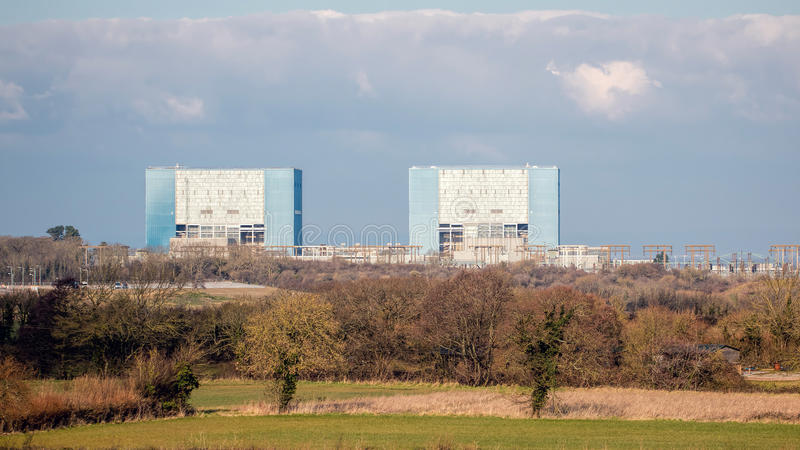
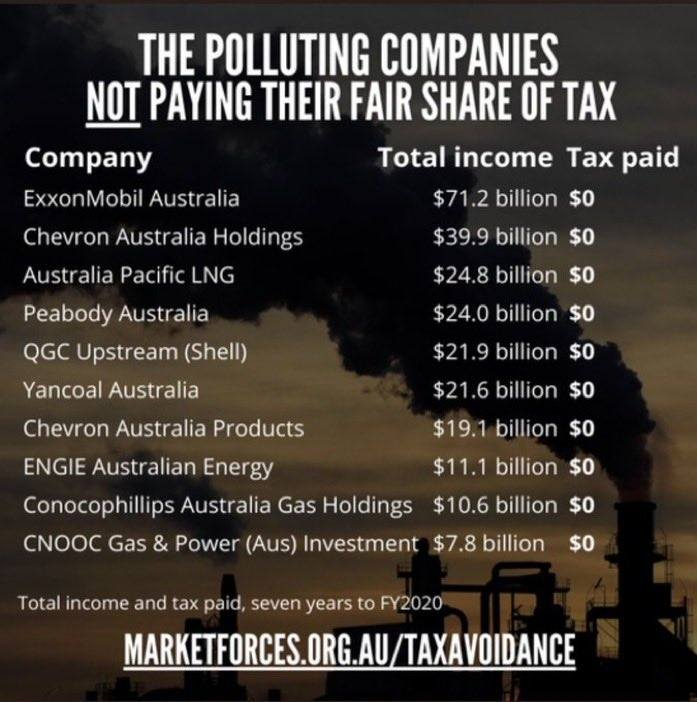
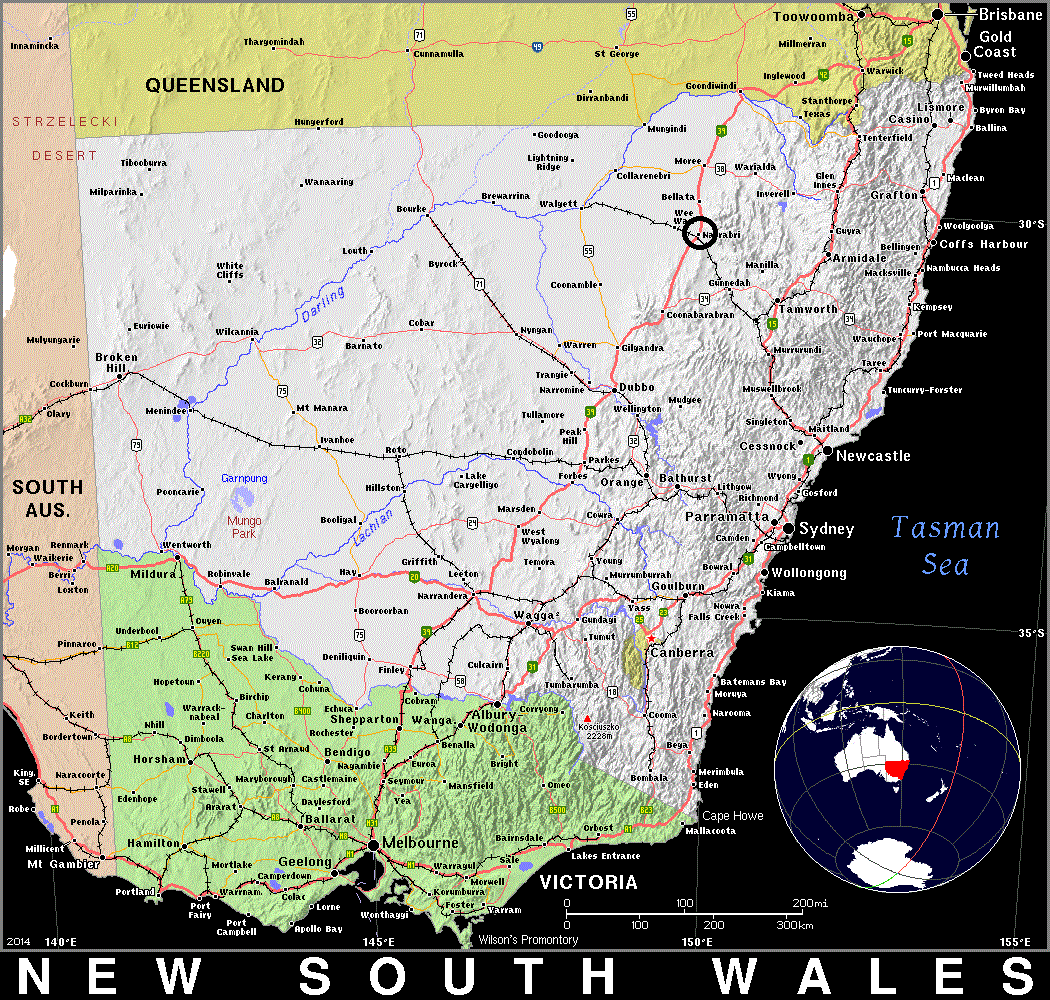
 Climate, technology and chaos Blog