The science is fairly clear. Some humans are causing massive environmental damage. One result is climate change, but there are many other harmful results which are exceedingly likely to be very bad for humans and others.
Part of the reason some humans are causing massive environmental damage is the way they dig for minerals, grow wood, grow food, pollute, fish, consume fossil fuels and energy, and so on. The way modern industrial society interacts with ‘nature’ is harmful to nature and eventually harmful to humans, as humans are part of nature and most depend on nature for food and water.
There is a feedback loop here. Some things that would be easily ‘recycled’ such as CO2 by vegetation, get less recycled as forests are cut down and ocean plankton poisoned, so they become more of a problem as we go along. CO2, for example, will trap heat which will desertify much land, produce droughts, and kill large numbers of plants. Other plants may grow more, but probably not enough to make up for the destruction – its complicated.
This harmful interaction of pollution and destruction occurs because of cheapness and power. Cheap extraction make higher profits in the short term, it also makes material ‘development’ easier.
Another more contentious reason, might be that high status people can indicate or producetheir status by their production of pollution (more air travel, bigger energy hungry cars, bigger homes, luxury yachts, more stuff bought from overseas, etc.), and often the pollution and destruction is channeled onto far less wealthy and powerful people, who have little chance of objecting.
Cheap extraction and pollution comes about because laws allow it. The people who benefit from the pollution and destruction, and who become wealthy or otherwise powerful, control the laws to make that the case, or make the penalties trivial in terms of profits. Some of them even argue that harmful pollution is good for you.
So destructiveness arises through politics and power, and attempts to curtail it also arise through politics (or occasionally through technological development).
Then there are the questions about what should be done to lower the destruction. Even if everyone benefitted immediately from lowering destruction and recognized this, people would still have different ideas about how to deal with the problems.
Another cause of problems is that economic, social and ecological systems are all complex systems, and hence difficult to predict in specific, hard to separate from other systems, and have so many interactions that we cannot observe them all, or understand them completely. It can be hard to formulate a policy which is not experimental (i.e. we learn how effective it is by implementing it).
However, the main problem seems to be that some groups seem to be trying to prevent discussion about what we should do to solve the problems, to prevent action that might reduce the problems, and sometimes to encourage what look to be fantasy solutions like carbon capture and storage. Some of those groups seem to be funded by people who might think they would loose on profit if the problems were corrected. For example, if we stop burning fossil fuels, that will have an effect on fossil fuel companies, and their continuing resistance to action seems pretty well documented.
So there are three main causes of politics around environmental problems, even when the science is well agreed:
Natural differences of opinion, probably based on political inclinations, about what to do;
the difficulty of completely understanding the systems we are trying to ‘heal’, and of knowing the exact results of actions in advance, and;
wealthy and powerful vested interests that don’t want to do anything to threaten their habits and wealth.
I’ve never been that fond of legitimacy as a concept, partly because it often seems too simple to deal with really complicated situations. The idea of delegitimation processes being mutually connected with legitimation processes, and shaping each other, improves the situation, but perhaps not enough.
Let’s look at some obvious points.
Legitimacy, complexity, process and struggle
Legitimacy is a social phenomena.
Hence Legitimacy is a complex phenomena:
It occurs in complex systems and is nearly always dynamic, and possibly unstable.
Complex systems tend to stay in equilibrium, but they can change rapidly, perhaps coming into new stable states, that may not be an improvement for all dwellers in the system.
Possibly small events can have large consequences, especially if repeated.
Unintended consequences are normal. Attempts to impose order generate chaos etc… What is thought to produce legitimacy for a thing/process may weaken its legitimacy. Legitimacy can be risked by enforcement. For example, enforcing fossil fuels destabilises the system, which may destabilise support for fossil fuels.
Producing legitimacy, or delegitimacy, is not just a matter of intention, but of mutually influencing factors and forces.
It can be hard to draw boundaries around legitimation struggles – they spill over into other ‘factors’ – such as cosmologies, customs, habits, politics, group relationships and identities, economics, ecologies, etc.
The course of what happens can depend significantly on the context – or supposed external factors and vice versa.
Sometimes with complex phenomena you have to proceed by listing the factors involved so you don’t forget important forces.
Legitimacy is not a noun or thing, it is more a descriptive adjective applied to a thing/process.
There are degrees of Legitimacy/illegitimacy which can be attributed to a thing/process. It is not just on or off.
The attribution of legitimacy involves a process, a struggle.
Legitimation struggles often imply de-legitimation struggles, as some other factors have to be delegitimated – the success of fossil fuels require renewables to be inadequate or hindered, and climate change to be exaggerated. Legitimacy and de legitimacy often come together and shape each other.
Institutions can be fractured and this can affect legitimacy. There can be legitimacy struggles within institutions.
Attribution of legitimacy may not be uniform in society, any more than ethical norms have to be uniform. These differences can drive legitimacy processes.
Legitimacy and Ethics
Legitimacy of a thing/process seems related to ethics in that establishing or demolishing Legitimacy often involves ethical arguments. It is possible that arguments over whether a thing/process is legitimate form a subset of ethical arguments, or that ethical arguments are a subset of legitimacy arguments. We could allege ethics is about the legitimacy of actions, thoughts, existence, relationships, behaviours etc…
Ethics is not only revealed in dispute, but ethical arguments can be irresolvable, so ethical disputes can end up being temporarily terminated by deployment of violence (preferably a violence with some support and acceptance [legitimacy], such as courts, law and police), or some kind of magical terminal category. I suspect the same is true of legitimacy arguments. When the violence is used or legitimacy asserted then it can risk being challenged.
Ethics seems to involve
Context – events and framings, what provokes the debate, how the events are understood.
Cosmology – how the world works and what ethics, or legitimacy/delegitimacy delivers.
Custom and habit – what is done gains ethical force, and ethical legitimacy, up to a point.
Doing what other people that a person identifies with, or whose category they are put into, may do… Do what others do.
Political relations between groups – social category theory makes predictions here
Justification or criticism of what people are doing. Often justification can apply to oneself and one’s group, and criciticism to those in outgroups. The aim can be to persuade people ‘you’ have behaved legitimately, or that ‘others’ have not.
Enforcement – ultimate resolution of debate by force, or threat of force, or punishment
Exclusion – of some people from ethical debate, by saying they are inadequate etc., eg it seems common to allege young children, slaves or people not of the same monotheistic religion, are not capable of ethics or of deciding whether a thing/process is legitimate.
These factors also appear to affect legitimacy: they can be called ‘framings’ or ‘contexts’ for the struggle.
Legitimacy/delegitimacy: Support, Acceptance, Indifference and Rejection for a thing/process
When we talk about the adjective of Legitimacy we may also be talking about several things, that compose it, apart from ethics.
For example: Active Support, Passive Support, Acceptance, Indifference, Reluctance, Active Hostility and Rejection (you can reject something without being actively hostile to it)
I propose to replace the single legitimation-delegitimation continuum, with two intersecting continuums:
Support – Rejection
Acceptance – Active Hostility
The central point can be called ‘Reluctance’ or Indifference
This graph allows us to specify that ‘legitimacy’ may involve acceptance and indifference, as much as it involves support. The graph could help prevent people from thinking legitimacy is just one thing. We could guesstimate plotting places for various different groups, to give some idea of the social complexity around a thing/processes’ legitimacy levels, and investigate (and possibly predict) what alliances are possible.
It also suggests a range of paths of transition towards support or towards rejection. Some of this can involve belief about legitimacy, but some of it does not – it may involve a disposition or a set of habits.
Indifference does not have to be on the path to rejection or support. Indifference can theoretically translate into either tacit acceptance or tacit rejection, so it may be less useful to replace this with a single continuum of Support / acceptance / indifference / rejection.
We realise that cumulative small events can trigger instability in the legitimation system, and alter it significantly. The question may be to find those causes of equilibrium stress.
The point here is not to present something entirely accurate, but something better, that hopefully points in more useful directions for this area of study, which allows us to ask better questions.
This is part of the Change in Legitimacy in Australia argument, but got a bit too long for that. It at pretty low level of analysis. But the point appears to be that the context of legitimacy struggles in Narrabri, and Australia generally, are changing for business. The Business Council of Australia, after a long period of climate action refusal, has issued two booklets on business climate action Achieving a Net Zero Economy and Sunshot: Australia’s opportunity to create 395,000 clean export jobs. The first is described as:
a blueprint to achieve net-zero emissions and position Australia to reap an economic dividend of $890 billion and 195,000 jobs over the next 50 years….
“We believe Australia can achieve a more ambitious 2030 emissions reduction target of between 46 to 50 per cent below 2005 levels.
This is a major change, and challenges the Federal Government’s (and the Opposition’s) lack of 2030 targets. However, in the official blueprint they point out how important fossil fuels are for exports, and still have about 20% of total energy production coming from fossil fuels by 2070 [1] p.33. So to achieve net zero, the plan needs a lot of new and working offsets or working CCS which seems improbable. It would appear they are ignoring carbon budgets, or hoping accounting can balance real emissions. The Business Council has also announced support for the NSW Government targets and their:
detailed, investment driven plan that accelerates the deployment of proven, commercial technologies to reach this ambitious goal…
Regional NSW is set to be a net beneficiary from the more ambitious target as the plan delivers renewable energy zones and hydrogen hubs to boost green manufacturing in regional centres
Narrabri is not in a Renewable Energy Zone, but that might be an opportunity, as it is not constrained or as open to corporate takeover. The Business Council is, not surprisingly, not a promotor of community energy or cooperative energy. Finally, in the second booklet, they argue that:
Australia could create 395,000 new jobs and generate $89 billion in new trade by 2040 through investment in clean energy exports….
[Australia needs] a new energy transition authority with representatives from government, industry and unions to manage the disruption to regional economies and workers dependent on carbon-intensive industries
This is also pretty surprising, as the Business Council is not normally in favour of unions anywhere, and it is talking about ‘transition’. As the Australian Financial Review remarked:
As absolutely no one has failed to notice, this shift in economic analysis comes three years after it labelled a slightly more modest proposal from the Labor Party as “economy-wrecking”.
On Sky News Jennifer Westacott, chief executive Business Council of Australia explained the change:
The facts have changed…. three years ago energy prices were going through the roof and now they’ve stabilised..
Secondly, the markets have moved, over 50 per cent of the ASX is committed to net zero targets. Businesses are moving dramatically. You’ve got giant companies like BP and Shell committing to net zero. You’ve got companies like Fortescue Metals, you’ve got Rio Tinto, BHP, BlueScope – all reducing their emissions at a really rapid pace.
[Thirdly] three years ago, the US had pulled out of Paris, and now they back in but they’re back in with a higher target. Japan has got a higher target. Canada has got a higher target. And we have always said you’ve got to calibrate with what the rest of the world is doing.
We’ve now got a technology roadmap [cf here; comment here] we didn’t have one of those before.
[The BCA supports] the safeguard mechanism… it’s a clever mechanism, it puts a cap on emissions. And we’re saying, we agree with the government, you’ve got to do this through technology.
our plan is basically saying; use the government’s existing mechanism to drive those new technologies, to bring forward the early action. The safeguard mechanism which has been well-used by business now, well-respected mechanism. That’s the government’s mechanism. And the point is, if we want to get this done through technology and we don’t send some kind of signal or take too long, if we take too long we add a lot of risk later on.
I’m not sure if Westacott is implying that if the US retreats from targets or COP fails then they will also retreat from targets, basically the justification seems to be everyone is doing it, we emulate these people, and acting is pragmatic. Behind this, probably lurks the fear of importing countries penalising Australia for inadequate targets or policies through rules such as carbon tariffs [2] [3], [4], [5], [6].
Clearly one rhetorical technique is to praise the government here, and align the Council’s apparently radically different policy with “business as usual”. The “safeguard mechanism,” also known as the Emissions Reduction Fund mentioned above, seems to be a voluntary mechanism for large operators, to pledge to reduce emissions from a “baseline”, and receive a taxpayer funded subsidy to do so. If they go the wrong way and exceed the baseline, they can apply for more time, a change in the baseline, or an exemption. Even an official government website says:
This significant level of flexibility which allows baselines (or GHG emissions limits) to be readily adjusted has led some critics to question the effectiveness of the safeguard mechanism and whether it will achieve its aim of ensuring that emissions reductions purchased through the ERF are not displaced by rising emissions elsewhere. The same critics claim that the safeguard mechanism ‘gives the green light’ to increase greenhouse emissions to some enterprises.
It still indicates context is changing – whether the change is reinforced or not by the actions of others, is another question.
More
A few days later the ‘Climate Leaders Coalition‘ a board linking 32 major Australian companies including BHP, Coles, CBA, Citibank, Deloitte, Fortesque Metals, Microsoft, Qantas, Rio Tinto, and Santos, claiming a total revenue of $305 billion released a document entitled Roadmap to 2030: Shifting to a Low Carbon Future. This also indicates significant change. However, again they fall into the problem of methane fuels, and allowing gas companies to pretend that storing CO2 at the point of production somehow will act as an offset and reduce emissions from gas burning – which of course it will not (cf p.43). Any gas being burnt without the CO2 from the burning being caught and stored or used, is contributing greenhouse gas emissions, especially if coal is not being shut down. This seems to be in conflict with earlier principles they elaborate.
Legitimacy is an awkward subject, because it does not exist by itself, it exists in a series of potentially shifting cosmologies, customs, relationships, contexts and struggles. Legitimacy exists within complex systems, with all of the problems involved in analysing those systems.
Legitimacy is not really a noun or a thing in itself (that usage leads to significant problems), it is a descriptor – some thing, practice, process, institution, custom, series of events or group of people (henceforth abridged as ‘thing/process’), has gained some kind of ‘legitimacy’ somehow or other, and that legitimacy probably varies throughout society, throughout different groups, and probably has to be maintained in someway.
Early studies on legitimacy tended to focus on powerful organisations such as the State. In this case legitimacy essentially meant the ‘right’, or ‘rightness’ of dominant people to be accepted in their dominance. This implies that legitimacy is a moral or political question, inherently associated with ethics – in the west of rights, or of God’s will. The democratic move of the early 17th Century was based on the idea that at least some of the ‘ordinary people’ being governed should have to consent to the governing for it to be legitimate. David Hume, went as far as to imply the fact that the governing existed meant there was some consent, even if there was only the consent of fear and imagination, otherwise no one would follow the instructions, and the thing/process would fall apart. The consent of imagining implies some precarity in the legitimacy of any institution, thing/process etc.
A thing/process’s legitimacy may not always have an on/off switch, and may only rarely be agreed to by 100% of the affected population; as such it always carries the possibility of contestation. We may need to recognise that what we call a thing/processes’ legitimacy can always be partial. Perhaps this can be indicated by using some more complicated term like ‘degrees of legitimacy’, or ‘ratios of legitimacy,’ even if these degrees may be impossible to measure.
More recently, a thing/processes’ legitimacy has been perceived as form of ethical/political struggle in which a process, thing, or series of events, is made ‘legitimate’ in the sense it has (enough) significant support, or lack of hostility, which allows it to function. The support, lack of significant hostility, or acceptance, seems important.
It is possible that a group’s legitimacy to rule, may not be agreed to, by the vast majority of the population, but the group claiming legitimacy holds effective violence or is ‘supported by’ social inertia – people can’t be bothered to get rid of them, or the authority is perceived as irrelevant in most cases. The authority of the dominant group does not necessarily rely on a positive belief about that group, or even that something is so, for most people. The claim of legitimacy may be a claim that tries to make a belief in legitimacy, but is ignored. Legitimacy may only matter when it is challenged.
People can adapt to events (reluctantly), rather than overtly resist them, so these events may again have little ‘legitimacy’ (in the sense the term is usually used) for many people. The thing/process is an expected order rather than an accepted or supported order. Legitimacy might then appear to be habits, or simply ‘imagined order,’ even if the promised order is yet to arrive, as with communist or capitalist utopias.
That could mean the process has tacit acceptance to a degree. Analysists might try to remove tacit acceptance from questions of legitimacy, but that is reducing the complexities, and factors around the struggle. I’m suggesting that we recognise those variations, and avoid the idea that the legitimacy of something is a positive belief about that something, but more a lack of effective challenge at the moment, or a relative confidence the thing/process cannot be challenged usefully. Defining legitimacy as a belief that something is legitimate is not very helpful, (I’m not even sure legitimacy is a concept widely used outside of sociology and politics) but it might be possible to say more if we think of it as depending on many factors some of which may be beliefs and some of which are not. Another way of expressing this might be to state an organisation has a high degree of legitimacy if there is no obvious or effective deligitimation.
Finally, institutions and processes etc. can become sites of power struggles and conflict themselves; they do not have to be uniform, or simply an abject tool of one class alone. Culture, information and ‘legitimacy’ does not have to be uniform within organisation, and this lack of uniformity can imply gaps of comprehension within that organisation, the generation of fantasies to explain the gaps and recognises some of the dynamics of change, not only because of internal conflict, but because of the possibility that external actors can insert themselves into the struggle.
While it may be useful to separate out legitimation and delegitimation practices into ‘discursive’ (spoken and written), institutional, and behavioural as do Bäckstrand & Söderbaum 2018, the reality is that these cannot be separated. Discourse practices are behavioural, and institutional; institutional practices are discusive and behavioural and so on. Behaviour is also a huge term, including regular customs and habits, violence, emulation, acting relationships etc….
Legitimacy, Ethics, Delegitimation
Legitimating of a thing/process, like ethics, involves a struggle to appear persuasive, right, virtuous, inevitable, effective and so on. Like ethics it affects, and is affected by: cosmology (whether it fits with the supposed working of the universe); is a familiar or established custom (that fits in with the cosmos or not); copying valued others; whether it allows whatever is considered ‘normal politics,’ and the supposedly ‘real’ relationships between groups to function – the strongest dictatorship is not without internal politics. Likewise the context of the debate is important to give it meaning, or limit the range of possibilities. Legitimacy can also be enforced by power relations, by law as a symbol of power relations, and sometimes by violence or threat; To establish legitimacy, powerful people may try to render other plausible actions illegitimate, they will certainly exclude some people from real power. Although, if an organisation’s legitimacy appears to depend only on violence, it may also, in some circumstances, appear illegitimate. Like many other processes, what is used to attain it, can also undermine it. However, domination can appear legitimate, if it survives long enough. Yet again, if a group is growing in power, the systems that ignored it or held it down, may look increasingly illegitimate to that group and others, or the groups can be deceived and pull things down in a way that further disempowers them. Like ethics a change in context can change a thing/process’s legitimacy for some people.
To repeat, the existence of ethical positions in a society, does not imply uniform norms throughout society and so we cannot appeal to these overarching norms as explanations for legitimating activity or degrees of legitimacy. Likewise ethics do not assume everyone has the same beliefs. That some thing/process is present and accepted, may create any widespread norms, rather than be justified by them.
The recognition of, or achievement of, the appearance of degrees of legitimacy by a thing/process, implies the possibility that it’s legitimacy may be challenged. Further, some of those degrees of legitimacy are risked every time it is pushed, stretched or fails, or it could be open to destabilisation, from either (random?) ‘internal’ or ‘external’ events. Motion is not an addition to a ‘normal’ stasis or equilibrium. Processes are always in flux, and always have the potential to be self-undermining.
Legitimating activity may depend on ‘something’ else being declared illegitimate or unfavourable. There may be no binary, or dialectic here, with processes simply being either legitimate or illegitimate; they may have both characteristics in different degrees for different parts of society – making appeals to different groups. We may need to think of (de)legitimisation processes as intertwined and shape each other (Bäckstrand & Söderbaum 2018, Uhlin 2019), while recognising what it is that appears legitimating for one group may appear delegitimating for another.
The possibility of ‘de-legitimation’ comes with legitimation itself, just as the possibility of ‘mis’, or ‘dis’ information comes with ‘information.’ Legitimising and delegitimising agency may be anywhere in society, although clearly the greater the power, wealth and control of information, the more likely the agency will have effect up to a point – that is that the powerful people making the legitmation case, are themselves considered legitimate, or they do not understand that the arguments they think are persuasive actually delegitimate themselves in the eyes of their audience. Legitimation and de-legitimation struggles seem likely to shape each other, as legitimacy of a thing/process implies something else is not as legitimate.
Social Category theory
Social Category theory suggest that the social groups associated with thing/processes can be categorised in ways which help legitimation and delegitimation practices. These groups are classified in relationship to other groups people identify with or against. This schema is based on Bar-Tal 2004, with a few other practices added. The point is that legitimacy and illegitimacy can be generated by separating people into opposed categories.
Legitimaton (identification with)
***
Delegitmation (identification against)
The people tied in with this thing/process are just like us in many ways. They are individuals and people.
The people tied in are inhuman or subhuman, they are completely unlike us. They are all the same. They are not really people.
What we consider positive traits are attributed to the group, if possible as essential parts of their being
What we consider negative traits are attributed to the group, as essential features of their being
The people tied in with this thing/process support our group’s norms and customs
They violate our group’s norms and customs
We class them with other groups we feel positively towards. We are roughly equal partners.
We class them with groups we feel negatively towards. We have little in common.
We have shared history and shared struggles, supporting each other
We have a bad, or conflictual, history.
They support us, or work with us, or for us. We defend each other against others.
They are persecutors. They use violence or deceit against us.
We rightfully exclude similar people who oppose us
They wrongfully exclude us.
Raise ‘positive emotions’, warm feelings
Raise ‘negative emotions’ anger, digust etc.
They fit in with our cosmology
They attack or disrupt our cosmology
Golden politics most of the time – things are going in the right direction, everything will be well
It is easy to use Shadow Politics against them
Once this process of separation and opposition, gets going, it maintains and intensifies a context of lack of discussion and mutual attack, which magnifies the ill feelings the groups have towards each other – this can then be magnified by media – which gives people a shared experience of attack and name calling.
Institutions
Institutions are social groupings, composed of social groups, with specific kinds of tasks. Institutions often, but not always, help group people together while excluding others. They support particular behavioural practices – not necessarily for everyone equally. As such they provide some ground for the behaviour which needs justification and thus produce ethical ‘systems’ (systems here does not imply the ethics has to be systematic. Institutions also provide targets, if people can be persuaded that their ethical/behavioural system is not ethical, or they do non-acceptable things, and they are too weak to respond, or they over-respond, then they have degrees of illegitimacy. I’ve already suggested institutions do not have to be places of harmony, they can be places of struggle in themselves – this can make make them legitimate as people can see their interests represented, but it can also make them appear vulnerable, or incoherent. To the extent that institutions issue guidelines, they can also dismantle guidelines. Institutions which focus too much on internal conflicts or the acquisition of internal benefits can be very bad at adapting to changes in the ‘external world’ and thus delegitimate themselves through failure to win people over, or through practices which have become destructive.
Example: Delegitimising US Government
Legitimacy of a process (etc.) can be precarious and subject to quite rapid change. It was probably inconceivable, 2 years ago, that US election results would be widely disbelieved in the US, with the concurrent assumption that not only was the election illegitimate, but the Presidential results, and hence the Presidency, are also illegitimate. This suggests relatively high degree of legitimacy can be broken by political struggle. How broken it is, we cannot know in advance, and still do not know, but it is not looking good.
Increasing the degree of legitimacy of Trump’s claims requires the delegitimating of Biden, his party and the electoral system, while delegitimating Trump only require delegitimating him and his party, so the shock of delegitimation is even greater. But the struggle involves a lot of delegitimating of both ‘sides’, which adds to the legitimacy problems of the system, and hence reinforces the Republican position.
Supporters of the ex-president, assert both a) the moral superiority of Donald Trump over the ethical integrity, or legitimacy, of the whole electoral system, and b) their victimhood to the established system which therefore has to be challenged. To those on ‘any other side’ such an assertion seems ridiculous, but it clearly appears likely to be accepted by a significantly large number of voters in the US and elsewhere, and almost certainly cannot be ignored with impunity.
In my experience, social categories worked pretty much as we me might expect. Democrats and Republicans rendered each other subhuman with attributes like: stupid, can’t think for themselves, easily deceived by their media, hypocritical, oppressive, selfish, sneaky, anti-American, all the same, riotous, oppressive, destructive and criminal. On top of that Republicans classed Democrats as communists and fascists, and Democrats classified Republicans as fascist. Discrediting all the people involved discredited anything the others did, and the system involved – the electoral system was seen by many Republicans as part of the Democrat machine, with the characteristics they associated with that machine. In this view, nothing was independent. You were either for them or against them.
Mutual participation does not mean both sides are equally to blame for the situation, but it does mean they are participating in the system of collapse, and helping to intensify the separation.
The events also shows that evidence, and argument do not have to be coherent, or detailed, (especially when the category moves are in play) for them to have an effect in some circumstances. The overwhelming, and growing, affective truth of the feeling that ordinary people in the US have little input into their government (are victims of the system), threatens the legitimacy of governance processes – the fact that Trump is called out as illegitimate, may only add to the effectiveness of his claims, as he is being pronounced illegitimate by a system which is losing legitimacy – and is felt to be oppressive which, in turn, delegitimises that governance in terms of US cosmology.
The context of the power struggles over government in the US has also changed over the last 20 years.
Corporations have become more dominant (because of wealth appropriation, and legal rulings magnifying corporate rights and political purchase) and ‘ordinary people’ have become more excluded through that extension of dominance producing a kind of ‘distant dominance‘.
Governments have repeatedly failed to solve the growing problems of life, or include people in the governing process.
One party has consistently argued that governments cannot do anything useful and everything should be left to business and The Market, reinforcing the above two points, increasing corporate power and decreasing governmental competence or ability to reach out to the people.
The information ecology has changed radically, meaning it is harder to create community unanimity. It is also easier to manipulate people, create antagonistic information groups fueled by anger against ‘the others’, to keep revitalising positions with little real validity, and to add unspecified power to allegations the internet was involved in the fraud.
The economy, life and ecology have also become more precarious, partly because of corporate dominance and the pursuit of destructive methods of producing order and power.
All these changes in context, threaten established habits, customs ways of life, and the sustainability of the dominance which has created these conditions. This change possibly renders even extremely mild challenges to corporate power, like Joe Biden and the Democrats, something that has to be de-legitimized to keep that power going. So powerful people throw their weight behind it, sure of their ability to ride the waves, something which they probably would not have been risked even 20 years ago…
Not only is the power struggle different, but the implied rules around what is permissible in power struggles have changed, and the context of struggles have changed. Results granting Presidency to one party have become delegitimised, and perhaps the whole system will come to share that fate.
This is a risky game for the Republicans, as their own legitimacy is challenged in the process but, from my position, it seems plausible to assert that when they win, which they almost certainly will through stacked elections, vote prevention and threats to those who proclaim results they don’t want, they will attempt to enforce legitimacy through violence, threat and law (engaging in shadow politics), while proclaiming this violence is supporting liberty for their followers. This will probably render the system even more doomed, as it will suppress responses to real challenges, or even the recognition of real challenges.
Legitimation/Delegitimation Struggles and the Fossil fuel Industry
A similar dynamics could apply to fossil fuels. Their legitimacy is not only dependent upon a perceived need for cheap customary energy and exports, but upon the dominance of parts of the corporate sector, and a degree of ‘invisible violence’ – ignoring court decisions when appropriate, changing the law to allow continuance, changing regulation to make alternatives difficult, poisoning locals, disrupting or destroying ecologies, increased penalties for protest etc.. This legitimacy could theoretically slide as quickly as that of US elections, although established dominance is probably largely on the side of fossil fuels and profit at any cost. However, the gorwing explicitness of this siding may undermine the appearance of legitimacy, and other corporations may wonder about their survival and change sides on this issue, as with the Business Council of Australia recently going for emissions targets that 2 years ago it said would destroy the economy. Whether the announced change of the Murdoch Empire’s position in Australia is real, a smokescreen, or an attempt to minimise action, will be seen with time, as was their last supposed change.
One of my colleagues, pointed out that delegitimation is part of the process of change, not just when climate change, pollution or health issues, are used to delegitimate coal and gas in Australia, but in India. sometimes people will come in to villages to attempt, actively, to de-legitimise old modes of life, as when Indian villagers are told not to use cowpats as fuel. Unintended consequences may be generated (what happens with the cowpats, now?), which then become part of the process, and disrupt it.
To reiterate, legitimate/illegitimate does not have to be an exclusive binary. Coal can appear to be part of the expected order and to disrupt that order, and it is this ‘paradox’ that allows questioning to be generated. Going off coal will likely disrupt the expected order and legitimate order for some people. Saying, to those people, we have to change our lives and get off coal, merely proves this disruption to those people.
Legitimacy can also cause people to ignore vital factors. For example, renewable energy is absolutely necessary for transition away from a destructive system, but where do we get the energy to produce all the renewables we need on top of the energy we need to continue life as it is?
We can only survive, should that be an ethical goal, if we reduce energy usage considerably and quickly.
The Next part of this series discusses legitimation issues for Fossil Fuels in Narrabri, a country town in NSW.
I shall argue that ethical questions are vital but fundamentally irresolvable and so the questions become:
How do people build and reinforce an ethical system?
How does, or to what extent does, that system affect human life?
How can we change social ethics?
Social importance of ethics
Let me posit that humans like to be regarded by themselves and others, if possible, as ‘good people’ no matter how ‘good’ is socially defined. A Viking’s idea of what makes a good person, might be radically different to that of Mother Teresa’s, and ideas of goodness might differ in a society with a person’s gender, social role, age and so on. There may be no coherent set of ethical positions across different groups in a society. However, being recognised as socially ‘good’ by some others, often builds status, privilege, trust, influence and sometimes power. Being recognised as ‘not-good’ may increase distrust, fear, the threat of exile and so on.
Sometimes what is socially good, is built up in opposition to a supposed mainstream – thus a ‘good’ criminal (as defined by others), might see themselves as tough, competent and clever, despite the mainstream seeing them as bad. Perhaps they claim to see the reality of human life, while other people are hypocrites.
Arguments about politics, decisions about courses to choose in life, seem frequently underlined by claims that the decisions and positions involve ethics. Even if people can be accused of hypocrisy, they are still making some kind of ethical decision, deciding that the decision they make is the best one, that it is a decision they should be able to live with. So we can still suggest they are being ethical, simply that they perhaps do not expect others to approve.
Ethics is complicated, and hard to demarcate, and understanding ethics seems complexified by several factors such as its lack of a non ethical basis, its connections to cosmology, its connections to group identity and politics, its connection to custom and habit, and finally (but permeating everything) its connection to context.
Lack of basis for ethics
Firstly, it seems there is no basis for ethics which is not an ethical statement which foreshadows the ethical argument that will proceed from it. In general ethical arguments do not have appeal across different forms of ethical arguments, and there seems no way to avoid this problem, despite the apparent importance of ethics for human identity.
For example, if we say it is good to behave in the same way in all situations (the so called “categorical imperative”), that itself is an ethical statement, which can be denied by other ethical arguments such as the assertion that it is our duty to behave with respect to the situation in its particulars, and not suppress those particulars in the general (what is sometimes called “situational ethics”). I would suggest we almost always categorise human events as situations similar to others, because of our intentions. We may want to classify an event as ‘bad’ or ‘excusable’ because of circumstances and context for example – is a killing murder, self defense, occurring in war, ‘crime of passion’, provoked, accidental etc…
Even something as apparently straightforward as acting to preserve the survival of as many people as possible, is already an ethical decision. Other ethical systems could suggest that humans do not necessarily deserve to survive, or that the population (usually of other people) should be culled, or that only elites, or true believers, like us (whoever we are) deserve to survive, that survival should be determined by contest, or that or that material survival (as opposed to gaining spiritual wisdom) is unimportant, and so on.
There is no necessary agreed on basis from which to argue ethics, so ethical questions are always irresolvable, although groups who share similar ethical orientations may agree on the general principles.
If groups do not share some symbolic ethical orientation, then there appears no obvious basis on which different ethical positions can be resolved, other than by different groups resolving to live together irrespective of this difference, different groups splitting or hiding, or uniformity being imposed perhaps by total control of information or through violence. And these resolution positions may also be said to be ethical positions.
We might suggest that ethics is itself revealed in argument over what should be done, and what has been done.
I will argue that to study ethics in action and the way it is built, reinforced and changed, we have to look at the following kinds of factors, all of which help resolve or limit the undecidability of ethics:
Cosmologies (the way people and reality works),
Established customs or habits – what people do regularly and publicly is supposed to be good. on the other hand changes in custom or habit may make new habits become ethically good
Group identities and relations to other groups. A good member of a group appears to express group values.
The way group boundaries are constructed and the group is positioned in relationship to other groups.
Contest and power relations – the other group is always bad, what we do is good, or at least acceptable in the context.
Dominance can become a custom which justifies the nature of the dominance. If wealthy people dominate then wealth marks virtue. If religious people dominate that piety marks virtue. If warriors dominate then boldness in combat marks virtue, and so on.
Context, the surrounding events may well alter ethical judgement and decision making. Cosmologies, etc can be considered to be contexts
Ethics and cosmology
Ethics always states something about a person’s cosmology. By ‘cosmology’, I refer to the ways that a person or group, thinks (theorises) that people and the world or cosmos actually work, or the ways that people have to live to survive. Good behaviour should generate ‘good’ results (however they are defined), because that is how things are – even if the good results may manifest after we die. Thus if you think that obeying the written instructions of a God is the basis of ethics, that says something about your cosmology and the way you expect behaviours to be rewarded. If you think that behaving ethically will bring happiness, you may aim to increase happiness, in the way you think that works. If you think the world is a place of endless struggle, then you will probably participate in, and train for, that struggle.
There is, for example, some evidence that believing in neoclassical capitalist economics is correlated with more selfish behaviour. Which way the causality flows is uncertain (believing in classical economics generates selfish behaviour, and selfish behaviour reinforces a belief in those forms of economic theory), but it may form a positive feedback loop. The behaviour and cosmology reinforce each other.
Sometimes behaviour and cosmology may not appear to reinforce each other, but they still set off a particular ethical dynamic. For example may believe that God is both love and an eternal torturer, this may set off a dynamic of using torture and violence to express your love and concern – which may drive guilt which drives more torture and less love, and so on. Perhaps people eventually came to think that this message was inconsistent and this helped drive the decline in Christian dominance?
Custom and habit
Anthropologists who studied traditional people often expressed surprise, when they asked the people “why do you do this?” and received the answer “because we have always done it,” or “our ancestors did this.”
The point is that if some process is familiar it can seem that that is the way of the universe, or the way things work, or are. You may not like it (individually), but most people will go along with it, because that is how the world is, and perhaps little thinking seems required. Custom and habit suggest ethical acceptance, or else they might change. They reinforce cosmologies. If it is the custom to sacrifice your first born to the gods, then while you might have personal doubts, most other people in your group will support the action, and will probably try to make you perform it – perhaps to avoid the anger of the god. If it is necessary to find a job to survive, then getting a job will seem moral. If it is customary for the Aristocracy, or the wealthy, to rule, and they seem relatively good at ruling, then it will seem good that they rule. If people get married as a mark of maturity, people may seek to get married. If a society and its habits had depended on fossil fuels for a long while, it could seem immoral to try and change, and to risk those habits that have grown up around that technology – new habits might seem impractical, unpragmatic or just wrong.
A change in habit can produce challenges to cosmologies…
Ethics politics and difference
Ethics is always political and revealed in conflict, disagreement and argument. Politics usually involves some kind of ethical appeal, even if the appeal appears pragmatic, because in some views ethics is primarily pragmatic, but what is pragmatic is also an ethical decision. Whether it is ethical to run a country either by increasing corporate profit, benefitting the people materially, or keep the ecology functional, is a matter of ethics. People often justify what they want to do by an appeal to ethics, cosmology or politics.
As political, ethics can be perceived to be part of the social relations of differences between groups and their social categories and identities. This is a context in which ethics works, and social identities are constructed. Identities often come with ethical positions, in which it is implied that exemplary members of the category will behave in particular ways, and exhibit particular virtues. One obvious basis for ethics, is that everyone we respect in our group is doing it, so we had better do it. This seems to work because of the lack of a basis for ethics
People’s ethical judgment of the behaviour of people on ‘their side’ is often more lenient, and trustful, than it is towards people on a socially defined other side. A person who seems to be a good exemplar of the groups you identify with, will probably seem to be virtuous. A person who seems to exemplify, to you, the groups you oppose, will probably seem non-virtuous, or more prone to corruption and evil. Likewise, people can justify their group’s narrow political interests while claiming it is for the greater good, or the good of all. People seem to more easily see the bad in another group than in their own, or even invent that bad in the others through some kind of shadow projection. Social categories are important for ethics. Mistreating, or ‘mastering,’ some people of certain social categories may be a requirement of virtue
The way the boundaries between groups and social categories is constructed is also important, because empathy and concern is also strong between people who are defined as similar, and who can be put into a wider category. This is similar to the ways that Benedict Anderson suggested that Nations where constructed out of popular media; the media grouped people together as worthy of concern, as sharing the same stories and the same identity, so that distance was relatively unimportant. In this case, different people were constructed as different, but still belonging to the wider notion of the nature, and for some people of humanity. However, categories can be constructed as opposed, in which case the connecting empathy may be significantly weakened, or even broken all together. We can see something like this happening in the US. Once not that long ago, people who identified as Republican or Democrat could see each other as different, but also as fellow Americans who worked together for their country and who could co-operate for the greater good. That stage now seems over. Republicans see Democrats as evil hypocrites, and Democrats see Republicans as conniving and stupid people who deny reality. There has been almost no co-operation between the parties, except for a co-operation in name calling, hostility and building polarities, for the last 12 or so years.
As a result, the US is probably in danger of falling apart, or falling into decay. There is no common story and identity group cosmologies are growing apart. The split is driven by ethics, ethical identity and group relations, and seems to be becoming a custom or habit, and hence part of practical cosmology.
Context and Framings
We can define ‘context’ as the events around (or ‘framing’) a specific event, or which the event is embedded within. Changes in context changes the meaning of an event, just as a different context can change the meaning of a text, or anything else. Framings can be conscious or unconscious. Using the term ‘framing’ is meant to suggest that the context of an event, does not have to be ‘real’ – people can bring their own framings to an event, and different groups may have different framings, so they perceive and interpret what is happening quite differently. Cosmologies can provide context. Wide scale, or local, politics can provide context. Ecologies can provide context.
If the context involves charged relationships between particular groups such as a challenge to authority, then the condemnation of a person in the opposed group might intensify and the defense of a person in a supported group might also intensify. In a war, the side committing war crimes will probably ignore them, or defend them as honorable, or aberrations. If a custom is breaking down, then those who offend against it may be excuses or more severely condemned, depending on other parts of the context. If a cosmology changes enough then it may provide a context in which the old ethics does not appear to work or make sense. In the case I will eventually get around to studying, one important context is the relationship of Governments to fossil fuel companies – this governs a lot of what is easy to happen, and what is difficult to happen
It appears to me that the somewhat precarious role of coal at the present, because of climate change (a change in context and cosmology), has not yet rendered fossil fuels completely bad, but it does seem to render other people’s coal bad, and our coal ok – it is cleaner or something.
This is one reason why it seems important to fossil fuel companies to deny climate change, deny human responsibility for climate change, find a model of the world in which burning fossil fuels is not harmful, or fantasise about technologies which would fix the problem, but don’t exist yet.
The problems of socially defining and enforcing Justice (which is an ethical position), particularly across culture and rivalrous nations, may make climate justice arguments ineffective in promoting climate action.
Conclusion
This suggests that ethics arises in making (or justifying) decisions, in conflict over those decisions, in supporting or criticising established behaviours, and within power relations. So ethics enters into human life and politics almost immediately. A wide view of ethics could easily suggest it is central to human life and to human identity.
All of the arguments above means that ethical argument may not be persuasive to others, unless you use their form of ethics and are a member of their social group, and perhaps not even then. In general there seems little to resolve ethical struggle, between people with different ethics and different ethical identities, other than violence, threat of violence, exclusion of people from discussion, or apathy.
However, ethics, in practice, seems more social, contextual and political than absolute. It may be that pointing out the incoherence, or changing the contexts, customs and cosmologies of ethics, or perhaps pointing to exemplary people in the group being targeted who are slightly closer to the desired position, is more significant than attacking the basis of the ethics.
This is another conclusion to the last post, hopefully summarising it.
Please remember I have no particular credibility, so this is simply advice that may or may not be useful to you.
I also apologise for being a more hectoring than is probably necessary, so just ignore that if you can… and see whether anything is worthwhile.
It seems that in the crises we face, both business and state are implicated, so we have to work at the levels we can work at, and not hope that someone else will solve problems for us.
What to do in a crisis, personal or social
1 Recognise and accept the problems
This can be difficult. and may require patience. If you really accepted the problems then you might be dealing with them already.
You may have developed social and psychological defences against the problems, or be trying to persuade yourself the problems are not real.
You might recognise some problems and deny others. No one is perfect.
If lots of people identify a problem, there may be something in it.
You may be frightened of the problems. Accept the fear and the problem.
Blame, especially angry blame, is usually a defence, aimed at making you feel innocent and better.
It is probably the system that is at fault not individuals.
Problematic systems interact. Those interactions can be reinforcing of the problem, or possibly, opposing/balancing the problem.
In a complex system, there may be people at fault, and that may include you, but this means that you can possibly make a helpful change wherever you are.
2 Taking responsibility
Take responsibility for what you can do and for recognising the problems you, and others, face. That’s all.
That the problems are systemic does not mean you can do nothing.
Every small improvement counts
If you are the CEO of a heavily polluting company you have more responsibility for what that company does, and more capacity to act, than does a worker. This does not mean that you won’t face significant opposition. But you may have any easier option to make things a bit better.
Team up with others to make a greater difference, and to support each other.
Have some self compassion for failure. You probably will fail some of the time, perhaps most of the time.
Beware of acts which can diminish your responsibility, such as angry blame.
Don’t be afraid of experiment – but check its unlikely to harm others – look for what is happening as a result of the experiment.
You don’t know how much improvement a situation can tolerate until you try.
3 Keeping what works
Identify what what works ‘well enough’ in your life
Build on that.
When you team up with others, also recognise what is working in that team up, and for other people.
Learn from each other. Everyone has slightly different experiences and understandings.
However, sometimes what worked, can now form an obstacle to further progress. Does it need to be abandoned or modified?
It may be worth trying to take back the State, but this seems difficult in the extreme. It is probably best to work one seat at a time, in areas you can affect.
Final comments
It is up to us. In one sense, there is no one else available, although the crises need many of us. This means we have to look after ourselves, and not flog ourselves to death. Humans need rest. They need breaks. They need enjoyment, as well as dedication.
Final point. It is normal for plans not to work out, or for actions to have unexpected consequences. This is not a matter for blame but for learning. No matter how nice an idea sounds, it may not work in the real world, and we often learn by doing.
The Australian media has almost been falling over itself to note that US House Speaker Nancy Pelosi has praised Scott Morrison on Australia’s climate action. The Sydney Morning Herald which is usually denounced by the Murdoch Empire as far left, had the following headlines.
Saying, “Absolutely no one expected Nancy Pelosi to stand there and say Scott Morrison has been a leader on climate change” predicting “some kind of deal made while he was here”
This is a little bit of a beat up, It was not quite fulsome praise but hopefully it will help Morrison to move a little away from promoting gas and coal.
The PM in New York
This is what PM Morrison said in NY. This provides the context:
“our achievements in reducing emissions is an important story for Australia to continue to tell, because it’s our record of achievement that actually establishes the integrity of the commitments that we make. That we will meet and beat our 2030 targets, I was able to inform the President today. And that we will continue to work on our plan as to how we can continue to reduce emissions to zero well into the future.
As I indicated at the start of this year, it was our intention to do. Because in Australia it’s not enough to have a commitment to something. You’ve got to have a plan to achieve it. And this is an important part of the way we approach this task. You have a plan to meet your commitment. If you don’t have a plan, you don’t have a commitment.
And so we will continue to work through those issues. It was a good opportunity to discuss the important elements of that plan today, in particular technology, the hydrogen projects that we’re engaged in, which were announced particularly early this week, and the important role that hydrogen technology as well as CCUS battery technology and others are going to play, not just in advanced economies, but in developing economies as well.
We share a passion that developing economies, particularly in our region, in Indo-Pacific, will be able to develop their economies with a clean energy future, that they will be able to realise the jobs that advanced economies have, to develop their industrial base on the new energy technologies. And Australia wants to play a critical role in that. And we want to partner with countries to achieve it. This will be an important topic of discussion on Friday, particularly to the point that you’ve raised [which was, “was critical minerals and hydrogen discussed during the meeting?”]”
The fact that the Government has avoided having a plan since they came to power over 9 years ago is not entirely irrelevant to the context, but let us assume they have suddenly discovered that planning can be useful and are now engaging in it.
He is still brandishing CCS or CCUS, which is about as failed a tech as its possible to get, but helps keep us burning coal and gas….
Pelosi Comments
In my opinion, Pelosi had a choice. She could accuse him of lying and incompetence which is really bad diplomacy and likely to lock him into his current denial of a problem, or she can selectively choose his words to try and hold him too those words. This is what she said (Italics for emphasis):
Yesterday, I had the privilege of welcoming two heads of state, Boris Johnson – maybe some of you were at that presentation with Boris Johnson, Prime Minister Johnson – and then later in the day, in the morning, same morning, with Prime Minister Scott Morrison of Australia. Why I bring it up in association with climate is that they were so exuberant about the urgency of addressing the climate issues.
Of course, we thanked the Prime Minister of U.K. for hosting COP26. I just had the privilege of doing that at 10 Downing over the weekend when I was at the G7 Heads of Parliament and to see what was happening there in preparation for COP26. But then he made a presentation to our bipartisan leadership of his priorities and strongly, strongly, strongly talking about what the U.K. was doing in terms of climate.
And the Prime Minister of Australia, Morrison, he was saying we’re not only addressing the Paris Accords, we are – our slogan is ‘We Meet It and We Beat It.’
So, they’re [Boris and Scott] leading the way, and that’s what we all have to do, is meet our emissions responsibility and our financial responsibility to other countries so that when we leave COP26, having fulfilled our obligations to the Paris Accords, and then to go further.
It’s a health issue for our children: clean air, clean water. It’s a jobs issue for our country: green technologies, being preeminent in the world on those. It’s a security issue [important in terms of the newly signed sub agreement], because security experts tell us that migrations and the rest, rising sea levels, thermal management of the planet, drying up of rivers, encroachment of deserts [All Australian concerns], the list goes on, you know what they are, I think that is cause for competition and conflict over habitat and resources.
So it’s a security issue – health, jobs, security – and, of course, a moral issue, if you believe, as I do, that this is God’s creation, and we have a moral obligation to be good stewards [appeal to Religion]. But, even if you don’t share that view, we all agree that we have a responsibility to our children, grandchildren, future generations, to hand off the planet in a very responsible way.
So while Pelosi avoids criticism of the PM, and her statement does involve some praise, it seems to be more, “that’s what you have claimed to be doing, so please do it.” She also seems to praise Johnson more than Morrison.
Her approach may produce a better result than an attack, but we will have to see….
This is just a summary of the opening chapters of a book called Ten Years to Midnight (2020), by a team of people from Price Waterhouse Coopers, who figure we have ten years to solve major global problems before the situation becomes irreparable.
Given the organisation the authors come from we would not expect them to be left leaning, so hopefully other people can take what they say about the causes of the problems seriously.
What they say is that wealth asymmetry (when a relatively small group of people own most of the wealth) is one of the fundamental problems facing the planet. Wealth asymmetry has social consequences – especially if people feel they are heading downwards, or struggling to keep up with the prosperity they used to have. I would say that wealth asymmetry affects two of the other three problems they identify: Technology destroying jobs, and political polarisation and increasing distrust.
Less than 1% of the world’s population hold over 45% of the world’s wealth. The top 10% hold 80% of the world’s wealth (p.15-16).
Growth in shareholder income has been more than double the growth in wages between 1999 and 2015 (p.16).
Money is moving from publicly listed companies to private equity markets, which limit investment to the well off. The number of people investing in publicly listed companies is shrinking (p.17-18).
In the OECD the size of the middle class has consistently shrunk since 1988. In North America, the number of people who identify as belonging to the middle class has also fallen “from two thirds to one half of the population since 2008” (p.15).
Home ownership is shrinking (p.18).
“For the first time in recent history a large percentage of parents believe their children will be worse off than they are” (p.15).
Governments collect less tax from the wealthy (p.18), and try to make it up from the less wealthy.
Globalisation, and the technology which enabled it, exported worker’s wealth and jobs from the developed world, which may have been good for the places the jobs were exported to…. but the benefits overwhelmingly went to the upper echelons, even with the revitalising of the so-called ‘knowledge industries’. Most people in the developed world were left behind.
“Unchecked, this crisis will infect (indeed it is already infecting) our social, economic and political systems” (p27).
One thing missing from all this analysis, is the obvious point that the greater the wealth asymmetry, the greater the power of the wealthy to influence politicians and laws, and to influence what most people believe to be true, and how they act. The wealthy can buy media, media performers and think tanks (and sometimes universities). The greater the wealth asymmetry, the easier it is for the wealthy to make sure they get more of the wealth, and disempower most people even more, making the situation much worse. It also makes it relatively easy to divide and conquer the ‘lower classes’ and get them to hate each other rather than see the problems they have in common – thus increasing polarisation and distrust.
“When the general population is not prospering, societies are in deep trouble”.
More accurately, I think, societies are in trouble, when people have lost a sense of things improving, or see the world as in decline.
In that situation, people don’t dream, they don’t plan, they don’t purchase things, they don’t set up businesses. Creativity declines. People may get resentful. Community participation may decline, so life gets harder for all. People may fall into drugs and related violence as distractions from their misery. They can become insular. There may be less community involvement, but others are seen as hostile. In particular the dominant groups, can be seen to be the problem. And they might well be part of that problem. People may cling to an idea of a better past, while trampling on the institutions that have failed them; thus destroying that past (p.27).
I’d also suggest that community can in some circumstances build up during collapse, as people withdraw from dependence on elites and come to mutual dependence upon each other. This happens in many poorer areas in the world, where they create their own economies, politics and self help. But it seems rare in the developed world, perhaps because capitalism destroys such felt interconnection – everyone fights against everyone else… but I don’t know.
Even university graduates no longer have a path to prosperity before them, in the supposed knowledge economy. They probably will not get high paying jobs, they may be expected to intern for free in the hope of a job, they will pay a large portion of their income for accommodation or live with their parents (which may not help maturation) and they will have large education debts to pay off. In the UK the education debt has almost tripled in the last 5 years (p30-31).
Older people face pension cutbacks on inadequate pensions, and those who have pension funds face market risk. If the market truly tanks, then they will loose everything. In the US, pension fraud by employers seems common, and people again lose money (p.32-3).
People in the middle of their career may have a mortgage, especially given the low interest rates we currently have. However, they may be supporting parents and children. Any rise in interest rates, or loss of job (due to automation, market crash, or managerial incompetence) would be catastrophic. They have little potential for resilience. If they fail, then their dependents fail. One estimate suggests that over 35% of existing jobs in the US are threatened by automation and artificial intelligence. So a large number of people’s survival is at risk.
Even if new jobs replace the ones being destroyed, then change is painful, and change does not promise success or new prosperity (p.36-39).
Technology is designed to render workers irrelevant to cut costs and increase employer power over the production process. This increases wealth asymmetry and occurs because of the separation between levels of wealth. Employers have little care for their workers. Eventually the current style of mass economy will collapse as fewer and fewer people have disposable income.
To add to this, few people are likely to think, comfortably, the world is currently stable. They likely know (even if unconsciously) jobs and homes (sunk capital) can be threatened, or destroyed, by ecological failure, storm, flood, fire and so on. This conglomeration of potential and painful disruption, makes up an existential crisis.
I would suspect such people would be prone to trying out fascisms that promise stability and returns to greatness. Without that they may end up with nothing. Fascisms lead to scapegoating, and internal warfare against people defined as the evil other, so they lead to increased intolerance, increased violence and increased precariousness, because you have to make sure you, personally, are never thought of as one of, or even in sympathy with, that evil other.
The evil other is usually promoted as a distraction from problems generated by the wealth elites. This again points to polarisation as a possible deliberate creation.
The authors of this book point (p.60-61) to the 2020 Edleman Trust Barometer which states
despite a strong global economy and near full employment, none of the four societal institutions that the study measures—government, business, NGOs and media—is trusted. The cause of this paradox can be found in people’s fears about the future and their role in it, which are a wake-up call for our institutions to embrace a new way of effectively building trust [and] balancing competence with ethical behavior….
A majority of respondents in every developed market do not believe they will be better off in five years’ time, and more than half of respondents globally believe that capitalism in its current form is now doing more harm than good in the world…
In a majority of markets, less than half of the mass population trust their institutions to do what is right.
The authors of the Trust Barometer are clear that “distrust is being driven by a growing sense of inequity and unfairness in the system.” They report that a massive:
83 percent of employees say they fear losing their job, attributing it to the gig economy, a looming recession, a lack of skills, cheaper foreign competitors, immigrants who will work for less, automation, or jobs being moved to other countries.
in capitalism, survival depends on jobs, and hence survival seems threatened – and this does not factor in the problems of climate change or pandemic.
These problems around wealth asymmetry are mutually reinforcing (p.39), and affect most people.
This is a crisis which seems to have no signs of getting better. And pretty much the only solution we are allowed to hear, is “leave it to the market. Don’t trust government. Don’t participate in your own government, or participate violently.” Beat people up or Give up.
Political Conclusion
The book does not recognise the politics of wealth asymmetry and its tendency to oligarchy, or the rule of the few. It does not appear to consider how the asymmetry and oligarchy has been established, and how that oligarchy makes maintaining its power more important than solving pronounced problems such as: wealth asymmetry; technological displacement of workers; or the ecological destruction which is used to generate wealth. This makes its remedies somewhat dubious.
There is one old point, usually said to have been made by US Supreme Court Justice, Louis Dembitz Brandeis (1856-1941)
We must make our choice. We may have democracy, or we may have wealth concentrated in the hands of a few, but we can’t have both.
Wealth Asymmetry is not a sign of social health, and that leads on to the next two posts about the Carbon or Polluter Oligarchy as the main factor in causing climate change, and in preventing us from dealing with it.
The problem of climate change can appear unsolvable for a number of reasons:
Contemporary society was built on fossil fuels, which are one of the main source of the greenhouse gases which cause and accelerate the current round of climate change, global heating, or climate turmoil whatever you want to call it.
Contemporary society has also been based on free pollution, and largely free ecological destruction.
Often the free pollution and ecological destruction is performed in places where it is difficult to see; in poor areas, overseas, with hard to perceive substances, etc., so the people consuming it don’t realise. However, it can be quite visible.
All the evidence suggests that we now, need to reduce emissions quickly, to avoid climate change as a severe threat. Reducing quickly adds to the challenge, to the turmoil an disorder produced, and to the resistance.
The fossil fuel, free pollution and ecological destruction system has brought about a technological system which benefits many people all over the world, and hence if we change it (especially if we change it rapidly), those people might lose out on something (whatever that is).
Developing countries want to catch up with developed countries in terms of prosperity, and be militarily secure. The only exemplary path is through using fossil fuels, pollution and eco-destruction. If developing countries use this path, it will send everything over the edge, no matter how fair it is for them to use it.
The developed world is not setting a good example of restraint, why should the developing?
Changing a whole system is really difficult, as the system will resist. Many powerful organisations in society will resist. Technologies are locked-in, and hard to change. Previous investment of money, time and energy in destructive technologies will be ‘wasted’ if we change. Social habits, such as excessive consumption by those who can afford it or world wide travel, support the system.
Powerful organisations benefit from ownership of fossil fuels, and free destruction and they fear change. Change may destroy their power and wealth.
Because these people tend to be hyper-rich, they seem to think that they can survive climate change, and other people are expendable – there are so many of those other people.
Because these people tend to be hyper-rich, they can buy media, they can buy politicians, they can buy think tanks; they can confuse the issue, and console themselves.
Many people think CO2 is harmless, because it is a ‘natural’ product. The problem is that we emit too much of it, for the surviving ecology to process and remove.
People don’t understand non-linear systems, in which small changes can lead to huge changes, and in which events in one place can effect events in another. Complex systems theory, or ‘ecological thinking’, is essential to understanding the world and giving a change of survival.
Many people think it is obvious they know more about climate than people who have worked in it all their lives.
Information society encourages feel-good ignorance, and the judging of information by political alliance.
Action on climate change has been tied into political polarization, and hence it is hard to be on the Right and think about potential solutions without feeling you are betraying the party or your fellows, or that there is no problem to solve. Hence there are few solutions coming from the Right, that appeal to people on the Right, and this lowers the availability of plausible solutions in general.
The media has generally been ‘even handed’ to escapist about climate change. Even now most people do not know how bad it is, or how much the world has been ‘on fire’. Ongoing, depressing news does not sell, and besides most media organisations are part of the corporate sector which appears to benefit from pollution and eco-destruction etc., so they are unlikely to try an undermine the system they grew out of.
It is always easier to run away from problems and pretend everything is ok, or hope that because a system has worked well it will continue to work well.
If we are going to change enough to survive climate change, we have to change the energy system. That is difficult because of established interests. It is also costly, and sets up new problems of energy supply, backup and energy organisation.
Gas does not solve emissions problems. It could be better than coal, but its not better enough: it still has continuing emissions when burnt. Gas mines and gas pipes leak. Unburnt methane (‘natural gas’) is worse for global heating than CO2. Gas is no solution to the current problem or the need to lower emissions quickly.
Nuclear energy could possibly solve the problem, but it seems too expensive. Taxpayers usually end up subsiding insurance, waste disposal and decommissioning. It is also possible reactors may not be quick and easy to build – they often run over cost and over budget. Going with nuclear may prolong fossil fuel emissions while we are waiting for the power stations to be built.
While nuclear accidents seem infrequent, they have the possibility of affecting large areas, and they do. Few people want to live next to a nuclear reactor, so there will be resistance.
Fracking usually makes the climate problem far worse, and runs the risk of poisoning local people. Ask almost anyone who lives in a fracking zone, if they will risk talking to you because of legal issues.
If renewables are primarily installed by a corporate sector which likes free pollution and eco-destruction, then the chances are high that the companies and their renewables will bring these features with them.
If renewables are installed by the kind of businesses that routinely exploit people, override local people, and lower wages and working conditions to increase profit, then they will likely continue to exploit people, override objections and probably not replace the jobs they are destroying.
If renewables are to replace fossil fuels, we have to manufacture them. This could mean either using the energy from fossil fuels, or lowering the energy usage, so we have spare energy for manufacture.
If we are going to survive climate change, we have to change the agricultural system, which has grown up with big farms, artificial fertilisers, economies of scale, free pollution, free eco-destruction and so on. Big agriculture is a source of GHG, deforestation and desertification. Big ag will resist any change, as the current situation seems profitable, even as the land becomes precarious. Change may also disrupt food supplies.
If we are going to prevent climate change then we have to lower deforestation and desertification rates. These both reduce the Earth’s ecological capacity to process CO2 and thus make heating worse. This is hard because there is a continuing demand for both timber and land.
If we are going to stop climate change in the long term, we probably have to shift out of a framework that requires continual economic growth, increasing consumption and increasing extraction. This will be difficult, given the world’s current wealth distribution
The main thing is to do what you can, whatever that is – even small changes can make a difference, as they rocket through the system.
If you can, organise to try and lower pollution and ecological-destruction in your neighbourhood, or by companies who exist in your neighbourhood.
Get on company boards, and try and shift the emphasis.
Lobby your pension fund to avoid destructive and polluting industries. Better still participate in an organised lobby.
Tell your politicians you do not support free pollution (including free greenhouse gas pollution), or free ecological destruction.
If you can afford it, buy real green power, or put solar panels on your roof.
Organise with other people in your community to see if you can arrange a community energy program or share power.
Consume electricity when its cheap.
Consume as little electricity from the grid as possible.
Use as little fossil fuel transport as possible. Covid has shown that many people do not need to travel.
If you can obtain it and afford it, buy as much organic food as you can/need. In many places some organic food is not that much more expensive than non-organic food.
If you can, don’t buy food that has travelled a long way.
Recognise climate change is not a simple problem, and help change as many of the points above as you can….
The impression given by the media and politicians, is that there is a large degree of consensus on economics, but there isn’t.
There are many different forms of economic theory, and if you ever find a cross section of economists arguing you will see they disagree significantly. They are also notoriously unable to predict crashes or other economic events. Large numbers of mainstream economists claimed that business and finance had solved the problem of crashes just before the last big crash. Few warned against it, or were taken notice of, if they did.
Given there is this level of disagreement and that economics frequently fails to be useful, why are non-economists given the impression that there is unity and truth in that unity?
The Orthodoxy
This is where the politics comes in. Probably, because of the power arrangements common throughout the world, in which wealth elites dominate and structure the economy in ways which they think benefit them, voters have to be persuaded that:
We have a free market economy, or things would be even better if we had a really free market in which governments, or people, had no control of the wealthy.
We don’t need to regulate, or interfere in business, because The Market, represents the invisible hand of God, and does everything close to perfectly.
Free markets work for everyone.
Free markets bring liberty.
People who rise to the top in a free market have special talents which others do not have, and which benefit all.
There is no need for a minimum wage people can live on, because if people deserve to live, and work hard, they will be ok.
If you are low paid or unemployed, it’s your own fault, and you just need to work harder, because The Market is good at distributing benefits.
We need to protect business, and listen to it, before anyone else, as business is the really important important part of society.
Wealthy people and corporations need more in tax cuts because that will lead to more business.
Business rarely does anything wrong collectively, and if the economy fails it is because of ‘the government’, even if the government is owned by business.
Booms, busts and bubbles are aberrations, or the consequence of avoidable human folly.
Crony capitalism is an aberration, easily rectified by less government intervention.
Everything is going as well as it possibly could, without imposing dreadful impingements on your liberty.
This persuasion is the main feature of mainstream neo-classical and popular economics. They may not say any of this directly but that is what mainstream economics comes down to.
This is generally what we might call “right wing economics” – or economics which supports existing relations of power and wealth.
Non-mainstream economics
Many other economists might disagree with all of these kinds of propositions, but you won’t hear that much from them, and what you do hear is probably distorted to help support mainstream economics. I’m not an economist, so there is much I am missing out here but some simple examples include the ideas that:
Economies cannot continue to grow, in a finite ecology, without running against the limits of the world and permanently damaging themselves and the Earth.
There are limits to possible pollution without producing disastrous change and we are hitting them.
Capitalism constantly destabilizes itself. Booms, bubbles and crashes are part of its normal workings.
Business is pretty obviously wrecking society and the natural world, as part of its normal activity. It brings goods and harms.
Capitalism is not just trade, but a form of class warfare.
Mainstream economics is a form of politics and about supporting power as much as it is about trade.
Capitalism tends to produce monopoly and diminish competition.
In capitalism, crony capitalism and plutocracy are the norm, and to be expected.
Capitalism always exists with a State, and uses the State to maintain its functioning.
Capitalism destroys the ability of most people to be self-supporting outside of waged labour. It rewards obedience to a boss and dependency.
When business controls the spread of information, information is geared towards markets (what appears to sell the news to people), propaganda (what appears to preserve the system or increase the power of some favoured players) and commercial hype (what produces more sales of ‘our’ commodities) rather than accuracy. Almost everyone in such a market has little idea about what is going on, and the markets will likely collapse.
Strong unions increase the relative power of workers and increases their share of profit.
If people live in capitalism they need protection from the cycles of the economy, and unemployment.
Distributing money to the poorer classes stimulates the economy, as they spend the money. Distributing money to the wealthy takes energy from the economy.
Human beings exist best and with the most freedom in a ‘gift economy’, rather than an ‘accumulation economy’.
These opinions tend to be less visible in the media, or distorted by the media and politicians.
Conclusions
I’m not trying to convince you of the truth of any proposition here. The main point is to know that there is a lot of variation of economic theory, and little consensus about the right thing to do, despite the confidence with which politicians and media people speak in favour of orthodoxy.
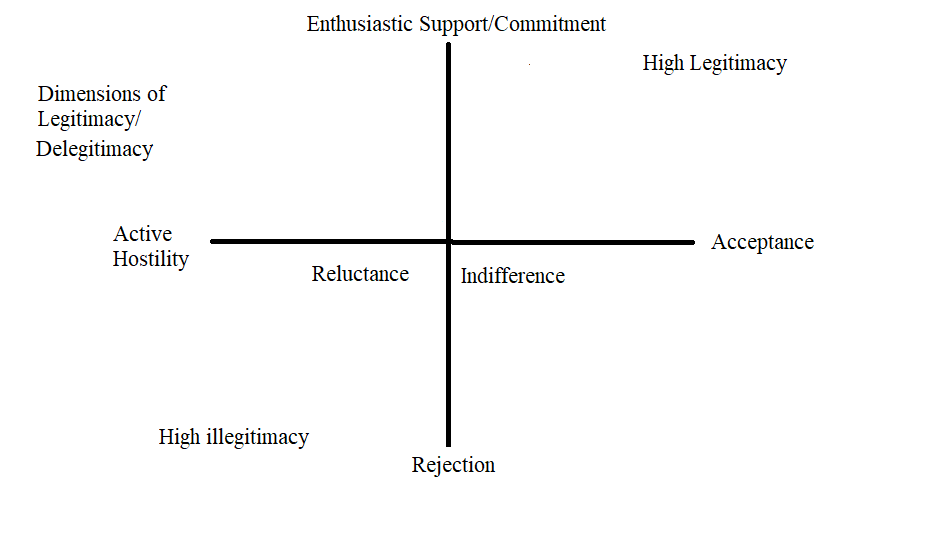
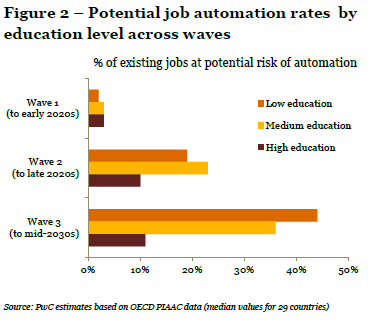
 Climate, technology and chaos Blog