Posts Tagged ‘renewable energy’

More on the Political Background: The ALP Platform

April 1, 2021

The Australian Labor Party had its national conference yesterday. They are Australia’s only practical hope for action on climate change and energy transition.

However, they seem to have decided to support, and lock-in, gas and drop any targets for 2030.

The Party platform, makes a lot of vague statements, but it does commit to a ‘safely in the future’ target of: “zero net emissions by 2050”

We should note that a recent report from the Australian Academy of Science states:

The total emission reductions currently pledged by the Australian and international governments through the United Nations Framework Convention on Climate Change Paris Agreement (UNFCCC), even if implemented on time, will translate as average global surface temperatures of 3°C or more above the pre-industrial period by 2100….

If the international community fails to meet the emission reduction targets under the UNFCCC Paris Agreement, this will result in a global mean surface temperature increase of approximately 3°C or more by mid to late century. This level of warming is well above the targets considered manageable under that agreement….

Given how much Australia stands to  lose if GHG emissions are not reduced, we also recommend that Australia accelerates its transition to net zero GHG emissions over the next 10 to 20 years.

The risks to Australia of a 3°C warmer world

Labor is not heading that way, but they do say:

as a substantial power we can make a significant contribution to international efforts on climate change, biodiversity and waste management….

Working with First Nations peoples, modern science and traditional knowledge will together be instrumental in solving today’s environmental challenges.

We will develop and implement practical, collaborative policies informed by the best science and consistent with the goals of the Paris Accord to realise Australia’s huge renewable energy opportunities and ensure all Australians benefit not only through stronger economic growth but also access to more affordable energy.

ALP National Platform: p31.

Which is nice, but what does it mean? Is growth compatible with a decline in ecological destruction?

More dangerously they leap into stating, that:

Supported by the advice of experts including the Chief Scientist and the Intergovernmental Panel on Climate Change, Labor recognises and supports the crucial role that Carbon Capture and Storage will play in abating carbon pollution and ensuring industries like heavy manufacturing and gas production are able to play their role in meeting carbon pollution reduction goals consistent with achieving the goals of the Paris Agreement. Labor has a proud history of supporting the development of CCS technologies, including through substantial financial support, which stands in sharp contrast to the record of the Coalition government which has abolished CCS support programs and cut $460 million in CCS financial support.

ALP National Platform: 32

You would have thought they might have learnt from the huge amounts of money they threw at CCS during their last period of government, that the fossil fuel industries are not that interested in CCS other than as an excuse to allow them to keep polluting, on the grounds that they might be able to capture emissions emitted in a distant future.

Companies working in Australia did some research on CCS, but none of it was as successful as promised, and non of it was successful enough to suggest that the dangers and risks of CCS (such as undetectable leakage, long term collapse, or poisoning of water supplies) were counter-balanced by its usefulness.

This policy marks an almost certain complete waste of money and effort. Although maybe government based research might be more productive? if we were lucky.

On the good side.

A federal Labor Government will join Australia with the dozens of countries around the world developing plans consistent with the Paris Agreement which requires a just transition of the workforce and the creation of decent work and quality jobs in accordance with nationally defined development priorities.

ALP National Platform: 33

Continuing the good side, if somewhat waffley:

Labor will modernise Australia’s energy system and develop a framework that will ensure reliable, affordable and clean energy for families and businesses. Labor will ensure sufficient investment in new generation to replace retiring assets, support the electrification of our transport infrastructure, and grow new industries such as green steel and green aluminum, as well as ensure affordability, reliability and pollution reduction goals….

Community and publicly-owned energy systems will play a critical role in the modernisation of Australia’s energy system, including in regional and remote communities. Labor will support the ongoing development and deployment of community and publicly-owned energy systems, ensuring all Australians can access the economic and environmental benefits of renewable energy.

ALP National Platform: 34

No targets or anything, or suggestions of how they will do this, but good.

This is followed by the lay down and surrender section

Labor recognises and supports the critical role that gas plays in the Australian economy. Labor recognises that gas has an important role to play in achieving Labor’s target of net zero emissions by 2050. Labor’s policies will support Australian workers in the gas extraction industry, building on Labor’s legacy of supporting sufficient and affordable gas supply for Australian industry and consumers. This includes support for new gas projects and associated infrastructure, subject to independent approval processes to ensure legitimate community concerns are heard and addressed.

ALP National Platform: 34

So gas can go ahead, and keep going ahead, despite the emissions. We can have lock in to fossil fuels! Not even a mention of phase out, or when it should be phased out by. Together with the up front emphasis on CCS, it appears “modernis[ing] Australia’s energy system” means staying with fossil fuels.

Labor will ensure the industry assesses and manages environmental and other impacts, including on water reserves and co-existence with other agricultural activities, and engages constructively with landholders.

ALP National Platform: 34

This has never worked in the past. Australia’s approval mechanisms tend to favour mining over agriculture – because mining is ideologically important and because mining is wealthy. So without modification of those processes, we can assume destruction of water and agriculture.

I am curious as to what “other agricultural activities” means in these circumstances. Gas drilling is now considered as agriculture?

The Federal government must also institute policies like more rigorous use-it or lose-it conditions for offshore gas resources, a price related export control trigger, and domestic reservation policies to ensure environmentally approved gas projects are developed for the benefit of Australians, including as a feedstock to crucial strategic manufacturing industries including chemical and fertiliser production. Consistent with the advice of energy market agencies such as the Australian Energy Market operator, Labor recognises that gas-power generation has a critical role to play in firming the National Electricity Market (NEM) to ensure reliability and price affordability as it transitions to net zero emissions and as other technologies emerge.

ALP National Platform: 34

“Rigorous use-it or lose-it”, implies offshore drilling must take place, rather than be delayed until it is pointless. That policy appears to be encouraging rush and ecological damage – leaks at sea are really hard to fix or even observe. Domestic reservation policies are largely irrelevant, as where the gas burns does not matter for climate. They restate the importance of gas, just in case you missed it, and cut backs in emissions seem to be phased into the distant future.

Working with industry, workers and states, Labor will ensure access to affordable gas to support Australian households, power generation and industry, including through measures designed to ensure Australia’s energy security.

ALP National Platform: 34

Lock in is clearly good. They assume energy security depends on gas, so consequently it will never ‘go away’.

I don’t think the platform says “Labor will ensure access to affordable renewable energy to support Australian households, power generation and industry.” So gas is special and privileged.

This idea that fossil fuels are a necessary economic backbone, which must be locked in, is further supported by another paragraph.

Australia is one of the only developed countries in the world that does not consistently meet the 90-day requirement for domestic fuel storage. Labor will secure Australia’s fuel security and ensure Australia meets its IEA obligations, including by ensuring a robust domestic fuel refining and storage capability.

ALP National Platform: 35

This is followed by another good point.

Labor recognises the strength and sustainability of our economy depends on the health of the environments in which we work, live and play… The current environmental trajectory is unsustainable…. Labor is committed to addressing the environmental crisis, while also building sustainable jobs and an economy that builds prosperous regions.

ALP National Platform: 35

Environmental protection is elaborated at such length, in comparison to everything else, that it is clear that Labor thinks environmental protection is a winner, in a sense in which climate change, or renewable energy, is not.

SO the conclusion is that the ALP is good on environmental protection, as long as it does not clash with fossil fuels, or maybe the environmental protection is where they hope to get movement on fossil fuels.

However, another light on environmental protection is shed by the Tasmanian Labor Party’s announcement during the conference period that:

Labor commits to legislate to protect workers from radical Greens

The Greens destroy jobs of hardworking Tasmanians

Labor wants to help the resources industry where the Liberals failed

A Labor Government will create the offence of aggravated trespass and put in place timber harvesting safety zones backed up with fines of $10,000 and up to 2 years in jail for individuals and up to $100,000 for entities.

Labor will protect resource industry where the Liberals failed, 30 March

So no more protests about deforestation in Tasmania by people wanting environmental protection. This is excused by preventing “dangerous workplace invasions” as if forests are workplaces alone. The proposed legislation seems to make sure that this just about stopping protests about tree felling or ecological destruction, just so unions don’t feel threatened about their capacity to protest changes in their workplaces. So is Labor’s environmentalism real, or just as shady as its gas policies?

***********

Other recent comments on the ALP here….

A New Report on the possibility of Renewable Transition

March 29, 2021

Background

The report comes from the Australia Institute (AI) and the the Victorian Energy Policy Centre, who will undoubtedly be dismissed as a bunch of old lefties, or the socialist dictatorship in hiding.

Anyway their Report released Monday 29th March 2021, is in stark contradiction to the attitudes of the major Australian political parties, who seem to be all in favour of tax payer support for fossil fuels.

The Report is being issued ahead of an important meeting scheduled for mid this year in which Australian energy ministers will decide on a new design for the National Electricity Market (NEM), based upon advice from the Energy Security Board (ESB), and which should be implemented in 2025 or thereabouts. The new design is intended to maintain reliability, stability and security. Current politics suggest that the favoured solutions will be new fossil fuel power stations – probably gas, but we cannot predict with certainty. The ESB advice should be published soon, so this report is probably a bit late to have much influence.

The Socio-Technical Problems

Many technological problems turn out to be social problems, in that the technology is designed for particular ends, to intensify power relations, keep challenges to power relations at bay, or to support (or challenge) the established ways of doing things, although these intentions may be undermined by unintended consequences, or by a change in demand (as with the decline of fossil fuel based electricity). The fact that the energy system will be set up, to some degree, by the social intention of some groups of people, makes this claim clear.

Some terminology

However, let us begin with some technical vocabulary, because it is part of the socio-technical imperatives, providing both focus and limitation. For example, the new design for the market could be limited as it apparently does not include emissions reduction as a primary focus.

The ESB’s workstream is focused on inertia and system strength services. Inertia refers to the extent to which the power system resists changes to demand and supply, over microsecond time scales. System strength refers to the extent to which a stable voltage waveform is maintained after disturbances to the system, such as from short circuits.

Cass Volt-face: Changing energy security in the National Electricity Market, Discussion Paper p.2

Security refers to the ability of the power system to stay within safe technical limits…. [and] less synchronous generation does present a system security challenge

Cass Volt-face: Changing energy security in the National Electricity Market, Discussion Paper p.3-4

This research report is entirely about these stability, or security, issues, which were supposed to be the reason for the move to charge people to export solar power to the grid.

Changes in technological use and capacity

In the past coal, gas and hydro were used to produce stability in both frequency (the rate the system oscillates between positive and negative voltage) and voltage. However, that dependency is becoming a problem. Prof Bruce Mountain, Director of Victoria Energy Policy Centre at Victoria University, Founder of BeatyourBill; and Director of Carbon and Energy Markets (Pty Ltd) and part of this research is quoted as saying:

“The business model underpinning coal and gas is collapsing before our eyes…

“Renewables already create the cheapest electricity in the market and the last leg the fossil fuel industry had to stand on was the security services they have historically provided. Now we can see [see below] that even those services are being delivered in a more reliable and affordable way by renewable energy and that trend will only accelerate in the future,”

Batteries and Renewables to Provide Secure Energy Future: New Report

In the summary of the research (Discussion Paper) Dan Cass remarks:

One of the emerging difficulties is that coal generators are starting to lose money and make financial decisions that harm system security. They will reduce maintenance, generate at a lower level and mothball or ‘decommit’ units, which makes them unavailable even when required for system security

Cass Volt-face: Changing energy security in the National Electricity Market, Discussion Paper. P.11

So the system is becoming unstable because fossil fuels are failing financially not directly because of renewables, as is frequently suggested. Fossil fuel generation is starting to lose money primarily because there is less and less demand for electricity during the day, because of rooftop solar, which possibly has something to do with people’s response to climate change. Hence the idea of either letting the system turn off domestic solar, or charge for domestic solar export, which might help bring in extra income and provide a role for fossil fuels.

Renewables may supply stability if the system is configured correctly

As we have seen above, the research claims necessary security and stability services are being increasingly supplied by renewable energy, batteries and demand response, making coal and gas less essential, which probably makes them even less profitable.

Batteries and demand response provided more than a third (38%) of all frequency control markets in Q4 2020, despite comprising just 0.5% of the grid’s generation capacity

Batteries and Renewables to Provide Secure Energy Future: New Report

Now 38% is not that close to 95% or thereabouts…. so we are nowhere near there yet. However, they go onto claim that Energy Australia’s proposed new 350 MW is “likely” to be able to give three times more stability than was given by the discontinuing 1,480 MW Yallourn coal power station. Which suggests that more large batteries would provide even more stability and possibly all the useful stability we might need.

Over the long term the NEM might not need inertia as conventionally defined at all.

Cass Volt-face: Changing energy security in the National Electricity Market, Discussion Paper p.2

‘Might’ is a hypothetical, suggesting we need more work here. Anyway, the research claims that there is:

no technical obstacle to… replacing the system security which has been provided by coal and gas generators. Innovative new inverter-based sources are already proving themselves cheaper and better than legacy technologies.

Cass Volt-face: Changing energy security in the National Electricity Market, Discussion Paper. Executive summary

Solar, wind and batteries use inverters to convert DC to AC and control power output to the networks and this ‘inverter-based’ class of technologies will <likely> provide most inertia and system strength in the future

Cass Volt-face: Changing energy security in the National Electricity Market, Discussion Paper p.4

These inverters could have advantages if set up properly.

Inverter-based systems can resist system frequency change, like a synchronous generator. Software determines the shape of the frequency response. Inverter based systems can also provide fast frequency or active power response, which does not mimic a synchronous generator and may be as fast as 70 milliseconds [which is a lot faster than the present system]….

The settings on grid-following inverters can be tuned so that instead of creating cascading system strength and inertia problems they can support system strength.

Cass Volt-face: Changing energy security in the National Electricity Market, Discussion Paper p.6 Rearranged for clarity.

Batteries also can be ‘grid forming’ – “setting frequency not simply following it” and batteries “have inertia in proportion to energy stored”.

Interestingly, the AI adds that “new or stronger interconnections in a network increase inertia” (Cass p.6). This seems to be a suggestion in favour of more “poles and wires” and making a more distributed grid.

They also estimate that:

the cost of system security represents around 2% of the cost of wholesale energy

Cass Volt-face: Changing energy security in the National Electricity Market, Discussion Paper. Executive summary

Which is surprisingly little in my eyes, and suggests a relatively easy transition.

Regulation

However, transition will probably not occur at the moment, as the existing regulatory structure inhibits that transition. Regulation is part of the social background to technology, and usually results from a competition between various social groups. It is not surprising that regulation tends to enforce the ‘markets’ favoured by established and dominant players, to the extent those players have been able to get away with it.

Rules:

governing the provision of inertia and system strength are not fit for purpose for the Post-2025 market. They are a brake on the clean energy transition and undermine state-based Renewable Energy Zones.

Cass Volt-face: Changing energy security in the National Electricity Market, Discussion Paper. Executive summary

A rather unclear example they give suggests that regulations prevent solar farms from using their inverters to provide system strength – but I’m not entirely sure if that is what they mean (cf Cass: p.5).

For them, the:

critical test is whether [the regulation] encourages investors to fund the innovative energy and system security capacity Australia needs as coal exits the stage.

Cass Volt-face: Changing energy security in the National Electricity Market, Discussion Paper

We may also need to think about whether contemporary capitalism can provide the transition which might have been provided by other forms of capitalism, or other forms of investment, but that is a different problem and we cannot expect such considerations in this kind of report.

The preferred solution of the general public?

Finally, only 26% of people surveyed preferred the idea of paying coal powered energy stations for this stability service. I’m not yet sure if they asked about gas.

It does not matter what people prefer, if they are wrong. Many people seem to think that Donald Trump was working for ordinary Americans, and that Republicans can be said to be the party of the working class. This does not mean those statements and preferences are remotely accurate or plausible.

But it does mean that people would like to progress if possible, just as the Trump results suggest that Americans recognise the need for a party that represents working class interests.

If more, and better regulated, renewables is the preferred solution of the public then the indication provided by the mainstream political parties is that the public will have to agitate for this solution, and not entirely leave it to committees which may still live in a fossil fuel universe in which emissions do not matter.

********************

Endnote from a day or two later…

The Clean Energy Council has said that more than 3 gigawatts of new small-scale solar capacity has now pushed the total renewable mix to almost 28 per cent of total supply. The number of individual installations reached 378,451. The average size of installations was 8kW. Renewable generation reached 27.7% of the total production over the whole year for the first time ever.

More Background

The Energy Security Board delivered some public recommendations in January 2021, saying:

The intent of this paper is to set out the direction of work within the Post-2025 work program, rather than elicit stakeholder views at this time. In March 2021, the ESB will consult on potential market designs which are being developed in accordance with the direction in this paper. Various accompanying papers published with this paper are, however, open to consultation

ESB Post-2025 Market Design Directions Paper p.10

The paper has been summarised as having the following aims:

1.     Manage exit of coal stations while providing reliability
2.     Work out how to provide system services when everything is done by power electronics
3.     Work out how to redesign the system so that distributors, communities and household seamlessly integrate with industrial size generators and consumers.
4.     Coordinate REZ introduction process and associated transmission
5.     Try and herd the States back into the NEM framework

As the Energy Security Board (ESB) released its latest Health of the National Electricity Market report.

Chair of the Energy Security Board, Dr Kerry Schott, said “years of insufficient action” and “band-aid solutions” have characterised Australia’s response to growth of renewable energy generation….

“The technology and renewables-driven transformation of our energy market is no longer an if or when proposition. It is here and now,”…

“The current set of systems, tools, market arrangements and regulatory frameworks is no longer entirely fit for purpose.

“This pace of change means there are now just months to finalise the redesign of the electricity marketplace so consumers can reap the benefits of this change.”

Clarke Blistering assessment gives Australia ‘just months’ to fix nation’s energy security. ABC News 5th January 2021

Professor Ken Baldwin of the ANU’s Energy Change Institute said an integrated energy and emissions reduction policy was needed.

“If there was a consistent policy going forward which had targets milestoned at every decade for the amount of emissions reduction we need to achieve in the electricity sector, that would help,”

Clarke Blistering assessment gives Australia ‘just months’ to fix nation’s energy security. ABC News 5th January 2021

**************

Another Endnote from April

The Energy Security Board has apparently delivered its recommendations to the Minister Angus Taylor, and is apparently supposed to be distributed to to state and territory energy ministers before being released publicly for feedback.

One of the apparent problems, is that the Energy ministers meet as part of a ‘national cabinet’, subcommittee which means participants are bound by, strict cabinet confidentiality rules and that external viewers, interested parties, experts etc are excluded from the meetings. Some say that Angus Taylor is the only formal member of this subcommittee, and thus effectively controls the agenda and results. It could mean that blatant giving of taxpayer funds to ‘mates’ could proceed without challenge.

Despite the restrictions, it appears that ministers have complained that Taylor will not allow emissions reductions to be discussed. He is the minister for emissions reduction. ACT climate change minister Shane Rattenbury said “If the federal government doesn’t want to talk about it, Angus just doesn’t let it on the agenda.”

RenewEconomy has made several attempts to request information about the proceedings of the federal cabinet energy subcommittee, only to be denied on the basis that all such material is cabinet-in-confidence.

Mazengarb Transparency lost as Taylor seizes control of now “secret” energy minister forums. RenewEconomy 1 DEcember 2020

It is apparently the case that “ministers meet ‘as required’ and that no details of the next meeting are available.” It is also not an unreasonable assumption that the Federal Government will try to design the market so it requires lock-in of coal and gas, and the inhibition of renewables.

Angus Taylor recently wrote:

The record level of renewable investment is in mostly non-dispatchable intermittent energy that works only when the sun shines and the wind blows…. this means there is an urgent need for more investment in dispatchable capacity, and a need to avoid premature and unanticipated closure of thermal generators, which are mainly coal and gas….

The Kurri Kurri gas generator, to be built by Snowy Hydro, will help fill the gap in the market when Liddell closes, if the private sector doesn’t step up. We are working closely with private sector proponents, but with only two years to go, we can’t risk under-supply and the higher electricity prices that would result.

We are strengthening incentives for the private sector to invest in dispatchable generation, whether it is pumped hydro, gas, batteries or just continuing to maintain existing coal and gas generators….

the Energy Security Board is currently working on initiatives that will strengthen dispatchable investment incentives further.

Gas will inevitably provide part of the answer. Opposition to investment in gas generation makes no sense, as generators are now typically [not universally] built to be hydrogen-ready [not much deal if there is no hydrogen] and offer an immediate pathway for decarbonisation <only if gas can be produced without massive leakage>.

Taylor, We need a balance of technologies. Australian Financial Review, 29 March 2021

Some current background to the charges for solar export

March 25, 2021

The whole process of charging for solar export has to be seen in the context of Australian Politics – and the confusion around policies, or the reluctance to move on from fossil fuels.

I will be expanding this….

But let’s start with a quick point about the Coalition Federal Government:

representatives of the Climate Change Authority confirmed to a senate estimates hearing earlier in the week that Angus Taylor [Minister for Emissions Reduction] has never asked the expert authority to provide a pathway to net zero emissions. It follows earlier revelations that Taylor has also never asked his department to prepare such modelling.

Mazengarb Taylor requests yet another review of future grid needs, to deal with “intermittents”. RenewEconomy 25 March 2021

You might expect a Minister for Emissions Reduction to want to model emissions reduction and find the best way to zero emissions, but apparently not. However, Taylor has initiated yet another inquiry into the transition. It does not seem improbable that the aim of the inquiry is to justify more tax payer subsidy of gas and coal, especially given that it mentions in its title: “future need and potential for dispatchable energy generation,” when for the Coalition ‘dispatchable energy’ has nearly always meant fossil fuels (even if coal power takes quite a while to ramp up and down).

When asked whether agriculture would be excluded from the 2050 emissions goal. The Deputy Prime Minister responded:

Well indeed that could well be one of the options. But as I say, it is a long way off. There are huge challenges in 2021 and we’re not worried, I’m certainly not worried about what might happen in 30 years’ time…. there is no way known that we are going to whack regional Australia, hurt regional Australia in any way, shape or form to get a target for climate in 2050. It’s not going to happen. The Prime Minister has said it’s not going to happen. If we get there, we will get there through technology. We’ll get there though our technology roadmap.

Transcript: interview with Kieran Gilbert – SkyNews 7 February 2021

Unfortunately, the main technological roadmap the government seems to support is its “gas-led recovery,” and other ways of supporting fossil fuels. The ABC claims:

The federal government is spending millions of dollars on consultants to advise [it] on how to subsidise the multi-billion-dollar gas industry, despite it employing just 0.2 per cent of the Australian workforce, according to tender documents and ABC sources….

[The Government is] refusing to say what the consultancy fees are for, citing commercially sensitive information.

A request to see the specific terms of the contracts with [the Boston Consulting Group] was denied, despite the AusTender website listing them as “not confidential”….

One of the contracts with BCG, worth more than $2.5 million, was awarded without an open tender

Roberts Federal government paying millions in consulting fees for advice on subsidising gas industry, documents show. ABC News, 9 March 2021

The Boston Consulting group seems to have been commissioned to design the National Gas Infrastructure Plan (NGIP), which will subsidise gas infrastructure with taxpayer funds. It is not clear why the Australian Energy Market Operator could not do the work.

The gas-led recovery means opening gas fields in Narrabri and risking the bore water and local agriculture, and opening massive fields in the Norther Territory, ignoring the protests of those who live on the land. In the October 2020 Budget, the Government budgeted to “unlock five key gas basins. Starting with the one in the Northern Territory and the North Bowen and Galilee Basins in Queensland”. They also promised more money for CCS, which does not work, and for keeping the most polluting coal fired power station in NSW going.

They have tried to use the Northern Australia Infrastructure Facility (NAIF) to provide support for the gas fields in the NT and for taxpayer funded infrastructure for the massive Adani mine in Queensland, which has been struggling to raise private funding.

Independent MP Zali Steggall sought to introduce amendments that prohibited the NAIF from investing in fossil fuel projects, but the government and Labor opposition blocked the changes.

If my amendments had been successful, they would have prohibited taxpayer money being used to fund the fossil fuel industry.

Only Helen Haines, Adam Bandt and Andrew Wilkie supported the amendments. We stared down the rest of the Chamber as both the Government and Labor passed this legislation supporting the fossil fuel industry.

Zali Steggal on Facebook 25 Marsh 2021

See also Hansard Thursday, 25 March 2021, pp:37-8

The resources minister Keith Pitt said later:

It was the height of hypocrisy to see inner-city southern MPs trying to delay the Bill because the NAIF proudly supports resources projects throughout the north….

NAIF supports a wide range of industries and I look forward to the Bill passing through the Senate so we can deliver new projects for the north as soon as possible

Keith Pitt NAIF reforms pass through House of Representatives, 25 March 2021

Objecting to producing more climate change through increasing emissions is not even vaguely hypocritical, and they were not interested in stopping the NAIF from supporting a wide range of industries, only in stopping it from supporting fossil fuels.

On the other hand, the Labor Opposition has already announced its support for fossil fuels, particularly gas, but coal is included. Chris Bowen the Shadow Minister for Climate Change, is reported as saying:

“To be honest, gas is not a low emissions fuel. It is not the answer to climate change. I don’t refer to it as a transition fuel either. But it is a very important part, nevertheless, of the transition, and will be for some time to come…

When there’s long periods of no sun or low wind, a battery is great for hours, not for weeks or months. Pumped hydro and hydrogen is better for longer periods. But we’re going to need gas to assist in that process. If you’re not going to have renewables, you’ve really got a limited number of choices: Nuclear, which I don’t support, or an ongoing role for coal. Well, actually, gas has a better role to play…

Should we have that serious conversation about what role coal has in the future? Yes. Do I think it should be providing alternative jobs in diversifying regional economies? Absolutely.

Mazengarb Bowen pitches Labor’s new gas-friendly climate platform, and an end to “toxic politics”. RenewEconomy 25 March 2021

He also made the usual attacks on the Greens, perhaps because they don’t pretend we can nanny the gas industry and achieve climate aims.

The Greens on our left, and the Liberals and Nationals on our right, have taken every opportunity to play identity politics, and it’s still that toxic politics in this country. And we won’t see real climate change action until that ends…

If you are asking for every coal-fired or gas-fired power station to be turned off tonight. I respectfully disagree. We are being powered by one tonight….

Will Australia stop coal exports tomorrow? No, we won’t. Is the international accounting mechanism, which says where those emissions will be counted written by me or the Labour Party or in Australia? No

Mazengarb Bowen pitches Labor’s new gas-friendly climate platform, and an end to “toxic politics”. RenewEconomy 25 March 2021

If I can find a press release from Bowen I will use that, but at the moment, he has not updated his website since last year.

He gives a great set of reasons not to put Labor first in the Senate or House of Reps, even if you have to put them ahead of the Coalition.

Lack of responsibility: It was not the Greens that mucked up Labor’s policies but the Labor party who refused to talk to the Greens about the first carbon price plan, and Labor attempts to wedge the Coalition and support Tony Abbott, who they thought was unelectable.

Straw-manning: Who precisely is “asking for every coal-fired or gas-fired power station to be turned off tonight”? and who is suggesting we stop coal exports “tomorrow”? No one. Phasing out is precisely not stopping “tonight” or “tomorrow”, but over time.

Support for coal: the knowing nod that coal exports don’t count to our emissions because of an accounting trick so export is ok. Let’s be clear here, climate change does not respect national boundaries. Emissions are emissions, and if we help emissions we are helping to make climate unstable. Not too hard to understand.

Then we have the line that implies that coal “should be providing alternative jobs in diversifying regional economies.” Maybe they have a truly clever plan to provide jobs in coal, without mining it and burning it, but that seems unlikely, given they are not mentioning it. The implication is that coal mining could be expanded, no doubt threatening water yet again, and being burnt and raising emissions.

Two way bets, or speaking with forked tongue: “To be honest, gas is not a low emissions fuel. It is not the answer to climate change. I don’t refer to it as a transition fuel either. But it is a very important part, nevertheless, of the transition, and will be for some time to come.” So gas is not a transition fuel but we have to use it to fuel transition.

I guess we hope there is a difference between the ALP and the Coalition, but its only a hope. When it comes to policy, there’s not much difference to see – especially given that there is evidence to suggest we may not hit our inadequate 2030 targets.

The Governmental Regime in Australia seems to be devoted to postponing transition or making it difficult.

***************

Added 20 March. I can’t find a transcript for Mr Bowen, so have to rely on other back sources….

In an interview dated 5 March 2021 Mr Bowen said

If you’re voting on the morality of climate change, you’re almost certainly voting left of centre. If you’re a climate-change denier, you’re almost certainly voting right of centre. But there’s a chunk of people in the middle who accept that climate change is an existential threat to the world, but losing their job is an existential threat to them. As a former treasurer and long-standing shadow treasurer, trained with an economics degree, I can bring a sensible economic case.

Law, Chris Bowen: ‘I could live my entire political career, never be leader and retire satisfied’. Sydney Morning Herald, 5 March 2021

The only problem here is that the Left of centre voter is probably talking about a “just transition” which means precisely, that workers are looked after, that new well-paying and secure jobs are provided, and that the transition does not disadvantage ordinary people. There are many on the right who claim to accept that climate change is a threat, but it is a lesser threat than the economic one. So this is all a bit of a strawman, a making a false centre, to try and sound reasonable. What we don’t know, is what a “sensible economic case” means to contemporary Labor. Does it mean more mines, tax payer support for emissions producing industries and so on? The excerpts from the later talk, imply that it does. “Sensible economics”, may well be a code word for not challenging powerful players invested in climate destruction.

Asked if 2050 is too late, which it might well be for restrained climate change. Bowen replies:

More than 120 countries around the world have adopted [the 2050 target]; you can’t turn it around overnight. The best time to start dealing with climate change was 25 years ago. The second best time is today.

Law, Chris Bowen: ‘I could live my entire political career, never be leader and retire satisfied’. Sydney Morning Herald, 5 March 2021

The idea being that we should not do more than other people. While it is true that it was better to have started 25 years ago, this does not make doing less now, somehow ok.

gas is an important provider of grid reliability as we transition to renewables, so we’re going to need some gas in the system. There are extremes to the argument: the government’s gas-led recovery at one end and the “Let’s get rid of all gas the day after tomorrow” position at the other. I don’t think either end of the spectrum is realistic.

Law, Chris Bowen: ‘I could live my entire political career, never be leader and retire satisfied’. Sydney Morning Herald, 5 March 2021

Again this is trying to make a false centre to make himself sound reasonable, and it is avoiding the questioner’s reference to Labor’s $1.5 billion plan to unlock more gas that will create more carbon emissions than Adani’s mine. Looking at the policy is not saying that much. And his comments at the talk imply he is ok with those emissions, just as he is ok with the emissions from burning the coal from the Adani mine. He is certainly not staking a position in opposition to making more emissions, or against doing more damage to country.

******************

Added, 4 April 2021

Richard Marles of the Labor Party, who is essentially the shadow minister for Recovery from Covid, or as he says “focusing on two priorities: jobs, and the future,” gave a talk at the National Press Club, which almost confirms the worries here. His talk on the recovery, although filled with talk about science, did not mention climate change or climate, temperature, weather, energy, renewables, emissions, pollution, ecology or environmental concerns. Not once.

This has to be thought a somewhat deficient view of the future, or a suppressed view of the future, and does not bode well for an ALP government that they cannot talk about any of these subjects.

Since that time the ALP has released its platform, some comments on that here.

Australian Solar Traffic Jams?????

March 25, 2021

Charged for providing solar power

The Australian Energy Market Commission is recommending new rules which allow people with rooftop solar to be charged for exporting energy to the grid.

This official reasons for this appear to be because:

  • a) the grid is struggling to cope with the increase in solar energy,
  • b) the grid was not configured for two way traffic, and
  • c) 20% of all customers now partly meet their needs through rooftop solar.

This level of solar can, sometimes during the day, mean that the minimum demand for corporately supplied electricity approaches zero. This pushes fossil fuel production into unprofitable regions – although this factor may not be being mentioned.

Switching solar off in South Australia

Once in South Australia, the whole State was powered by solar panels, as about 280,000, or 35% of households in South Australia have solar installed. At that time Australian Energy Market Operator (AEMO) chief executive Audrey Zibelman said:

Never before has a jurisdiction the size of South Australia been completely run by solar power, with consumers’ rooftop solar systems contributing 77 per cent.

Davies All of South Australia’s power comes from solar panels in world first for major jurisdiction. ABC News 25 October 2020

This event was greeted by the announcement that new inverters must have software installed that allows them to be controlled remotely by the power company.

This appears to mean that a person’s own solar panels can be switched off by that power company, and they have to consume energy from the grid. The first such mass switch off occurred in March 2021, five months after the announcement.

with South Australia experiencing “near-record minimum demand levels for electricity from the grid” during a planned outage of circuits feeding the Heywood interconnector which links the state’s grid with Victoria… AEMO instructed transmission company ElectraNet to “maintain grid demand above 400 megawatts” for one hour during the afternoon [by switching people’s solar off].

Keane et al Solar panels switched off by energy authorities to stabilise South Australian electricity grid. ABC News 17 March 2021

Which is great for a centralised power system that does not face any export charges.

Climate Justice and the social good of charging solar owners

As we might expect there is an attempt to justify this imposition of charges on exports by encouraging rivalry.

The AEMC said the recommendation was not designed to create mandatory export charges, but to create more flexibility and pricing options.

“Introducing this flexibility should benefit the 80 per cent of consumers who don’t have solar PV (photovoltaic) on their roof,” Mr Barr said.

“We’ve modelled that there’s a small reduction in their bills if this comes in.”

Mr Barr said households across Australia could see a reduction of up to $25 a year on their energy bills.

Eacot Australians with rooftop solar panels could soon be charged for exporting power into the grid, under proposed changes ABC News 25 March 2021

The ABC quotes a person in a family of four celebrating the charges, saying

“I looked into getting [solar power] because our electricity bill is around $1,300 a quarter, that’s for two adults and two kids,…

“I kind of think, ‘Well, you’re lucky because you might have to pay an extra minimal amount per year but the amount you’re saving is a lot more than what we are saving because we don’t get any savings at all,'” she said. 

“I’d swap any day.

Low-income families back proposed solar export fees in hope of reducing power bills. ABC News 26 March 2021

I suspect that this is inaccurate as one source implies the average annual home electricity bill in NSW is $1,421. If the $1300 a quarter bill is accurate, then some kind of energy efficiency, power-saving scheme, finding out where that consumption was going, would probably be far more effective in reducing the family bill than charging people with solar. Especially given that the new rules might mean “Australian households could save up to $25 on their bills each year.” This seems to be of trivial advantage (less than 2% reduction) for most people who can afford to pay electricity bills.

On the other hand people with solar panels would see a reduction in their earnings. Solar Citizens argued

It is inequitable to charge solar owners when generators in the transmission network are not charged for accessing the network

Eacot Australians with rooftop solar panels could soon be charged for exporting power into the grid, under proposed changes ABC News 25 March 2021 .

The AEMC is essentially making a ‘climate justice’ argument – people who cannot afford solar are supposed to suffer from solar, so to be fair we should continue to use fossil fuels, and charge people using solar. It could also be argued that solar panels provide cheap energy, and that this reduces everyone’s electricity bills. Over-supply is supposed to make a product cheaper. Restricting that supply is supposed to make the product more expensive, especially with ‘necessary products’ as opposed to voluntary consumables. On the other hand if people decide to respond by storing power and going off grid, to avoid being turned off when convenient for power companies (or if the grid collapses) then use of the grid could become less economic, and real problems start.

Some also say that the evidence is that:

proportionately, rooftop solar uptake is the highest in middle and lowest socio-economic areas and the lowest in the highest socio-economic areas. Where then, is the supposed transfer from the rich to poor that needs to be righted?

Mountain, Where is proof that rooftop solar is being subsidised by non-solar households? RenewEconomy, 26 March 2021

At this moment, I do not know whether this is true or not in general, but it is true that there is more solar in Lismore, as a percentage of rooftops, than there is in Annandale in Sydney.

The same author comments:

Snowy Hydro will pay nothing towards the (at least) $3 billion of to-be-built “shared network” to get their electricity to market. Instead, electricity consumers in New South Wales and Victoria will pick up the tab at around $560 per connection.

While Snowy Hydro gets away scot-free, the typical household in NSW or Victoria that has solar panels on its roof should, according to the AEMC, be charged around $100 per year to use the grid to export the circa 2,200kWh that we estimate the typical household with rooftop solar exports each year.

Mountain, Where is proof that rooftop solar is being subsidised by non-solar households? RenewEconomy, 26 March 2021

I guess Justice issues do not apply to corporations.

Official optimism about power corporations

The AEMC seems to be claiming, that companies will undoubtedly provide different services so people need not fear loss, while others have suggested the charges will provide investment funds to encourage the building of a better grid. It also, for reasons which are not clear, expects this to allow more Australians to install solar.

According to its draft report, the AEMC started its journey with three potential scenarios for consumers in Australia’s booming rooftop solar market: [1] Do nothing to upgrade the grid, pass on no costs, but nobble distributed solar investment and returns in the process; [2] upgrade the grid and spread the costs over all customers; [3] upgrade the grid and recover costs through export charges on solar customers only.

Having summarily ruled out scenario one, the Commission said its analysis of total revenue recovered under the remaining scenarios indicated that the fairest distribution of costs was made under scenario 3; as opposed to scenario 2, where all customers – solar and non-solar – would pay an estimated $14 a year to cover the cost of solar exports.

Vorath Modelling: How the proposed rooftop solar tax will affect solar households. RenewEconomy 25 March 2021

Energy Networks Australia [“the peak industry association for energy networks“] chief Andrew Dillon supported the charges:

“The AEMC’s draft decision will help networks support the increasing number of customers who want to connect solar and export their energy into the grid.

“Without changes to how DER (Distributed Energy Resources) is managed, the ongoing growth in solar means networks would increasingly need to restrict power exports or even block solar connections to prevent voltage spikes and even local black outs…

“This rule change will incentivise networks to invest in a smarter grid that can better support a two-way flow of electricity as more customers both consume and export electricity

AEMC move to support more solar welcomed Energy Networks Australia 25 March 2021

Despite this kind of claim there is no guarantee that companies will use the money to upgrade the grid, as this would lower their profit, and possibly benefit their competitors. If they improved the grid the companies could not justify getting the extra income from the regulation (?). Able to charge, rather than pay, people for solar exports they would appear to have more incentive to keep a bad grid, and not upgrade it.

The current recommended cost is

2c/kWh for exports in the middle of the day. This would cost up to $100 a year, but it is not recommending a flat or compulsory tariff and wants consumers and networks to negotiate flexible outcomes.

Parkinson Solar tax: Networks able to charge households to export solar power to grid. RenewEconomy 25 March 2021

The AEMC modelling suggested that the charges would not significantly reduce solar take-up of systems less than 6-8 Kw. The AEMC announcement of charging people for export:

was promptly labelled a “sun tax” by community interest group Solar Citizens, which called on state energy ministers to “protect solar owners from this discriminatory charge”.

But electricity distribution companies said the proposed reforms would allow more rooftop solar systems and batteries, collectively known as distributed energy resources or DER, to connect on to the grid and provide networks with the incentive to invest in “smarter” management systems for the network.

McDonald-Smith ‘Sun tax’ riles solar users Australian Financial Review 25 March 2021

It is not clear why. After all if people are paying to export, then the companies either make money, or people decide not to export, and thus make more use for fossil fuel back up, and remove the cheaper exports.

Also batteries are reasonably expensive. Choice comments:

Batteries are still relatively expensive and the payback time will often be longer than the warranty period (typically 10 years) of the battery. 

Choice. How to buy the best solar battery storage. ND.

This goes against the climate justice argument of penalising the wealthy for having solar. Only the wealthy will afford batteries, as well as the costs of installation. So the wealthy benefit rather than ordinary users.

The Tasmanian Renewable Energy Alliance remarked:

It is also discriminatory. Large power stations are not charged to use the network to export power, neither should solar owners…

There are many positive ways of encouraging consumers to invest in new technology and change their behaviour in ways that benefit all consumers. These include time-of-use tariffs, better feed-in tariffs and virtual power plants…

Vorath No biggie or bin job: Solar advocates react to export tax proposal. RenewEconomy 25 March 2021

As long as it penalises solar, and does not use it as an energy source

Currently it looks like we have two systems proposed. One in which solar panel users have to pay for grid electricity they don’t need because their panels are switched off, and a second in which people are charged for exporting electricity. We could have both. In both cases it would appear electricity companies are profiteering off solar generation. There is no proposal for a system in which supposed overloading leads to exports being switched off, or stored, so that people are not being charged extra for having solar panels. If we switched to people with solar, heating their water during the day, that would also reduce input into the grid. Another route would be to encourage the construction of decent grids, perhaps by public utilities, or perhaps all we need is better/redesigned transformers and substations – some of which are getting pretty old. Although, the Australian Energy Market Commission’s chief executive, Ben Barr, said fixing poles and wires would be “very expensive and end up on all our energy bills, whether we have solar or not”, which given the ‘gold plating scandals of a few years ago was not a concern when the sources of power were primarily fossil fuels. Indeed the previous incentives to improve networks were held to be a public good.

If you believe people are driven by profit then charging them extra at your whim, seems to be a way of discouraging uptake. Bruce Mountain, from the Victoria Energy Policy Centre said:

“It is like arguing that bicycles should be charged for using the roads…. The uptake of solar was the one big success we have had in the energy transition.”

Parkinson Solar tax: Networks able to charge households to export solar power to grid. RenewEconomy 25 March 2021

The point seems to be not to use solar constructively in a way that does not cause these ‘traffic jams’, but to penalise people with solar for some reason.

Conclusion: Do the claims match likelihood?

This is not the first time the AEMC has made this proposal for charging people for export, but it abandoned two previous attempts due to unpopularity from solar users. This time as well as using ‘Justice’ arguments it is also claiming that is is:

Changing distribution networks’ existing incentives to provide services that help people send power back into the grid…. We also propose recognising energy export as a service to the power system in the energy rules to give consumers more influence over what export services networks deliver and how efficiently they deliver them…

Gives networks pricing options they don’t have now, like rewarding solar and battery owners for sending power to the grid when its needed and charging for sending power when it’s too busy. New incentives will give customers more reason to buy batteries or consume the power they generate at busy times on the grid…

Allows each network to design a menu of price options to suit their capability, customer preferences and government policies. Customers could choose things like free export up to a limit or paid premium services that guarantee export during busy times.

New plan to make room on grid for more home solar and batteries, AEMC 25 March

None of these points seem to encourage people to export energy to the grid, or make it likely for companies to encourage export to the grid, or make more room on the grid for household solar, other than by stopping exports as opposed to fixing the grid problems.

While perhaps we can agree that “Customer preferences [should] drive network tariff design and the solar export services they get,” that we should “recognis[e] energy export as a service to the power system” and that “planning ahead will avoid costly over investment and crisis solutions down the track” (AEMC) This does not seem to be it. Neither do the results being aimed at seem to be likely to arise from the method being proposed.

********

Endnote

There is some evidence that there are plans to expand the poles and wires, but whether these plans will be useful for connecting new renewable farms to the web, and solve the local grid wiring problems that make small scale export problematic, is difficult to say.

The new projects include:

the Marinus Link, between Tasmania and the Australian mainland, Project EnergyConnect, linking South Australia and New South Wales, HumeLink linking the Snowy 2.0 project with the grid in NSW, and VNI West between Victoria and NSW.

Vorath Wind farm commissioner role expands to tackle tricky transmission projects. RenewEconomy 26 March 2021

Another report adds that researchers from the University of NSW are going to investigate how distributed energy resources (such as small-scale energy devices, like rooftop solar and battery storage systems), behave during periods of sudden failures in the energy system (including failures of network infrastructure due to fire or lightning strikes or unscheduled outages at large thermal generators), in an effort to boost system resilience and maintain reliable supplies of power.

It is expected that there will be opportunities:

to harness rooftop solar capabilities to help restore power system security. Despite this growing role and potential impact, there is very little data showing how solar PV behaves in the field during such events

Mazengarb Can rooftop solar and household batteries keep grid stable when big generators fail? RenewEconomy 1 April 2021

ARENA says:

“Integrating renewables into the electricity system is a key priority for ARENA, so the tools being developed throughout the project will help to ensure that Australia’s record-breaking solar installations continue to be of benefit to the grid and in helping with system security.”

Mazengarb Can rooftop solar and household batteries keep grid stable when big generators fail? RenewEconomy 1 April 2021

This functionality may be changed by distributors charging for electricity export or shutting down solar panels…..

****************

Update

Giles Parkinson, founder of RenewEconomy, who is generally a reasonably reliable source, states:

State energy ministers are looking to adopt new protocols that will allow network operators to not just switch off rooftop solar when instructed, but also pool pumps, electric vehicle charging stations, hot water systems and even air conditioners….. the promise is that it will be used rarely – in terms of hours a year. But that remains to be seen.

Parkinson. Solar “switch-off” rule to extend to EV chargers, pool pumps and air con. RenewEconomy 13 April 2021

This is an extension of the idea that people with solar panels must be forced to buy power from the grid when it is convenient for those big operators selling power on the grid.

As Parkinson and others point out this is likely to get people to plug their EVs into the socket.

Another consequence is that rather than the householder being a ‘prosumer’ a producer and a consumer, the corporate aim seems to be to gain control of what happens ‘behind the meter’ so that the company puts its own advantage first, and makes the consumer a paying labourer or producer – an appendage and slave to the system, rather than the other way around….

For once a cheery graph….

December 30, 2020

Electricity prices from renewables decline noticeably over the last 10 years

Price of electricity new renewables vs new fossil

see: https://ourworldindata.org/cheap-renewables-growth

Fossil Fuel Fascism

December 11, 2020

People often seem to talk as if some form of democracy was inherent in the future, whether it is based the current neoliberal form of energy use, or whether it becomes based in renewable decentralised energy. There is no necessity for this assumption. It is probably more accurate, and analytically useful, to assume the politics of transition will be complicated.

The Right, Climate & Ecology

Rightwing politics, and in particular right wing authoritarianism is often tied in with climate denial, postponement of climate action, support for ecological destruction and support for fossil fuels. They will not even accept that their sacred market seems to be in favour of renewables, they just plough taxpayers money into fossil fuels, and try and inhibit development of renewable energy through regulation and legislation. They also repeal regulation that stops ecological destruction. Conservative politics in the UK and Germany, can assume that conservation is possible, while the supposed Left in the English Speaking world (ie the Democrats, Labour and Labor), are less hostile to climate action but are still rarely pro-active. In Australia climate action can be joined to support for coal which endangers limited and precarious water supplies for major cities, and the Labor party can support the Narrabri coal seam gas project, and coal for export. It risks much less powerful opposition from the mining sector.

It would appear that many people think neoliberal capitalism cannot survive without its modes of pollution and destruction, or even if those modes of pollution and destruction are restrained. For them, capitalism is about liberty (even if that liberty, in practice, is limited to the wealth elites), and that includes the liberty to destroy, which appears to be the basis of the other liberties, as is the classic capitalist view of property (if something is yours you can destroy it with complete liberty). That would appear to justify a liberty to suppress others, who object to the destruction.

The neoliberal Right is not consistent about this. They sometime claim a care for the environment. Trump is well capable of saying he has produced the best air and the best water, [1] (although he seems to have had little to nothing to do with it), and that he wants to lower emissions, while removing nearly all boundaries and penalties for polluting and destroying, opening national monuments and national parks for drilling and destruction and shoveling taxpayers’ money to fossil fuel companies to keep them buoyant – especially during the Covid Crisis and the oil shock of early 2020. After the election he rushed to confirm the opening of the Arctic national wildlife refuge in Alaska to drilling for oil and gas [2], [3], as part of “advancing this administration’s policy of energy independence.”

Trump implies that you can have both rampant ecological destruction and a good ecological result, which could be a pleasant fantasy. However, more consistent thinkers have put forward a similar view, saying that capitalist countries tend to have gained cleaner environments over the years, and suggesting that only people who are financially prosperous can afford environmental care [4], [5], [6], [7], [8]. The problem is that even if this is true, then do we have the time for it to work all over the world? and do we advance this movement by opening more land and country to destruction? Especially when the destruction is easily concealed?

There is also the possibility that, like many other risks, the risks of climate change are not equally distributed and will hit the poor and racially vilified first. Racism could be built into the current system, and not likely to be unwound deliberately. Apparently:

A disproportionately high number of poor and non-white people live in the hottest neighborhoods across the [USA]. It’s often the result of discriminatory practices by banks and local governments.

Climate racism is real. Researchers found it in U.S. cities

The other right wing approach to ecological protection is simple and based in a similar kind of discrimination. They suggest that there should be less population elsewhere in the world. It is the poorer countries who are to blame, not the wealthier ones.

However, between 1990 and 2015:

The richest one percent of the world’s population [were] responsible for more than twice as much carbon pollution as the 3.1 billion people who made up the poorest half of humanity during a critical 25-year period of unprecedented emissions growth…

The richest 10 percent accounted for over half (52 percent) of the emissions added to the atmosphere between 1990 and 2015. The richest one percent were responsible for 15 percent of emissions during this time – more than all the citizens of the EU and more than twice that of the poorest half of humanity (7 percent).

Carbon emissions of richest 1 percent more than double the emissions of the poorest half of humanity. Oxfam, 21st September 2020

The argument about poor populations being the problem, is often joined with an attempt to reinforce borders and keep out refugees, because they supposedly spread the problem, producing ecological destruction because of their rampant preproduction, poor origins, or foreignness – the foreignness is part of the pollution of the national purity. The nationalist authoritarians don’t have to do anything in their own countries, except keep people out, no matter how much pollution those countries issue.

One US mass murderer is supposed to have written, mixed up with attacks on ‘migrants’: “If we can get rid of enough people, then our way of life can become more sustainable” [9], [10]. This kind of attitude is likely to become more prevalent the more that climate refugees become common.

Like many contemporary conspiracy theories, this population argument deflects attention from the normal action of the wealth elites, and the corporate sector, with their unsustainable and destructive consumption, extraction and pollution, and puts the burden on people who individually, or even collectively, do very little damage and have very little power. In the US, it has been indigenous people who have been resisting fossil fuel pipelines, and who face the penalties of action, sometimes enforced by police and troops and sometimes by private military contractors (mercenaries).

Discounting the extremism, from my experience, the reality seems to be that many people think that by opposing climate action, and by supporting fossil fuels, or dawning imaginary technology (without use having to change anything, including power relations), they are supporting prosperity and liberty, and moving against potential tyranny, and that authoritarian tactics are sometimes necessary – especially against outgroups such as native Americans.

This move does not seem to be declining. The Left, such as it is, has to face up to the fact that there has been no boom in Left voting, and little acceptance of Left ‘common sense’, over the last 20 years. Trump increased his vote considerably, despite all his failures and despite the Covid deaths. Morrison won his miracle election, and shows no sign of being able to lose the next. Boris Johnson won. Bolsonaro won. Modi won and so on… While Greens in Australia occasionally increase their representation, so do One Nation and the Shooters and Fishers Party; there is no likelihood of a Greens government at either State or Federal level.

The anti-fossil fuel movement is not like the anti-nuclear movement, in terms of its effects or popularity. This is despite what can be considered ‘elite’ defunding and divestment movements – you have to be reasonably elite to own shares and attend corporate meetings. Likewise, no current international agreement is strong enough to prevent dangerous climate change – and action seems resisted, despite UN exhortations (it hints at the loss of some national sovereignty, for the global good).

Liberty and Energy

There is a sense the Right could be partly correct about fossil fuels. Available Energy does give freedom and capacity, and renewables simply don’t produce similar availability to fossil fuels as yet, and probably never will. Fossil fuels do increase capacity, but with cost to other people and the environment, which is primarily a problem if theses issues are counted, or if you wonder about the destruction resulting from climate change in the future. If you discount the unintended side effects, then in the present, fossil fuels could easily be thought to generate new jobs, and jobs generate the only liberty capitalism allows, namely consumption.

Fossil fuels have also allowed production of the energy, steel, transport and weaponry needed for conquest, extraction of resources and control over cheap labour, and the imposition of stability. Fossil fuels allowed the world wars and truly massive violence, which ties together with the authoritarian project. What do you do with all the people you have encouraged to be violent, when there is little violence to use at home?

Energy transition also requires excess energy, or excess pollution, to produce the new sources of generation in quantity. This is a further incentive to open more coal.

On the other hand, renewables do possibly break down centralised energy generation and allow people to make their own energy, independent of the corporate structure – but that form of energy is not widely promoted, and most renewables (at scale) are installed by standard neoliberal processes with non-consultation, non-care for the environment, and non-care for workers. They do not generate community involvement or enthusiasm when built that way.

The connection of the possibility of new forms of liberty with small scale energy generation is not obvious, and it may not happen, because capitalism appears to need, and profit from, large scale energy generation, and large scale is more likely to produce simple and stable pricing structures.

If Mitchell’s argument is correct, that modern democracy grew with coal, and the capacity of coal workers to hold the country to ransom and demonstrate workers’ power, then the abolition of coal based energy may indeed mean the end of that democracy, unless we approach transition with care.

Autonomism and renewable energy

The Autonomists argued that there was a process of interaction between workers and bosses in the use of technology. Bosses would introduce technology to control workers and to extract more labour, and workers would respond by finding ways to play the technology, take over the technology, control the technology, steal bits of the technology, or use the technology for their own purposes – “the street has its own uses for things” to quote William Gibson. Then the bosses would respond to worker’s creativity by trying out new technologies, and new processes of discipline, and so it went on for cycle after cycle.

The processes are more confused than this skeleton suggests because technologies have unintended consequences, which might end up producing new social results – as for example when workers have to develop ‘work arounds’ and an organisation around those work-arounds, to actually do the job they are expected to do, and which the technology no longer allows them to do. However, the point is there is a place for workers to insert power and creativity.

This is inherent in Mitchell’s argument mentioned above. The bosses’ energy technology used for the factories, disciplining labour and making it mindless and perfectly replicable, could be commandeered against the bosses, to extract concessions for workers in general.

The problem with renewables is that dynamic seems to be almost completely lost. Solar panels don’t require labour, after construction and installation, other than cleaning and a little maintenance. The same is largely true of windfarms. If so, then renewables have the capacity to eliminate the autonomist cycle – there are few workers to subvert the technology. Maybe people can steal a bit of free energy, or build a bit for themselves, but usually the panels are not near people’s homes and the theft would be obvious (wires leading to your house). Renewables, at a large scale, eliminate the need for many energy workers; the companies are not that dependent on workers or upon difficult to replace workers. The workers cannot easily withhold supply. This is part of the system’s profitability. Renewables, have the potential to make energy companies dominant with few checks, other than legislation and regulation, and that is controlled by neoliberals, and as the renewable companies gain wealth and control, what might stop them filling the gap in the socio-political ecology previously occupied by oil and coal? There is none of the Autonomist interactive construction of liberty that could be present in previous technology.

This implies that renewables are not inherently ‘popular’ in the sense of giving power to the people, unless the people commandeer the processes of production and organisation. And that is a situation which goes against the ways that the modern world is organised. The modern world is largely organised by the actions of the corporate sector, followed by the adaptation of the people to those actions. We no longer have community solidarity or self organisation as normal. When popular action occurs it is motivated by people like Trump, who misleadingly use that action to support himself and most of the rest of the dominant groups. He shares the dominant interests, and shows no sign of supporting the people in general – with the possible exception of tariffs, but even that seems geared at protecting particular types of industry or exerting commercial power on other countries.

We cannot dismiss either the possibility that politics will become more authoritarian to support capitalisms current destructions, or that it will stay as authoritarian as it is now, because of the way Renewable Energy is organised.

The Authoritarian and Anti-Democratic Background

It seems more or less indisputable that we are in a growing phase of authoritarianism. This authoritarianism generally is being put forward, by people who are also engaged in climate denial, or who support fossil fuels. There is no reason to assume that the two cannot link together powerfully. There is also the possibility of anti-climate change authoritarianism, to overcome resistance to necessary changes, but I’ll talk about that elsewhere – and I’ve just mentioned the possibility renewables could become an authoritarian technology. However, at the moment the authoritarian threat seems to be largely promoted by neoliberals and the Right. Neoliberalism always acts in an attempt to boost the power of the wealth and power elites to begin with.

In the US, neoliberals like Trump are currently dismissing election results and either encouraging or turning a blind eye to threats of violence against election officials or other Republicans who refuse to overturn, or throw out, the votes for Biden. This report may be exaggerated, but:

Kim Ward, the Republican majority leader of the Pennsylvania Senate, said the president had called her to declare there was fraud in the voting. But she said she had not been shown the letter to Congress, which was pulled together hastily, before its release.

Asked if she would have signed it, she indicated that the Republican base expected party leaders to back up Mr. Trump’s claims — or to face its wrath.

“If I would say to you, ‘I don’t want to do it,’” she said about signing the letter, “I’d get my house bombed tonight.”…

Even in Defeat, Trump Tightens Grip on State G.O.P. Lawmakers. New York Times, 9 December 2020.

In the Supreme Court, Trump allies:

sought to invalidate the state’s 2.6 million mail-in votes, 77 percent of which were cast for Mr. Biden…

Republicans argued that a 2019 state law authorizing no-excuse mail voting was unconstitutional, although it passed the Republican-led legislature and was signed by Gov. Tom Wolf, a Democrat….

Rudolph W. Giuliani aired false charges about the election, including an assertion that mail-in ballots in Philadelphia were “not inspected at all by any Republican.” The claims were debunked in real time on Twitter by a Republican member of the Philadelphia elections board.

Even in Defeat, Trump Tightens Grip on State G.O.P. Lawmakers. New York Times, 9 December 2020.

It seems that Republicans are basically saying election results, and votes, are only valid if they give Republicans victory, probably because they think Democrats are not truly American, but are truly monstrous, in all possible ways. That is what their media tells them, and it helps explain a distressing loss. Republicans who disagree with them are made outgroup. A tweet from the Arizona Republican Party suggested that people should be willing to die for Trump and to overturn the election, and another (later taken down, officially because of copyright concerns) said “This is what we do, who we are. Live for nothing, or die for something” (apparently a quote from the film ‘Rambo’). It is hard to see this as anything other than a call for violence on behalf of the party, or a call for people to sacrifice themselves for the party.

For what its worth, I suggested that the Republicans were trying to prepare for, and encourage, a Civil War back in July. Since then, Trump has been preparing his supporters by repeatedly arguing that the only way he could lose was through fraud, and that there is some massive Democrat plot against him. No one can guarantee election results unless they are successfully trying to fix them. This ‘protest’ against the result was not an unforeshadowed event, but one involving some long term planning. Trump warned he would protest the results and he did.

If Trump has real evidence of electoral fraud, then why is he generally presenting ambiguous, or hearsay, evidence to the public and not presenting solid evidence to the courts? The Courts have asked for evidence, and been refused or ignored. One possible theory is that Trump’s teams do not have any such evidence, and his lawyers do not want to face perjury charges by putting faked evidence to the court. Another is that he does not need success. Indeed the court cases he is putting forward and supporting have largely seemed engineered to be rejected by the courts, perhaps to give the impression that he is being victimised by the system or the ‘deep state’. He may just be trying to build up suspicion about, and resentment over, the results. That is much easier, it does not require real evidence, and appears to have a massive persuasive impact on his followers, and will keep them motivated.

Even William Barr, after displaying massive support for Trump, has determined “we have not seen fraud on a scale that could have effected a different outcome in the election.” Another official, Chris Krebs, the director of the Department of Homeland Security’s Cybersecurity and Infrastructure Security Agency, said “I’m here to tell you that my confidence in the security of your vote has never been higher… because of an all-of-nation, unprecedented election security effort over the last several years.” Krebs was sacked.

Trump may be planning to leave the Covid crisis and the likely economic collapse, to his enemies, and come back arguing everyone was prosperous under him, which shows how bad Biden and crew are. This could be why he seems to be ignoring Covid in his last months. Why should he try and fix it? Why not let deaths increase exponentially to make it harder for the incoming administration?

There is also a double standard. Trump is not complaining about Republican attempts to fix the election or his own attempts to sabotage mail voting during a pandemic, as he had reason to think that mail in voting would favour Biden, as Biden voters would be more likely to believe in the Pandemic. (Indeed, mail in voting did favour Biden, by a considerable margin, which Trump then used to suggest it was fake.) Similarly, it appears if armed protestors threaten death to people who are standing up for the Elections and not following the Republican line, then that is not a big deal at all.

Likewise when people drew up to shoot paintballs into protesting crowds, this was not a problem. How did the crowds know there were no bullets in amongst this? Paintballs can injure, that is why players wear protective clothing and goggles (dye in the eyes may not be pleasant never mind the impact), and paintballs can certainly vandalise clothes and property – which normally you would expect the right to complain about, but nothing.

This is authoritarianism displaying its muscles.

In some states in the US, we reportedly have armed right wing groups seeking non-existent Antifa arsonists, and threatening people photographing or fleeing the climate induced fires. Some people risked staying in their homes to protecting them from equally non-existent marauding Antifa terrorists. [11], [12], [13], [14], [15],[16], [17]. The point here is that the misinformation machine easily seizes on the fear of fellow Americans in the outgroup, and this suspicion is now normal.

The violent Right is in action, the democratic Right is largely silent, and the action is not likely to dispel if Biden gets past all the hurdles, or even if Trump manages to persuade the electoral college to vote for him, or if he persuades congress to refuse the vote for Biden. If Trump ‘wins’, he will have the violent Right to deal with any protests against his denial of the electoral process, assuming the Democrats do not cave in as usual. If Trump loses, then the Violent Right has all the excuse it needs to fight against a supposedly stolen election.

There is no reason to assume that if Trump is successful in building up a popular disturbance, whether he gets back into power or not, that the techniques will not be emulated elsewhere in the world.

While it is not evidence, of much except the building oppositions, and fears the following comment seems reasonably accurate to me.

It turns out that Trump wasn’t an aberration. He was the result of long-building extremism and reality-denialism on the right. And when he came to power, far too many in the Republican party didn’t see a cruel, incurious, dictatorial madman, but a kindred spirit – and the kind of leader who would happily override inconvenient democratic norms, basic standards of human decency, and even the rule of law. That became increasingly clear the longer Trump was in office; yet, out of naivety or perhaps just misplaced trust in other human beings, too many Democrats, pundits, and average citizens chose to believe that Republicans were simply caught between a rock and a hard place, and that Trumpism would end with Trump…..

[However] a request that a high court disenfranchise millions who voted according to the rules and overturn the will of the people – isn’t an issue on which reasonable people might disagree.

Filipovic Republicans are trying to get the supreme court to overturn democracy itself. The Guardian, 12 Dec 2020.

This kind of aggressive attack on political processes, meets up with attempts to criminalise protests against fossil fuel pipelines in the US, and the hardening of penalties for protests in Australia. This is a violence aimed at suppressing even mild dissent against the neoliberal establishment.

While the wealth elites can well support, encourage or turn a blind eye to this violent authoritarianism in the belief it can, and will, protect them, they can also find out, as they did with Mussolini and Hitler, that once violence is established, the supportive elites can be threatened along with anyone else.

Weaponising hatred

I’ve argued elsewhere in this blog [18], [19], [20] that fascism needs to find or manufacture vile enemies at home and abroad, to be successful and to give its supporters the ability to excuse their side’s violence. Fascism’s rhetorical process requires hardening social identity categories and that has been building up in the US, Britain and Australia over the last 40 years of normal political action, providing a good basis for fascists to work from. The election fuss works for them, in that it delegitimates anything other than a Trump win, suggests the left cannot be trusted, allows authoritarian right to plough on in its quest for liberty for some, and allows the potential threatening of Republican officials in future elections – they now know what happens if they stand up to agree a Democrat won, and the positions will attract those who are determined that their side shall win.

Earlier in this post I remarked on the righteous idea that it is the size of population in other countries that is to blame for climate change, should it be happening. This seems to be linked to the increase in ingroup political identities, racial tensions, and that general collapse in dialogue between political groups. Naomi Klein suggests that it is no coincidence that “these two fires, the planetary one and the political one, are raging at the same time.”

What all of these demagogues understand, is the power of fear. They are tapping into feelings of profound unease and scarcity, in their respective countries. Some of that scarcity flows from decades of neoliberal economic policies, the attacks on labor protections, the shredded social safety nets, the opened chasms of economic inequality…. [but]

We all know on some cellular level that life on this planet is in crisis. That our one and only home is unraveling. No one, no matter how much Fox News they watch, is protected from the feeling of existential terror that flows from that. And that is what men like Trump and Bolsonaro know. Their one true skill is how to make other people’s fear work for them. And so they rile up hatred and they weaponize desperation and they run campaigns on building walls and stopping pending invasions. And most of all they sell their respective in groups the illusion that they will finally be secure in our age of rampant insecurity….

all of this leaves them free to get on with a real business at hand, which is plundering the last protected wildernesses on this planet, from the Amazon to the Arctic.

Berkeley Talks transcript: Naomi Klein on eco-fascism and the Green New Deal

Generating enemies, gives the leaders the excuse they need to declare martial law, to declare elections that reject them rigged, to declare war on the outgroups – which are those that oppose them – and support violent people on their side (if indirectly at the beginning). It gives them the power to stop speech in the name of protecting their own speech. It makes it patriotic to continue the economic war which siphons money from ordinary people and protects the neoliberal elite and their liberty, and which destroys the environment and makes people more insecure.

This potential fascism is a destructive positive feedback loop, and it is hard to evade.

Conclusions

Neoliberalism generates the conditions in which authoritarianism becomes natural, and fights against it can also become authoritarian.

Democratic Communists thought they were winning in the 1920s and 30s, partly because they refused to take fascism seriously, or thought the workers would recognise that their interests were not served by fascism and would join the parties on their side. They also failed to win the middle class. They forgot the effectiveness of orderly violence which was deployed by fascists, and they thought the process of history would inevitably lead to workers’ revolution. It didn’t.

This lesson should not be ignored.

The future is never guaranteed. We cannot assume climate democracy is inevitable or even likely.
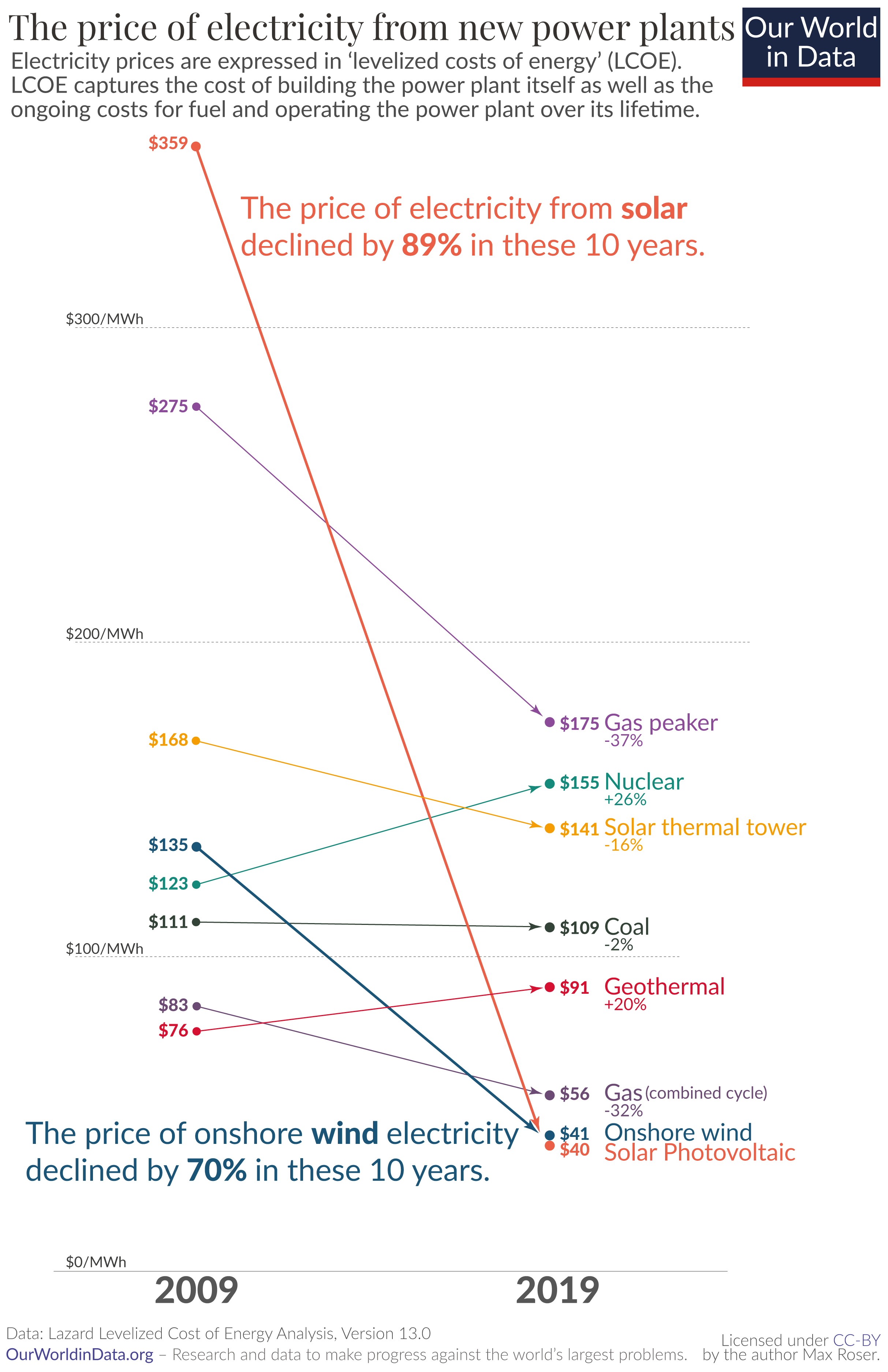
Hydrogen

December 9, 2020

This is based on a talk given last night by Nicky Ison of the WWF on hydrogen power.

Advantages

The advantage of hydrogen as a fuel is fairly simple. You burn it and that produces energy and water. No greenhouse gases. It is reasonably energy intense, perhaps not as good as coal or oil, but it is more likely to be useful for processes which require large amounts of power, than renewables and storage can be. These include steel production and powering huge mining trucks and shipping, or other trucks which have to travel long distances quickly.

Hydrogen is unlikely to be used to power ordinary cars. There is already an electricity infrastructure, and we would have build a new, and country wide, hydrogen infrastructure to make it useful to for ordinary people. Its more energy efficient to use electricity, than to make hydrogen. and transport it. However, in big vehicles the weight of batteries becomes significant. Hence the possibilities of use.

Having said its a great form of energy, it is good because it is extremely flammable and hence dangerous. It does burn so fiercely that materials nearby may not be hurt, as the flames rise upwards. Hydrogen is often transformed into ammonia to help safe storage and transport, and ammonia is not that great for human health. Hydrogen stays as a gas until very low temperatures are reached (−252.87 Celsius), so freezing it or liquidifying it is not practical.

There are three ways of producing Hydrogen. In the first two, coal or gas are used as raw materials (processing them in different ways). These methods could be powered by renewables, but are perhaps more likely to be powered by coal or gas. The third method is to extract the hydrogen from water by electrolysis – that is passing an electrical current through nearly pure water. This third method can use renewable energy, and produces more-or-less no harmful waste products. The other two methods naturally produce greenhouse gases.

There is an argument that the greenhouse gasses from fossil fuel hydrogen could be stored underground through carbon capture and storage (CCS). This is almost certainly a fantasy. CCS does not work well enough, and costs a lot. It is not happening for most coal and gas energy production now, and even in working projects little carbon is being stored, so there is no reason to think it will happen for hydrogen production in the near future.

Hydrogen production is already a major industry, it is used to produce ammonia and methanol, and that goes into cleaning products, fertilisers and explosives. It is highly polluting. 99% of global hydrogen is made from coal and gas and produces approximately 1% of global greenhouse gas emissions – that is more emissions than attributed to Germany or South Korea. Hydrogen production accounts for about 6% of global methane use.

Big renewable Hydrogen/Ammonia plants are being built in China, Saudi Arabia, Spain and Germany. So the idea is taking off, and some people, at least, do not think it impractical in their local conditions.

Conditions of Use

The WWF argues that if we are going to use hydrogen it must be:

  • Renewable hydrogen, not hydrogen made from, or powered by, coal or gas.
  • Traceable. So we don’t get established fossil fuel hydrogen being substituted onto the market for renewable.
  • Deploy stringent safety regulations. If we transport it as ammonia, then we have to also consider the safety issues of that.
  • Minimising environmental impact, and maximising environmental co-benefits [This is a bit vague]
  • Part of the electrification of energy use and production. This is not an excuse for gas or coal to come back.
  • Cheap for Australian customers. We don’t want a replication of the gas (methane) situation in which it is cheaper to import methane than it is to buy local methane.

Renewable hydrogen could conceivably be exported to Singapore, or Japan. But that needs us to build it up quickly, before other people lock in contracts.

We might also use it to start up “green steel” production, and “Green aluminium”. We could also start putting hydrogen into gas pipelines, if we reduced the amount of methane we consumed.

Problems

1) The classic problem is that Australian business is not geared towards making things and exporting them. Our business likes digging things up, growing things, or selling real estate. That is about it. The only person person interested in Green Steel in Australia, who is widely known, is Sanjeev Gupta who is an Indian born Briton.

I’m told that compared to other countries there is a dearth of Australian industrial policy that is helpful to people starting up. It is possible that this could get in the way, or that the Government’s declared preference for fossil fuel Hydrogen, could also inhibit renewable hydrogen.

2) hydrogen production is not very energy efficient. It takes lots of energy to make, compared to the amount of energy released by burning. Energy Return on Energy Input (EREI) is not great. This means we can only do green hydrogen, when we have masses of excess energy being produced. Renewable farms could conceivably produce hydrogen when they can’t sell electricity, because they are producing too much. However, this assumes that we can build that many large scale renewable options, and still have them make a profit, and that we can add the cost of transporting Hydrogen to this, without making it difficult.

3) You need clean water to make renewable hydrogen. I think the WWF tend to bypass this problem too quickly, but I don’t know how much water is needed – I would have thought quite a lot, but I could be wrong. Australia is not renown for its fresh water supplies. Sea water is probably no good. To use sea water we would have to have large desalination plants. That would take even more energy. Bore water usually contains impurities, and that might have to be purified as well. It was suggested we use water in tailings dams. But that is also impure, and probably not enough in any particular pool for us to set up an industrial plant, so the plant would have to be moveable, which could be quite difficult.

So the priority would be cheap water cleaners which can operate at large volumes. This is something the world will need soon anyway, so working on this would be useful. However, because something would be useful, does not mean it can be done in the current situation.

The other possible light here, is that if we stopped coal mining, we would have heaps more water.

According to the National Hydrogen Strategy, producing “enough hydrogen to satisfy Japan’s projected annual imports in 2030 would require less than 1% of the water now used by Australia’s mining industry each year”.

Energising the Economy with Renewable Hydrogen, WWF Australia, P 14.

Conclusion

If we are going to try hydrogen, and we won’t know whether it is doable unless we try, then we need to add at least two points to the WWF list of conditions

  • A coordinated industrial policy that aims to get renewable hydrogen off the ground, encourages industry to use it (such as green steel for export), and either spends the money that is currently marked for taxpayer funding of gas (methane) pipelines on hydrogen pipelines, or gradually converts the current gas infrastructure into hydrogen infrastructure.
  • Make sure that any water which is consumed by hydrogen manufacture does not take away from farming, environmental or human drinking supplies. This could be done by tightening water regulation for coal mines and slowly decreasing the amount of water that coal mines can take, deliberately or ‘accidentally’.

Without these extra points, hydrogen will almost certainly fail to help the situation.

Community Energy

August 14, 2020

Community energy may be the way to go, all over the country, or indeed all over the world.

In Australia, we clearly cannot wait for the State and Federal Governments to do anything, as they seem quite happy with increasing emissions either here or elsewhere in the world, or in confusing people so that they build solar farms and find they can’t connect to the grid.

Neither State nor business, will do it in time. We have to do it ourselves at the local level, and be willing to fight the obstacles that State and business will put in our way. But we can learn from each other, and every time some community has a victory, it needs to be widely advertised.

Perhaps we need a clearing site somewhere to put up these victories and how they were performed? I’d be happy to put up a web site if there was nothing happening.

Congrats to all those who have been involved in making the video below….

[as a footnote, I’m not sure why the sheep are not expected to graze on the solar farm under the panels, in the farm part of the story…..]

More considerations on decarbonisation

August 3, 2020

What I’m trying to do, however badly, in the previous comments is to figure out what are some of the more important eco-social systems in play in decarbonisation, and the ways they interact. It is impossible to specify all such factors in advance, so these are limited, and could be discarded. The main point is to avoid reduction of reality to the two blocks of ‘society’ and ‘ecology’ although I’m limited in my ability to do this because of lack of ecological knowledge.

When I use the term ‘eco-social systems’ I’m deliberately placing ecologies first. Humans do not exist without ecologies, while ecologies can and have existed without humans.

The eco-social systems selected out here, are:

  • Energy,
  • Waste/pollution
  • Extraction
  • Information
  • Planetary boundaries, and the limits of ecological functioning or resilience.

Energy system

This is obviously based in eco-physical functioning. The ecosystem itself can be considered to be a system of energy release/generation and transformation.

I’m suggesting Labour is part of the directed energy system, but no longer should count as the major and only significant part of that system, as in Marxism or classical economics for example, due to the bulk of directed energy coming from other than human sources.

It is useful to explore the dynamics of the limits and stresses of the energy system, and its transformation. For example, we have the possibility that renewables could simply become an addition to the continued use of fossil fuels, unless we have a specific programme to cut greenhouse gas emissions.

The Waste/pollution system

I think it is useful to specify a conceptual difference between ‘waste’ and ‘pollution’ (waste is re-processable by the economy or eco-system, and pollution is not), because the ecological feedbacks, and eco-social consequences are different. It suggests how eco-social activity can overpower ecological resilience even through such apparently harmless action as the production of CO2 – the CO2 waste becomes pollution after it passes certain levels, and the more the ecology is destroyed the more waste becomes pollution.

I also hope naming this system reminds people that the manufacture and distribution of renewables may produce pollution. We need to cut this pollution down, but it seems that renewables are relatively non polluting after installation (before decommission), unlike fossil fuel energy, which only functions through continuing pollution. However, waste and pollution are not removed from the system.

If renewable energy, after the initial costs, is almost free, until the installation reaches the ‘waste/pollution’ stage, that has a large disruptive capacity in itself.

The Extraction System

The eco-social extraction system can damage itself, through ecological ‘revenge’ effects and feedback. There is obviously nothing unusual about asserting this, although it does not seem to be recognised in orthodox pro-capitalist economics.

The damage does not have to be gradual or linear. It can be abrupt and excessive as systems breakdown.

Extraction systems do not have to be harmful – they can pay attention to ecological information, and moderate themselves as needed. However, largely, unconstrained extraction/destruction, pollution, and expansion (or what is usually called ‘growth’) have historically been part of both capitalism and developmentalism, and are the main factors which seem to produce the current eco-crisis. Capitalism and Developmentalism also tend to suppress, downplay, or ignore information about ecology. We can also note that pro-corporate neoliberals tend to remove limits on extraction, pollution and expansion, as soon as they can.

Given this, we can raise the question of ‘how we can transform the energy system without continuing a damaging extraction system?’

If economic growth is linked to increasing extractive destruction, then either growth has to go, or we need to find new ways of extraction. This may cause ‘climate justice’ issues if growth remains our main solution for poverty.

The Information system

This is how humans generally recognise eco-feedback. However, the information system can be distorted by organisational, economic and political processes.

It seems useful to have some idea of how this distortion occurs, and where it is dangerous, and maybe how to diminish it .

Planetary Boundaries and the limits of eco-social resilience.

This is pretty crude but, that is because of a lack of ecological knowledge. However, it does place constraints within the model.

Firstly we need to consider the physical layout, geography, climate, and spatial configuration of a place. This can effect the possibilities of the renewable energy being used, and the way it is deployed. Changing the environment can produce the experience of people being ‘unhomed’. Land not only shapes human activities but is shaped by them. Possible uses of land depend on political struggle and sometimes violent displacement of those originally occupying the land.

As well as this the world’s systems are effected by what people call planetary boundaries, which are themselves systems. The formal planetary boundaries and the eco-social systems which encapsulate them are:

  • Climate stability,
  • Biospheric integrity (balance between species, rates of extinction etc),
  • Water cycles,
  • Biochemical flows (phosphorus and nitrogen cycles etc),
  • Ocean ph (acidity or alkalinity),
  • Particulate levels,
  • Ozone depletion, and
  • Novel entities (new chemicals, microplastics etc.).

We can think of these as essential planetary geo-bio cycles – they are necessary to human functioning, and to the functioning of the planet. They can be broken, and appear to be being broken at this moment. Adjustment will eventually happen, but there is no reason to think that this adjustment will automatically be friendly to current human societies, or even to humans themselves.

It seems that capitalism and developmentalism, both seek to avoid limits, and claim they can transcend those limits, usually though innovation and new technology. But this is likely to be a fantasy. Going by the evidence so far, it is a fantasy – however consoling it might be.

Even if we have massive unexpected technical innovation in the next twenty years (say, fusion power), then it still may be too late, and we still have to stop pollution and ecological damage from other sources.

It almost certainly will not hurt more to stop breaking the geo-bio cycles, than it will hurt to continue breaking them.

Further comments

All of the above systems are obviously interconnected, but specifying them out, might help us factor them all in to our analysis, all the time.

I didn’t particularly bother about the class system and its political dynamics (plutocracy) at this time, because I figure I’m unlikely to forget that, but it affects all of the above. Likewise the political system and its patterns affect all of the above.

Politics can affect the energy system. People can encourage and hinder certain forms of energy. They can forcibly ignore the consequences of energy production and so on.

Politics can affect the waste/pollution system such as the kinds of pollutions accepted or banned. Who is allowed to pollute. Where the pollution is dumped. What kind of penalties apply, and so on.

Politics affects extraction. Who can do the extraction. What kind of royalties are paid. What kind of property is made. What kind of limits to extraction exist. What local benefits arise.

Politics affects what kinds information are promulgated. The kinds of truth standards to are applied. The modes of distribution of information. The suppression of information and so on. What kinds of people who are ‘trusted’ with respect to information. The kind of information is accepted by different groups?

In later blogs I’m planning to try and incorporate the property/accumulation system, and the class/plutocracy/group-categorisation systems into the analysis.

Decarbonisation

Decarbonisation seems obviously affected by all of these factors:

How do we generate the energy to decarbonise, without disrupting ecologies, through waste/pollution and extraction processes? How do we decarbonise without harmful growth?

How do the information systems work to recognise, or not recognise, what is happening? how do they play out through the political and economic processes? Is it possible to improve them?

How do ecological limits affect decarbonisation pathways when they are not in good shape. We face doing decarbonisation in an era of compounding eco-social crises, which increases energy expenditure as people attempt to control them. This adds to the difficulties of decarbonisation.

To reiterate: we cannot successfully decarbonise, without generating enough energy to decarbonise. It also seems we must generate this energy at the same time as cutting pollution, ending extractive destruction, ending growth, refining information, and protecting ecological resilience, etc.

Conclusion

If there are any points that I would really like people to take from any of this it is that:

  • It takes energy to ‘release’ energy – and usually leads to waste or pollution somewhere in the cycle. Pollution must be minimised to keep geo-bio cycles functional.
  • In this sense, no energy is completely free.
  • If it takes more energy for humans to make energy than energy is released then, over the long term, the human system will collapse.
  • Human action is limited by available energy. It is also limited by the amount of destruction, and damage to the geo-bio cycles produced by the energy system.
  • The Information System and its confusions, is not an addenda to the other systems, it is vital to any analysis.
  • Human energy, extraction, waste/pollution, information and other systems, interact with planetary geo-bio-cycles or planetary boundaries, and if the human systems disrupt those geo-bio cycles, they will be limited and disrupted in turn – probably violently.

Considerations on decarbonisation processes

August 2, 2020

Basics

Social life only exists because of ecological processes, and is shaped by those processes.

All economies (modes of production, distribution and consumption) involve systems of energy, waste, extraction, information and ecological limits. [They almost certainly involve systems of accumulation/property, class/plutocracy and regulation/politics, but I’ll leave those out for another blog]

  • These other systems are not necessarily subsumed or determined by economies.
  • If an economic theory ignores the interactions between energy, ecology, waste, information, social organisation and conflict, it is more or less pointless.

It can be helpful to think of eco-social relations in terms of flow or flux, of patterns rather than structures, or of disruption rather than stability, or as guidable but not controllable .

Ecologies and eco-social relations are inevitably what we call ‘complex systems’. Their trajectory cannot be predicted with complete accuracy. If we are working with them, we should be on the look out for unintended consequences and surprise – as these are sources of information.

Every being in the system is interdependent with others, and responding to others. It has the characteristics it has, because of those interactions and their histories.

Energy

All ecologies and economies involve transformation of energy, from the transformation of sunlight by plants, to atomic power.

Transformation of energy, plus effective ecological functioning, is necessary for any human actions to happen. The less effective, or functional, the energy or the ecology, the more restrictions and difficulties.

Labour power is just one form of humanly applied and directed energy. Labour, itself requires energy from the organic transformation, and breakdown, of food into waste.

  • Humans have appropriated animal labour, the flow of water, wind and tides, the burning of biological material, the burning of fossil fuels, the energies inside atoms, and so on. These processes magnify, and transcend, human labour.
  • Once you develop large scale directed energy generation and application, then labour, and the organisation of labour, becomes secondary to the organisation of energy production and transmission in general. This is why energy is so fundamentally important to social capacity and organisation – and why changes of modes of energy generation are so threatening and unsettling to that established order.

Human producing, or using, of energy takes energy. Understanding this is vital.

The more energy is produced by the energy used to produce it, the greater the energy availability and the greater the activity possible. This is what we can call the “Energy Return on Energy Input” or EREI.

  • Fossil fuels have had a very high EREI. It look as though the EREI of renewable energy is much less. However, for most renewables after they are installed, the EREI changes, as very little labour, or energy expenditure, is required to gain an energy output – it is more or less free – whereas fossil fuel energy generation requires continual energy use to find and process new fossil fuels, and continual pollution from burning.
  • It looks as though the EREI of fossil fuels is decaying. Gas and oil sources are diminishing, requiring uneconomic and ecologically dangerous practices like fracking, or they are having to be found in places with increasingly difficult extraction practices – such as being under deep and stormy waters. Extraction of fossil fuels seems to be doing more ecological damage and requiring more energy to obtain. The ‘low hanging fruit’ has been taken and it cannot grow back, as once used it is consumed forever.
    • Coal could be an exception to the decline in EREI, but this may be because contemporary open cut coal extraction processes are much more ecologically destructive than previously, and the energy costs of transport are being ignored.
  • The decline in the EREI of fossil fuels, with the possible exception of coal, means that the energy expense of finding new fossil fuels to provide the energy for fossil fuel power stations is probably increasing in general.
  • It also means that there is less available energy around.

Waste/Pollution

Transformation of materials through energy, or in energy production, produces ‘waste’. The simplest human society imaginable, turns edible material into energy and human excreta (this is an overt simplification).

  • ‘Waste’ is here defined as excess, or unwanted matter which can be used, or ‘recycled’ by the economic or ecological system within an arbitrary, but functional, ‘reasonable’ time.
  • ‘Pollution’ is defined as waste which cannot be so processed in a ‘reasonable’ time.
  • Perfectly harmless waste can become pollution if there is so much of it that the economic or ecological systems cannot process it, and it accumulates and disrupts, or poisons, functioning ecologies.
  • Contemporary Greenhouse gas emissions are wastes which have become pollution because of the volume in which they are emitted.

The more that pollution damages the system, the less waste can be processed by it.

Extraction and ecology

Economies can also extract materials, and life forms, from the ecology in ways that destroy the ability of the ecology to regenerate and, as a consequence, produce eco-social change, minor or large depending on industry wide levels of destruction.

  • Ecologies are not passive, and respond to human or other actions in ways which are often unpredictable in specific.
  • It is possible to imagine an economy in which destruction of ecologies was not standard practice.
  • Indeed the impact of humans on ecologies was, until relatively recently, mostly fairly gentle. Although some human systems appear to have been unintentionally destructive of their ecologies, before the large scale use of fossil fuels, and carried out the destruction fairly quickly.
  • Increasing economic growth, which seems essential in capitalism and developmentalism, nearly always seems to involve increases of ecological damage. Such growth has often come out of destruction.

For decarbonisation, the fundamental question is “how we can transform the energy system without continuing a damaging extraction system?”

It can be postulated that the economic system is not the only cause of ecological destruction. Religious systems can demand the cutting down of trees, the use of plaster which blocks water supplies, as apparently the case for the Maya, and so on. That is another reason why we talk of eco-social relations, and indicates the importance of worldview and information.

Information

Economies require information distribution and restriction. At the minimum, people need to know what to extract, how to transform it, how to consume it, and how to keep the system going. This knowledge may be restricted so that only some people know how to do some tasks properly (through gender, age, class, education, etc.), and the information may be limited, incorrect, or influenced by its role in politics.

The information system is how humans generally recognise eco-feedback.

Any information about complex systems, such as societies or ecologies, is almost always limited and inadequate, because it is inherently impossible to map all the relevant links and exchanges in real time. Any representation, however useful, is a distortion.

  • Not all information is literal, some can be ‘symbolic.’ There is the possibility that symbolic information may be useful in dealing with systems that ‘resist’ ordinary language.

Information distortion is not just a product of the limits of human conception. The information system can be distorted by organisational, economic and political processes.

  • For example, information distortion can result as a normal function of capitalist accumulation. There is the production of opaqueness of pricing to hinder customers finding out the best price (competition through obscurity), the use of rhetorical, or overly hopeful, information as part of market strategy to capture markets and discourage competition, and the use of information to capture, or influence, states.
  • The information needed to know that aspects of the economy, are destroying the ecologies they depend upon, can be ignored or suppressed as part of the functioning (and protection) of that economy.
  • Politics also damages accurate information, through using information as a mode of persuasion, through concealment of information, and through the inability to co-ordinate coherent information in a zone of information excess, such as an information society, when information justifying almost anything can be found.
  • Organisational forms, such as punitive hierarchy, can also distort information transmission. In such a circumstance, people try to give those higher up in the hierarchy than them the information they think those above them require, and hide mistakes to avoid punishment or gain reward. Likewise, those above have incentives not to reveal exactly what is going on to those below them, or to ever admit ignorance, as that implies vulnerability. This situation can be reinforced if the organisation is justified by adherence to a correct dogma which has to be kept safe from challenge.
  • Information has value, and its value to a group may depend on how restricted or how available it can be made, in different situations.

Ecological systems 1: Human Geographies

Before considering planetary boundaries as features of eco-systems, lets first briefly consider geography, climate and landscape.

Obviously, mountain ranges, forests, plains etc may affect the layout of Renewable Energy, or the RE may affect the land, if trees are felled, fields converted etc. Wind may be more geographically more prevalent than sunlight, or vice versa. Wind may be severe, putting a limit on size of turbines, or the angles of solar panels. Winter darkness, or heavy seasonal rain can affect the possibilities of solar power. Weather features such as presence of wind and sunlight, and the presence of water for hydro-electric generation, can be affected by climate change. Distances between centres of population and the areas in which renewables can be deployed, are all important, although cities may need to become renewable centres (there are plenty of wind canyons, and high roofs ). All this means that simple geography, spatial layout and its effects, cannot be ignored.

Landscape and vegetation is also something that people related to, and end up in relationship with. Disruption, or change, of landscape can disrupt and unsettle people and their activities, and often their livelihood, to the extent of them feeling ‘unhomed’.

Unhoming is a common feature of development, which is usually ignored by the established powers and thrust upon people living in that landscape. For some reason it is far more significant when the unhoming comes from renewables.

Ecological Systems 2: Planetary boundaries

All planetary eco-social systems are currently bounded. Exceeding the boundaries leads to the rundown, or breakdown, of ecological functioning, and this breakdown then adds difficulties to maintaining other systems in their previous flourishing.

  • As ecological systems breakdown, they cease performing all of their ‘essential services’ at previous levels.
  • If these levels are to be maintained ‘artificially’ then this requires extra energy expenditure, in addition to normal energy expenditure.
  • It appears that growth, in the contemporary world, is likely to eventually lead to the breaking of planetary boundaries

Capitalism and developmentalism tend to recognise boundaries only to ignore them, and claim that ingenuity and willpower, will overcome those boundaries forever without limit. However, just because a technology is needed and would be profitable, does not mean it will be developed in time to save the system.

Capitalism downplays any limit to growth, and any fundamental role to the world ecology. This is one reason it is currently so destructive.

The main planetary eco-social systems which form these boundaries are:

  • Climate stability,
  • Biospheric integrity (distribution and interaction of organic life forms),
  • Land layout (geography),
  • Water flows and cycles,
  • Biochemical flows (phosphorus and nitrogen cycles. The possibility of ‘Metabolic Rift’),
  • Ocean acidity or alkalinity,
  • Particulates,
  • Ozone levels,
  • Novel entities such as new chemicals, plastics and microplastics.

All of these factors should at least be glanced at.

To emphasise again: humanly propelled destructive extraction and pollution are the main current disruptors of these boundary systems.

Capitalism and developmentalism

Capitalism and developmentalism have been incredibly successful at increasing standards of material life for many people. This success means that changes to their processes are likely to be resisted, at many different points in society.

So far, this success has involved refusals to live within ecological (or planetary) boundaries and processes. The eco-social relations of these systems seem doomed.

Capitalism and developmentalism, run a several pronged attack on ecologies. They a) emit pollution, b) destroy ecologies through over-extraction, and c) attempt to grow themselves to increase their ‘benefits’ (such as profits, development, spread, production, consumption and extraction). They attack planetary limits, and produce compounding destruction.

  • Dumping pollution and poisoning without cost is defined by these systems, as an ‘externality’, and helps to increase business profit. This means that pollution escapes being ‘accounted’ for (or noticed) by members of the emitting organisation.

There are no ‘externalities’ once we accept society and ecology always intermesh, and that there are boundaries to the planet and its functionality.

  • To reiterate: organisational structure can limit the observation, and conscious processing, of feedback and useful information. It is involved in creating patterns of ignorance or unaccountability. It is likely these patterns of ignorance also hide other information vital to the general survival of the organisation.

Capitalism leads to the classic tragedy of the commons, in which individuals and organisations acting independently, in their apparent self-interest, over-exploit and over-pollute a resource destroying the common good.

By diminishing ecological functioning as part of their own functioning, capitalism and developmentalism, suffer from what Engels called the ‘revenge effects of nature’.

Climate Change

One of these ‘revenge effects’ is climate change. Climate change is a subset of the consequences of the ecological damage produced by capitalism and developmentalism, as should be clear through looking at the list of planetary boundary systems. We probably should not ignore the other ecological problems we are facing at the same time.

All the systems I have been discussing, are bound into a shared set of eco-social processes, and as they are all active (although not coherently or harmoniously), any change in the relationships, or interactions, produces further changes in eco-social relations.

  • Ecological damage probably always portends some change in eco-social relations. The greater the damage the more likely the greater the change.
  • This is summarised in the concept of the Anthropocene, in which it is recognised that human activity can influence planetary activity, and vice versa.

Climate change disrupts the possibility of a smooth continuance of the established eco-social relations. This means change, whether voluntary and planned, or otherwise. There is no necessity the change should be beneficial.

Accelerating social breakdown produced by climate change may render all forms of transition more difficult.

Energy Systems and Transformations

Through the introduction of new energy systems and a simultaneous ongoing reduction of pollutions and destructions, the global greenhouse effect could be diminished and climate disruption ameliorated.

  • It needs to be emphasised that an increase in renewables without a cut back in pollution (especially from burning fossil fuels) and a slowdown in destructive extraction (which will probably need to be connected to a slowdown in growth etc.), will not generate stability and the eco-climate crisis will continue.

If establishing a new relatively stable set of eco-social-energic relations is successful, then social relations will have changed – and probably unpredictably.

As energy systems influence the capacity of a society’s ability to act (to produce, consume, struggle, invent, extend itself, produce information, or promote dominance of various groups and nations,), a change of energy system will cause political eruptions, and unpredictable change, which potentially threatens losses for powerful sections of society, not just fossil fuel companies.

  • For example:
    • cheaper energy might threaten the capital accumulation of energy companies of all kinds; it may even threaten capital accumulation itself.
    • Cheaper energy might increase eco-destruction, as more damage can be done at low cost.
    • More jobs may threaten economic platforms which depend on maintaining a “reserve army” of unemployed labour.
    • With localised energy production, nations may be able to break up with greater ease.
  • Our solutions to poverty have so far depended on increasing energy supply, emitting cheap pollution, destroying ecologies and economic growth. If we stop these practices to save the world, do we know how to reduce poverty in the short term? I suspect not. If those in favour of transformation are in favour of what is loosely called ‘climate justice’, then this is a problem they have to face.
  • Unintended consequences are possible everywhere and should be expected.

Any energy transformation depends on the production of energy to power and build that transformation.

It may not be possible to provide all this energy immediately from other renewables, or non-greenhouse-gas emitting sources. Without care, the organisation of transformation could lead to a catastrophic increase in the use of fossil fuels to ‘temporarily’ provide the energy for the transformation, which would then appear to ‘lock-in’ the use of those fossil fuels for some time.

  • As stated earlier, the EREI of fossil fuels seems to be declining, which could mean there is both less energy available from them and the harm of using them increases.

A program of transformation may also generate heavy pollution from the manufacturing, and installation, of the new energy system.

If the old forms of social organisation remain, then renewables may be used to allow increasing energy supply on top of fossil fuels, rather than replacing energy supply from fossil fuels.

  • This would be a so called ‘Jevons effect’ in action.

The energy costs of transformation, when added to the power of established fossil fuel industries, may lead to state and business encouragement for locking in fossil fuels.

  • Potential conflict between the state and capitalist accumulation, may lead to the state abdicating its role in the transformation, to the extent that its governors depend on corporate subsidy for their campaigns or for other forms of income.
  • The energy transition is largely occurring because of recognition of climate change, not through normal socio-political reasons such as increase of profit for already powerful people, or increase of state power, or the dangerous increase in the EREI of fossil fuels. Fossil fuel energy production is still relatively cheap, efficient (for certain values of efficiency) and is an established and understood technology. Transformation can be seen as an unnecessary cost, with little benefit for the already successful.
  • Accepted behaviour that previously generated wealth and power, now generates (disputable) harm – in the sense that any information can be disputed. Recognition of this problem, could produce an existential crisis, which may well lead to people lowering their anxiety by enforcing familiar ways of problem solving.

Cost, lack of co-ordination among, and between, capitalists and states, and presence of competition between business and states, is likely to increase problems of freeloading and non-cooperation.

  • It may seem beneficial for an organisation to allow other organisations to bear the cost of transformation, or catch up later assuming that costs will have decreased.

Every country has possible excuses for why it should be exempted from action and allow other countries to have the primary expense of conversion.

  • In Australia it tends to be argued that we are an exporting nation, contribute relatively little in terms of greenhouse gas emissions, or that we are large country which needs to burn fuel for transport etc.
  • It also tends to be argued that we should only change after others have done so, so we do not lose out through: a) the higher competitiveness of nations which retain or boost fossil fuels; b) loss of coal sales; or c) through the greater cost of early transformation.
  • We also tend not to be informed of the steps to transformation that are happening elsewhere. Even the success of Conservative British Governments in reducing greenhouse gases tends not to be reported here, or skated over. That India has a carbon price is almost completely unknown.
  • Information is hidden or lost, probably by ‘interested parties’ to reinforce inertia.
    • Australians also have to deal with an extremely confusing, and hidden set of energy regulations, which vary from state to state. There is no apparent co-ordination of energy legislation or regulation.

“How do we overcome organisational inertia and freeloading within a state and capitalist framework that puts local profit first?”

Renewable Energy

Renewable energies can be presented as:

  1. a simple technical fix,
  2. a retro-fit of the existing system,
  3. an ‘energy transition’,
  4. a wide-scale ‘energy transformation’
  5. a wide-scale social and energy transformation, which makes either radical break with the present or for continuing change,
  6. the inevitable process of societal decarbonisation under climate change,
  7. a co-ordinated socialist plot to increase government control over daily lives,
  8. a false hope – too little too late. Or even,
  9. the end of civilisation and a reversion to barbarism with a return to “living in caves”.

The information presented about renewable energy is not always entirely positive, and analysts should not pretend otherwise, or claim that a transformation will inevitably occur. Transformation to renewable energy involves social struggle, partly because we do not know the consequences of the transformation, and imaginations of the transformation involve, and produce, politicised information geared at social persuasion.

Transformation also involves technical and organisational difficulties.

  • According to some estimates, the amount of fossil fuel energy we need to replace is truly massive. Real renewables (not biofuel, not hydro) currently compose less than 3% of the world’s total energy requirements, according to the IEA. Other estimate seem more optimistic, but we are still, once biofuels are removed, talking about 5-7% of the world’s total energy usage.

To make incursions on the non-electrical energy system we have to electrify these other uses of energy (diesel in Australia). This requires even more energy use to build.

The technical difficulties of achieving this replacement, without producing further ecological destruction or pollution, is huge, especially given that energy needs to be highly available to make the transition. It is a problem which has to be faced.

Transition to renewables also faces powerful political opposition. This renders the imposition of renewables upon people through standardised neoliberal non-consultative planning processes, which do not benefit local populations, even more harmful than usual. Renewables may face difficulties not faced by more established industries.

We also appear to have significant time constraints. If we keep delaying the transformation, climate change and eco-social destruction will become more severe and make the transformations far more difficult.

  • As the ecological crises get worse, we may well require more energy use to keep eco-social relations stable, or repaired, after more frequent, and compounding, disasters
    • (such as covid and intense storms, which spread the virus because people cannot keep clear of each other, which lessens the energy available to deal with the problem).
  • The crises may possibly take energy away from transition, or require still more energy generation.
  • Organisational breakdown resulting from climate turmoil will also impede the transitions and add to the energy expenditure.

Conclusion

We cannot successfully decarbonise, without generating enough energy to decarbonise. It also seems we must generate this energy at the same time as cutting pollution, ending extractive destruction, ending growth, refining information, protecting ecological resilience, dealing with compounding problems, and fighting political wars etc.

Energy transformation is not easy, and is being rendered more difficult, by the current forms and dynamics of eco-social relations, and our ways of problem solving.