The 1965 Report Restoring the quality of our environment presented to US President Johnson gives some ideas of knowledge and approach to climate change. They took it as likely and serious. Here are some paragraphs with a few comments in [ ]s:
President Johnson wrote:
the technology that has permitted our affluence spews out vast quantities of wastes and spent products that pollute our air, poison our waters, and even impair our ability to feed ourselves…. Pollution now is one of the most pervasive problems of our society.
Johnson points out that pollution is a general and serious problem resulting from the way societies have gained affluence. The Report, itself, opens with some history of the knowledge of CO2 Pollution, climate change, and its consequences:
The possibility of climatic change resulting from changes in the quantity of atmospheric carbon dioxide was proposed independently by the American geologist, T. C. Chamberlain (1899) and the Swedish chemist, S. Arrhenius (1903), at the beginning of this century.
They point to some existing evidence of climate change.
One might suppose that the increase in atmospheric CO2 over the past 100 years should have already brought about significant climatic changes, and indeed some scientists have suggested this is so. The English meteorologist, G. S. Callendar (1938, 1940, 1949), writing in the late 1930’s and the 1940’s on the basis of the crude data then available, believed that the increase in atmospheric CO2 from 1850 to 1940 was at least 10%. He thought this increase could account quantitatively for the observed warming of northern Europe and northern North America that began in the 1880’s….
As Mitchel (1961, 1963) has shown, atmospheric warming between 1885 and 1940 was a world-wide phenomenon.
The authors point to the difficulties of prediction of climate….
Even today, we cannot make a useful prediction concerning the magnitude or nature of the possible climatic effects.
Although clearly they recognise that climate change is a problem. They also recognise that sea level rise is a likely result.
It has sometimes been suggested that atmospheric warming due to an increase in the CO2 content of the atmosphere may result in a catastrophically rapid melting of the Antarctic ice cap, with an accompanying rise in sea level…. But such melting must occur relatively slowly on a human scale…. The melting of the Antarctic ice cap would raise sea level by 400 feet. If 1,000 years were required to melt the ice cap, the sea level would rise about 4 feet every 10 years [They add that this is not yet happening]
They think CO2 increase is induced by the actions of a particular social formation, and is therefore humanly induced.
Through his worldwide industrial civilization, Man is unwittingly conducting a vast geophysical experiment. Within a few generations he is burning the fossil fuels that slowly accumulated in the earth over the past 500 million years. The CO2 produced by this combustion is being injected into the atmosphere; about half of it remains there.
We can conclude with fair assurance that at the present time, fossil fuels are the only source of CO2 being added to the ocean-atmosphere-biosphere system.
By the year 2000 the increase in atmospheric CO2 will be close to 25%. [They were wrong, the increase was much bigger than they thought] This may be sufficient to produce measurable and perhaps marked changes in climate, and will almost certainly cause significant changes in the temperature and other properties of the stratosphere. At present it is impossible to predict these effects quantitatively…
Again, they suggest that humanly induced climate change could be bad for humanity
The climatic changes that may be produced by the increased CO2 content could be deleterious from the point of view of human beings. The possibilities of deliberately bringing about countervailing climatic changes therefore need to be thoroughly explored.
The solution they propose, appears to involve an early suggestion of geoengineering, rather than a cutback in fossil fuel consumption.
A change in the radiation balance in the opposite direction to that which might result from the increase of atmospheric CO2 could be produced by raising the albedo, or reflectivity, of the earth.
So, the Report could warn that global heating and climate change was likely to occur because of human burning of fossil fuels, but made no suggestion of cutting back consumption of those fossil fuels.
“The main conclusion of the vast majority of 100% renewable energy systems studies, is that such systems can power all energy in all regions of the world at low cost”
Pessimism
However we can also read that is appears that tax payers all over the world, are still subsidising their own destruction.
An analysis of 51 countries responsible for 86% of electricity coonsumption, showed that global public subsidies for fossil fuels almost doubled to $700bn in 2021 largely through government subsidies of electricity prices.
Fatih Birol Director of the International Energy Agency remarked “Fossil fuel subsidies are a roadblock to a more sustainable future, but the difficulty that governments face in removing them is underscored at times of high and volatile fuel prices,”
And Mathias Cormann, the OECD secretary general (!!!well known for collaborating with climate/ecological damage denial governments in Australia) said “Significant increases in fossil fuel subsidies encourage wasteful consumption, while not necessarily reaching low-income households… We need to adopt measures which protect consumers [and] help keep us on track to carbon neutrality, as well as energy security and affordability”
Estimates including implicit subsidies, ie the cost of the climate and air pollution damage caused by fossil fuels, are far higher. These amounted to $5.9tn in 2020, according to the International Monetary Fund, or $11m a minute
Let’s begin with some useful definitions from Ruskin:
“Wealth” to Ruskin is what contributes to a good life and adds to people’s capacity to be constructive:
There is no wealth but life. Life, including all its powers of love, of joy, and of admiration. That country is the richest which nourishes the greatest numbers of noble and happy human beings; that man is richest, who, having perfected the functions of his own life to the utmost, has also the widest helpful influence, both personal, and by means of his possessions, over the lives of others.
Unto this Last.
To Ruskin wealth is therefore connected to the power of implementing virtue, ‘nobility’, and being helpful. This is not a definition likely approved by classical economics – partly because these powers cannot be counted or measured and evaluation can be fairly subjective. Wealth being life, also points to the health of the environmental ecology.
“Riches” can be distinguished from wealth as it is collections of money and property which may not contribute to peoples lives. They may even involve cruelty, exploitation and exclusion.
If the king alone be rich, or if a few slave-masters are rich and the nation otherwise composed of slaves is it to be called a rich nation?… [paraphrase] Since the inequality, which is the condition of riches, may be established in two opposite modes—namely, by increase of possession on the one side, and by decrease of it on the other—we have to inquire, with respect to any given state of riches, precisely in what manner the correlative poverty was produced.
Ruskin Munera Pulveris
Wealth tends to be communal, riches tend to be private and exclusive. I’m not aware of whether Ruskin writes on the virtues of commoning, but it is implied in these definitions. Wealth and prosperity is helpful to all, riches are not. This distinction is again unlikely to be favoured by classical economics, as such economics might even have the aim of confusing prosperity with riches for some.
“Illth” is the harm produced by economic activity. Illth includes obvious(?) devastations produced by pollution, dumped nuclear waste, ecological destruction during extraction and so on, but illth also includes the, perhaps, unintended human consequences which can arise from building riches such as ugliness, ill-health, insensitivity, compulsive selfishness, bad community relationships, exploitation, increasing misery, people crippled or exhausted and insecure from the work they have to do, loss of the ability for the community or individual to support themselves, work injuries, consumerist addiction, people being fed lies and untruth, dispossession of people by market demands, people being sacrificed to the market, destruction of prosperous futures, destruction of virtue, and so on.
There may be conflict here. What one person counts as illth, can be defined by others as riches, or even wealth.
Problems of Measurement
Recognition of the complexity of wealth and the problems of Illth seem vital to living a good life and perhaps even surviving. As Herbert Daly points out, once we start hurting the planet and using up its capacity to regenerate its wealth, we are continually generating compounding illth – even if we apparently generate riches. This is a case in which our economics measures money, but does not measure prosperity or the risk of illth. Again, this is difficult to do, but should probably not be ignored.
The main supposed measure of prosperity is the GDP which measures economic activity or expenditure (riches), not Ruskinian wealth.
GDP = C (Private Consumer spending) + G (government spending) + I (investments spent on capital equipment, inventories, and housing) + NX (country’s total exports less total imports)
or
GDP = Wages + Profits + small business profits + Taxes – Subsidies
These sums can be adjusted for inflation or not. I used Wikipedia as the source, despite finding many other definitions, on the grounds that informed people would probably alter Wikipedia if it was obviously wrong, but also see this which points to rents, earnings from interest, and depreciation as factors in the second version of GDP etc.
The problem with illth in this scheme, as Daly points out, is that it has little recognised monetary value and is not measured. While few people wish to buy illth, they will happily dump it on others to increase profits and the GDP, and people will buy products that may save them from illth, gas masks, air filters, vitamins, pollution clean ups and so on, also boosting GDP, so that illth not only can help destroy the future but generate economic activity which counts as riches and prosperity as measured by the GDP. Through the measurement process, illth can increase apparent riches more than if the harm had not happened. The actual damage to life that illth creates may not be so easy to calculate.
Likewise if a climate change driven storm flattens an area and leaves people homeless or months or years, then any effort at reconstruction also adds to GDP, when in many cases little wealth may be being added to people’s lives and much may have been taken away.
If a forest is destroyed that can count as good economic activity. If people destroy all the world’s trees that is still a boost to the current GDP, despite having destroyed current and future wealth. Destroying the capacity for life, is almost certainly definitional of illth.
Because humans have apparently already significantly affected the planet’s ability to support us, then we need to lower the mass of the monetary economy, especially the mass of the illth economy. To do this we may have to abandon the current version of the GPD as a measure, and damage will have to be counted as a negative in the same terms, which may not be possible. But it is almost certain that economies will have to shrink in reality until the illth (long and short term) is minimised.
Sometimes harms may be useful when they occur during a re-organisation of the economy into a more democratic form, for example, but that is not usual.
We might even wonder if illth can ever be separated from riches? It may be the case that the global economy (both capitalist and developmentalist) requires illth to ‘work’ or to know it is working.
If we then add growth of the GDP as a supposed necessary mark of success or even of economic “sustainability”, then this holds a demand that the economy will have to continue to increase resource extraction and consumption, which may require even more violent, and illth producing, forms of extraction, which incidentally add more to GDP because the cost is greater but which add very little wealth. Daly again remarks that a low destruction oil well that produces much oil without much labour or danger, would currently add less to the GDP than would a dangerous deep sea well, in a storm racked area, which produces heaps of pollution and a need for clean ups. The second well would probably only be countenanced when the easy wells are almost used up.
The difficulty is measuring illth purely in monetary terms. If illth is not completely repaired, which is possibly impossible, then there is no cost, and as we have seen currently the cost of repair hides the damage as riches. If illth is freeloaded upon to generate riches, then it cannot be costed other than by estimate, and if the illth of human misery is to be factored in, then it can always be denied by those with riches….
A more useful measure????
Nowadays, according to some claims, economic activity uses up a year of the Earth’s capacity to regenerate in just under 8 months. This is illth creation in action. Economic activity is creating riches but destroying our capacity to produce future prosperity. It indicates the seriousness of illth production. I presume this is a disputable measurement, which is why it is not in official use, but it does seem to be a useful measure. We simply cannot afford to be in a situation in which our use of the planet is greater than the planet can regenerate, for long periods of time.
Hence, again we go to the necessity of
degrowth
the recognition of the unintended harms coming from the production of riches, and
The book essentially argues that our ways of approaching complex and uncertain problems is likely to generate even more problems, because of psychological programming (or perhaps human nature – I’m not going to assume these problems are universal). Non-work lives do not help either, as we have a lot of interconnecting and interrupting problems to face even when we are not at work, and this takes away lack of urgency from around the problems and piles on the pressure. There is no space for slow thinking or contemplation. Our issues get worse.
The five psycho-social problems involve
Simplification
Rightness
Agreement
Control
Ego protection
So lets look at what this involves….
Simplification: Using simple and repetitive stories
Humans tend to live by simple stories, which fit into a standard narrative frame. These stories can help bond us together, because they are, or become, shared. However, simple stories narrow focus and freeze creativity….
It is common that we use repetitive stories to give ourselves an interpretations of events, without bothering to check if they are true…. We may see people in specific (and repeated) roles, such as being unhelpful, hostile, or even evil. We may see ourselves as perpetually failing, or suffering, or triumphing, and add more examples to ‘illustrate’ our stories. We turn fragments of ‘evidence’ into a familiar story, or plug them into familiar stories, and that often seems like its enough. Without any check whatsoever if the story is true… We may not even know what we are doing.
We don’t look for new solutions or new information, because we feel we ‘know’ what happened, because of the story we tell ourselves. Not only is our story likely to be wrong, because the world is complex, but it is likely to shape what we perceive and what we ignore. It is also likely to replace complex interactional causality, with linear causality, to make the explanation easy. People are also likely to give a story a beginning and an end, when in complex systems beginnings and endings may never be clear.
The simplicity of stories tends to mean that we feel it is ok to simplify the world. We don’t have to look for unexpected connections, or unexpected causalities, unintentional consequences and so on – all of which are features of normal life in complex systems.
One way to get out of this harmful simplicity, is to see if we can tell multiple stories, change people’s roles in the story etc… tell the story from other people’s point of view (as our views of any complex system are likely to be different). We can add things which might seem irrelevant. We can wonder how the story or the simplification could be wrong. The more stories we can tell the more we might notice or imagine.
We may not be able to avoid simple stories, and simplifications, but we don’t have to believe them, and we can expand the range of possible events we consider, or even just change the story…..
A simple story in a complex world is probably wrong.
Rightness
We often think something is correct because it feels right, and assume we are right most of the time, or again we may get carried away by the story. We seek data that confirms our rightness, rather than our wrongness, and we tend to reinforce this attitude by ignoring areas in which we are uncertain – It is other people who are wrong and need teaching, rather than ourselves who need to learn.
Being right has similar problems to reducing things to simple stories, it causes us to ignore things which may be going on. It can also cause us to make situations worse, as we ignore data that is telling us we are wrong, when we cannot be. People thinking they are inevitably right, are dangerous.
If you feel certain about something then ask questions, anyway….
Agreement
Agreement is not inherently bad, but Humans tend to agree with people who they identify with too quickly. If everyone has the same bias, then an agreement can just reinforce that bias, and again stop exploration. Agreement gives us a sense of belonging in the chaos, and thus reassurance we are right, or that it is not just our fault if everything goes wrong. On the other hand, people may disagree with people they identify with as outgroup, as quickly as they agree with those defined as ingroup. As usual this process removes information from people.
Try disagreeing to expand our sense of the problem.
Control
Complex systems are very hard to control, or to master. They slip out of our hands or our machines. Yet in modern societies, its generally expected that leaders be in control, so leaders can insist on simple targets which are actually distractions from the real job. They can assume that because some practice has worked before, it will automatically work again.
Leadership in complex systems involves letting go and allowing things to happen, in the best way that seems to be possible.
We cannot control many outcomes, but we can influence, conditions, events and what is emerging – having a direction rather than a fixed destination. We can experiment, without knowing what will happen in advance.
Ego protection
We can’t avoid egos, because we cannot perceive or understand everything; we simplify, we try to fit in and be part of the ingroup, we try to control our lives, random events and other people, and so on. In a sense, our sense of self is unreal or dependent on what we think others will want or observe, and we try to protect it from attack from others, and attack from the world. We try and protect our reputations, and our group membership and respect, rather than reacting to the world as it is, and so on. Protecting our ego is to some extent trying to enforce the past, and not react to the present, or our present position.
Summary
The problem is that complexity is not simple. It is not possible to know everything relevant about a complex system, although we might model it well enough for short term purposes.
Our habits of:
Isolating simple parts of reality and giving them prominence, and linking everything together through standard stories which we use as detailed interpretative maps of reality
Of insisting that we are right, and know everything important
Of reinforcing our rightness by agreement, so that understanding becomes a group activity tied into identity, which reinforces the processes of not looking for alternatives or exceptions
Of trying to control and force the system to behave in particular ways, and being upset when there are unintended and disruptive consequences,
Of trying to not risk our status, and keep in well with those people in our ingroup
All increase the tendency to ignore reality and make it personally and socially acceptable, so we tend not to deal with complexity, or life, very well. As a result, we can head towards some kind of destruction.
Realising these 5 processes are mind traps, not mind virtues, helps us to undo them and get more perception and information. This can be thought of as a negative process. Lowering the influence of the mind traps won’t ensure you can deal with complexity, but it will help. It’s a basic first step.
Another problem occurs when we have political movements which get trapped in these processes, and we ignore the world’s complexity and attempt to suppress that complexity. This may work for a while, but the long term prospects are not good. As I’ve said before, in an organisation which reinforces the mind traps with a punitive hierarchy, punishing people for not agreeing with the organisation’s stories, their rightness and demands for control, then the upper layers of the organisation will have very little idea of what is going on, as people will make sure they don’t tell those people anything which will get them punished, and the whole organisation becomes a mind-trap.
This is why some generals make sure they talk to the troops in an informal and safe situation, to find out what is really happening; to get new stories, new information, and stories of failure of control and action. They avoid their officers telling them what those officers think the general wants to hear.
Just as a footnote, it seems to me that talking of complex adaptive systems is a story which helps confuse people. It implies that the systems will adapt to whatever we might do, or that they will adapt to support us. This is simply not necessarily true. Systems can adapt to be hostile to any of the life forms that currently occupy them – especially if those life forms continually disrupt the system.
Orbán’s speech in Texas, opens with lots of flattery and a few jokes, but it soon settles into a rhythm more familiar from his last speech to CPAC. He is:
A leader of a country that is under the siege of progressive liberals day-by-day.
Obviously there is a huge army of progressive liberals outside the gates. Like Russia in Ukraine???
I can already see tomorrow’s headlines: “Far-right European racist and anti-Semite strongman, the Trojan horse of Putin, holds speech at conservative conference.” But I don’t want to give them any ideas. They know best how to write Fake News.
He was pretty accurate, but the level of reportage seems to have been pretty low key, just as it was when CPAC went to Hungary. My experience then was that many on the US right had no idea it was happening, and regarded reports as fake news “why would CPAC go to Hungary?”. On the whole, the US media likes to pretend that authoritarian pro-corporate governments are not a threat.
The Obama Administration tried to force us to change the Fundamental law of Hungary, and delete Christian and national values from it.
I’m guessing they tried to support some group which was being declared non-human, but I’ve no idea, he does not say. An accusation is always better if its too vague to be denied, or you don’t look bad making it.
Progressive liberals didn’t want me to be here because they knew what I would tell you. Because I am here to tell you that we should unite our forces.
Fair enough. If you are going to tell lies about progressive liberals and declare war on them, they probably won’t be happy you are here, but it does not prove your virtue.
If somebody has doubts whether progressive liberals and communists are the same, just ask us, Hungarians. We fought them both, and I can tell you: they are the same.
So the technique is as before, try to combine different groups in the one smear of guilt by association. Is it possible that communists and progressive liberals both opposed Orbán for different reasons and did not join together?
political life is ruled by liberal hegemony
If only it was. This is about scare mongering, and suggesting the right has been stripped of rightful power.
So, first and foremost: we need to trust our Judeo-Christian teachings. They help us decide what actions are right and what actions are wrong. If you believe in God, you also believe that we humans were created in God’s image. Therefore, we have to be brave enough to address even the most sensitive questions: migration, gender, and the clash of civilisations. Don’t worry: a Christian politician cannot be racist.
Interesting. Presumably this statement above means that racism is bad, but if you are Christian you just can’t be racist and don’t have to trouble your conscience about it. Which given his speech just before he came in which he supposedly said, seems to be what he thinks.
There is a world in which European peoples are mixed together with those arriving from outside Europe. Now that is a mixed-race world. And there is our world, where people from within Europe mix with one another, move around, work, and relocate. So, for example, in the Carpathian Basin we are not mixed-race: we are simply a mixture of peoples living in our own European homeland.
I’ll tell you the truth: in Hungary we introduced a zero-tolerance policy on racism and anti-Semitism, so accusing us is fake news, and those who make these claims are simply idiots.
The idiots obviously include writers on the Jerusalem Post, who report that an official report on anti-Semitism is just a press release with no information on how the data was compiled, that the government has effectively censored Holocaust museums and that:
a European Union survey finds that 40% of Jews in Hungary have thought about leaving the country because of antisemitism, [so] it’s hard to swallow that Hungary offers a high quality of life for Jews.
He implies that mixing is about culture…. ?
Don’t be afraid to call your enemies by their name. You can play it safe, but they will never show mercy. Consider for example George Soros, as you call him here…. He is my opponent. He believes in none of the things that we do. And he has an army at his service: money, NGOs, universities, research institutions and half the bureaucracy in Brussels. He uses this army to force his will on his opponents, like us Hungarians.
George Soros’s army is a recurring figure in his speeches. Indeed there are huge billboards in Hungary which attack Soros. Soros wants an “Open Society,” with many opinions, something which authoritarians do not want. He has not been very successful given the supposed reach of this army. I suspect that Soros’s prime crime, is that he has not believed in the ideology that the free market always delivers the best result, or that corporations don’t have power. But I suspect that Orbán does not believe in a free market either. I don’t know, but he probably believes in a market which cronies with business to make what looks like the best result for Hungary.
You also have to know how you should fight. My answer is: Play by your own rules! But how do you do that? It is as simple as it sounds. You must play to win. ‘You cannot expect victory and plan for defeat.’ You have to believe that you are better than your left-liberal opponents are. And don’t care what the liberals say! They always say you will lose. They say it cannot be done.
You also have to know how you should fight. My answer is: Play by your own rules! But how do you do that? It is as simple as it sounds. You must play to win. ‘You cannot expect victory and plan for defeat.’ You have to believe that you are better than your left-liberal opponents are. And don’t care what the liberals say! They always say you will lose. They say it cannot be done.
You just have to prove them wrong.
Again we learn that in war anything goes. Presumably a Christian not only cannot be a racist, they also cannot play dirty, or destroy tradition or principle in their politics; whatever they do is justified by victory.
this war is a culture war. We have to revitalize our churches, our families, our universities and our community institutions. Hungary is an old, proud but David-sized nation standing alone against the Woke Globalist Goliath.
I’ve already stated many times that the right engages in culture wars, because its real agenda would not be popular and Orbán seems to run similar culture war memes to those of the US Right. Some say he has pioneered the vote rigging the Republicans seem to be engaged with [1]. But that makes sense: if your opposition is evil, you cannot afford the risk of them winning. Again we have the idea of the “Woke Globalist Goliath”. Whatever wokeness is, its not that big a movement, but presumably its an evil giant. Always magnify your enemy while making them look weak?
His next point is that they built a wall and kept out migrants. The corresponding point that Trump said he would build a wall, and failed at enormous cost, after 4 years, is not made.
Progressives claim all over the world that families should not be protected. In Europe they say there is no such thing as family, because love is love and family is family. If you cannot define family, nothing is a family.
This is simply not true. Most progressives do not want violence in families, rape in families and so on. They want families to be protected. This has sometimes been seen as an attack on families, by those people who support violence in families. Who says there is no such thing as family? People do say, however, that there are more complicated families than a married man and woman and their children by that marriage. This is reality, and those more complicated families need protection.
All subsidies are already available to families following conception. Families automatically get tax breaks, the state takes over your student loans after your third child. Women are exempt from paying personal income tax for life after the birth of their fourth child. And we are fighting to extend the same zero tax policy for mothers with three children.
Sounds like communism 🙂 Mother Heroines of the Soviet Unions etc.
He also boasts that children should not know about non-straight people.
We decided we don’t need more genders; we need more rangers. Less drag queens, and more Chuck Norris. We believe there is no freedom without order. If there is no order, you get chaos… In Hungary you will only hear: “more funds to the Police!”
Sometimes you get more chaos the more you try and impose order. But let us remember why people in the US said things like defund the police. This was because many black people, respectable middle class black people, are still treated like criminals by police, even without any criminal record or criminal behaviour. It was because black people are convicted for crimes which are ignored if you are white. It was because black people where killed by police out of proportion to their numbers. It is because police are frightened they are going to be shot if they don’t shoot first. If you can sort out the police, then the police will be more popular. There is no sign that Republicans want to deal with these problems, and maybe they are happy with those problems, and happy to blame the people being shot and arrested. Orbán gives no hints how to solve those problems.
we introduced a flat tax on personal income, which is currently 15 per cent. In just 10 years-time we reduced the tax wedge by 10 per cent, which was the biggest tax cut in Europe. We have the lowest corporate income tax in Europe, which is a flat 9 per cent. With this low corporate income tax last year, we had a 27 per cent investment rate, which was among the best in Europe.
Should it surprise us that corporations pay a lower tax rate than workers? Probably not. That would possibly be pleasing to Republicans as well. The only question is whether corporations pay that 9% or not, or manage to get out of it. If a flat tax works then good.
With the war in Ukraine. He argues that America and Russia need to negotiate peace. I don’t know whether his statement implies that the Ukrainians have a say in this. If they don’t then its a betrayal of peace.
only strong leaders are able to make peace. We in the neighbourhood of Ukraine are desperately in need of strong leaders, who are capable of negotiating a peace deal. Mayday, mayday! Please help us! We need a strong America with a strong leader.
He may just want Russian gas.
We in the West have not faced a crisis like this for a long time. The ideological wars of the twentieth century – against the totalitarian powers of Nazi Germany and the Soviet Union – were terrible, but democratic West rallied, and defeated them both. Now the West is at war with itself.
He does not mean the crises of climate change or ecological destruction. It would seem he means people being gay and disobedient, not being professed Christians, having complicated families, resisting being beaten up by police for no reason, or wondering why they are paying higher rates of tax than corporations.
All pretty trivial compared to the challenge of Hitler and Stalin. And let’s not forget that many Christian Churches supported Hitler, and went out of their way not to attack his policies, or refuse to teach “Aryan Christianity.” Hungary might be said to have gone along with Hitler as they later went along with Stalin.
We must take back the institutions in Washington and in Brussels. We must find friends and allies in one another. We must coordinate the movement of our troops, because we face the same challenge
Again its a war. And its a war for ideological space and power. There is no compromise. Only the extinction of liberals having any basis for power. Its a war based on a claim of religious tradition to get some religious bodies onside. It is a war based upon a claim about family and being straight. It is a war based on disliking difference. It is a war in which fixing elections, controlling the media and controlling supposedly independent institutions is considered normal.
Everything is to be held in check and made the same.
People may know that the important US rightwing Organisation CPAC (Conservative Political Action Conference) is courting Hungary’s President Viktor Orbán, and getting his advice on how to proceed to win victory in the USA. CPAC has both formally gone to Hungary to observe the results and invited Orbán to speak to them in Texas. So this is not a bit of random noise. This is saying that the USA has no ideas of its own, and it’s a bit like inviting Mussolini to speak to them in the 1930s. It indicates what the US right is looking for, if we did not already know.
So its worthwhile looking at Orbán’s two speeches to them. Some of what he says is probably good advice for everyone, and people who are not authoritarian right wingers should pay heed, not only to the authoritarian advice, so they know what is being done against them, but to find out what they might learn.
The first was given in Hungary, when CPAC visited him. It was called “The cure for progressive dominance was invented in Hungary.” Some of us may dispute the idea of progressive dominance, but the idea that progressives are dominant is important to right wing ideology, it makes a good excuse to justify unethical action. Orbán says
four days ago I formed my fifth conservative, Christian government
I guess we can guess that this means he is hostile to non-Christians, and is full of self righteousness, because he has God on his side, and can punish the heathen, or other people he does not like. Some claim that he expelled many Christian denominations from Hungary, so American people should be worried about what Republicans think is Christian. But this might be a bit premature.
How can I contribute to today’s gathering? Perhaps if I tell you how we won: how we first defeated the communist regime; then how we defeated the liberals; and then, most recently, how we defeated the international liberal left when they combined their forces against Hungary in the election.
International people are bad unless they are right wingers, obviously the right is international, but it again conjures the idea that the left is powerful and stretches all over the world.
This problem – if I am not mistaken, both in America and Western Europe – is the domination of public life by progressive liberals. The problem is the fact that they hold the most important positions in the most important institutions, that they occupy the dominant positions in the media, and that they produce all the politically indoctrinating works of high and mass culture.
He offers no evidence of course, again the point is to officially claim that right wing politics is fighting against a monster. It is hard to believe that Rupert Murdoch and Tucker Carlson are dominating the media as progressive liberals, and its hard to pretend that there is not a large body of right wing literature, rightwing publishing houses, or rightwing corporately sponsored think-tanks, or that the right does not feature in many important institutions (including universities), unless you refuse to look, or unless you consider that everyone that disagrees with you is a progressive liberal, and should be removed or censored.
One way you can detect authoritarianism, is a refusal to admit the other side could win legitimately, and to suspend all restraint against that other side, while pretending to be victims to justify whatever steps you might take.
He talks about the revolution against the communists
We thought we had finally got what we wanted, but we were wrong: under the dictatorship liberals and conservatives entered into an anti-communist pact, but at the first subsequent opportunity the liberals sided with the communists. It turned out that in fact they were natural allies. If I am not mistaken, this kind of sinful covenant has also been seen in the United States.
I’m not familiar with Hungarian history, but talking of “sinful covenants” should ring alarm bells, especially as there is no evidence that current day “progressive liberals” have much more in common with communists than the conservative right.
And then, between 2002 and 2010, we saw what generally happens in such circumstances: the socialists spent the people’s money. Hungary sank into debt, the economy fell into recession, inflation ran out of control, unemployment rose and people were unable to pay their bills. Street violence broke out and paramilitary groups were on the march. It was a long time ago, but let us not forget: strings of ethnically-motivated murders outraged public sentiment.
We might wonder which side these paramilitary groups were supporting.
the fruit of progressive government speaks for itself: economic ruin and street violence. When a left-wing government comes to power, the story almost always ends in the same way.
Again there is not even an attempt to justify this. There are plenty of governments that he would call left progressive that don’t encourage street violence and that don’t leave economic ruin. More modern street violence occurred under Trump than under Obama, including the attack on the Capitol and the BLM riots in response to police violence, and Obama started the US economy on a road to recovery from the crash of 2008. Biden seems to be doing ok on the US economy as well. Under Trump the U.S. national debt increased by 39%, reaching $27.75 trillion; the U.S. debt-to-GDP ratio the highest since WWII. When he left office there were 3 million fewer jobs in the U.S. than when he took office, which is something of a surprise given the increase spending. However, being able to condemn street violence is probably a good place to be. Most politicians have developed the art of excusing violence by their own.
The first point in the Hungarian formula is to play by our own rules. The only way to win is to refuse to accept the solutions and the paths offered by others.
Another way of expressing this, is don’t play by conventions, don’t play by the rules, don’t heed tradition. Let the rules inhibit others. Never agree with the others. Politics is total war. There is no reason not to encourage violence in the Streets, or violence against opposing politicians. Stochastic Terrorism is great, if you don’t want to risk normal terrorism.
The second point: national conservatism in domestic politics. The cause of the nation is not a matter of ideology, nor even of tradition. The reason that churches and families must be supported is that they are the building blocks of the nation. This also means that one must remain on the side of the voters….. One must find the issues on which the Left is completely out of touch with reality and highlight them – but in a way that can be understood by people who are not eggheads
Churches are good sources of ideology, and they will support people who go along with them and support them. No immigrants. Walls on borders. Lie about what your opponents want.
Third point: the national interest in foreign policy…. the Nation First! Hungary First! America First!
You might wonder what groups are being identified with the Nation, but people will want to know what is in the policy for themselves and their associates. This is reality. Always portray wars in the national interest, or not being involved in a neighbouring war as in the national interest.
Fourth point, Dear Friends: we must have our own media…. My friend Tucker Carlson stands alone and immovable. His show has the highest audience figures. What does this mean? It means that there should be shows like his day and night – or, as you say, 24/7.
There should be no media, other than media which supports the right. This is pretty much the case in Hungary, nearly all the media is owned by supporters of Orbán. But yes, the left needs to heed this and build its own media. Hard, when media requires money and there is an established corporate media which generally ignores the left, but it used to be possible: unions could own media.
Fifth point: expose your opponent’s intentions. As a condition for victory, media support is necessary, but not sufficient…. Here in Hungary we expose what the Left are preparing before they even take action. At first they will deny it, but success is all the sweeter when it emerges that we were right all along. For instance, there is the issue of LGBTQ propaganda targeting children. This is still a new thing over here, but we have already destroyed it…. to quote General Patton again: “A good plan, violently executed now, is better than a perfect plan next week.”
Invent stuff about your opponents, and keep repeating it until it is believed, and then act against what you said they were doing, violently. This can be done by any side that does not believe truth is relevant, or who is prepared to say some minor groups of the opposition represent the whole group of the opposition.
Sixth point: economy, economy, economy. We all know that the Left want to operate the economy according to abstract notions…. When we came to power, we decided that we must only pursue economic policies that benefit the majority of voters
This is probably borrowed from Bill Clinton…. not that he would accept of course. But sadly we know that with control of the media, then you can, like Trump, claim to have made economic progress and people will believe you for a while, and some will be able to truthfully say they are doing better.
Our seventh point: do not get pushed to the extreme. I say this because extreme conspiracy theories rear their heads from time to time on the right – just as extreme utopias regularly rear their heads on the left.
No objection to this, just wish it would happen, and that the right would not deny science, and invent imaginary conspiracy theories to attack their opponents. But I suspect he is saying try to keep the conspiracy arguments in bounds
Eighth point: read every day. A book a day keeps the defeat away. I know that this sounds strange. I am not an academic myself, but the fact is that no invention has yet surpassed the book as a vehicle for understanding and conveying ideas. The world is becoming increasingly complex, and we need to dedicate time to understanding it. I, for instance, set aside one whole day every week for reading. Reading also helps us to understand what our opponents think and where their thinking is flawed. If we know that, the rest is mere technique.
Ninth point: have faith. A lack of faith is dangerous. If you do not believe that there will be a final reckoning and that you will be held to account for your actions before God, you will think that you can do anything that is in your power
The problem with this is simply the obvious one that if you think everything you do is guided by God, then you may well think that you can do anything that is in your power.
Tenth point: make friends. Our opponents, the progressive liberals and neo-Marxists, have unlimited unity: they have one another’s backs.
if only that was true 🙂 but it does make them a monolithic block capable of evil, and unprincipled.
if we want to succeed in politics, we should never look at what we disagree on, but instead look for our common ground.
another likely truth. This is why Libertarians and Evangelical Christians can live with pagan fascists.
Eleventh point: build communities. My Friends, over the years I have also learned that there is no conservative political success without functioning communities.
This is true for every politics. Politics must become communal. It must build relationships, identity, mutual support and mutual dedication to the cause. However, he also suggests taking over community organisations to gain influence. For the righteous, communities must have no voice of their own.
the twelfth point: build institutions. For successful politics, one needs institutions and institutes. Whether they are think tanks, educational centers, talent workshops, foreign relations institutes, youth organizations or whatever, they should have a political aspect. Let us not forget: politicians come and go, but institutions stay with us for generations.
This is also true, and follows that only the righteous should have a voice, and there should be no institutions which do not support the righteous and their government. No pluralism. Authoritarians see this uniformity as paradise – an echo of the unity in God.
Few people can stand against this gentle coercion.
Now we see that the progressives are threatening the whole of Western civilization, and the true danger is not from without but from within….
We are dealing with the same people: faceless, ideologically trained bureaucrats sitting in Washington DC and Brussels. Progressive liberals, neo-Marxists intoxicated by the dream of wokeness, those in the pay of George Soros, the advocates of the open society. They want to abolish the Western way of life that you and we love so much: what your parents fought for during World War II and the Cold War, and what we fought for when we drove the Soviet communists out of Hungary.
Again we have the inflation of the progressive evil, to make the fight existential and unbounded. Remember your opponents are evil and faceless. They are completely hostile to civilisation, and they must be removed and driven out. We are right. They are wrong. There is no common point. You might build commonality with those you share goals with, but your defined opponents have nothing in common with you. They must be exterminated. This really is war. And if democracy involves disagreement, and acceptance of disagreement, this is a war on democracy.
According to reports of a 350.org and Lock the Gate report:
at least $1.3bn and up to $1.9bn in direct funding for the gas industry was promised between September 2020 and the election. They found another $63m was pledged in indirect funding for federal agencies to support the expansion.
The International Energy Agency made it clear in May 2021:
from today, [there should be] no investment in new fossil fuel supply projects, and no further final investment decisions for new unabated coal plants. By 2035, there are no sales of new internal combustion engine passenger cars, and by 2040, the global electricity sector has already reached net-zero emissions.
Exxon Mobil made $18bn in profits in the past three months. Shell and Chevron each made nearly $12bn. Those are all record numbers.
A recent study showed that for the past 50 years, the oil industry has made profits of more than $1tn a year, close to $3bn a day. These profits are driven not by some fantasy of free enterprise and perfect competition, but by the exact opposite – cartels, mega-corporations and the regulatory capture of governments..,
However, more recently, the leader of the opposition said:
It is high time that Australia had an honest and informed debate on the benefits and costs of nuclear energy….
The current energy crisis has shown the importance of getting more dispatchable power into the grid. The average wholesale electricity price in the second quarter this year was three times higher than the same time a year ago – a situation described by the Australian Energy Market Operator as ‘unprecedented’….
Australia is already a nuclear nation. The Australian Nuclear Science and Technology Organisation has operated a nuclear research reactor at Lucas Heights for over 60 years. A national conversation about potential of nuclear energy is the logical next step.
We have already had multiple inquiries that suggest nuclear power is too expensive without a carbon price which the Coalition will not accept, and few people want to live next door to one.
In their mind it appears to ‘excuse’ opposing climate targets, and suggests they might have a plan.
They will probably hope to distract from their failure to agree to actually cut emissions by arguing that people disinterested in nuclear energy, such as most people in Labor, Green and Teals, are not really prepared to tackle climate change, and are only interested in crippling the Australian economy, while the Coalition has a practical solution to the problem with zero social cost.
However, they have no ability, or probably intention, to get nuclear up before 2030 and thus help phase out greenhouse gas emissions. It’s just empty virtue signaling.
If you want to see the difficulties of modern nuclear then have a look at the Hinkley Point project.
The CSIRO was recently unable to get any pricing from the people claiming to have developed Small and Medium Reactors, and CSIRO Chief Executive Dr Larry Marshall pointed out that:
The latest report shows renewables are holding steady as the lowest cost source of new-build electricity.. With the world’s largest penetration of rooftop solar, unique critical energy metals, a world class research sector and a highly skilled workforce, Australia can turn our challenges into the immense opportunity of being a global leader in renewable energy
The status of nuclear SMR has not changed. Following extensive consultation with the Australian electricity industry, report findings do not see any prospect of domestic projects this decade, given the technology’s commercial immaturity and high cost. Future cost reductions are possible but depend on its successful commercial deployment overseas.
We have had a range of feedback into the assumed current costs for nuclear SMR over several years reflecting the difficulty of finding good evidence for costs in circumstances where a technology is not currently being deployed. This year only one submission was received but it continues the theme established in previous years that current costs of nuclear SMR should be lower. Vendors seeking to encourage the uptake of a new technology have proposed theoretical cost estimates, but these cannot be verified until proven through a deployed project.
So the chances of getting affordable nuclear in time, seems small. However the cost of renewables is decreasing and they are much easier to build than reactors.
It seems likely that a conversation on nuclear, at the same time as ignoring all the other fossil fuel problems we have, and all the solutions we have, is likely to be an attempted shield for doing nothing.
This is a set of quotations and arguments from George Monbiot, with an occasional paraphrase. Monbiot is easily the most important journalist who writes on climate change, power and economics, and his work is well worth your perusal, and hopefully this will help. If there are copyright issues, please let me know and I will remove this.
Monbiot. Photo from the Guardian
Summary
Complex Systems can change quickly to a new state of equilibrium – events cascade and reinforce the change – this is what the global eco-system, Gaia if you like, is facing.
The media is engaged in distraction, and blame shifting, partly this could be because the situation is frightening, and partly because we are ruled by a plutocracy that resists change, or awareness of change.
Plutocracy may lead to avoidance even in the powers that be. this can be summarised by the idea of “learning to live with” climate or Covid. This “living with” usually seems to mean ignoring the problem, invoking magic, blaming the relatively powerless, and not learning at all.
Plutocracy leads to confusion, even when governments try to do something, as they also try and support the plutocracy that is causing the problems. For instance, they avoid stopping new fossil fuel development, or removing regulations that support fossil fuel companies.
Much of the technology promoted and imagined as helpful is magical as well. It may not even exist, but will still solve our problems. Carbon Credits and biofuels are good examples of technology which is supposed to help, but which may make the problems worse.
On top of everything else we have a world food crisis. The food system is complex, but has the kind of structure which indicates it is likely to collapse altogether if there is much stress.
Finally we quickly look at a few solutions: basically supporting democracy against plutocracy and getting rid of climate debt to free poorer countries to deal with their own climate crises.
Complexity and mess of information
[Complexity is important, as I keep hammering] Monbiot writes that people who study complex systems have discovered that they behave in consistent ways. It doesn’t matter whether the system is a banking network, a nation state, a rainforest or an Antarctic ice shelf; its behaviour follows certain mathematical rules. In normal conditions, the system regulates itself, maintaining a state of equilibrium. It can absorb stress up to a certain point. But as stress escalates, these same properties start transmitting shocks through the network. [The system] suddenly flips: a small disturbance can tip the entire system over its critical threshold, whereupon it collapses, suddenly and unstoppably. It passes a tipping point, then falls into a new state of equilibrium, which is often impossible to reverse.
If the nodes behave in a variety of [different] ways, and their links to each other are weak, the system is likely to be resilient. If certain nodes become dominant, start to behave in similar ways and are strongly connected, the system is likely to be fragile. [This happened leading up to the 2008 financial crisis, in banking].
Human civilisation relies on the current equilibrium states. But, all over the world, crucial systems appear to be approaching their tipping points. If one system crashes, it is likely to drag others down, triggering a cascade of chaos known as systemic environmental collapse. This is what happened during previous mass extinctions.
[One] way of telling whether [the complex system] is approaching a tipping point [is that its] outputs begin to flicker. The closer to its critical threshold it comes, the wilder the fluctuations. What we’ve seen this year is a great global flickering, as Earth systems begin to break down. The heat domes over the western seaboard of North America; the massive fires there, in Siberia and around the Mediterranean; the lethal floods in Germany, Belgium, China, Sierra Leone – these are the signals that, in climatic morse code, spell “mayday”.
[However, our media are not talking about the problems. They engage in distraction and the pursuit of ratings] Tune in to almost any radio station, at any time, and you can hear the frenetic distraction at work. While around the world wildfires rage, floods sweep cars from the streets and crops shrivel, you will hear a debate about whether to sit down or stand up while pulling on your socks, or a discussion about charcuterie boards for dogs. I’m not making up these examples: I stumbled across them while flicking between channels on days of climate disaster.
Most political news is nothing but court gossip: who’s in, who’s out, who said what to whom. It studiously avoids what lies beneath: the dark money, the corruption, the shift of power away from the democratic sphere, the gathering environmental collapse that makes a nonsense of its obsessions.
This distraction has taken up things like anti-litter campaigns [shifting the packaging industry’s deliberate creation of waste onto consumers] personal carbon footprint [instead of industry footprint, again shifting responsibility to relatively low emitters]. The oil companies didn’t stop there. The most extreme example I’ve seen was a 2019 speech by the chief executive of the oil company Shell, Ben van Beurden. He instructed us to “eat seasonally and recycle more”, and publicly berated his chauffeur for buying a punnet of strawberries in January. [In other words, none of the problems were apparently related to his company’s business. It was the general public, that was the problem. Wealthy polluters have to be protected from anyone doing anything about the pollution they emit.]
[Personally the question arises is this avoidance because of climate change being a scary “turn off” and they fear audiences will go elsewhere, is it because the media is owned by the same class of people as those who profit from climate change, who don’t want people to get the idea that people could have power over the corporate sector, or is it because there is always a corporately sponsored think tank which can point to something optimistic or to the evil consequences of doing something?].
Plutocracy
[We live in plutocracies, and its sometimes pretty overt] The Sunday Times [recently] reported that people who have donated at least £250,000 to the Conservative party have been invited to join an “advisory board”, with special access to the prime minister, cabinet ministers and senior government advisers. They have used this access to lobby for changes in government policy. The 14 identified members of the group have a combined wealth of at least £30bn, and have donated £22m to the Conservatives. The group and its agenda had hitherto been kept secret.
We have also been told that the Conservative party is helping its donors to apply for key government positions.
The interests of the very rich are not the same as the interests of the nation. We should never forget what the billionaire stockbroker Peter Hargreaves, who donated £3.2m to one of the leave campaigns, said about Brexit: “We will get out there and we will become incredibly successful because we will be insecure again. And insecurity is fantastic.”
[The real] power is oligarchic capital, [and that bends the way that we respond and the ways that the corporate media reports the crises]
Plutocracy leads to UK Water Crisis
[Monbiot suggests that] Absence, [and lack of action from government,] is what the party donors paid for.
[R]ecent prime ministers and their governments have prepared us for none of the great predicaments we face. They have looked the other way as the water companies failed to commission any new reservoirs since they were privatised in 1989, and allowed astonishing volumes of that precious commodity we call treated drinking water – 2.4bn litres a day on current estimates – to leak away. It’s a carelessness so grand that it feels like a metaphor. Instead of forcing them to stop these leaks, the government has allowed these corporations to pump the rivers dry: the living world, as ever, is the buffer that must absorb failure and greed.
So determined is the government to absent itself from decision-making that it cannot even institute a hosepipe ban: it must feebly ask the water companies to do so. Most, with an interest in ensuring their metered customers use as much as possible, have so far refused. Nor have the companies been obliged to upgrade their sewage treatment works. The combination of over-abstraction and sewage dumping is devastating. The water in the upper reaches of some of our chalk streams – remarkable ecosystems that are almost unique to England – now consists of nothing but sewage outflows and road run-off. During this long period of regulatory absence, the privatised water firms have piped £72bn in dividends into the accounts of their shareholders.
To [plutocrats], the duty of care is an abomination. Ten years ago next month, Liz Truss launched Britannia Unchained,… [that blamed] everything going wrong in the UK to “a diminished work ethic and a culture of excuses”. Of her four co-authors, three – Priti Patel, Kwasi Kwarteng and Dominic Raab – are frontbenchers in the current government… They blamed inequality and the lack of social mobility in this country not on the patrimonial spiral of wealth accumulation and the resultant rentier economy, but on “laziness”. Citing no meaningful evidence, they maintained that “once they enter the workplace, the British are among the worst idlers in the world”.
[And to return to a previous point;] When governments are contractually incapable of solving their people’s problems, only one option remains: turning us against each other [giving them a distraction].
Magic and Avoidance
[Avoidance is common in plutocracy, as the plutocrats are part of the problem.] We have a new term for doing nothing: “learning to live with”. Learning to live with Covid means abandoning testing, isolation and wearing masks in public places. Living with it, dying from it, what’s the difference? The same applies to climate breakdown.
[With climate] our primary effort should still be to decarbonise our economies, to prevent even worse impacts. We also need to brace ourselves for the heating [and resultant weather] that’s now unavoidable.
[However,] government policy is to wish away these problems [and shift responsibility on to ordinary people] Doubtless we’ll soon be told we need to take “personal responsibility” for ensuring our homes are not flooded and our power lines are not destroyed by storms.
There is no learning involved in “learning to live with” [hence its easy and makes no demands personal or political]….
A few days ago, a senior executive at the Institute of Economic Affairs suggested that instead of preventing climate breakdown, we could simply “build sea walls”. It is not just denial we’re up against. It’s a belief in magic.
MPs with no discernible record of concern for poor people, and a long record of voting against them, suddenly claim that climate action must be stymied to protect them. [Or that we must sell poorer countries our fossil fuels to reduce their poverty.]
An analysis by conservation charity WWF suggests that, while the last UK budget allocated £145m for environmental measures, it dedicated £40bn to policies that will increase emissions.
It is still government policy to “maximise economic recovery” of oil and gas from the UK’s continental shelf. According to the government’s energy white paper, promoting their extraction ensures that “the UK remains an attractive destination for global capital.”
Boris Johnson appears to be on the point of approving the development of a new oilfield – the Cambo – in the North Sea.
Since [Joe Biden] pledged to ban new drilling and fracking on federal lands, his administration has granted more than 2,000 new permits. His national security adviser has demanded that Opec+, the oil cartel, increase production, to reduce the cost of driving the monstrous cars that many Americans still buy.
[Laws and regulations are written to support this corporate death spiral.] A UK oil company is currently suing the Italian government for the loss of its “future anticipated profits” after Italy banned new oil drilling in coastal waters. Italy used to be a signatory to the Energy Charter Treaty, which allows companies to demand compensation if it stops future projects. The treaty’s sunset clause permits such lawsuits after nations are no longer party to it, so Italy can be sued even though it left the agreement in 2016.
There is no realistic prospect of preventing more than 1.5C of global heating unless all new fossil fuel development is stopped. In fact, existing projects need to be retired. Nor can we achieve the government’s official aim of net zero emissions by 2050. [But magically we can work against climate change and keep on with more fossil fuels. that way we don’t have to struggle against the plutocracy.]
Renewable power, for instance, is useful in preventing climate chaos only to the extent that it displaces fossil fuels.
[However, fossil fuel companies are rich] and fossil fuels will become stranded assets only when governments insist that they be left in the ground. [So that probably won’t happen for a while yet.]
[Again there is magic. A reasonably well known economist Oded] Galor claims, without providing the necessary evidence, that “the power of innovation accompanied by fertility decline” may allow us to avoid a difficult choice between economic growth and environmental protection. [We will also develop] “revolutionary technologies” that will one day rescue us from the climate crisis. [Just like that. No problem. Technology will always be found to solve every problem, when we need it.]
[People] appear to believe that the transformations necessary to prevent systemic collapse can happen without political pressure or political change. [So we don’t have to trouble THE Market or face up to the corporations who temporarily benefit from from not paying the cost of their pollution and destruction.]
[Magic innovations would be nice, but we still need to stop burning fossil fuels, just in case they don’t eventuate. If they do eventuate, we just have to deal with less pollution.]
Carbon Credits: Magic or Fraud
[Carbon credits are an idea which depends on] removing historic carbon from the air, and counteracting a small residue of unavoidable emissions once we have decarbonised the rest of the economy.
[However], they are being widely used as an alternative for effective action. Rather than committing to leave fossil fuels in the ground, oil and gas firms continue to prospect for new reserves while claiming that the credits they buy have turned them “carbon neutral”.
The French company Total is hoping to develop new oilfields in the Republic of the Congo and off the coast of Suriname. It has sought to justify these projects with nature-based solutions: in Suriname by providing money to the government for protecting existing forests, and in Congo by planting an area of savannah with fast-growing trees.
If the drilling goes ahead it will help to break open a region of extremely rich forests and wetlands that sits on top of the biggest peat deposit in the tropics, potentially threatening a huge natural carbon store. The rare savannah habitat the company wants to convert into plantations to produce timber and biomass has scarcely been explored by ecologists. It’s likely to harbour a far greater range of life than the exotic trees the oil company wants to plant. It is also likely to belong to local people though their customary rights… In other words, the offset project, far from compensating for the damage caused by oil drilling, could compound it.
Last year, forests being used as corporate offsets were incinerated by the wildfires raging across North America [showing how precarious, this form of carbon store is, in the climate fossil fuels are producing.].
Oxfam estimates that [even if carbon credits worked] the land required to meet carbon removal plans by businesses could amount to five times the size of India – more than the entire area of farmland on the planet. And much of it rightfully belongs to indigenous and other local people, who in many cases have not given their consent. This process has a name: carbon colonialism.
A better strategy would be to spend money on strengthening the land rights of indigenous people, who tend to be the most effective guardians of ecosystems and the carbon they contain. {But that would prevent land from being alienated and purchased (or stolen) by corporations and other wealthy people for their own use.]
The number of undernourished people fell from 811 million in 2005 to 607 million in 2014. But in 2015, the trend began to turn. Hunger has been rising ever since: to 650 million in 2019, and back to 811 million in 2020. This year is likely to be much worse.
Last year, the global wheat harvest was bigger than ever. Astoundingly, the number of undernourished people began to rise just as world food prices began to fall. In 2014, when fewer people were hungry than at any time since, the global food price index stood at 115 points. In 2015, it fell to 93, and remained below 100 until 2021.
[Food forms a complex system, and as remarked above if nodes behave similarly there is a problem. In this case the] features that might impede systemic collapse (“redundancy”, “modularity”, “circuit breakers” and “backup systems”) have been stripped away, exposing the system to “globally contagious” shocks.
On one estimate, just four corporations control 90% of the global grain trade [and] just four crops – wheat, rice, maize and soy – account for almost 60% of the calories grown by farmers.
[Food companies nowadays can depend on just-in time supplies with no redundancy or stores, this is easily disrupted by collapse in supply through company problems, war, bad weather or eco-crises – all more likely in climate change.]
If so many can go hungry at a time of unprecedented bounty, the consequences of the major crop failure that environmental breakdown could cause defy imagination. The system has to change.
Ukraine and Russia produce nearly 30% of the world’s wheat exports, 15% of the maize (corn) and 75% of the sunflower oil. Altogether, they generate about 12% of the calories traded internationally. [This obviously has effects given the current war in Ukraine]
Just as European countries allowed themselves to become hooked on Russian gas and oil, they are also highly reliant on Russian and Belarusian fertilisers. About one-third of the nitrogen and two-thirds of the potassium imported by the UK and western Europe come from Russia and Belarus, and we can expect them to use this dependency as another economic weapon.
[Adding to the precariousness of food supplies we have agricultural land and crops being used to make biofuels, hence reducing the world’s food supplies again.]
Between 2019 and 2021, farmers in England raised the area of land used to make biogas by an astonishing 19%. Now 120,000 hectares (300,000 acres) is ploughed to grow maize and hybrid rye for biogas, which is marketed, misleadingly, as a green alternative to fossil gas. The reopening of a bioethanol plant in Hull that will turn wheat into fuel for cars is likely to take another 130,000 hectares out of food production.
About 450 hectares of land is needed to feed a biogas plant with a capacity of one megawatt. By contrast, a megawatt of wind turbine capacity requires only one-third of a hectare.
The investigative group Transport & Environment shows, the land used to grow the biofuels consumed in Europe covers 14m hectares (35m acres): an area larger than Greece. Of the soy oil consumed in the European Union, 32% is eaten by cars and trucks. They devour 50% of all the palm oil used in the EU and 58% of the rapeseed oil. Altogether, 18% of the world’s vegetable oil is turned into biodiesel, and 10% of the world’s grains are transformed into ethanol, to mix with petrol.
Since 2000, 10m hectares of Africa’s land, often the best land, has been bought or seized by sovereign wealth funds, corporations and private investors.
[We might be told the biiofuel plants will run on waste, but] Invariably, as soon as the market develops, dedicated crops are grown to supply it.
The UK government, “responding to industry feedback”, increased its target for the amount of biofuel used in surface transport. Worse, it justifies continued airport expansion with the claim that planes will soon be able to use “sustainable” fuels. In practice this means biofuel [and more magic and fantasy]
There’s a limit to how much we can eat. There’s no limit to how much we can burn.
Changing the plutocracy
Society is a complex system, and complex systems can never be sensibly and benevolently controlled from the centre. A centralised, hierarchical system means concentrated power, and concentrated power favours concentrated wealth. [And concentration of power and contacts may favour system collapse.]
Politics is “the active engagement of free citizens” in their own affairs. [Politics is a normal part of everyday life as we organise ourselves to do things together].
Bookchin proposed a structured political system, built on majority voting. It begins with popular assemblies, convened in opposition to the state, open to anyone from the neighbourhood who wants to join. As more assemblies form, they create confederations whose powers are not devolved downwards but delegated upwards. The assemblies send delegates to represent them at confederal councils, but these people have no powers of their own: they may only convey, coordinate and administer the decisions handed up to them. [possible examples include Rojava in Syria and the now defunct participatory budgeting in Porto Alegre, southern Brazil. This kind of proposal might end the problem that] we have no opportunity to engage creatively with each other in building better communities.
Until we change our political systems, making it impossible for the rich to buy the decisions they want, we will lose not only individual cases. We will lose everything.
An analysis in the journal Global Environmental Change suggests that $10tn of value is extracted from poorer countries by richer ones every year, in the form of raw materials, energy, land and labour. That’s 70 times as much money as would be needed to end extreme poverty worldwide….
A report from Green New Deal suggests that debt has been used by the World Bank as a means of obliging Senegal to allow US, Australian and British companies to exploit its oil and gas. In Argentina, the International Monetary Fund (IMF) has reportedly pushed for the development of the giant Vaca Muerta shale gas basin, using similar leverage. Impoverished and coerced by debt, poorer nations have little choice but to allow destructive industries to exploit them.
An analysis by Oxfam suggests that 85% of the Covid loans made by the IMF to poorer nations were connected to austerity programmes: the fund is using the power of debt to push nations into cutting wage bills and spending less on public services and support for poor people.
Rich nations owe a massive climate debt to poorer nations: for the devastating impacts of the fossil fuels we have burned. Yet they have no intention of paying for the loss and damage they have caused. Poor countries are deemed to owe massive financial debts to the rich nations, yet they cannot pay them without destroying their economies and their ecosystems.
The proposal is simultaneously to cancel both the climate and the financial debts, liberating the money poorer nations need to take climate action.
[This sounds good, but it would, like any other climate action which cuts energy, would probably produce some kind of degrowth. However, degrowth will undoubtedly happen when the cost of fixing climate damage starts becoming a significant fraction of the profit made from provoking that damage.]
[Needless to say, it is probable that the plutocracy will oppose this measure, as they or the wealth economy will suffer, and most people will never get to hear of it.]
Conclusion
There is hope. But we have to be prepared to take on the Plutocracy and their promotion of harmful magic and distraction. We have to slow emissions, and keep fossil fuels in the ground. We can’t phase them out immediately, but we can agitate for more democracy, degrowth, and debt reduction as part of a strategy to help poorer countries.
Let’s be clear I don’t know enough about these subjects to be sure what the author is saying is completely correct, but its interesting and I think makes a set of really important points….
The Problem
The fundamental question we might face is ‘What is collapse?‘ That is a big question, because much of what ‘some people in Western society’ see as collapse might actually be beneficial continuity and change, and hence dominant explanations for collapse and its consequences might be completely wrong.
Daley instances common ideas like:
The Human inability to include the long-term future in our decision-making
The Human proclivity toward increasing consumption of energy especially when we find windfall sources
The Human tendency to increase complexity as we ‘develop’
The Human tendency towards hierarchy and unsustainable resource use, because we are all profit maximisers, and because it is the best way of organising at scale…
She points out that this view of ‘humans’ just happily corresponds to the views of the dominant parts of our society, who are largely privileged white males. They:
still largely speak in terms of collapse when they encounter change in the historical record, especially a change from a complex hierarchical system or a high-resource-use system to a simpler, dispersed way of meeting needs that confines itself to ecological boundaries.
Collapse without Collapse?
She points out that after the “collapse” of the Roman Empire, it seems Roman culture and ideals still spread, and we all know the Eastern Empire went on for another 1000 years, if that is your mark of failure…
However in the west the system of domination broke down.
But this is not at all the same thing as a collapse of society. It is not the end of a culture or a system of meeting needs. The part of a system that breaks first when limits are strained — that top tier of the parasitically powerful — often has very little to do with average culture and nothing at all to do with needs.
Then I think the Feudal estates built up, so perhaps the change is not that optimistic, but its hard to tell – there is a lack of records, and historians tend to be more interested in the ‘barbarian invasions,’.
She also points to the “collapse” of Chaco Canyon Culture, sometime in what westerners call the Medieval warm period, which may well still continue (with some changes). The people change their lives to live within the constraints of a changing environment. Indeed she indicates that many peoples of the area might occasionally walk away from an oppressive affluence into something quieter.
However, it may need to be pointed out that dominator-free societies are not always good at defending themselves against dominator societies and dominator States, other than by hiding, walking away or ‘passing’ as ‘normal’.
Resisting ‘Collapse;’ Supporting Domination
However, when some people cannot face change in power or wealth structures, or in knowing their place, or are extremely nervous about change, they may find it hard change voluntarily or even imagine such voluntary change. Sadly “those who are [currently] sunk deepest into this crisis of creativity are also those who are in charge.” Our political systems, largely seem to operate as if increasing domination (by which ever group the supporters belong to) is the answer to our collective problems, when it simply sets up further and more intense conflicts.
It is possible that those who ‘have’ power, and its commonsense about domination, constrain the ability to change – partly because power seeks expansion, and thus is “quite likely to rapidly destabilize its environment, wiping itself out along with whatever trips over it”, and partly because they cherish their privilege which is threatened by our collective problems. Holders of domination like the world to be predictable, and submissive, so it can be controlled.
Power-over is deadly, and not merely in a touchy-feely metaphorical fashion. It is evolutionarily maladaptive. It does not arise often, and when it does, it quickly exterminates itself.
The Dominators in our society define society as functional only if it is empire, and only if people can be told what to do.
Many, many complex stateless, artistically expressive societies have existed – that is societies without dominators. Sure they may have hierarchies, but these hierarchies seem shallow and impermanent, and the societies appear to work to make sure they stay that way. We may need to work to move in that direction, as the dominators’ empires collapse.
And while it is not an ideal solution, the dominators in Western societies seem to have figured out that they needed to share power with ordinary people after and during the second world war – and that led to the economic and social mobility boom of the 50s to early 70s, and the rise of liberation movements and anti-colonial movements, producing what the dominators called the “crisis of democracy.” This problem seems to have been solved by returning power to the dominators under the guise of neoliberal ‘free market’ ideologies.
Eco-feminism, or releasing those who already work
Daley makes an eco-feministpoint:
We are all aware of the problems that this culture has with women…. But we tend to be blind to the potential, the hope embodied in women because the dominant culture actively suppresses all about women that is positive, strong and independent of that dominant culture…. Give those who already do the work of meeting human needs the freedom and support to do that work unhindered, and — miracle of miracles! — the work gets done! Needs are met! If we want to clean up the world, then let women get on with that.
I’m a bit more cynical than that, but it is a good point – let people be free to choose the way forward. Creativity is not always in the dominator groups. I also want to remark the obvious, that there are men who are entirely in empathy with these aims – but women in the USA seem increasingly to be under threat of constraint, which needs to be stopped. Curtailing female creativity is not a step forward. The point is that humans are not without virtues, not without shared culture, not without inner resources, not without creativity, and they are not without wanting to be living simply, humanly and without being dominated, and that domination and steep hierarchy is not always functional, always useful or even necessary. Indeed it is often harmful unless perhaps fighting other dominators. Sometimes all that we need to do, is to remove the restraints, which might not be visible until the movement starts.
She further points out that this work is already happening. People are trying to build a society based in relationships and turning away from the idea that society requires domination, within the ‘collapse’ of that dominator society.
Women seem to be notably present in community energy organisations, at least the organisations I know, and they are talking about the importance of getting the community together and free of external domination by electricity companies, so that they can develop in ways of their own choosing. That in itself, is significant of the new ways that might be emerging.
We seem to be facing a climate crisis already. We don’t have to wait for the future. This description is obviously not complete, and only deals with 2022.
Australia
There are severe floods in Eastern Australia again. The Climate Council calls them “one of the most extreme disasters in Australian history… causing tragic loss of life and submerging tens of thousands of homes and businesses.” They point to speed, severity and “rain bombs”. Yet this flooding occurred on the East Coast at the the same as Perth on the West Coast “smashed its previous record number of summer days at or over 40 C.” The Council recommends “Australia triple its efforts and aim to reduce its national emissions by 75% by 2030, and reach net zero by 2035.” The government is currently refusing to budge on its targets of 43% cuts by 2030 and net zero by 2050. This does not seem enough.
While the handling of the last floods may have been better than the previous floods, the country does not seem to be preparing for more events. Greg Mullins, former commissioner of Fire & Rescue NSW, Climate Council member, and founder of the Emergency Leaders for Climate Action states:
Australia lost a critical decade of preparation under a former federal government that repeatedly failed to heed the advice of scientists and experts… We are now in a position where we’re ill-equipped to get ahead of disasters and nowhere near where we should be to address the climate crisis.
Recently the NSW government scrapped orders to consider flood and fire risks before land zoning and building. The previous Federal Government delayed the release of a report into the condition of Australia’s environment until after the election. This has just been released. It appears to show a large number of newly threatened animals, with the country having one of the highest rates of species decline in the developed world, large scale forest clearance (not sure if this includes through the bushfires), a crisis in the Murray-Darling river system which is vital for agriculture and inland life, repeated bleachings of the Great Barrier Reef, increased ocean acidity, sea level rise affecting low-lying areas, such as the Kakadu wetlands, loss of soil carbon, and so on. The new Minister for the Environment stated that “The Australian Land Conservation Alliance estimates that we need to spend over $1 billion a year to restore and prevent further landscape degradation”.
The president of the Australian Academy of Science, Prof Chennupati Jagadish, said the report was sobering reading and the outlook for the environment was grim, with critical thresholds in many natural systems likely to be exceeded as global heating continued
Australia has warmed on average by 1.44 ± 0.24 °C since national records began in 1910, with most warming occurring since 1950 and every decade since then being warmer than the ones before. Australia’s warmest year on record was 2019, and the seven years from 2013 to 2019 all rank in the nine warmest years.
It appears that Australia is already close to exceeding the 1.5C increase, that was an acceptable target.
Staying under 1.5C, or even setting a good example, is unlikely, as Australian emissions have recently increased in most areas of the economy, with the exception of electricity.
Increased transport emissions (up 4.0%; 3.5 Mt CO₂-e) reflecting a continuing recovery from the impacts of COVID restrictions on movement
Increased emissions from stationary energy (excluding electricity) (up 3.3%; 3.3 Mt CO₂-e) driven primarily by an increase in fuel combustion in the manufacturing sector
Increased emissions from agriculture (up 4.2%; 3.1 Mt CO₂-e) due to the continuing recovery from drought
Increased fugitive emissions (up 1.8%; 0.9 Mt CO₂-e), resulting from increased venting and flaring in oil and gas.
The latest list on the Department of Industry Science and Resources (p.8) Lists 69 new coal projects and 45 new gas and oil projects in various stages of approval. This could change with the new government, but it seems unlikely. Rupert Murdoch’s The Australian reports the new Prime Minister as saying new coal and gas projects could proceed if they stacked up financially and passed environmental approvals and “Policies that would just result in a replacement of Australian resources with resources that are less clean from other countries would lead to an increase in global emissions, not a decrease” [Albanese: coal ban won’t cut emissions, The Australian, 21 July 2022: 4.]. This was a conventional line repeated by the Minster for Environment: “Other countries that are burning Australian coal are responsible for reducing the pollution when they’re burning that Australian coal. That is how the global accounting for carbon pollution reduction works.” It also appears that Australian based Fossil Fuel companies have also been announcing massive profit increases. For example, Woodside announced a 44% increase in revenue. Santos an 85% increase despite only increasing production by 9%. Whitehaven Coal announced that it received a “record” average price for coal over the second quarter in 2022, over 5 times what it charged the previous year.
The weather conditions elsewhere are also ‘difficult’.
Dr Eunice Lo, a climate scientist at the University of Bristol Cabot Institute for the Environment, said: “The climate has warmed since 1976 significantly. We have a record going back to 1884 and the top 10 hottest years have all occurred since 2002…. This hasn’t happened before; it is unprecedented…. By definition these are new extremes.”
The chances of seeing 40°C days in the UK could be as much as 10 times more likely in the current climate than under a natural climate unaffected by human influence.
Apparently some UK climate scientists said that they had not expected these kinds of temperatures in the UK this early. Yet the simultaneous Conservative Party leadership ballot, has had candidates accused of ignoring climate change. The two finalists Rishi Sunak and Liz Truss have both expressed caution. Sunak said “If we go too hard and too fast” toward net zero “then we will lose people,” and Truss said she wanted to “find better ways to deliver net zero” that won’t “harm people and businesses” [1]. Truss has generally voted against climate measures.
EU
Fires are burning in France, Spain, Portugal, Croatia and Hungary. At least 12 thousand of people have been evacuated from the Gironde in south-western France. [Later reports suggest 37,000] According to the French weather channel La Chaîne Météo 108 absolute temperature records were set. Some Nuclear Reactors where turned down as the cooling water was too hot. In Spain temperatures reached 45C and 3,000 people were evacuated from the town of Mijas due to fires. The arrival of 30C temperatures in Spain has “advanced between 20 and 40 days on average in 71 years, according to a climatological study by” the State Meteorological Agency (Aemet) “the climate of Spain no longer It is as we knew it: it has become more extreme” the four seasons in Spain will end up being two: summer and almost summer (Via Google Translate). Fires have also broken out near Athens [more] fanned by gales and heat. A hospital and the National Observatory of Athens were evacuated, and homes were burnt down.
Andrea Toreti of the European Commission’s Joint Research Centre [sais] “There were no other events in the past 500 [years] similar to the drought of 2018. But this year, I think, is worse.”
Only 3% of homes in Germany and the UK have air-conditioning, 5% of residential homes in France, 7% in Italy. The heat waves suggest that there will also be a wave of power consumption as people start to install cooling in their homes. Radhika Khosla, associate professor at the Smith School at the University of Oxford, made the obvious point about needing air conditioning in a heated world:
“The global community must commit to sustainable cooling, or risk locking the world into a deadly feedback loop, where demand for cooling energy drives further greenhouse gas emissions and results in even more global warming.”
There is also likely to be struggles over available energy in Europe over the winter. Frans Timmermans the vice-president of the European Commission has warned the EU could descend into serious strife if there wasn’t enough energy for heating in winter, and “If we were just to say no more coal right now, we wouldn’t be very convincing in some of our member states and we would contribute to tensions within our society getting even higher.” So “can we make further commitments on reducing our emissions given the situation?” The answer he was implying was ‘no’.
Nearly 90 large fires and complexes have burned 3,100,941 acres in 12 states. Six new large fires were reported, two in Alaska and one in Alabama, Idaho, Montana and Oklahoma. More than 6,600 wildland firefighters and support personnel are assigned to incidents across the country
The amount of the USA being burnt seems to be increasing… By early July the Alaskan fires had burnt over 2 millionacres, more than twice the size of a typical Alaska fire season.
the weather factors – the warm spring, low snowpack and unusual thunderstorm activity – combined with multidecade warming that has allowed vegetation to grow in Southwest Alaska, together fuel an active fire season…. [The fires] burn hotter and burn deeper into the ground, so rather than just scorching the trees and burning the undergrowth, they’re consuming everything, and you’re left with this moonscape of ash
In California there are large fires almost every year nowadays. The ‘Oak fire’ in Mariposa county has led to 6000 people being evacuated.
On Saturday, the Oak fire sent up a pyrocumulus cloud so large it could be seen from space…. Kim Zagaris, an adviser for the Western Fire Chiefs association, told the LA Times: “When you get a pyrocumulus column, it can pick up a pretty good-sized branch and actually draw it aloft into the column and in some cases drop it a mile or two miles down the head of the fire, which starts additional spot fires.”….. Felix Castro, a meteorologist with the US National Weather Service, said the region had experienced 13 consecutive days of triple-digit heat with relative humidity of 8% or 9%. Vegetation had reached near-record dryness, he said, in what scientists estimate to be the most arid 22-year period in at least 1,200 years.
There were unexpected heat waves in Texas and Arizona with daily temperature records, and record overnight temperatures. Some cities opened cooling centres for people without air conditioning. Texas warned people to cut electricity use or face blackouts. “Extreme heat is America’s leading weather-related killer, and Phoenix in Maricopa county [Arizona] is the country’s hottest and deadliest city.”
Water shortage’s are common in Western USA, due to a long term drought. In Mid August, the US Department of the Interior declared the first-ever tier 2 water shortage for the Colorado River, so Arizona, Nevada and Mexico have to reduce their water usage even more from 1 January next year. Not only is the ecology of the river basin threatened, but humans will face disrupted water supplies and diminished hydro electric capacity. This has already increased tensions between the different states.
The 2022 heatwave is estimated to have led to at least 90 deaths across India and Pakistan, and to have triggered an extreme Glacial Lake Outburst Flood in northern Pakistan and forest fires in India. The heat reduced India’s wheat crop yields, causing the government to reverse an earlier plan to supplement the global wheat supply that has been impacted by the war in Ukraine. In India, a shortage of coal led to power outages that limited access to cooling, compounding health impacts and forcing millions of people to use coping mechanisms such as limiting activity to the early morning and evening… Because of climate change, the probability of an event such as that in 2022 has increased by a factor of about 30.
Bangladesh has been having the worst floods in Sylhet in a century. Thousands of people are displaced, towns have been washed away. According to the UN, an estimated 7.2 million people across seven districts have been affected. Hospitals are inaccessible due to flooding. Over half of the regions medical clinics are underwater. “An estimated 60,000 women are pregnant in the affected region, with more than 6,500 births expected to take place in July”, and the lack of medical resources also means that waterborne diseases are likely to sweep through the population.
India has apparently used the heat wave and failing power sources to reduce environmental compliance rules for coal mines, such as holding public consultations before mines operate at greater capacity. The government plans to increase coal production to 1.2 billion tonnes, an increase of over 400m tonnes, over the next two years
Latin America
Conditions where not good in Latin America early this year
In mid-January, the southern tip of South America suffered its worst heat wave in years. In Argentina, temperatures in more than 50 cities rose above 40°C, more than 10°C warmer than the typical average temperature in cities such as Buenos Aires. The scorching heat sparked wildfires, worsened a drought, hurt agriculture, and temporarily collapsed Buenos Aires’s electrical power supply.
Ethiopia, Kenya and Somalia are facing lack of rainfall and a drought emergency [1], [2]
The Poles
Temperatures at Vostok station relatively near the South Pole were 15C hotter than the previous all-time record. At the North Pole temperatures were 3C higher than average. Science Dailyreported research which showed that “the Arctic is heating up more than four times faster than the rate of global warming.” (See also here) The ice melts reveal more ‘dark sea’ which will absorb more heat and, in a positive feedback loop, lead to higher temperatures and more ice melts
The global mean temperature in 2021 was around 1.11 ± 0.13 °C above the 1850–1900 pre-industrial average…. The most recent seven years, 2015 to 2021, were the seven warmest years on record.
Global mean sea level reached a new record high in 2021, rising an average of 4.5 mm per year over the period 2013–2021.
Greenland experienced an exceptional mid-August melt event and the first-ever recorded rainfall at Summit Station, the highest point on the Greenland ice sheet at an altitude of 3,216 m.
Exceptional heatwaves broke records across western North America and the Mediterranean. Death Valley, California reached 54.4 °C on 9 July, equalling a similar 2020 value as the highest recorded in the world since at least the 1930s, and Syracuse in Sicily reached 48.8 °C.
Hurricane Ida was the most significant of the North Atlantic season, making landfall in Louisiana on 29 August, equalling the strongest landfall on record for the state, with economic losses in the United States estimated at US$ 75 billion.
Deadly and costly flooding induced economic losses of US$ 17.7 billion in Henan province of China, and Western Europe experienced some of its most severe flooding on record in mid-July. This event was associated with economic losses in Germany exceeding US$ 20 billion.
Drought affected many parts of the world, including areas in Canada, United States, Islamic Republic of Iran, Afghanistan, Pakistan, Turkey and Turkmenistan. In Canada, severe drought led to forecast wheat and canola crop production levels being 35%–40% below 2020 levels, while in the United States, the level of Lake Mead on the Colorado River fell in July to 47 m below full supply level, the lowest level on record.
Hydro-meteorological hazards continued to contribute to internal displacement. The countries with the highest numbers of displacements recorded as of October 2021 were China (more than 1.4 million), Viet Nam (more than 664 000) and the Philippines (more than 600 000).
These weather patterns seem entirely consistent with the idea that climate change had arrived and that weather is getting more chaotic and disruptive.
In 2021, natural disasters caused overall losses of US$ 280bn, of which roughly US$ 120bn were insured
Alongside 2005 and 2011, the year 2021 proved to be the second-costliest ever for the insurance sector (record year 2017: US$ 146bn, inflation-adjusted) – overall losses from natural disasters were the fourth-highest to date (record year 2011: US$ 355bn)
Hurricane Ida was the year’s costliest natural disaster, with overall losses of US$ 65bn (insured losses of US$ 36bn)
In Europe, flash floods after extreme rainfall caused losses of US$ 54bn (€46bn) – the costliest natural disaster on record in Germany
Many of the weather catastrophes fit in with the expected consequences of climate change, making greater loss preparedness and climate protection a matter of urgency….
The USA accounted for a very high share of natural disaster losses in 2021 (roughly US$ 145bn), of which some US$ 85bn were insured
Five Final Opinions
Carbon Brief, is an activist organisation, so you may want to ignore it….
We found more than 400 new mine proposals that could produce 2,277m tonnes per annum (Mtpa), of which 614Mtpa are already being developed. The plans are heavily concentrated in a few coal-rich regions across China, Australia, India and Russia.
If they all went ahead, the new mines could supply as much as 30% of existing global coal production – or the combined output of India, Australia, Indonesia and the US.
Yet last month, the International Energy Agency said no new coal mines – nor extensions of existing mines – were “required” in its pathway to 1.5C. A UNEP report last year said coal output should fall 11% each year to 2030, under the same target.
Plans to massively boost coal production are, therefore, incompatible with the 1.5C limit. Alternatively, if global climate goals are to be met, the estimated $91bn of investment in the proposed mines could be left stranded.
The Chair of the IPCC, said at the launch of the Working Group II report.
The cumulative scientific evidence is unequivocal: climate change is a grave and mounting threat to human wellbeing and the health of the planet. Any further delay in concerted global action will miss a brief and rapidly closing window to secure a liveable future.
We are not on track to achieve a climate-resilient sustainable world.
This report is a dire warning about the consequences of inaction.
Katharine Hayhoe, chief scientist for the Nature Conservancy in the US and professor at Texas Tech University says:
We cannot adapt our way out of the climate crisis…. If we continue with business-as-usual greenhouse gas emissions, there is no adaptation that is possible. You just can’t…. Our infrastructure, worth trillions of dollars, built over decades, was built for a planet that no longer exists… Human civilisation is based on the assumption of a stable climate…. But we are moving far beyond the stable range. We will not have anything left that we value, if we do not address the climate crisis
Let’s be clear this is only the beginnings of actual observable climate change. Not the end. These events are happening within what was considered the ‘safe range’ of a global average under 1.5C rise. We are continuing to make the situation worse, and there is always a delay….
The need to cut GHG gas emissions and transition to renewable energy quickly appears to begin the only way that present day large scale civilisations can survive. Hence you would think transition might be an urgent priority – although it still seems to be an urgent priority to have more coal and gas supplies.
However, we have several problems, the world is distracted by the ongoing mutating pandemic, the war in Ukraine (and there is no necessity that the war remains contained), is taking money away from climate mitigation and adaptation, and causing shortages of gas which is causing countries to open old coal plants, increase emissions, while also causing food shortages. Tackling inflation by putting up interest rates is likely to cause defaults not only on the housing market, but to countries and companies who are indebted and only just managing, which will likely cause an economic crisis, which will hinder ecological restoration and ambitious plans for energy transformation. The chaotic weather is also likely to disrupt travel and economic production and increase demand for electricity for air-conditioning and cooling, adding to the problems of energy, productive capacity and available money.

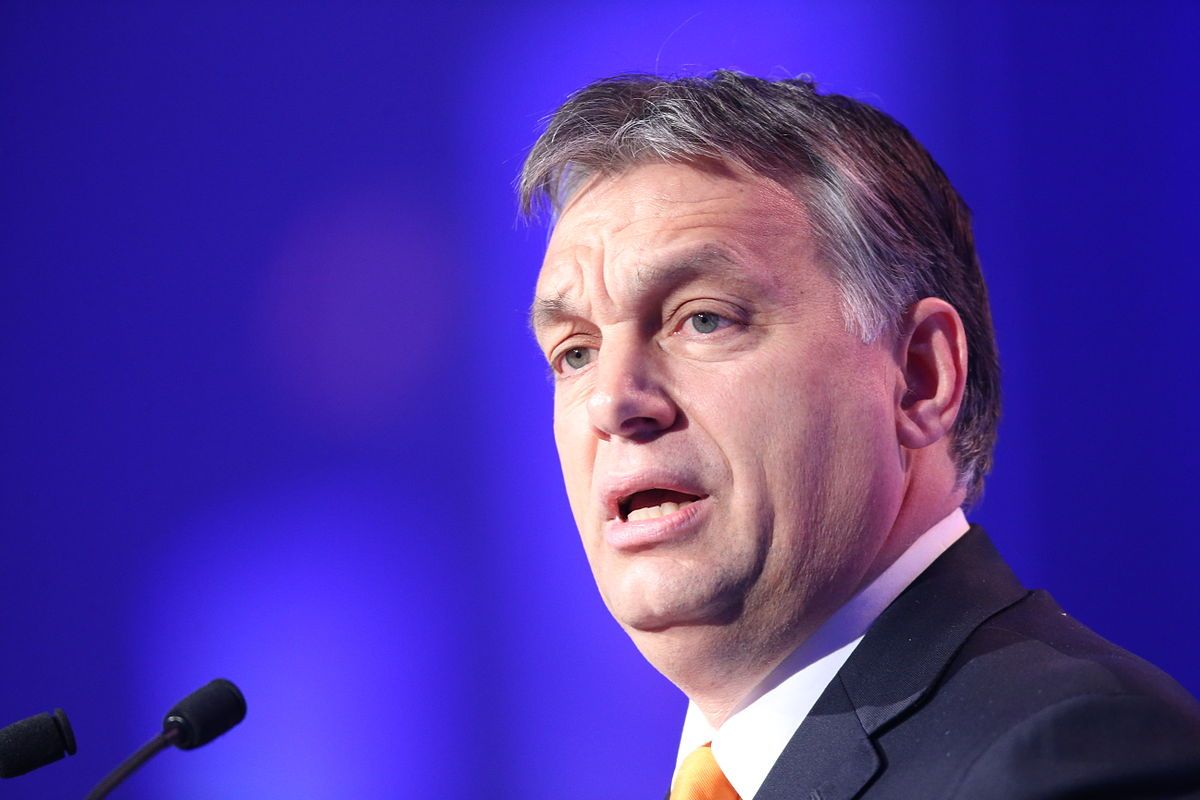
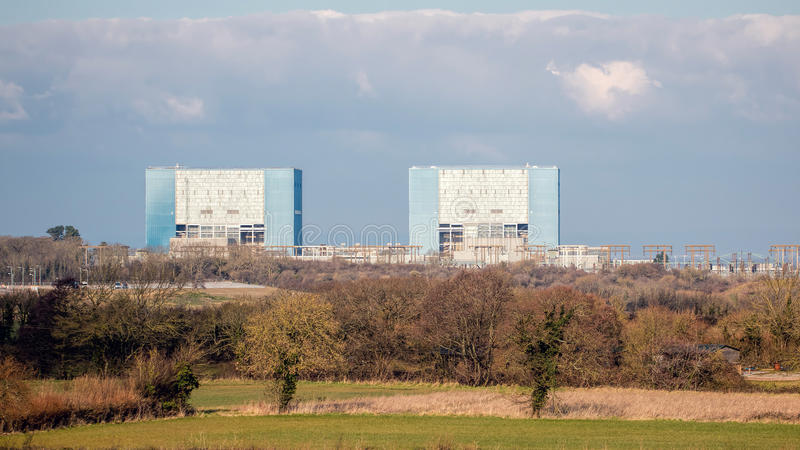
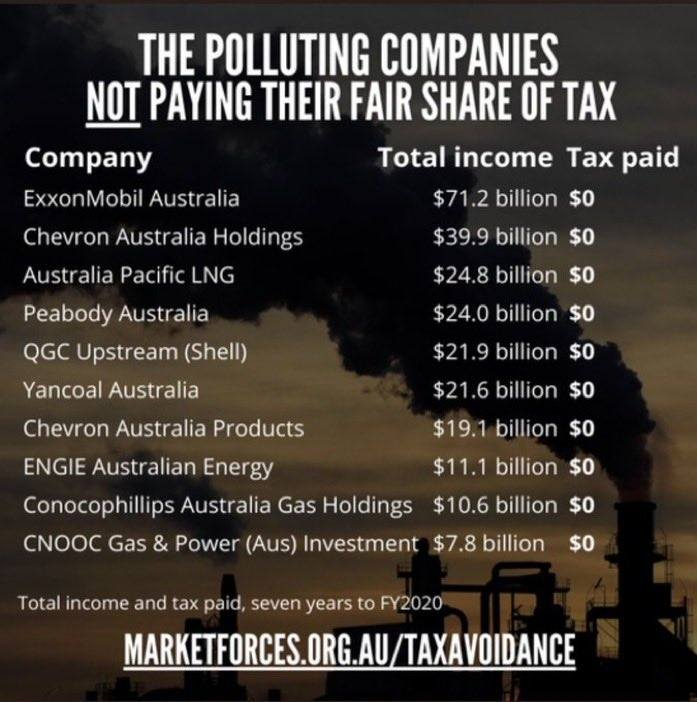

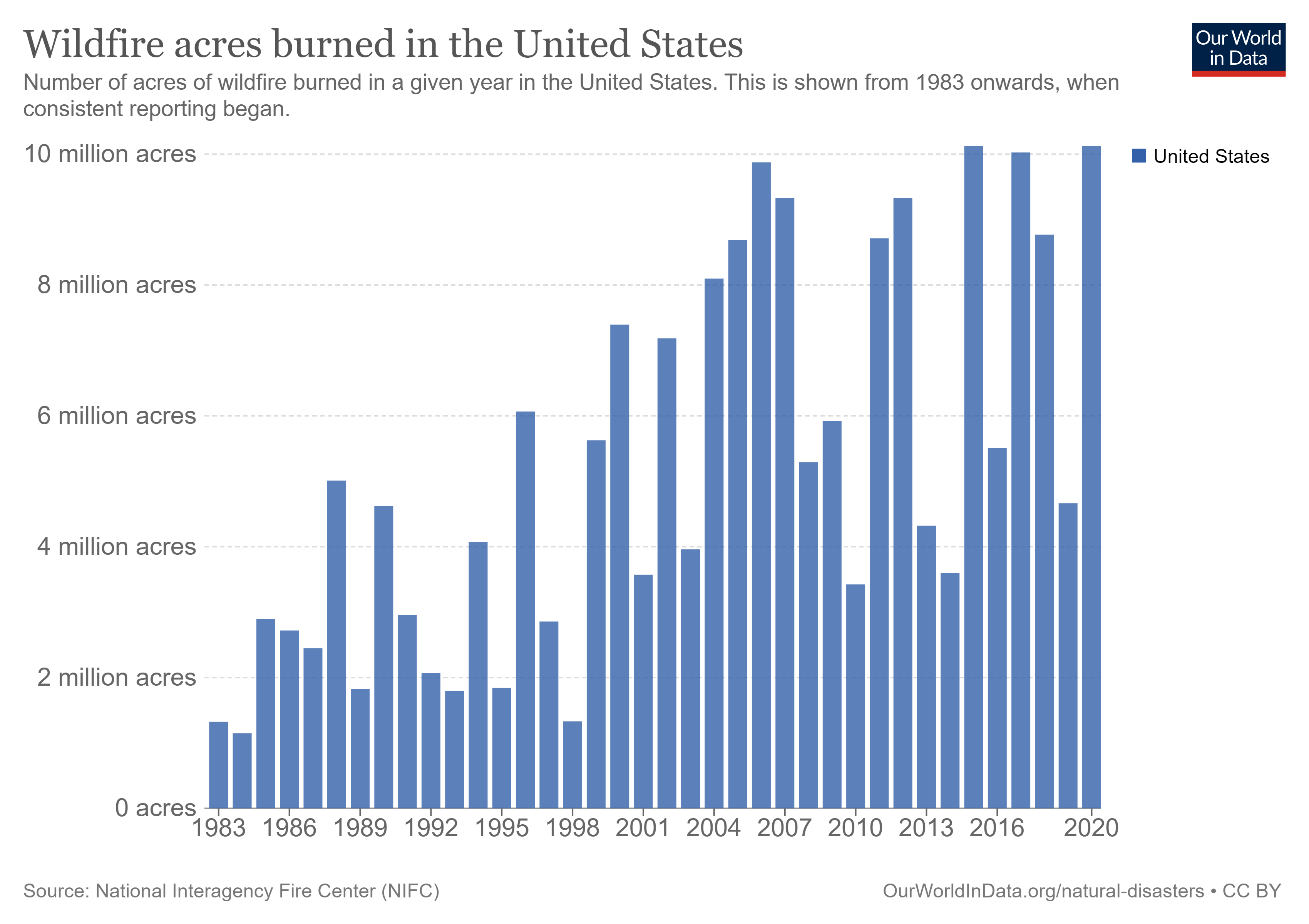
 Climate, technology and chaos Blog

.jpg)